A gigantic trade surplus. Another senior official under investigation. An American payments company finally inching through the regulatory door. And an artificial intelligence industry moving considerably faster than its public safety disclosures.
These might look like four separate China stories. They are not. Together, they expose the tension running through the country’s political economy: Beijing wants the benefits of competition, innovation and international commerce without surrendering much control over how any of them develop.
Sometimes that produces impressive results. Sometimes it produces bottlenecks. And sometimes the headline achievement conceals a rather less comfortable reality underneath.
September’s enormous export figures are the clearest example. China is selling more abroad, particularly technology products. Yet manufacturers face rising costs, consumers remain cautious, and trading partners are becoming increasingly irritated. The export engine is roaring. That does not mean everyone inside the factory is doing well.
Key Takeaways
- Huang Qifan’s investigation extends scrutiny into Chongqing’s longstanding political and financial networks.
- September’s export surge masks uneven industrial performance, rising input costs and fragile domestic demand.
- Visa has received preparatory approval, not final permission to operate domestic card clearing.
- Research found limited public safety disclosures across Chinese AI releases, without establishing that internal testing was absent.
Table of Contents
- Huang Qifan’s Investigation Shows the Limits of Political Survival
- China’s Trade Surplus Is Booming. Its Domestic Economy Looks Less Convincing.
- Visa Finally Gets an Opening—But Not a Licence to Operate
- China’s AI Industry Is Moving Faster Than Its Public Safety Evidence
- The Bigger Picture: Impressive Momentum, Unresolved Frictions
Huang Qifan’s Investigation Shows the Limits of Political Survival
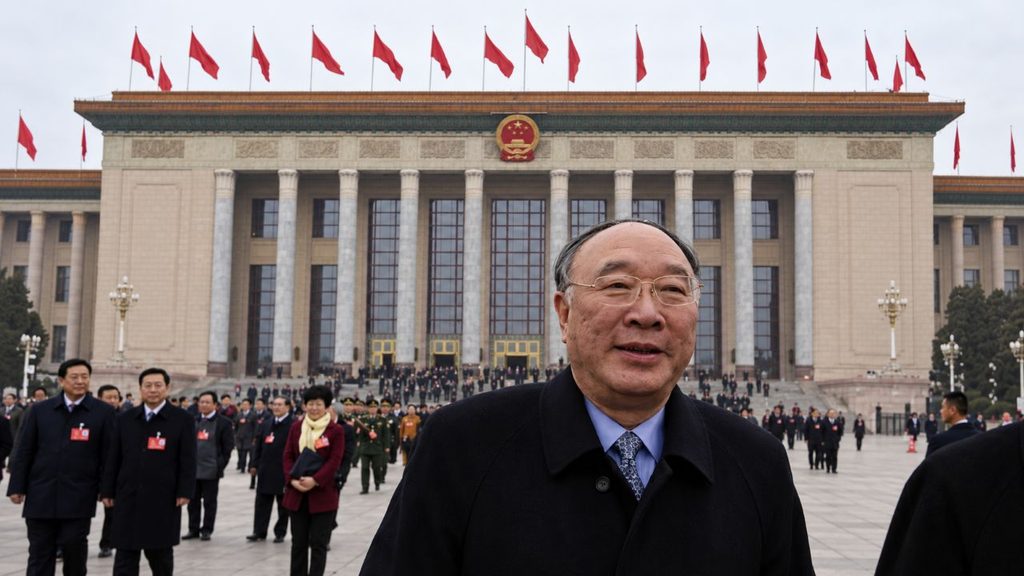
First, we need to look at a man who appeared unusually good at surviving China’s political upheavals. Huang Qifan, the former mayor of Chongqing, is under investigation for suspected serious violations of Communist Party discipline and law. The announcement targets a 74-year-old economic policymaker who remained a prominent public commentator after leaving office.
Huang governed Chongqing from 2010 to 2016. That meant working alongside Bo Xilai, whose spectacular downfall in 2012 shook the Chinese leadership, and subsequently Sun Zhengcai, who was removed in 2017. Both former Chongqing party chiefs received life sentences.
Huang, meanwhile, emerged relatively unscathed. In that context, his continued prominence looked like evidence of exceptional political resilience. It now looks rather less permanent.
The economic reforms attracting scrutiny
Chinese financial publication Caixin has reported that the investigation may involve mixed-ownership reforms of Chongqing’s state-owned enterprises during Huang’s tenure. That is a reported possible connection, not an established finding of wrongdoing.
The underlying issue matters. Mixed-ownership reform introduces private investment into state businesses. In principle, this can help restructure companies and improve their operations. But it also raises sensitive questions: What are the assets worth? Who gets to buy them? On what terms? And who benefits when ownership changes?
Get those decisions wrong—or manipulate them—and an economic reform can become a vehicle for preferential treatment.
Scrutiny has also reached financial institutions associated with Huang’s time in Chongqing. Former Chongqing Yufu chairman Cai Wenhui was placed under investigation in September, followed by former Southwest Securities chairman Wu Jian. Caixin reported that eight senior Chongqing officials have fallen since the Communist Party’s 2022 Congress.
None of that establishes Huang’s guilt. It does show that investigators are reaching into the regional networks and financial structures built during his career.
Retirement is not immunity.
Beijing presents Xi Jinping’s anti-corruption campaign, launched after he took power in 2012, as essential to protecting party discipline and eliminating graft. Analysts also regard the campaign as a mechanism for enforcing loyalty and consolidating Xi’s authority.
Its reach extends well beyond civilian administrators. Former defence ministers Li Shangfu and Wei Fenghe were expelled from the party in 2024, while senior generals Zhang Youxia and Liu Zhenli have also faced investigations.
The message from Huang’s case is straightforward: surviving an earlier purge does not buy permanent protection. Neither, apparently, does retirement.
China’s Trade Surplus Is Booming. Its domestic economy looks less convincing.
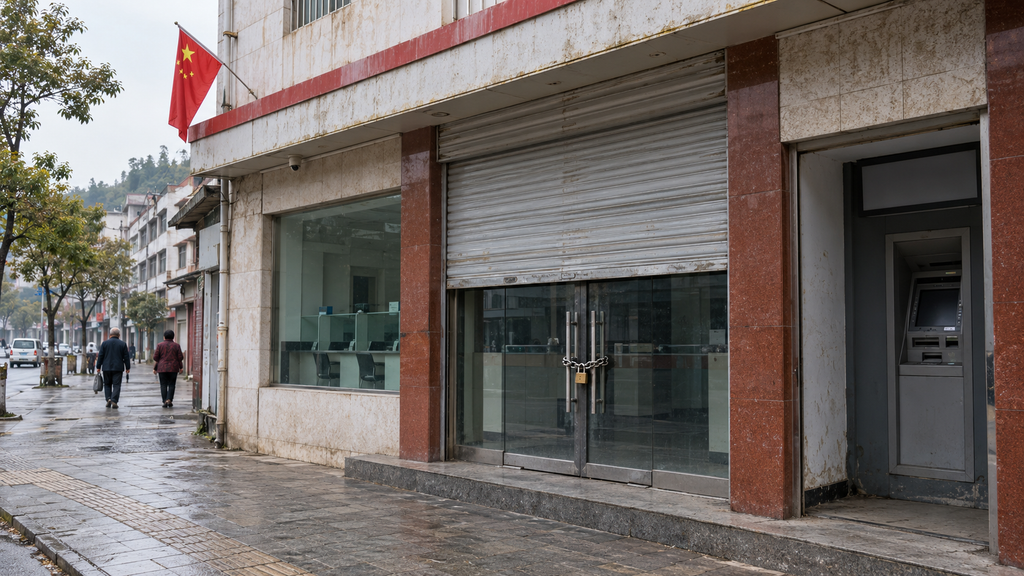
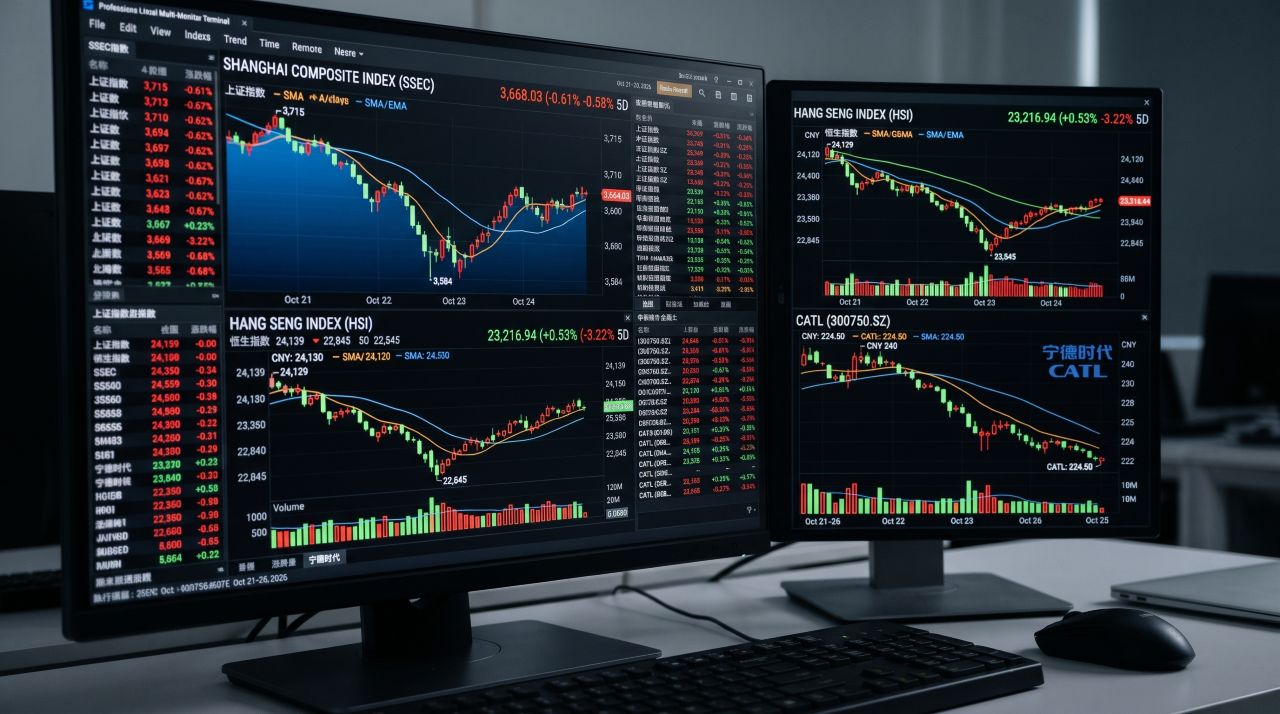
China’s September trade figures are enormous. Exports increased 36% from a year earlier, their fastest growth since February. Imports rose 31%. The monthly surplus approached $134 billion, exceeding every forecast in Bloomberg’s survey.
Across the first nine months, the cumulative surplus reached $938 billion, almost 8% above the corresponding period a year earlier. With the final quarter typically strong for exports, China appeared on course to exceed the $1.2 trillion annual record set in 2025.
That sounds like an uncomplicated economic success story. It is not.
A bigger dollar figure does not mean an equivalent increase in goods
Part of the surge reflects prices. More expensive semiconductors, oil and metals inflated trade values, meaning the increase in physical shipments was less dramatic than the headline numbers suggest.
Then there is the composition of the boom. High-tech exports rose almost 64% in September and accounted for roughly half of overall export growth, according to Bloomberg Economics. Global spending on artificial intelligence infrastructure provided a powerful boost.
Clothing, furniture and toys remained comparatively weak. So this was not a uniform recovery sweeping through Chinese manufacturing. It was an uneven expansion with technology doing much of the heavy lifting.
That distinction matters for employment, business confidence and the durability of growth. A thriving supplier of AI infrastructure and a struggling furniture exporter can inhabit the same economy while experiencing completely different realities.
Tariffs have changed trade routes, not eliminated the surplus.
The figures also expose the limits of American tariffs as a tool for reducing China’s overall trade surplus.
According to International Monetary Fund estimates, Asian economies absorbed around half of China’s diverted trade, while the European Union absorbed almost one-fifth. Restrict access to one destination, and exporters look for another.
Yet September also brought a striking twist: Chinese exports to the United States increased 40%, their fastest growth in more than five years, as American businesses bought equipment for AI infrastructure. China’s bilateral surplus with the US reached $34 billion.
With the EU, the surplus reached $34.8 billion, almost 21% higher than a year earlier. Those figures preceded the announcement of an agreement restricting Chinese hybrid vehicle imports.
In other words, the commercial pressure is not disappearing. It is spreading across trading relationships. Earlier coverage of China’s trade slowdown and external pressures illustrates how quickly the headline picture can change, even while the underlying dependence on overseas demand remains.
The squeeze inside the factory
Meanwhile, producer prices rose 5%, their fastest increase since 2022. Consumer inflation was just 0.9%.
Those measures cover different baskets of prices, so they are not a direct calculation of manufacturers’ margins. Nevertheless, their divergence points to the central problem: industrial costs are rising while weak household demand limits businesses’ ability to charge more.
China can therefore export extraordinary amounts while some of the companies producing those goods struggle to make satisfactory profits.
The surplus supports growth. But its scale also invites resistance from countries absorbing the corresponding deficits. What looks like a domestic economic solution increasingly becomes an international political problem.
Visa Finally Gets an Opening—But Not a Licence to Operate

Now consider a different kind of economic headline: China has approved Visa’s application to prepare a domestic bank card clearing business. That is a significant development. It is also not permission to start operating. The distinction is doing quite a lot of work.
The People’s Bank of China said Visa Information Technology Beijing must complete its preparations and apply to commence operations within one year. A business licence would follow only after joint approval from the central bank and the National Financial Regulatory Administration.
If ultimately authorised, Visa would become China’s first wholly foreign-owned bank-card clearing institution, allowing it to process domestic card transactions independently of China UnionPay.
A market opening measured in years
Other international networks entered through joint ventures with Chinese partners. American Express received preparatory approval in 2018 and began operating in 2020. Mastercard secured approval in 2020 and started operations in 2024.
Visa established its Chinese subsidiary in 2015. The wider dispute goes back further: in 2012, a World Trade Organization ruling on electronic payment services found against Chinese restrictions following a US challenge.
So, yes, this is progress. But presenting it simply as a fresh diplomatic gift would erase a long history of delayed access.
There is also an awkward commercial reality. During the wait, China developed a mature digital-payments ecosystem. Established domestic networks and mobile platforms already shape how people pay.
Visa is not entering an empty market patiently awaiting its arrival. It must persuade banks, merchants and customers that its services offer something worthwhile within an intensely competitive system.
Access and commercial success are different things
Bank relationships, merchant acceptance and useful products will determine whether regulatory permission translates into meaningful business.
The approval nevertheless has political value ahead of further Washington-Beijing engagement. Visa’s chief executive also chairs the US-China Business Council, adding another connection between corporate investment and the broader bilateral relationship.
For Beijing, the arrangement offers a convenient combination: evidence of financial opening, while final authorisation and the timing of operational entry remain under regulatory control.
The door is opening. Beijing still has its hand on the handle.
China’s AI Industry Is Moving Faster Than Its Public Safety Evidence
The final development concerns an industry where speed is treated as a competitive necessity: artificial intelligence.
Research firm SemiAnalysis examined 857 model releases from nine leading Chinese developers between 2021 and September 15, 2026. The dataset included Alibaba, Tencent, Baidu and ByteDance, alongside startups such as DeepSeek and Moonshot.
Only 31 releases—3.6%—had developer-published safety results. Just nine had those findings available at launch. For 16 releases with results published afterwards, the median delay was 42 days.
That is a substantial transparency gap. It is not, by itself, proof that the remaining models underwent no internal testing.
The distinction matters. Missing public evidence and missing safeguards are not identical claims. Differences in how companies name model variants also complicate comparisons. But without disclosure, outsiders have less information with which to judge the safeguards that may exist.
When safety becomes a geopolitical argument
Former Australian prime minister and China specialist Kevin Rudd described a similar emphasis on speed after discussions with senior Chinese officials.
According to Rudd, Chinese participants regarded fears of advanced autonomous AI escaping control as overstated and primarily an American concern. They also viewed US-backed safety restrictions with suspicion, seeing them as potential tools for limiting China’s technological progress.
That creates a difficult problem. If proposed safeguards are interpreted as industrial containment, cooperation over genuine shared risks becomes harder.
Rudd also questioned whether confidence in cyber defences developed partly to control politically sensitive information necessarily extends to protecting electricity networks, financial systems and military infrastructure. These are different security challenges; success in one area cannot simply be assumed to settle the others.
The tension also runs through China’s wider debates over cybersecurity and AI controls: technological ambition, political oversight and credible protection are related, but they are not interchangeable.
The employment disruption is already arriving
There is a more immediate issue, too. AI is changing which workers businesses need.
Caixin reported that recruitment-platform chairman Evan Guo sees standardised jobs and middle-management positions coming under pressure as AI takes on routine coordination and information processing.
At the same time, demand is increasing for workers who help companies deploy AI. That suggests a shift in employment, rather than jobs disappearing uniformly across the economy.
But “the jobs are changing” is hardly reassuring if your particular role is being automated. Businesses and government still face the practical task of helping workers adapt while determining whether deployed systems are sufficiently reliable.
The Bigger Picture: Impressive Momentum, Unresolved Frictions
China is demonstrating considerable economic and technological capacity. Its exporters are capturing AI-related demand. Foreign financial participation is expanding, however slowly. Domestic developers are releasing models at extraordinary speed.
Yet each achievement comes with a qualification. Exports do not automatically repair household demand. Market access does not guarantee commercial opportunity. Rapid AI deployment does not establish safety. And a long political career does not provide lasting immunity from investigation.
The useful question is not simply whether China is advancing. In several important respects, it plainly is. The question is how much strain that advance creates—and whether the institutions managing it can address the costs rather than merely celebrate the headline numbers.