A stock market can bounce without an economy getting healthier. That sounds obvious. But when state-backed money appears to arrive just as shares tumble into bear-market territory, it is worth remembering what, exactly, has been rescued.
China’s CSI 300 staged a dramatic reversal on Friday, closing 1.7% higher after falling as much as 1.9%. Trading surged in funds associated with government-backed investors. Hong Kong technology stocks rallied too. On the surface, this looked like a welcome change of direction.
Underneath, the problems were rather less cooperative. Consumers remained cautious, corporate earnings were under scrutiny, and investors were still looking to Beijing for reassurance.
Meanwhile, a dispute over Hong Kong’s freedoms, proposed American investment restrictions, and Huawei’s growing partnership with DeepSeek revealed the wider challenge. China is trying to stabilize confidence while national security increasingly determines what businesses can do, where capital can go, and which technologies companies can use.
That is not a backdrop a few enthusiastic trading sessions can make disappear.
Key Takeaways
- China’s stock rebound reflected expectations of state support, while weak demand and earnings concerns remained unresolved.
- Britain and China offered sharply conflicting assessments of national security legislation’s impact on Hong Kong.
- Proposed U.S. investment restrictions would expand scrutiny into sensitive biotechnology, with some cash-only licensing deals excluded.
- Huawei and DeepSeek are improving China’s AI software ecosystem, although performance and compatibility gaps persist.
Table of Contents
- A Market Bounce Is Not an Economic Recovery
- Hong Kong’s Openness Is Becoming a Security Argument
- Washington’s Investment Restrictions Move Beyond Chips
- Huawei and DeepSeek Are Working on Nvidia’s Real Advantage
- The Common Thread: Support Cannot Replace Capability
A Market Bounce Is Not an Economic Recovery
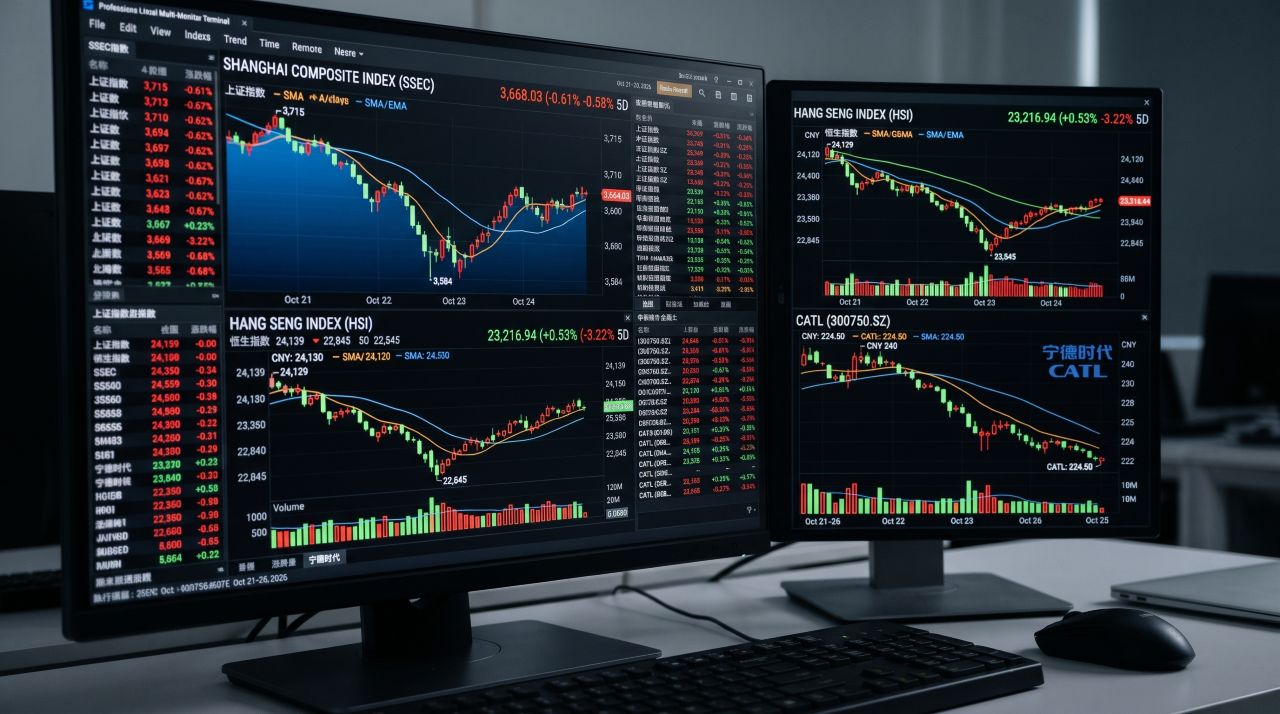
The scale of Friday’s turnaround was striking. Having officially entered a bear market on Thursday, the CSI 300 recovered some ground as trading in nine exchange-traded funds favoured by China’s “national team” reached 84 billion yuan, according to Bloomberg-compiled data. That was the highest turnover since July 20.
One E Fund ETF attracted 19.7 billion yuan in inflows, a two-year high. The nine funds collectively received net inflows of 46 billion yuan on Thursday.
These figures fuelled expectations of government intervention. They do not, by themselves, establish who was behind every trade. But the message investors took away was straightforward: Beijing might be prepared to put a floor under the selling.
Authorities have also introduced selling restrictions and encouraged companies to buy back their shares. Such measures can interrupt a downward spiral. The harder task is giving investors a reason to own shares when the immediate prospect of official support fades.
China has been here before. The CSI 300 declined in three consecutive years from 2021 through 2023 as pandemic disruption, the property downturn, and weak consumer confidence battered earnings expectations. It then gained 14.7% in 2024 following policy support.
That recovery demonstrated the power of intervention. It also exposed the dependence on it.
The latest retreat reflects familiar concerns: sluggish consumption, weak investment, and uncertain corporate profitability. Battery giant CATL’s slower-than-expected quarterly profit growth added to those worries, despite stronger-than-forecast third-quarter economic growth.
This is the awkward distinction between an economy producing a reassuring headline number and businesses producing the earnings investors expected. They are related. They are not interchangeable.
The Borrowed-Money Problem
Leverage adds another complication. Outstanding margin trades fell 1% on Thursday to their lowest level in a year, indicating caution among investors trading with borrowed money.
If prices fall far enough, those investors can face demands to provide additional collateral or reduce their positions. Selling then risks producing more selling. A market intervention may help interrupt that process without resolving the weakness that started it.
Aberdeen fund manager Shin Hyo In the warning, the state buying offered only temporary relief. Stronger domestic consumption and investment were essential for a lasting recovery.
Hong Kong technology shares also rebounded, gaining as much as 2.7%. But the same distinction applies: a rally tells us prices have risen, not that the underlying problems have been fixed.
As explored in this analysis of China’s fragile recovery narrative, confidence depends on more than policy announcements. Eventually, household demand, investment, and earnings have to carry some of the weight.
Hong Kong’s Openness Is Becoming a Security Argument

The dispute between Britain and China over Hong Kong gets at a different kind of confidence: whether the city’s political and legal environment still supports the openness behind its international financial role.
Britain’s latest six-monthly report on Hong Kong raised concerns about the widening application of national security legislation. It highlighted the imprisonment of former media tycoon Jimmy Lai, who received a 20-year sentence for national security offences, and reiterated Britain’s demand for his immediate release.
The report also pointed to proceedings involving former leaders of the disbanded organisation behind Hong Kong’s annual Tiananmen Square vigil, alongside activist Joshua Wong. Britain argued that these cases reinforced concerns about the breadth of security prosecutions.
The criticism was not simply that individual cases were troubling. It was that the national security law imposed by Beijing in 2020 had restricted freedoms, discouraged debate, and weakened the openness underpinning Hong Kong’s international standing.
Hong Kong’s government rejected that assessment, accusing Britain of spreading falsehoods and using political manoeuvres to interfere in the city’s governance. Officials maintain that the legislation targets only a small minority involved in activities threatening national security.
China’s embassy in London likewise rejected the report as interference in domestic affairs. It argued that security, legal protections, government effectiveness, and the business environment had improved, and urged Britain to stop publishing the assessments.
These are competing claims about the foundations of prosperity. Beijing and Hong Kong’s government present stronger security controls as a source of stability. Britain argues that those controls are eroding the freedoms that helped make the city successful.
For businesses, the distinction matters. Stability and openness are both valuable. The dispute is over whether current policy protects both—or advances one at the expense of the other.
Washington’s Investment Restrictions Move Beyond Chips
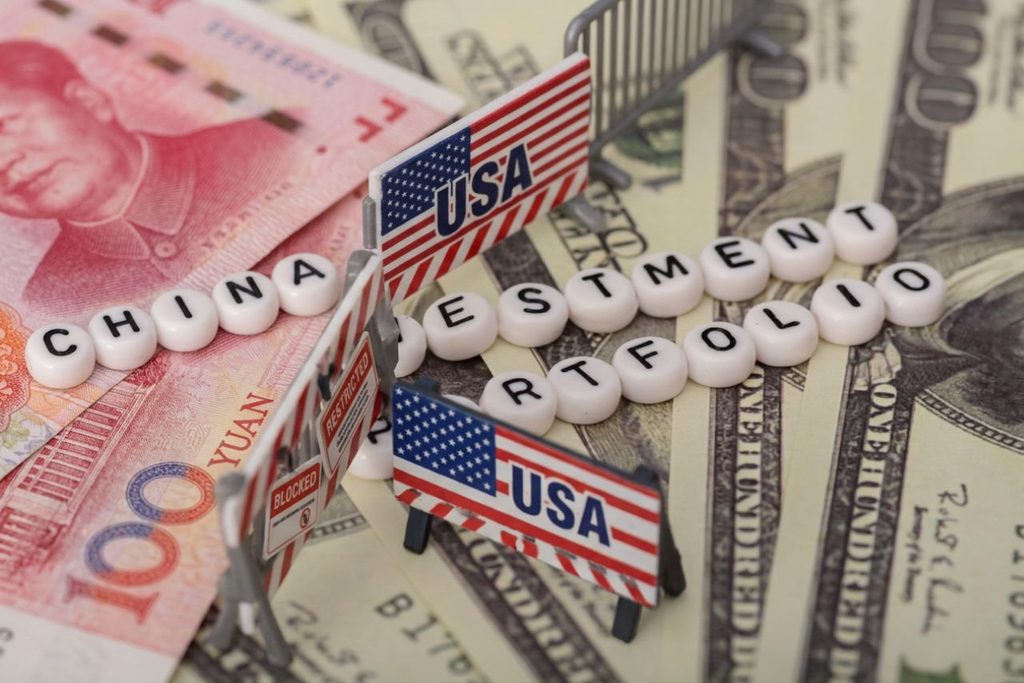
The United States is extending its own national security scrutiny of economic activity.
Proposed Treasury Department rules would tighten restrictions on American investment in sensitive Chinese technologies, expanding the focus beyond advanced semiconductors and artificial intelligence into areas including biotechnology, hypersonic weapons, and brain-computer interfaces.
The proposals would implement the Comprehensive Outbound Investment National Security Act, passed by Congress in 2025. The legislation targets investment involving China and other U.S. adversaries, including Russia and Iran.
Treasury Secretary Scott Bessent said the measures would prevent adversaries from using American investment to develop technologies threatening U.S. security while giving investors clearer guidance. The broader policy framework is outlined through Treasury’s Outbound Investment Security Program.
The important word here is "investment". Washington is scrutinising American capital flowing into sensitive technological development, not just the movement of finished products.
And this is happening despite a recent easing of trade tensions. President Donald Trump and Chinese leader Xi Jinping agreed at their Washington summit to extend their trade truce until January.
There is no necessary contradiction. A government can negotiate commercial breathing room while tightening restrictions in sectors it considers strategically dangerous. A trade truce is not a technological ceasefire.
Biotechnology Is Where the Argument Gets Messy

Biotechnology could become the most contentious part of the proposals because the same broad field encompasses commercially valuable medical research and technologies with potential security applications.
Treasury identified risks involving biological weapons, intelligence gathering, and mass surveillance. Proposed prohibitions would cover certain cell and gene treatments and immunotherapies.
The difficulty is drawing a workable boundary. American biotechnology companies increasingly rely on China for early drug development. Restrictions that sweep too broadly could disrupt that relationship without neatly separating dangerous applications from useful medical work.
The Biotechnology Innovation Organization warned that excessively broad rules could create uncertainty and weaken American competitiveness. That sets up a familiar lobbying battle: officials argue that restrictions protect national security, while industry warns that poorly designed restrictions could damage the capabilities the government wants to preserve.
Not every pharmaceutical transaction would be caught. American companies, including Pfizer, have paid Chinese developers billions of dollars for rights to experimental medicines.
According to Kempstone policy adviser Will Humphrey, licensing agreements paid in cash, without an accompanying equity investment, would fall outside the restrictions. Buying development rights and buying an ownership stake would therefore receive different treatment.
That distinction could prove commercially significant. For now, the regulations remain proposals, subject to public comment before finalization. Their eventual scope—not merely their headline ambition—will determine their impact.
Huawei and DeepSeek Are Working on Nvidia’s Real Advantage
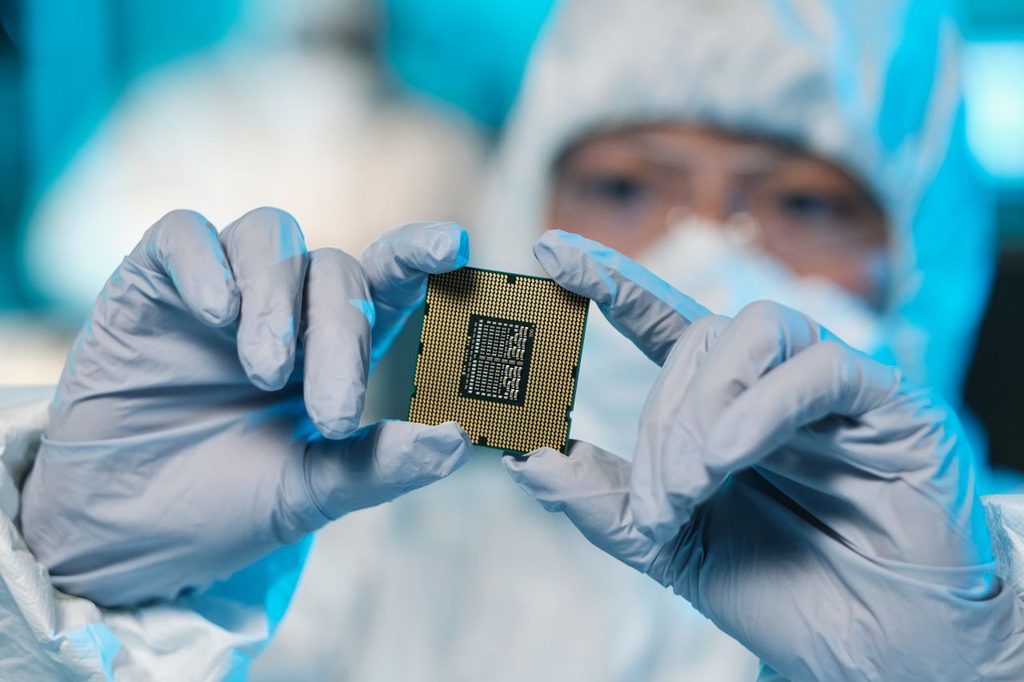
While Washington considers how to restrict sensitive investment, Huawei and DeepSeek are working on a different problem: making Chinese AI hardware easier to use.
Research firm SemiAnalysis says the companies’ growing collaboration is narrowing the gap with Nvidia’s hardware-and-software ecosystem. The partnership combines Huawei’s Ascend processors with DeepSeek’s expertise in efficient AI models and software.
This matters because an AI chip is not a self-contained solution. Developers need tools that allow their applications to use its capabilities efficiently. Nvidia’s strength rests on its processors and the extensive software ecosystem supporting them.
Producing alternative hardware is difficult enough. Persuading developers to build around it is another challenge entirely.
DeepSeek recently released six software modules tailored to Ascend, mirroring tools it previously developed for Nvidia chips. These include an Ascend-compatible programming tool that simplifies the development of kernels: specialized code that helps applications use chip hardware efficiently.
That may sound like an obscure engineering detail. It is actually central to the competitive struggle. Hardware becomes more attractive when developers can use it without having to solve every software problem themselves.
SemiAnalysis expects DeepSeek could rely primarily on Huawei’s technology stack by 2027 or 2028, supported by commercial incentives and political pressure to build a domestic ecosystem. That is a forecast, not an accomplished transition. But it identifies a plausible route toward reducing dependence on American technology.
Progress Is Not the Same as Parity
There are substantial limitations. According to SemiAnalysis, Huawei’s Ascend 950PR still trails Nvidia’s H100 in absolute performance—even though the H100 began shipping in 2022.
Compatibility problems also persist beyond DeepSeek’s specialized computing configurations, particularly for developers using standard x86 host processors. A system optimized for one laboratory does not automatically become an easy replacement for everyone else.
Still, the benefits need not remain confined to the two companies. Businesses running DeepSeek models could reuse optimized code and deployment methods. Competing laboratories could build on shared software capabilities. Contributions from additional developers could gradually improve the wider ecosystem.
This is where the implications for export controls become uncomfortable. Restrictions can deny access to advanced American chips and chipmaking equipment. But they can also strengthen the commercial and political incentives to develop alternatives.
That does not mean restrictions are ineffective, or that Huawei has caught Nvidia. It means immediate constraints and long-term substitution can occur together. China’s electricity-driven AI strategy amid chip constraints reflects the broader effort to work around technological bottlenecks rather than wait for them to disappear.
The Common Thread: Support Cannot Replace Capability
These developments share an uncomfortable tension between intervention and underlying strength.
State-backed buying can steady share prices. It cannot, by itself, produce stronger household consumption. Security legislation can be presented as a guarantee of stability while critics argue it damages openness. Investment restrictions can constrain technological development while encouraging a more determined search for substitutes.
The Huawei–DeepSeek partnership is particularly important because it addresses an underlying capability: the software that makes alternative hardware useful. Its progress remains limited, but it is more substantial than a reassuring announcement.
For China, the question is whether policy support can translate into durable economic confidence and competitive technology. For Washington, it is whether restrictions can slow strategic rivals without strengthening their incentive to build independent systems.
Neither question will be answered by a single market rally. The bounce is visible. The harder work is underneath.
Frequently Asked Questions
Why did Chinese stocks rebound?
Heavy trading and inflows in ETFs associated with state-backed investors fueled expectations of government intervention. The CSI 300 closed 1.7% higher after falling as much as 1.9%.
Are the proposed U.S. biotechnology restrictions final?
No. They remain subject to public comment before finalization. Their eventual scope will determine which investments are restricted, while some cash-only pharmaceutical licensing agreements would remain outside the rules.
Has Huawei caught up with Nvidia?
Not according to the assessment discussed here. SemiAnalysis reported software progress through Huawei’s partnership with DeepSeek, but said the Ascend 950PR still trails Nvidia’s H100 in absolute performance and faces compatibility challenges.