
A government can keep spending long after it loses the freedom to decide what that spending is for. That is the uncomfortable distinction emerging in China’s provinces, where disappearing land revenues and mounting debt repayments are making local authorities increasingly dependent on Beijing.
At first glance, the wider economic picture looks less alarming. Industrial profits are rising sharply. Some technology and commodity businesses are doing very well. China remains a formidable manufacturing power.
But look underneath those headline numbers, and the picture becomes considerably messier. Local governments are borrowing to replace missing income. Much of the industrial profit recovery is concentrated in a handful of sectors. Europe is preparing more import restrictions. And Beijing is trying to preserve its influence over a North Korea that now has another powerful sponsor in Moscow.
These are different stories, but they share a theme: China still has substantial economic and diplomatic resources. The question is how much room it has to use them—and how expensive maintaining that room is becoming.
Table of Contents
- China’s Local Governments Are Losing More Than Revenue
- Europe Is Preparing a Broader Trade Defence
- Industrial Profits Are Rising. That Does Not Mean Everyone Is Recovering.
- North Korea Is Giving Beijing Another Balancing Act
- The Bigger Picture: Less Room for Error
China’s Local Governments Are Losing More Than Revenue
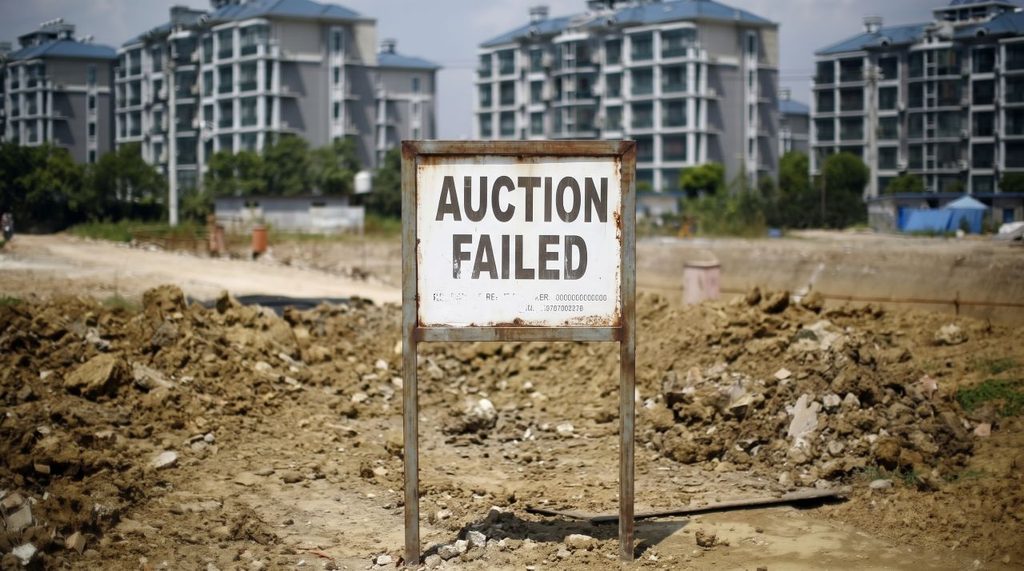
For years, land-related income gave Chinese local governments something enormously valuable: discretion. It helped finance infrastructure and allowed officials to pursue development priorities without waiting for every decision to come down from the centre.
Now that revenue model is breaking down. And replacing land income with borrowing does not recreate the same freedom.
A research paper, The End of Fiscal Autonomy, accepted by The China Quarterly, argues that falling land revenues and rising debt repayments are fundamentally changing the relationship between Beijing and local authorities.
The researchers found that ordinary local budget revenue grew just 21% over six years. Meanwhile, extra-budgetary revenues closely associated with land sales and infrastructure spending stagnated amid the property crackdown.
Central transfers supplied most of the growth in non-debt income. Even those transfers failed to keep pace with expenditure.
That leaves a fairly obvious hole. Local governments have increasingly filled it with debt.
The borrowing is enormous—and the headline estimate is incomplete
Drawing on more than 70,000 bond issuance records, the researchers found that special-purpose bonds have driven local debt growth since 2022, helping replace missing land income.
Their estimate puts bond-based local government debt near 70 trillion yuan, roughly $10 trillion, or about 50% of GDP. Crucially, that excludes loans owed by local government financing vehicles. Include those obligations, and the burden would be substantially larger.
The deterioration is also becoming harder to dismiss as a problem confined to a few struggling provinces:
- Between 2017 and 2025, the number of provinces with debt exceeding 50% of GDP rose from three to 22.
- By 2025, no province remained below the 25% threshold.
- Even Shanghai had entered the middle debt category.
Debt servicing has reached around one trillion yuan in some months. Debt exchanges have helped smooth repayment peaks, but smoothing a repayment schedule is not the same thing as shrinking the underlying obligation. Those obligations have continued to rise.
There is also an important distinction inside the accounts. Debt servicing in ordinary budgets has remained relatively stable. The more acute pressure is building in extra-budgetary accounts carrying obligations associated with financing vehicles and special-purpose bonds.
In other words, an apparently manageable budget can coexist with a much less comfortable financial position elsewhere.
Beijing’s support comes with strings.
By 2025, central transfers and centrally approved borrowing financed 63.5% of total provincial expenditure, including debt repayments. Exclude Beijing, Shanghai and Guangdong, and that dependence reached 70%.
That is not simply a change in who supplies the money. It changes who controls its use.
Land income historically offered considerable local discretion. Special-purpose bond proceeds, by contrast, face Ministry of Finance oversight and cannot readily fund initiatives that have not been approved.
The researchers found that land revenue now has roughly half its previous positive influence on spending. Special-purpose bond issuance has more than twice its earlier effect on extra-budgetary expenditure.
Local governments have not lost all agency. They can still bargain over bond allocations. But negotiating for centrally authorised funding is a different proposition from controlling a substantial revenue stream of your own.
The danger is that fiscal stress weakens both the capacity and the incentive to experiment. Officials who must prioritise repayments and seek approval for replacement funding have less space to pursue local reforms or growth initiatives.
This also helps explain the pressure behind tighter local tax enforcement. When established income sources weaken, governments look harder for money elsewhere. But collecting more aggressively does not, by itself, repair the development model that produced the shortfall.
Europe Is Preparing a Broader Trade Defence
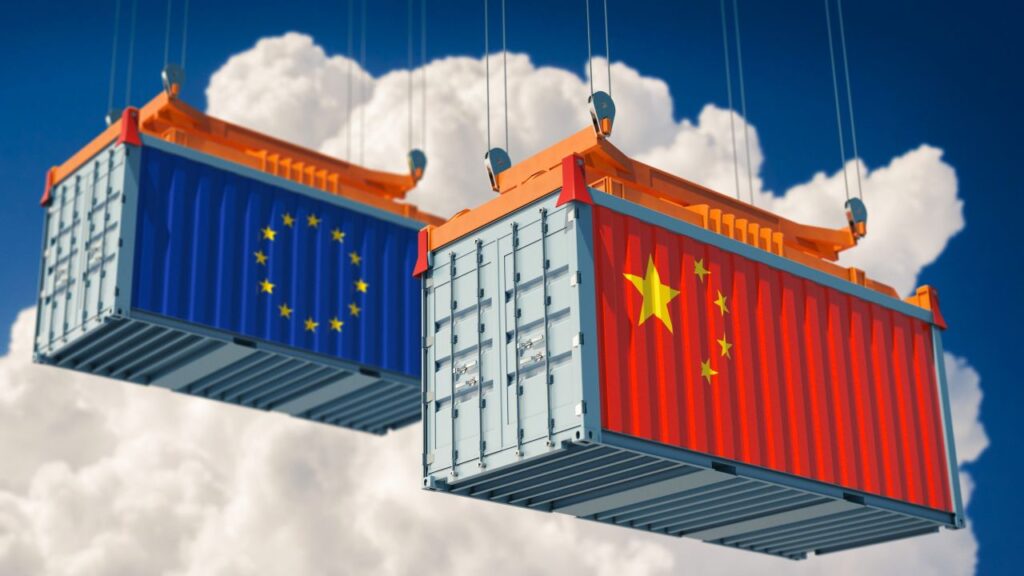
China’s manufacturers face another problem: some of their most important overseas customers are becoming increasingly determined to protect domestic industry. Bloomberg, citing unnamed sources, reported that the European Union is preparing possible import restrictions across sectors including chemicals, furniture and machinery. Measures could involve import caps or tariffs and may be presented in the first quarter of 2027.
These are proposals, not settled policy. Negotiations with member states and Beijing remain ahead, and the targeted sectors could change.
Nevertheless, the direction is clear. European industrial concerns are pushing Brussels toward a broader defensive posture.
The EU’s trade deficit with China reached €360 billion last year. European manufacturers face competition from inexpensive Chinese goods while also contending with weak demand and restricted access to China’s market.
“Our industries have called for action, and we have heard them,” European Commission President Ursula von der Leyen said earlier this month, promising additional safeguards.
A quota can be both protection and compromise.
Brussels is seeking to build on an agreement limiting Chinese hybrid vehicle imports to 350,000 annually. The ceiling was considered generous enough to discourage Chinese retaliation while still offering European carmakers some protection.
The Commission aims to implement that arrangement in December. It would last four years, with China’s quota increasing by 6% annually after the first year.
The broader proposals could use safeguards, including quotas or tariff-rate quotas. Under the latter, imports above a specified volume face additional duties.
The World Trade Organization’s safeguards framework provides context for this type of temporary import restriction. The reported European proposals would be designed to comply with WTO rules and cover other suppliers outside the European Economic Area, rather than exclusively targeting China.
That distinction matters legally. It does not make the political tension disappear.
China’s Commerce Ministry has warned Europe not to underestimate Beijing’s determination and ability to defend Chinese interests. Chinese authorities have also opened an anti-dumping investigation into an imported chemical used in products ranging from dyes to pharmaceuticals.
Brussels is therefore trying to do two things that do not sit comfortably together: protect European producers and preserve commercial engagement with China. It is also preparing tools to diversify supplies and respond faster to retaliatory measures.
The next round of talks with Chinese officials early next year will test whether negotiated limits can contain the dispute. A quota acceptable to both sides would be a compromise. A widening cycle of restrictions would be something else entirely.
Industrial Profits Are Rising. That Does Not Mean Everyone Is Recovering.
China’s September industrial profit figures look impressive. Profits rose 14.4% from a year earlier, accelerating from August’s 4.2% increase and exceeding the 12% forecast in a Reuters survey. It was the fastest growth in three months. But the composition of that growth matters more than the headline suggests.
Producer prices rose 5% in September, their fastest annual increase since 2022. Higher oil costs amid renewed Middle East hostilities, along with more expensive artificial intelligence hardware and raw materials, lifted revenues in selected industries.
For businesses selling those products, higher prices can be welcome news. For businesses buying them, the same price increases can become a serious problem.
Two groups account for almost all the headline gain.
During the first nine months of 2026, electronics industry profits doubled, contributing 9.6 percentage points to overall industrial profit growth. Raw materials industries recorded a 45% earnings increase, contributing another 5.4 percentage points.
Together, those contributions amounted to 15 percentage points. Overall industrial profits increased 15.5% during the period.
That arithmetic reveals just how concentrated the recovery was.
Higher energy prices supported oil and chemical businesses. Demand associated with AI and new energy industries helped copper and aluminium producers. These are substantial gains, but they do not establish that the industrial economy as a whole has regained its footing.
Outside those stronger sectors, weak consumer spending, subdued government expenditure and intense competition continued to squeeze margins. Manufacturers unable to pass higher input costs on to customers could face an especially unpleasant combination: expensive supplies and customers unwilling to pay more.
This is the distinction between an earnings recovery driven by stronger demand and one heavily influenced by higher prices in particular industries. Both can improve an aggregate number. Their implications are not the same.
It echoes the tension explored in China’s earlier industrial profit rebound and exposure to energy shocks: improving earnings can coexist with conditions that threaten margins elsewhere.
There are other reasons for caution. January-to-September industrial profit growth was slightly slower than growth recorded through April. Separately, Bloomberg calculations showed that MSCI China companies reporting results had missed earnings forecasts by an average of 9%.
Those corporate results are a different measure from the industrial profit series. Still, they reinforce the warning against treating one strong headline as proof of a broad recovery.
North Korea Is Giving Beijing Another Balancing Act
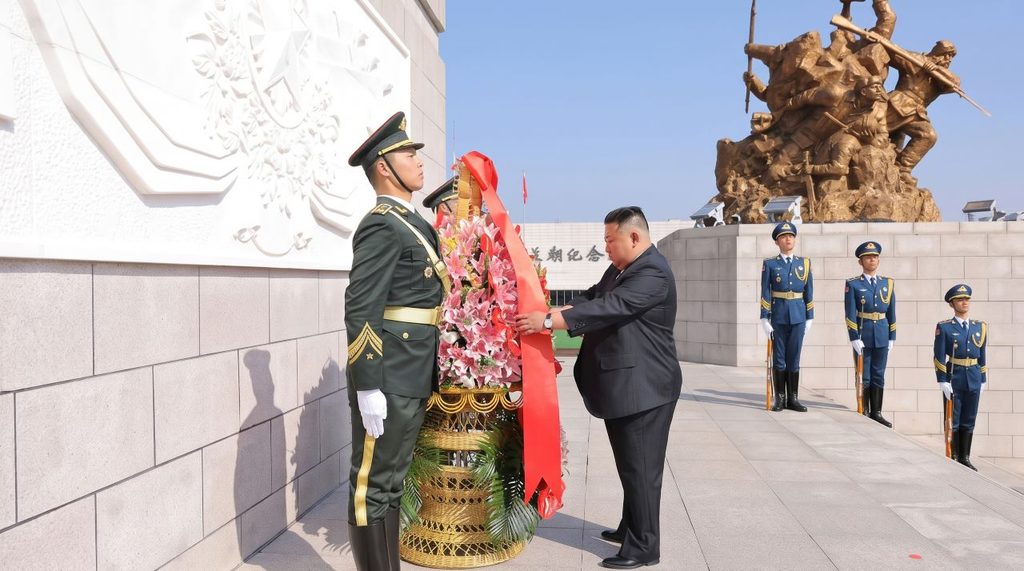
The pressures on China are not exclusively financial. Along its northeastern border, Beijing is working to strengthen ties with a neighbor whose alternatives have expanded. Kim Jong Un visited Dandong on October 24, crossing the newly opened New Yalu River Bridge and meeting senior Chinese official Wang Huning. Foreign Minister Wang Yi also attended.
The visit came a day before the 76th anniversary of China’s entry into the Korean War. Kim paid respects to Chinese soldiers killed in the conflict and expressed readiness to expand practical cooperation.
The historical symbolism was obvious. So was the contemporary strategic interest.
North Korea’s provision of weapons and troops for Russia’s war against Ukraine has given Kim another source of support, potentially reducing Beijing’s leverage. As Peter Ward of the Sejong Institute told the Financial Times, China wants better relations and does not want North Korea getting too close to Russia.
Kim did not meet Xi Jinping. Even so, the visit signaled an effort to reinforce the relationship.
The bridges—and the buses—matter
The four-lane, three-kilometer bridge between China and North Korea opened this month, 12 years after construction was completed. Its opening followed that of another bridge connecting North Korea and Russia in September.
For Kim, improved connections with both neighbors offer economic opportunities and diplomatic flexibility.
His tour of Dandong’s Huanghai Automobile factory added a practical dimension. Founded in 1951 to repair vehicles supporting Chinese forces during the Korean War, the company now makes buses, special-purpose vehicles and new energy vehicles.
North Korean television showed Kim inspecting production lines and boarding a bus. The visit appeared consistent with his efforts to modernize and electrify public transport, although no purchase agreement was reported.
There was also speculation about renewed diplomacy with Washington around November’s APEC summit in Shenzhen. A meeting with Donald Trump remains uncertain.
The clearer development is Kim’s ability to cultivate Beijing and Moscow simultaneously. For China, maintaining influence now requires engagement with a neighbor that has more options—not simply assuming dependence will do the work.
The Bigger Picture: Less Room for Error
None of these developments means China has run out of options. Industrial strengths remain substantial, central funding continues to support local spending, and diplomacy offers ways to manage external friction.
But the constraints are becoming harder to ignore.
Local borrowing can sustain expenditure while reducing local autonomy. Higher commodity prices can lift aggregate profits while hurting downstream manufacturers. Trade compromises can preserve market access while imposing new limits. Better relations with North Korea can reinforce influence without restoring exclusive leverage.
The important question is not simply whether Beijing can respond. It is whether those responses resolve the underlying pressures—or make an increasingly constrained system more dependent on another intervention from the center.
Frequently Asked Questions
Why are China’s local governments becoming more dependent on Beijing?
Land-related revenues have weakened while debt repayments and spending needs remain substantial. Central transfers and centrally approved borrowing are filling more of the gap, but generally offer less discretion than land income did.
Why do stronger industrial profits not prove a broad recovery?
Electronics and raw materials accounted for almost all the reported January-to-September profit growth. Other manufacturers continued to face weak demand, intense competition and rising input costs.
Are the EU’s proposed import restrictions finalised?
No. The broader restrictions remain subject to negotiations, and both their scope and targeted sectors could change. Bloomberg reported that proposals may be presented in the first quarter of 2027.
Why does Kim Jong Un’s China visit matter?
It signals efforts to strengthen China–North Korea ties as Pyongyang deepens its relationship with Russia. New transport links give Kim more economic opportunities and greater flexibility between his two powerful neighbors.