Beijing has a familiar response when financial markets become uncomfortable: tell somebody to buy. Tell somebody else not to sell. Then hope the resulting stability turns into something more durable than an expensive pause.
China is deploying that machinery again. Regulators are pushing state-backed investors to purchase shares, leaning on companies to support the market, and asking major insurers to avoid realising losses. The immediate objective is straightforward. Stop falling prices from further damaging confidence in an already struggling domestic economy.
But here is the awkward bit. While Beijing tries to manufacture confidence at home, Chinese manufacturers are producing something genuinely transformative abroad: increasingly affordable batteries that can make renewable electricity available after sunset.
That success, however, is creating another problem. Europe increasingly sees Chinese industrial dominance not simply as a source of cheap products but as a strategic vulnerability. Brussels is preparing stronger trade defences, and Germany is helping lead the charge.
These are not separate stories. They reveal an economy whose industrial capabilities remain formidable, whose domestic demand remains weak, and whose reliance on overseas customers is becoming politically harder to sustain.
Table of Contents
- First, the Party Is Tightening Its Own Machinery
- Beijing Wants Buyers. The Market Wants a Reason to Buy.
- Meanwhile, Chinese Batteries Are Solving a Real Problem
- Energy Independence Has an Awkward Dependency Attached
- Europe Is Preparing to Make Market Access a Weapon
- Germany’s Shift Makes This More Serious
- The Problem Is Bigger Than Falling Share Prices
First, the Party Is Tightening Its Own Machinery
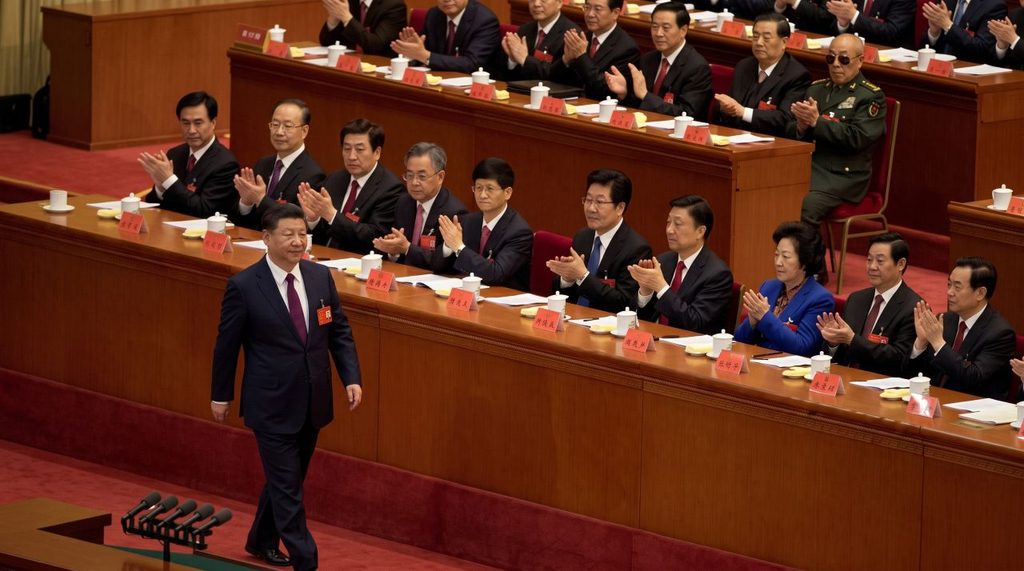
Before getting to the market intervention, there is an important political backdrop. China’s Communist Party is preparing for a fifth plenum focused on internal discipline, with possible consequences for senior appointments and the signals surrounding Xi Jinping’s authority.
Ahead of the gathering, the party journal Qiushi published an earlier Xi speech on disciplinary enforcement. The message is hardly subtle: the anti-corruption campaign remains central to how the leadership governs the party.
The meeting could also address nearly two dozen vacancies on the Central Committee, potentially including three Politburo positions. That makes an apparently bureaucratic gathering worth paying attention to. Personnel decisions can reveal priorities that official slogans obscure.
Still, there is a difference between a vacancy and a verified political upheaval. Suggestions of further investigations into senior officials or changes to leadership arrangements remain unconfirmed. Treating speculation as an established succession drama would get well ahead of the evidence.
The useful question is narrower: what will disciplinary messaging and appointments reveal about the leadership’s priorities before the next consequential Party Congress? For now, those are signals to examine, not conclusions to announce.
Beijing Wants Buyers. The Market Wants a Reason to Buy.
Financial regulators met on Thursday to discuss support for Chinese equities. Alongside efforts to encourage companies and state funds to purchase shares, authorities pressed some institutional investors to limit selling.
Major insurers reportedly received informal instructions to disclose their equity holdings, avoid crystallizing losses on underwater investments, and align investment decisions with broader economic objectives.
That last phrase does quite a lot of work. An insurer deciding whether an investment makes financial sense is one thing. An insurer being asked to support the national economic mood is another.
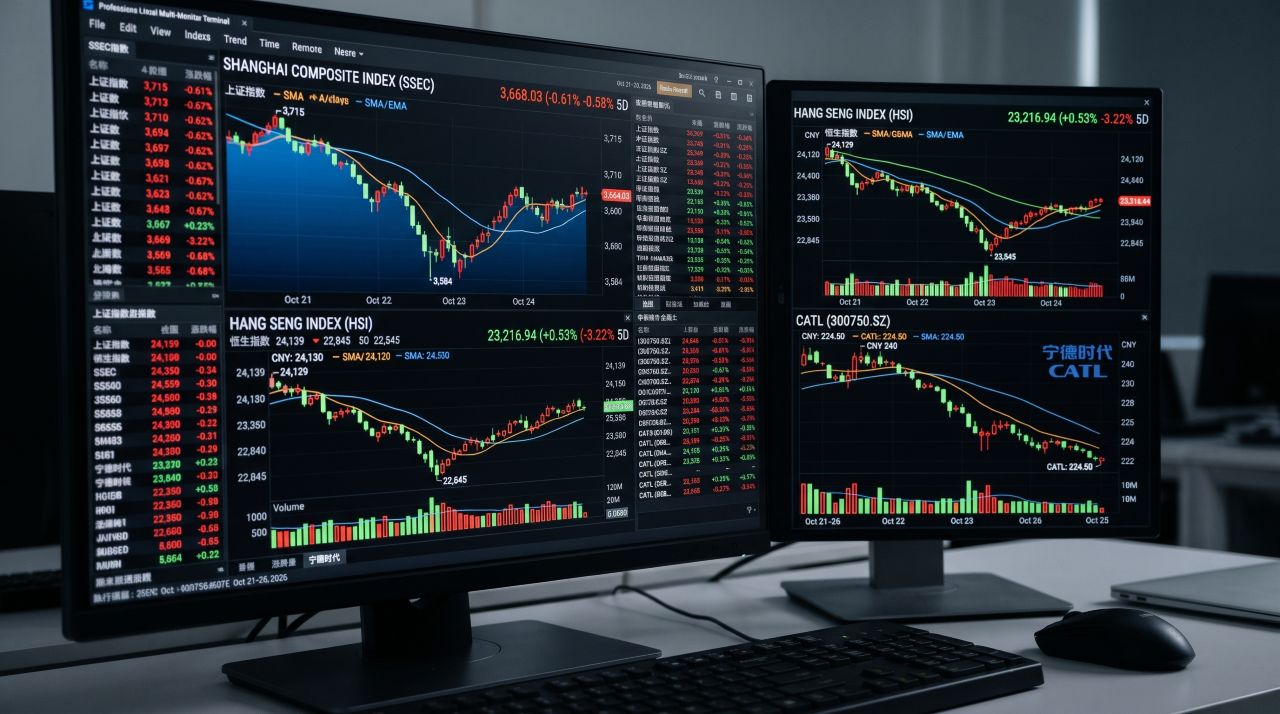
Regulators also directed the “national team”—the collection of state-backed investors used to support markets—to accelerate purchases. Evidence of intervention appeared in exchange-traded funds associated with state buying. One fund tracking the CSI 300 recorded daily inflows of 18.8 billion yuan.
Chinese shares initially rebounded on Friday before giving back some gains. That is not nothing. But neither is it evidence that the underlying problem has disappeared.
The benchmark index had fallen roughly 10% over the year and reached its lowest closing level since August 2025. The technology-heavy ChiNext had lost 9% in a week and more than 13% over the year. More than 100 technology stocks, spanning optical communications, printed circuit boards, and memory chips, had fallen at least 50% from their yearly peaks.
These are not gentle corrections. They are substantial reversals in sectors that had previously helped power market gains.
Nor is China operating in isolation. South Korea’s Kospi plunged more than 7% on Thursday, while Japan’s Nikkei 225 fell almost 5%. A broader technology sell-off is clearly part of the story.
But China has its own confidence problem layered underneath: soft consumption, sluggish private investment, and a prolonged property downturn. Those weaknesses matter because share prices ultimately need something more dependable than instructions from regulators.
State buying can provide a buyer. It cannot, by itself, provide stronger earnings or healthier household demand.
The contrast elsewhere in financial markets is revealing. Government bonds have rallied as investors seek safety, while the yuan has gained more than 4% against the dollar over the year, supported by resilient exports. Export strength and domestic weakness can coexist. Indeed, that imbalance is central to the broader debate over China’s weak consumption and investment.
Beijing can slow a sell-off. A sustained recovery requires a more convincing reason to own the businesses being rescued.
Meanwhile, Chinese Batteries Are Solving a Real Problem
There is a danger in allowing weak Chinese financial markets to stand in for the entire Chinese economy. The battery industry demonstrates why that would be a mistake.
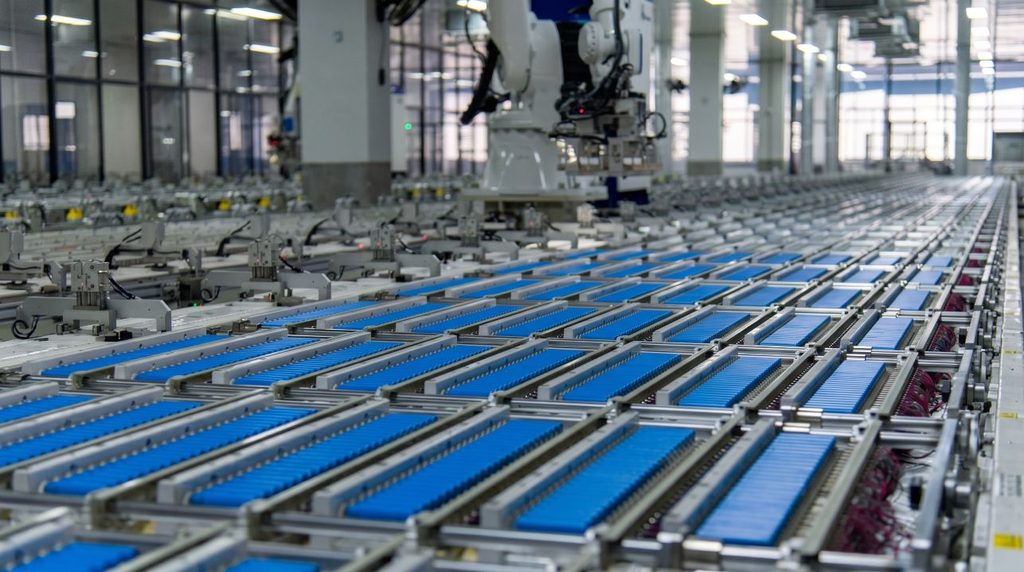
At CATL’s headquarters in Ningde, automated production lines manufacture cells for large-scale electricity storage. Already the world’s largest electric-vehicle battery producer, CATL supplied 22% of global storage-cell sales in the first half of the year covered by the latest figures.
The appeal is not mysterious. Solar panels generate electricity when the sun shines. Electricity demand does not politely follow the same schedule. Cheaper storage makes that mismatch easier to manage.
According to Ember, battery packs for grid storage became 45% cheaper in the preceding year. The International Energy Agency says installed storage capacity has grown to 11 times its level five years earlier. Its analysis of batteries and secure energy transitions provides useful context for why storage has become so important to electricity systems.
Lower costs allow more solar and wind generation to be saved for periods of high demand, reducing reliance on fossil-fuel plants. In practical terms, renewable electricity becomes more useful—not merely more abundant at the wrong hour.
China’s industrial position did not appear from nowhere. Authorities encouraged storage deployment alongside renewable projects. National battery-storage capacity rose from 2.4 gigawatts in 2020 to more than 140 gigawatts in the latest annual figures cited.
According to Benchmark Mineral Intelligence, Chinese manufacturers now account for 95% of large-scale storage batteries. That is an extraordinary concentration of manufacturing capability.
Its consequences extend well beyond China. Near Abu Dhabi, a $6 billion solar-and-battery development using equipment from BYD and Sungrow is designed to deliver one gigawatt continuously. India has also secured solar-and-storage capacity offering round-the-clock electricity below recent coal-contract prices.
The important distinction is between what these projects are designed or contracted to deliver and what has already been demonstrated in operation. Nevertheless, the direction is clear: cheaper batteries are changing the economics of renewable power.
Energy Independence Has an Awkward Dependency Attached
Here comes the catch. A country can reduce its dependence on fossil fuels while becoming more reliant on Chinese equipment.
Washington has tightened restrictions on Chinese-linked storage equipment, citing potential national-security risks. European authorities are restricting some public funding for projects using components from countries considered high risk.
Chinese manufacturers reject suggestions that their equipment is unsafe. They are also expanding overseas production to address concerns about import dependence.
Neither side of this argument can simply wish away the trade-off. Concentrated supply chains create strategic exposure. But excluding dominant, low-cost suppliers can make the energy transition more expensive by pushing buyers toward costlier alternatives.
There is also a technical limit beneath the geopolitical argument. Most lithium-ion storage systems supply power for several hours. Covering a prolonged renewable shortfall economically is a different challenge.
CATL’s sodium batteries and emerging longer-duration systems could improve affordability and reliability. “Could” matters here. Promising technology is not the same thing as an already solved electricity system.
The sensible conclusion is therefore neither that Chinese batteries are an uncomplicated gift nor that dependence makes their benefits irrelevant. They offer a powerful way to reduce fossil-fuel use, alongside a manufacturing concentration that governments cannot ignore.
Europe Is Preparing to Make Market Access a Weapon
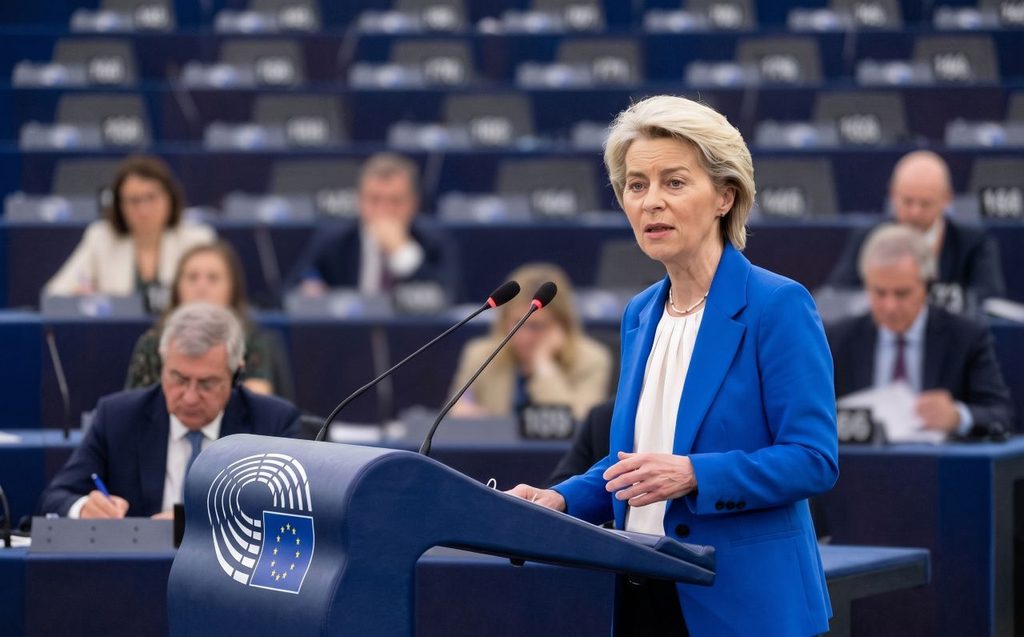
That same tension—cheap products versus strategic dependence—is driving Europe’s tougher approach to Chinese trade. European Commission President Ursula von der Leyen has confirmed work on a new mechanism, based on a joint French-German proposal, that could sharply restrict or potentially close access to the EU single market in response to economic coercion.
The intended logic is blunt. If a trading partner threatens European interests through restrictions on essential supplies, Europe should be able to respond quickly with restrictions of its own.
Chinese limits on rare-earth exports, imposed in retaliation for European trade investigations, are among the measures officials envisage confronting. A proposal is expected in December, followed by negotiations the next year.
But this is still a proposal taking shape, not an operational switch Brussels can already throw. Its legal design remains unsettled, including compatibility with World Trade Organization rules. Reported plans envisage support from 13 member states being required for activation.
Readers should also distinguish this initiative from the EU’s existing Anti-Coercion Instrument. Europe already has an economic-coercion framework; the new proposal concerns an additional mechanism whose precise scope remains under development.
The immediate political backdrop is an agreement limiting Chinese hybrid-vehicle shipments through import quotas and tariffs on volumes above those quotas. Some European officials see that arrangement as a possible model for other industries.
Chemicals and industrial machinery are among the priorities reportedly identified by von der Leyen. Emmanuel Macron has highlighted plastics and various alloys, while complaints have also come from wind and furniture businesses.
Beijing, unsurprisingly, dislikes the idea that one agreement should become a template for extracting more concessions. China’s Ministry of Commerce warned that Brussels should not expect threats to deliver results. Former ministry adviser Tu Xinquan described the automotive arrangement as exceptional rather than a precedent.
So the apparent breakthrough may not signal a calmer relationship. It may instead establish the opening position for the next confrontation.
Germany’s Shift Makes This More Serious
Germany’s involvement is particularly consequential. Berlin has traditionally been reluctant to confront Beijing because of the depth of German commercial exposure to China. Now it is helping drive the tougher approach.
Chancellor Friedrich Merz has indicated that Europe must be prepared to deploy trade instruments rather than merely threaten to use them. That strengthens Brussels’ negotiating position. It also increases the risks for European businesses vulnerable to Chinese retaliation.
Officials are considering a solidarity mechanism to compensate affected companies, alongside measures encouraging supplier diversification. That is an acknowledgment of the obvious: a more assertive trade policy can impose costs on the industries it is meant to protect.
Britain faces a similar balancing act. London wants closer coordination with Brussels on China’s automotive expansion and wants British manufacturers included in procurement preferences under the proposed “Made in Europe” framework.
Germany and some European officials have linked inclusion to alignment with tariffs on Chinese electric vehicles. British officials, meanwhile, worry about retaliation against an export-oriented automobile industry.
For Beijing, the stakes are equally uncomfortable. Europe is an important export destination precisely when overseas sales are helping offset weak domestic demand. The broader tension between China’s trade engine and rising geopolitical friction is becoming harder to manage.
The Problem Is Bigger Than Falling Share Prices
China’s predicament is not that it cannot produce competitive goods. Its battery industry makes that argument look absurd.
The problem is that industrial competitiveness does not automatically generate healthy domestic demand, and foreign customers do not assess cheap imports solely on price. They also consider industrial survival, supply security, and political leverage.
Beijing can mobilize state money to support equities. Chinese manufacturers can make renewable power more practical. Europe can build stronger defenses against economic coercion.
None of those moves eliminates the underlying tension. China needs confidence at home and customers abroad. Its trading partners want affordable technology without becoming strategically dependent on its suppliers.
That is a much harder problem than persuading a state fund to buy another basket of shares.
Frequently Asked Questions
Why is China intervening in its stock market?
Authorities want to prevent falling share prices from further undermining confidence amid weak consumption, sluggish private investment, and a prolonged property downturn. State-backed purchases can support prices, but lasting recovery also requires stronger earnings and demand.
Why do Chinese batteries matter for renewable energy?
Lower-cost batteries allow solar and wind electricity to be stored for later use. Chinese manufacturers dominate large-scale storage-battery supply, helping improve project economics while creating concerns about concentrated dependence.
Has Europe finalized its proposed new trade mechanism?
No. EU leaders have backed developing the mechanism, but its scope, activation requirements, and compatibility with international trade rules remain under discussion.