
China can build factories, launch electric cars, and put up data centers at a speed that makes much of the world look painfully slow. But speed is not the same thing as success. A factory still needs customers. A car still needs to be safe. And a data centre without enough powerful processors is an expensive building with an impressive electricity bill.
That distinction runs through four major developments: Europe’s agreement to restrict Chinese hybrid imports, a weaker International Monetary Fund growth forecast, Beijing’s proposed crackdown on rushed vehicle development, and a vast expansion of computing infrastructure in China’s energy-rich interior.
Together, they expose the problem with treating industrial capacity as an answer to every economic difficulty. China’s production machine remains formidable. But demand, market access, quality, and advanced chips are becoming harder constraints. Building more does not automatically make those constraints disappear.
Key Takeaways
- Europe’s hybrid-import agreement restrains Chinese-made vehicles but leaves room for Chinese brands to expand through overseas production.
- The IMF cut China’s 2026 growth forecast to 4.5% as weak domestic demand limits the benefits of strong exports.
- Proposed vehicle rules would increase testing and restrict designs amid concerns about rushed development.
- China’s data centre boom benefits from cheap power and fast construction, but advanced-chip shortages remain a critical constraint.
Table of Contents
- Europe’s Hybrid Deal Buys Time, Not Safety
- Strong Exports Cannot Fix Weak Household Demand
- Beijing Wants Carmakers to Stop Confusing Novelty With Engineering
- China’s AI Buildout Has Everything Except Enough Chips
- The Real Test Is What All That Capacity Delivers
Europe’s Hybrid Deal Buys Time, Not Safety
The European Union’s agreement with China over hybrid vehicles has reduced the immediate danger of a trade war. That matters. Neither side benefits from turning an already difficult industrial relationship into a rolling series of retaliatory restrictions.
But the numbers reveal how substantial the proposed restraint would be.
Under the four-year arrangement, imports of Chinese-made hybrids would be capped at 350,000 vehicles in 2027, with annual increases of 6% afterward. Implementation could begin in December. The initial ceiling is less than half the roughly 800,000 vehicles expected this year.
Beijing, unsurprisingly, prefers a more flattering comparison: the 302,000 vehicles imported in 2025. Against that baseline, the agreement allows growth. Against the anticipated current-year total, it looks like a serious squeeze. Both comparisons describe the same agreement. They tell very different stories.
The compromise also reaches beyond cars. It includes continued expedited processing of Chinese export licences for rare earths and permanent magnets, alongside European efforts to facilitate certain dual-use export licences to China. Strategically important trade is being kept moving while the two sides try to contain their automotive dispute.
China insists the safeguards must avoid discrimination and retains its rights to pursue disputes and compensation through the World Trade Organization’s dispute-settlement system. This is managed tension, not newfound trust.
The Factory Loophole Is Really the Point
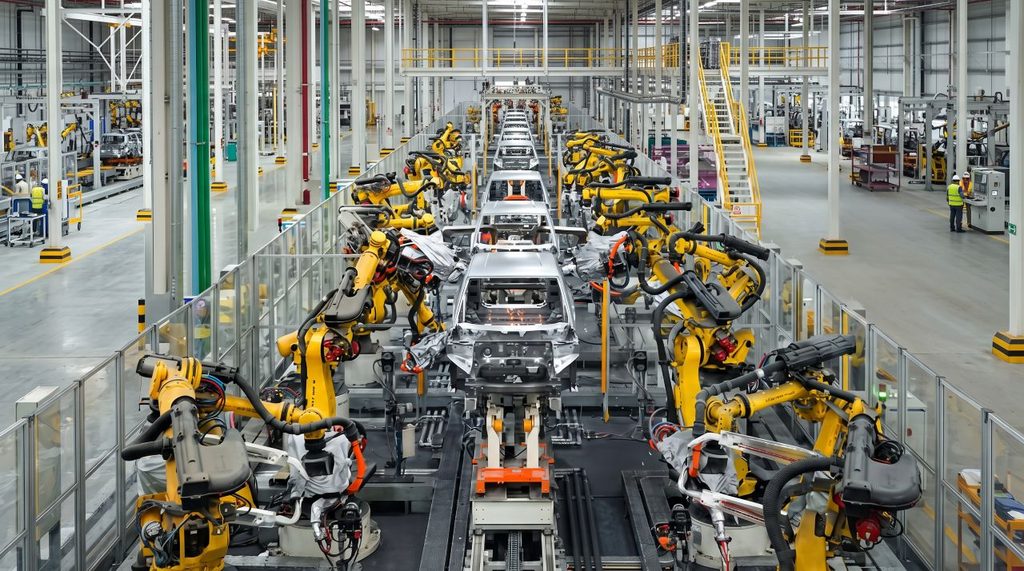
Here is the awkward part for European carmakers: restrictions on Chinese-made vehicles are not necessarily restrictions on Chinese brands.
Vehicles genuinely manufactured outside China would fall under their host country’s quota. Production inside the EU would avoid the Chinese import allocation altogether. That leaves manufacturers with a fairly obvious response: move more production closer to their customers.
BYD says its Hungarian factory remains on track to begin manufacturing this year. Changan plans European production by the middle of next year, targeting 180,000 vehicles annually by 2028 and nearly twice that volume by 2030.
So the agreement could reduce imports while accelerating the establishment of Chinese manufacturing inside Europe. Those are not contradictory outcomes. They are what an origin-based restriction makes possible.
There is another potential response: sell fewer cars, but make each one more expensive. A former EU ambassador to the WTO drew a comparison with Japanese manufacturers’ response to export restraints decades ago, when premium brands including Lexus and Infiniti emerged.
That is a possibility, not a prediction. But it illustrates why a quota does not freeze competition. It changes the incentives.
Hyundai’s European chief offered the bluntest assessment: regulation provides temporary protection, while manufacturers’ strongest defence remains the products they offer customers. Europe can negotiate breathing room. It cannot negotiate away the need to make compelling cars.
Europe Finally Used Its Leverage
EU-China analyst Noah Barkin argues that the significant development is not simply Beijing’s willingness to restrict exports. It is Europe’s improved negotiating position.
Historically, three weaknesses have undermined the EU:
- Divisions between member states that allowed Beijing to work around Brussels.
- Fear of retaliation, particularly over rare earths.
- A reluctance to use access to the European market as leverage.
Barkin sees progress on all three, driven partly by Germany’s mounting industrial difficulties and Chancellor Friedrich Merz’s decision to take a more direct role in China policy. A Franco-German paper also signalled support for the European Commission ahead of the negotiations.
Its precise influence on Beijing’s calculations cannot be established. But the broader lesson is straightforward: a large market has bargaining power only if its members are prepared to use it together.
Strong Exports Cannot Fix Weak Household Demand
The IMF has cut its forecast for Chinese growth in 2026 to 4.5%, down from its July projection of 4.6%. That places the forecast at the bottom of Beijing’s annual target range. Its 2027 projection has also been lowered to 4%.
A tenth of a percentage point is not an economic earthquake. The explanation behind it is more important than the size of the revision.
Strong exports are failing to fully offset weak consumption, slowing investment, and persistent property-sector strains. Higher oil prices and prolonged uncertainty add further pressure, although government support is expected to prevent a sharper slowdown.
The IMF’s World Economic Outlook provides the wider framework for assessing these growth risks. For China, the central tension is between external strength and domestic weakness.
Exports remain an essential lifeline. But increasingly capital-intensive export production delivers more limited benefits to employment and household incomes. A successful factory does not necessarily produce a proportionately larger wage bill. Strong overseas sales therefore cannot be assumed to turn into strong household spending.
This is also why the European automotive agreement matters beyond the car industry. When domestic demand is weak, restrictions in an important foreign market become more consequential. China’s export engine is being asked to carry a heavy load just as its trading partners become less comfortable with the volume arriving.
Beijing is responding. According to Morgan Stanley, support has expanded through policy-bank interest-rate cuts, mortgage subsidies, and additional local-government borrowing capacity. These measures could help generate a modest fourth-quarter rebound.
But “modest rebound” is doing important work here. Local debt burdens, weak consumer confidence, and the prolonged housing downturn are expected to keep domestic demand under pressure well into 2027.
The distinction between stabilisation and recovery matters. As explored in China’s fragile recovery and deepening technology squeeze, improvements in selected indicators do not necessarily resolve the weaknesses underneath them.
Beijing Wants Carmakers to Stop Confusing Novelty With Engineering
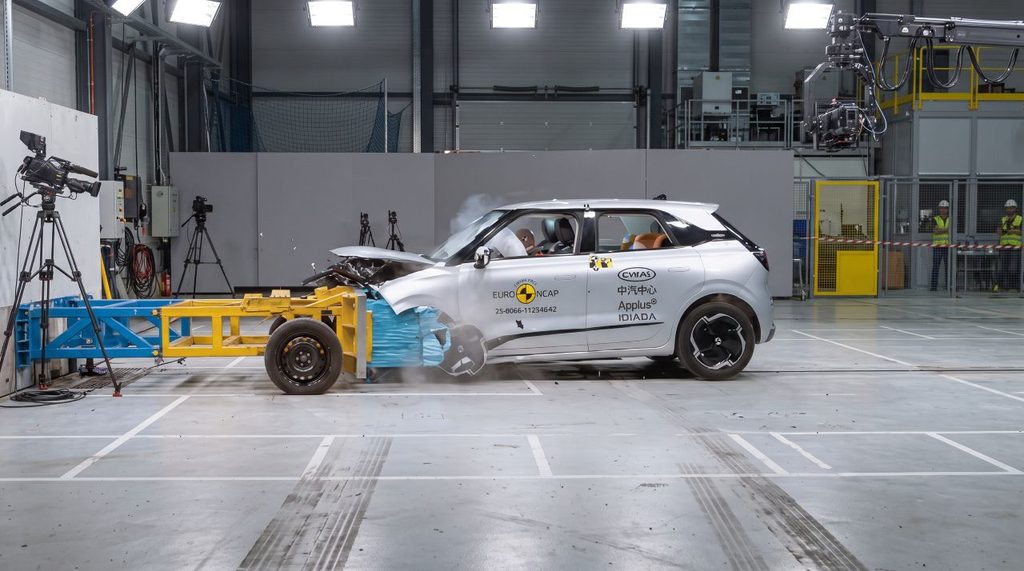
China’s automotive industry has become extraordinarily good at launching new products. Regulators are now asking whether it has become too good at launching them before adequate testing is complete.
A draft released by the Ministry of Industry and Information Technology and three other agencies proposes tighter oversight of vehicle design and more extensive validation before models reach consumers.
According to Chinese financial publication Caixin, regulators identified 41 designs requiring increased scrutiny. These include yoke steering wheels, virtual buttons, powered doors, and voice-controlled systems. The proposals would ban fully hidden door handles, folding screens, and flexible displays.
The underlying concern is not that technology is inherently bad. It is that a feature can look futuristic while making a basic task less reliable or less usable. In a car, that distinction is rather more important than it is in a showroom demonstration.
More Testing, Less Rushing
Under the proposals, new energy vehicles would need at least 30,000 kilometres of reliability testing—double the existing requirement and in line with combustion-engine cars.
Environmental-adaptability testing would last at least one year and cover two winters and one summer. Climate chambers could reproduce some conditions, but complex combinations of environmental stresses would still require road testing.
In other words, manufacturers would have to demonstrate that their vehicles work outside the carefully controlled circumstances in which new features tend to look their best.
The proposals arrive amid controversy over reported tests in which brake-pedal brackets repeatedly snapped on three vehicles from the Maextro flagship range, manufactured by state-backed JAC within Huawei’s Harmony Intelligent Mobility Alliance.
Commentary published through the state-run People’s Daily app connected the debate to “rush-built cars”: vehicles developed on compressed schedules, with testing reduced or omitted. It also stressed that an authoritative investigation into the incident remains necessary. Reported failures warrant scrutiny; they are not a substitute for a completed investigation.
The competitive pressure is substantial. Manufacturers launched 282 new or updated electric or plug-in hybrid models during the first half of the year—nearly 11 every week. Meanwhile, the Economic Observer reported passenger-car retail sales down 22% through late September.
That combination is uncomfortable: a relentless flow of new products into a weakening market. The incentive to launch faster becomes stronger precisely when manufacturers may have less room to absorb mistakes.
Quality concerns also travel across borders. Caixin reported that Malaysia suspended new registrations of Chery’s Omoda 5 following a rear-axle detachment, the second reported incident there in two years.
For manufacturers pursuing international growth, reliability is not a separate issue from export strategy. It is part of export strategy.
The proposed rules fit Beijing’s broader effort to curb destructive competition, also visible in its campaign against subsidy-driven food-delivery price wars. Tougher validation could raise costs and slow launches. But competition based on engineering is more sustainable than competition based on who can skip ahead fastest.
China’s AI Buildout Has Everything Except Enough Chips

In China’s energy-rich interior, a different industrial race is accelerating. Beijing wants cheap electricity, abundant land, and rapid construction to become strategic advantages in artificial intelligence.
Ulanqab, an agricultural city in Inner Mongolia, illustrates the scale. An industry executive cited by the Financial Times put the number of data centers built or planned at 89, with approximately 15 gigawatts of committed capacity.
Nationally, research firm SemiAnalysis estimates China has 24 gigawatts of operational data-center capacity, more than the rest of Asia combined. The United States has 56 gigawatts. Another 50 gigawatts is under construction or announced in China.
That last distinction matters enormously. Announced capacity is not completed capacity. And a completed building is not necessarily a fully equipped computing facility.
Inner Mongolia’s Advantages Are Real
The region offers an unusually attractive combination of power, climate, and construction economics.
Installed wind capacity reached 117 gigawatts by June, alongside roughly 130 gigawatts of fossil-fuel generation, predominantly coal.
Facilities pay approximately 0.358 yuan per kilowatt-hour for electricity, compared with 0.8 yuan in Beijing.
Average annual temperatures of 4.3 degrees Celsius reduce cooling requirements.
High-speed rail puts the capital about two hours away.
Data centers can absorb electricity that would otherwise struggle to find enough local demand. Some projects can connect directly to dedicated generation, reducing transmission costs and avoiding grid constraints.
Goldman Sachs estimates regional construction costs are about 20% below those in larger Chinese cities. Projects target completion in 12 to 18 months, compared with 18 to 24 months in the United States. Prefabricated computing modules can accelerate assembly further.
Alibaba, Huawei, ByteDance, and specialist operators are driving demand, while DeepSeek is reportedly developing facilities in the region. Tax benefits and discounted utility bills encourage the use of domestic processors.
This is a serious infrastructure advantage. But infrastructure is only one part of the machine.
You Cannot Build Your Way Around Every Bottleneck
Restrictions imposed by both Washington and Beijing on Chinese purchases of Nvidia chips, combined with limited domestic fabrication capacity, complicate the task of equipping these facilities. Water scarcity presents another potential constraint.
AI is treated as a national-security priority: a means to raise productivity, strengthen technological independence, and expand international influence. That helps explain the intensity of the buildout.
Yet cheap electricity cannot replace advanced processors. Nor can rapid construction guarantee the computing performance needed for technological leadership.
The challenge is examined further in Beijing’s electricity-driven AI strategy. Power is a genuine advantage, but it does not eliminate the chip bottleneck.
The Real Test Is What All That Capacity Delivers
These developments are connected by a simple question: what happens after China builds?
Its cars need durable market access and customer confidence. Its exports need to support an economy whose households remain cautious. Its data centers need processors powerful enough to justify the investment.
Europe’s quota buys time. Beijing’s safety rules could improve the quality of competition. Economic support may soften the slowdown. Cheap power could strengthen China’s AI position.
None is meaningless. None is a complete solution. China’s next challenge is not simply producing more, faster. It is turning that production into safer products, stronger incomes, and usable computing power.
Frequently Asked Questions
Will Europe’s hybrid quota stop Chinese car brands from expanding?
Not necessarily. The restriction concerns Chinese-made vehicles. Genuine production elsewhere would fall under the host country’s quota, while manufacturing inside the EU would avoid the Chinese import allocation.
Why is China’s growth outlook weakening despite strong exports?
Weak consumption, slowing investment, property-sector strains, and local debt burdens remain significant. Increasingly capital-intensive exports also provide more limited benefits to employment and household incomes.
Are China’s tougher vehicle-testing requirements already in force?
The measures described are draft proposals. They would increase reliability testing and strengthen scrutiny of vehicle designs before models reach consumers.
What is the biggest obstacle to China’s data-center expansion?
Securing enough advanced processors remains critical. Electricity and construction advantages help, but chip-purchase restrictions and limited domestic fabrication capacity complicate the task of equipping new facilities.