A footballer makes a throwaway remark about an internet meme. Sponsors disappear. Broadcasts are suspended. His club apologises, his league apologises, and suddenly the question isn’t whether anyone intended to cause offence. It is whether the apologies are sufficiently apologetic.
That is the predicament facing Kylian Mbappé, Real Madrid and La Liga in China. And while the spectacle might look like another celebrity controversy spiralling out of control, it exposes something considerably more consequential: the uncertainty attached to doing business in a market where political sensitivities can abruptly override commercial relationships.
Meanwhile, European officials are preparing economic talks with Beijing over currency competitiveness, industrial competition and trade imbalances. And China’s reported population figures point to an accelerating demographic decline that will make its economic challenges harder to manage.
These are different stories. But they share an uncomfortable theme. China wants the benefits of international commerce while maintaining tight control over its terms. Its trading partners want access to China without accepting unlimited political and economic exposure. And beneath that argument, China’s domestic foundations are shifting.
Key Takeaways
- Mbappé’s remarks triggered sponsorship cancellations and broadcast restrictions, spreading the consequences beyond one player.
- EU-China talks face structural disputes over currency competitiveness, subsidies, market access and automotive investment.
- Reported population figures show accelerating decline, adding pressure on employment, consumption, pensions and elderly care.
Table of Contents
- How an Internet Joke Became a Commercial Crisis
- The Apology Is Only the Beginning
- China’s Market Access Comes With Political Exposure
- Europe Wants Dialogue. The Trade Problems Remain.
- The Car Industry Exposes Europe’s Dilemma
- The Bigger Problem Is Inside China
- China Needs Adaptation, Not Just Reassurance
How an Internet Joke Became a Commercial Crisis
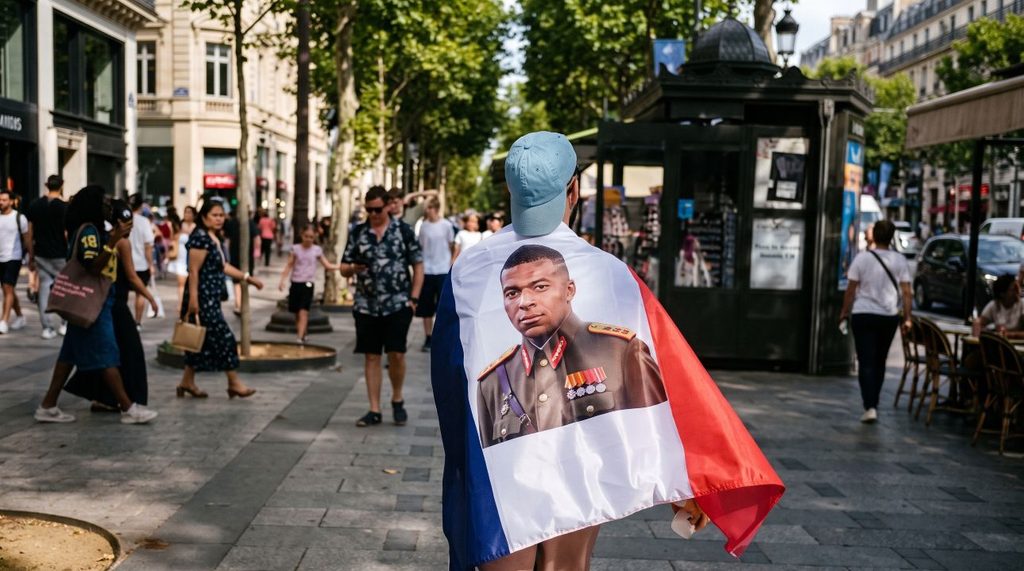
During a French television programme, Mbappé was asked about online images portraying him as a dictator. He referred to a video featuring someone he described as a “Chinese dictator", with his own face superimposed. He did not name Mao Zedong, although an accompanying image depicted the former Chinese leader.
The distinction matters. This was not a detailed political intervention or a campaign targeting China. It was a comment about an internet caricature. Nevertheless, once it circulated on Chinese social media, the consequences expanded far beyond an argument among football supporters.
At least three Chinese companies—beverage producer Dongfang, dairy group Mengniu and cheese maker Milkground—announced that they were terminating their partnerships with Mbappé. His accounts on Xiaohongshu, also known as RedNote, and Weibo were muted. RedNote also said it was reviewing and removing related material.
International brands including Dior, On and Hublot removed Mbappé-related content from Weibo. That does not necessarily mean those companies ended their endorsement agreements. Removing promotional posts and cancelling a contract are different things. But it demonstrates how quickly the commercial pressure spread.
Then came the broadcasting response. China Media Group, CCTV’s parent organisation, suspended La Liga broadcasts involving Mbappé and advertisements featuring his endorsements. Chinese football video games also announced measures affecting his characters, cards and promotional content.
At that point, this stopped being merely Mbappé’s problem. A suspended match broadcast affects the visibility of other players, competing clubs and sponsors that had nothing to do with the original remark.
That is the commercial mechanism here: the consequences travel.
The Apology Is Only the Beginning
Mbappé apologised, describing his comments as “ill-judged.” He acknowledged that they had hurt people in China and Chinese communities internationally, expressed respect for Chinese people and their history, and said causing offence had never been his intention.
La Liga apologised too. Real Madrid subsequently issued a formal statement expressing regret and supporting its player’s apology, while emphasising its respect for China and its millions of Chinese supporters.
But apparently, saying sorry was not the entire assignment.
A China Media Group spokesperson rejected a reported earlier Madrid response that combined assurances about Mbappé’s intentions with a defence of players’ rights to express personal views. The broadcaster argued that the remarks had crossed a red line, exceeded the bounds of free speech and implicated the club as well.
Real Madrid then sent an apology letter through La Liga to China Media Group on October 28. Whether that would restore coverage remained uncertain.
There was, however, a noticeably softer signal from Beijing’s Foreign Ministry. Asked about Mbappé’s apology, its spokesperson said China took it seriously. That left room for de-escalation, although it supplied neither a timetable nor a clear route back to normal commercial relations.
It would be a mistake to treat these responses as proof that every part of the Chinese state was pursuing an identical approach. The broadcaster’s demands and the ministry’s language differed. But for businesses caught in the middle, that distinction hardly makes the situation predictable.
What, exactly, constitutes an acceptable apology? Who decides? And when does the punishment end?
Those are not minor public-relations questions when broadcast access and sponsorship revenue are involved.
China’s Market Access Comes With Political Exposure
The obvious comparison is the NBA’s confrontation with China after Daryl Morey expressed support for Hong Kong protesters in 2019. That dispute also disrupted sponsorship and broadcasting relationships, illustrating how a political controversy involving one person can spill across an entire sporting organisation.
For On, Mbappé’s footwear partner, the present situation is particularly awkward. The Swiss company has identified China as an important growth market. It welcomed his apology and expressed respect for the country. Its growth ambitions now sit alongside a political dispute it did not create.
Veteran China analyst Bill Bishop offered a deliberately bleak assessment: athletes hoping to protect Chinese revenue for themselves, their teammates, leagues and sponsors should stick to harmless declarations of affection for Chinese food, Chinese people or visiting China.
The point is not really about media training. It is about the narrowing range of statements considered commercially safe.
And there is a potential cost for Beijing too. A response intended to defend national dignity can look disproportionate abroad, particularly when it reaches beyond the individual involved. Bishop suggested that the controversy could worsen European public opinion toward China.
That would be an especially unhelpful outcome when Europe and China already have plenty to argue about.
Europe Wants Dialogue. The Trade Problems Remain.
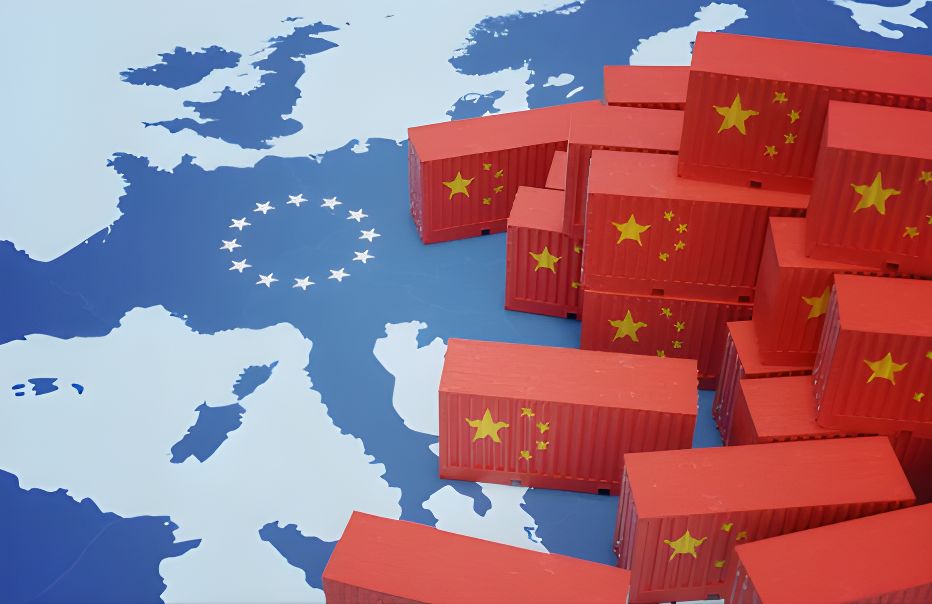
European officials are preparing renewed high-level economic discussions with China as concerns grow over exchange rates, industrial competition and trade imbalances.
According to the South China Morning Post, a delegation led by European Commission Director-General Martin Verwey was expected to travel to Beijing during the week of November 23 for macroeconomic dialogue. A more senior delegation involving the European Central Bank, Eurogroup and European Commission could follow around the turn of the year, although a date had not been finalised.
The proposed revived format would hold its first formal meeting in more than a decade, involving People’s Bank of China Governor Pan Gongsheng and Finance Minister Lan Fo’an.
One major European concern is the Chinese currency’s valuation. The underlying logic is straightforward: a stronger renminbi would make Chinese exports more expensive abroad while making European goods relatively cheaper for Chinese buyers.
But an exchange-rate adjustment is not a magic repair button.
It would not, by itself, resolve differences over weak Chinese domestic demand, industrial policy, state subsidies or access to the Chinese market. Those are structural disagreements, not simply problems with the price displayed on a currency screen.
The European Commission’s overview of EU-China trade relations provides useful context for that broader relationship. The central challenge is preserving valuable trade while addressing the conditions under which businesses compete.
That tension also runs through the wider debate over EU-China trade friction and Beijing’s mounting economic pressures. Dialogue can keep a dispute from escalating. It does not automatically remove the reasons for the dispute.
The Car Industry Exposes Europe’s Dilemma
Beijing’s public position is that China is part of the solution to Europe’s problems, not their source. During meetings with the chair of the European Parliament’s International Trade Committee, Commerce Minister Wang Wentao proposed expanding investment, increasing imports from Europe and cooperating in emerging industries. In Beijing’s formulation, trade should be rebalanced through growth rather than barriers.
That sounds attractive. The difficulty is deciding whose industries grow, under what conditions, and at whose expense.
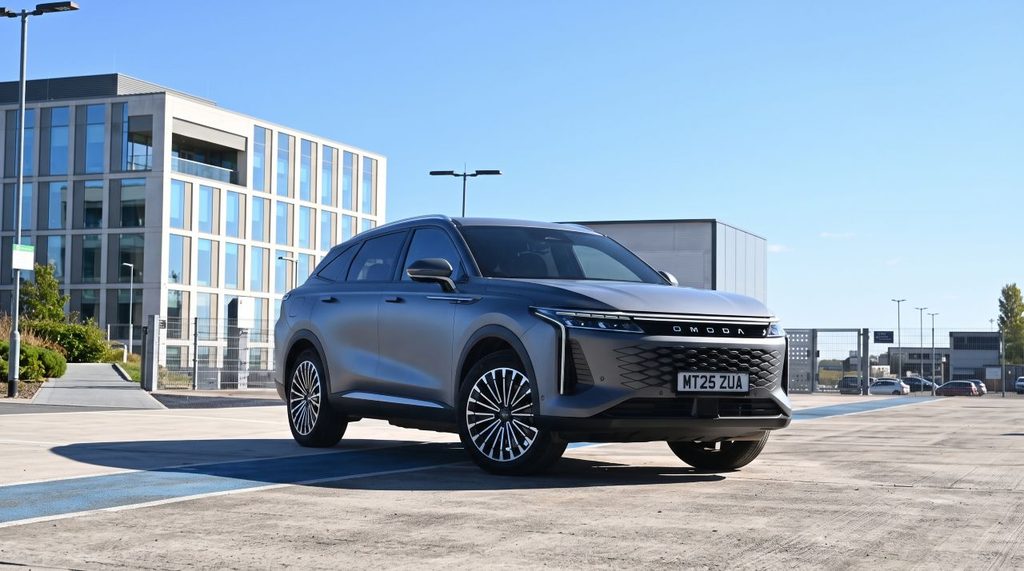
Consider cars. Chinese financial outlet Caixin reported that important details of proposed limits on Chinese hybrid vehicle exports remained unresolved. These included final quotas, their allocation among manufacturers and tariffs on shipments exceeding the agreed limits.
Brussels was also considering restrictions affecting investment in European factories. That complicates an apparent alternative for Chinese manufacturers: producing inside Europe rather than shipping vehicles into it.
Yet European communities seeking employment may actively want that investment. The New York Times reported that SAIC Motor had selected a port near Barcelona for a major factory expected to create more than 1,000 jobs.
There is the contradiction in plain sight. At the European level, Chinese industrial expansion can look like a competitive threat. At the local level, a Chinese factory can look like jobs.
Neither perspective can simply be wished away.
Beijing, meanwhile, is challenging Europe’s diagnosis. A People’s Daily commentary argued that trade barriers cannot fix weak European competitiveness, blaming internal divisions and inadequate reform implementation.
Diplomatic contact continues beyond trade, including Chinese military consultations in France and Germany. German Chancellor Friedrich Merz has also urged Japan to support an alliance defending rules-based trade against tariffs and economic coercion.
The relationship is not collapsing into a complete absence of cooperation. It is becoming an increasingly difficult negotiation over where cooperation ends and vulnerability begins.
The Bigger Problem Is Inside China
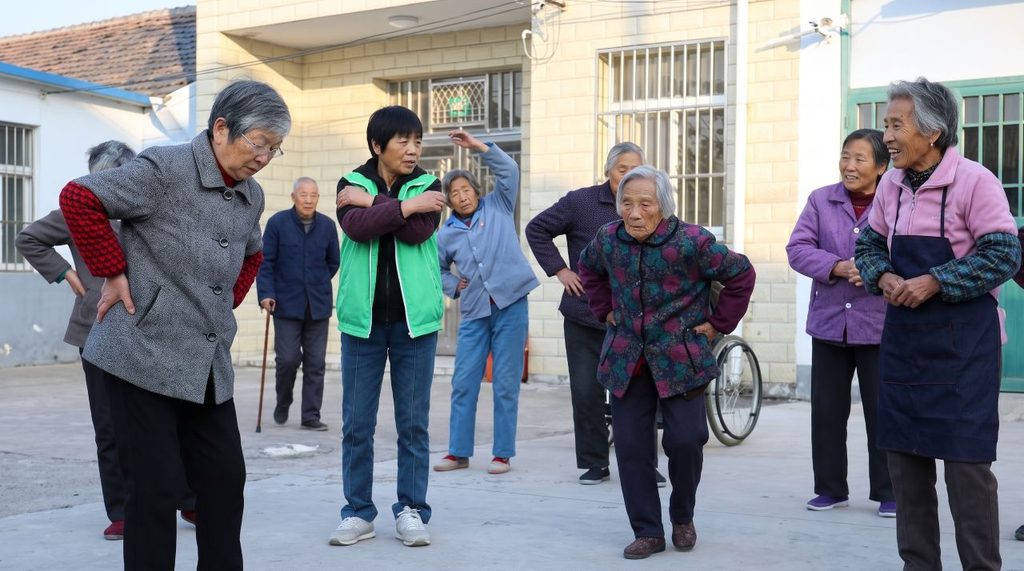
Then there is the demographic story. Unlike a football controversy or a disputed export quota, this cannot be settled with a carefully worded statement.According to figures reported by Caixin from the China Statistical Yearbook 2026, China’s population fell by 3.39 million in 2025. That would mark its fourth consecutive annual decline and its largest contraction since the current downturn began in 2022.
The reported year-end population was 1.40489 billion, down 7.71 million from its 2021 peak.
The sequence of official annual declines illustrates the direction:
- 2022: a decrease of 850,000 people.
- 2023: a decrease of 2.08 million.
- 2024: a decrease of 1.39 million.
- 2025: a reported decrease of 3.39 million.
These are official figures, not an independent estimate of the true population loss. But even taken on their own terms, they describe a substantial economic challenge.
A shrinking population affects the potential workforce, the outlook for consumer demand and the financing of pensions and elderly care. It is not simply a smaller number in a statistical publication. It changes what the economy must support and the resources available to support it.
Research led by Zhang Xuying of the China Population and Development Research Center projects average annual population losses of 2.3 million between 2026 and 2030, increasing to 3.7 million during the following decade and 6.2 million between 2041 and 2050. After 2050, annual declines could average 10 million.
Those are projections, not guaranteed outcomes. Occasional annual increases remain possible. Nevertheless, the trajectory points toward sustained contraction rather than a brief demographic interruption. The UN’s World Population Prospects offers broader context for understanding long-term demographic projections and their uncertainties.
China Needs Adaptation, Not Just Reassurance
Beijing is responding with renewed calls for a birth-friendly society. A State Council executive meeting urged stronger support covering marriage, childbirth, childcare and education, alongside fiscal, tax, social-security and housing measures.
The stated objective includes stabilising newborn numbers. But the expert assessment described alongside these measures is pessimistic about their ability to reverse the broader decline.
That means China faces two tasks, not one: support families, and adapt economic policy and public services to a smaller, older population. The second task remains necessary even if the first produces some improvement.
Put the three stories together and the problem becomes clearer. International businesses need predictable rules. Europe wants a more balanced economic relationship. China needs a domestic economy capable of functioning through prolonged demographic change.
None of those challenges is solved by a louder demand for respect.
The Mbappé controversy may eventually subside. Trade negotiations may produce compromises. But restoring confidence requires more than getting through the next dispute. It requires making cooperation durable when political sensitivities, commercial interests and economic reality collide.
Frequently Asked Questions
Why did China react to Mbappé’s comments?
Mbappé described an internet caricature featuring his face superimposed on a Chinese dictator. Although he did not name Mao Zedong, the accompanying image depicted Mao. The resulting backlash spread into sponsorships, social media and broadcasting.
Would a stronger Chinese currency resolve Europe’s trade concerns?
It could reduce some price competition by making Chinese exports more expensive and European products relatively cheaper. It would not independently resolve disputes over subsidies, industrial policy, domestic demand or market access.
Can China reverse its population decline?
Beijing is expanding its emphasis on family support, but the research discussed here projects continued long-term decline. Supporting births and adapting public services to demographic contraction are separate, necessary challenges.