Photo by Igor Omilaev on Unsplash
China is confronting a difficult mix of climate risk, fragile market confidence and escalating strategic competition. A potentially destructive typhoon is bearing down on the country’s south and east after weeks of flooding, while Beijing and Washington are preparing for another high-level summit that may deliver limited trade agreements without easing the deeper rivalry between the two powers.
At the same time, China’s technology ambitions are becoming more tightly intertwined with national security. Officials are reportedly considering controls on the overseas availability of advanced Chinese artificial intelligence models and chips, while Washington is weighing action against another Chinese AI developer over allegations of model distillation and access to advanced Nvidia hardware.
Further afield, another clash between Chinese and Philippine vessels has underscored the danger that the South China Sea could derail the emerging effort to place guardrails around US-China competition.
Table of Contents
- Southern and Eastern China Brace for Another Typhoon
- Xi Jinping’s Planned US Visit and the Limits of Constructive Stability
- China Considers Tighter Controls on AI Models, Data and Chips
- State Support Drives a Sharp Rebound in Chinese Technology Shares
- Fields Medal Success Raises Questions About China’s Research Talent Pipeline
- Moonshot AI Faces Growing Pressure in Washington
- South China Sea Clash Tests US-China Crisis Management
- FAQ
Southern and Eastern China Brace for Another Typhoon
China’s flood-control authorities have convened an emergency inter-agency meeting as a tropical depression east of the Philippines moves toward the northeastern South China Sea. The system is expected to strengthen and, if it reaches typhoon intensity, will be named Knoll.
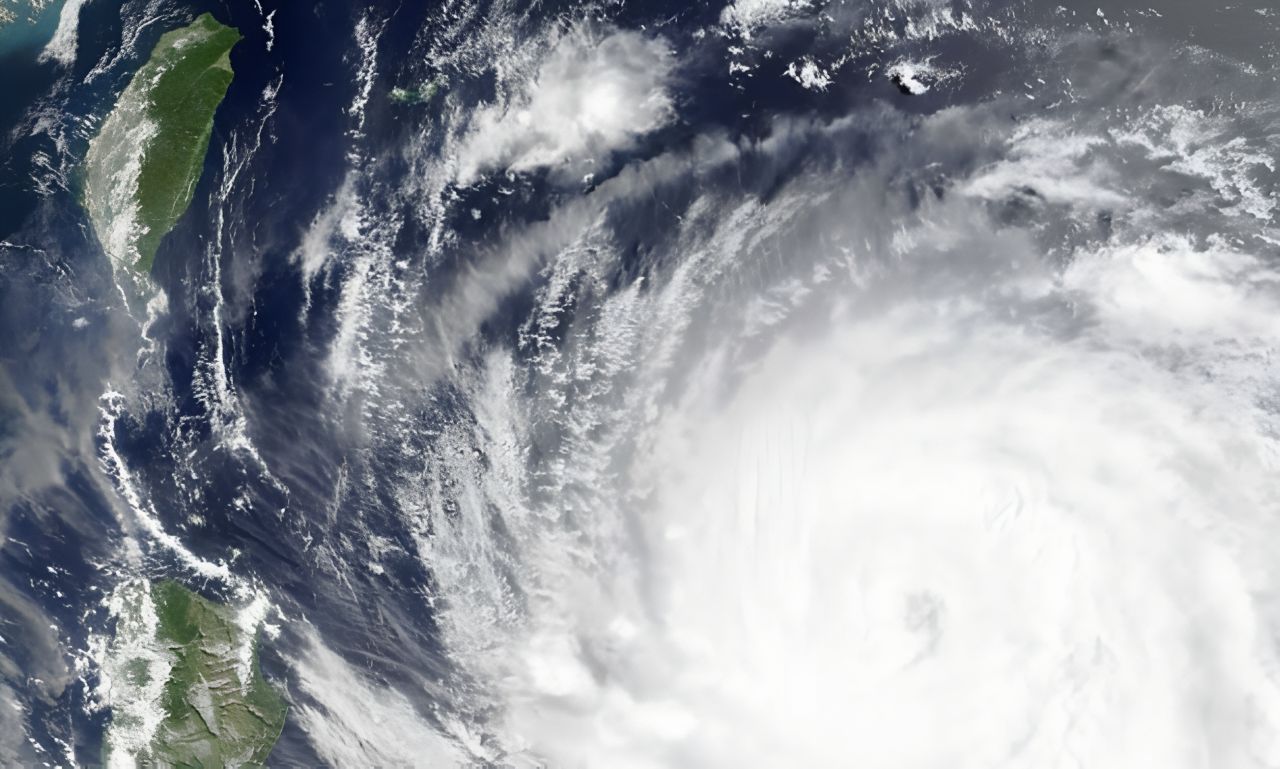
Forecasters expect the storm to approach Hong Kong before making landfall somewhere between Guangdong and Fujian. Sustained winds could reach roughly 120 kilometres per hour. This would make it the third typhoon to strike China in a little over three weeks, a troubling concentration of severe weather at a time when saturated soil and swollen rivers have already left many areas exposed.
Recent storms have shown the scale of the danger. Typhoon Bavi struck Zhejiang on January 11, forcing the evacuation of nearly two million people and causing extensive damage. Before that, Typhoon Meisak caused devastating flooding in Guangxi, killing dozens, damaging homes and crops, and driving tens of thousands from their homes.
Authorities have instructed Guangdong and Guangxi to prepare for the worst-case scenario. The response includes:
- Evacuating communities in high-risk areas.
- Inspecting reservoirs, levees and smaller water-control infrastructure.
- Protecting transportation networks and utility systems.
- Placing rescue personnel and emergency equipment on standby.
- Monitoring rainfall across the Pearl, Yangtze and Songhua river basins.
The risk is not confined to the coastline. Heavy rainfall across several major river basins could push smaller waterways beyond warning levels. Where drainage systems, local levees or reservoirs are already under strain, another major storm could quickly turn into a broader flood emergency.
The economic implications are serious. Flooded factories can interrupt supply chains, damaged roads and railways can restrict commerce, and the destruction of crops and livestock can deepen pressure on rural households. For communities with weak insurance coverage or uneven access to compensation, repeated disasters may also reinforce poverty and inequality.
Climate disasters are therefore not merely a humanitarian concern. They are increasingly a macroeconomic and governance challenge for Beijing, particularly as the authorities attempt to restore business confidence and strengthen domestic demand.
Xi Jinping’s Planned US Visit and the Limits of Constructive Stability
US President Donald Trump has confirmed that Chinese leader Xi Jinping is expected to visit the United States on September 24. The announcement follows recent discussions between US Secretary of State Marco Rubio and Chinese Foreign Minister Wang Yi, as well as a visit to Washington by Vice Foreign Minister Ma Zhaoxu.
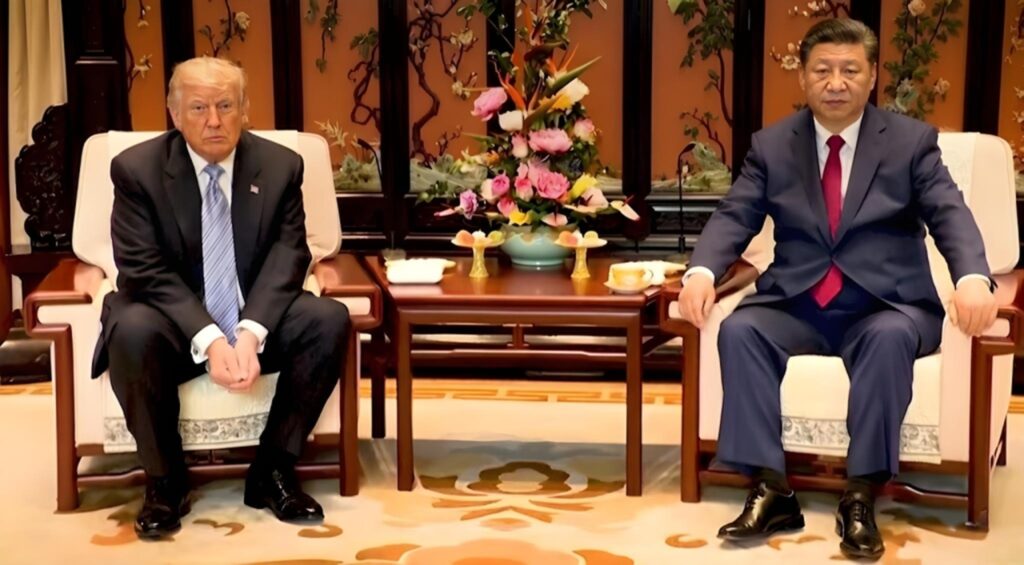
Ma’s reported visit to the Pentagon has added to the sense that the diplomatic preparations are becoming more substantial. The agenda is expected to include artificial intelligence, an issue that was previously discussed during Trump’s visit to Beijing and is now rapidly becoming one of the central fault lines in bilateral relations.
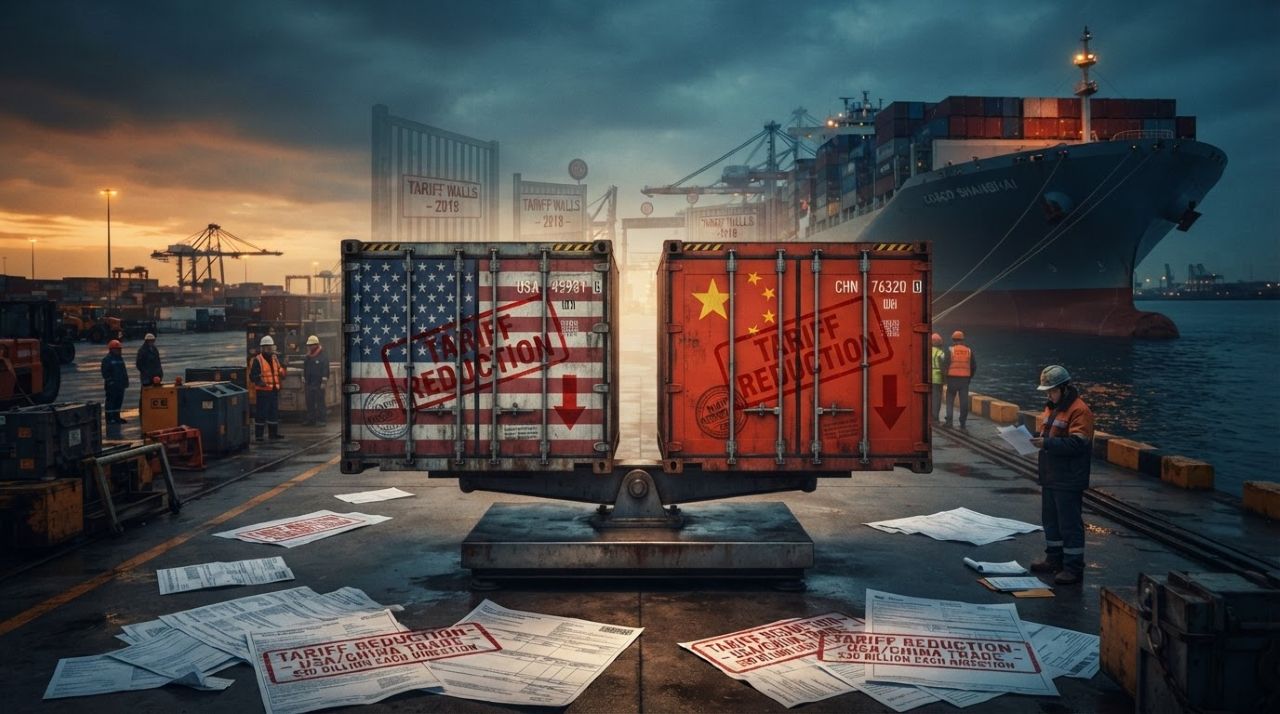
Economic talks are progressing alongside the summit preparations. China’s Commerce Ministry has said both sides are discussing the structure and operation of a new trade council, as well as a reciprocal tariff-reduction framework covering US$30 billion of goods on each side.
The broader approach can be described as constructive strategic stability. The basic idea is not that Washington and Beijing have resolved their differences. They plainly have not. Rather, both sides are attempting to manage those differences through limited agreements, regular communication and practical mechanisms that reduce the chance of a sudden escalation.
That approach could produce tangible results in September. A trade council, tariff adjustments and clearer channels for AI discussions would all be meaningful. Yet several disputes illustrate why expectations should remain restrained.
A preliminary Chinese commitment to buy 200 Boeing aircraft, reportedly worth between US$17 billion and US$18 billion, has stalled. Beijing is seeking long-term guarantees on engine-parts supplies, while Washington maintains that maintenance provisions were not part of the original understanding. This is a reminder that even commercially attractive deals can become entangled in wider political mistrust.
Security policy is also moving in the opposite direction. The Pentagon has added Fudan University and Shanghai Jiao Tong University to a blacklist of foreign institutions deemed national-security risks. The expanded list covers 88 mainland Chinese institutions and bars Pentagon-funded researchers from collaborating with them or using their equipment.
The likely outcome is a familiar one: selective cooperation where interests overlap, with intense competition continuing almost everywhere else. That pattern is also visible in the growing dispute over artificial intelligence.
China Considers Tighter Controls on AI Models, Data and Chips
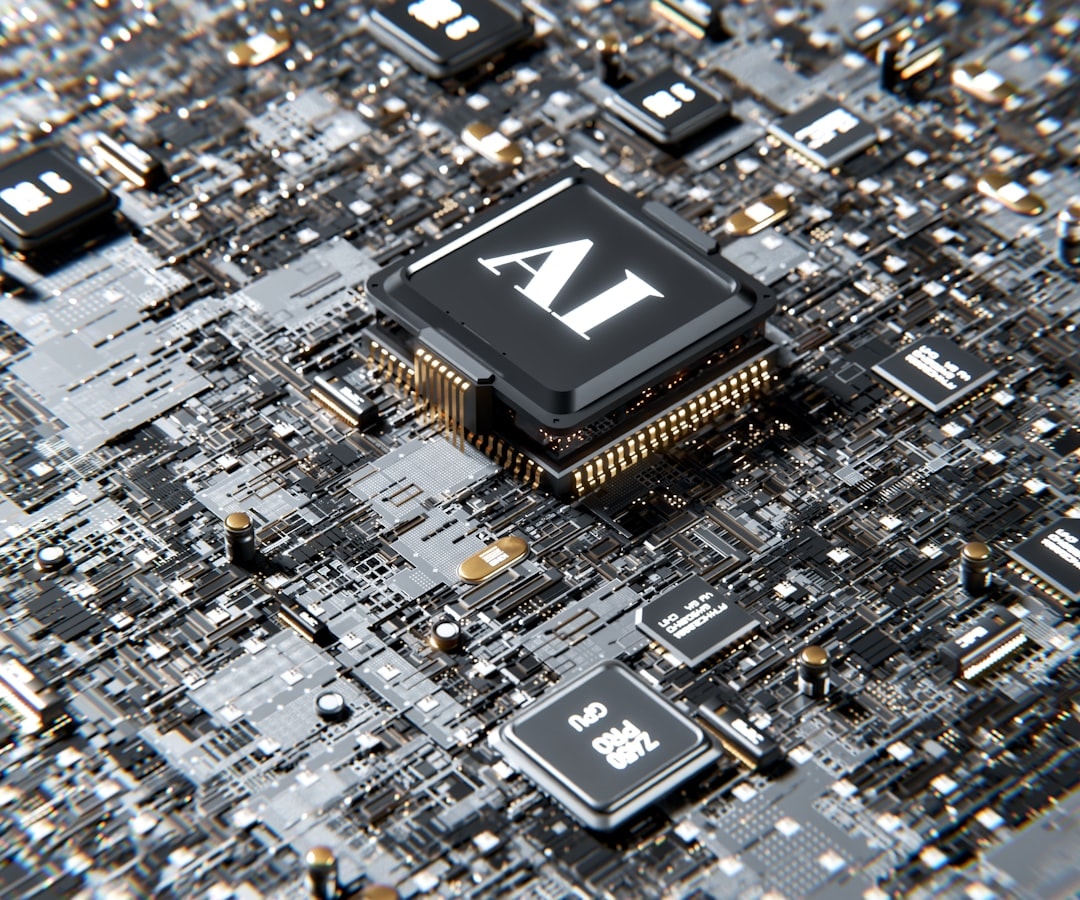
Beijing is reportedly considering restrictions on overseas access to advanced Chinese AI technology. The discussions involve downloadable model weights, strategic training data and domestically designed semiconductors. Regulators led by the Ministry of Commerce have reportedly consulted companies including Alibaba, ByteDance and Zhipu.
The central question is how China can sell AI services internationally without giving foreign users unrestricted access to the intellectual property that underpins them. One possible approach would limit the transfer of important training data and prevent overseas users from downloading the weights behind powerful Chinese models.
Foreign customers could still potentially use those models through controlled online services. That structure would allow Chinese firms to provide commercial access while retaining control over the underlying technology, model parameters and data assets.
Beijing is also considering restrictions involving overseas chipmakers, including TSMC and CorelD. The deliberations reflect a broader shift in thinking. Advanced AI models and semiconductors are no longer treated purely as commercial products. They are increasingly viewed as strategic capabilities, relevant to industrial competitiveness, military potential and technological sovereignty.
This sits uneasily beside China’s public language about openness and international AI cooperation. Chinese officials have supported open-source development while rejecting Western allegations that Chinese laboratories rely on distillation from American models.
Washington, meanwhile, is raising the pressure. Treasury Secretary Scott Bessent has said Chinese open-source models will be examined for evidence of intellectual-property theft and has warned that sanctions remain possible. These arguments are likely to feature prominently in the planned US-China AI discussions in September.
The contest is not simply about who builds the best model. It is about access to chips, control of training data, export restrictions, commercial scale and the rules governing whether powerful AI systems should be open, downloadable and globally deployable. For further context on the broader political dispute over alleged AI model extraction, see this report on AI model theft allegations and the changing US trade approach.
State Support Drives a Sharp Rebound in Chinese Technology Shares
China’s latest effort to stabilise its stock market delivered dramatic results. State-linked buying and renewed institutional support triggered a powerful rebound in technology shares after a period of steep declines.

The Shanghai Composite closed 1.8 percent higher, while the Shenzhen Composite gained 4.8 percent. The technology-heavy ChiNext and STAR Market indices rose 7.1 percent and 8.8 percent respectively. The narrower STAR 50 index climbed 11 percent, its strongest session in almost two years.
The rally followed signs that Beijing’s so-called national team of state-backed investors had stepped in after weeks of falling prices. The China AMC STAR 50 exchange-traded fund received a record 13.8 billion yuan of inflows on Monday. Although the source of the money was not confirmed, the scale of the purchase was widely interpreted as state-directed support for semiconductor and artificial intelligence companies.
The intervention came after the STAR 50 had lost about 17 percent in the preceding week, as leveraged investors rapidly unwound positions. Quantitative funds were also hit. Seventy-three quant funds attempting to outperform the small-cap CSI 1000 index fell by an average of 14 percent, adding to anxiety among wealthy clients.
Beijing’s response has gone well beyond ETF purchases. At least five major insurers have pledged to raise equity investment, while China Life said one of its units had already purchased more than 10 billion yuan in shares and funds. The China Securities Regulatory Commission has also convened a symposium involving 29 representatives from listed companies, securities firms, fund managers and academia.
Officials have promised stronger risk prevention, better investor protection and further market reform. But the strategic purpose is also hard to miss. Supporting valuations in AI and semiconductor companies makes it easier for firms deemed nationally important to raise capital, fund research and compete with the United States.
There are limits to what intervention can achieve. State buying can calm panic, slow forced selling and restore a measure of confidence. It cannot permanently overcome excessive valuations or weak fundamentals. A durable recovery will require technology stocks to settle at price levels that investors consider sustainable.
Fields Medal Success Raises Questions About China’s Research Talent Pipeline
Two Chinese nationals, Wang Hong and Deng Yu, have won the Fields Medal for the first time, a significant moment for China’s ambition to become a global scientific power. The prize, awarded every four years to outstanding mathematicians under the age of 40, is among the discipline’s most prestigious honours. More background on the award is available from the International Mathematical Union’s Fields Medal page.
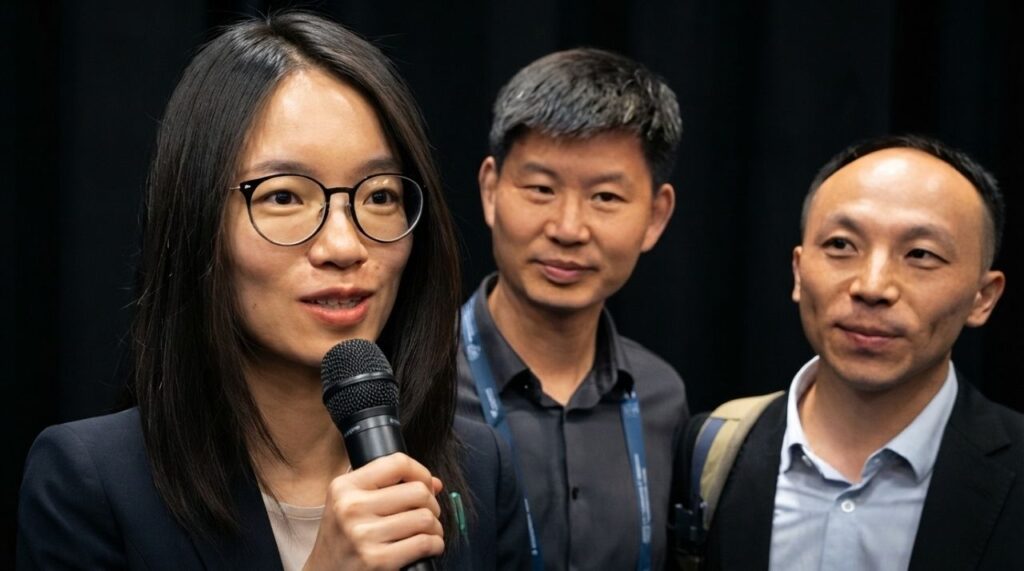
Wang, aged 35 and a professor at New York University, became only the third woman to receive the medal in its 90-year history. She was recognised for solving a long-standing problem in harmonic analysis and geometric measure theory.
Deng, aged 37 and a professor at the University of Chicago, was honoured for advances in partial differential equations. Their achievements were widely celebrated in China, where the news dominated social media and prompted praise for Chinese mathematicians making original contributions to fundamental theory.
Wang’s success also carried particular symbolic importance as an inspiration for women in mathematics and science. Yet the awards have also renewed a familiar debate. Both scholars studied at Peking University but built much of their academic careers abroad.
That fact highlights China’s continuing difficulty in reversing the migration of elite researchers to Western institutions. Producing talented students is one challenge. Retaining them, providing academic autonomy and building the institutions that can support world-leading basic research is another.
Calls for Wang and Deng to return and help train a new generation of domestically based mathematicians reflect the stakes. China’s scientific ambitions depend not only on national investment and research rankings, but also on whether it can create an environment in which top researchers choose to build long-term careers.
Moonshot AI Faces Growing Pressure in Washington
The US government appears to be preparing possible action against Chinese AI developer Moonshot AI following allegations surrounding its Kimi K3 model. Treasury Secretary Scott Bessent has said sanctions and possible placement on the Commerce Department’s entity list are under consideration.
Michael Kratsios, head of the White House Office of Science and Technology Policy, has alleged that Moonshot operated a sophisticated platform designed to extract knowledge from American models while switching access methods to avoid detection. He also alleged that the company obtained servers containing Nvidia’s advanced GB300 chips and accessed additional GB300 hardware in Thailand, potentially for model training.

Moonshot has not publicly provided detailed evidence regarding Kimi K3’s training infrastructure. The promised release of open weights, along with greater transparency about development methods, could help clarify the allegations. Until then, the dispute will remain highly political as well as technical.
Opinion in Silicon Valley is divided. Critics of government intervention argue that Washington risks shielding major US laboratories, including OpenAI and Anthropic, from competition. Nvidia chief executive Jensen Huang has defended open models, arguing that downloadable systems can be inspected, customised and operated securely.
OpenAI president Greg Brockman has described Kimi K3 as a strong model, while cautioning that it is too early to determine whether improper distillation occurred. The uncertainty matters because the case could become a test of how aggressively the Trump administration is willing to police Chinese AI development.
If officials persuade Trump that Chinese laboratories are appropriating American technology and threatening confidence in the US-led AI boom, sanctions become more likely. Technology executives and AI policy figures can be expected to intensify their lobbying as the administration considers its response.
South China Sea Clash Tests US-China Crisis Management
Tensions between China and the Philippines have risen again after a Chinese Coast Guard ship used a water cannon against a Philippine vessel near Scarborough Shoal. The Philippine boat had reportedly travelled to the disputed area to deliver supplies to Filipino fishermen.
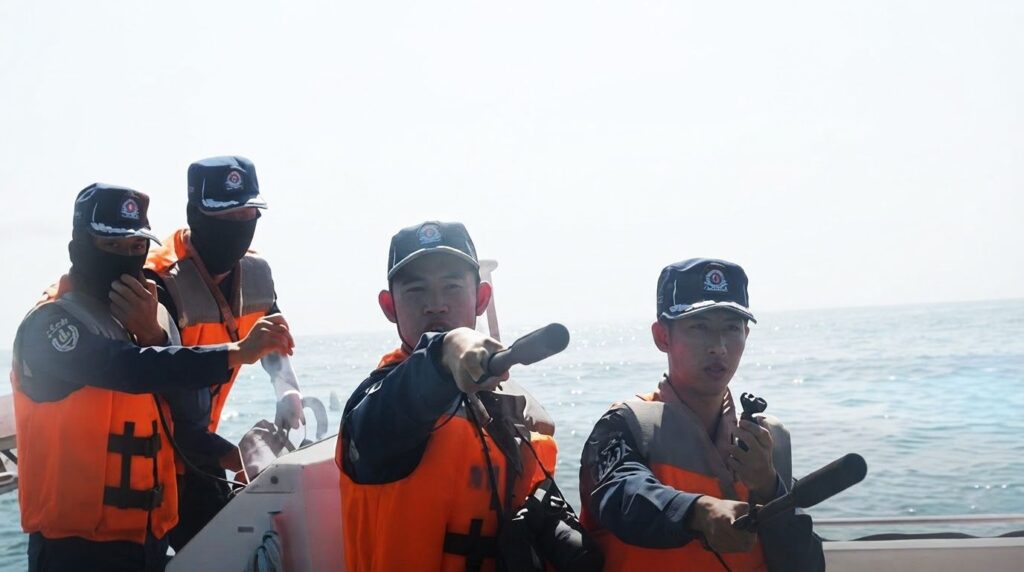
The incident followed a confrontation days earlier at Second Thomas Shoal, where Chinese and Philippine personnel clashed and a Philippine Marine was injured. Marco Rubio subsequently said an American Coast Guard vessel was operating nearby and positioned itself between the opposing sides, allowing the injured service member to be rescued and taken for medical treatment.
Rubio emphasised that the Philippines is a US treaty ally and that Washington would not abandon its partners. Philippine President Ferdinand Marcos Jr. also spoke with Trump after the Second Thomas Shoal confrontation. Trump reportedly assured Marcos that Manila’s concerns would be raised during his September meeting with Xi Jinping.
The immediate dispute at Second Thomas Shoal centres on the BRP Sierra Madre, a grounded Philippine warship used as a military outpost. China has accused Manila of conducting construction work aboard the vessel in breach of a provisional understanding. Philippine Defence Secretary Gilberto Teodoro rejected the assertion, saying he knew of no such agreement and that China had no right to interfere with Philippine activity within its own territory.
The danger is clear. Trade talks and summit planning may establish a more stable framework for the US-China relationship, but maritime confrontations can move faster than diplomacy. A collision, serious injury or miscalculation in contested waters could rapidly create a crisis involving both a US treaty ally and Chinese forces.
The South China Sea will remain one of the sharpest tests of whether Washington and Beijing can keep strategic competition from becoming a broader conflict.
FAQ
Why is the approaching typhoon a major concern for China?
The storm is approaching after widespread flooding, leaving soil saturated and rivers swollen across parts of southern and eastern China. Another major typhoon could cause fresh evacuations, infrastructure damage, crop losses and dangerous river flooding.
What is constructive strategic stability between the United States and China?
It refers to an effort to manage rivalry through communication and limited practical agreements, such as trade mechanisms or tariff reductions, without pretending that the underlying strategic competition has disappeared.
Why are AI model weights becoming a geopolitical issue?
Model weights can allow users to download, modify and run advanced AI systems independently. Governments increasingly view access to those capabilities, along with training data and advanced chips, as a matter of commercial advantage and national security.
Why did China intervene in technology stocks?
State-linked investors stepped in after a sharp sell-off in technology shares, particularly in semiconductor and AI-related companies. The intervention was intended to stabilise markets, reduce panic selling and support strategically important firms’ ability to raise capital.
Why do tensions with the Philippines matter for US-China relations?
The Philippines is a US treaty ally, meaning maritime confrontations with China can draw Washington into a crisis. Repeated incidents near disputed shoals increase the risk that a local clash could disrupt wider efforts to manage US-China competition.