US-China Talks Create a Narrow Opening for Stability
China’s diplomatic and economic picture is increasingly defined by a familiar contradiction. Beijing wants stable external relations at a moment when its domestic economy needs them badly, yet its policy choices, messaging, and unresolved structural problems keep generating new sources of friction.
The latest developments span four connected fronts: a more constructive US-China dialogue ahead of a possible Xi Jinping visit to Washington; worrying signs in China’s fiscal position; increasingly difficult trade and geopolitical discussions with Europe; and a South China Sea dispute with the Philippines that has been made substantially worse by inflammatory state media messaging.
Table of Contents
- US-China Talks Create a Narrow Opening for Stability
- China’s Fiscal Data Reveals Pressure Beneath the Headline Numbers
- Europe’s China Debate Is About Economics, Not Misunderstanding
- South China Sea Clash Undermines Beijing’s Regional Messaging
- What to Watch Next
- Frequently Asked Questions
US-China Talks Create a Narrow Opening for Stability
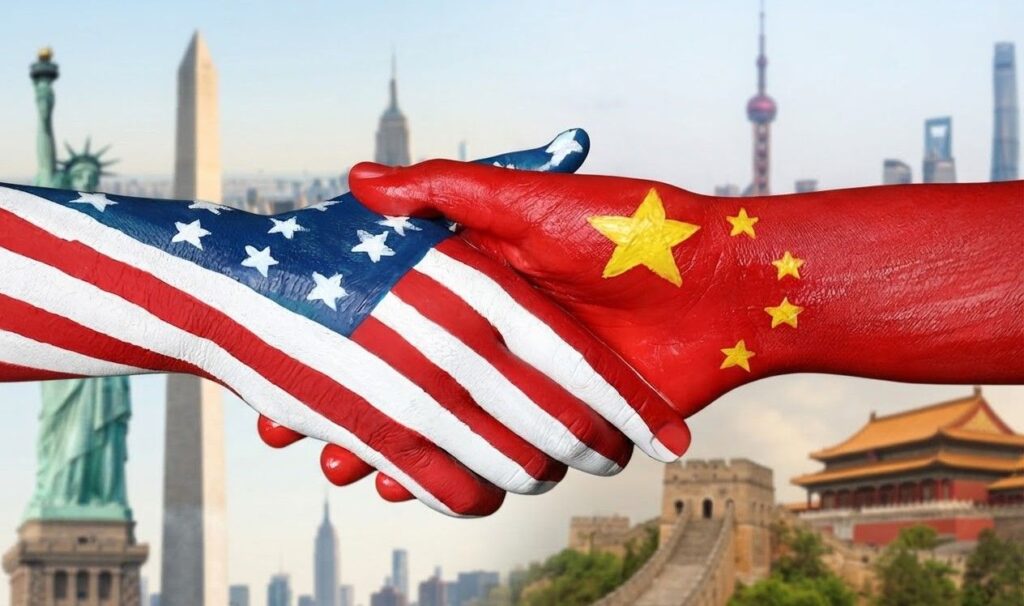
US Secretary of State Marco Rubio and Chinese Foreign Minister Wang Yi met in Manila during the ASEAN foreign ministers’ gathering, with both sides striking an unusually positive tone. Their discussions focused heavily on preparing for Xi Jinping’s planned trip to Washington, reportedly expected around late September and potentially timed around the opening of the United Nations General Assembly.
China’s foreign ministry characterised the exchange as pragmatic, positive, and constructive. Rubio similarly suggested that Xi would receive a very positive reception in Washington. In a relationship accustomed to sharp public statements, tariff escalation, export-control disputes, and mutual accusations, this language matters.
The meeting appears to have reinforced plans for new US-China investment and trade bodies, agreed upon during President Donald Trump’s May trip to Beijing. Those bodies emerged after another cycle of tariff escalation and Chinese restrictions on rare earth exports had destabilised relations. Their purpose is clear enough: create structured channels that can produce tangible economic outcomes before high-level political engagement.
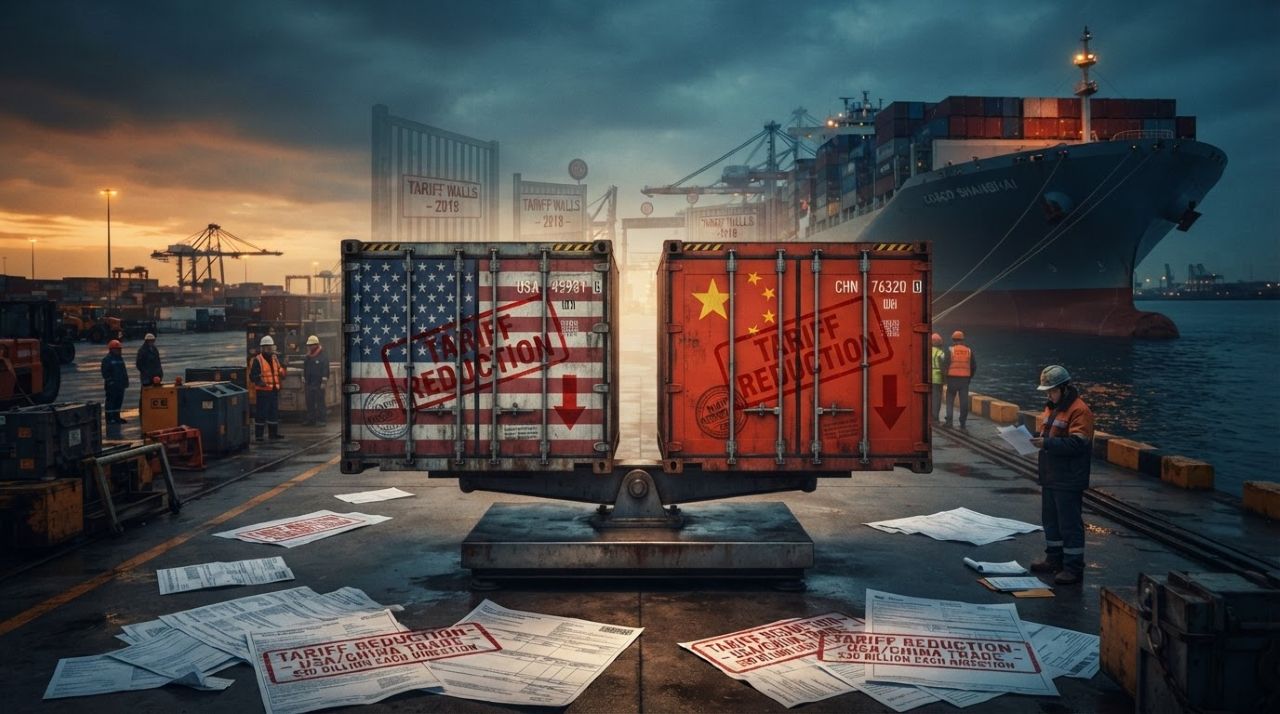
One possible deliverable is a reduction in tariffs on at least US$30 billion of non-sensitive goods. If implemented, that would give both governments something concrete to point to before Xi’s arrival. It would not settle the underlying strategic contest, but it could reduce pressure in selected commercial areas.
There is no reason to confuse improved tone with a fundamental reset. Wang Yi again pressed Washington to respect China’s core interests and uphold the one-China principle. Rubio acknowledged that major differences would remain, while emphasising the responsibility of both powers to keep them from spiralling beyond control.
That is probably the most realistic framing. The objective is not harmony. It is guardrails.
China’s Fiscal Data Reveals Pressure Beneath the Headline Numbers
China’s first-half fiscal data initially appears reasonably solid. National general public budget revenue reached 12.1 trillion yuan, a year-on-year increase of 4.7%. Tax revenue rose 5.3% to 9.79 trillion yuan, while expenditure increased 1.5% to 14.33 trillion yuan.
But the deeper numbers are much less encouraging. A broader measure of government spending dropped 11.9% year-on-year in June, even as revenue increased 1.8%. The broader fiscal deficit narrowed 13% to 4.57 trillion yuan, approximately US$675 billion. A shrinking deficit may sound reassuring in isolation, but it can also mean fiscal policy is becoming more restrictive while the economy is losing momentum.
That is exactly what appears to be happening. Economic growth slowed from 5% in the first quarter to 4.3% in the second quarter. Goldman Sachs estimates that the negative fiscal impulse accounted for more than 40% of the sequential slowdown.
Infrastructure spending under the general public budget fell by almost 9% in the second quarter. That is a notable reversal for an economy that has repeatedly relied on public investment to cushion weak private demand. Pulling back on infrastructure may help control fiscal strain, but it also removes support at a time when household consumption remains subdued and the property downturn remains unresolved.
Local Governments Face the Most Serious Problem
The central government’s revenue increased 7.5% in the first half, but local revenue grew only 2.7%. The biggest issue remains land sales, once the financial foundation of local government operations.

Revenue from land sales collapsed 31.5% to just under 1 trillion yuan
Revenue from land sales collapsed 31.5% to just under 1 trillion yuan, the sharpest first-half drop in nearly a decade. For years, local authorities financed infrastructure, public services, and a substantial portion of their budgets by selling land to property developers. That model depended on rising home sales, developer demand, and confidence in continued construction. All three have weakened.
Land appreciation tax revenue fell 15.3%, while farmland occupation tax declined 3.5%. These figures reinforce the same conclusion: developers are reluctant to acquire land or begin new housing projects. There is still no convincing evidence of a durable bottom in the property sector.
Several stronger revenue categories also underline how fragile the fiscal picture is. Individual income tax rose 13.1%, partly reflecting stronger compliance enforcement among higher-income earners. Stock trading stamp duty nearly doubled amid an equity-market boom. Neither is necessarily a stable substitute for the old land-finance model.
The result is growing dependence on Beijing. By the end of June, the central government had allocated nearly 10 trillion yuan in transfers to local authorities, more than 90% of the original annual budget. Provinces also retain almost 1.9 trillion yuan in unused bond quotas, and a further 800 billion yuan in policy financing is expected during the third quarter.
China still has room to spend. The problem is the quality and purpose of that spending. More borrowing for infrastructure can support short-term activity, but it cannot by itself resolve weak household demand, local-government indebtedness, or the disappearance of land-sale revenue. The risk is that debt rises while the underlying growth model remains unchanged.
Related pressures around local government finance and tighter revenue collection are explored in this analysis of China’s tightening local tax net and export cost pressures.
Europe’s China Debate Is About Economics, Not Misunderstanding
Before travelling to the ASEAN meeting, Wang Yi met an eight-member delegation from the European Parliament’s Committee on Foreign Affairs. The group, led by chairman David McAllister, included lawmakers from Germany, Spain, Italy, Poland, Belgium, and the Czech Republic. Its programme included meetings in Beijing and Shanghai with officials, academics, and technology companies.
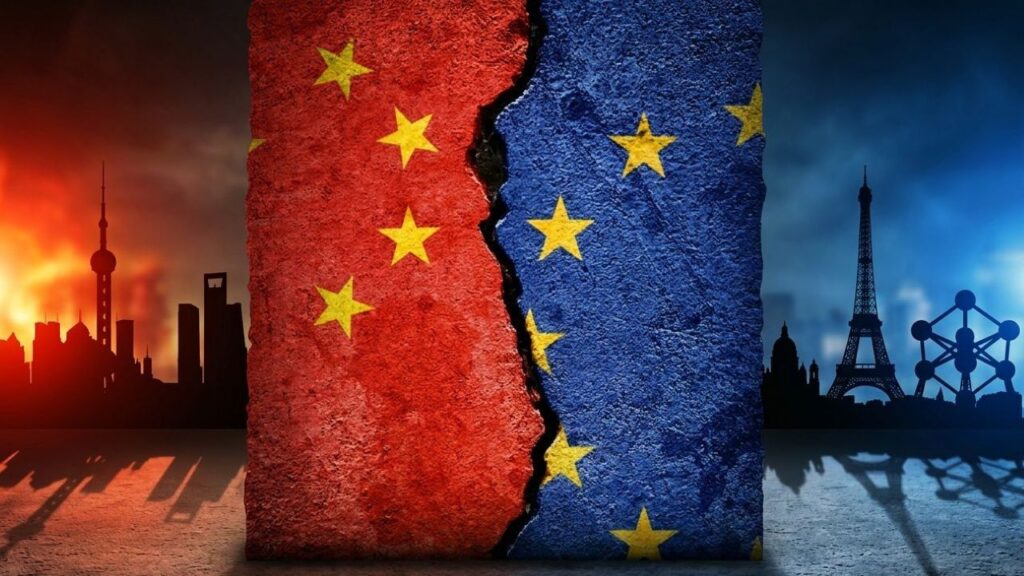
Wang urged the delegation to adopt what he called a rational and objective understanding of China. His argument was that inaccurate European perceptions were producing flawed China policies.
The implication is rather convenient: China has done nothing particularly wrong, and European concerns arise because Europe simply does not understand China correctly. But the delegation’s agenda makes clear that Brussels has specific, substantive concerns.
- China’s growing trade surplus with Europe
- Industrial competition and subsidized exports
- Russia’s war against Ukraine
- Human rights and political governance
- Indo-Pacific stability and security
- European dependence on Chinese supply chains
- Technology, artificial intelligence, and economic sovereignty
The economic imbalance is central. Weak domestic demand and industrial overcapacity have made external markets more important for Chinese manufacturers. Europe remains one of the largest wealthy consumer markets that is comparatively open to Chinese goods, making it especially valuable to Beijing.
European governments, however, are increasingly concerned that heavily supported Chinese exports could overwhelm domestic producers across electric vehicles, batteries, steel, machinery, and renewable-energy equipment. Brussels has responded with tariffs, investigations, and consideration of stronger trade defences.
Beijing argues that Europe is politicising ordinary commercial competition. Yet China has offered few major concessions on subsidies, market access, or the widening bilateral trade gap. Without meaningful movement, European policy is likely to continue hardening.
A more serious trade confrontation is entirely plausible. Europe could raise tariffs or place tougher restrictions on Chinese firms. Beijing could retaliate through access to critical minerals and other industrial inputs. The harder question is whether Europe can remain unified. Countries with deep commercial exposure to China may be reluctant to escalate, while others increasingly see economic dependence as a national-security vulnerability.
For Beijing, the practical answer is not simply asking Europe to improve its perception. It would require increasing imports, strengthening domestic consumption, and delivering fairer market access. Without those steps, the political pressure in Europe will persist.
South China Sea Clash Undermines Beijing’s Regional Messaging
The diplomatic optimism surrounding the Rubio Wang meeting stood in sharp contrast to developments between China and the Philippines. The two governments exchanged strong protests over a new confrontation near Second Thomas Shoal, which China calls Ren’ai Jiao.

Wang Yi accused elements of the Philippine military and police of deliberately provoking incidents and serving external forces, a clear reference to the United States and, more broadly, Manila’s security partnerships. China also accused a Philippine vessel of ramming a Chinese law-enforcement ship.
Manila gave a very different account. Philippine Foreign Affairs Secretary Theresa Lazaro protested what the government described as violent Chinese Coast Guard actions during a clash that injured a Philippine Navy serviceman. Lazaro characterised her discussions with Wang as candid, comprehensive, and constructive, emphasising dialogue and the need to prevent miscalculation.
That alone would have been a difficult enough diplomatic exchange. Then China Daily published an AI-generated video depicting the Philippines as a monkey taking instructions from the United States and Japan. The video also attacked the 2016 international arbitration ruling that rejected Beijing’s sweeping South China Sea claims.
The Philippines condemned the imagery as racist and dehumanising. Manila drew a firm line at the depiction of Filipinos as monkeys, and rightly so. A complex territorial dispute had been turned into a national insult.
China’s foreign ministry attempted to distance the government from the video, saying it was not an official government act. That is unconvincing. China Daily operates inside the Chinese Communist Party’s broader media system. Regardless of the formal distinction, the damage was done.
Publishing such imagery was a serious strategic mistake for Beijing. It reinforced regional concerns that China treats smaller neighbouring countries with contempt. It undercut Wang Yi’s effort to portray China as a responsible partner pursuing a peaceful and cooperative South China Sea. And it may do the opposite of what Beijing intended by strengthening, rather than weakening, Philippine incentives to deepen security ties with Washington and Tokyo.
Public humiliation makes compromise politically harder. It also makes warnings against relying on external forces sound less like diplomacy and more like coercion.
The episode arrives as China hopes to advance negotiations on a South China Sea code of conduct through ASEAN. That task becomes much harder when Beijing’s own state media has created a fresh diplomatic crisis. Broader maritime and economic pressures affecting China are also examined in this report on producer inflation, debt strain, and maritime risk.
What to Watch Next
Several developments now deserve close attention.
- Xi Jinping’s possible Washington visit: A tariff reduction or trade board announcement could provide a short-term stabilising signal, but core US-China disputes will remain.
- Fiscal policy in the third quarter: The use of provincial bond quotas and policy financing will reveal whether Beijing is prepared to provide stronger support to growth.
- China’s property and land-sale data: Further deterioration would place even greater pressure on local governments and central transfers.
- European trade defences: Brussels faces growing pressure to respond to industrial overcapacity and the trade imbalance with China.
- China-Philippines relations: The risk of another confrontation remains high around Second Thomas Shoal, particularly as diplomatic trust erodes.
The broader pattern is difficult to ignore. Beijing needs stable trade ties, dependable foreign markets, and a less confrontational external environment while its domestic economy deals with property weakness, local government stress, and insufficient household demand. Yet its industrial model, geopolitical positions, and at times self-defeating rhetoric keep making those external relationships more difficult to manage.
Frequently Asked Questions
Why did Marco Rubio and Wang Yi meet in Manila?
They met alongside the ASEAN foreign ministers’ gathering to discuss US-China relations and prepare for a possible Xi Jinping visit to Washington. Their talks also addressed proposed investment and trade bodies intended to stabilize economic ties.
What is driving China’s fiscal pressure?
The main pressures are slowing economic growth, weaker public investment, heavily indebted local governments, and a severe decline in land-sale revenue caused by the prolonged property downturn.
Why are China-Europe trade tensions increasing?
European governments are concerned that Chinese industrial overcapacity and state-supported exports are threatening domestic producers. Disputes extend beyond trade to technology, supply-chain dependence, Russia’s war against Ukraine, human rights, and Indo-Pacific security.
What happened between China and the Philippines in the South China Sea?
China and the Philippines issued competing accounts of a confrontation near Second Thomas Shoal. The dispute then escalated diplomatically after China Daily published an AI-generated video that portrayed Filipinos as monkeys, prompting a strong condemnation from Manila.
Why does the China Daily video matter?
The video transformed a territorial and maritime dispute into a wider national insult. It damaged Beijing’s regional standing, weakened its message of peaceful cooperation, and could strengthen Philippine support for deeper security ties with the United States and Japan.