Photo by Catgirlmutant on Unsplash
By Tony Fiddis: China Analyst
China’s economy is not collapsing. That is the important caveat before the inevitable avalanche of headlines about “China’s decline” gets turned into something much more dramatic than the evidence supports. Beijing still commands enormous industrial capacity, vast financial resources, increasingly capable technology firms and, crucially, a state apparatus willing to throw money at a problem until it either disappears or becomes someone else’s problem.
But China’s economic model is plainly under strain. The old formula—debt, property, infrastructure and relentless state-directed investment—is producing ever smaller returns. Domestic demand remains weak. Property is no longer the reliable engine it once was. Local governments are financially exhausted. And so the Chinese system is doing what it has historically done when domestic demand cannot absorb its output: it is exporting the problem.
That creates a difficult, slightly perverse reality. China may be economically weaker than it was a decade ago, but it can still be more disruptive abroad. Its surplus manufacturing capacity is landing in foreign markets at precisely the moment governments from Brussels to Washington are trying to protect industrial capacity, build alternative supply chains and reduce dependence on Beijing.
The result is a broad strategic contest playing out through trade imbalances, semiconductor nationalism, diplomatic coercion and control over supply chains. None of these are isolated stories. They are different fronts in the same increasingly ugly fight.
Table of Contents
- Europe Is Learning the Cost of Disunity
- CXMT’s Giant IPO Shows Where Beijing Is Still Betting Big
- Taiwan Is Being Squeezed in Every Available Space
- China’s Weakness Is Driving Its Export Strength
- The West Has Leverage—If It Can Stop Fighting Itself
- Frequently Asked Questions
Europe Is Learning the Cost of Disunity
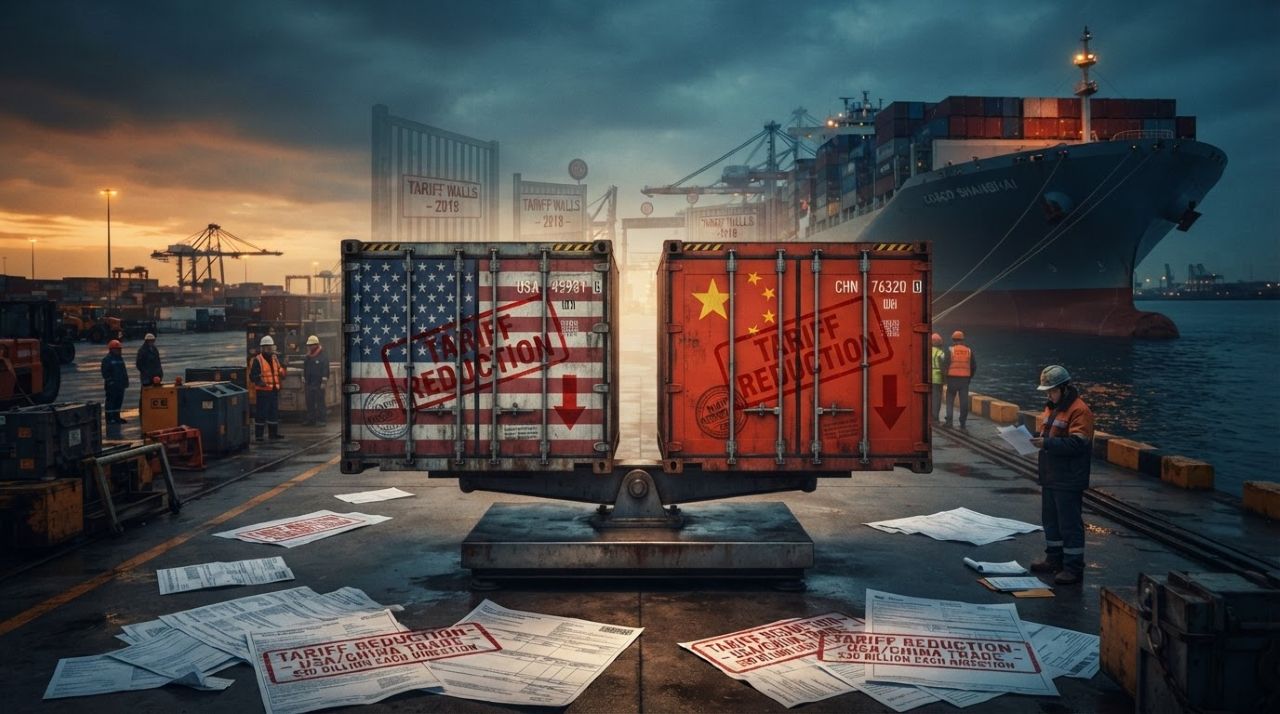
China’s trade surplus with the European Union reportedly reached €360 billion in 2025, then rose another 24% year on year in the first half of 2026. That is not a minor imbalance. It is a glaring sign that European markets are absorbing huge quantities of Chinese industrial output while European firms struggle to compete both at home and abroad.
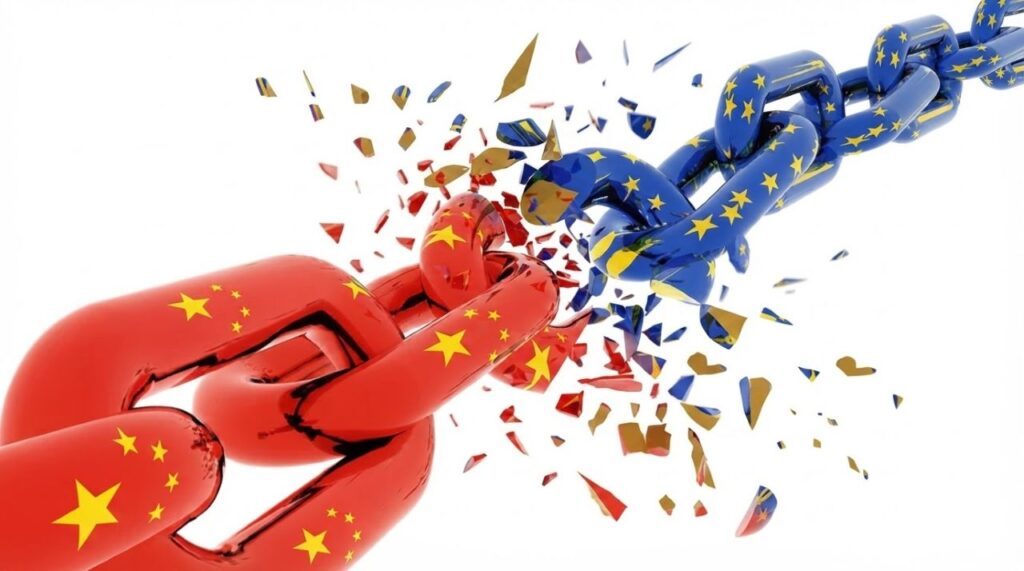
Brussels controls trade policy, but the EU is not a unitary political actor. It is 27 member states, each with its own industrial interests, diplomatic instincts and exposure to Chinese trade. Beijing understands this perfectly well. It can confront EU institutions in Brussels while quietly cultivating national capitals willing to prioritise investment, exports or short-term commercial calm over a tougher common position.
It is the classic divide-and-conquer playbook, except it works because Europe keeps offering the division.
France and Italy have tended to favour stronger protective measures. Spain and other governments have been more open to deeper economic cooperation. Meanwhile, many European capitals are reluctant to pick a major fight with China because they depend on Chinese renewable-energy technology, critical minerals and low-cost industrial inputs. Europe wants strategic autonomy; it just does not always want to pay for it.
The immediate disputes are substantial:
- European tariffs on Chinese electric vehicles.
- Chinese demands for looser restrictions on exports of advanced ASML semiconductor equipment from the Netherlands.
- Chinese rare-earth export controls affecting European firms.
- Arguments over intellectual property, export controls and World Trade Organization reform.
- The expanding gap between Chinese industrial output and European manufacturing competitiveness.
EU Trade Commissioner Maroš Šefčovič and Chinese Commerce Minister Wang Wentao have agreed to consultations on these questions, with Brussels seeking tangible progress by October. But Beijing is not entering these talks from a position of embarrassment. It is entering them with leverage: access to its market, control over important parts of clean-energy supply chains, and the ability to make individual European governments nervous about the economic costs of confrontation.
China is also finding routes around the bloc. Britain has not matched the EU’s tariffs on Chinese electric vehicles, even while aligning more closely with Europe on steel import restrictions. Morocco has become another significant potential gateway, with Chinese companies announcing around $6 billion in investment since the pandemic, particularly in automotive supply chains serving Europe.
Brussels has already found that some aluminium wheels imported from Morocco benefited from unfair subsidies involving both Rabat and Beijing. This is the wider concern: if Europe raises trade barriers but fails to monitor how production is rerouted through third countries, Chinese overcapacity does not vanish. It simply gets a new label.
The stakes go beyond a few tariff disputes. As explored in this analysis of China’s expanding use of export controls and its uneven technology rise, industrial policy is now a core instrument of strategic competition. European hesitation may preserve commercial peace in the short term, but it risks hollowing out sectors that Europe may later discover it cannot rebuild.
CXMT’s Giant IPO Shows Where Beijing Is Still Betting Big
While European governments worry about the consequences of Chinese overproduction, China is trying to solve one of its own deepest vulnerabilities: dependence on foreign semiconductors.
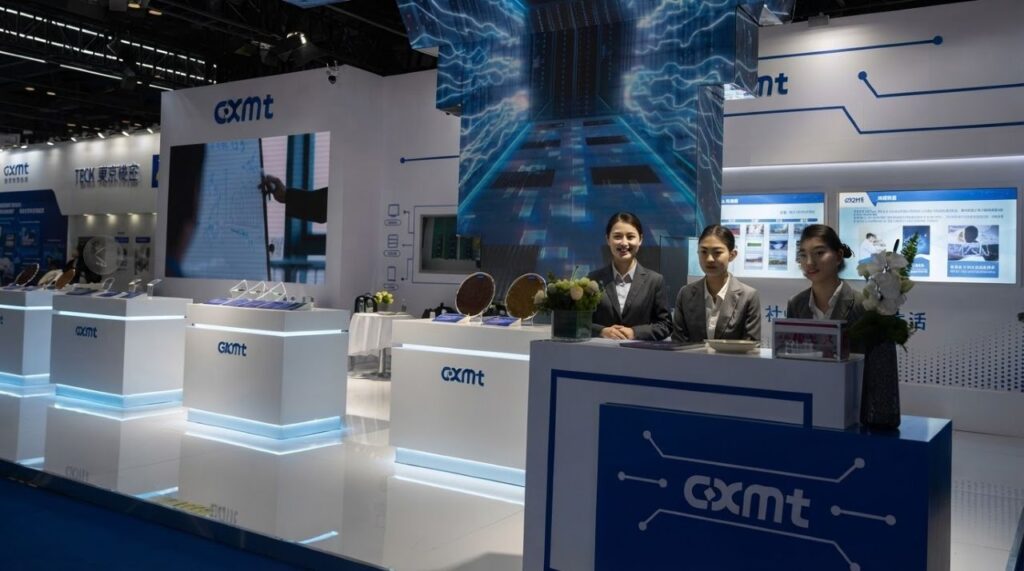
ChangXin Memory Technologies, better known as CXMT, surged 472% on its first day of trading in Shanghai. The company raised up to 66.6 billion yuan in what became China’s second-largest initial public offering, behind only the Agricultural Bank of China’s 2010 listing. Demand was absurdly strong. Its retail allocation was reportedly 212 times oversubscribed, with millions of orders placed.
This was not merely a stock-market frenzy. It was a national-security investment thesis dressed up as a market event.
CXMT is the world’s fourth-largest producer of dynamic random-access memory, or DRAM—the memory used across everything from smartphones to servers. More strategically, it is one of China’s most important hopes for developing high-bandwidth memory, a critical component in advanced artificial-intelligence data centres.
Beijing has spent years trying to reduce reliance on American, South Korean, Japanese and Taiwanese technology. Export controls on advanced chips and chipmaking equipment have made that effort more urgent. The basic logic is brutally simple: if China cannot reliably buy the technologies needed to sustain advanced computing and AI development, it needs to build them itself.
CXMT’s debut also benefited from a pricing argument. Its IPO valuation was seen as relatively inexpensive compared with international competitors such as Micron and SK Hynix, particularly amid concern that global AI-related equities have been priced for a future that may not arrive quite as quickly as investors hope.
The successful listing could encourage more Chinese chip companies to go public, including Yangtze Memory Technologies and Baidu’s Kunlunxin chip division. But blockbuster IPOs are not automatically evidence of durable technological success. China can mobilise capital at an immense scale. Turning that capital into commercially competitive, world-class semiconductor products is much harder.
Still, dismissing these firms would be foolish. China’s technology rise is neither a myth nor a smooth, unstoppable march toward dominance. It is uneven, expensive and constrained—but very real in selected areas. The smarter question is not whether China will replace every foreign supplier. It is which bottlenecks it can eventually weaken and how quickly.
Taiwan Is Being Squeezed in Every Available Space
China’s pressure campaign against Taiwan is often discussed in military terms: aircraft, naval patrols, exercises and the increasing normalisation of coercive activity around the island. But military pressure is only part of the picture. Beijing is also trying to reduce Taiwan’s international presence one invitation, visa, airspace request and nameplate at a time.
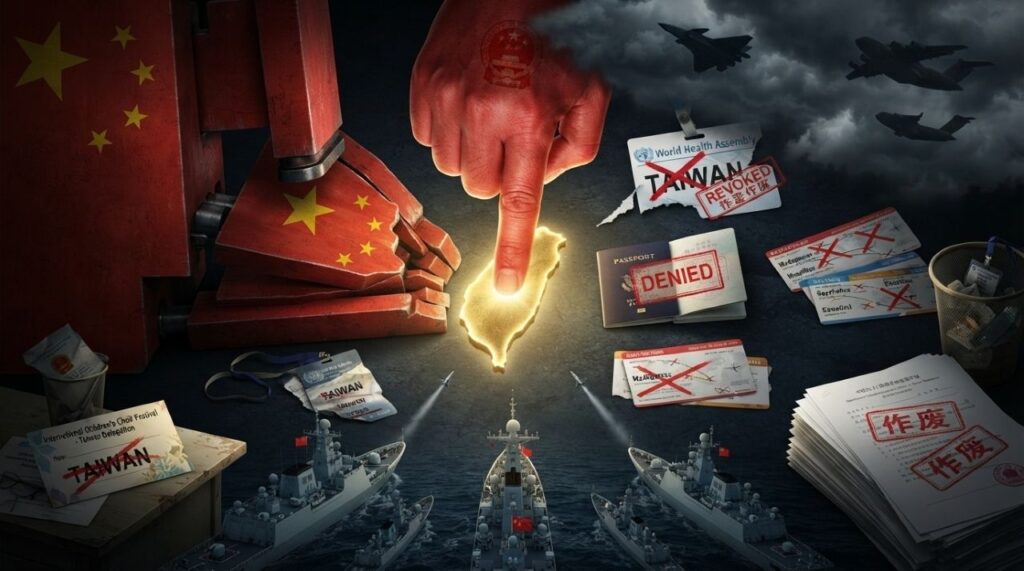
The campaign can look petty on the surface. A children’s choir. A coffee competition. A conference badge. Yet the pettiness is the point. Beijing’s position is that Taiwan cannot be treated as a separate political entity in any international setting, no matter how trivial, commercial or culturally insignificant it might seem.
That pressure reportedly intensified across Africa and the Pacific in recent months. Madagascar, Mauritius and the Seychelles withdrew permission for Taiwanese President Lai Ching-te’s aircraft to pass through their airspace during a journey to Eswatini, forcing a highly secretive flight plan. Taiwan was again excluded from the World Health Assembly. Kenyan authorities revoked visas for Taiwanese officials intending to attend the Our Ocean Conference, and delegates who reached the venue were denied entry.
Papua New Guinea then announced plans to close Taiwan’s representative office. Only 12 countries now formally recognise Taiwan, including several Latin American and Pacific states, Eswatini and the Vatican.
The smaller incidents are just as revealing. A Taiwanese children’s choir withdrew from a global choral symposium in Macau after organisers reportedly objected to a name suggesting Taiwan was a distinct country. At a latte-art championship in San Diego, a Taiwanese winner’s affiliation was changed from “Taiwan” to “Chinese Taipei", following naming conventions used by some international sporting bodies.
These cases may seem absurd, and they are. But they are also meaningful. Taiwan’s international status is built not only through embassies and formal recognition but also through thousands of mundane interactions: cultural exchanges, business events, medical meetings, educational programmes and private-sector participation. Restrict those spaces consistently enough and international isolation becomes more than a diplomatic slogan.
For Taiwan, every removed reference, blocked delegation and altered label reinforces the sense that Beijing is attempting to erase its distinct identity from public life. For Beijing, allowing even symbolic recognition can look like a dangerous precedent. This is why a choir or barista can be dragged into a geopolitical conflict that they neither asked for nor understand.
The campaign matters even more because it is unfolding alongside sustained military and paramilitary activity around Taiwan. Economic, diplomatic and military pressure do not operate separately. They reinforce one another: isolate Taiwan internationally, make engagement more costly for other governments, and gradually normalise Beijing’s claim that Taiwan has no independent place in the world.
China’s Weakness Is Driving Its Export Strength
One of the most important arguments in the current debate comes from Logan Wright of the Rhodium Group, author of Broken China: How the Economic Model Shattered and What It Means for the World. His central point is not that China is about to implode. It is that Beijing’s traditional policy machinery is becoming progressively less effective.
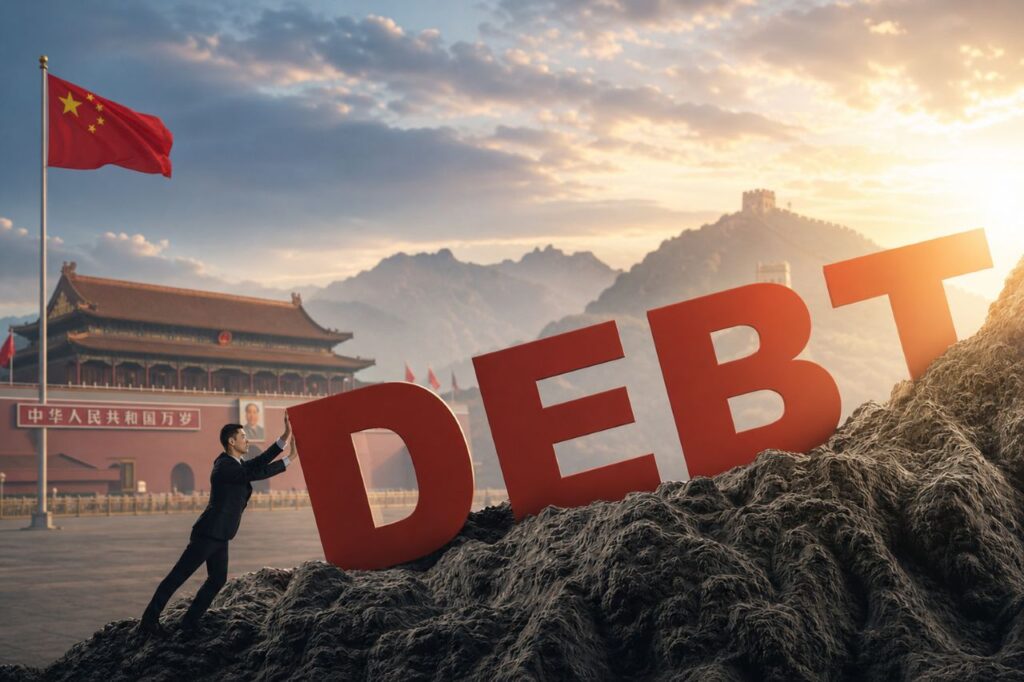
After the 2008 global financial crisis, Chinese banks added around $27 trillion in assets between 2008 and 2017. Much of that lending flowed into property, infrastructure and local-government projects that did not generate enough return to service their debts. China’s banking system now holds around $72 trillion in assets, while policymakers have generally preferred rolling over troubled debt to recognising losses and restructuring failed borrowers.
That approach can prevent an immediate financial crisis. It can also turn the economy into a zombie factory: credit continues to flow, but too much of it supports weak borrowers and unproductive investment rather than genuinely new growth.
Annual lending growth has reportedly fallen to 5.3%, less than a third of the pace seen during the boom years. Property weakness has crushed local-government revenues, while fiscal deficits are estimated at 9% to 10% of GDP. The old strategy of borrowing and building is becoming less potent precisely when Beijing needs an alternative growth engine.
Wright also disputes the strength of official GDP figures. China reported average annual growth of 4.6% between 2022 and 2025, while Rhodium Group’s estimate places plausible growth closer to 1.5% to 2%. On that reading, China’s share of global GDP has fallen from 18.5% in 2021 to perhaps 15%, while the United States’ share has risen to roughly 26%.
That does not mean China is unimportant. Far from it. It means the nature of the challenge has changed.
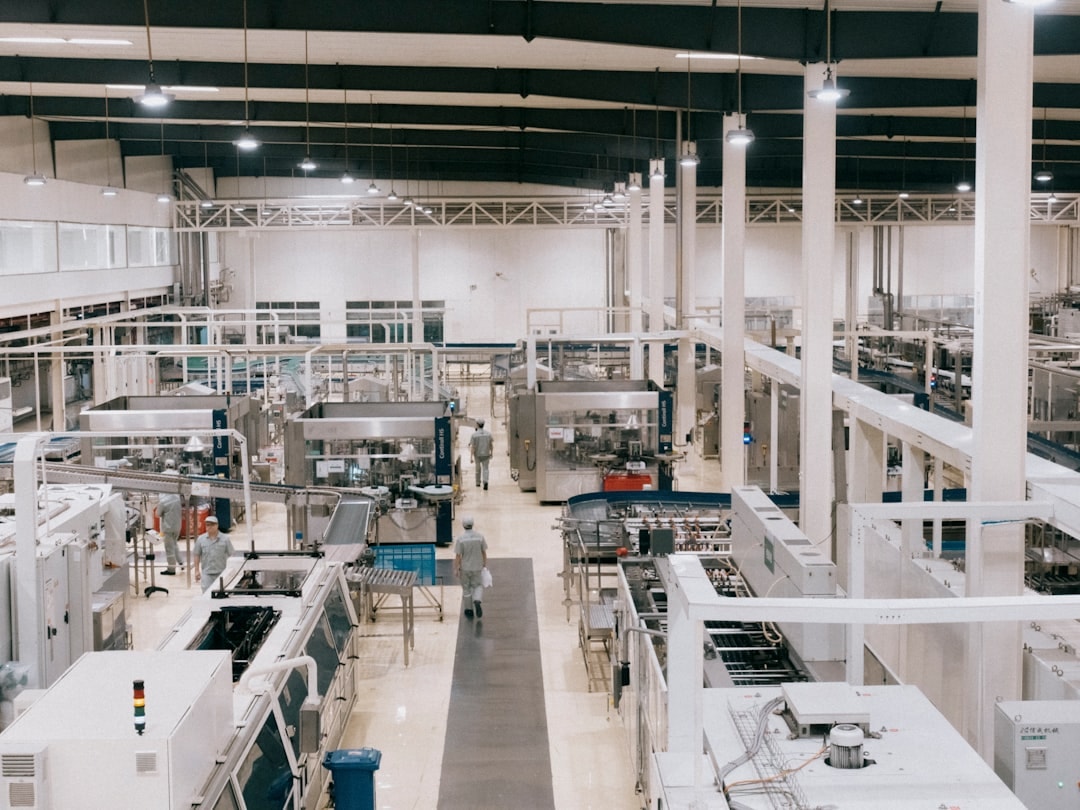
With the property market unable to absorb steel, chemicals and other industrial output, Chinese companies have slashed prices and pushed excess production overseas. China recorded a $1.2 trillion trade surplus last year, exporting around $3.8 trillion in goods. Export success, in other words, is partly a symptom of domestic weakness.
This is the contradiction at the centre of China’s economic model. The country can appear extraordinarily powerful because it is exporting so much. Yet it is exporting so much because its domestic economy cannot absorb what its factories continue producing.
That is why the EU story matters so much. Cheap Chinese imports can weaken foreign manufacturers, deter investment and deepen dependence on Chinese supply chains. Beijing’s rare-earth restrictions show that commercial dependence can become political leverage very quickly. For more context on how energy shocks, industrial inflation and supply-chain strain can compound these vulnerabilities, see this report on China’s producer-price pressures and debt strain.
The West Has Leverage—If It Can Stop Fighting Itself
Wright’s proposed response is not to relax technology restrictions every time Beijing threatens export controls. Instead, he argues that the United States and its allies should use China’s dependence on foreign consumer demand as leverage.
That could mean targeted tariffs, quotas and technical standards in sectors where Chinese exports are expanding quickly, including industrial robots, machine tools, chemicals and ships. It also means investing aggressively in domestic manufacturing and alternative supply chains.
The logic is reasonably straightforward. China’s control of rare-earth processing and other chokepoints can cause immediate disruption, but high prices create incentives for competitors to develop alternative mines, processors and supply routes. Beijing’s leverage weakens once other producers secure even a modest share of supply.
China’s need for overseas customers is more difficult to replace. No country can easily redirect enormous volumes of exports if access to major Western markets is restricted. The danger for Washington and Brussels is that they will fail to coordinate, undermine each other with conflicting policies, and allow China to entrench its supply-chain position while everyone argues about who should pay the political cost.
China remains formidable. It has industrial scale, technological capability and strategic leverage that should not be underestimated. But it is no longer obvious that it is destined to eclipse the United States economically. It looks increasingly like a slowing, export-dependent power trying to preserve an industrial model that its own domestic economy can no longer comfortably sustain.
That creates an opening for democracies willing to act together. The only problem, as usual, is whether they can manage it.
Frequently Asked Questions
Why is China’s trade surplus with Europe such a concern?
A large and growing trade surplus can mean European firms lose market share, investment and manufacturing capacity. The concern is not simply the size of the deficit, but whether low-priced Chinese industrial exports are displacing strategically important European production.
What does CXMT’s IPO mean for China’s semiconductor ambitions?
CXMT’s listing gives China a major source of capital for memory-chip development and signals strong investor confidence in Beijing’s drive for technological self-sufficiency. It does not eliminate China’s semiconductor vulnerabilities, but it could help reduce dependence on foreign suppliers over time.
Why does Beijing care about Taiwan’s participation in cultural events?
Beijing treats names, invitations and affiliations as part of the broader struggle over Taiwan’s political status. Restricting Taiwan’s presence in cultural, commercial and international settings reinforces China’s claim that Taiwan cannot be represented as a separate entity.
Is China’s export strength evidence of economic health?
Not necessarily. Strong exports can reflect productive competitiveness, but they can also result from weak domestic demand and excess industrial capacity. In China’s case, the record trade surplus is increasingly seen as partly driven by a property downturn and insufficient domestic consumption.
What leverage do the United States and its allies have over China?
China relies heavily on access to foreign consumer markets. Coordinated and carefully targeted trade measures, combined with investment in alternative supply chains, could reduce dependence on Chinese production while increasing pressure on Beijing to reform its economic model.