
Healthcare systems depend on Chinese pharmaceutical and biotech supply chains.
Three developments stood out this week in China’s political economy and strategic landscape.
First, Beijing is intensifying efforts to stop money, technology, companies, and talent from leaving the country. Second, China’s oil imports fell sharply as the leadership leaned on reserves and weaker demand cushioned the shock from the Hormuz crisis. Third, a new U.S. policy report is raising alarms about how deeply Western healthcare systems depend on Chinese pharmaceutical and biotech supply chains.
Taken together, these stories point in the same direction. China is moving further toward a security-first economic model, one built around tighter state control, strategic stockpiles, and reduced vulnerability to external pressure. Whether that model proves resilient or brittle is the larger question hanging over all three stories.
Table of Contents
- 1. Beijing’s capital crackdown is becoming much broader
- 2. This is no longer just about money leaving China
- 3. China’s oil imports dropped hard, but not because of panic buying
- 4. Strategic reserves are doing exactly what they were built to do
- 5. A U.S. report warns that pharmaceutical dependence on China runs deeper than many assume
- 6. The pharma challenge is not only manufacturing, but innovation too
- 7. The bigger pattern: security logic is now driving economic policy
- What to watch next
- FAQ
1. Beijing’s capital crackdown is becoming much broader
China’s effort to stem capital flight is no longer a narrow regulatory campaign aimed at a few offshore loopholes. It is becoming something much bigger.
International private banks are pulling back from mainland-facing activity as compliance risks rise. Some institutions have delayed events, restricted staff travel, and tightened internal controls. That kind of behaviour matters because it shows concern is no longer limited to Chinese regulators. Global financial firms themselves are reassessing how exposed they want to be.
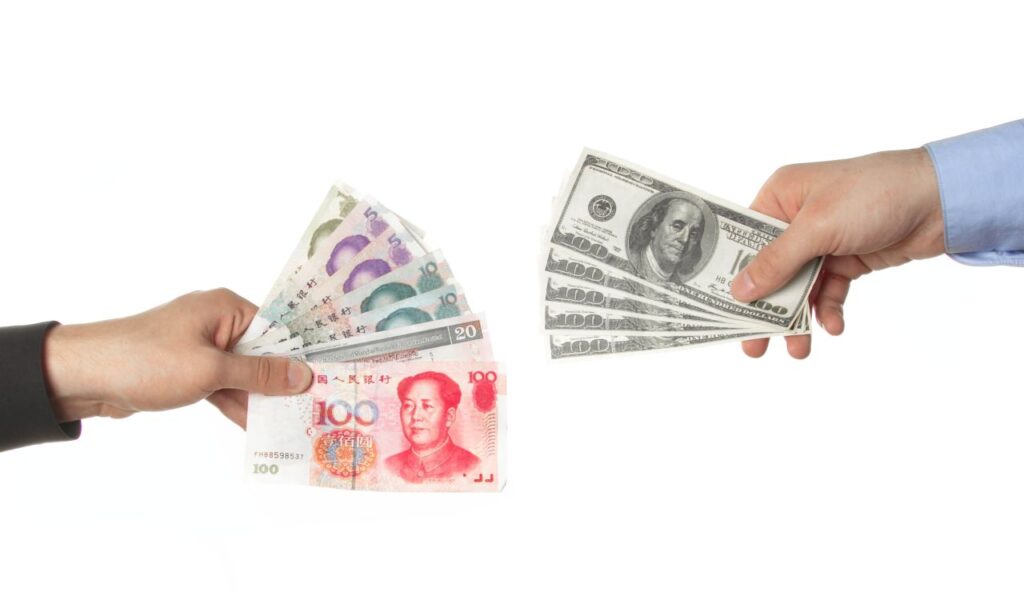
The backdrop is simple enough. Chinese residents have been trying to move money abroad at scale, driven by weak confidence in the domestic economy and a desire to diversify into offshore assets. Estimates for resident outflows in 2025 reached extraordinarily high levels, underscoring just how difficult it has become for Beijing to keep capital at home.
Authorities have responded with a much more aggressive enforcement push. Online brokers that provided offshore trading access to mainland investors without proper approval have been hit with heavy fines. Retail accounts that do not meet the new rules are being wound down over a transition period. There are also tighter controls around using mainland bank cards to buy Hong Kong insurance products, an area long used as a quasi-offshore wealth channel.
Tax enforcement is also part of the story. Chinese authorities are stepping up efforts to collect taxes on offshore income, while Hong Kong banks are being pushed to ask new clients to confirm that their investment funds originated outside the mainland. That may sound technical, but it is actually very important. Hong Kong has historically functioned as a gateway for mainland money seeking access to international assets. If that gateway narrows, one of the most established pressure valves in the system becomes harder to use.
For Hong Kong’s financial sector, this is not a side issue. Mainland clients have long been central to business in banking, insurance, and wealth management. If those flows are constrained, the city loses part of the role that made it so valuable in the first place.
Several state-backed Chinese banks in Hong Kong have reportedly already stopped opening some new offshore wealth accounts for mainland customers. International banks, meanwhile, are conducting more due diligence on who their clients are and where their money comes from. This is what a real tightening cycle looks like in practice. Not one dramatic announcement, but a rolling series of restrictions that steadily reduce room to manoeuvre.
This is no longer just about money leaving China
The more important shift is that Beijing is not just trying to stop capital from exiting. It is building a framework to control the outward movement of strategic assets more generally.
New outbound investment rules introduced by the State Council require national security reviews for Chinese companies investing overseas. That follows earlier measures that expanded the government’s power to step in when foreign businesses try to move supply chains out of China. When you put these policies together, the direction is unmistakable.
China is constructing a more tightly managed economic perimeter around finance, technology, industrial know-how, and strategic production capacity.
This is why the idea of a “Fortress China” keeps coming up in commentary. The term captures the logic fairly well. In an era of worsening competition with the United States and Europe, Beijing appears increasingly convinced that economic openness carries too much strategic risk.
The new framework reportedly allows projects to be categorised as encouraged, restricted, or prohibited. Regulators can review not only capital flows, but also the transfer of talent and intellectual property, especially in sectors seen as strategically important. That is a major evolution from earlier outbound investment crackdowns, which tended to focus more on financial risk and speculative overseas acquisitions.
Now the emphasis is national security.
That difference matters. A broad national security standard gives authorities far more discretion. It also creates more uncertainty for businesses trying to expand abroad. A company may be under pressure to internationalise because domestic growth is weak and trade barriers are rising, yet at the same time face more political scrutiny if that expansion involves technology, expertise, or industrial capacity that Beijing wants to keep close.
There is also a retaliatory element. The rules establish a basis for countermeasures against foreign governments or firms that restrict Chinese investment. In other words, outbound investment policy is being folded into China’s wider strategic toolkit rather than treated as a purely commercial issue.
Seen in a global context, China is not alone in tightening controls. The United States has moved to limit investment into sensitive Chinese sectors like advanced chips, artificial intelligence, and quantum technologies. Europe has also become more cautious. But China’s definition of national security tends to be much broader, which leaves regulators with more flexibility to intervene across a wider range of economic activity.
That is the broader structural story. The age of relatively free movement in trade, capital, knowledge, and people is being replaced by a world shaped more directly by strategic competition. China’s version of that shift is especially stark because it combines external pressure with internal stress.
Economic growth has slowed. Capital outflow pressure remains intense. Social tensions, including labour disputes and protests, have reportedly become more sensitive politically. In that environment, the leadership appears to be choosing control over liberalisation.
For more background on the wider economic pressures shaping this environment, this analysis of China’s fragile recovery narrative adds useful context.
China’s oil imports dropped hard, but not because of panic buying
The second major story is energy.
China’s crude oil imports fell in May to their lowest level in roughly a decade, even as global markets dealt with the shock of war involving Iran and effective disruption through the Strait of Hormuz. On the surface, that looks counterintuitive. You might expect the world’s largest crude importer to rush into the market under those conditions.
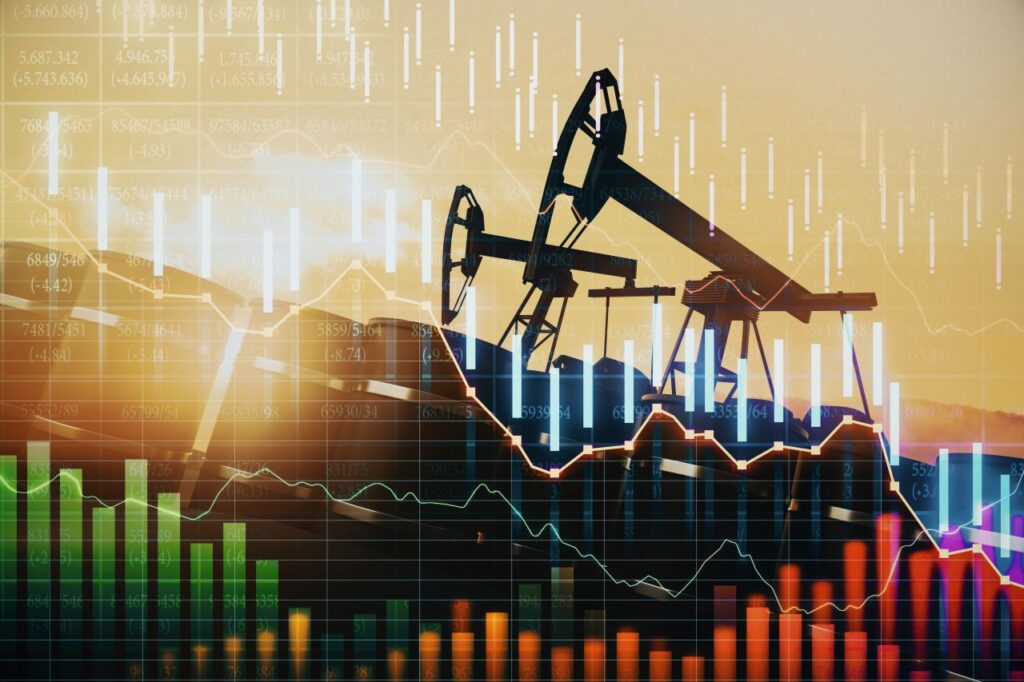
That did not happen....
Instead, Chinese refiners appear to have pulled back, drawing on existing inventories while domestic demand remained soft. Import volumes dropped far below the average pace seen across the previous year. Analysts attributed the decline to a mix of weaker consumption, refinery run cuts, and the fact that China already had substantial oil on hand.
This matters for two reasons.
First, it helped ease some of the upward pressure on global prices. When a buyer as large as China steps back from the market during a supply shock, that takes some strain out of the system.
Second, it says something important about how China’s economy is changing. Oil still matters enormously, and it would be a mistake to exaggerate this episode into proof that China is somehow no longer vulnerable to oil shocks. It remains the world’s largest crude importer. But its sensitivity to price spikes may be gradually declining at the margin.
There are several reasons for that. Electric vehicle adoption has been rapid. LNG-powered trucking has expanded. High-speed rail continues to reduce reliance on more oil-intensive transport modes. And when fuel prices rose sharply earlier in the year, retail fuel sales volumes reportedly fell by a similar amount, which suggests demand was not especially robust to begin with.
In other words, part of the story is resilience, but part of it is weakness.
Refiners have cut operations sharply. Output in May and June was estimated at levels not seen since the early pandemic period. State-owned giants and private refiners alike reduced production as refining margins weakened and supply uncertainty remained high.
So while China’s ability to absorb disruption through stockpiles may look impressive from one angle, it also reflects sluggish underlying demand and a cautious industrial outlook.
Strategic reserves are doing exactly what they were built to do
If there is one clear takeaway from the oil story, it is that Beijing’s emphasis on strategic reserves is paying off in the short term.
Commercial refinery inventories reportedly fell during May, while China’s strategic petroleum reserves increased. That combination is striking. It suggests officials are trying to manage energy security in a more coordinated way, balancing commercial use with state stockpiling.
The leadership has been reinforcing that message publicly. During a recent inspection tour, Premier Li Qiang visited national and commercial storage facilities and called for better coordination between strategic and market-based reserves. The message was straightforward: in an unstable world, storage capacity and deployment mechanisms are not a technical issue. They are a core pillar of national resilience.
There is also a longer-term ambition here. Beijing wants greater influence over global commodity pricing, including through domestic trading hubs and benchmark development. That ambition is not new, but every external shock gives it fresh urgency. If China can use reserves, state coordination, and market scale to buffer turbulence better than others, it strengthens the case inside the system for deeper state management of key commodities.
This is one reason the energy story links so neatly back to the capital control story. Both point toward the same policy instinct. Build buffers. Tighten chokepoints. Reduce exposure. Expand state capacity to direct outcomes during crisis.
For a broader snapshot of recent China developments across energy, trade, technology, and security, the China News Bytes roundup is a useful companion read.
A U.S. report warns that pharmaceutical dependence on China runs deeper than many assume
The third development came from Washington, where the Council on Foreign Relations published a report focused on pharmaceutical and biotechnology supply chain dependence on China.
The warning is not limited to cheap generic drugs. It extends into critical hospital medicines, biologics manufacturing, synthetic DNA, and parts of the biotech innovation pipeline itself.
The core argument is that U.S. and allied dependence on Chinese-linked pharmaceutical supply chains has become a national security vulnerability. That vulnerability is not always obvious because the final product may be manufactured elsewhere. But the upstream inputs, starting materials, chemical precursors, and key production dependencies often still trace back to China.
That means apparent diversification can be misleading.
A medicine may arrive from India or another third country yet still rely on Chinese-origin inputs earlier in the production chain. If those earlier links are disrupted, shortages can spread quickly across multiple manufacturers at once.
The report highlights several categories of concern, including drugs used to prevent organ transplant rejection, broad-spectrum antibiotics used in hospital settings, blood thinners, and key ingredients that feed into common medicines. The point is not that China supplies every finished product directly. The point is that it holds influence over enough critical nodes in the system to create serious risk if a disruption occurs.
And that risk is not purely hypothetical. Beijing has shown in other sectors that it is willing to use supply chain dominance as geopolitical leverage. Rare earths are the obvious example. The report argues that similar logic could apply in pharma and biotech under the right political circumstances.
Even without deliberate coercion, the system already looks fragile. Recent medicine shortages have forced hospitals and healthcare providers to ration treatment, delay procedures, and use inferior substitutes. Those disruptions happened under normal market stress rather than a full-scale geopolitical confrontation. That is why policymakers are paying more attention.
The pharma challenge is not only manufacturing, but innovation too
One of the more important points in the report is that dependence is shifting beyond manufacturing and into innovation.
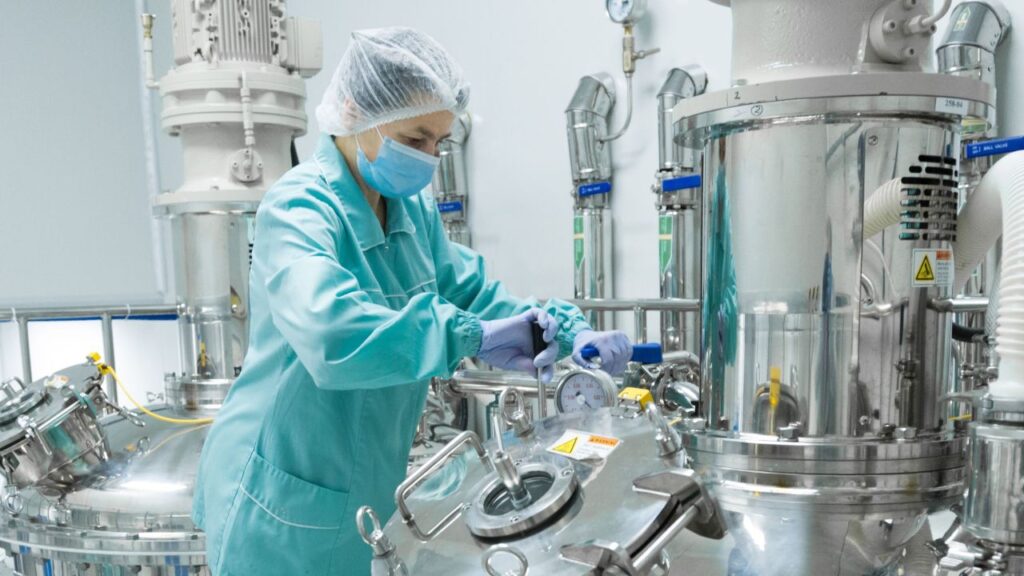
Chinese biotech firms are taking on a larger role in drug discovery, clinical trials, biologics development, and synthetic biology. U.S. companies are increasingly entering licensing agreements and partnerships with Chinese firms. That may make commercial sense in the short term, but it also means know-how, data, and intellectual property can migrate abroad along with production capacity.
In other words, the issue is not simply where a pill is made. It is who controls the upstream science, the trial ecosystem, the production expertise, and the specialised inputs needed to bring advanced therapies to market.
This is very much in line with a broader trend in strategic competition. Countries are no longer worried only about access to raw materials or low-cost assembly. They are also worried about control over the platforms and ecosystems that make advanced industries possible in the first place.
That same theme has shown up repeatedly in sectors from semiconductors to batteries to critical minerals. Pharma is now joining the list.
If you want a related look at how Chinese innovation is becoming more central to global industry, including biotech, this piece on Big Pharma’s turn toward China offers a helpful companion perspective.
7. The bigger pattern: security logic is now driving economic policy
These three stories are different on the surface, but they all fit within the same larger pattern.
- Capital controls are tightening because Beijing wants to keep money, talent, and strategic capabilities inside the system.
- Energy policy is centred on reserves, coordination, and shock absorption rather than trust in open markets alone.
- Western concern over pharmaceutical dependence reflects a wider breakdown in the old assumption that global supply chains are primarily about efficiency.
Security logic is displacing market logic across more and more sectors.
That does not mean economics no longer matters. Of course it does. But the hierarchy is changing. Governments are increasingly willing to accept higher cost, lower efficiency, and more friction if it buys resilience, leverage, or strategic insulation.
China’s leadership seems especially committed to this shift. The state is not simply responding to outside pressure. It is actively reorganising parts of the economy around a view that instability, confrontation, and fragmentation are likely to define the years ahead.
That is the real significance of this week’s China News Update. It is not just a story about a few policy changes or market moves. It is another sign that the operating system is changing.
For readers tracking these themes regularly, the China Update channel remains a useful source for ongoing analysis of China’s economy, politics, and geostrategy.
What to watch next
Several questions now matter more than ever.
- Will tighter capital controls actually slow outflows, or simply push more activity into harder-to-monitor channels?
- Can Chinese firms continue expanding abroad if outbound investment is increasingly treated as a national security issue?
- Will low oil imports prove temporary, or do they signal a more durable combination of weak demand and improved energy buffering?
- How quickly will the U.S. and its allies move from diagnosing pharmaceutical dependence to actually rebuilding domestic or allied capacity?
Each of these questions points to the same underlying reality. Economic openness is no longer the default assumption. It is increasingly conditional, contested, and subordinated to strategic priorities.
FAQ
Why is China tightening capital controls now?
Beijing appears to be responding to large-scale capital outflows, weak domestic confidence, and a broader desire to keep strategic financial resources inside the country. The policy shift also reflects rising concern about economic security amid intensifying competition with Western economies.
What does “Fortress China” mean in this context?
It refers to a more closed and security-focused economic model in which the state works to control the movement of money, technology, companies, talent, and supply chains. The goal is to reduce external vulnerability and preserve strategic capacity at home.
Why did China’s oil imports fall even during a major supply shock?
China relied more heavily on existing inventories and strategic reserves while domestic demand remained soft and refiners cut runs. Rather than panic buying, the system absorbed some of the disruption internally.
Does lower oil demand mean China is no longer vulnerable to oil shocks?
No. China is still the world’s largest crude importer. But expanding electric vehicle use, LNG trucking, rail infrastructure, and reserve capacity may be reducing its short-term sensitivity at the margin.
Why are policymakers worried about pharmaceutical dependence on China?
Because dependence often exists upstream in chemical precursors, starting materials, and specialised production inputs, even when final medicines are made elsewhere. That creates hidden vulnerabilities that could trigger shortages during disruption or geopolitical tension.
Is the pharmaceutical issue only about cheap generics?
No. The concern extends into critical hospital drugs, biologics, synthetic DNA, and parts of the biotech innovation ecosystem. The issue is increasingly about control over advanced capabilities, not just low-cost manufacturing.