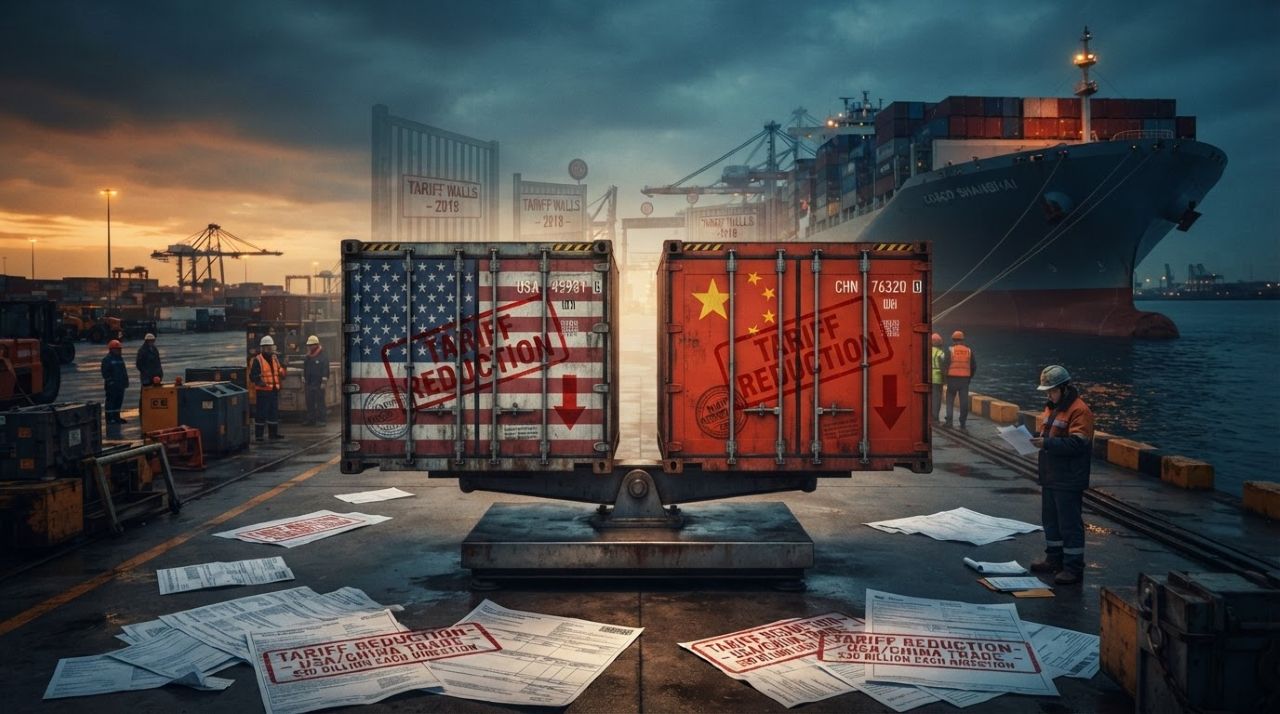

China is facing pressure across several fronts at once. A prominent economist has raised doubts about the true scale of unemployment. Trade tensions with Europe are hardening as China’s surplus reaches new highs. The US-China trade truce is showing renewed strain over rare earth supplies. And a leading China analyst has issued a sober warning about the risks surrounding Taiwan in 2028.
None of these developments exists in isolation. Together, they illustrate the core challenge confronting Beijing: an economy struggling to generate broad domestic momentum while its export model produces a rising international backlash and geopolitical competition becomes more intense.
Table of Contents
- China’s Broad Unemployment Rate May Be Above 10%
- China’s Record EU Trade Surplus Raises the Prospect of New Restrictions
- The US-China Trade Truce Is Under Pressure Over Rare Earths
- Why Taiwan in 2028 Is Becoming a Key Risk Scenario
- A Difficult Economic and Strategic Picture
- Frequently Asked Questions
China’s Broad Unemployment Rate May Be Above 10%
Li Daokui, dean of Tsinghua University’s Academic Centre for Chinese Economic Practice and Thinking, has delivered a remarkably direct assessment of China’s economy. His argument is that the economy has been “running cold” for roughly three years, with weak employment and falling investment emerging as central problems.

The headline figure is striking. Li’s research team estimates that China’s broad unemployment rate could stand at 10.2% once discouraged workers are included. These are people who are able to work but have stopped actively looking for jobs and therefore do not appear in the official labour-force statistics.
The team estimates that about 24 million people fall into this category, including around 13 million people aged 16 to 24. That matters because China’s official urban unemployment rate has remained around 5% in recent months, suggesting a substantially healthier labour market than the broader measure implies.
Official data naturally capture only those counted within the labour force. If a graduate, migrant worker, or laid-off employee gives up searching because opportunities appear unavailable, they can disappear from the headline unemployment number without finding work. That is the gap Li is drawing attention to.
Questions over youth employment have already been politically sensitive. Authorities revised the methodology for calculating youth unemployment after the earlier measure reached record levels in 2023. Li’s assessment adds to the concern that the underlying employment problem may be more extensive than the official headline rate conveys.
This is especially important in an economy where weak household confidence, a prolonged property downturn, and rapid adoption of artificial intelligence are all reshaping employment prospects. For a fuller look at the strain affecting workers and the wider policy environment, see this report on migrant labour stress and China’s tightening economic pressures.
Investment Is No Longer Carrying the Economy
Li’s second major concern is fixed-asset investment. Investment has historically been one of China’s most important growth engines, whether through property construction, infrastructure, manufacturing capacity, or local government development projects.

But the numbers now point in the opposite direction. According to Li, fixed-asset investment contracted throughout 2025 and was down 4.1% year on year during the first five months of 2026. A sustained fall of this kind is highly unusual in modern Chinese economic history.
The significance goes beyond a single indicator. Investment supports construction activity, industrial orders, local government revenue, employment, and credit growth. When it weakens for an extended period, the effects spread through the economy.
Li argues that the main problem is not simply a K-shaped recovery where high-tech sectors thrive while older industries struggle. His view is more worrying: weakness is becoming widespread. The bottleneck, he says, is financially constrained local government.
Local authorities have traditionally played an outsized role in driving economic activity. They fund infrastructure, guide investment, manage local development and, in many places, rely heavily on land-related revenue. Financial stress leaves them less able to support new growth, just as the old property-led model has weakened.
Li’s proposed response is more government borrowing, particularly at the central level, to strengthen local governments and give them greater capacity to support economic transformation. This is a significant intervention because it identifies fiscal constraints, rather than simply a lack of private-sector optimism, as a key barrier to recovery.
Beijing’s latest five-year plan has also dropped a fixed target for new urban jobs between 2026 and 2030. Employment targets will instead be adjusted annually according to economic conditions. That is a notable shift after decades of fixed headline goals, and it has understandably fuelled speculation that policymakers are becoming more cautious about the labour-market outlook.
China’s Record EU Trade Surplus Raises the Prospect of New Restrictions
Trade friction between China and the European Union is intensifying. Chinese customs data showed that China’s trade surplus with the EU reached US$32.9 billion in June, up 27% from a year earlier. Exports to Europe also reached an all-time monthly high.
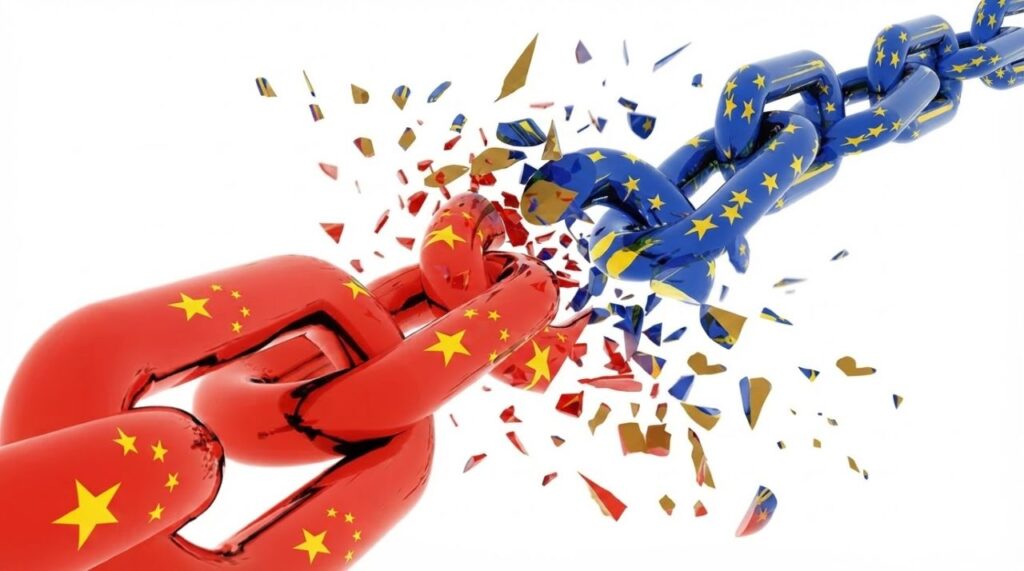
Across the first half of 2026, Chinese exports to the EU rose 17% to US$312.3 billion. EU exports to China increased by 9% to US$135.6 billion. The direction of travel is clear: trade is expanding, but the imbalance is expanding faster.
The picture varies by country. China’s surplus with Germany, Europe’s largest economy and industrial centre, more than doubled from a year earlier. Its surplus with France, by contrast, fell sharply by 81%. Yet the larger political issue in Brussels is not one country’s monthly result. It is the broader concern that Chinese industrial exports are putting mounting pressure on European manufacturers.
Electric vehicles, machinery and industrial goods sit at the centre of the dispute. European policymakers increasingly argue that Chinese companies benefit from extensive state support, enabling them to compete at prices European rivals cannot easily match either inside Europe or in export markets.
An EU deputy director general for trade has warned that safeguard measures could be used on a case-by-case basis if import surges continue. Such tools can include tariffs and import quotas. The European Commission appears to be preparing contingency options if negotiations with Beijing fail to produce meaningful progress before an October deadline.
Currency valuation has become another source of tension. Deutsche Bank analysts estimate that the yuan is roughly 15% below fair value against the euro under purchasing-power-parity and external-balance measures. In their assessment, that gives Chinese exporters an additional competitive advantage. Beijing rejects the allegation that it uses competitive devaluation to support exports.
The practical conclusion is that Europe’s patience is wearing thin. If the trade gap continues to widen and no agreement is reached, fresh EU defensive measures become increasingly likely. That would create another serious front in the global resistance to China’s export-driven growth model.
Related concerns about Europe’s willingness to strike a workable economic balance with Beijing are explored in this analysis of EU trade doubts and broader pressure on China.
The US-China Trade Truce Is Under Pressure Over Rare Earths
On the surface, Washington and Beijing are still preserving a broader trade truce. Beneath that surface, however, frustration is growing over access to critical minerals and rare earths.
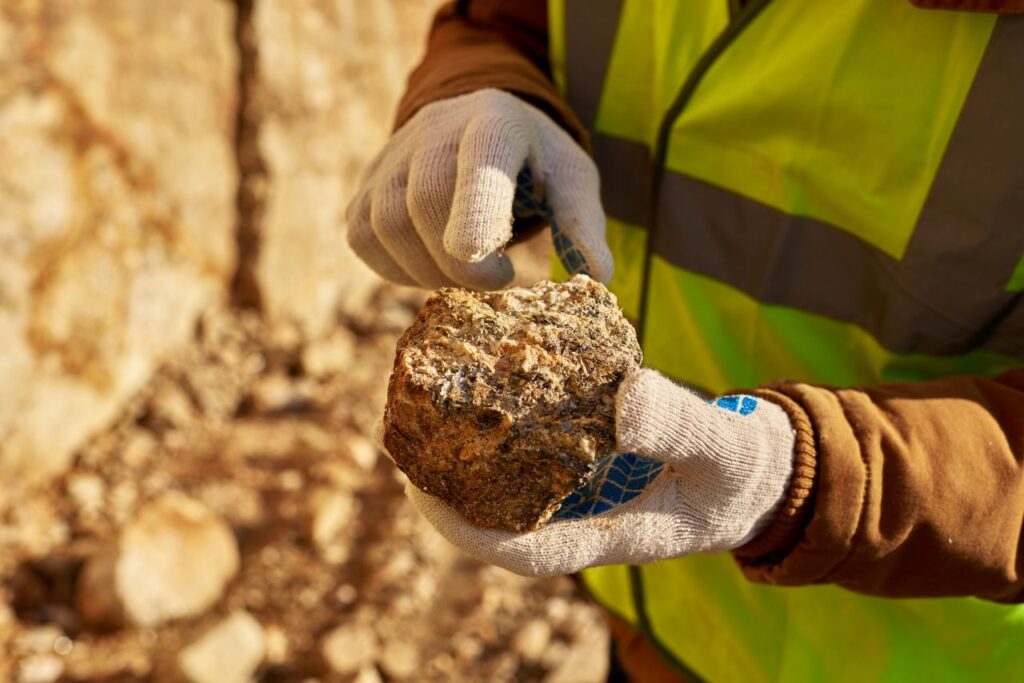
Reports indicate that senior Trump administration officials believe Beijing has not honoured key expectations from last year’s agreement between Donald Trump and Xi Jinping in South Korea. The central issue is whether China has restored access to rare earth materials in the way Washington expected.
US officials are reportedly frustrated but reluctant to take the dispute public. Public criticism could complicate preparations for Xi’s planned September state visit to Washington. It could also prompt Chinese retaliation and unsettle financial markets before the US midterm elections in November.
Treasury Secretary Scott Bessent and US Trade Representative Jamieson Greer have reportedly held repeated discussions with Chinese counterparts in an effort to secure more dependable supply for US manufacturers. So far, those efforts are said to have delivered limited progress.
The stakes are substantial because rare earths are not merely another trade product. They are deeply embedded in advanced industrial supply chains, including semiconductors, defence equipment and electric vehicles.
Former Trump trade adviser Peter Navarro has argued that the United States needs to reduce China’s dominance by investing in domestic mining, processing and alternative technologies. His argument is that Beijing can restrict supply enough to preserve leverage without triggering a full supply-chain collapse.
One particularly acute concern involves yttrium, a rare earth element used in semiconductor and defence technologies. Suppliers have warned that shortages could disrupt automotive, defence and semiconductor production later in the year if constraints persist.
There is also a possible new political complication. The White House is reportedly considering the release of previously classified intelligence concerning China’s alleged intentions or capabilities to interfere in the 2020 US election. The intelligence reportedly does not conclude that Beijing manipulated votes, but its release could nevertheless worsen an already delicate relationship.
The broader point is that US-China competition now extends far beyond tariffs. Critical minerals, technology supply chains, industrial resilience and national security are increasingly inseparable. A trade truce may reduce immediate escalation, but it does not resolve the strategic contest beneath it.
Why Taiwan in 2028 Is Becoming a Key Risk Scenario
The final development is perhaps the most disturbing. Former Australian prime minister and veteran China analyst Kevin Rudd has warned that Xi Jinping could miscalculate over Taiwan in 2028.
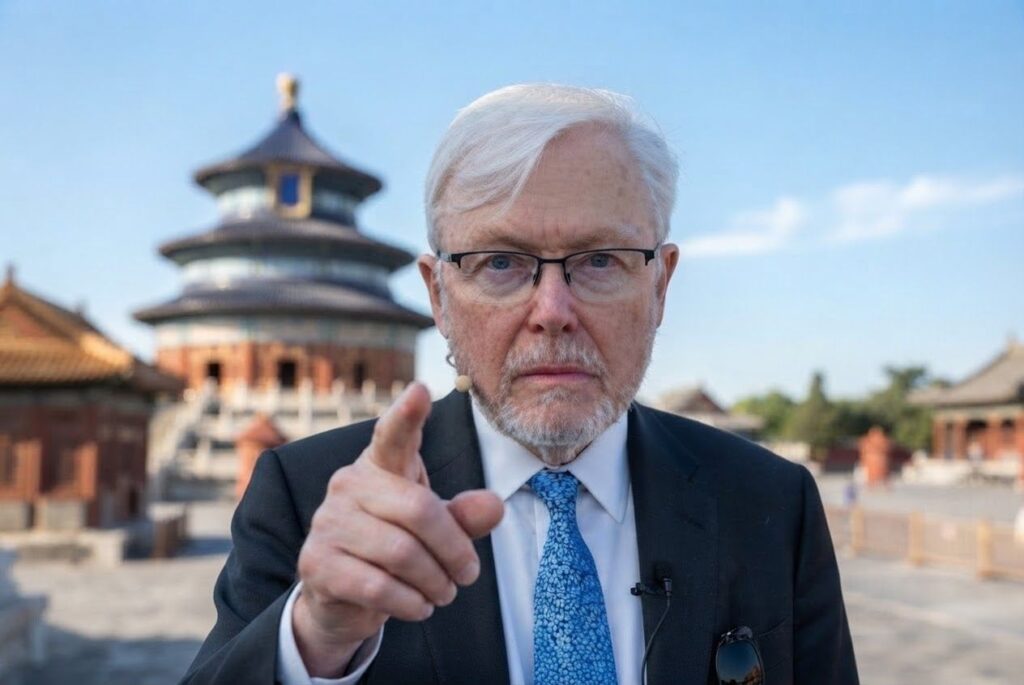
Rudd’s focus on 2028 is deliberate. Taiwan will hold a presidential election in January of that year. If the Democratic Progressive Party is re-elected, it would mark a fourth term for a party that Beijing views as deeply objectionable because of its independence-leaning political orientation.
Rudd does not claim that a DPP victory is certain. He puts the prospect at roughly 50-50. His concern is the calculation Beijing might make after such an election, particularly if Chinese leaders conclude that US willingness or ability to intervene has been weakened by events in Iran.
That assessment could involve two different considerations:
- Political resolve: Beijing could question whether US leadership would deploy forces in a Taiwan crisis after a major Iran-related confrontation.
- Military capacity: Beijing could assess whether US stockpiles, weapon availability and wider capabilities had been depleted or impaired.
The danger, in Rudd’s framing, is excessive confidence. Xi could conclude that a unique strategic opening had emerged. Yet acting against Taiwan would also risk making a US president appear weak, something Rudd argues Donald Trump is particularly unwilling to accept.
Rudd also pushed back against the assumption that purges within the People’s Liberation Army necessarily make military action less likely. The PLA is enormous, and replacing purged officials does not eliminate China’s military capacity or political ambition.
His larger warning is against treating China’s demographic decline, slower growth and internal stresses as though they solve the strategic problem. They do not. China remains formidable, particularly under a highly centralised leader with a vast surveillance apparatus and a powerful state behind him.
A Difficult Economic and Strategic Picture
China’s unemployment challenge, investment downturn, export surplus and geopolitical rivalry are interconnected. Weak domestic demand makes export growth more important. A more export-dependent model deepens trade imbalances. Those imbalances increase foreign protectionism. And geopolitical tensions over technology, minerals and Taiwan make economic relations harder to stabilise.
The central issue is not that China lacks industrial strength. It plainly has significant industrial strength. The issue is whether its economic model can generate durable domestic confidence and employment without producing ever-greater international friction.
For now, the answer remains uncertain. Beijing is confronting weaker investment, financially strained local governments and a labour market that may be far softer than official data suggests. Meanwhile, Europe is considering defensive trade measures, Washington is pressing for rare earth access, and the Taiwan question continues to carry profound strategic risk.
This is the difficult landscape now facing the world’s second-largest economy.
Frequently Asked Questions
Could China’s real unemployment rate be above the official figure?
Li Daokui’s research team estimates a broad unemployment rate of 10.2% when discouraged workers are included. China’s official urban unemployment rate is near 5%, but it does not include people who have stopped actively searching for work.
Why is falling fixed-asset investment a major concern for China?
Investment has traditionally been a major source of Chinese growth, supporting construction, industrial activity, local government revenue and employment. A prolonged decline signals weaker activity across much of the economy, not merely trouble in one sector.
Why is the EU concerned about China’s trade surplus?
European officials are concerned that rising imports of Chinese electric vehicles, machinery and industrial goods are intensifying pressure on European manufacturers. The EU may consider tariffs, quotas or other safeguard measures if import surges continue.
Why do rare earth supplies matter in US-China relations?
Rare earths are critical inputs for advanced technologies, including semiconductors, defence systems and automotive production. Supply restrictions can create major vulnerabilities for manufacturers and give China strategic leverage in negotiations with the United States.
Why does 2028 matter for Taiwan?
Taiwan is scheduled to hold a presidential election in January 2028. Kevin Rudd’s concern is that a DPP victory, combined with a possible Chinese perception of reduced US military resolve or capacity, could increase the risk of a dangerous miscalculation by Beijing.