
The Great Election Hack That Wasn’t: Why Trump’s Latest China Tirade is Pure Smoke and Mirrors
Trump is screaming about a massive 2020 cyber-heist. But if you look at the empirical reality of the data and the conspicuous lack of actual economic retaliation, it's clear this is just supply-chain politics dressed up as a national security crisis.
By Tony Fiddis: China Analyst
We are, once again, being dragged kicking and screaming into the exhausting, manufactured spectacle of American political theatre.
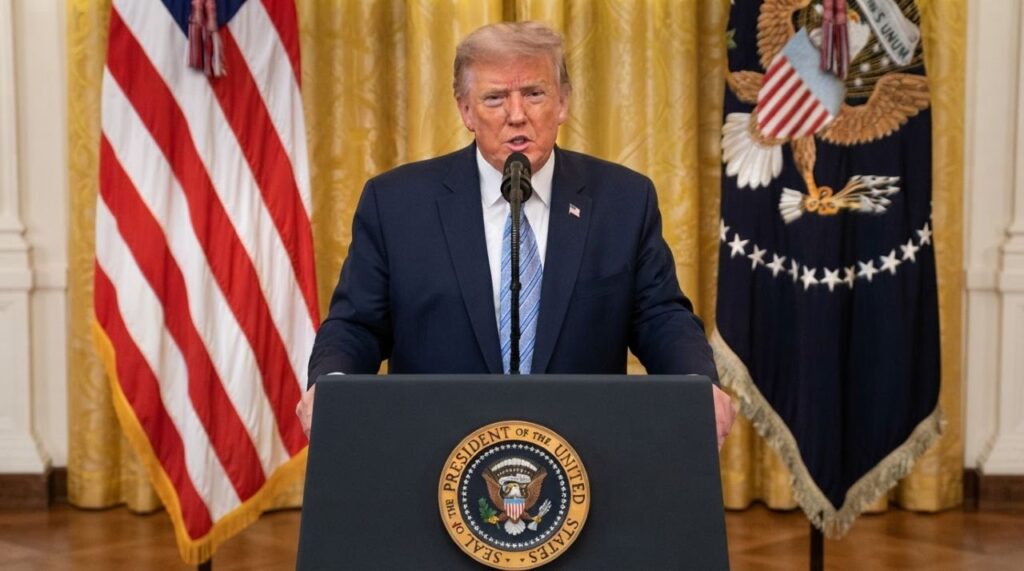
In a recent prime-time address from the White House, President Donald Trump stood before the nation and hurled a geopolitical hand grenade, accusing the Chinese government of executing an unprecedented cyber operation targeting the 2020 United States presidential election. According to the commander in chief, Beijing orchestrated the largest compromise of election data in human history, quietly syphoning off roughly 220 million voter records, complete with names, addresses, and intimately personal data. The alleged motive was simple: Beijing was terrified of his tariff policies and desperately wanted him out of the Oval Office.
If you take this claim at face value, it sounds like a devastating act of digital warfare. It sounds as though the very foundation of American democracy was hollowed out by a foreign adversary. But when you strip away the prime-time theatrics of the speech, what you are left with is a masterclass in domestic political manipulation, perfectly calibrated to avoid disrupting a highly fragile, desperately needed global supply chain. Never listen to the rhetoric. Look at the data, look at the structural reality, and the illusion quickly falls apart.
Let us start with the so-called hack itself.
The administration is waving the figure of 220 million stolen voter records around like a smoking gun. To the technologically illiterate, that number is terrifying. But we must look at the empirical reality of what voter registration data actually is in the United States. In many states, this information is practically public domain. It is routinely purchased, downloaded, and traded by domestic data brokers, marketing firms, and political campaigns.
The released intelligence documents accompanying the speech confirm this mundane reality. Yes, Chinese-linked actors downloaded voter registration data from several states. However, much of that information was already publicly available. Scraping public databases is not a sophisticated cyberattack; it is digital housekeeping and basic, low-level intelligence gathering.
More importantly, the administration’s own released documents do not show a shred of evidence that China altered a single vote, hacked a single voting machine, or penetrated any system capable of changing the election outcome. We do not have to guess about this. A comprehensive 2021 United States intelligence assessment explicitly concluded that absolutely no foreign actor attempted to manipulate voter registration, ballot casting, tabulation, or the reporting of results in the 2020 election.
Did Chinese hackers poke around? Yes. The intelligence indicates they mapped the email accounts of Joe Biden’s campaign staff. This is standard, albeit aggressive, statecraft. It is the digital equivalent of casing a building in preparation for future intelligence collection. But casing the building is not the same as blowing up the vault. Conflating routine espionage with the theft of an American election is not just factually bankrupt; it is a profound misunderstanding of how cybersecurity and foreign intelligence actually operate.
So, if the technical reality of the hack is this flimsy, why is the White House turning it into a prime-time spectacle?
The answer lies in the domestic purge. The president is not just pointing the finger at Beijing; he is using this inflated narrative as a battering ram against his own intelligence agencies. By accusing the American intelligence apparatus of deliberately concealing this evidence during his first term, he has manufactured a convenient justification for a sweeping institutional clean-out. He has already ordered four federal agencies to investigate this alleged deep-state cover-up, demanding the dismissal of responsible officials and pushing for criminal charges. It is a textbook authoritarian manoeuvre: invent a crisis, blame the institutional guardrails for failing to stop it, and then dismantle those very guardrails.
Unsurprisingly, Beijing’s response was swift and categorically dismissive. Chinese Foreign Ministry spokesperson Lin Jian branded the accusations as fabricated, malicious smears, reiterating the standard diplomatic boilerplate that China has never interfered in United States elections and has zero interest in doing so. The ministry rightly pointed out that Washington is simply using China as a convenient punching bag for its own domestic political issues.
But here is where the story shifts from a domestic political circus to a fascinating lesson in global macroeconomics.
If a foreign superpower truly committed the largest compromise of election data in history, you would expect an immediate, devastating retaliatory response. You would look for sanctions, expulsions, or trade embargoes.
Instead, the administration announced absolutely nothing. There are no new penalties, no new tariffs, and no shattered diplomatic ties.
Why the sudden restraint? Because behind the bluster, the United States and China are locked in a toxic, codependent economic death spiral.
For months, the two superpowers have been tip-toeing around a highly fragile trade truce. We have to remember that the global economy is currently a house of cards. Under this temporary arrangement, tariffs have been dialled back, aggressive restrictions on technology companies have been quietly paused, and, most crucially, the flow of critical supplies has resumed. Both sides have accused the other of incomplete implementation, but the agreement has largely prevented another major, catastrophic trade war.
If you want to know who really holds the cards, look at the supply chain. China controls the overwhelming majority of the world’s rare earth elements. These materials are the lifeblood of modern civilisation. Without them, you do not have electric vehicles, you do not have advanced artificial intelligence hardware, you do not have modern telecommunications, and you certainly do not have a functional military-industrial complex. If Washington were to actually slap severe retaliatory sanctions on Beijing over this 2020 data scrape, China could cut the rare earth supply chain tomorrow. The resulting economic shockwave would crater the Western economy right as the administration is trying to project stability.
The leadership knows this. The advisors know this. The bluster is free, but the tariffs are expensive.
This dynamic sharply contrasts with the end of the president's first term. Back in the 2020 campaign, after signing the Phase One trade agreement, the White House aggressively pivoted to blaming Beijing for the global pandemic. That rhetoric spiralled into real, structural damage, resulting in unleashed sanctions, shuttered consulates, and the deepest deterioration in bilateral ties in decades.
This time, the calculus is entirely different. The lack of concrete retaliatory action proves that this prime-time address was not about holding China accountable. It was a calculated piece of political theatre designed to revisit grievances over the 2020 election and whip the voter base into a frenzy ahead of the looming midterms.
Furthermore, diplomatic planning is still quietly underway for Xi Jinping to make a highly anticipated state visit to Washington this September, returning the favour for the American delegation's visit to Beijing in May. You do not invite the leader of a rival superpower to Washington for a state dinner if you genuinely believe they just executed a digital coup against your country. The continuation of this summit proves that the election hacking narrative is strictly for domestic consumption.
However, just because the outrage is manufactured does not mean the situation is not incredibly dangerous. When you play fast and loose with allegations of cyber warfare and election interference, you are playing with matches in a room full of dynamite. The relationship between the United States and China is already defined by intense, paranoid strategic rivalry. By turning routine cyber espionage into a weaponised domestic talking point, the administration is normalising a level of diplomatic brinkmanship that could quickly become a flashpoint.
Ultimately, this entire saga is a masterclass in the cynical reality of modern governance. The public is being fed a hyper-inflated narrative of stolen elections and deep-state cover-ups to manipulate domestic political outcomes, while the true arbiters of global power, such as trade agreements, rare earth supply chains, and economic codependency, continue to hum along quietly in the background.
It is political theatre at its most predictable and its most exhausting. Do not look at the smoke and mirrors on your television screen. Look at the cargo ships, the data structures, and the raw materials. That is where the real war is being fought, and right now, nobody in Washington has the stomach to actually pull the trigger.