
China’s economy is expected to have lost momentum in the second quarter of 2026, exposing a widening divide between a powerful export sector and a persistently weak domestic economy.
Economists surveyed by Bloomberg expect gross domestic product to have expanded by 4.5% year on year from April through June, down from 5% in the first quarter. That would leave growth at the lower end of Beijing’s 4.5% to 5% annual target range. Quarter on quarter, growth is forecast at only 0.9%, the slowest pace since 2023.
The headline picture is therefore mixed. China is benefiting from extraordinary global demand for artificial intelligence infrastructure, semiconductors, servers, data centre equipment and advanced electronics. But households remain cautious, property investment is deteriorating, local governments are constrained by debt, and many traditional sectors are still struggling to find demand.
The central question for Beijing is becoming harder to avoid: can exports continue to carry the economy if domestic consumption and property do not recover?
Table of Contents
- Economic Growth Is Slowing Despite a Record-Scale Trade Surplus
- Weak Consumption and the Property Downturn Remain the Core Problems
- Why Beijing Has Not Launched a Bigger Stimulus Package
- A US Seismologist’s Detention Adds to US-China Tensions
- Crash;China Did Not Avoid the Property Crash, It Managed Its Consequences
- The Bubble Replacement Strategy
- The Economic Challenge Ahead
- Frequently Asked Questions
Economic Growth Is Slowing Despite a Record-Scale Trade Surplus
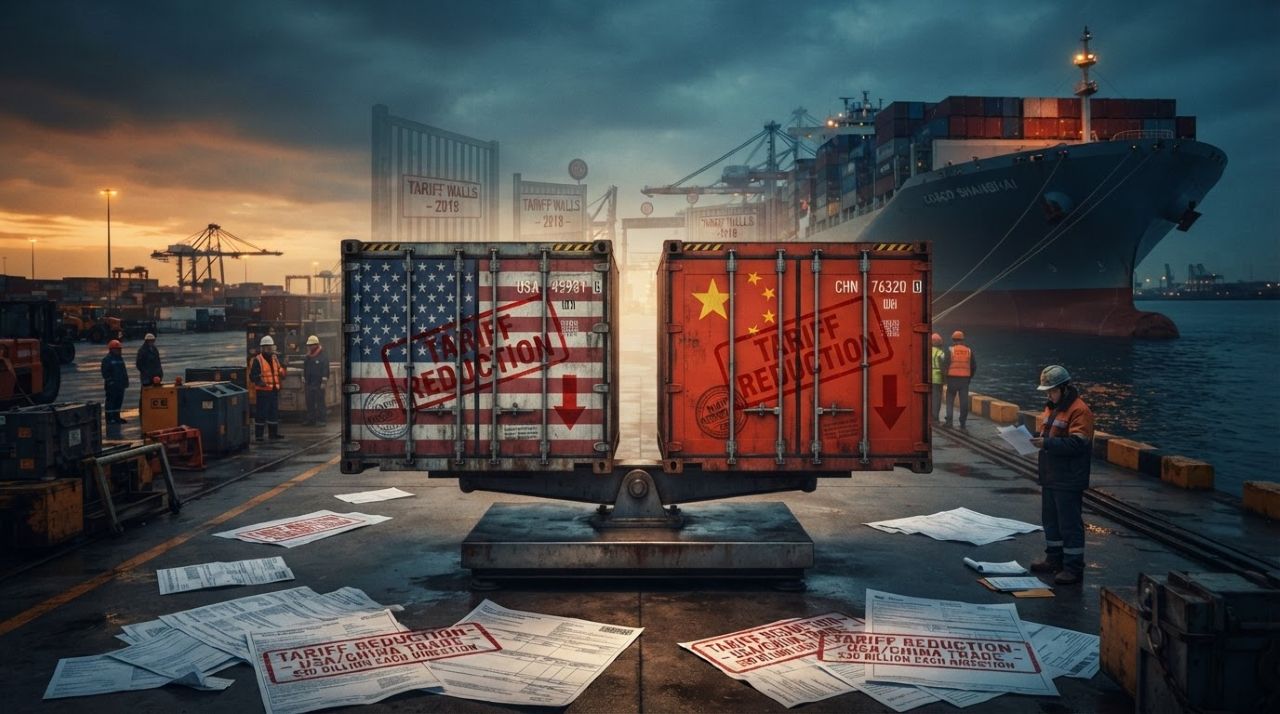
The most striking feature of China’s current economy is the contrast between foreign trade and domestic demand. June exports reportedly surged 27% year on year, while imports rose 36%, both far exceeding market expectations. China’s monthly trade surplus reached US$125.6 billion, its second-largest on record.
That performance is closely tied to the global AI investment cycle. Companies around the world are racing to build computing capacity, and that requires a vast amount of equipment: chips, networking systems, power components, servers, industrial electronics and data centre infrastructure. Chinese manufacturers are deeply embedded in those supply chains.
High-tech manufacturing is consequently doing much better than sectors tied to households and housing. Computer, telecommunications and electrical-equipment producers have gained from shortages and rising global orders. In contrast, furniture, steel and segments connected to the property supply chain remain under pressure.
This is not simply an export recovery. It is a concentrated, technology-heavy export boom, and that distinction matters. A narrow group of industries can generate enormous trade figures without producing a broad improvement in household confidence, consumer spending or employment conditions across the economy.
China’s expanding trade balance also brings its own risks. As manufacturing capacity grows faster than domestic demand, more output must find buyers abroad. That can intensify trade tensions, especially where foreign governments believe subsidised production or excess capacity is displacing local industries. China’s broader trade vulnerability has already been visible in the debate over whether export-led growth can remain sustainable. A recent analysis of China’s export-led growth model and weakening services sector explores why stronger external demand does not resolve the underlying imbalance.
Weak Consumption and the Property Downturn Remain the Core Problems
Domestic demand has not kept up with the export surge. Consumer confidence remains near historic lows, retail spending has been weak, and passenger vehicle sales have fallen by double digits for seven consecutive months.
Low energy prices have not been enough to persuade households to spend more freely. That tells us something important: the issue is not simply the cost of living. It is confidence. Households facing uncertainty about jobs, incomes and property values tend to save rather than spend.
The property market remains a major drag. China’s real estate sector has been contracting despite years of government support, and economists expect real estate investment to have fallen by nearly 17% in the first half of the year. Fixed-asset investment more broadly is projected to decline by 5%.
That matters because property has historically been linked to far more than apartment sales. It supported local government revenues through land sales, generated demand for construction materials, underpinned household wealth, and served as an important source of investment activity. When the sector contracts, the effects spread into steel, cement, furnishings, local finances and consumer sentiment.
Local governments are also facing a difficult trade-off. They are under pressure to reduce debt, which limits infrastructure spending at a time when the economy would ordinarily look to public projects for support. Beijing is expected to respond by accelerating special local government bond issuance and using an 800 billion yuan policy financing facility, equivalent to roughly US$118 billion, for major infrastructure projects in the second half of the year.
That could provide a near-term lift. But infrastructure financing does not automatically solve the deeper challenge of creating sustainable household demand.
Why Beijing Has Not Launched a Bigger Stimulus Package
The export boom has reduced the immediate pressure for a broad rescue package. Strong overseas demand gives policymakers room to favour targeted fiscal support rather than aggressive, economy-wide stimulus.
From Beijing’s perspective, this approach has advantages. It can direct funds toward strategic industries, infrastructure and selected areas of weakness while avoiding another large-scale wave of indiscriminate borrowing. It also allows policymakers to preserve flexibility if global conditions weaken later in the year.
But the strategy rests on a major assumption: that external demand will remain strong enough to compensate for weak domestic demand. That is far from guaranteed.
AI investment has been the primary source of export momentum, yet investment booms are cyclical. If global demand for data centre equipment or advanced electronics slows, China could lose a critical growth engine just as its property market remains depressed. Slower global growth, fresh tariffs or weakening technology investment would expose the fragility beneath the trade figures.
Attention will therefore turn to the upcoming Politburo meeting, where China’s top leadership is expected to set economic priorities for the second half of 2026. The key policy question is whether officials will take stronger steps to restore domestic demand and stabilise housing or continue to rely on exports and targeted investment.
A US Seismologist’s Detention Adds to US-China Tensions
Economic uncertainty is unfolding alongside another sensitive development in US-China relations. Chinese-born American seismologist Chen Youlin has reportedly been detained in China for nearly two years on espionage charges.

Chen, 54, is based in the United States and has conducted US government-funded research on using seismic monitoring to detect North Korean nuclear tests. He was arrested by Chinese state security officers at Beijing Capital International Airport on 5 November 2024, as he was preparing to return to Boston after visiting family and giving lectures at two Chinese universities.
US Secretary of State Marco Rubio has reportedly designated Chen as wrongfully detained, making his release a priority for the Trump administration. Chen’s family initially avoided publicising the case in the hope that private diplomatic engagement could achieve a breakthrough. Those efforts have reportedly failed, and he now faces a possible trial on spying charges.
The case is at least the second known detention of a US citizen on espionage-related allegations in China this year. In June, Myanmar scholar Minxin, who leads a think tank focused on Myanmar, was detained after arriving in Kunming at the invitation of a Chinese academic institution to give a lecture.
These cases could have consequences far beyond the individuals involved. Even a small number of high-profile detentions can have a disproportionate effect on academics, researchers and businesspeople considering travel between the United States and China. The uncertainty is especially significant in fields connected to science, technology, security or politically sensitive regional issues.
Beijing has not publicly released detailed evidence supporting the allegations against Chen, consistent with the limited transparency that surrounds many national security investigations. Chinese authorities have generally defended such cases as legitimate law enforcement. Washington, meanwhile, has increasingly argued that some detentions lack due process and transparency.
The cases arrive while both governments are trying to prevent relations from deteriorating further following last year’s trade disputes. Yet espionage allegations remain among the most politically difficult issues in the relationship because they touch directly on national security, public trust and academic exchange.
China Did Not Avoid the Property Crash; It Managed Its Consequences
The final issue is the longer-term legacy of China’s property crisis. China may have avoided the dramatic financial collapse many analysts once feared, but avoiding a banking panic is not the same thing as avoiding an economic crash.
Economist Noah Smith has argued that Beijing successfully prevented a systemic financial crisis and maintained positive official annual GDP growth, but that the economy still experienced a significant downturn. In this view, government intervention and the limitations of official statistics made the damage less visible, not absent.
China has long relied on a distinctive crisis-management mechanism. Rather than depending entirely on interest-rate cuts or conventional fiscal stimulus, Beijing can direct state-controlled banks to increase lending toward chosen sectors.
This approach was deployed after the 2008 global financial crisis and again following the 2015 stock market turmoil. In those periods, credit expansion helped fuel a huge real estate boom. After the property bubble began to break down following Evergrande’s collapse in 2021, authorities shifted credit toward manufacturing.
Supporters see this as evidence of the state’s ability to stabilise the economy and prevent the kind of financial panic that can rapidly destroy jobs, household savings and bank balance sheets. Official annual GDP did not fall below zero, and China avoided the immediate banking crisis that many had predicted.
However, the broader indicators have often painted a less reassuring picture. China’s own data showed an economic contraction in the second quarter of 2022. Youth unemployment rose sharply after the property downturn, eventually prompting authorities to revise the way that statistic was calculated. Alternative labour-market indicators also suggested worsening conditions for young graduates and migrant workers.
Independent assessments have questioned whether official GDP growth fully captures the weakness. Rhodium Group estimated that the economy likely contracted in 2022 and expanded much more slowly in 2023 than official figures indicated. The Bank of Finland and Capital Economics have also concluded that the recovery after the property boom was weaker than Beijing’s reported numbers suggested.
The Bubble Replacement Strategy
Peking University finance professor Michael Pettis offers a useful framework for understanding the issue. His argument is not that China did nothing well. The banking system’s ability to contain panic is real and worthy of serious examination. The problem is that repeated stabilisation has relied on replacing one investment bubble with another.

The pattern looks something like this:
- A major shock threatens growth and employment.
- State-controlled banks are encouraged to expand lending.
- Investment rises sharply in a chosen sector.
- The short-term slowdown is softened.
- Debt increases, while the new investment becomes progressively less productive.
After the post-2009 decline in China’s current-account surplus, infrastructure investment expanded dramatically. That was widely praised at the time. Yet Pettis argues that China already had close to as much infrastructure as it could productively absorb, meaning the investment surge created debt without generating equally valuable long-term returns.
When officials attempted to bring infrastructure investment down in the mid-2010s, the economy was supported through the final phase of the property bubble. Between 2015 and 2016, restrictions on home purchases were eased, down-payment requirements were lowered, mortgage rates were reduced, and banks were pushed to expand mortgage lending despite rising concerns.
Housing prices and property development rose again, but only temporarily. Once the sector began its sharp contraction in 2021 and 2022, manufacturing investment became the next replacement engine.
Property investment declined, while manufacturing investment increased by a broadly comparable amount. The issue, as Pettis sees it, is that China was already unusually dependent on manufacturing and already faced substantial excess capacity. Directing even more capital into that sector has contributed to greater overcapacity, fierce competition, falling margins and an accelerating trade surplus.
The immediate economic effect can appear impressive. Factories are built, lending rises, output grows and employment is supported. But the long-term arithmetic becomes more difficult because each successive investment bubble must be larger to prevent growth from slowing.
The clearest sign is debt. Pettis argues that where debt is financing genuinely productive investment, debt should not consistently outpace economic output. In an economy where most new debt finances investment rather than household consumption or transfers, a persistent rise in the debt-to-GDP ratio suggests that a growing share of investment is producing weaker returns.
China’s property crisis, then, was not painlessly deflated. The costs were transferred and distributed through weaker household confidence, employment pressure, declining property values, rising debt and a manufacturing system increasingly reliant on foreign demand.
The Economic Challenge Ahead
China’s current model has bought time. It has avoided a sudden financial collapse, protected the banking system and preserved a degree of short-term stability. But stability is not the same as resolution.
Exports driven by AI demand have become a crucial source of momentum, yet they cannot permanently substitute for a healthy domestic economy. A durable recovery would require stronger household consumption, a credible stabilisation of the property sector, more productive investment and a way to prevent debt from rising faster than the economy’s capacity to service it.
The pressure will rise if the AI export cycle cools, if foreign markets become less open to Chinese goods, or if trade frictions intensify. Recent warnings around China’s slower trade momentum and geopolitical risks show how quickly external conditions can turn against an economy that depends heavily on overseas demand. See this China News Update analysis of trade weakness and global instability for the broader external risks facing Beijing.
For now, the numbers tell two stories at once. China is exporting more, particularly in strategic technology sectors. But at home, consumers are cautious, the housing downturn persists, investment is weakening and the old strategy of replacing one bubble with another is reaching increasingly difficult limits.
Frequently Asked Questions
Why is China’s economy slowing despite strong exports?
Exports are being boosted by global demand for AI-related equipment, but domestic consumption, property investment and broader fixed-asset investment remain weak. The export boom is concentrated in high-tech manufacturing and has not translated into a broad domestic recovery.
What is driving China’s large trade surplus?
Demand for semiconductors, AI servers, data centre equipment and advanced electronics has lifted Chinese exports. Manufacturing expansion and limited domestic absorption of output have also pushed more goods into foreign markets.
Why is the property crisis so important for China’s economy?
Property has been linked to household wealth, local government land revenue, construction activity and demand for many industrial products. Falling real estate investment therefore affects consumer confidence, local finances, employment and a wide range of industries.
What does the bubble replacement strategy mean?
It refers to using state-directed credit to expand investment in a new sector when an earlier investment boom collapses. China moved from infrastructure expansion to property and then toward manufacturing. The strategy can limit short-term pain but may create excess capacity, rising debt and weaker long-term productivity.
Why do the detention cases matter for US-China relations?
Espionage-related detentions raise concerns about transparency and due process, while also discouraging academic, scientific and business exchange. They add another sensitive issue to an already difficult relationship shaped by trade disputes, technology competition and security tensions.