China opened the week with a cluster of developments that touch diplomacy, agriculture, trade policy, and energy. Taken together, they show a country trying to manage strategic pressure on several fronts at once.
At the geopolitical level, Xi Jinping’s arrival in North Korea signals renewed attention to one of Beijing’s most sensitive relationships. At home, officials are preparing for heavy rainfall across the south that could hit rice output and strain flood defences. In Europe, Germany is weighing how firmly it should back a tougher line on Chinese trade practices. And on the climate and energy front, China’s carbon emissions have started rising again even as renewable capacity keeps expanding at extraordinary speed.
Here is the latest China news update, broken into the major stories shaping the day.
Table of Contents
- Xi Jinping’s North Korea Visit Puts Strategic Alignment Back in Focus
- Southern China Faces Heavy Rain, Flood Threats, and Agricultural Pressure
- Germany and the EU Are Debating How Hard to Push Back on China Trade
- China’s Emissions Rose Again Despite a Massive Renewable Buildout
- What These Stories Say About China Right Now
- FAQ
Xi Jinping’s North Korea Visit Puts Strategic Alignment Back in Focus
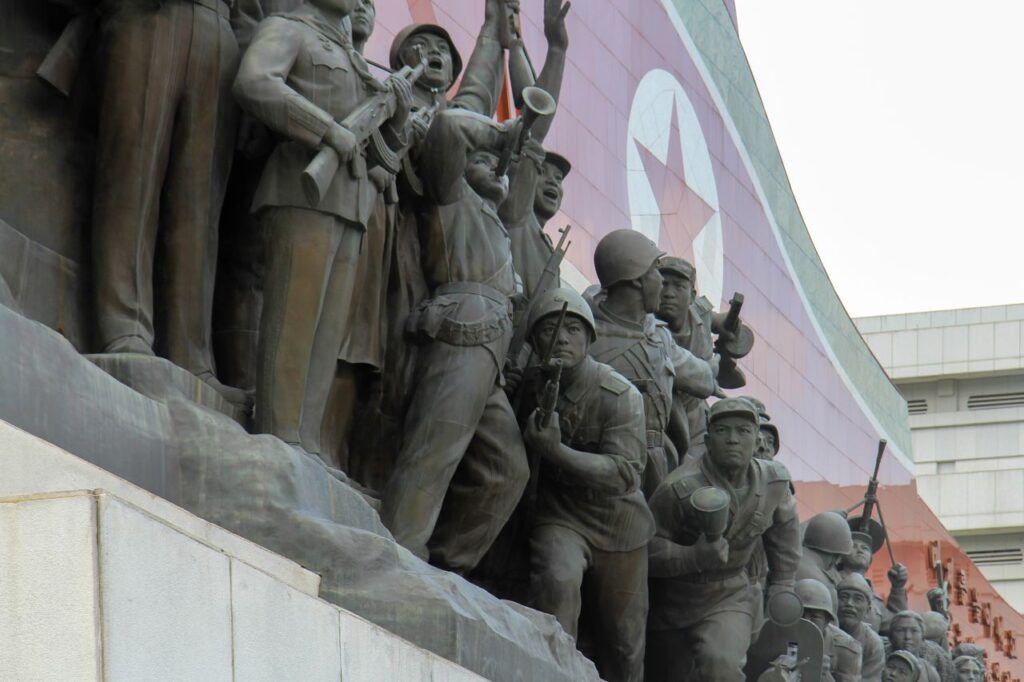
Xi Jinping arrived in Pyongyang for a two-day state visit that is attracting close attention across the region. It is his first trip to North Korea in seven years and also his first overseas trip of the year, which immediately gives the visit extra political weight.
The broad message is fairly clear. Beijing wants to reinforce ties with a long-standing ally at a time when regional and global tensions are intensifying. Xi is expected to meet Kim Jong Un for high-level talks, and the visit comes with senior Chinese officials in tow, including Foreign Minister Wang Yi. That signals a visit designed not just for symbolism, but for coordination.
There has been no detailed public agenda, but the likely objectives are not difficult to read. China wants to reaffirm its role as North Korea’s most important diplomatic backer and economic partner. That matters more now because Pyongyang has moved closer to Moscow in recent years, particularly through ties linked to Russia’s war in Ukraine.
From Beijing’s perspective, that trend creates a strategic problem. China still dominates North Korea’s trade relationship and remains indispensable to the country’s external support structure, but Russia’s growing role changes the balance. Reasserting influence now helps Beijing remind both Pyongyang and other regional players that China still intends to be the key outside power in the relationship.
Xi also used familiar Chinese diplomatic language ahead of the visit, calling for deeper strategic coordination and joint resistance to hegemonic pressure and coercive politics. In Beijing’s vocabulary, that is a direct critique of US foreign policy and a sign that this trip is being framed not only as a bilateral meeting but also as part of a broader contest over regional order.
Practical support may be part of the package as well. Analysts expect discussion around additional economic assistance, possibly including food aid, fertiliser, tourism cooperation, and joint development efforts. That kind of support would help North Korea’s weak economy while deepening Chinese leverage.
What is less likely is any meaningful public pressure on Kim over nuclear weapons. North Korea continues to develop its nuclear programme, and Kim has recently pointed to new production-related facilities while stressing the importance of building military strength quickly. Beijing may still want stability and restraint, but the priority appears to be strategic alignment rather than visible denuclearisation pressure.
That has implications well beyond the bilateral relationship. Stronger China-North Korea ties could alter the atmosphere in Northeast Asia at a time when the United States, South Korea, and Japan are all watching for signs of closer coordination among authoritarian states in the region. It also matters for future US China diplomacy, particularly if Beijing wants to enter further talks with Washington from a position of stronger regional influence.
For more on the wider strategic pressures surrounding China’s external relationships, the recent analysis on cross-strait friction, banking stress, trade leverage, and identity policy adds useful context.
Southern China Faces Heavy Rain, Flood Threats, and Agricultural Pressure
Another urgent issue is unfolding inside China. Southern provinces are preparing for an extended stretch of very heavy rainfall that could trigger flash flooding, landslides, and serious pressure on agriculture.
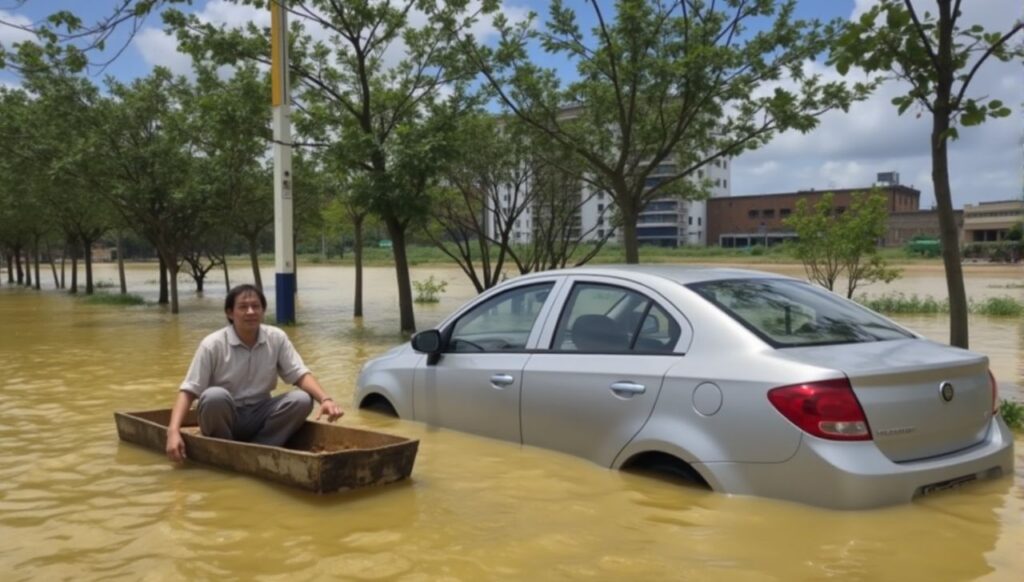
Authorities expect a broad rain band to cover much of southern China over roughly the next ten days, with the most intense downpours concentrated between Wednesday and Sunday. In some places, rainfall totals could exceed 400 millimetres. That is enough to create immediate concern not just for transport and local safety but also for farming in one of China’s most important food-producing regions.
The Ministry of Agriculture and the weather authorities have already issued joint warnings. The central agricultural concern is rice. Torrential rain can wash out seedlings, flood paddy fields, and reduce yields during a crucial part of the growing season.
Farmers have been urged to clear and strengthen drainage systems, keep a close eye on disease outbreaks, and take remedial steps such as crop support treatments when needed. Those measures can help, but they only reduce the damage margin. If rainfall stays intense and prolonged, losses can still become significant.
This matters because China is one of the world’s largest rice producers. Weather disruptions in major growing areas do not stay local for long. They can feed into domestic food supply concerns and add volatility to wider agricultural markets, especially when other rice-producing parts of Asia are also dealing with difficult weather.
The broader flood risk is just as important. China has painful recent experience here. The Yangtze basin floods of 2020 affected enormous numbers of people and caused major economic damage. The Henan disaster in 2021 exposed severe weaknesses in urban drainage, emergency response, and infrastructure resilience. Those events remain fresh in official thinking.
That history helps explain why warnings have come early and with some urgency. Flooding in southern China can disrupt road and rail links, damage homes and industrial sites, hit logistics, and put local emergency systems under severe strain. In a country where economic recovery still depends heavily on maintaining stable production and transport, extreme weather has become a macro issue as much as a local one.
There is also a global layer to the story. International rice production is already under pressure, and higher fuel and fertiliser costs linked to conflict in the Middle East are adding to the burden on producers. Even before the heaviest rains arrive, large parts of southern China have moved from earlier dry conditions into an excessively wet state since late May. Once soils are saturated, each additional rainfall event becomes more dangerous.
Forecasters expect wetter than usual conditions across much of southern China through the core flood season, which generally runs from June to August. Provinces such as Guangdong, Guangxi, and Fujian could see rainfall significantly above historical norms. That sharply raises the chance of repeat flood emergencies.
The weather risk is not confined to the south. Northern regions are also expected to receive above-average rainfall, prompting extra monitoring in coal-producing provinces such as Shanxi and Shaanxi. If severe weather disrupts mining operations there, the effect could spread into energy supply chains as well.
This is one of those stories where agriculture, infrastructure, and energy all intersect. A bad flood season would not only threaten crops. It could also complicate transport, industrial activity, and already sensitive supply conditions.
Germany and the EU Are Debating How Hard to Push Back on China Trade
In Europe, a different kind of pressure is building. The debate is no longer about whether China’s trade and industrial policies pose a challenge to European industry. The real question now is how confrontational the European response should be and whether Germany is prepared to support a tougher line.

European Commission President Ursula von der Leyen is reportedly seeking backing from EU leaders for stronger measures to counter a wave of Chinese exports entering European markets. The proposed toolkit could include broader trade safeguards in sectors such as chemicals and machine tools, along with new mechanisms designed to encourage supply chain diversification away from China.
That reflects a larger shift in Brussels. Concerns over industrial overcapacity, state subsidies, strategic dependency, and national security are increasingly shaping Europe’s China policy. The old assumption that economic integration would steadily smooth political tensions has been losing ground for some time.
But Germany remains the critical variable. As Europe’s largest economy and one of the member states with the deepest commercial ties to China, Berlin’s position matters enormously. Current reporting suggests Chancellor Friedrich Merz is unlikely to actively block new European initiatives, but there is still internal division over how far Europe should go.
The tension became more visible after Germany’s economy minister travelled to China and, according to local reporting, struck a notably conciliatory tone. He reportedly praised Chinese technological progress, criticised Germany’s own economic sluggishness, and appeared to suggest that Berlin would moderate the sharper edges of Brussels’ approach.
That prompted backlash from critics who argued Germany was undermining its own leverage before negotiations had even fully played out. The criticism gets at a long-running European dilemma. If major member states signal hesitation too early, the credibility of any collective response weakens.
Supporters of a firmer approach argue that Chinese overcapacity and subsidies are putting growing strain on European manufacturers. Their concern is not just about price competition. It is also about whether Europe becomes structurally dependent on Chinese supply in key sectors while its own industrial base erodes.
Critics of stronger trade defences, however, warn that more protectionist policy could raise costs, provoke retaliation, and ultimately weaken Europe’s own competitiveness. That argument has found support outside the EU core as well. Serbia’s president recently suggested that Europe risks harming itself by building new barriers, especially after securing major Chinese investment commitments for his own country.
So Europe is stuck between two uncomfortable realities. One is that the status quo increasingly looks unsustainable. The other is that shifting away from it carries real economic costs.
That same tension appears in other recent coverage of trade and industrial pressure, including this piece on China’s slowing trade momentum and wider global disorder.
China’s Emissions Rose Again Despite a Massive Renewable Buildout
The final major development is one of the clearest reminders that adding renewable energy capacity is not the same thing as successfully decarbonising an economy.
China’s carbon dioxide emissions rose by 2 per cent in the first quarter of 2026. That is the first meaningful increase after nearly two years in which emissions had been flat or falling. The increase is notable precisely because it came during a period of continued rapid growth in wind and solar installations.
Wind power capacity expanded by 23 per cent year on year, while solar grew by 33 per cent. On paper, that is an enormous clean energy surge. Yet much of that new generation was not fully used. Instead, China ran into a familiar problem: renewable curtailment, sometimes described as wasted wind and solar.
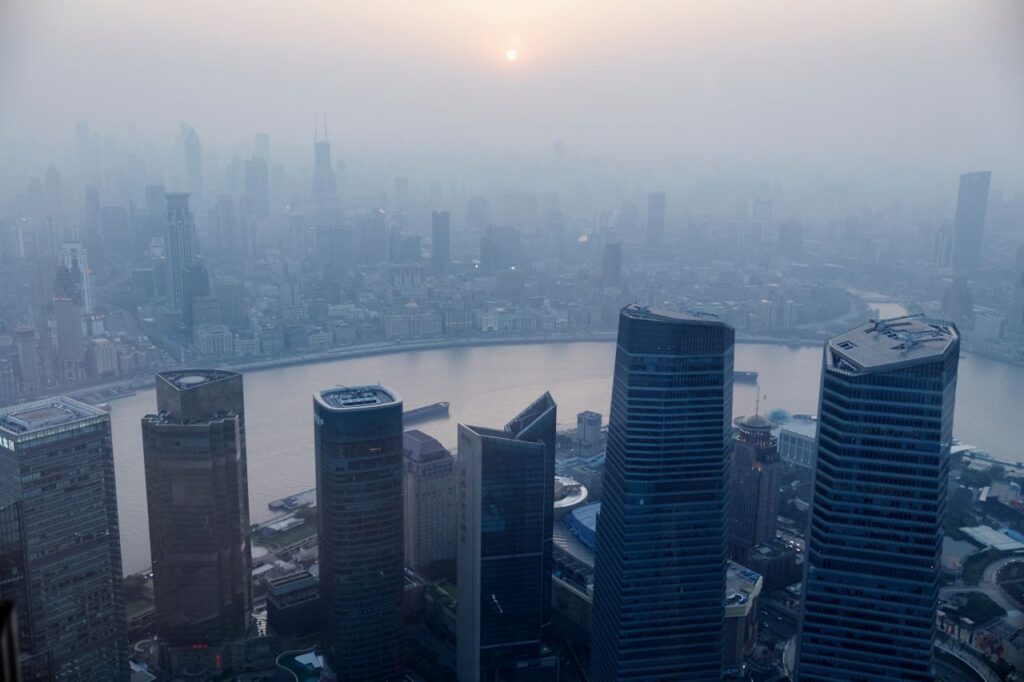
In simple terms, the country built a great deal of renewable capacity but failed to deliver all of that electricity efficiently into actual consumption. The result was that fossil fuel generation still increased. Coal and natural gas output in the power sector rose by 4 per cent in the quarter, even though renewable additions should have been enough to cover new electricity demand.
That mismatch is the core issue. Capacity is growing fast, but system flexibility is lagging behind.
The problem appears to be less about a complete absence of transmission lines and more about how the power system is managed. Many coal plants continue operating under long-term arrangements that reduce their incentive to scale back when renewable generation is available. Electricity trading between provinces also remains constrained by rigid annual contracts, making it harder to send renewable power where it is most needed.
That means wind and solar can be produced in one area but not fully absorbed by the grid, while fossil fuel plants elsewhere keep running. It is a structural inefficiency, not a simple shortfall of generating assets.
If curtailment had stayed at earlier levels, China could have generated a very large additional amount of wind and solar power during the quarter. Instead, utilisation rates slipped sharply. Wind generation, for example, rose only marginally even though installed capacity jumped strongly. That is an unmistakable sign that infrastructure and market reform are not keeping pace with construction.
Energy security concerns are also shaping the backdrop. With disruptions tied to the Strait of Hormuz and higher oil and gas prices, China has an even stronger incentive to lean into electrification and domestic energy sources. In theory, that should help the low carbon transition. In practice, it also raises electricity demand and can encourage the system to keep coal capacity running as a form of insurance.
So the current emissions rise does not mean China’s clean energy push has failed. It does mean the next stage is harder than simply installing more panels and turbines. The real challenge is integrating those assets into a power system that was built around coal, rigid dispatch rules, and provincial fragmentation.
That is why upcoming electricity market reforms and planning under the 15th Five-Year Plan matter so much. Grid flexibility, better pricing signals, and lower curtailment may now be among the most important variables in determining whether China can resume a downward emissions path.
For a broader snapshot of how energy, trade, and industrial trends are colliding across the country, the roundup in China News Bytes on 30 April 2026 offers useful additional detail.
What These Stories Say About China Right Now
Each of these developments sits in a different policy silo, but together they tell a fairly coherent story.
- Diplomatically, Beijing is tightening important relationships on its periphery while managing competition with Washington.
- Domestically, climate volatility is increasing pressure on food security, infrastructure resilience, and emergency preparedness.
- Economically, China remains central to Europe’s industrial future even as Europe becomes more wary of dependence.
- Energetically, the country is proving that renewable scale alone is not enough without major reform to the way electricity is moved and priced.
None of these issues is isolated. Floods can affect agricultural output, logistics, and energy supply. Trade tensions feed into industrial policy and strategic alignment. Energy security pressures influence both emissions and external policy choices. This is why a daily China news update can feel so wide-ranging. In China’s case, the domestic and the geopolitical are rarely cleanly separated.
FAQ
Why is Xi Jinping’s visit to North Korea important?
It signals that Beijing wants to strengthen ties with Pyongyang at a time of rising regional tension. It also suggests China is trying to reinforce its influence as North Korea deepens ties with Russia.
What is the main risk from the heavy rain forecast in southern China?
The biggest immediate risks are flash floods, landslides, and damage to rice production. Waterlogged farmland can reduce yields, while broader flooding can disrupt transport, homes, businesses, and emergency services.
Why is Germany’s position so important in the EU debate on China trade?
Germany is Europe’s largest economy and has deep trade ties with China. If Berlin supports stronger EU trade defences, Brussels will have much more political weight. If Germany hesitates, the EU’s tougher strategy becomes harder to sustain.
How can China’s emissions rise when renewable capacity is growing so quickly?
Because not all of the new wind and solar power is being used efficiently. Grid constraints, inflexible coal plant operations, and rigid power trading arrangements mean fossil fuel generation is still rising even though renewable capacity is expanding fast.
Does the emissions increase mean China’s energy transition is stalling?
Not necessarily. It points more to a system integration problem than a collapse in renewable investment. China is still adding clean energy rapidly, but it now needs market and grid reforms to turn capacity growth into actual emissions reduction.
The week begins with a familiar pattern. China is trying to secure strategic space abroad while dealing with mounting complexity at home. That applies to alliance management, extreme weather, trade friction, and the mechanics of decarbonisation alike.
Those pressures are unlikely to ease anytime soon, which is why this set of developments deserves close attention in the days ahead. That is the latest China news update.