A major OECD report is adding fresh weight to the argument that Chinese manufacturing dominance has been built not just on scale and efficiency but on unusually large state support. Europe is now openly debating how hard it should push back. In the Pacific, the Solomon Islands is reassessing its security arrangement with China. And inside China itself, the pressure of capital flight continues to reveal something deeper than regulation: a lack of confidence among many wealthy households.
Taken together, these developments offer a useful snapshot of the current moment. China is still projecting influence abroad, but it is also running into rising resistance and scrutiny. That tension is becoming harder to ignore.
Table of Contents
- Public health diplomacy returns as China sends Ebola specialists to the DRC
- OECD report sharpens the case against China’s subsidy model
- Why the subsidy debate is really about competitiveness versus efficiency
- Europe signals a tougher line on China trade
- Solomon Islands reopens a sensitive security question
- China’s capital controls are strict, but money keeps leaving
- The bigger picture
- FAQ
OECD report sharpens the case against China’s subsidy model
A new OECD analysis has intensified an argument that has been building for years: China’s rise as a manufacturing superpower cannot be understood without looking squarely at industrial subsidies.
The report examined company-level subsidy patterns across 15 major industrial sectors. Its conclusion was striking. Nearly 60 per cent of Chinese firms’ gains in global market share since 2005 may be linked to state support.
That is not a small claim. It suggests that a large share of China’s export success was not simply the result of natural comparative advantage but of policy-driven competitive advantage.
According to the OECD findings, Chinese companies received, on average, several times more government support in 2024 than firms based in OECD economies. The support often came through channels that are less transparent than Western subsidy programmes, especially low-cost financing from state-owned banks rather than straightforward grants or tax credits.
The report’s more damaging conclusion was not just that subsidies helped Chinese firms gain share. It was that they did so without meaningfully improving productivity or profitability.
That matters because it cuts against one of Beijing’s core defences. Chinese officials regularly argue that their firms are winning because they are more advanced, more efficient, and more competitive. The OECD’s argument is more uncomfortable: companies can become globally dominant not because they are the best at creating value, but because they are the best funded by the state.
In practical terms, this means weaker producers can outperform stronger rivals if the subsidy gap is large enough. Global capital and industrial capacity then flow toward what is most supported, not what is most productive.
This is exactly why the debate over Chinese overcapacity has become so politically explosive. It is no longer just about low prices. It is about whether those low prices reflect real efficiency or a policy model that pushes costs onto households, banks, taxpayers, and trade partners.
Several sectors stood out in the data:
- Aerospace firms in China reportedly received support worth multiple times that of comparable OECD rivals relative to revenue.
- Chinese automakers were supported at roughly four times the level of firms in OECD markets.
- Semiconductor subsidies for Chinese firms approached 10 per cent of revenue in 2021 and 2022, far above the global norm.
The wider implication is that China accounted for a very large share of industrial subsidies globally in 2024, reportedly more than half of the total.
That finding lands at a moment when even some Chinese economists have begun warning that the current export-heavy model is becoming dangerous. Some have argued that Beijing should scale back huge rebate programmes and other support mechanisms that keep export machinery running even when foreign resistance is rising. That broader issue is explored in this analysis of why export-led growth is becoming harder for China to sustain.
Why the subsidy debate is really about competitiveness versus efficiency
One of the most important distinctions in this entire discussion is the difference between being competitive and being efficient.
Those terms are often treated as if they mean the same thing. They do not.
A company can be highly competitive in export markets because it receives enough support to underprice rivals. But that does not mean it is using labour, capital, and technology in the most productive way. If policy support is doing the heavy lifting, then market outcomes are sending the wrong signal.
This is where the OECD findings cut especially deep. The issue is not merely whether Chinese firms are winning. The issue is whether the global system is rewarding actual value creation or simply rewarding whichever firms are backed most aggressively by state financing.
In the short run, this distorts trade and investment flows. In the longer run, it creates a sustainability problem. Subsidies on this scale must ultimately be funded. If the underlying economy is not generating enough real value to support them, then someone else absorbs the cost, whether that is households through weak consumption, banks through bad credit allocation, or trade partners through widening imbalances and political backlash.
That is part of why the overcapacity argument is not going away. It is tied to the structure of China’s economy itself.
Europe signals a tougher line on China trade
The European side of this story is moving quickly.
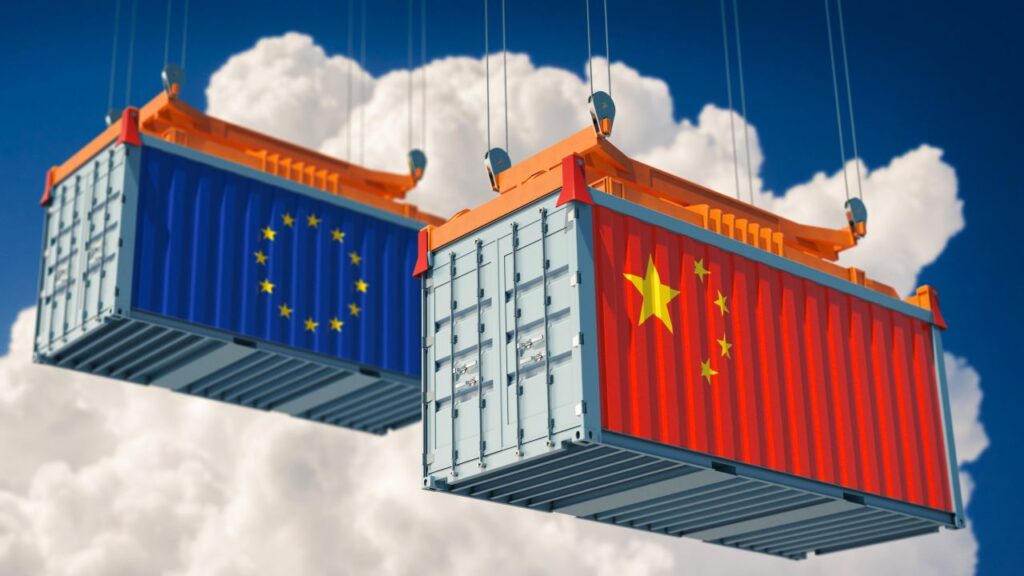
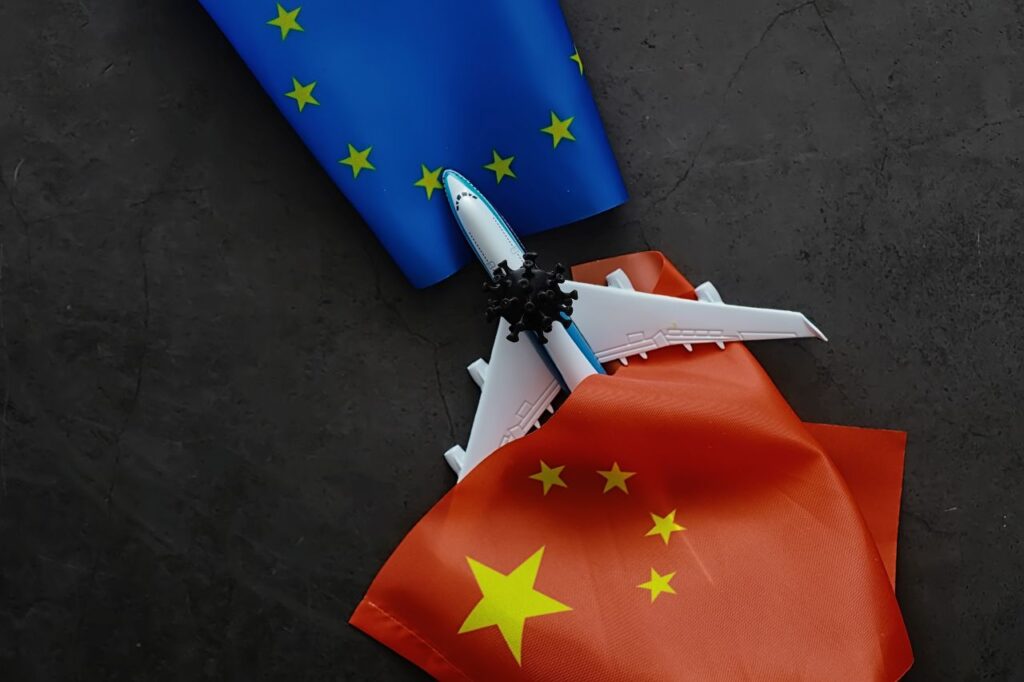
Senior European Commission officials recently met behind closed doors to discuss how the bloc should respond to Chinese subsidies, excess capacity, and rising dependence on Chinese supply chains. The public message afterward was unusually direct: the current trade and investment relationship with China is not sustainable.
That language matters. Brussels does not use it lightly.
European officials are increasingly worried that the continent is being squeezed from both sides. The United States is pushing hard into strategic industry, technology, and defence. China is pushing enormous volumes of state-supported industrial output into global markets. Europe fears ending up dependent, slower, and less competitive in industries it still considers strategic.
The anxiety goes well beyond electric vehicles. European concern now spans solar panels, steel, telecom equipment, shipbuilding, aerospace, semiconductors, artificial intelligence, and defence-related technologies.
Europe’s trade deficit with China has widened to an eye-catching level, roughly 361 billion euros last year. That alone is forcing a harder policy debate.
Possible responses being discussed reportedly include:
- Higher tariffs
- Import quotas
- Restrictions on heavily subsidized goods
- Use of the EU’s anti-coercion tools
But there is still a clear divide inside Europe. France and some other member states favour a firmer response. Germany and other export-heavy economies remain more cautious, concerned that pushing too far could trigger retaliation from Beijing and damage European business interests.
That concern is not hypothetical. China has already warned that it will respond if Europe introduces new barriers.
This is why the next few weeks matter. If Europe moves from complaint to coordinated action, the trade relationship could enter a much more openly confrontational phase. A separate look at how Chinese trade momentum is already facing broader geopolitical pressure can be found in this China Update News breakdown of slowing trade momentum and rising global disarray.
Public health diplomacy returns as China sends Ebola specialists to the DRC
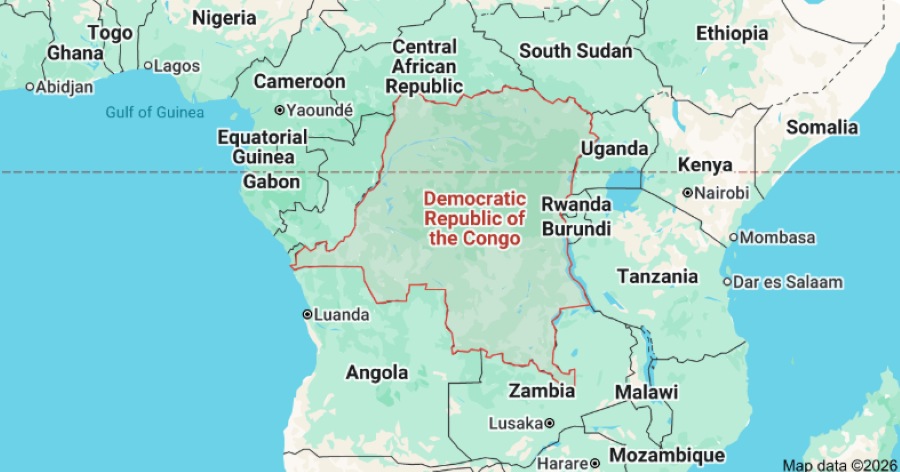
China has dispatched a sizeable team of medical experts to the Democratic Republic of Congo to assist with a worsening Ebola outbreak that the World Health Organization has designated a global public health emergency.
The mission includes specialists in infectious disease control, public health, lab diagnostics, and clinical treatment. Chinese authorities say the team will work with local health agencies, disease control personnel, and Chinese medical staff already in the country. Their tasks include helping with treatment protocols, disease prevention, healthcare worker training, and stronger laboratory capacity.
There is also a practical consular dimension here. The team is expected to help Chinese citizens and businesses operating in the DRC manage health risks as the outbreak spreads.
The case numbers remain disputed depending on the source, but the trend is clearly serious. International health authorities have reported well over a hundred confirmed cases and multiple deaths across the DRC and neighbouring Uganda. Congolese authorities have put the domestic total much higher, with hundreds of confirmed infections and more than a thousand suspected cases since the outbreak was formally declared in mid-May.
The strain involved has historically had a very high fatality rate, sometimes reaching half of all infected patients. There is no simple cure. Early detection, isolation, and supportive medical care remain essential.
Beijing is framing the deployment as part of broader health cooperation with Africa, and there is precedent for that. China also sent support during the major West African Ebola crisis in 2014.
Still, there is an obvious complication. Any attempt by Beijing to present itself as a responsible global health actor runs into the lingering reputational damage from its handling of the early COVID period. That history does not erase the practical value of sending medical teams, but it does shape how these efforts are interpreted internationally.
Solomon Islands reopens a sensitive security question
In the Pacific, the Solomon Islands has signalled a possible reassessment of one of the region’s most controversial agreements: its 2022 security pact with China.
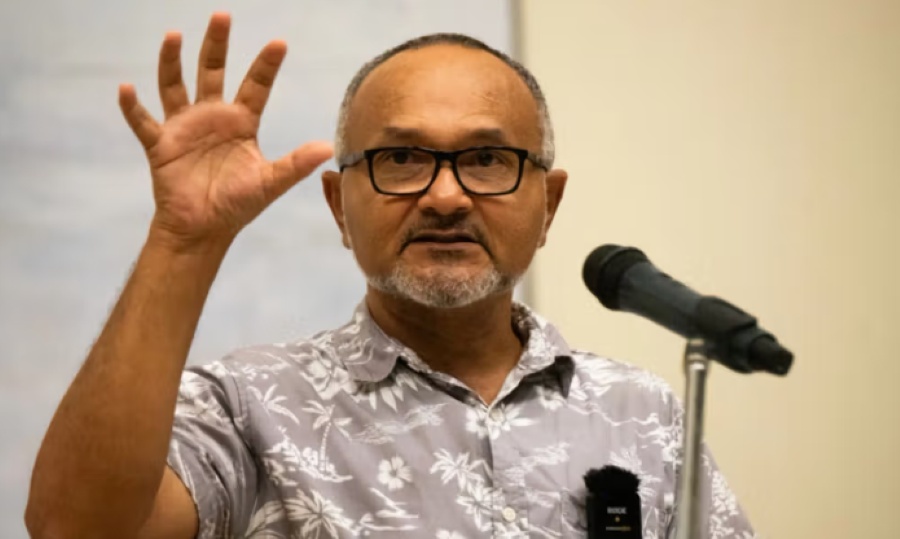
The country’s new prime minister, Matthew Wale, said his government would review the agreement as part of a broader examination of security arrangements with multiple partners. He also indicated that he had only recently seen the full text of the China deal and that the cabinet would now study its contents.
This is significant because the original agreement set off alarm bells across the region. Australia, the United States, and other partners worried that it could open the door to a larger Chinese security presence in the Pacific and potentially weaken Australia’s traditional role as the primary regional security actor.
The timing of the review also matters. During a visit to Canberra, Wale and Australian Prime Minister Anthony Albanese agreed to begin talks on a more comprehensive bilateral treaty and deepen cooperation in policing and security. Australia also pledged financial support for cyclone recovery and help with rising energy costs in the Solomon Islands.
That combination suggests more than a routine policy review. It points to a possible diplomatic reset in which Honiara rebalances away from Beijing and back toward Canberra or at least seeks to widen its options.
None of this means China is suddenly out of the picture. But it does show that Beijing’s regional gains are not automatically permanent. Pacific states continue to weigh security, aid, development, and sovereignty concerns in a fluid strategic environment.
China’s capital controls are strict, but money keeps leaving
The final development is domestic, and in some ways it may be the most revealing of all.
China has some of the world’s tightest capital controls. Individuals are generally limited to moving the equivalent of 50,000 US dollars abroad each year. Yet despite these controls, huge sums continue to leave the country through unofficial channels.
Recent estimates suggest capital flight last year may have reached somewhere between 800 billion dollars and 1 trillion dollars. That is an extraordinary number.
It also tells a story that is bigger than any single enforcement campaign.
Many affluent Chinese households are trying to diversify abroad because they are worried about the domestic outlook. The concerns are familiar by now: the long property downturn, weaker growth, political uncertainty, and a policy climate that makes wealthy families uneasy about concentrating too much of their wealth inside the system.
Authorities have been cracking down, but the routes out are varied and often creative.
Common methods used to move money abroad
- Cash smuggling: One of the oldest methods involves physically carrying undeclared cash across borders, often into Hong Kong or Macau. This has become riskier as customs enforcement has tightened, but it still happens.
- Quota pooling, often called smurfing: Brokers recruit many individuals who have not used their annual foreign exchange allowance, then combine those quotas to move large sums in transactions that appear legal on the surface.
- Underground banks: A client hands over money in China, and a corresponding network arranges payment abroad without funds moving through formal banking channels in the ordinary way.
- Fake or inflated trade invoices: Companies overstate import values or fabricate transactions entirely, allowing money to be transferred overseas as if it were part of normal commercial activity.
- Cryptocurrency channels: Even after repeated crackdowns on crypto trading and mining, digital assets remain a route for covert transfers through underground brokers and laundering networks.
State media has reported cases where brokers recruited over a hundred people to move millions of dollars abroad by aggregating their annual quotas. Authorities in one province reportedly uncovered an underground banking network with assets equivalent to more than 10 billion US dollars. Separate blockchain analysis suggests Chinese-language money laundering networks handled well over 16 billion dollars in illicit crypto transactions in 2025.
These numbers show the scale of the challenge, but the more important issue is psychological. People do not go to these lengths unless they believe keeping all their money at home carries serious risk.
That is why capital flight should not be treated merely as a law enforcement problem. It is a confidence problem. It signals that a meaningful segment of the wealthy class wants geographic and legal diversification, even if obtaining it requires navigating grey markets and illegal channels.
That broader theme of financial stress and policy management has also appeared in other areas of China’s economy, including banking risk and strategic trade measures, as discussed in this China Update News article on banking stress, trade leverage, and cross-strait friction.
The bigger picture
These five developments may look unrelated at first glance, but they fit together rather neatly.
China is still trying to shape global outcomes through aid, trade, finance, and strategic partnerships. But each of those channels is facing a different form of friction.
- Its health diplomacy efforts are useful, but they operate under the shadow of past credibility damage.
- Its industrial strategy has delivered export power but now faces serious scrutiny over fairness and sustainability.
- Its trade ties with Europe are becoming more politically contentious.
- Its strategic influence in the Pacific remains contested rather than settled.
- Its domestic capital controls reveal deep unease among those with the greatest ability to move money.
That combination is worth paying attention to because it captures the dual reality of China’s position. Beijing remains highly capable and highly consequential. But it is also increasingly constrained by mistrust abroad and anxiety at home.
This is the pattern to watch. Not simple expansion, and not simple decline, but growing resistance to the way China currently projects power economically and strategically.
FAQ
Why did China send medical experts to the Democratic Republic of Congo?
China sent a specialist team to support the response to a worsening Ebola outbreak. The team is expected to assist with prevention, treatment, laboratory work, training for healthcare staff, and risk management for Chinese nationals and firms operating in the country.
What did the OECD report say about Chinese industrial subsidies?
The OECD found that state support has played a major role in the rise of Chinese firms in global manufacturing. It argued that subsidies helped Chinese companies gain market share, often without corresponding improvements in productivity or profitability, which reinforces concerns about unfair competition and overcapacity.
Why is Europe taking a tougher line on trade with China?
European officials are increasingly concerned about dependence on Chinese supply chains, large trade imbalances, and the impact of Chinese state support on strategic sectors such as electric vehicles, solar, steel, telecom equipment, and advanced industry. Brussels is considering stronger trade defence measures, though member states remain divided on how far to go.
Why is the Solomon Islands reviewing its security agreement with China?
The new Solomon Islands government says it wants to review the 2022 pact as part of a broader look at security arrangements with multiple countries. The agreement has been controversial because of concerns that it could expand China’s strategic role in the Pacific.
How are wealthy Chinese households getting money out of the country despite capital controls?
Common methods include cash smuggling, pooling other people’s annual foreign exchange quotas, underground banking networks, fake trade invoices, and cryptocurrency-based transfers. These methods persist despite repeated enforcement campaigns, reflecting strong demand for offshore diversification.
What does capital flight say about China’s economy?
It suggests that many wealthy households lack confidence in keeping all of their assets inside China. Concerns include slower growth, the property slump, political uncertainty, and the desire for legal and financial protection abroad. In that sense, capital flight is not just a regulatory issue but also a measure of domestic confidence.