
The latest round of China news brought four very different stories, but they all point in a similar direction. Pressure is building across technology, the economy, diplomacy, and energy. In each case, policymakers are trying to manage structural problems, not just temporary disruptions.
On the technology front, Washington is tightening AI chip restrictions after fresh concerns that Chinese firms may have been accessing advanced American processors through offshore subsidiaries and remote computing arrangements. On the domestic economy side, local governments are stretching school holidays in hopes of nudging families to travel and spend more. In diplomacy, a journalist expulsion has triggered a retaliatory visa move from the United States, adding another layer of friction to an already tense relationship. And in energy, China's crude oil demand appears to be softening in a more lasting way, with the Iran conflict exposing just how much of China's previous import growth may have been stockpiling rather than real consumption.
Taken together, these developments suggest something important. The challenge for Beijing is no longer simply about weathering a rough patch. It is about adapting to a world where external constraints are tightening while domestic demand remains weaker than officials would like.
Table of Contents
- US Moves to Close an AI Chip Loophole
- The Bigger Problem: Remote Access to AI Compute
- Why Export Controls Remain So Contested
- Local Governments Turn to School Breaks to Boost Spending
- Beijing and Washington Clash Over Journalist Visas
- China's Oil Demand Is Showing Signs of Structural Weakness
- Why the Decline Looks More Than Cyclical
- What These Stories Say About China's Current Position
- FAQ
US Moves to Close an AI Chip Loophole
The most strategically important development is the new guidance from the US Commerce Department's Bureau of Industry and Security. The point of the clarification is straightforward: Chinese companies cannot sidestep American export controls simply by buying advanced AI chips through subsidiaries based outside mainland China.
That sounds obvious, but the fact that Washington had to spell it out tells you something. There is growing concern in policy circles that a gap in enforcement or interpretation may have allowed Chinese firms to get hold of top-tier US hardware for quite some time.
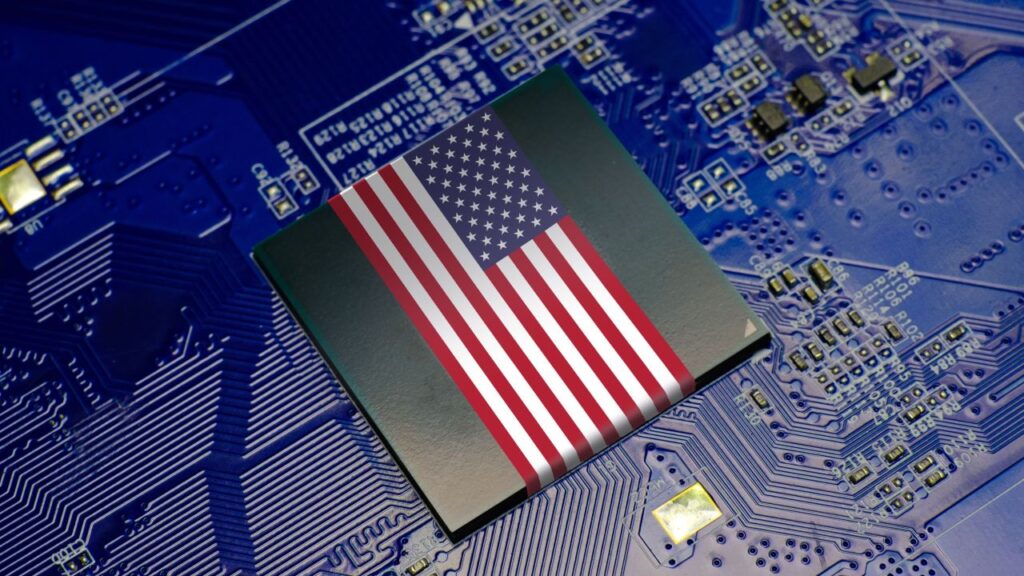
Reports circulating in Washington suggested that when parts of the earlier AI diffusion framework were rolled back, a route may have opened up for Chinese companies to buy advanced processors through overseas entities. Industry estimates cited in recent reporting suggested the volume may have been substantial, potentially reaching into the hundreds of thousands of chips over the past year.
The new guidance is meant to shut that door. If a company is headquartered in China, US licensing rules apply even when the purchasing arm is offshore.
But this has not ended the debate. Critics argue the announcement raises an uncomfortable question: if the rule needed clarification now, what exactly was happening before? Some analysts have suggested that Chinese firms were able to acquire extremely advanced Nvidia chips during that period without running into the restrictions Washington intended.
That matters because AI chips are not just another trade item. They are the foundation for frontier model training, advanced simulation, cybersecurity research, autonomous systems, and military-relevant applications. This is why export controls on semiconductors sit at the centre of the US-China technology rivalry.
The Bigger Problem: Remote Access to AI Compute
Even if Washington successfully closes the offshore subsidiary route, another issue remains much harder to solve. Chinese institutions do not necessarily need to import physical chips into China if they can simply rent access to computing power located elsewhere.
That is one of the most important weaknesses in the current control regime.
Recent reporting indicates that several Chinese universities linked to the defence sector have sought access to Nvidia H200 chips, either by leasing compute or by using third-party intermediaries. These are not ordinary academic institutions. Some have known ties to military research and have already appeared on US restriction lists.
The quantities involved may be small compared with the needs of major commercial AI labs, but that does not make them insignificant. For advanced research in areas like autonomous systems or digital security, a relatively modest amount of compute can still be very useful.
The regulatory challenge is obvious. If the hardware stays outside China, and access is provided over the cloud or through a rental arrangement, the transaction can fall into a grey zone. Traditional export controls were built around moving physical goods across borders. AI infrastructure is increasingly about access rather than ownership.
That means the contest is not only about semiconductors. It is about cloud services, computing rentals, and the legal definitions that determine whether those arrangements count as controlled exports in the first place.
Why Export Controls Remain So Contested
This fight is also exposing a basic tension in US policy. Washington wants to constrain China's progress in advanced AI, particularly where military use is concerned. But US chipmakers want to sell into one of the world's biggest technology markets.
Nvidia has repeatedly argued that China has significant capabilities of its own and that aggressive restrictions could damage American firms more than they slow Chinese development. There is a commercial logic to that argument. If US companies lose market share, domestic Chinese alternatives may benefit, and Beijing's drive for semiconductor self-sufficiency could accelerate.
That is one reason some experts doubt export controls will fundamentally alter China's long-term direction. Beijing was already heavily committed to building an indigenous chip ecosystem before the current restrictions intensified. The controls may be speeding up that effort rather than reversing it.
At the same time, Chinese state media continues to frame the restrictions as political weaponisation of technology. The message from Beijing is that Washington is trying to build barriers around AI development while talking about fair competition. Chinese commentary has warned against a divided AI world and called for more cooperation instead.
Still, the strategic contest is moving beyond who has the very best model today. It is increasingly about whose systems become widely adopted. The United States still leads in top-end chips and frontier AI models, but China is working to expand influence by scaling cheaper systems, applications, and ecosystem reach.
That broader strategic context makes semiconductor policy one of the most consequential areas in the entire bilateral relationship. For related pressure points in China's technology and growth story, this piece on fragile recovery and AI chip constraints adds useful context.
Local Governments Turn to School Breaks to Boost Spending
The next development is more domestic, but it says a lot about the current mood inside the economy. Cities in Fujian, including Fuzhou and Xiamen, are introducing new three-day spring and autumn school breaks. The idea is to create more opportunities for families to travel, spend money, and support local tourism.

In Xiamen, the spring break will be linked to the Qingming holiday, effectively creating a longer travel window. This move fits into a broader national push to stimulate consumption. Beijing has already added extra public holidays this year in an effort to encourage more discretionary spending.
On paper, the logic is understandable. If households have more time off, they may book short trips, dine out, and spend in the service economy. For local officials under pressure to show they are responding to calls to boost consumption, extending holiday periods is a visible and low-cost policy tool.
But the criticism is also easy to understand. More days off do not automatically translate into more spending power. If families are worried about income, housing, or job security, giving them additional vacation days may simply result in more time at home rather than more consumption.
That is why some commentators have described the measure as a sign of policy frustration. Officials are clearly trying to be seen doing something. The deeper question is whether these kinds of administrative nudges can solve what looks increasingly like a confidence problem.
The weakness in household demand has become one of the defining features of China's post-pandemic recovery. Consumers remain cautious, and local governments are experimenting with increasingly creative methods to get cash moving through the economy. Extended school holidays may help at the margins, especially for domestic tourism, but they are unlikely to change the bigger picture on their own.
Beijing and Washington Clash Over Journalist Visas
Another development this week came from the media and diplomatic space, where tensions have intensified after China expelled a correspondent for the New York Times. The United States then revoked the visa of a journalist working for China's state-run Sina News Agency.

Chinese authorities reportedly objected to Taiwan President William Lai Ching-te appearing by video at a DealBook event in New York late last year. Although the correspondent herself was not responsible for organising the event, Beijing linked the issue to what it said was the newspaper's handling of Taiwan-related coverage.
China's foreign ministry argued that the outlet had given space to what it sees as pro-independence rhetoric and had described Taiwan in terms that conflict with Beijing's interpretation of the One China framework and the China-US communiqués.
This episode matters for more than just one visa case. It shows how aggressively Beijing is trying to shape the international language surrounding Taiwan. That sensitivity is not new, but the degree of scrutiny appears to be rising.
It also raises a wider concern about reporting conditions for foreign media in China. Taiwan has always been one of the most politically sensitive subjects in the relationship. If media organisations face growing penalties over wording, event participation, or editorial framing, the operating environment becomes even more difficult.
The case is also a reminder that media access now functions as another instrument in bilateral competition. Visa approvals, accreditation, and correspondents' working conditions can all become pressure points when broader relations deteriorate.
For a broader look at rising cross-Strait sensitivity and related political pressure points, the article on Taiwan cross-Strait friction and banking stress is worth reading alongside this development.
China's Oil Demand Is Showing Signs of Structural Weakness
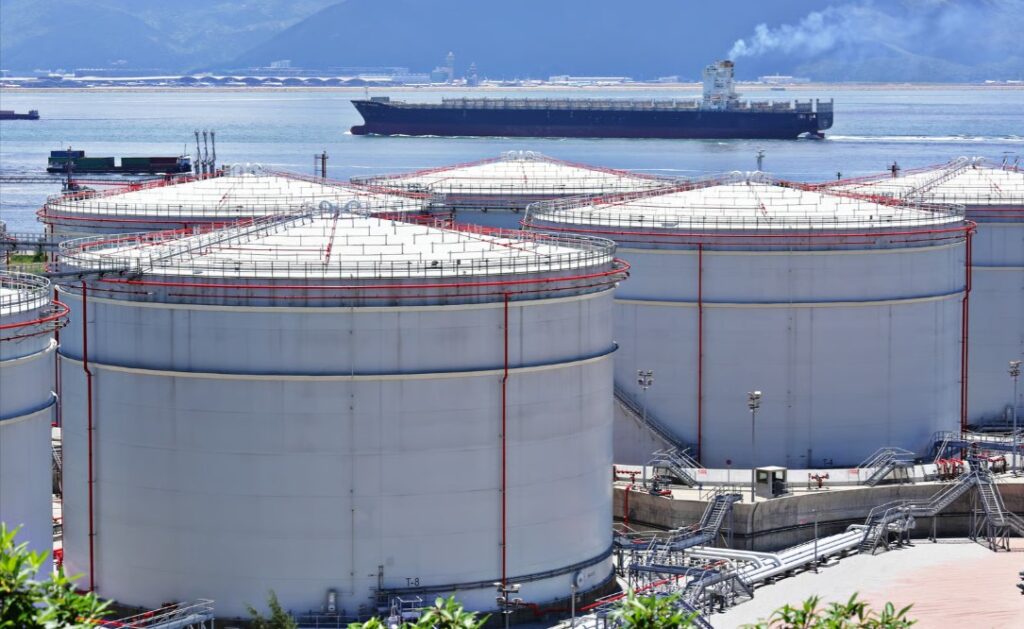
The final story may be the most economically significant over the longer term. China's demand for crude oil appears to be weakening in a way that looks structural rather than temporary.
According to estimates from Energy Aspects, China's crude imports could average about 10.9 million barrels per day in 2026. That would be the lowest level since 2022, when strict pandemic controls were still weighing heavily on activity.
To understand why that matters, it helps to compare it with the recent past. China's 2025 average was around 11.6 million barrels per day, but that number was boosted by heavy government stockpiling. In other words, part of the apparent strength in imports was not about immediate fuel demand. It was about building reserves.
The Iran conflict and disruption risks around the Strait of Hormuz have helped reveal this underlying weakness. Many importers have had to scramble for alternative supply routes and contingency plans. China, by contrast, has been able to manage the shock partly by drawing down inventories and cutting refinery runs.
That is telling. A system that can absorb a major external disruption by processing less crude suggests final demand is not especially tight.
Why the Decline Looks More Than Cyclical
Several forces are driving this shift.
- Stockpiling distorted earlier import growth. A meaningful share of recent buying went into storage rather than straight into end use.
- Electric vehicles are eating into gasoline demand. As EV adoption expands across China, fuel consumption growth in road transport is flattening.
- Refining capacity is excessive. China built an enormous refining system, but recent processing rates have fallen sharply.
- Sales of gasoline and diesel have weakened. That points to softness in underlying demand, not just a one-off logistics issue.
State-owned refiners have reportedly cut processing rates to record lows, while gasoline and diesel sales in April fell by more than 15 per cent from the previous month. Analysts at the Oxford Institute for Energy Studies estimate China's actual crude needs may now be closer to 10.4 million barrels per day, with domestic production steady and inventories still substantial.
If that assessment is broadly right, imports could decline further without causing major fuel shortages. That would mark a major turning point for global commodity markets.
For years, China was the anchor of world oil demand growth. It absorbed supply, supported prices, and shaped expectations across the energy trade. If Chinese demand is plateauing or even falling because of electrification, slower industrial momentum, and inventory saturation, the global oil market will need to adjust to a different reality.
This is also tied to wider geopolitical risk. If energy disruptions in the Middle East are no longer automatically met by surging Chinese import demand, the market response to conflict could change. For more on that angle, this report on Hormuz turmoil, inflation, and debt strain gives a fuller picture of the pressures building around energy and regional security.
What These Stories Say About China's Current Position
Each of these developments sits in a different policy lane, but they point in the same direction.
In technology, China faces tighter external restrictions, but the controls themselves remain incomplete and difficult to enforce.
In domestic demand, officials are searching for practical ways to encourage spending, yet the measures increasingly look like workarounds for deeper confidence issues.
In diplomacy, sensitivities over Taiwan are spilling into media access and reciprocal visa action, adding friction to an already strained relationship.
In energy, one of the old assumptions about China's role in the global economy is weakening. The country may no longer be the same engine of oil demand growth that it once was.
That combination matters. It suggests policymakers in both Beijing and Washington are navigating a more structural phase of competition and adjustment. These are not isolated headlines. They are signs of a relationship and an economy moving into a less flexible, more constrained period.
For anyone tracking the bigger picture, that is the key takeaway from this China news update. Temporary fixes are becoming less convincing, while long-term strategic realities are becoming harder to ignore.
FAQ
Why did the US issue new guidance on AI chip exports?
The guidance was meant to clarify that Chinese companies still need US approval to obtain advanced AI chips, even if the purchase is made through subsidiaries located outside mainland China. Washington is trying to close a loophole that may have allowed access to high-end processors through offshore entities.
Can Chinese institutions still access advanced AI chips without importing them directly?
Potentially, yes. One major challenge is remote access to computing power. If advanced chips remain outside China and institutions rent compute through cloud or third-party arrangements, those transactions may not fit neatly within traditional export control definitions.
Why are Chinese cities extending school holidays?
Local governments are hoping longer breaks will encourage families to travel, support tourism, and spend more. It is part of a broader effort to boost domestic consumption during a sluggish recovery.
What triggered the latest journalist visa dispute between China and the United States?
China expelled a New York Times correspondent after objecting to Taiwan President William Lai's video appearance at a Times event. The United States then responded by revoking the visa of a journalist working for a Chinese state media outlet.
Why is China's oil demand weakening?
Several factors are contributing, including slower real consumption growth, large crude stockpiles, weaker refinery activity, and the rapid spread of electric vehicles, which is reducing gasoline demand growth.
Why does weaker Chinese oil demand matter globally?
China has long been the main source of growth in global oil demand. If that role is fading, it could reshape long-term expectations for crude prices, refinery planning, and energy market dynamics worldwide.