Watch a Tony Fiddis full video news analysis on YouTube on the China Update Channel: click here.
Taiwan’s capital market has been climbing the global rankings at remarkable speed, recently overtaking major markets to become the world’s fifth largest. That is a striking contrast with the mood surrounding mainland China, where the dominant story is not capital rushing in, but money trying to get out.
That divergence captures the broader picture rather well. On one side, parts of Asia are benefiting from investor confidence, technology demand, and stronger market narratives. On the other hand, Beijing is tightening controls, dealing with weak domestic confidence, and trying to project strategic strength abroad while stabilising pressure at home.
Today’s China News Update revolves around four linked developments:
- Beijing’s latest crackdown on cross-border stock trading and what it says about capital flight
- Xi Jinping’s push to reinforce foreign partnerships during a period of global instability
- Huawei’s ambitious claim that it may have found a new route around advanced semiconductor bottlenecks
- China’s fast-growing missile industrial base and the companies profiting from it
Taken together, these stories say a great deal about where China is right now: a country trying to hold capital in, build strategic resilience, and prepare for a much more contested international environment.
Table of Contents
- China’s Cross-Border Trading Crackdown Signals Deeper Capital Flight Anxiety
- From 2015 to Today: Why Beijing Is Nervous About Outflows Again
- Xi Jinping Uses Diplomacy to Reinforce Strategic and Economic Ties
- Huawei Claims a New Path Around the Semiconductor Blockade
- China’s Missile Supply Chain Is Booming
- What These Developments Say About China Right Now
- FAQ
- Conclusion
China’s Cross-Border Trading Crackdown Signals Deeper Capital Flight Anxiety
The most immediate economic story is Beijing’s sharp move against offshore stock trading channels used by mainland investors.
Authorities imposed more than $330 million in fines on online brokers, including Futu Holdings, Tiger Brokers, and Longbridge Securities, for operating on the mainland without proper licences. Regulators also ordered so-called illegal offshore trading accounts to be shut down within two years.
This is not some technical compliance issue tucked away in the financial pages. It is one of the clearest signs yet that Beijing is increasingly concerned about money leaving the country through financial loopholes.

The market reaction was immediate. Shares in Chinese-listed U.S. companies fell, and Futu lost more than a quarter of its market value in a single day. One estimate suggested that as much as HK$250 billion, or around US$32 billion, in Hong Kong assets could be affected.
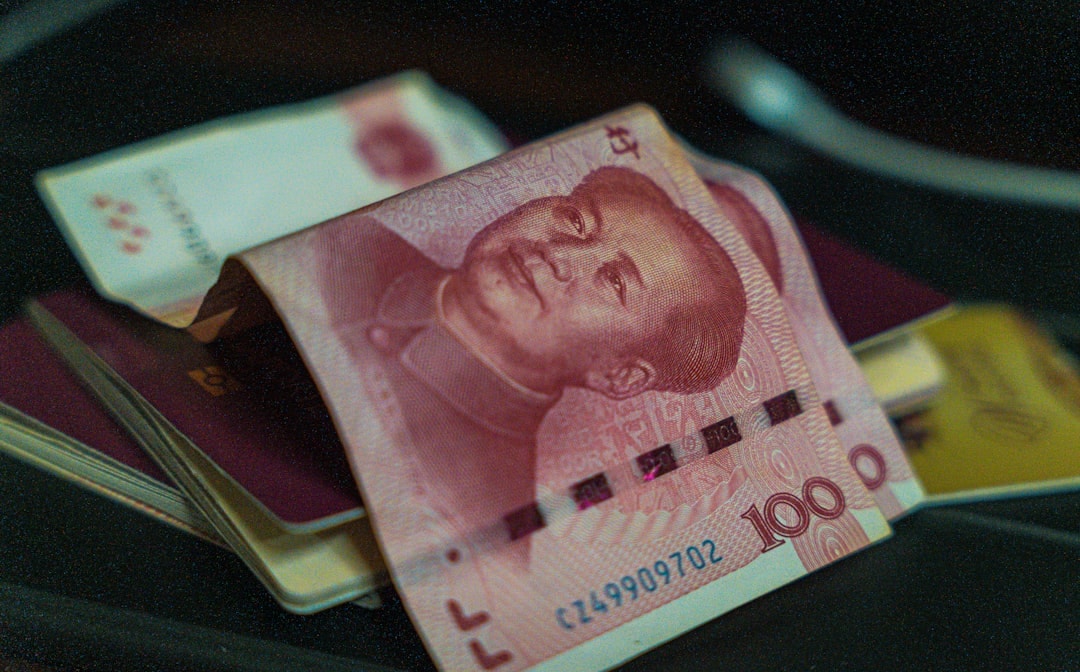
The deeper issue is confidence. China already has some of the strictest capital controls among major economies. Individuals are officially limited to converting the equivalent of $50,000 into foreign currency each year. But when households and wealthy investors believe the domestic outlook is deteriorating, restrictions do not eliminate the incentive to move money. They simply change the methods.
Those methods have ranged from offshore shell companies and false overseas addresses to inflated import invoices, art auctions, and cryptocurrencies. Others have simply routed funds into Hong Kong, Singapore, or U.S.-based accounts to gain exposure to foreign assets and dollar-denominated securities.
Why the outflow pressure matters
Bloomberg Intelligence estimated earlier this week that roughly $1 trillion in hot money left China last year, the largest annual outflow since records began in 2006. That number is extraordinary in any context. It becomes even more significant in a country where formal controls are already extensive.
This pressure did not appear overnight. Since 2021, China has seen one of the largest waves of capital outflows in modern history. Several factors have fed into that trend:
- Slowing economic growth
- The collapse of the property boom
- Regulatory crackdowns on major private sector firms
- Rising geopolitical tension
- Lingering damage to confidence from the zero-COVID period
The property story is especially important. For decades, real estate was the primary store of wealth for Chinese households. As the housing downturn deepened, trillions of dollars in household wealth were effectively wiped out. That did not just hurt balance sheets. It also changed behaviour. If the old default investment vehicle no longer looks safe, money starts looking for the exit.
This is also why Beijing’s moves are about more than market supervision. They appear tied to a broader campaign of financial surveillance and tax enforcement, especially as local governments struggle with collapsing land-sale revenues. In other words, authorities are not just trying to stop capital from leaving. They are trying to regain visibility and control over where wealth is held and how it is taxed.
For background on the broader fragility behind the recovery narrative, this earlier analysis on China’s uneven rebound and growing technology constraints fits neatly with the picture emerging here.
From 2015 to Today: Why Beijing Is Nervous About Outflows Again
China has been here before, at least in part. The 2015 to 2016 capital flight episode rattled both domestic markets and global investors. At that time, fears about slowing growth and a stock market crash drove large outflows, prompting Beijing to tighten controls, scrutinise overseas transactions, and limit outbound investment.
The difference now is that the pressure feels more structural.
Back then, the concern was that China was experiencing a sharp and destabilising adjustment. Today, the concern is that confidence has been eroded over a much longer period and across multiple fronts at once. The property bust has persisted. Private-sector sentiment has been repeatedly shaken. External demand is less reliable. And households increasingly appear unwilling to assume that domestic assets will recover quickly.
That is why this crackdown matters. It is not merely a regulatory event. It is a policy signal that Beijing sees capital outflow pressure as a serious and ongoing challenge.
Xi Jinping Uses Diplomacy to Reinforce Strategic and Economic Ties
While officials tighten financial controls at home, Beijing is also trying to expand room for manoeuvre abroad.
Xi Jinping held two notable meetings in Beijing aimed at strengthening diplomatic and economic partnerships amid rising global instability, especially connected to Middle East tensions.
In talks with Pakistan’s prime minister, Xi praised Pakistan’s role in mediation efforts involving the United States and Iran. That reflects China’s clear interest in reducing the economic fallout from regional conflict. Beijing is sensitive to any development that pushes up energy prices, weakens global demand, disrupts shipping, or increases financial volatility.
The China-Pakistan discussions also went beyond diplomacy. The two sides agreed to deepen cooperation in:
- Artificial intelligence
- Agriculture
- Industry
- Healthcare
- Security
The Pakistani prime minister also visited Alibaba’s headquarters in Hangzhou, where agreements were signed to accelerate Pakistan’s AI and digital economy development. That is notable because it shows Beijing’s continued effort to use technology partnerships as part of its foreign policy toolkit, even while Chinese tech firms face pressure from Western restrictions.
Xi also met with Serbia’s president, with both sides signing agreements covering trade, technology, education, green energy, infrastructure, and advanced manufacturing. Serbia awarded Xi the country’s “friendship medal", underscoring the closeness of the current bilateral relationship.
These meetings serve several purposes at once. They reinforce China’s image as a dependable economic partner, broaden its network of political relationships, and signal that Beijing intends to remain an active diplomatic player even as global tensions rise.
There is also a more pragmatic layer here. When major power competition intensifies, China benefits from strengthening ties with countries willing to cooperate on trade, technology transfer, infrastructure, or geopolitical coordination.
Huawei Claims a New Path Around the Semiconductor Blockade
The next story sits at the centre of the technology war.
Huawei says it may have found a new way to close the semiconductor gap with global leaders such as TSMC, potentially allowing China to produce more advanced chips without relying on the most sophisticated Western manufacturing equipment.
The claim emerged at a semiconductor conference in Shanghai, where Huawei’s chip division presented a new design principle called the "Pangu Scaling Law", also referred to as “Ho’s Law". The company’s argument is that it can improve chip performance not simply by making transistors ever smaller, but by reorganising chip designs in three dimensions and improving data transmission efficiency.
That matters because China remains cut off from the most advanced extreme ultraviolet lithography machines, or EUV systems, produced by Dutch firm ASML. Those tools are widely viewed as essential for manufacturing the world’s most advanced semiconductors at scale.
Huawei’s proposal is, in effect, an attempt to challenge that assumption.
The company says upcoming Kirin smartphone chips launching later this year will deliver significant gains in transistor density and power efficiency. It also claims it aims to produce 1.4-nanometre chips by 2031, only a few years behind the expected timelines of firms like TSMC and Intel.
That is an ambitious statement. It is also very much a claim at this stage, not a verified breakthrough.
Why skepticism remains warranted
Investors reacted enthusiastically. SMIC rose more than 18 per cent, and Huahong Semiconductor jumped 20 per cent in Shanghai trading. Markets clearly wanted to believe that China might have found a route around the sanctions bottleneck.
But there is a major difference between proving a concept and producing advanced chips at a commercial scale.
Analysts note that alternative techniques such as self-aligned quadruple patterning may help compensate for the lack of EUV machines. Yet such workarounds are typically more complex, more expensive, and far harder to scale efficiently. Yield rates, cost, reliability, and manufacturing consistency all become serious obstacles.
So the prudent reading is this: Huawei’s announcement is important because it shows how sanctions are forcing Chinese firms to explore unconventional pathways. But the industry should not assume that one conference presentation has solved China’s advanced semiconductor constraints.
For related context on how chip restrictions continue to shape China’s technology strategy, this earlier piece on Beijing’s AI ambitions amid chip limitations is highly relevant.
China’s Missile Supply Chain Is Booming
The final major development concerns the defence sector, where the contrast with the civilian economy is hard to miss.
A Bloomberg analysis of corporate filings found that 81 listed Chinese companies are now involved in the country’s missile supply chain, more than double the number from 2013. Nearly 40 per cent of those firms reported their highest revenues since Xi Jinping came to power, even as many of China’s civilian companies have struggled with weak demand, slowing growth, and the ongoing property crisis.
That is a striking result. It suggests that while large parts of the private economy remain under pressure, sectors tied to strategic state priorities continue to benefit from sustained funding and demand.
At the centre of this ecosystem are major state-owned defence conglomerates such as the following:
- China Aerospace Science and Industry Corporation
- China Aerospace Science and Technology Corporation
These firms oversee significant portions of missile development and production, but they depend on an increasingly broad network of subcontractors. Those suppliers produce everything from infrared guidance systems and fibre-optic navigation technology to stealth coatings, embedded computers, advanced alloys, and 3D-printed materials.
Many of these technologies have dual-use applications, meaning they can serve both civilian and military functions. That makes the ecosystem harder to map and, in some cases, easier to scale.
Missiles at the center of China’s military strategy
This build-up is not incidental. Missiles sit at the heart of China’s deterrence strategy, particularly in relation to the United States and Taiwan.
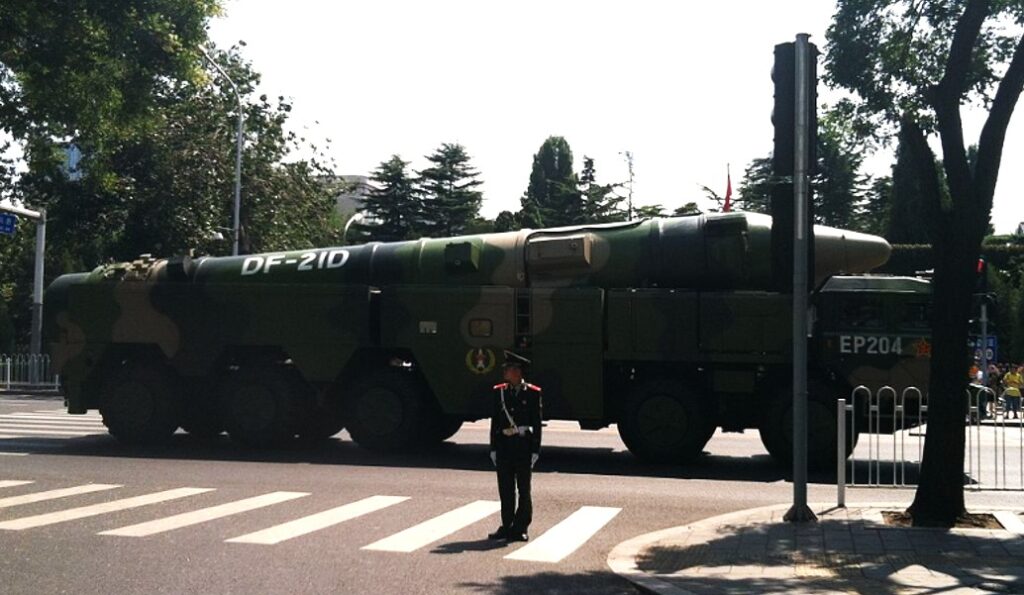
According to Pentagon estimates cited in the reporting, China now has at least 3,150 ballistic missiles and 300 ground-launched cruise missiles. That is a dramatic increase from a decade ago.
Systems such as the DF-21D and DF-26 are specifically designed to threaten U.S. carrier groups and military bases deep in the Pacific. Beijing also displayed hypersonic weapons and intercontinental ballistic missiles during its major military parade last year, underscoring that strategic messaging is part of the military modernisation effort.
The timing is important. China is racing to modernise the People’s Liberation Army ahead of its 100th anniversary in 2027. At the same time, tensions remain elevated across the Taiwan Strait and in the broader Indo-Pacific.
Regional capitals will be paying attention. Tokyo, Taipei, Seoul, and Canberra all have strong reasons to monitor the pace and quality of this missile expansion.
Who is benefiting?
Some private-sector firms are seeing significant gains from military orders. One company producing infrared sensors and missile systems reportedly saw revenue rise 73 per cent last year. Another firm making fibre-optic gyroscopes used in missile guidance also recorded strong growth.
This reflects a broader pattern: defence-linked sectors are becoming one of the more resilient pockets of the Chinese industrial economy, especially when tied to technologies that the state views as strategically essential.
Of course, this expansion is not without friction. Xi’s anti-corruption campaign has purged senior military officials, defence executives, and scientists, creating uncertainty inside parts of the weapons industry. Tighter oversight and procurement reforms could slow some programmes in the short term.
But for now, first-quarter results from many missile suppliers remain strong. That suggests Beijing still sees missile production as a top priority in its effort to challenge U.S. military dominance and establish itself as a world-class military power.
For broader context on the security-first logic shaping policy, this earlier article on Beijing’s increasingly securitised worldview helps explain why economic, technological, and military policy are becoming more tightly integrated.
What These Developments Say About China Right Now
If there is a common thread across all of this, it is control under pressure.
Beijing is trying to:
- Stop capital from leaking out
- Keep economic partnerships alive abroad
- Accelerate technological self-sufficiency
- Build hard military power at speed
Those are not separate stories. They are deeply connected.
Weak confidence at home makes capital harder to retain. Technology restrictions from abroad make domestic innovation more urgent. Geopolitical instability increases the value of diplomatic partnerships. Rising strategic competition reinforces military spending, even when the civilian economy is under strain.
That is why China News Update at the moment often feels less like a sequence of unrelated headlines and more like a single system under pressure from multiple directions.
The contrast with Taiwan’s capital market surge only sharpens the point. Markets are not responding just to growth rates or headline GDP numbers. They are responding to confidence, institutions, access to global supply chains, and the perceived ability of an economy to attract rather than trap capital.
FAQ
Why is Beijing cracking down on cross-border stock trading?
Because officials are increasingly concerned that mainland investors are using offshore trading channels to move money out of China. The crackdown targets brokers and account structures that gave investors access to overseas markets without full regulatory approval.
How serious is China’s capital flight problem?
It appears to be very serious. Estimates cited this week suggest around $1 trillion in hot money left China last year, the largest annual outflow since records began in 2006. That points to persistent weakness in domestic confidence despite strict capital controls.
What is driving Chinese investors to move money overseas?
The major drivers include slowing growth, the property downturn, past regulatory crackdowns on the private sector, geopolitical tension, and lasting damage to confidence from the zero-COVID period. The collapse of real estate as a reliable store of wealth has been especially important.
Did Huawei really solve China’s advanced chip problem?
Not yet, at least not based on what is publicly known. Huawei has presented a potentially important alternative design approach, but there is still no public proof that it can mass-produce leading-edge chips at scale without advanced EUV lithography tools.
Why are investors excited about Huawei’s semiconductor announcement?
Because if China can produce more advanced chips using nontraditional methods, it could weaken one of the most important effects of U.S.-led export controls. That would have major implications for China’s self-sufficiency push and for the global semiconductor industry.
Why is China’s missile industry growing so quickly?
Missiles are central to Beijing’s military strategy, particularly for deterring the United States and shaping any future Taiwan contingency. The state is prioritising military modernisation ahead of 2027, and that is generating strong demand across a wide supply chain of listed defence-related companies.
Can China maintain the current pace of military expansion?
It likely can in the near term, but there are risks. Anti-corruption purges, tighter oversight, and procurement reforms could slow some weapons programmes. Even so, recent corporate results suggest missile production remains a very high strategic priority.
Summing up
China’s current trajectory is defined by a difficult mix of economic fragility and strategic ambition.
Money is trying to leave. The state is tightening the exits. Diplomacy is being used to widen external options. Technology firms are searching for ways around sanctions. Defence-linked industries are expanding even as much of the civilian economy remains sluggish.
That does not describe a country in collapse. Nor does it describe one operating from effortless strength. It describes a system trying to manage vulnerability while still pushing hard for power, resilience, and strategic autonomy.
That balance, or imbalance, is likely to define the next phase of the China story.