It was a heavy start to the week for China news, with four major developments cutting across
industrial safety, trade policy, space ambitions, and regional security.
The most immediate was a catastrophic coal mine gas explosion in northern China that killed at least 82 people, making it the country’s deadliest mining disaster in more than a decade. At the same time, several of Europe’s largest economies moved toward a much tougher position on Chinese trade practices. Beijing also successfully launched a new Shenzhou mission to the Tiangong space station, underscoring the country’s accelerating long-term strategic goals in orbit and beyond. And finally, a striking report on Xi Jinping’s recent summit diplomacy suggested that tensions with Japan may be entering a more dangerous phase than many had assumed.
Taken together, these stories show the range of pressures. Beijing is trying to manage at once domestic governance failures, external economic pushback, technological prestige projects, and sharpening geopolitical rivalry.
Table of Contents
- Deadly coal mine explosion puts China’s industrial safety failures back in focus
- Europe’s biggest economies are shifting toward a tougher China trade policy
- China’s Shenzhou 20 mission reinforces the strategic importance of its space program
- Xi’s reported outburst over Japan points to a more dangerous regional dynamic
- What ties these stories together
- FAQ
Deadly coal mine explosion puts China’s industrial safety failures back in focus
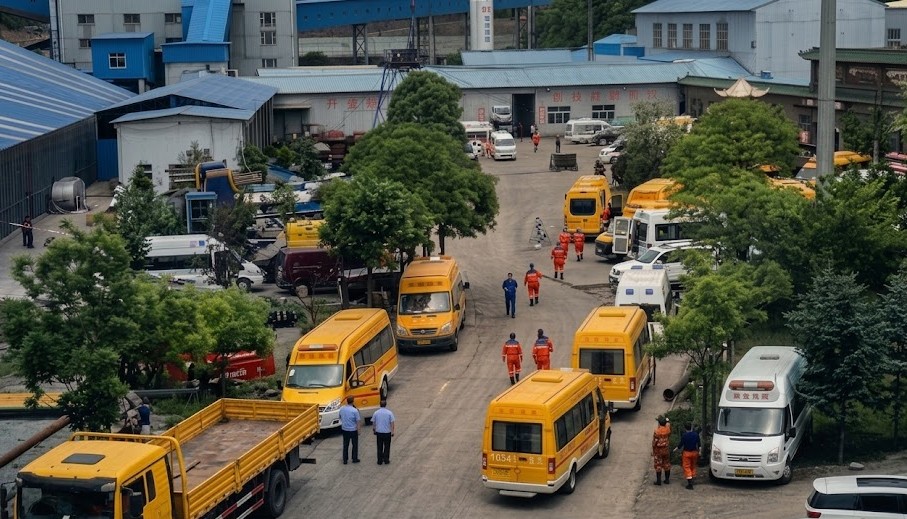
Xi Jinping ordered an all-out rescue effort and a nationwide safety review after a catastrophic gas explosion tore through a coal mine in Shanxi province late Friday. At least 82 people were killed, two remained missing, and another 128 were hospitalised, many with blast injuries or toxic gas exposure.
More than 200 workers were underground when the explosion occurred.
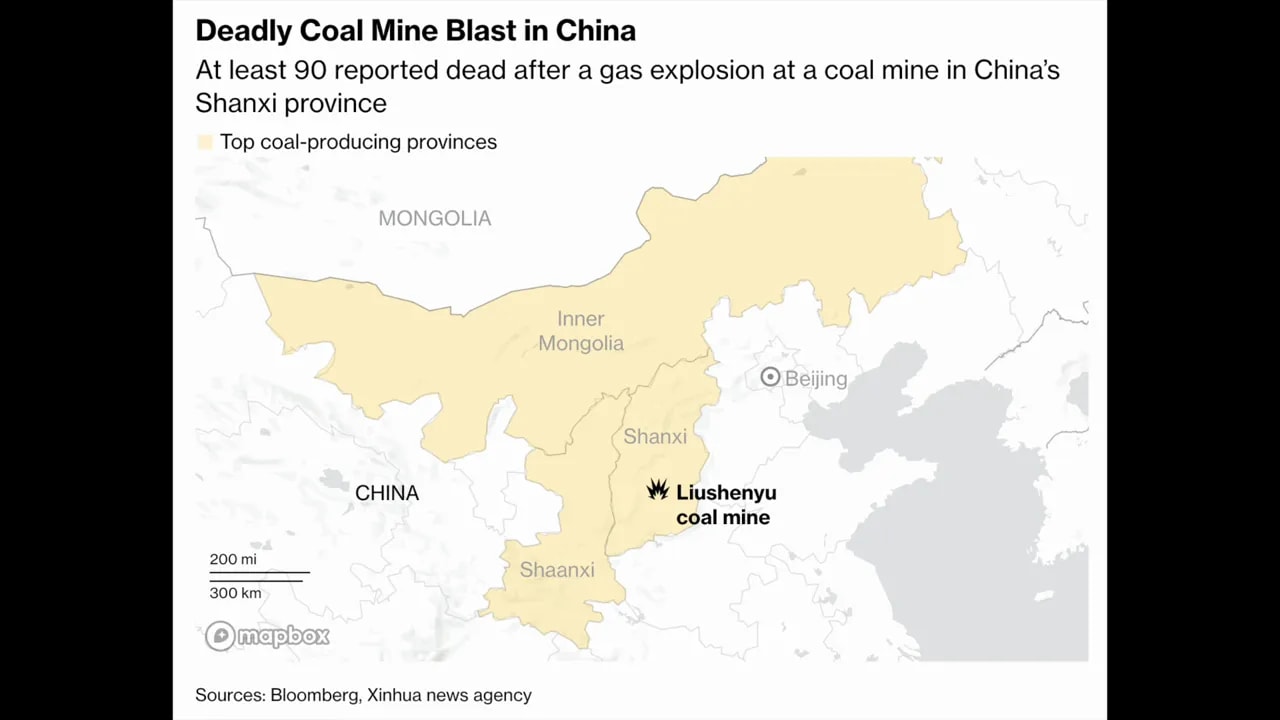
Early official reporting significantly understated the scale of the disaster before the death toll was revised sharply upward.
Local authorities later blamed confusion at the scene and uncertainty over worker numbers for the inaccurate initial figures. That explanation has been met with understandable scepticism.
There is an old and deeply familiar pattern here. In the immediate aftermath of major industrial disasters in China, early information is often incomplete, delayed, or sanitised. Then, as the scale becomes harder to obscure, the official account shifts. That does not automatically prove a cover-up in every case, but it does help explain why public trust is often so low when local authorities ask for patience.
Xi’s response was unusually direct and personal. He called on authorities to make every effort to rescue survivors, treat the injured, investigate the cause thoroughly, and strictly punish those responsible. Premier Li Qiang also ordered tighter enforcement of industrial safety rules nationwide.
Preliminary investigations reportedly found “serious violations” by the mine operator. Executives connected to the company have been detained. It is also known that the mine had previously been flagged by China’s National Mine Safety Administration in 2024 for severe safety hazards, including dangerously high gas levels.
That is the key point. This was not simply a bolt-from-the-blue tragedy. It appears to have happened in a system where major risks were already known.
Why these disasters keep happening
China has spent years promising better industrial safety enforcement, but serious accidents continue to occur with troubling regularity. In many cases, the drivers are depressingly consistent:
- poor enforcement of existing rules
- local corruption and protectionism
- cost-cutting by operators
- falsified or incomplete safety data
- pressure to maintain output
The country’s industrial accident history is full of examples. The 2015 Tianjin chemical warehouse explosions killed more than 170 people and devastated nearby residential areas. A coal mine collapse in Inner Mongolia killed 53 workers. Just weeks ago, a fireworks factory blast in Hunan killed 26 people.
The issue is not that Beijing lacks regulations. The issue is that implementation often weakens as it moves down the system, especially where economic incentives and local official interests cut in the opposite direction.
That tension is particularly visible in coal.
Coal remains indispensable, even as the risks grow
Beijing has aggressively expanded coal production in recent years to strengthen energy security and reduce vulnerability to imported fuel disruptions. That strategy has a logic to it. Coal is abundant, domestic, and deeply embedded in the structure of China’s economy. It powers factories, steel mills, and large portions of the electric grid.
But the more output is prioritised, the harder it becomes to convince the public that safety is truly the top priority.
Shanxi remains the heart of China’s coal industry, producing more than a billion tonnes annually. It is central to the country’s energy model, which means any serious inspection campaign there can have ripple effects far beyond the province.
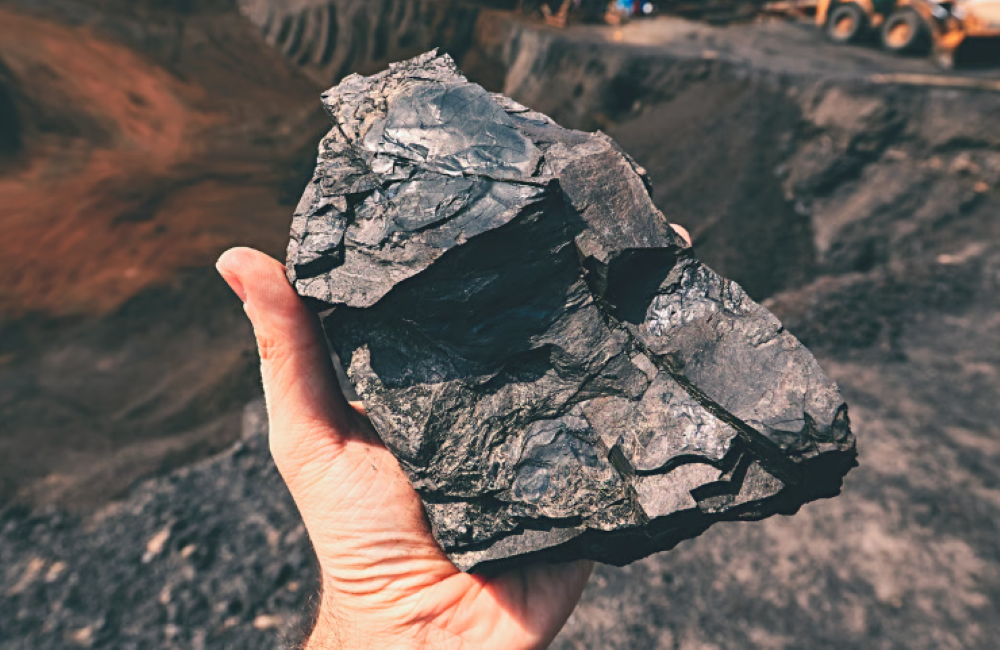
illustrating how industrial governance failures can move from the ground to the markets.
Markets reacted immediately. Chinese coking coal futures surged by the daily trading limit amid expectations that tighter inspections could disrupt supply during peak summer demand. Analysts are now warning that a broad crackdown on mining operations could tighten supplies across both the steel and energy sectors.
So Beijing faces a familiar three-way balancing act:
- energy security, which still leans heavily on coal
- economic growth, which depends on stable industrial inputs
- public anger, which rises every time another avoidable industrial tragedy occurs
This latest disaster is not just a safety story. It is also a governance story and a reminder that in China’s growth model, basic enforcement failures can still carry mass-casualty consequences.
Europe’s biggest economies are shifting toward a tougher China trade policy
The second major development came from Europe, where several of the bloc’s largest economies are now pushing for significantly stronger trade defences against China.
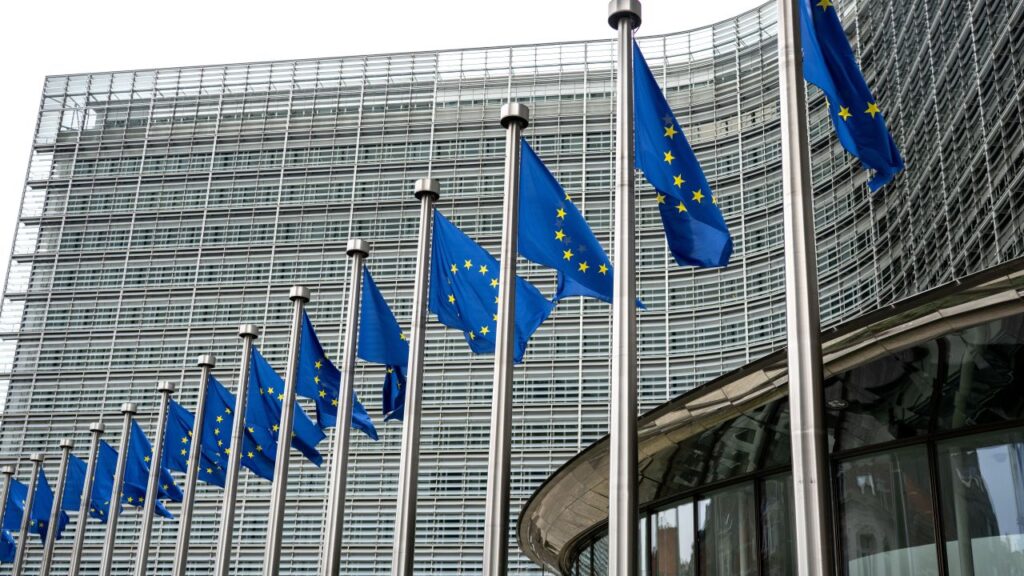
Spain, France, Italy, the Netherlands, and Lithuania jointly urged the European Commission to adopt tougher measures to protect European industry.
from what they describe as unfair trade practices and state-backed industrial overcapacity.
The proposal reportedly calls for faster and broader tariff tools, tighter anti-circumvention rules, and a new “resilience tool” that could impose quotas or additional duties on suppliers dominating critical supply chains.
This is not a minor adjustment. It reflects a broader shift in Europe’s strategic thinking.
For years, much of Europe tried to maintain a middle position with China: economically engaged, politically cautious, and reluctant to fully embrace a confrontational trade posture. That mood is changing.
The list of sectors causing concern is telling: electric vehicles, steel, solar products, semiconductors, and green technologies. These are not peripheral industries. They are exactly the sectors many European governments see as essential to future competitiveness.
European leaders increasingly argue that the bloc’s open market structure is being exploited while domestic firms struggle with high energy costs, lower productivity growth, and tougher regulatory burdens. According to the proposal, European industry lost around one million jobs between 2019 and 2025.
The underlying complaint is straightforward: Chinese firms, backed directly or indirectly by the state, can scale production so aggressively that they overwhelm competitors abroad. The result is not just lower prices. It is industrial dependency.
From trade concern to economic security concern
What makes this moment more serious is that the European debate is no longer only about trade imbalances. It is increasingly about vulnerability.
Beijing has shown that it can wield leverage over critical minerals and industrial inputs, including semiconductors and rare earths. That has pushed many European officials to frame economic dependence on China in geopolitical terms, much as Europe now looks back on its former dependence on Russian energy before the war in Ukraine.
In other words, the concern is no longer simply that Europe is losing market share. The concern is that Europe could become strategically exposed.
This harder line sits within a wider trend that has been visible for some time. If you have been following recent China News Update coverage on Europe’s tougher trade posture, this latest move looks less like an isolated initiative and more like part of a broader rethinking of the EU-China economic relationship.
Europe still cannot easily disentangle from China
At the same time, Europe’s balancing problem is real. China remains one of the EU’s most important trading partners and an increasingly significant source of investment.
Chinese automakers now account for more than 15 per cent of Europe’s electric vehicle sales, with brands such as BYD and Chery expanding rapidly. Many Chinese companies are also moving production into Europe itself, allowing them to bypass tariffs and gain closer access to the EU market.
Then there is Germany. Chinese companies reportedly launched 228 investment projects in Germany in 2025, overtaking the United States as the largest single-country source of foreign direct investment projects there for the first time.
That matters because Germany has traditionally been one of the key swing actors in Europe’s China policy. Its economy is deeply tied to manufacturing and export integration, and its political system has long contained competing instincts: commercial engagement on one side, strategic caution on the other.
Now those tensions are becoming harder to contain. France has long leaned more protectionist. Spain and the Netherlands had previously been more cautious. Germany remains internally divided. But the political centre of gravity across Europe appears to be moving toward a tougher stance.
Beijing has already warned of retaliation if additional EU restrictions are imposed. That means this issue is unlikely to settle quietly. It points toward a more defensive, more politicised, and more contested phase in Europe-China trade relations.
China’s Shenzhou 20 mission reinforces the strategic importance of its space program
Amid the bad news and geopolitical friction, China also marked a high-profile technological success. The country launched its Shenzhou 20 mission on Sunday, sending three astronauts to the Tiangong space station.
The spacecraft lifted off from the Jiuquan Satellite Launch Center in northwestern China. The crew includes commander Chen Dong, Chen Zhongrui, and Wang Jie. One detail receiving particular attention was the participation of the first astronaut from Hong Kong in a Chinese space mission, a symbolic milestone that carries both scientific and political significance.

moving from prestige to practical capability.
The astronauts are expected to conduct dozens of experiments and technology tests while aboard Tiangong. They will also rotate with the current Shenzhou 21 crew, which has already spent more than 200 days in orbit. One astronaut is expected to remain on the station for a full year, placing the mission among China’s longest-duration space efforts to date.
That is important because long-term human spaceflight is not just about prestige. It is about systems reliability, medical endurance, operational logistics, and cumulative experience. If a country wants a serious future in lunar operations or deep-space missions, it needs to solve these problems step by step.
And that is exactly what Beijing is doing.
The 2030 moon goal is no longer abstract
China has been very clear that it wants to land astronauts on the moon by 2030. The space station program is one of the core foundations supporting that ambition.
Every successful crewed launch, every long-duration stay, and every technical test aboard Tiangong serves a larger strategic project. This is about building a complete national capability stack: launch systems, orbital operations, astronaut endurance, docking reliability, and mission integration.
China’s space program is often discussed as a prestige exercise, and prestige is certainly part of it. But it is also a state capacity story. It demonstrates organisational discipline, technical competence, and strategic patience. In that sense, space remains one of the clearest examples of how Beijing links national power, symbolism, and long-term competition.
For broader context on the strategic competition unfolding beyond Earth orbit, the recent piece on the U.S.-China lunar race is worth reading alongside this mission.
Xi’s reported outburst over Japan points to a more dangerous regional dynamic
The final story may be the most strategically concerning.
A report in the Financial Times said Xi Jinping became visibly agitated during his recent summit with U.S. President Donald Trump in Beijing when discussing Japanese Prime Minister Shigeru Ishiba and Japan’s military expansion. If accurate, that matters a great deal.
Officials familiar with the discussions reportedly described the exchange as the most intense moment of the two-day meeting, despite Japan not being a major subject in summit preparations. Trump is said to have responded that Japan’s increasingly assertive security posture is being driven by threats from North Korea and wider regional instability.
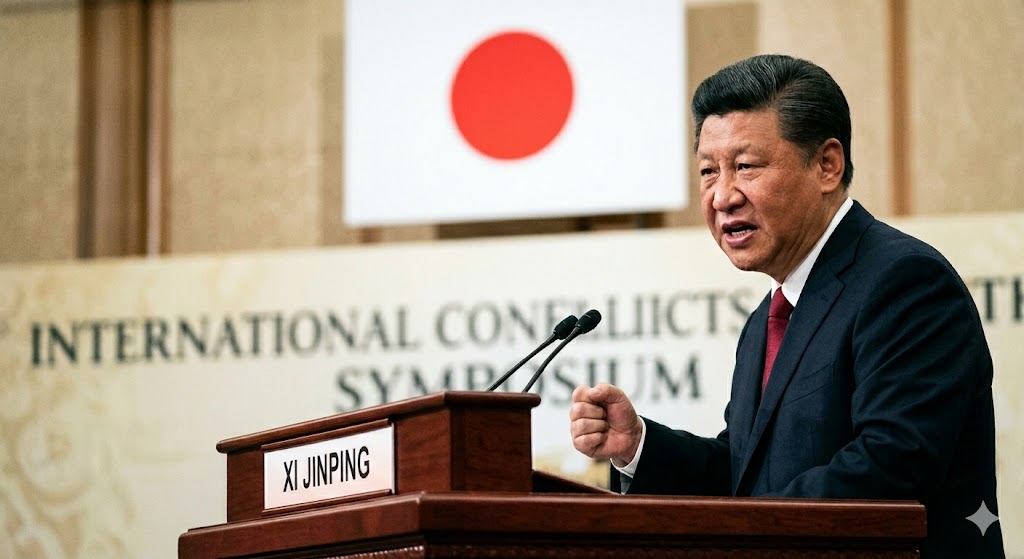
framed by grievance as well as strategy.
Why does this stand out? Because if Xi’s reaction was genuinely emotional rather than narrowly tactical, it suggests that anti-Japanese policy in Beijing may be shaped not only by cold strategic calculation but also by grievance, volatility, and a sense of historical victimhood.
That is where things get dangerous.
A powerful state is not automatically destabilising. A powerful state that sees itself as perpetually wronged, encircled, and morally entitled to redress can be much more difficult to predict. That kind of mindset can elevate escalation risks, especially when the issues involved include Taiwan, maritime disputes, military modernisation, and alliance politics.
Why Beijing is so alarmed by Japan’s security shift
Under Ishiba, Japan has accelerated defence spending, loosened restrictions on arms exports, strengthened ties with regional partners, and signalled more openness to revisiting longstanding anti-nuclear principles. Beijing has condemned these moves as evidence that Tokyo is abandoning its postwar pacifist identity and moving toward what Chinese officials call "neo-militarism".
But the regional context is crucial. Japan is not rearming in a vacuum.
Countries across the Indo-Pacific have become increasingly concerned about China’s military build-up and more assertive regional behaviour. Japan has responded by deepening security ties with Australia, the Philippines, and South Korea. It has also sharpened its warnings over Taiwan, including statements that a Chinese attack on Taiwan could pose an existential threat to Japan itself.
That in turn has infuriated Beijing, which has responded with diplomatic protests, export restrictions, anti-Japanese rhetoric, and broader pressure tactics.
The asymmetry in official messaging is also impossible to miss. China routinely condemns Japanese military expansion while carrying out one of the largest and longest military build-ups in the world. According to the figures cited, China spent roughly $336 billion on defence last year, compared with Japan’s $62 billion, and Chinese defence spending has risen for 31 consecutive years.
This is part of a wider security worldview in Beijing, one that increasingly treats the surrounding environment as hostile and sees economic, technological, and military competition as deeply interconnected. That broader framework has been visible in other recent China News Update analyses of Beijing’s securitised worldview.
Both sides want to avoid rupture, but the rivalry is deepening
For all the hostility, neither China nor Japan appears eager for a complete collapse in relations. Senior Japanese officials briefly met Chinese Commerce Minister Wang Wentao on the sidelines of the APEC meeting over the weekend, the highest-level engagement since the latest diplomatic standoff began.
Still, the trendline is not encouraging.
China is increasing military pressure around Taiwan. Japan is accelerating its defence transformation. Tokyo is also growing more uneasy about the reliability of the U.S. alliance under the current administration, citing tariff pressure, uncertainty over U.S. commitments to Taiwan, and delays in Tomahawk missile deliveries.
That combination creates a volatile triangle: a more assertive China, a more heavily armed Japan, and a less predictable United States. It is difficult to imagine a cleaner recipe for miscalculation risk in the Indo-Pacific.
For additional context on this worsening bilateral relationship, the recent report on rising Japan tensions connects many of the same pressures now becoming more visible.
What ties these stories together
At first glance, a mine explosion in Shanxi, a European trade initiative, a crewed space launch, and an angry exchange over Japan do not seem to belong in the same frame.
But they do.
Each reflects a different dimension of China’s current position:
- At home, Beijing is still struggling with basic governance problems, especially where political incentives clash with safety and transparency.
- In trade, major partners are becoming less willing to absorb the consequences of China’s state-backed industrial model.
- In technology and prestige, China continues to make real gains in areas that support long-term strategic competition.
- In regional security, emotional nationalism and military rivalry are creating a more brittle environment.
This is what makes the current moment so consequential. China is not dealing with one isolated challenge. It is managing multiple stress points at once, and each one feeds into the others.
The coal disaster raises questions about governance quality. Europe’s trade shift raises questions about market access and external resilience. The Tiangong mission highlights strategic competence and ambition. The Japan dispute underscores the danger of grievance-driven policymaking in a heavily armed region.
That is the broader picture this week. And it already looks like a busy one.
FAQ
Why is the Shanxi mine explosion such a significant event?
Because it killed at least 82 people, making it China’s deadliest mining disaster in more than a decade. It also appears to expose deeper failures in enforcement, especially since the mine had reportedly already been flagged for serious safety hazards.
Why are European countries pushing for tougher trade measures against China?
European governments increasingly believe Chinese state-backed industrial overcapacity is harming domestic manufacturers in sectors such as electric vehicles, steel, solar products, semiconductors, and green technology. The concern is no longer just about trade deficits. It is about long-term economic security and strategic dependency.
What is the importance of the Shenzhou 20 mission?
The mission advances China’s long-term crewed space capabilities through orbital experiments, crew rotation, and long-duration human spaceflight. It also supports Beijing’s stated goal of putting astronauts on the moon by 2030.
Why is the report about Xi Jinping and Japan concerning?
If the account is accurate, it suggests that Beijing’s policy toward Japan may be shaped not only by strategic calculation but also by a more emotional and grievance-driven mindset. That can increase the risk of escalation in an already tense regional environment.
Is Europe fully aligned on a hardline China policy?
Not completely. France has generally favoured stronger protection, while Germany remains divided because of its deep economic ties to China. But the political mood across the EU is clearly moving toward a firmer stance.
What broader theme connects this China News Update?
The common theme is simultaneous pressure. China is facing domestic governance challenges, worsening external trade resistance, sustained technological competition, and rising geopolitical tension all at the same time.