China delivered a packed set of headlines this week, and the common thread running through them is unevenness. The economy is showing signs of life, but only in narrow pockets. Maritime tensions are flaring again in the South China Sea. A shocking corporate murder case has reached its final conclusion. Hong Kong is making a major push to reclaim aviation leadership. And beneath all of that sits a public health crisis that remains both massive and politically difficult to solve: China’s dependence on tobacco.
There was also a brief diplomatic note hanging over the week. Reports had suggested Xi Jinping might visit North Korea for the first time in years, but as of now there has been no confirmation. That uncertainty only became more awkward after North Korea launched a ballistic missile while Chinese Foreign Minister Wang Yi was in New York for United Nations Security Council meetings. If a trip does materialise, it will be geopolitically significant. For now, the larger story is that many of Beijing’s headline wins still come with serious caveats.
Table of Contents
- Economic bright spot, but only if you look at the top line
- South China Sea tensions: China says it expelled a Dutch frigate
- A notorious corporate murder case ends with an execution
- Hong Kong opens Terminal 2 and bets big on aviation
- China’s deadliest long-term crisis may be tobacco
- What these stories say about China right now
- FAQ
Economic bright spot, but only if you look at the top line
Official figures released this week showed China’s industrial profits rising sharply again. In April, industrial earnings jumped 24.7 per cent from a year earlier, the fastest pace in more than two years. That came on top of a 15.8 per cent rise in March. For the first four months of 2026, profits were up more than 18 per cent.
On paper, this looks like one of the best economic stories Beijing has had in a long time. After years of stagnation, property weakness, and fragile consumer confidence, any solid growth figure gets attention. But when you break down where the profit surge is actually coming from, the picture becomes much less reassuring.
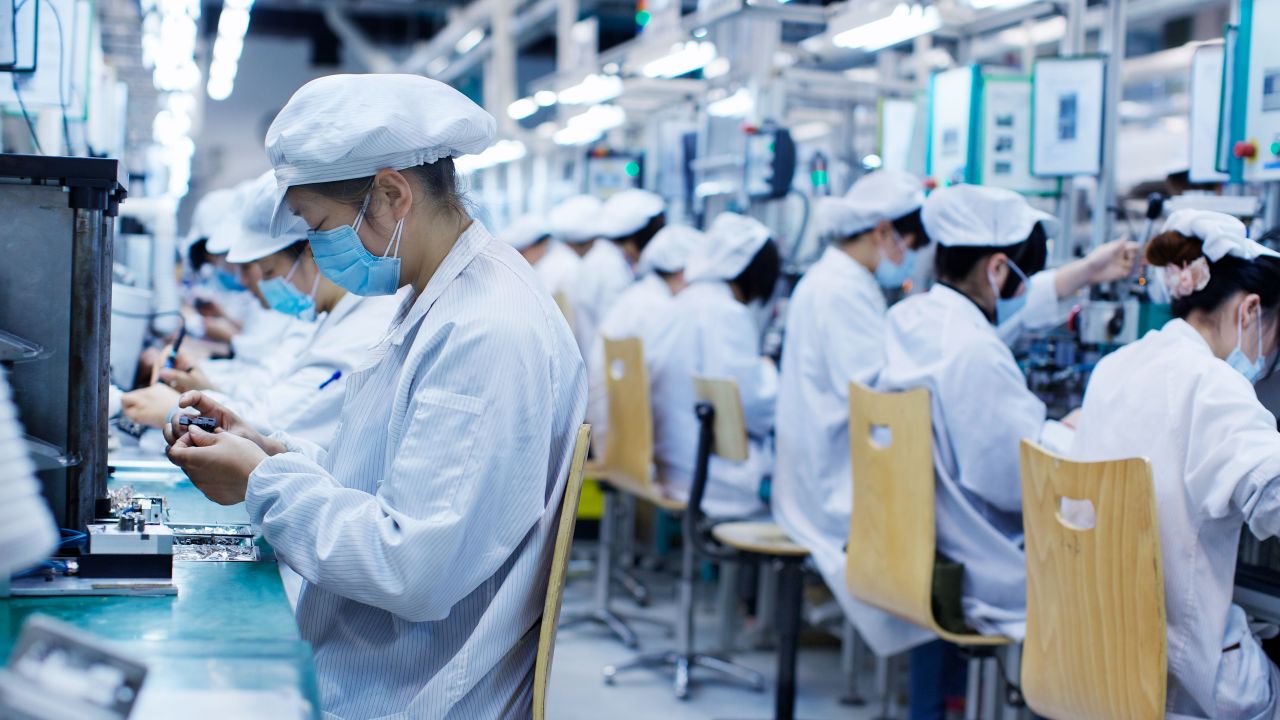
The boom is highly concentrated in a relatively narrow group of industries. The biggest winners are businesses tied to the global artificial intelligence investment cycle and commodity producers benefiting from higher oil prices linked to Middle East instability. That is not the same thing as a broad-based domestic recovery.
AI supply chain winners are carrying the numbers
The electronics sector was the clear standout. Profits there more than doubled in the first four months of the year, rising 108 per cent compared with the same period in 2025. By the National Bureau of Statistics’ own count, electronics alone accounted for nearly half of all industrial profit growth nationwide.
That tells you something important about where China sits in the current global economy. The country has become deeply embedded in the AI hardware and infrastructure supply chain. As American hyperscalers spend enormous sums on data centres, networking equipment, semiconductors, and computing infrastructure, demand for Chinese-made components has surged. That includes chips, printed circuit boards, optical fibres, and specialist electronic materials.
Some of the numbers are extraordinary. Producers of specialised electronic materials reportedly saw profits jump more than 600 per cent. Optical fibre makers saw gains above 340 per cent. These are not marginal improvements. These are explosive increases driven by one of the biggest global investment themes of the moment.
This also fits with the broader pattern discussed in earlier coverage of China’s uneven recovery and technology bottlenecks, where AI-linked activity has often looked much healthier than the rest of the economy. For more on that wider context, see this analysis of China’s fragile recovery narrative and AI chip constraints.
Energy prices helped upstream producers too
The other major support came from commodities, especially energy-related sectors. Rising oil prices tied to the Iran conflict lifted profits for upstream producers. Oil and gas extraction profits rose 8 per cent after steep declines last year. The chemical sector posted profit growth of more than 70 per cent.
Again, that helps explain the headline strength. It also underlines how much of the current improvement depends on external conditions rather than a genuine revival in household demand inside China.
Consumers are still weak, and that remains the core problem
Once you move outside AI-linked manufacturing and commodity production, the economy looks much weaker.
Consumer-facing industries continue to struggle under the combined pressure of soft household spending and excess industrial capacity. Companies are still trapped in brutal price wars. Furniture maker profits fell 54 per cent in the first four months of the year. Textile and apparel profits dropped 14 per cent. Carmaker profits slid 17 per cent as vehicle sales contracted at their fastest pace since 2022.
This is the central issue. Exports and selected industrial sectors are masking deep domestic weakness. Factory inflation and higher commodity prices may support some producers, but they are not translating into stronger wages, better household confidence, or a meaningful rise in consumer prices.
Without a real rebound in consumption, this recovery remains fragile. It is also increasingly dependent on forces outside Beijing’s control, including geopolitical shocks, foreign demand, and the highly cyclical global technology spending boom.
That theme has appeared repeatedly across recent China News Update coverage: parts of the system are improving, but the gains are selective, policy-driven, and vulnerable. A related read is this earlier piece on industrial profits, energy shocks, and Beijing’s stability-focused response.
South China Sea tensions: China says it expelled a Dutch frigate

China also said this week that it expelled a Dutch naval frigate from waters near the disputed Paracel Islands, another reminder that the South China Sea remains one of Asia’s most dangerous geopolitical flashpoints.
According to China’s Southern Theatre Command, the Dutch vessel entered waters claimed by Beijing and repeatedly launched a helicopter that “violated” Chinese airspace. Chinese naval and air forces reportedly responded with radio warnings and electronic interference before driving the ship away.
Beijing accused the Netherlands of undermining regional stability and warned that these sorts of encounters could lead to misunderstandings and misjudgments. On that narrow point, there is not much argument. Close military interactions in disputed waters always carry escalation risk, particularly when each side is operating from a completely different legal and political framework.
The Dutch defence ministry did not immediately comment, but the wider context matters. The frigate is on a five-month Indo-Pacific deployment focused on freedom of navigation and maritime security. It recently conducted exercises with Philippine forces after a visit to Manila.
So this incident is not an isolated naval spat. It sits at the intersection of several broader disputes:
- China’s sweeping claims over most of the South China Sea
- Western naval operations intended to challenge excessive maritime claims
- Heightened China-Philippines tensions in contested waters
- A separate deterioration in China-Netherlands relations over semiconductor restrictions
The final point is especially worth noting. Tensions between Beijing and The Hague have grown over Dutch export controls affecting advanced chip equipment and Chinese semiconductor ambitions. In that environment, even a maritime confrontation can no longer be treated as a single-issue event.
A notorious corporate murder case ends with an execution
One of the most shocking stories in China’s technology and gaming sectors reached its final chapter this week with the execution of Xu Yao, the former executive convicted of poisoning gaming entrepreneur Lin Qi.
Chinese media confirmed that Xu was executed last week after being convicted in 2024 for murdering Lin, the founder of Shanghai-based Yoozoo Games. The company said in a statement that “justice has ultimately been served".
Lin died in December 2020 at the age of 39. He was widely regarded as one of China’s rising entrepreneurs and was especially well known internationally for securing the adaptation rights to Liu Cixin’s science fiction trilogy The Three-Body Problem. Netflix later adapted the novels into its 2024 series, with Lin receiving a posthumous executive producer credit.
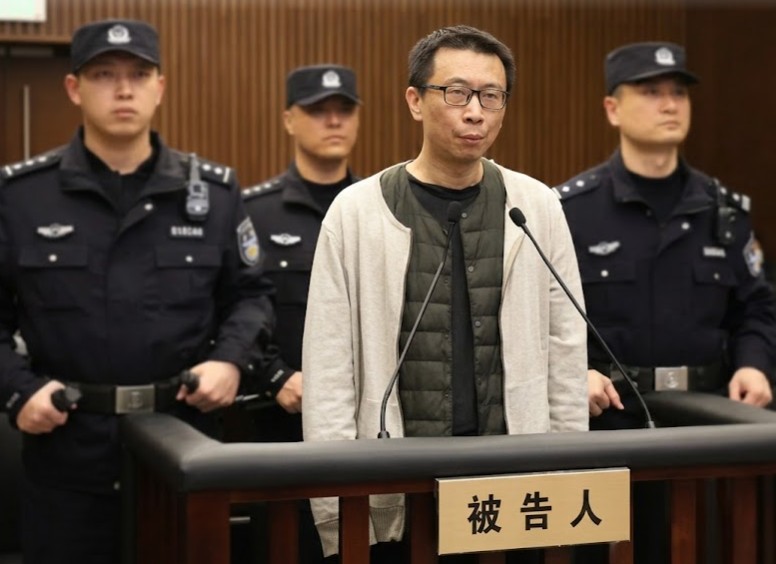
The details of the crime were extraordinary. Court filings said Xu became resentful after being sidelined from managing the Three-Body Universe subsidiary, the unit responsible for franchise-related projects. Prosecutors said he disguised toxic substances as probiotic pills and gave them to Lin. The court described the plot as “extremely despicable". Lin fell ill in December 2020 and died nine days later in hospital. Police arrested Xu shortly afterward.
Reports also indicated that several other people were sickened in the wider poisoning scheme. At the time of his death, Lin’s fortune was estimated at around 6.8 billion yuan, just under 1 billion US dollars.
Corporate crime is not rare anywhere, but this case stood out because it fused boardroom rivalry, personal grievance, celebrity business culture, and one of China’s most globally recognised intellectual properties. It remains one of the most disturbing episodes to hit the country’s private tech sector in recent years.
Hong Kong opens Terminal 2 and bets big on aviation
Amid all the heavier political and economic news, Hong Kong delivered a major infrastructure milestone. Hong Kong International Airport officially opened its second passenger terminal, part of a US$14.5 billion expansion designed to reinforce the city’s role as a global aviation hub.
The first passengers arrived before dawn for Hong Kong Airlines’ inaugural flight from the new terminal to Shanghai. Terminal 2 will eventually serve 15 mostly low-cost and regional airlines, including AirAsia, Indigo, and Bangkok Airways. That should free up capacity in Terminal 1 for larger carriers such as Cathay Pacific.
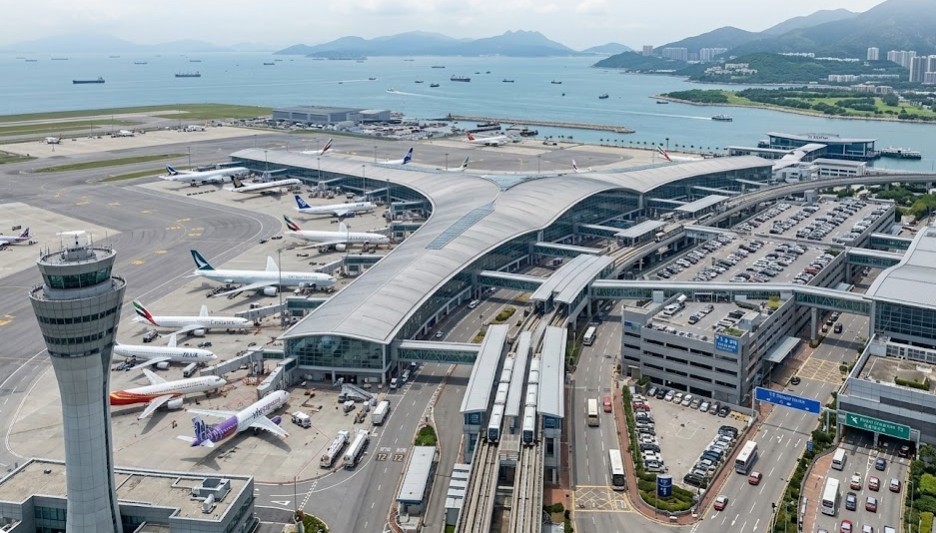
The broader expansion also includes a newly operational third runway, and airport officials say the combined project will lift annual capacity to 100 million passengers. That is an ambitious statement of intent at a time when regional competition is intense.
Hong Kong is trying to sharpen its edge against major rivals such as Singapore Changi and Dubai International. Current instability in the Middle East adds another strategic opening, since conflict there has disrupted travel through Gulf aviation hubs.
Officials are also pitching Terminal 2 as the world’s most digitally advanced terminal, with AI-powered facial recognition, robotics, and automated check-in systems capable of handling up to 30 million passengers annually.
This matters for more than airport prestige. Hong Kong’s competitive position has become a recurring issue across finance, logistics, and technology. If the city can reclaim momentum in passenger traffic and regional connectivity, that would strengthen one of the few sectors where it still holds genuine global advantages. There is a related angle here too: Hong Kong has recently benefited from strong AI-related market activity, as covered in this report on Hong Kong’s AI listing boom and broader policy shifts.
China’s deadliest long-term crisis may be tobacco
The most consequential story of the week may also be the least surprising. China remains deeply addicted to cigarettes, and the scale of the problem is staggering.
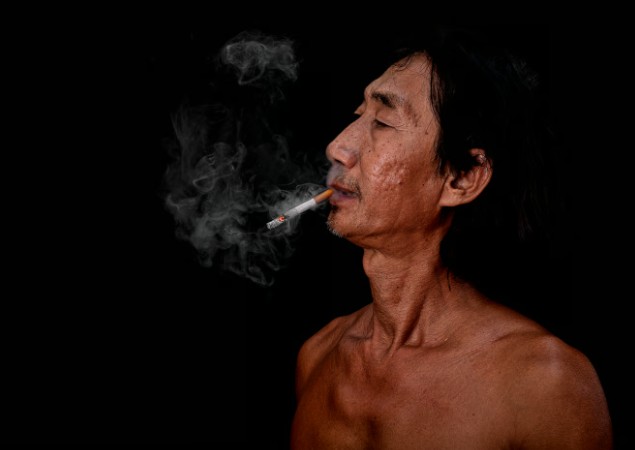
Despite years of anti-smoking promises, China still consumes nearly half the world’s cigarettes. Cigarette consumption in the country rose 39 per cent between 2003 and 2023, even as consumption outside China fell sharply. Around 2.4 trillion cigarettes are sold there every year.
The public health consequences are immense. Estimates differ depending on the study, but the most widely cited range is that smoking causes between 1 million and 2.7 million deaths per year in China. That works out to roughly 3,000 to 7,000 deaths a day. Smoking is estimated to account for more than one-fifth of all deaths in the country.
That alone would make this one of the biggest health issues in the world. But in China’s case, the problem is compounded by an institutional contradiction built directly into the state.
The regulator is also the seller
China’s tobacco industry is controlled by the State Tobacco Monopoly Administration, an unusual body that both regulates the industry and operates the state-owned China National Tobacco Corporation. In other words, the state is simultaneously referee and player.
That dual role creates an obvious conflict of interest. It also creates enormous fiscal dependence. In 2025, the monopoly reportedly generated around US$244 billion in profits and tax revenue. That is equivalent to about 7 per cent of total central government revenue and roughly in line with China’s official defence budget.
Once an industry becomes that important to state finances, reform gets much harder.
Why anti-smoking reform keeps stalling
Beijing has repeatedly discussed tougher tobacco controls, including nationwide indoor smoking bans and stronger warning labels. Some cities have introduced restrictions, but enforcement remains weak and inconsistent. Smoking is still common in restaurants, bars, train stations, and many public places that are technically supposed to be smoke-free.
Even top Chinese leaders have acknowledged how difficult it is to change the culture. Critics say the tobacco monopoly has repeatedly blocked stronger reforms, and there is evidence for that view. A push around 2017 for a national indoor smoking ban reportedly stalled after resistance from tobacco authorities, leaving regulation largely to local governments.
That creates another problem: local governments are often financially dependent on tobacco taxes themselves.
- In Kunming, tobacco taxes reportedly accounted for more than half the city’s budget in 2024.
- In Changde, Hunan, tobacco generated roughly one-fifth of tax revenue.
At a time when China’s property downturn has crushed land-sale revenues and local governments are under severe fiscal strain, tobacco money has become even more valuable. That makes anti-smoking enforcement politically costly.
Economic slowdown has made the contradiction worse
One of the most uncomfortable realities here is that China’s weak economy may be making the smoking crisis harder to solve. As traditional revenue sources dry up, tobacco income becomes more attractive to officials, not less. The monopoly has reportedly even supported some of Xi Jinping’s broader strategic priorities, including investment into semiconductors and the financial system.
That means tobacco is no longer just a health issue or a tax issue. It is tied into industrial policy and state capacity as well.
There was some early momentum after Xi took power in 2013. Officials were banned from smoking during government activities, and tobacco taxes were raised in 2015. But broader reform efforts gradually lost steam, especially after tighter restrictions were placed on foreign NGOs, many of which had funded public health campaigns.
Public frustration is growing, especially among younger Chinese
Even if the system has stalled, public sentiment appears to be changing. Social media campaigns encouraging people to confront smokers and report violations have become more common. Comedians and influencers have also become more outspoken about weak enforcement.
China officially wants to reduce the smoking rate to 20 per cent by 2030, down from around 23 per cent today. That may not sound like a dramatic gap, but with cigarettes remaining cheap, enforcement weak, and government budgets still tied to tobacco revenue, even that modest target looks difficult.
One health official summed up the challenge bluntly last year: "The pressure is immense.” That is probably the most honest description of the entire issue. China knows smoking is killing an enormous number of people. It also knows the state earns too much from cigarettes to move decisively.
What these stories say about China right now
Put all of this together, and a broader pattern emerges.
China is not short of headline successes. Industrial profits are rising. Hong Kong is opening major new infrastructure. Strategic sectors linked to AI are booming. But the positive numbers are narrow, externally exposed, and often disconnected from underlying domestic weakness.
At the same time, geopolitical frictions are intensifying, from European naval deployments in the South China Sea to technology disputes with countries like the Netherlands. And inside the system, some of the most serious long-term challenges, such as the tobacco epidemic, remain stubbornly unresolved because they are entangled with state finance and political incentives.
That is the essence of this week’s China News Update. Strength in one area often coexists with fragility in another. A bright top-line figure may conceal structural weakness. And in some cases, the state’s own dependence on a problem is what prevents it from solving it.
FAQ
Why are China’s industrial profits rising if the economy is still weak?
The recent rise in industrial profits is heavily concentrated in AI-related manufacturing and commodity sectors benefiting from higher oil prices. Electronics, optical fibre, and specialised materials have performed exceptionally well, but many consumer-facing industries such as furniture, apparel, and autos are still under pressure from weak domestic demand and intense price competition.
What happened between China and the Dutch navy in the South China Sea?
China said it expelled a Dutch naval frigate near the disputed Paracel Islands after the vessel allegedly entered waters claimed by Beijing and launched a helicopter into what China described as its airspace. Chinese forces reportedly used warnings and electronic interference. The Netherlands had not immediately commented at the time, and the incident occurred during a wider Dutch Indo-Pacific deployment focused on freedom of navigation.
Why is the Lin Qi poisoning case so significant?
The case drew intense attention because Lin Qi was a major entrepreneur in China’s gaming industry and the key figure who secured rights to adapt The Three-Body Problem. His murder involved a senior executive, an internal business dispute, and a calculated poisoning plot that shocked China’s tech and entertainment sectors.
What is the importance of Hong Kong’s new Terminal 2?
Terminal 2 is part of a US$14.5 billion airport expansion that includes a third runway and is intended to raise Hong Kong International Airport’s annual capacity to 100 million passengers. It is a strategic effort to strengthen Hong Kong’s position against regional aviation rivals such as Singapore and Dubai.
Why is smoking so hard to reduce in China?
The biggest reason is financial dependence. China’s tobacco industry is state-controlled, and the same system that regulates tobacco also profits from it. Tobacco taxes and monopoly profits contribute major revenue to both central and local governments, making aggressive anti-smoking reform politically and fiscally difficult.
How serious is China’s tobacco-related health crisis?
It is enormous. China consumes nearly half the world’s cigarettes, and smoking is estimated to cause between 1 million and 2.7 million deaths per year. That makes it one of the country’s deadliest long-term public health problems.
China News Update this week was less about a single dominant event and more about a revealing contrast: impressive-looking gains in certain sectors, serious stress in others, and a state that still struggles to resolve problems when its own finances are tied to them. That remains one of the most important lenses for understanding China in 2026.