Photo by Henry Chen on Unsplash
Several important China developments converged this week, and together they tell a larger story about where the country stands in 2026.
The economy is still struggling under the weight of a prolonged property crisis. Energy resilience appears stronger than many expected during the recent Middle East disruption. Beijing is leaning further into strategic ties with Myanmar's military-led government. And a revealing job advertisement shows how official overseas messaging is becoming more professional, more targeted, and more reliant on influencers and data analysis.
Each story matters on its own. Put together, they show a country trying to manage structural economic weakness while reducing external vulnerabilities and tightening control over how it is perceived abroad.
Table of Contents
- Property slump remains one of the biggest drags on the Chinese economy
- China's oil demand response to the Hormuz disruption may signal something bigger
- Beijing deepens engagement with Myanmar's military-backed government
- Official overseas messaging is becoming more professional and more measurable
- What these developments say about China's current trajectory
- FAQ
The property slump remains one of the biggest drags on the Chinese economy
Even after years of policy support and repeated hopes for stabilisation, the housing downturn is still not over.
Fresh official data showed that new home prices across 70 major cities slipped again in May, with the decline slightly worse than in April. Existing home prices fell even faster, which matters because resale prices usually give a cleaner read on actual market conditions. They are less distorted by administrative guidance and local support measures.
Property investment also deteriorated further. In the first five months of the year, investment was down 16.2 per cent from the same period a year earlier, a sharper contraction than the figure recorded over the first four months.
This is not a narrow real estate issue. It cuts into consumer confidence, local government revenue, employment, banking stability, and Beijing's long-running effort to make domestic consumption a stronger growth engine.
The core problem is simple. For many Chinese households, property was not just a place to live. It was the main store of wealth. When home values fall for years, families feel poorer, become more defensive, and delay spending.
The market is splitting into winners and losers
There is some relative strength in the richest coastal cities, especially places connected to the country's technology and AI expansion. Hangzhou stood out, helped by its role as a major tech hub and by the concentration of companies tied to robotics and digital industries.
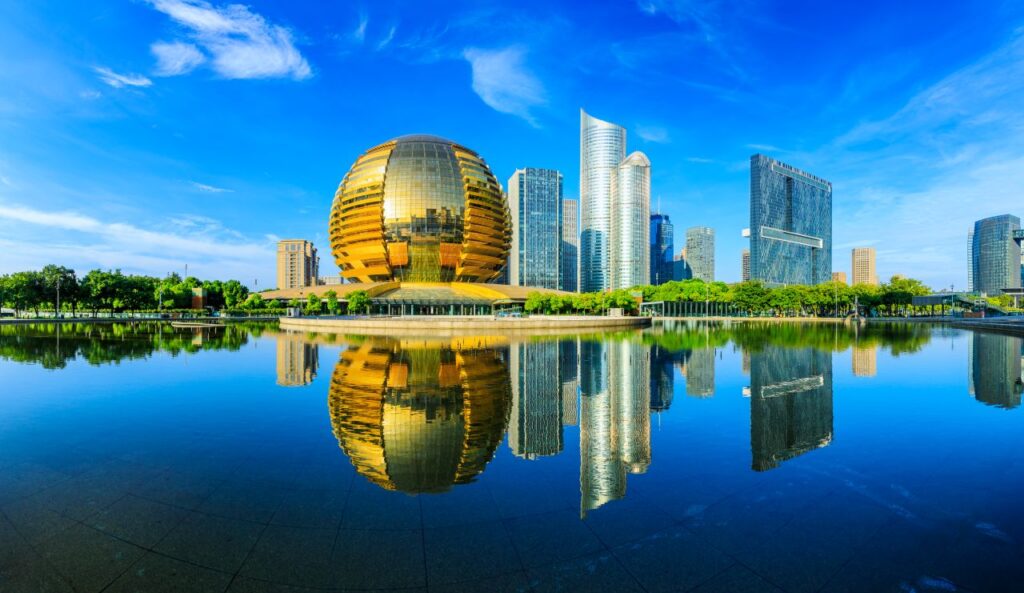
But that relative resilience should not be mistaken for a national rebound.
Many second-tier cities are still under heavy pressure, with resale prices posting their largest monthly decline in several months. Outside the strongest urban centres, oversupply and weak demand remain severe. That is where the broader picture becomes much darker, because those areas represent most of the population.
Some banks and analysts think the market may be getting closer to a floor. Others argue the divide between top-tier cities and the rest of the country will remain entrenched and that a nationwide bottom may not arrive until 2027. There are also analysts who are more pessimistic than that.
That divergence in forecasts makes sense. There may be pockets of stabilisation. But a selective recovery in a few wealthy cities is not the same thing as a healthy national housing market.
For more background on how this divide is interacting with the AI-led growth story in top cities and the broader weakness elsewhere, see this related analysis on China's property slump and Taiwan's AI chip boom.
Why the property crisis is so damaging
The scale of the damage is hard to overstate. Real estate and related sectors once made up roughly a quarter to nearly a third of China's GDP. Housing starts have fallen by more than 60 percent from their 2020 peak. Land sale revenue, once a critical source of local government funding, has dropped dramatically from prior highs.
Developer defaults have mounted into the hundreds of billions of dollars. Household exposure to property was extraordinarily high before the downturn, with real estate accounting for the overwhelming majority of household wealth. That means falling prices hit confidence much harder than they would in economies where savings are spread across a wider mix of assets.
There is also the inventory problem. China is believed to have tens of millions of empty apartments. In many smaller cities, prices are far below their peak levels and still have not clearly found a bottom.

The fallout reaches everywhere:
- Households are more cautious and spend less.
- Local governments have lost major land-sale revenue and are under debt pressure.
- Developers and builders face collapsing activity.
- Upstream industries such as steel, cement, furniture, and appliances suffer lower demand.
- Banks carry more stress from property-linked bad loans and local financing risks.
That is why the property downturn has become more than a cyclical correction. It is now a structural drag on growth.
China's oil demand response to the Hormuz disruption may signal something bigger
Another major development came from China's response to the Middle East crisis and the emerging U.S.-Iran peace process.
Beijing welcomed the interim agreement, with Foreign Minister Wang Yi describing it as an opening step rather than a final solution. He also pushed for broader diplomatic involvement, including through international institutions.
But the more revealing story may not be diplomatic. It may be economic.
When shipping disruptions earlier this year raised fears about Middle Eastern oil supplies, many expected China to be hit hard as the world's largest crude importer. Instead, while the shock still mattered, the damage appears to have been less severe than many anticipated.
The reason is that China's oil demand has been changing in structural ways.
Electrification is cutting into fuel demand
The most important factor is the rapid shift in transport.
More than 60 percent of vehicles sold in China now come with a plug, meaning they are either fully electric or plug-in hybrid. Meanwhile, sales of conventional gasoline-only cars have fallen to levels not seen since 2010. Public charging activity has surged, reinforcing the idea that electric transport is displacing a meaningful amount of oil consumption each day.
This is not a small adjustment around the margins. It changes the sensitivity of the Chinese economy to imported fuel shocks.
Petrochemicals are changing too
The petrochemical side also matters. High energy costs and supply disruptions forced chemical producers to reduce output, and plastics production recorded a notably sharp decline. That translates into weaker oil demand as well.
On top of that, China has been using more imported U.S. ethane as a feedstock for plastics manufacturing. Ethane can be a more efficient input than alternatives derived directly from crude oil, which further reduces reliance on oil in parts of the industrial chain.
Strategic stockpiles gave Beijing breathing room
Perhaps the biggest short-term buffer came from inventories.
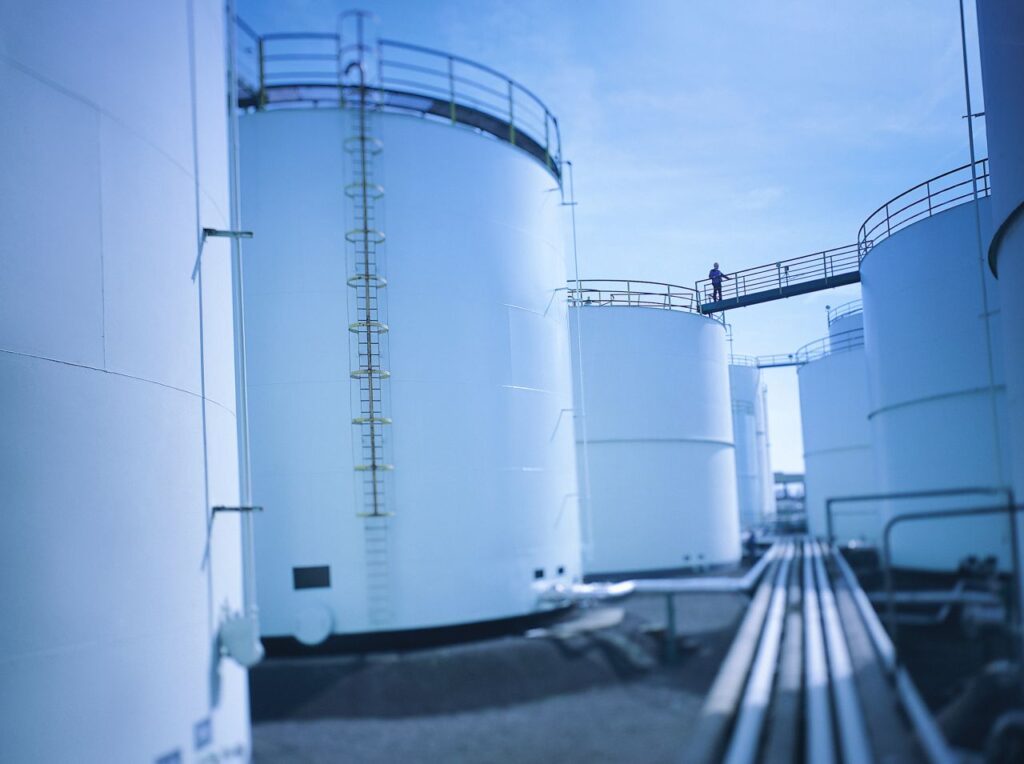
Over the past two years, China built up strategic oil reserves aggressively. During the crisis, refiners were able to draw down those stockpiles instead of increasing imports. That inventory swing appears to have accounted for a very large reduction in import demand.
This is significant for two reasons.
First, it helped steady China's position during a real external shock. Second, it offers a rough case study in how the country may try to cushion itself during future disruptions, including those tied to a conflict closer to home.
That point connects with broader concerns around energy security, inflation pressure, and strategic exposure discussed in this analysis of Hormuz turmoil, producer inflation, and debt strain.
Has China already reached peak oil demand?
That is now a much more serious question than it was even a year ago.
For a long time, major oil producers and energy companies expected Chinese demand to keep climbing. But the combination of EV adoption, industrial substitution, petrochemical shifts, and strategic stockpile management is strengthening the case that oil demand may already have peaked or is close to doing so.
If that turns out to be correct, the geopolitical implications are substantial.
- China becomes less vulnerable to Middle Eastern supply shocks.
- Global oil demand growth looks weaker than many producers expected.
- Energy security planning shifts from pure import dependence toward storage, electrification, and industrial substitution.
It would not mean China no longer depends on imported energy. Far from it. But it would suggest that one of the country's biggest strategic vulnerabilities is slowly becoming more manageable.
Beijing deepens engagement with Myanmar's military-backed government
On the diplomatic front, Xi Jinping hosted Myanmar's president in Beijing in a visit that carried clear symbolic and strategic weight.
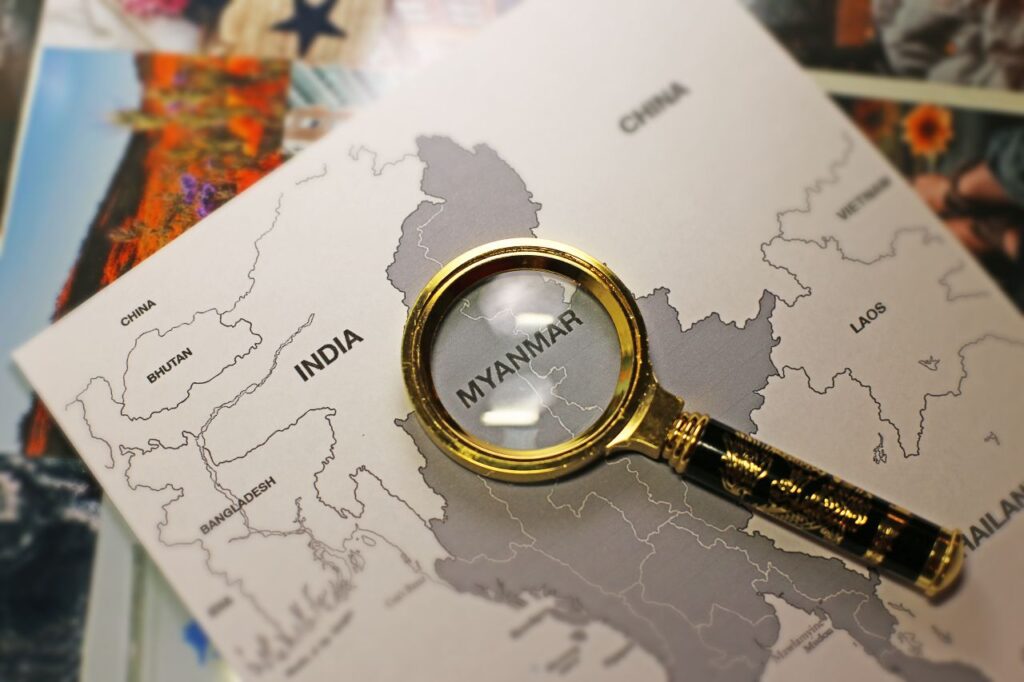
The trip included a formal state ceremony, meetings with multiple senior Chinese leaders, and highly visible gestures usually reserved for visits Beijing wants to elevate. Chinese state media emphasised the long relationship between the two countries and framed China as supportive of friendly ties with Myanmar as a whole, not only with one faction.
At the same time, Beijing again called for dialogue among Myanmar's competing forces, especially in northern areas near the Chinese border where instability directly affects Chinese interests.
Still, the practical meaning of the visit is hard to miss. It gives an important diplomatic boost to Myanmar's military-backed leadership, which remains internationally isolated and is still facing resistance from armed opponents across much of the country.
Why Myanmar matters so much to China
China's interest is not abstract. It is strategic and immediate.
A central focus is the China-Myanmar Economic Corridor, an infrastructure network meant to connect Yunnan Province with Myanmar's Indian Ocean coast. This route matters because it could provide alternative trade and energy access that bypasses more vulnerable maritime chokepoints elsewhere in Southeast Asia.
That makes Myanmar relevant to several Chinese priorities at once:
- Border stability in areas adjacent to China.
- Protection of investments tied to infrastructure and trade.
- Strategic diversification of transport and energy routes.
- Regional influence in a politically fragmented neighbouring state.
From Beijing's perspective, the military leadership may be the most useful partner available for securing those interests, even if Myanmar's internal conflict remains unresolved and politically costly internationally.
This fits a broader pattern in Chinese foreign policy. When instability threatens critical infrastructure, border security, or supply routes, Beijing often prioritises order and access over reputational concerns.
Official overseas messaging is becoming more professional and more measurable
The final development is smaller on the surface but potentially revealing in a different way.
A recent job posting from Chongqing's Western International Communication Centre offered a rare look at how official international messaging is adapting to the social media era.
The listing described roles focused on recruiting and managing influential foreign content creators, sometimes called "big Vs", meaning personalities with large and active online followings. The goal was not just to arrange one-off content. It was to build sustained relationships with creators, media organisations, industry voices, and digital platforms that can help spread favourable narratives about China to overseas audiences.

Influencers are now part of the state communication toolkit
This is a notable evolution.
China has long cultivated foreign voices seen as sympathetic to its interests. What is changing is the mechanism. Social media creators often command more trust with their audiences than traditional media outlets do, especially when they present themselves as independent travellers, culture commentators, or lifestyle personalities.
The Chongqing centre has already been using this model. It recently hosted Colombian influencers on an organised trip through the city, highlighting nightlife, architecture, and food. Chongqing is a natural fit for this kind of content because it is visually striking, culturally distinctive, and already popular among travel creators.
Financial arrangements behind these trips are not usually made public, but organised group visits aimed at specific international markets strongly suggest institutional backing for logistics and access.
That matters because it blurs a line that many casual consumers of online content do not examine closely enough: where independent cultural storytelling ends and state-assisted image management begins.
It is not only about content creation
The more interesting part of the job ad is what comes after the content is made.
The material produced by influencers appears intended for further circulation through a wider network of overseas media partners. In other words, this is not simply tourism promotion. It looks more like a distribution strategy.
Another role in the same posting focused on tracking global sentiment through AI-assisted analysis of foreign media coverage and social media discussion. That suggests a more systematic feedback loop:
- Recruit foreign creators and partner outlets.
- Generate positive or attractive content themes.
- Distribute that content across multiple channels.
- Measure sentiment and refine future messaging.
This is a more professionalised model of international communication. It is less blunt than old-style propaganda and more tailored to how people actually consume information online.
It also means some of the most polished, upbeat, and apparently spontaneous foreign content about life in China may not be quite as organic as it appears.
For another example of how information, technology competition, and security thinking are increasingly tied together in China's policy environment, see this broader analysis of Beijing's security worldview and economic strategy.
What these developments say about China's current trajectory
These stories may seem unrelated at first glance, but they point in the same direction.
China is dealing with deep domestic economic strain, especially from property. At the same time, it is trying to reduce strategic dependence on vulnerable external inputs such as Middle Eastern oil. It is reinforcing relationships with partners that can support trade corridors and regional access. And it is modernising the way it shapes foreign perceptions, relying more on networks, analytics, and digital intermediaries.
That combination reflects a system under pressure but also one that is adapting.
The property crisis shows the cost of old growth models. The oil story shows how quickly structural change can alter strategic exposure. The Myanmar visit shows Beijing's willingness to work with difficult partners when geography and infrastructure are at stake. The Chongqing job ad shows that international influence work is becoming more sophisticated and much more intentional.
That is the larger picture from this China news update. The headlines are different, but the underlying theme is consistent: China is trying to stabilise internally, harden itself externally, and manage its image more actively abroad.
FAQ
Why is China's property crisis still such a major economic problem?
Because real estate was deeply woven into household wealth, local government finance, construction activity, and credit creation. Falling home prices do not just hurt developers. They weaken consumer confidence, reduce spending, strain banks, and shrink land-sale revenue that many local governments relied on.
Are any parts of the housing market improving?
Some wealthy coastal cities connected to technology and AI investment are holding up better than the rest of the country. But that strength is uneven and does not change the broader weakness in many second-tier and smaller cities, where oversupply and falling resale prices remain serious problems.
Why did the Middle East oil disruption affect China less than expected?
Several factors helped. Electric vehicle adoption is cutting transport fuel demand. Petrochemical production adjusted downward during the shock. More industrial activity is using alternatives such as imported ethane. And China had built up strategic oil inventories that refiners could draw from instead of sharply raising imports.
Has China already reached peak oil demand?
It is not certain, but the case is growing stronger. Slower gasoline demand growth, widespread EV adoption, industrial substitution, and better stockpile management all suggest China's oil consumption may be near its high point or already past it.
Why is Myanmar strategically important to Beijing?
Myanmar offers border access, investment opportunities, and potential transport and energy routes linking southwestern China to the Indian Ocean. For Beijing, that makes stability in Myanmar important even amid the country's internal conflict and political isolation.
What does the Chongqing job posting reveal about China's overseas messaging?
It suggests a more modern approach built around foreign influencers, media partnerships, and AI-assisted sentiment tracking. Rather than relying only on official statements or state media, the strategy appears designed to use trusted outside voices and then measure the impact more systematically.