
Photo by Hyunwon Jang on Unsplash
China opened the week with three important developments that, taken together, say a great deal about where the country is headed.
On the economic front, the latest data pointed to another setback for Beijing’s long-running effort to make domestic consumption a stronger growth driver. In security, reports indicate Chinese naval forces are now maintaining an almost constant presence around Taiwan. And diplomatically, Beijing has released a major white paper laying out how it wants the international system to evolve.
Each story matters on its own. Together, they show a country trying to manage economic weakness at home while steadily expanding pressure abroad and presenting a broader ideological alternative to the current global order.
Table of Contents
- Economic news: consumption and investment are still moving the wrong way
- Security news: Chinese warships are now a near-daily presence around Taiwan
- Diplomatic news: Beijing’s new white paper makes its ambitions explicit
- What ties these three developments together
- Bottom line
- FAQ
Economic news: consumption and investment are still moving the wrong way
For years, Chinese policymakers have said they want households to spend more and for consumption to play a larger role in the economy. The problem is that the numbers keep telling a different story.
The latest data showed retail sales contracting in May, the first such decline since 2022. At the same time, fixed-asset investment dropped 4.1 per cent in the first five months of the year compared with the same period a year earlier. That marks the steepest decline since the pandemic period.
Those are not isolated disappointments. They point to a broader reality. Demand remains weak, confidence remains fragile, and the economy is still struggling to pivot away from the old growth model built around construction, investment, and exports.
The property downturn remains central to this story. China’s housing slump is now in its fifth year, and it continues to drag on household wealth and spending behaviour. New home prices across 70 major cities fell another 0.2 per cent in May. That may sound modest in isolation, but it adds to a long decline that has already wiped out an enormous amount of household wealth.
When homes are the main store of value for families, a property slowdown does not stay confined to real estate. It affects confidence, future expectations, and the willingness to spend. That is one reason the weakness in consumption keeps proving so persistent.
For more background on how the property downturn is feeding wider economic stress, this related analysis on property stabilisation hopes and weak data provides useful context.
Why this is more than a temporary slowdown
A familiar debate appears after almost every weak data release. Is the problem the property market? Geopolitical uncertainty? Poor weather? Weak sentiment? Some temporary drag that can be corrected with stimulus?
Those factors matter, but the bigger argument is that China’s consumption problem is structural, not merely cyclical.
The core issue is that households receive too small a share of national income relative to the overall size of the economy. That matters because low household income naturally means a low consumption share of GDP. At the same time, it helps support a system where manufacturing remains highly competitive, investment stays elevated, and debt keeps expanding to hit ambitious growth targets.
In other words, low consumption is not just an unfortunate side effect of the current model. It is deeply tied to the way the model works.
This is why Beijing’s policy messaging so often runs into a contradiction. Officials want stronger household consumption. They also want relatively high GDP growth and continued manufacturing strength. But those goals do not fit neatly together.
Raising the consumption share of GDP usually means shifting more income toward households. That can reduce the advantages produced by suppressed labour costs, heavy investment, and resource allocation toward production. It can also slow headline growth, at least for a period, especially in an economy accustomed to hitting high targets through credit expansion and large-scale investment.
History offers an uncomfortable lesson here. Economies that rebalanced toward consumption often had to accept lower growth and a reduced share of global manufacturing. That does not mean the shift is impossible. It means it comes with tradeoffs that policymakers may be reluctant to embrace fully.
For now, the pattern remains familiar. Beijing says it wants more consumption, stronger growth, and greater industrial competitiveness all at once. In the short term, those tensions can be papered over with more borrowing. Over time, though, rising debt tends to make the system more fragile rather than more sustainable.
Why the debt angle matters
The debt side of this story is crucial.
When an economy relies on credit to maintain investment and growth despite weak household demand, debt can rise faster than the underlying ability of the system to absorb it productively. That does not always trigger an immediate crisis, but it increases long-term strain.
That is why the current weakness in retail sales and investment matters beyond a single month of disappointing numbers. It suggests the old levers are becoming less effective, while the structural barriers to rebalancing remain in place.
A broader look at banking and mortgage stress is also helpful here, especially in how authorities are trying to prevent the property downturn from spilling into a wider financial problem. This earlier report on housing stress and foreclosure risk adds another layer to the picture.
Security news: Chinese warships are now a near-daily presence around Taiwan
The second major development is in the Taiwan Strait, where Chinese military pressure appears to be becoming less episodic and more permanent.
New reporting from regional security officials suggests that five to six Chinese naval vessels are typically positioned around Taiwan at any given time. That is a notable shift. These are no longer occasional exercises or temporary shows of force. They are increasingly part of the normal security environment around the island.
The change has happened in stages.
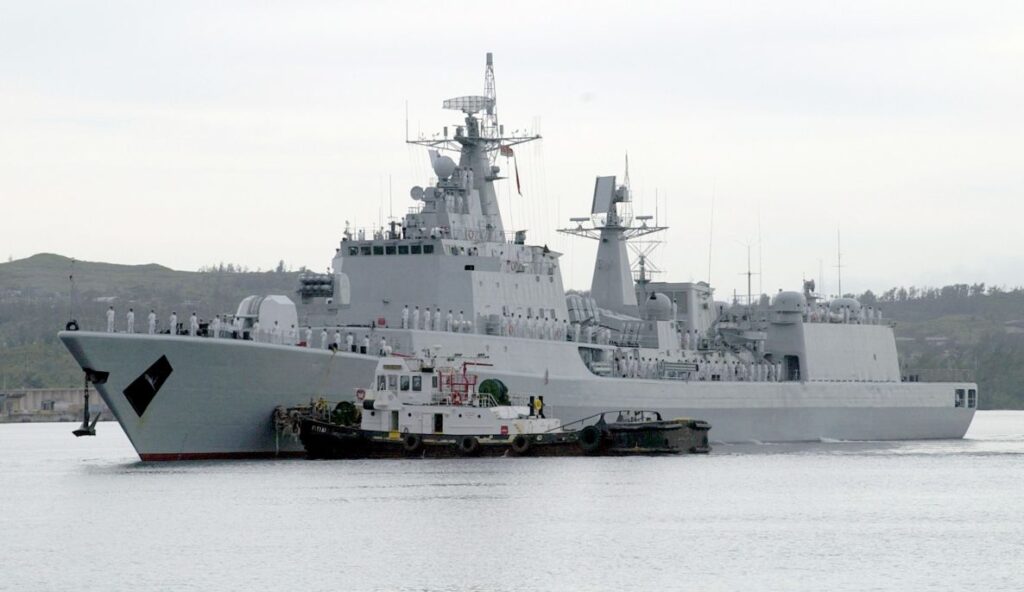
For years, it was common to see a single Chinese warship patrolling the Taiwan Strait. In 2020, Beijing expanded that posture to include vessels operating off Taiwan’s northern and southern coasts. By 2022, Chinese ships were maintaining a near-continuous presence around the island. In the years that followed, more ships were added, especially along the eastern coast.
This matters because eastern Taiwan has long been seen as strategically important in any contingency. Increased activity there suggests a broader and more capable operating pattern, not just symbolic patrolling in the Strait itself.
The pattern follows political triggers
Analysts say these expansions have often followed political developments Beijing opposed such things as Taiwanese elections or visits by senior American officials.
That helps explain the logic of the deployment pattern. China can respond to political events with visible military pressure without crossing into direct conflict. Over time, each step builds on the last, normalising a heavier Chinese presence and making future escalations easier to sustain.
The fleet composition has changed too. Earlier patrols relied more heavily on smaller frigates. Now the Chinese navy is increasingly deploying larger guided missile destroyers. That reflects the rapid modernisation of the People’s Liberation Army Navy and a more assertive approach toward Taiwan.
China already operates the world’s largest navy by ship count, and over the past decade it has added large numbers of modern destroyers. Those capabilities are now being used not only for deterrence and signalling but also for routine pressure operations close to Taiwan.
Why these deployments are strategically useful for Beijing
These operations serve several purposes at once.
- Political signalling: They remind Taipei, Washington, and regional actors that Beijing can sustain pressure whenever it chooses.
- Operational experience: Crews gain real-world practice in deployment, coordination, and sustained presence missions.
- Intelligence collection: Chinese vessels can observe how Taiwan responds, including communications, deployment habits, and readiness procedures.
- Normalisation of pressure: What once looked exceptional begins to feel routine, which can alter perceptions over time.
That last point may be the most important. Constant pressure can reshape the strategic baseline without requiring a major crisis. Beijing can intensify military coercion gradually while staying below the threshold of open war.
The burden on Taiwan is real
Taiwan does not have the luxury of ignoring these deployments. When Chinese ships approach sensitive areas, Taiwan has to respond with its own naval and coast guard assets. Even when encounters remain controlled, the demands on personnel, maintenance, and readiness are real.
That is especially challenging for a smaller military already dealing with manpower constraints and equipment pressures. Sustained grey zone pressure can wear down a defender over time, not through a dramatic clash but through constant operational strain.
This is also why analysts increasingly describe the patrols as more than political theatre. Continuous operations around Taiwan can function as rehearsal. They let Chinese forces practise aspects of blockade, encirclement, surveillance, and rapid escalation while gathering valuable information about Taiwan’s responses.
The result is a more difficult security environment in which military pressure becomes an everyday fact rather than an occasional spike.
For readers tracking the broader Taiwan picture, this related piece on cross-strait friction and rising strategic pressure is also worth reading.
Diplomatic news: Beijing’s new white paper makes its ambitions explicit
The third development is more ideological and diplomatic, but no less important.
China has released a major white paper on global governance that lays out Beijing’s vision for reforming the international system. Officially, it is framed as an effort to build a fairer and more equitable order. Critics see it as part of a broader push to make global institutions and norms more compatible with Chinese Communist Party preferences and Chinese state interests.
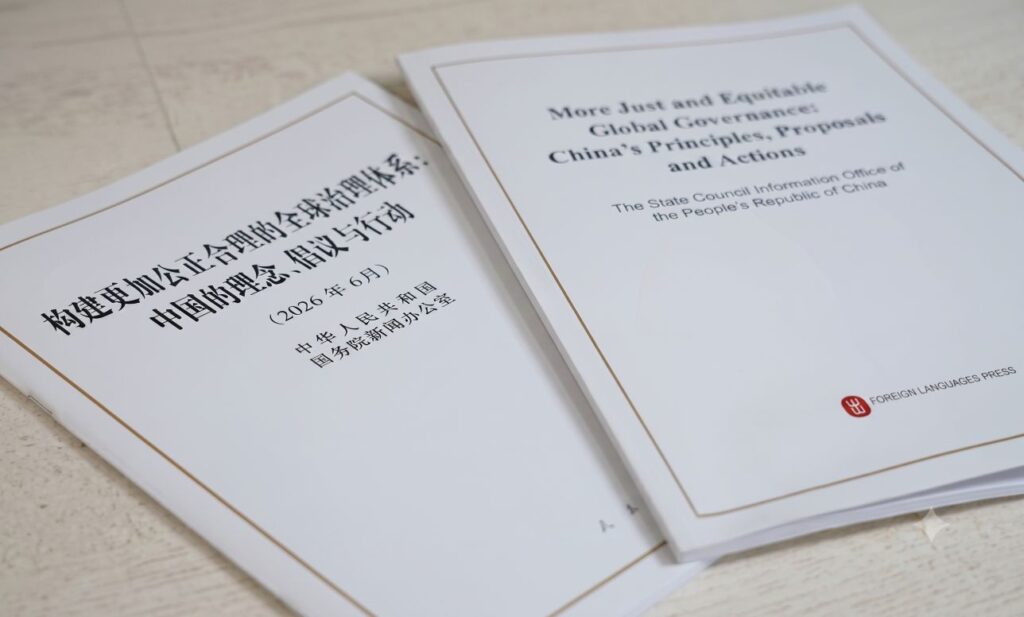
The document is extensive and presents a systematic account of how Beijing thinks international institutions should adapt in what it describes as a more multipolar world.
The core framework: the Global Governance Initiative
At the centre of the paper is the Global Governance Initiative, or GGI, a concept first put forward by Xi Jinping.
The argument begins with a diagnosis. Beijing says the world is under strain from geopolitical conflict, protectionism, unilateral action by major powers, and widening gaps in peace, development, security, and trust. In this telling, the current system is not functioning well enough and needs reform.
Chinese officials frame the initiative around two broad questions:
- What kind of global governance system should be built?
- How should that system be improved?
The white paper answers by emphasising five principles:
- sovereign equality
- respect for international law
- multilateral cooperation
- a people-centred approach to development
- practical, results-orientated action
On paper, those ideas sound broadly familiar and widely acceptable. The real significance lies in how Beijing defines them and how it applies them in practice.
Support for the UN, but on Beijing’s terms
The white paper repeatedly stresses support for the United Nations and calls for preserving the international system centred on the UN. It argues that reform should strengthen existing institutions rather than replace them.
At the same time, Beijing uses this language to criticise what it sees as hegemonic behaviour and power politics, terms it frequently directs at the United States and its allies.
That rhetorical structure is familiar. China presents itself as defending multilateralism and sovereign equality while arguing that the current order has been distorted by Western dominance. The message is not that the system should be torn down entirely. It is that the system should be adjusted in ways that reduce Western influence and create more space for Beijing’s preferences.
Part of a larger diplomatic architecture
The Global Governance Initiative does not stand alone. Beijing links it to several other Xi era frameworks, including the Global Development Initiative, the Global Security Initiative, and the Global Civilisation Initiative.
Together, these projects are presented as a comprehensive set of ideas for reshaping international norms, development priorities, security concepts, and even civilisational discourse.
Chinese officials often package these efforts under the broader idea of building a shared future for humanity. That phrase is meant to signal inclusiveness and common purpose. But in strategic terms, it also reflects an effort to build a more China-centred international conversation, one in which Beijing has greater agenda-setting power.
China is being unusually open about the goal
What stands out here is not subtlety but directness.
Beijing is not hiding its ambition to shape the future international order. The white paper makes clear that China sees global governance as an arena of competition and reform, not a settled framework to simply operate within.
Chinese officials say that nearly 160 countries and international organisations have expressed support for the initiative and that more than 60 countries have joined a related group of friends on global governance. Those figures are meant to show momentum and legitimacy.
Whether that support is deep, symbolic, or uneven is a separate question. But the larger point remains: Beijing is systematically building the intellectual and diplomatic case for a world order less centred on the liberal Western model and more accommodating to Chinese political assumptions.
What ties these three developments together
At first glance, weak retail sales, naval patrols around Taiwan, and a white paper on global governance may look like unrelated stories. They are not.
All three reflect the same broad pattern.
- At home, the economic model is under pressure, and the shift toward consumption remains incomplete.
- Near China’s periphery, military pressure is becoming more sustained and normalised.
- At the global level, Beijing is presenting itself as a rule shaper rather than merely a rule taker.
That combination matters. When domestic growth becomes harder to sustain through traditional means, external strategy and ideological positioning often become even more important to the leadership. Economic weakness does not necessarily mean strategic caution. In some cases, it can coincide with more determined efforts to shape the environment abroad.
This is one reason following these stories together is more useful than treating them in isolation. A proper China news update is rarely just about economics or only security or only diplomacy. The interaction between them is where the real story often sits.
Bottom line
The latest data suggest Beijing still has not solved the consumption problem, and the deeper issue may be that the current economic model does not allow for an easy solution without sacrificing other priorities.
Around Taiwan, China’s military pressure is becoming routine, more capable, and more difficult to dismiss as temporary signalling.
And internationally, Beijing is making an increasingly explicit case for reshaping global governance in ways that better reflect its own preferences and power.
None of this points to sudden rupture on its own. But all of it points to continued structural pressure, inside China and beyond it.
FAQ
Why is China’s weak consumption such a big problem?
Because Beijing has long wanted household spending to play a bigger role in growth, yet the economy still relies heavily on investment, production, and debt. When consumption remains weak, it becomes harder to rebalance the economy and reduce dependence on old growth drivers.
Is the slowdown mainly about the property market?
The property downturn is a major factor because it has damaged household wealth and confidence, but the problem appears broader than housing alone. The deeper issue is structural, tied to how income, investment, and production are distributed across the economy.
Why does a near-constant Chinese naval presence around Taiwan matter?
It changes the baseline. Instead of occasional military signalling, Taiwan now faces persistent pressure that can wear down readiness, generate intelligence for Beijing, and allow Chinese forces to practise operations that could matter in a future crisis.
Are these patrols the same as military exercises?
No. The key point is that they are increasingly routine rather than episodic. That makes them more strategically significant because they normalise a higher level of coercive military activity around the island.
What is Beijing trying to achieve with the new global governance white paper?
Beijing is presenting a vision for reforming international institutions and norms in a way it describes as fairer and more multipolar. In practice, it is also making the case for a global order less dominated by the West and more open to Chinese preferences and influence.
How should these developments be read together?
They show China managing several pressures at once: economic weakness at home, sustained military coercion near Taiwan, and a long-term effort to shape the international system. Looking at them together gives a clearer picture than treating each story separately.