
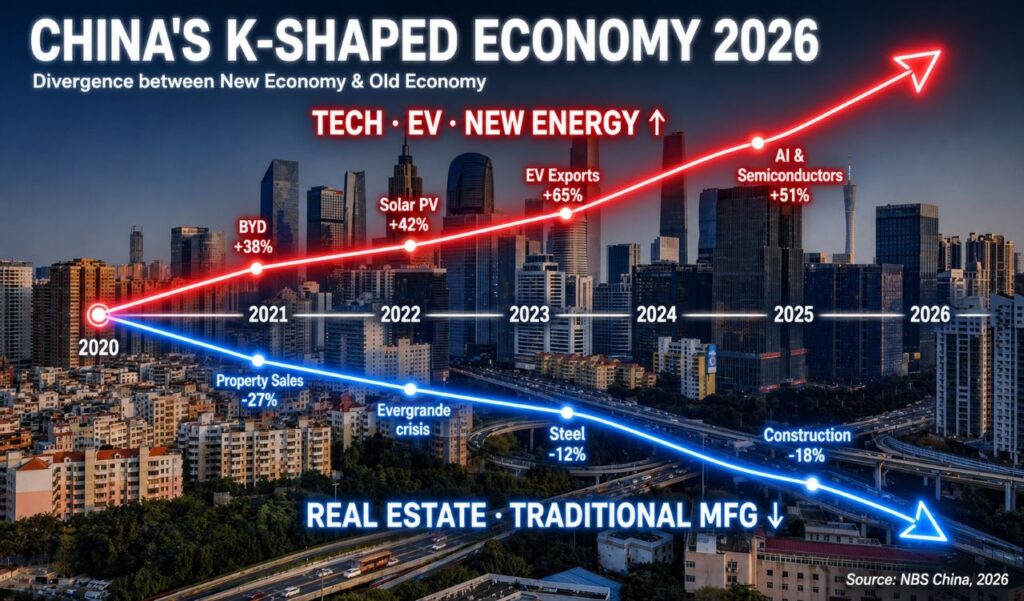
China has spent years trying to convince itself that the difficult bits of its economy are temporary: a property slump here, a local-government financing problem there, a bit of weak consumption, and a bit of youth unemployment. Meanwhile, the shiny parts of the economy—electric vehicles, batteries, solar panels, high-end manufacturing and advanced technology—were meant to do the heavy lifting. The good industries would keep growing, pull everything else upward and deliver another smooth transition into the next era of Chinese prosperity.
There is only one rather inconvenient problem with this story: the rest of the economy is not being pulled upward. It is being dragged downward by debts, weak investment, battered local governments and households that have little reason to spend more freely. And some of China’s most prominent economists are now saying this publicly.
Li Daokui, dean of Tsinghua University’s Academic Center for Chinese Economic Practice and Thinking and a former member of the People’s Bank of China’s monetary policy committee, has offered a strikingly direct diagnosis. China’s core problem, he argues, is not merely a “K-shaped” economy in which successful industries rise while struggling sectors fall. It is a broader economy that has been running cold for roughly three years and remains below its potential growth rate.
That distinction matters. A K-shaped story is reassuring. It suggests that, yes, there are losers, but the winners are powerful enough to carry the country forward. A running-cold story is much uglier. It suggests that the engine itself is misfiring—and that the gleaming bits of Chinese industrial policy cannot simply compensate for the damage elsewhere.
Table of Contents
- The US-China minerals race is accelerating
- The comforting myth of the K-shaped economy
- China’s hidden unemployment problem
- Investment is contracting when China needs it most
- Local governments have become the financial black hole
- Li’s solution: use Beijing’s balance sheet
- Michael Pettis’s warning: moving debt is not reform
- The real question is whether China can change the model
The US-China minerals race is accelerating.
Before getting into China’s domestic financial plumbing—which, regrettably, is more important than it sounds—it is worth noting the wider geopolitical backdrop. Washington is continuing to pour money into supply chains designed to reduce dependence on China, particularly in critical minerals, batteries and magnets.
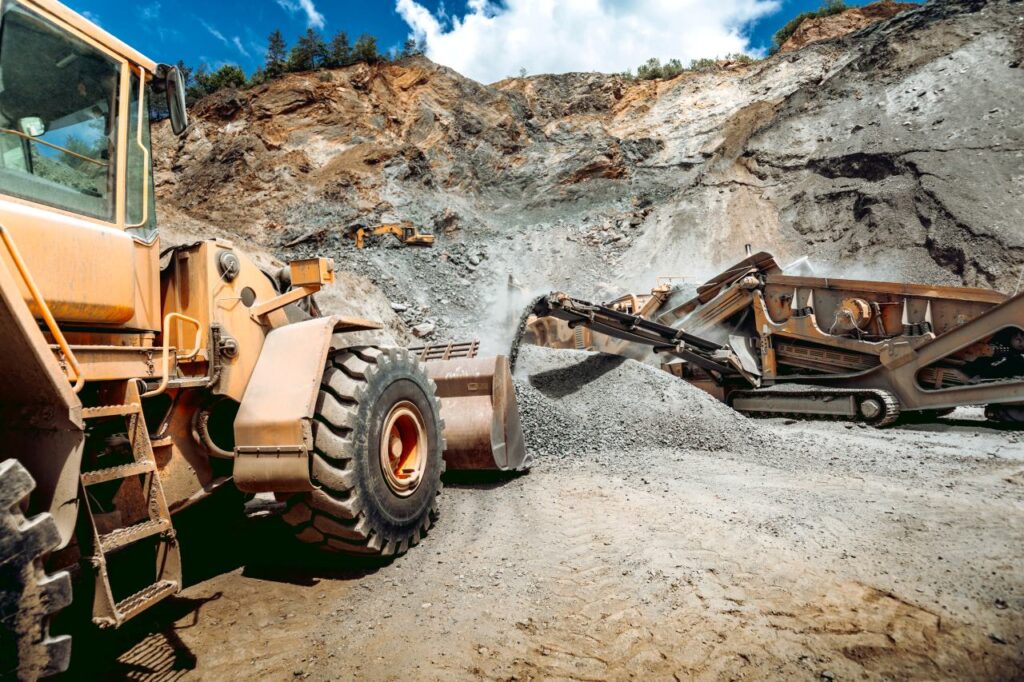
Donald Trump announced around US$3 billion in US-backed critical-minerals investments, framed as an effort to restore American mining capacity and strengthen economic and national security. The projects include major support for silicon battery anodes, lithium-ion battery cells, scandium production, copper development, graphite mining and rare-earth-related supply chains.
There is also funding for mining education, which sounds wonderfully bureaucratic until one remembers the underlying problem: the United States has spent decades allowing domestic mining expertise and industrial capacity to erode. You cannot build a resilient supply chain merely by announcing that you would like one. You need geologists, metallurgists, engineers, processing facilities, mines, refineries, magnet makers and customers willing to pay for a system that may be more expensive than the Chinese alternative.
China’s dominance in many of these supply chains was not created by magic. It was created through sustained investment, industrial coordination, a willingness to tolerate low margins and a readiness to build capacities that other economies often treated as strategically uninteresting until they suddenly became strategically indispensable.
Washington’s new investments are therefore part of a much wider project: reducing the West’s exposure to Chinese leverage over minerals, processing and advanced manufacturing inputs. That project will take years, cost vastly more than a few headline-grabbing funding packages, and face the usual political problem of every industrial strategy: everyone loves resilience until it is time to pay for it.
This matters for China because its own economic adjustment increasingly relies on exporting more high-value manufacturing. Yet the very markets Beijing hopes will absorb this output are becoming more protective, more suspicious and more determined to develop alternatives. As China’s own debate over export-led growth has made clear, selling ever larger volumes abroad is not a durable answer to weak domestic demand.
The comforting myth of the K-shaped economy
The K-shaped economy has become one of those phrases that allows policymakers to acknowledge problems while still sounding optimistic. China’s top-tier technology companies are advancing. Some manufacturing sectors are thriving. Certain cities and regions remain prosperous. Export champions continue to expand.
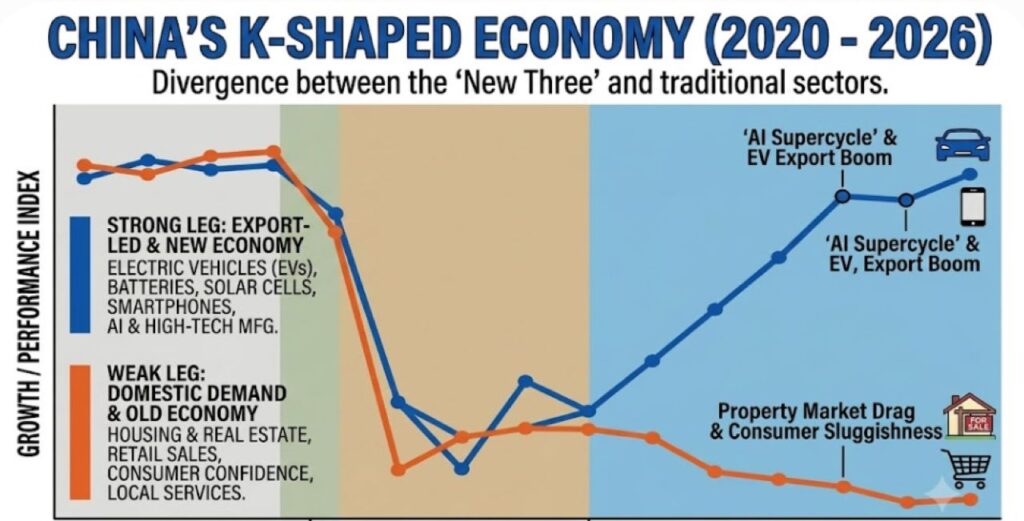
But Li’s argument is that the upward arm of the K cannot pull up the entire economic base. This should not be particularly controversial, yet it cuts directly against the hope that advanced manufacturing can simply become China’s replacement for property and infrastructure.
For two decades, China’s growth model had two enormous engines.
Local-government spending financed roads, railways, industrial parks, city expansion and infrastructure of every imaginable variety.
Real estate generated construction activity, land-sale revenues, household wealth and a huge ecosystem of related spending.
Both engines have weakened. Property development has slumped, and local governments are drowning in the costs of the old model. The trouble is not merely that China needs new growth industries. It is that its old sources of demand were so large that replacing them is an absurdly difficult task.
Li estimates that local-government investment and routine spending once amounted to around 41% of GDP. That is an astonishing figure. It implies that local authorities were, in effect, a larger source of demand than household consumption. When those authorities become financially constrained, the impact does not stay neatly confined to a provincial balance sheet. It hits construction firms, suppliers, employers, banks, consumer confidence and the willingness of private companies to invest.
China’s hidden unemployment problem
Official labour-market numbers never tell the whole story in any country, but Li’s alternative unemployment measure is particularly sobering. It includes discouraged workers: people who still want jobs but have stopped being formally counted as part of the labour force after failing to find work for an extended period.

On that broader measure, unemployment may be around 10.2%, representing roughly 24 million people.
These are not people who have spontaneously embraced “lying flat” as a lifestyle choice. They are people who remain willing to work but have become discouraged after unsuccessful job searches. That distinction matters because an economy with millions of discouraged workers has a demand problem as well as a labour problem. People worried about employment do not eagerly buy homes, cars, appliances or restaurant meals. They save, delay and wait for some sign that the future is not about to kick them in the teeth again.
That weaker confidence then feeds back into the broader slowdown. Businesses see cautious consumers and hold off on expansion. Local governments face lower revenues and greater pressure. Investment slows. Job creation weakens further. It is the kind of cycle economists tend to describe in very dry language because “the entire machine is becoming more miserable” does not fit neatly into a policy paper.
Investment is contracting when China needs it most.
Li also pointed to exceptionally weak fixed-asset investment. During the first five months of the year, cumulative fixed-asset investment reportedly fell 4.1%, while both private investment and manufacturing investment contracted.
For a country whose economic rise was built on investment at a truly enormous scale, this is a nasty signal. China has long relied on capital spending to stabilise growth when other parts of the economy weakened. If infrastructure slowed, more infrastructure could be built. If exports softened, local governments could approve projects. If the property market cooled, credit could be loosened and construction encouraged.
That playbook now looks increasingly exhausted. Infrastructure investment can no longer expand forever without producing roads to nowhere, industrial parks with too few tenants or facilities that generate little economic return. Property development cannot be rebooted simply by wishing people felt more confident about buying apartments in a market already burdened by unsold homes and falling prices.
The property downturn has inflicted significant damage, even if it has not produced the kind of mass household mortgage defaults some had feared. Chinese households hold an estimated 400 trillion yuan in net property assets and have broadly absorbed the fall in values. But property still needs stabilising. A household that sees its main asset stagnate or decline becomes more cautious, and that caution is poison for the consumption rebound Beijing keeps promising.
Local governments have become the financial black hole.
For Li, the more immediate blockage lies with local governments. Their debts may exceed 100% of GDP once the various forms of borrowing are included. Much of that debt was issued at relatively high interest rates and short maturities. As obligations come due, new lending and bond issuance are often used simply to repay old borrowing.
This is not an investment. It is financial treadmill work. Plenty of motion, very little forward progress.
Li describes local governments as economic “heat absorbers” and financial “black holes". It is harsh language, but the mechanism is straightforward. Debt service consumes resources. Authorities cut spending, delay payments to companies, collect taxes early and in some cases claw back previously promised tax concessions. That may improve a cash position in the short term, but it also makes private firms less willing to hire, invest or trust local policy commitments.
Local-government expenditure, Li argues, has fallen from about 41% of GDP to roughly 35%. Capital spending has fallen especially sharply. The result is a vicious cycle:
- Local governments reduce spending because they are financially constrained.
- Businesses lose contracts, payments or tax certainty.
- Private investment and employment weaken.
- Demand falls further.
- Local revenue becomes even more strained.
This is the sort of problem that cannot be fixed by telling consumers to spend with greater enthusiasm. If a local government owes money to contractors, is delaying payments and is scrambling to preserve cash, the entire local economy feels the pressure.
It also reinforces concerns raised in broader reporting on China’s debt and cost pressures, including the growing strain from financing growth with more leverage. The risks become even more complicated when external shocks raise energy and industrial costs, as explored in this examination of debt strain and producer inflation.
Li’s solution: use Beijing’s balance sheet.
Li’s proposed remedy is bold, though not entirely radical by international standards. The central government, he argues, should borrow much more and use its comparatively clean balance sheet to relieve local governments.
China’s central-government debt remains below 30% of GDP by Li’s estimate, giving Beijing significantly more fiscal space than indebted local authorities. Planned bond issuance of around 12 trillion yuan, he argues, should be doubled or potentially increased further.
The money could be used in several ways:
- Replace high-interest local-government debt with cheaper central-government financing.
- Fund productive projects proposed by local authorities without adding to their debt burdens.
- Purchase unsold homes and convert them into affordable or rental housing.
- Eventually package parts of that housing stock into real estate investment trusts.
- Expand migrant workers’ access to urban public services.
- Strengthen social welfare systems and support targeted consumption subsidies.
The logic is simple enough. If local governments are too indebted to spend, then Beijing should borrow on their behalf. This would lower financing costs, stop the debt treadmill and restore some capacity to support demand. In theory, it could stabilise property, improve welfare provision and prevent a long period of stagnation.
It is also a recognition that China’s adjustment cannot rely entirely on local officials improvising their way through a national debt problem. Beijing created many of the incentives that fuelled the investment binge. Beijing has the strongest balance sheet. And Beijing, if it chooses, can shift the burden.
Michael Pettis’s warning: moving debt is not reform.
Michael Pettis, the Peking University finance professor, largely agrees with Li’s diagnosis. China has a major demand problem. The K-shaped dream is unlikely to work. Advanced manufacturing cannot realistically pull the entire economy forward, particularly as the United States, the European Union and Japan become less willing to absorb ever more Chinese industrial output.
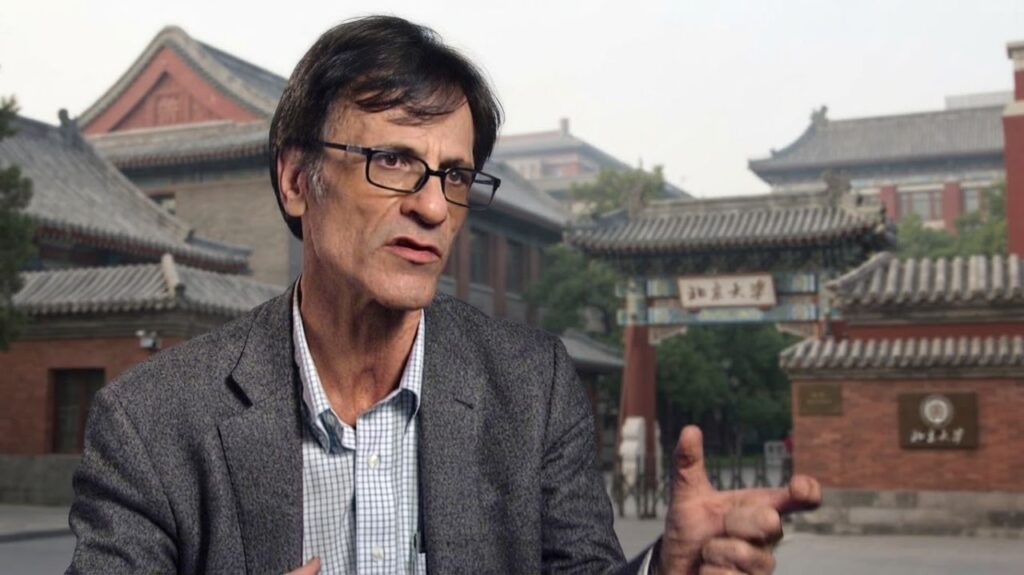
But Pettis is much more sceptical of the proposed cure. His central objection is that local governments did not simply invest badly because they were careless, corrupt or insufficiently disciplined. They invested excessively because the political system demanded exceptionally high GDP growth targets even after China had ceased to be broadly underinvested.
In the earlier decades of reform, enormous infrastructure spending could generate real economic returns. China needed roads, ports, power systems, housing, factories and urban networks. But as the economy matured, the number of genuinely productive projects naturally declined. The pressure to keep investment high did not decline with it.
The result was excess capacity in property, infrastructure and manufacturing, followed by lower returns and soaring debt. Provincial governments continued investing because growth targets made slowing down politically difficult. In Pettis’s telling, the debt problem is therefore not an accident of bad local behaviour. It is the predictable outcome of a model that repeatedly used investment to compensate for insufficient household consumption.
Transferring local debts to the central government may relieve immediate pressure, but it does not change the underlying incentive structure. If Beijing continues to demand growth rates that can only be achieved through heavy investment, new debt will accumulate. China will simply move liabilities from one ledger to another until it has damaged the final major balance sheet, still capable of absorbing losses.
That is Pettis’s bleak but important warning: the central government’s clean balance sheet is valuable precisely because it gives Beijing room to manage an inevitable adjustment. Spending it to maintain the old growth model could leave China with less capacity to navigate the harder years ahead.
The real question is whether China can change the model.
The disagreement between Li and Pettis is not really over whether China has a problem. Both see the same broad picture: weak demand, a property slump, overextended local governments, cautious households and an economy that cannot rely indefinitely on exports or investment.
The disagreement is over whether China can rescue the old system long enough to build a better one—or whether rescuing it will merely extend the distortion.
Li sees a route toward renewed growth through central fiscal intervention, local-debt restructuring, property stabilisation and targeted support for consumption and welfare. Pettis sees a deeper structural adjustment that cannot be avoided and should not be postponed by loading more debt onto Beijing’s balance sheet.
Both arguments contain an uncomfortable truth for policymakers. China’s advanced industries are genuinely impressive, but they are not a magic wand. A country cannot build sustainable growth only by producing more goods for foreign markets that are increasingly trying to buy fewer of them. Nor can it endlessly replace weak consumption with debt-financed investment.
The era of easy fixes is over. China can either confront the imbalance between production and domestic demand, or it can keep trying to refinance its way around it. The first option is politically difficult. The second is becoming economically difficult. That is the bind.
Frequently Asked Questions
What does a K-shaped economy mean in China’s case?
It refers to an uneven economy in which successful sectors, such as advanced technology and high-value manufacturing, continue expanding while weaker sectors, including property, local-government finance and parts of private business, struggle. Li Daokui argues that the strong side cannot carry the whole economy.
Why are China’s local governments under financial pressure?
Local governments accumulated large debts through years of infrastructure, urban development and investment spending. With weaker land-sale revenues, high interest costs and maturing obligations, much new borrowing is now used to repay old debt rather than finance new activity.
What is Li Daokui’s proposed solution?
Li proposes substantially greater central-government borrowing to refinance expensive local debt, fund productive local projects, support housing conversion, expand welfare provision and encourage consumption without worsening local balance sheets.
Why does Michael Pettis oppose shifting local debt to Beijing?
Pettis argues that the debt problem was driven by structurally excessive investment and unrealistic growth targets, not merely poor local-government discipline. He warns that moving debt to the central government could preserve the same incentives while compromising China’s last relatively clean balance sheet.