China is facing a difficult combination of domestic financial strain, rising external pressure, and familiar industrial policy risks.
On the economic front, Beijing wants households to spend more and help carry growth. But that goal is running into a hard reality. Personal debt problems are spreading, confidence remains weak, and many families are focused less on consumption and more on surviving repayment schedules.
Abroad, the G7 is moving more decisively to cut reliance on China for rare earths and other critical minerals. In advanced manufacturing, China is pouring resources into humanoid robotics, even as insiders warn the sector may repeat the same overcapacity pattern seen in electric vehicles. And in the Taiwan Strait, the security and diplomatic picture continues to tighten.
Taken together, these developments offer a useful snapshot of the broader challenge facing policymakers. China is still trying to stabilize growth, preserve strategic leverage, and push into next-generation industries, all while managing intensifying geopolitical friction.
Table of Contents
- Household debt is becoming a direct obstacle to China’s consumption strategy
- The G7 wants less dependence on China’s critical minerals supply chain
- China’s humanoid robotics boom is growing fast, but so are overcapacity fears
- Taiwan seeks movement on delayed US arms package as pressure from Beijing grows
- What ties these stories together
- FAQ
Household debt is becoming a direct obstacle to China’s consumption strategy
One of the clearest problems in China’s economy right now is the growing strain on households.
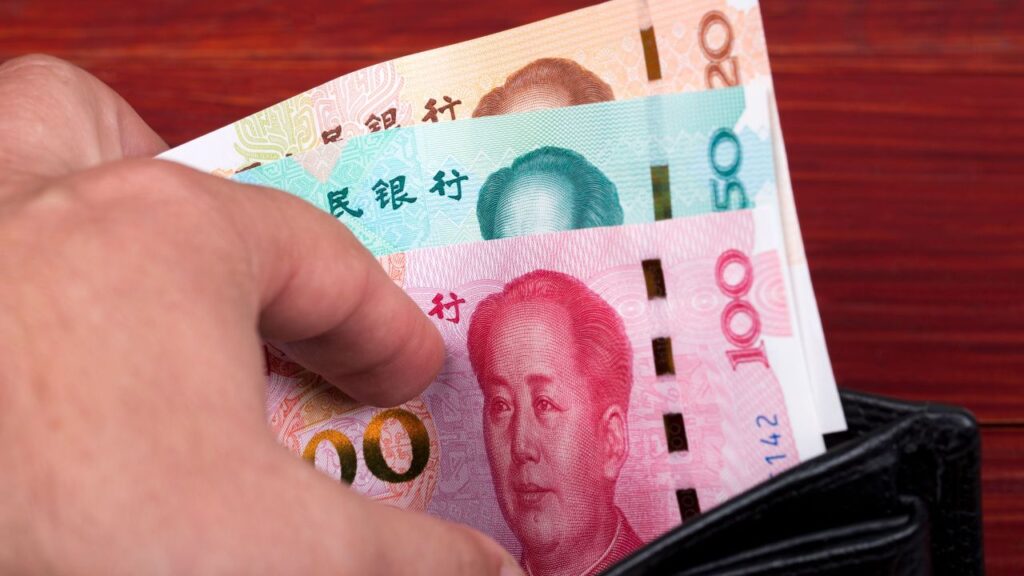
Recent estimates suggest non-performing household debt climbed sharply in 2025, reaching a record level above 2 trillion yuan. Other research points to Chinese financial institutions potentially having to dispose of 2 to 3 trillion yuan in bad personal loans each year. If those estimates are even roughly correct, the scale is significant enough to matter not just for banks but also for the broader economy.
Some analysts now believe that by the end of 2025, around 100 million adults in China may have fallen behind on debt payments. Even allowing for uncertainty around that figure, the message is the same: repayment stress is no longer a niche issue.
This matters because Beijing has spent years trying to rebalance growth away from property and exports and toward domestic consumption. That shift was always going to be difficult. It becomes even harder when a large share of households is trying to repair damaged balance sheets instead of spending.
Retail sales have already shown weakness. That is a warning sign, because consumer activity is supposed to help offset softness elsewhere in the economy. If debt stress keeps rising, the hoped-for consumption recovery remains fragile.
How household borrowing expanded so quickly
China’s household debt has nearly tripled over the past decade, reaching roughly 83 trillion yuan. Mortgages still account for the largest share, but the faster recent growth has come from consumer loans.
That expansion was made possible by a lending environment that became extremely easy to access. Banks and major tech platforms pushed consumer credit through mobile apps, reducing friction almost to zero. Loans could be approved in minutes. Advertising highlighted low barriers, quick cash, and manageable monthly payments.
Platforms tied to major Chinese technology firms became central to this system through partnerships with banks. The result was a broad and highly convenient consumer credit market, especially appealing to younger borrowers.
Convenience, however, can become a trap. When credit is easy and repeated refinancing feels normal, borrowers can end up using fresh debt to service older debt. That can work for a time. It stops working when wages stagnate, incomes weaken, or job prospects become uncertain.
That appears to be exactly what has happened in many cases.
Why the banking system is paying attention
The rise in missed payments is already showing up in bank data. At ICBC, the country’s largest lender, the bad loan ratio for credit card debt rose well above the bank’s overall non-performing loan ratio. Analysts also estimate that 5 to 6 percent of retail loans at some large Chinese banks may already be non-performing, with smaller institutions potentially in worse shape.
Those are not comfortable numbers.
Consumer debt stress does not automatically trigger a systemic banking crisis, but it can erode profitability, force write-downs, and increase pressure on lenders that are already dealing with property-related weakness and slowing growth. In other words, this is landing at a bad time.
The deeper problem is that household stress and macroeconomic rebalancing are now working against each other. Officials want consumers to support growth. Households, meanwhile, are trying to cut liabilities and rebuild what was lost during the property downturn.
That property slump matters enormously here. Housing was not just a place to live. For many families, it was the core of household wealth and confidence. As property values weakened, both perceived wealth and willingness to spend fell with them. For more on that broader balance-sheet damage, this related analysis on China’s housing reckoning helps explain why consumer recovery remains so difficult.
Policy response exists, but only up to a point
Regulators have begun to respond. The People’s Bank of China has introduced a form of credit amnesty that allows some borrowers to repair damaged credit records after clearing overdue debt. Authorities have also reportedly pushed online lenders to lower interest rates and assess the effects of lower lending caps.
These steps may help at the margin. They may reduce pressure for some borrowers and limit further deterioration.
But they do not resolve the structural issue. China still lacks a nationwide personal bankruptcy framework that would allow heavily indebted individuals to formally restructure or discharge debts. Without that kind of mechanism, many borrowers remain stuck in a long and painful workout process.
Weak wage growth, persistent uncertainty, and the aftereffects of the property downturn make that even harder.
The bottom line is straightforward. Until household finances stabilise, calls for stronger domestic consumption will run into a balance-sheet problem. At best, that delays recovery. At worst, if debt stress is mishandled, it could become a more serious financial risk.
The G7 wants less dependence on China’s critical minerals supply chain
The second major development is strategic rather than purely domestic.
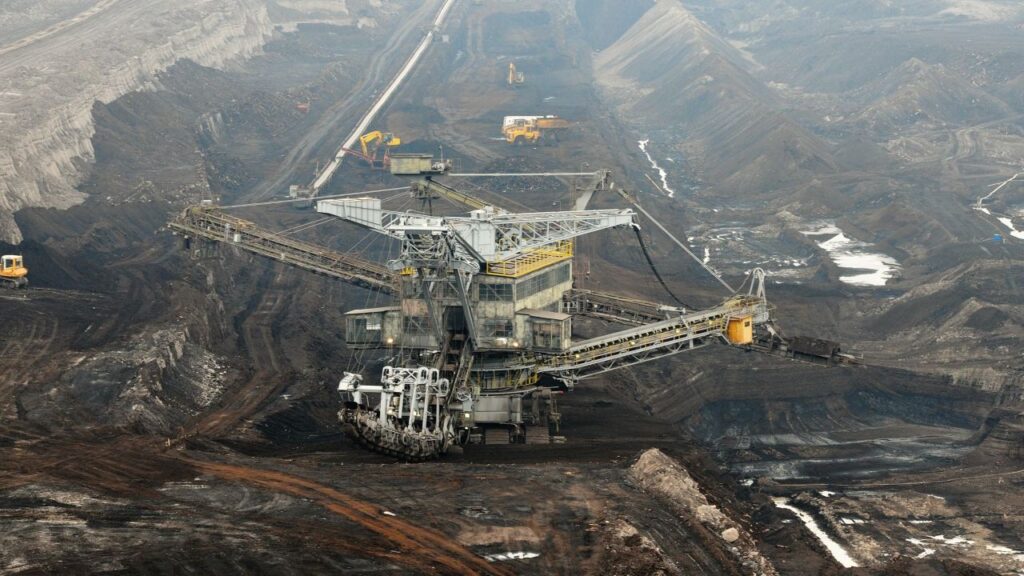
The G7 has agreed on a plan to reduce dependence on China for rare earths and permanent magnets, aiming to ensure that no single country accounts for more than 60 percent of imports by 2030. After that, the group wants to push exposure even lower, targeting 50 percent as soon as feasible.
This is a notable shift because it takes a long-discussed concern and turns it into a measurable diversification goal.
Rare earths and other critical minerals are essential inputs for electric vehicles, renewable energy systems, semiconductors, defence manufacturing, and a wide range of industrial processes. China’s role in refining and processing these materials has given it a powerful position in global supply chains.
That leverage has become more visible after a series of export restrictions. Beijing has imposed controls on multiple critical materials, and it has also used trade restrictions in the context of geopolitical tension, including measures affecting Japan amid disputes connected to Taiwan.
From the perspective of G7 governments, the strategic risk is obvious. If one country dominates the processing stage of essential inputs, it can disrupt production across multiple downstream industries.
Why diversification is easier to announce than to achieve
The G7 plan includes support for new mining projects, more recycling, and a platform to coordinate investment and supply chain development. Leaders also discussed possible quotas in some industries, especially defence, to make sure diversification targets are actually met.
That sounds straightforward. In practice, it is anything but.
Building alternative supply chains takes years. New mines need investment, permits, infrastructure, processing capacity, and technical expertise. Environmental concerns can slow projects considerably. So can local political opposition.
Even where raw materials exist outside China, processing is often the real bottleneck. China’s dominance is not just about digging minerals out of the ground. It is about refining, separation, midstream infrastructure, and the industrial ecosystem built around those steps.
According to International Energy Agency estimates referenced in the discussion, China controls around 70 percent of global refining capacity for many critical minerals, with even stronger positions in some individual markets.
That means diversification is possible, but not quick.
Even if the G7 reaches its 60 percent threshold, dependence would still remain substantial. That is an important point. This is not immediate decoupling. It is gradual risk reduction.
The broader pattern is worth noting as well. Western governments are no longer treating critical minerals as a niche commodity issue. They are treating them as a national security issue. That shift will continue to shape investment, industrial policy, and trade friction for years.
For a related look at how Beijing is trying to build advantage through power supply and industrial strategy, this piece on Beijing’s electricity-driven AI push provides useful context.
China’s humanoid robotics boom is growing fast, but so are overcapacity fears
China’s humanoid robotics industry is attracting major capital, heavy policy support, and a great deal of excitement. It is also drawing a more cautious response from industry insiders who have seen this story before.

The concern is that the sector may be heading toward the same kind of destructive competition that hit electric vehicles: too many firms, too much capital, too much output chasing uncertain demand, and intense price pressure that crushes profitability.
Chinese policymakers often use the term involution for this dynamic. Outside China, the more familiar term is overcapacity.
The warning signs are already visible in lower-end robotics segments where barriers to entry are relatively low. Once enough firms can assemble roughly similar products, competitive pressure shifts toward undercutting on price rather than building durable advantages.
A crowded field backed by the state
Official figures indicate that more than 140 Chinese companies were developing humanoid robots in 2025, with over 330 products released. That is rapid expansion by any standard.
At the same time, Beijing is actively pushing commercialisation. A directive from central authorities aims to put around 10,000 humanoid robots into commercial use by the end of 2026.
That target tells you a lot about the policy mood. Robotics is not being treated as a speculative side project. It is being framed as a strategic industry.
There are real reasons for that enthusiasm. China has a formidable manufacturing ecosystem. Domestic supply chains for motors, batteries, sensors, and electronics make it easier to prototype quickly, iterate rapidly, and produce at scale with lower cost than many competitors can match.
That is a genuine advantage, and it helps explain why China is moving so quickly in this space.
Where robots are already being used
Commercial deployment is underway across factories, logistics centres, supermarkets, hospitals, and retail settings. In some logistics applications, robots are reportedly achieving a large share of human work efficiency already.
That is important because it shows this is not purely futuristic branding. There are real industrial and service use cases emerging now.
Still, the near-term limitations matter. Fully capable household humanoid robots remain some distance away. Industry estimates suggest that machines able to handle meaningful domestic tasks at scale are still several years from broad practical use.
So while commercial and industrial robotics may continue growing, consumer hype should be treated carefully.
The bigger macro concern is that China’s growth model keeps rewarding investment surges into politically favoured sectors. When capital pours into the same strategic industries at once, competition can become excessive before demand is mature enough to absorb the output. That pattern has already generated trade tensions in sectors such as electric vehicles and clean technology.
Humanoid robotics may be next.
If this cycle intensifies, China could end up with rapid technological gains alongside poor industry economics. That would be familiar territory: stronger productive capacity but weaker profitability and more international complaints about subsidised expansion.
Taiwan seeks movement on delayed US arms package as pressure from Beijing grows
The final major development concerns Taiwan, where military and diplomatic pressure from Beijing continues to intensify.
Taiwan has renewed calls for the United States to move ahead with a delayed 14 billion dollar arms package, arguing that stronger self-defence is essential. The central message from Taipei is clear: Taiwan cannot assume outside forces will arrive in time during a crisis, so it must improve its own readiness and resilience.
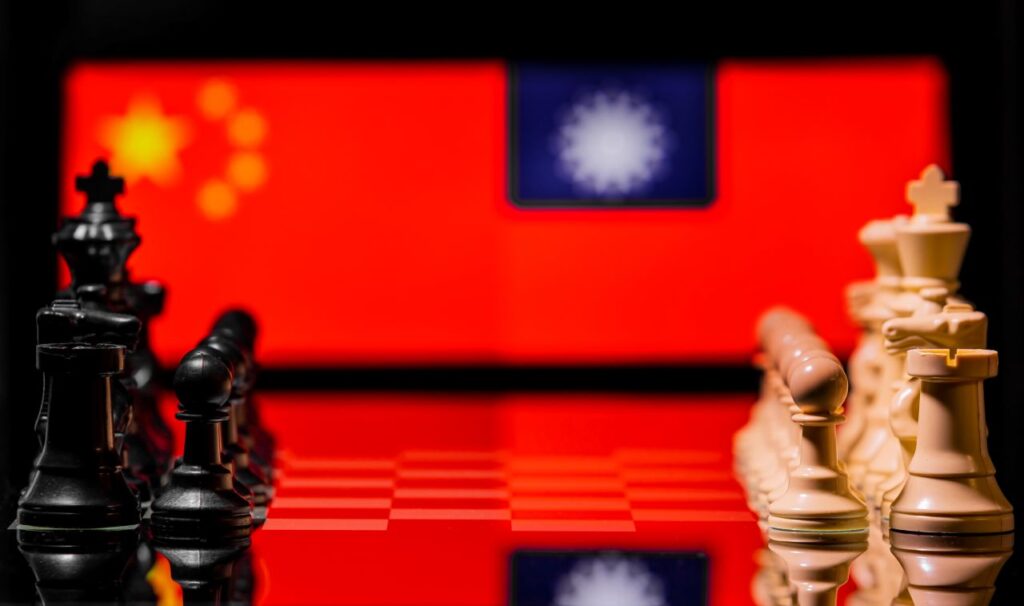
That argument has become more urgent as China continues regular military activity around the island, including aircraft and naval operations and larger exercises in surrounding waters. Beijing still maintains that unification remains a national goal and has repeatedly left open the use of force.
The problem for Taiwan is that the proposed US package remains under review. Although senior lawmakers had approved it earlier in the year, the process appears to have slowed after discussions between Washington and Beijing.
That delay matters symbolically and practically. Symbolically, it raises concern in Taipei about whether security support could become bargaining material in broader US-China negotiations. Practically, it delays capabilities Taiwan believes it needs to strengthen deterrence.
Washington says policy is unchanged, but concern remains
Taiwanese officials have said they do not see a change in the overall US position toward Taiwan. American officials have also publicly reaffirmed that arms sales policy remains in place and is not something to be negotiated with Beijing.
At the same time, review delays are still being explained in part by stockpile concerns, including pressure tied to other regional conflicts. That introduces a real-world constraint. Strategic commitments may be steady on paper, but defence industrial capacity and inventory levels still shape what can be delivered and when.
This is one reason Taiwan has emphasised the need for self-defence capability rather than dependence on assumed rescue.
For additional context on how Taiwan's readiness and broader regional risk are evolving, this analysis on rising Taiwan blockade planning is worth reading.
Diplomatic isolation is also intensifying
The military dimension is only part of the picture. Taiwanese officials also say Beijing is becoming more aggressive in using diplomatic influence to block Taiwan’s participation in international events and organisations.
An incident in Kenya, where Taiwanese delegates were reportedly detained and barred from attending an ocean-related conference after local authorities cited adherence to the One China policy, has been presented by Taipei as part of a wider pattern.
From Taiwan’s perspective, this is increasingly normal rather than exceptional. Beijing is using economic influence and diplomatic relationships, particularly in the developing world, to narrow Taiwan’s international space wherever possible.
That creates a two-track pressure campaign.
- One track is military, with persistent activity around Taiwan and growing coercive signalling.
- The other is diplomatic, limiting Taiwan’s access to global forums and reducing its international visibility.
Together, these tools are designed to increase Taiwan’s isolation while reinforcing Beijing’s sovereignty claims.
What ties these stories together
These four developments may seem separate, but they are closely connected by the same larger themes.
First, China’s domestic economy still faces balance-sheet stress. That weakens consumption and complicates the transition away from old growth drivers.
Second, strategic competition with advanced economies is deepening around the industries and materials that will define future manufacturing and defence capacity.
Third, Beijing’s industrial playbook remains aggressive. It can produce rapid scale, but it also risks creating overcapacity and international backlash.
Fourth, the Taiwan issue continues to sit at the centre of regional security risk, with military deterrence, diplomatic isolation, and great-power bargaining all intersecting.
That is the broader picture from this China news update. The pressure points are different, but the underlying message is consistent: China is trying to pursue economic stabilisation, technological advancement, and strategic resilience at the same time, under conditions that are becoming less forgiving both at home and abroad.
FAQ
Why is household debt such a problem for China’s economy right now?
Because Beijing wants consumption to play a bigger role in growth, but indebted households are more likely to cut spending and focus on repayments. That weakens consumer confidence and makes economic rebalancing much harder.
How large is China’s household debt burden?
Household debt has risen to roughly 83 trillion yuan over the past decade. Mortgages remain the biggest component, but consumer lending has grown rapidly, especially through mobile lending platforms linked to banks and major technology firms.
What is the G7 trying to do on rare earths and critical minerals?
The G7 wants to reduce dependence on China by ensuring no single country supplies more than 60 percent of rare earth and permanent magnet imports by 2030, with a longer-term goal of pushing reliance down further.
Why is it so hard to reduce dependence on China’s mineral supply chain?
Because the challenge is not only mining. China has deep strength in refining, processing, and industrial infrastructure. Building alternatives requires years of investment, permits, technical capacity, and political support.
What does overcapacity mean in China’s robotics sector?
It means too many companies and too much capital may chase the same market before demand is mature, leading to price wars, weak profits, and unsustainable competition. Chinese policymakers often describe this as involution.
What is Taiwan asking the United States to do?
Taiwan wants Washington to move ahead with a delayed 14 billion dollar arms package and continue strengthening Taiwan’s self-defence capabilities as pressure from Beijing increases.
How is China increasing pressure on Taiwan beyond military activity?
Taiwanese officials say Beijing is also using diplomatic and economic influence to block Taiwan’s participation in international events and organisations, further reducing its international space.