
A slightly smaller fall in house prices is not a recovery. A factory built overseas is not necessarily an independent supply chain. And a relatively obscure metal can become a very expensive problem when the country controlling its supply decides to tighten the tap.
These are three uncomfortable lessons emerging from China’s latest economic developments. Its property market is showing tentative signs of stabilisation, but the damage to household wealth and confidence remains enormous. Meanwhile, Japan faces a shortage of yttrium, and Beijing is preparing broader controls on technologies ranging from artificial intelligence to solar manufacturing.
The connecting thread is dependence. Chinese households remain exposed to a wounded housing market. Overseas manufacturers remain exposed to Chinese materials and industrial expertise. Neither dependence disappears because a reassuring headline says things are improving.
Key Takeaways
- China’s housing decline moderated in September, but improvement remained narrow, and resale prices kept falling widely.
- Japan’s yttrium shortage demonstrates how Chinese export restrictions can disrupt interconnected industrial supply chains.
- Proposed technology controls could extend Beijing’s oversight into overseas factories, particularly in solar manufacturing.
Table of Contents
- China’s Housing Market Is Falling More Slowly. That isn't the same as getting better.
- Japan’s Yttrium Crunch Shows What Supply-Chain Dependence Costs
- Beijing Wants More Control Over the Technology Behind the Factory
- The Real Story Is Where Dependence Accumulates
China’s Housing Market Is Falling More Slowly. That isn't the same as getting better.
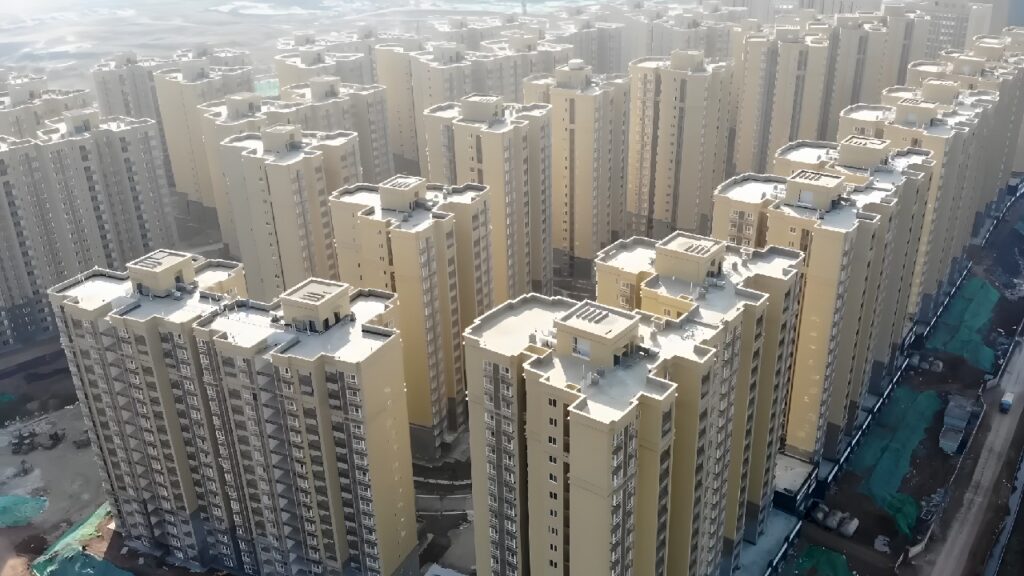
First, the relatively good news. September’s figures from China’s National Bureau of Statistics showed new home prices across 70 major cities, excluding subsidised housing, falling 0.14% from August. That was a smaller decline than the previous month’s 0.17%.
But existing home prices fell 0.26%. This matters because resale housing is subject to less government intervention, making it an important check on the more encouraging new-build numbers.
The geographical breakdown makes the recovery story look even thinner:
- First-tier cities recorded a 0.1% increase in new home prices.
- Shenzhen gained 0.3%, while Shanghai and Guangzhou each gained 0.2%.
- Beijing moved in the opposite direction, falling 0.2%.
- Second-tier cities were flat after two consecutive monthly declines.
- Third-tier cities fell 0.2%.
Only 17 of the 70 cities recorded monthly increases. So, yes, there are pockets of improvement. No, they do not amount to a nationwide turnaround.
Citigroup analyst Griffin Chan sees 2027 as a potentially pivotal year for a recovery in core cities, citing improving sales and inventory indicators. Those two words do a lot of work. A recovery in a small group of stronger urban markets would not automatically rescue the weaker cities where much of China’s population lives.
Even that narrower forecast comes with a warning: more evidence is needed before making a firm recovery call.
The Damage Goes Far Beyond Developers
The scale of the contraction explains why a modest improvement in monthly prices deserves caution rather than celebration.
Annual sales of newly built commercial property fell from 18.19 trillion yuan in 2021 to 9.67 trillion yuan in 2024. That is a decline of roughly 47%, equivalent to about 8.5 trillion yuan—more than a trillion US dollars—in annual sales.
Property investment dropped 10.6% in 2024 alone. New construction starts fell 23%.
This is not just a problem for developers with ambitious borrowing habits. Fewer construction projects mean less demand for steel, cement and machinery. Fewer homes being fitted out mean weaker demand for furniture and appliances. Unpaid contractors and suppliers face pressure on wages, employment and their own bills.
Households face a particularly unpleasant imbalance: the home loses value, but the mortgage does not shrink to match. That encourages families to save rather than spend. Buyers of unfinished, pre-sold apartments can face something worse—mortgage payments on homes they cannot occupy.
Local governments also lose revenue when developers stop buying land, limiting their ability to support services and investment. Banks face stressed borrowers and declining collateral values. As explored in this analysis of China’s property losses and household wealth damage, the fallout extends well beyond the housing transaction itself.
The result is a feedback loop. Weak confidence depresses purchases. Weak sales squeeze developers’ cash flow. Construction delays then give prospective buyers another reason to stay away.
Targeted Support Cannot Fix Every Reason People Aren’t Buying
Beijing’s latest response includes mortgage interest subsidies for qualifying first-time buyers purchasing relatively small homes priced at no more than 1.5 million yuan. Lower-income households, recent graduates and new urban residents are among the intended beneficiaries.
That is selective support, not a broad fiscal rescue. Its timing also means it cannot fully explain September’s improvement.
Bloomberg Intelligence analysts Christie Hung and Kingsley Chan identified the obvious limitations: subsidies do not resolve falling property prices, difficulty selling an existing home or insecurity about employment. A cheaper mortgage helps, but it does not make those risks disappear.
Supply changes further muddy the picture. New home supply across 50 key cities nearly doubled from August to 14.5 million square metres in September. Some developers accelerated launches ahead of regulatory changes encouraging completed-home sales.
Industry sources cited by Chinese financial publication Caixin also warned that successful high-end launches could lift average prices without indicating a broad revival. A more expensive mix of homes selling is not necessarily the same thing as homes generally becoming more valuable.
Meanwhile, existing-home sales by floor area rose 10.7% year-on-year in the first nine months of 2026, while new home sales fell 13.5%. Yet resale prices still declined in 59 of the 70 monitored cities in September.
S&P Global Ratings expects nationwide existing-home prices to decline for approximately two more years, although leading cities could recover in 2027. The sensible reading is that pressure may be easing. Calling the crisis over would be a considerable leap.
Japan’s Yttrium Crunch Shows What Supply-Chain Dependence Costs
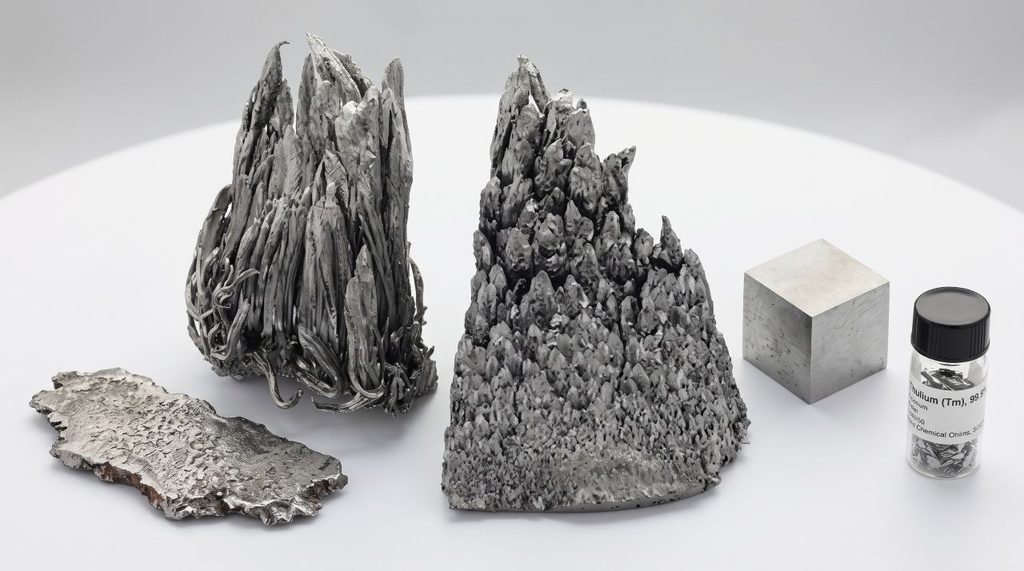
Now for a different kind of vulnerability. Japan could run short of yttrium within months as Chinese rare earth export restrictions squeeze supplies. According to Financial Times reporting, Japanese officials and trading executives warned that shortages could emerge before year-end unless alternative supplies, substitutes or additional stockpiles become available.
Yttrium is hardly a household name. Unfortunately, industrial importance is not determined by name recognition.
It is used in heat-resistant coatings for jet engines and in semiconductor-manufacturing equipment. Japanese components containing the metal also feed into US defence supply chains. A shortage in Japan therefore does not remain a Japanese problem.
The price divide is extraordinary. Argus assessments put yttrium oxide outside China at $1,150 per kilogram—179 times its price two years earlier. Inside China, it costs approximately $9 per kilogram.
Those are two separate comparisons. The international price has risen roughly 179-fold over two years, while the current gap between Chinese and overseas prices is itself enormous. Either way, manufacturers outside China face a painful disadvantage.
The Chokepoint Is the Point
China’s dominance in rare earth mining and processing gives Beijing leverage that cannot be wished away with a diversification announcement. The International Energy Agency’s critical minerals research provides useful background on why concentrated mineral supply chains create such difficult industrial risks.
Japan has asked Washington and major American companies to press Beijing for more shipments. US and Japanese officials have discussed the shortage through a critical-minerals rapid-response group, while Washington argues that Beijing has not fully delivered promised relief from export controls.
The squeeze also has a political dimension. China tightened restrictions against Japan following Prime Minister Sanae Takaichi’s remarks about the threat a Taiwan conflict could pose to Japanese security.
But the consequences do not follow neat geopolitical boundaries. US officials have told Beijing that mineral shortages constrain production of jet engines needed for China’s own Comac C919. Critical-mineral disputes have also contributed to delays in completing China’s planned purchase of 200 Boeing aircraft.
That is the awkward reality of interconnected manufacturing. A restriction aimed at creating pressure abroad can complicate industrial ambitions at home, too.
For Japan, the immediate issue is simpler: conservation has limits. Factories ultimately need material, not assurances that the diplomatic process is progressing.
Beijing Wants More Control Over the Technology Behind the Factory
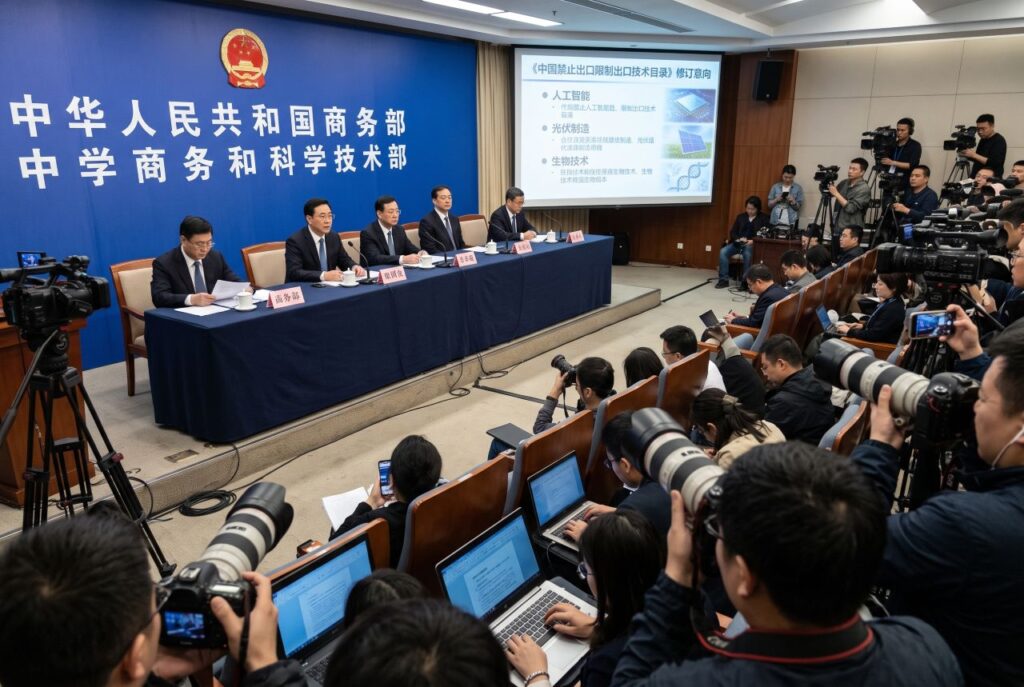
The yttrium shortage concerns access to a material. Beijing’s next moves concern access to the knowledge required to make things. China’s Ministry of Commerce and Ministry of Science and Technology have proposed additions to the catalogue of prohibited and restricted technology exports. The changes cover artificial intelligence, solar manufacturing and biotechnology.
Public comments are due by November 15. But registration requirements for covered technology transfers, including transfers already underway, took effect immediately.
That distinction matters. Some restrictions remain, yet proposals are still being made, yet businesses already face administrative obligations. Treating every measure as either entirely hypothetical or fully implemented would miss what is actually happening.
AI Controls Come With Important Exceptions
The proposal covers 23 AI technologies, including large language models, autonomous agents, chip design and computing clusters.
That sounds sweeping, but the exceptions matter. The commerce ministry said publicly available technology would be excluded. API access and software-as-a-service delivery generally fall outside large-model export management.
So this is not simply a blanket ban on overseas access to Chinese AI. The implications for future Chinese model releases remain uncertain, and the practical effect will depend on how the boundaries are applied.
Beijing is also offering additional support and facilitation for technology exports supporting cooperation among members of the World Artificial Intelligence Cooperation Organization. The approach combines restrictions with incentives: tighter oversight in some circumstances, easier cooperation in selected others.
Solar Manufacturing Reveals the Bigger Strategy
The solar proposals add 12 technologies spanning polysilicon, wafers and cells. Certain advanced thin-wafer and tandem-cell production technologies would face outright export bans. Specified manufacturing processes would require licenses.
Finished solar modules generally remain outside the restrictions. That creates an important distinction between buying a Chinese product and acquiring the capability to manufacture it.
Exports of equipment containing controlled technology could also be covered, along with installation, commissioning and subsequent improvements. In other words, regulatory oversight could extend beyond shipping machinery to the continuing operation of an overseas factory.
This is particularly significant as Chinese solar companies expand abroad. Overseas sales accounted for 50.37% of revenue at 27 solar supply-chain companies reporting that breakdown in the first half of 2026.
A factory can change its address without becoming technologically independent. If it still requires controlled equipment, Chinese expertise and approval for improvements, the underlying dependency remains. This is the broader strategic concern explored in the analysis of China’s expanding export controls and uneven technological rise.
Biotechnology, Drones and Heavy Machinery Are Also Covered

The biotechnology proposals cover five categories, including cell and gene therapies, small interfering RNA drugs and specified pathogen technologies. They appear designed to protect underlying capabilities while leaving room for pharmaceutical licensing agreements.
Separately, authorities announced expanded controls on drones, components and associated technologies, alongside certain tunnel-boring machines, dredgers and specialized high-altitude construction equipment. Those measures take effect on November 18.
Covered drone items include qualifying long-endurance aircraft, high-powered communications equipment, motors, propellers and autonomous navigation systems. The commerce ministry described the controlled items as having an obvious military-civil dual-use character.
The categories differ, but the strategic logic is consistent: industrial know-how is being treated as an asset whose movement the state intends to supervise.
The Real Story Is Where Dependence Accumulates
None of this means China’s domestic weakness and international leverage cancel each other out. They coexist.
Beijing can struggle to restore housing confidence while retaining enormous influence over the materials and technologies other economies need. Equally, possessing that influence does not repair household balance sheets or finish stalled apartments.
For anyone assessing China’s economy, the useful questions are therefore more demanding than whether prices improved slightly or whether a factory has moved overseas.
How widely is housing stabilization spreading? Can buyers trust developers to deliver? Do alternative mineral supplies exist at usable scale? And does overseas manufacturing actually control its own technology?
Those are the dependencies that matter. The headline may change long before the underlying vulnerability does.
Frequently Asked Questions
Is China’s housing market recovering?
September showed slower new-home price declines, not a broad recovery. Only 17 of 70 monitored cities recorded new-home price increases, while existing-home prices fell in 59 cities.
Why is yttrium important to Japan?
Yttrium is used in heat-resistant jet-engine coatings and semiconductor-manufacturing equipment. Japanese components containing it also support US defense supply chains, making shortages an international concern.
Would China’s proposed solar controls ban finished panel exports?
Finished solar modules generally remain outside the proposed restrictions. The measures focus on specified production technologies and processes, potentially including equipment, installation and later improvements at overseas factories.
Do the proposed AI controls cover every overseas use of Chinese models?
No. The commerce ministry said publicly available technology would be excluded, while API and software-as-a-service delivery generally fall outside large-model export management. The implications for future model releases remain uncertain.