By Tony Fiddis: China Analyst.
China and the United States are preparing to talk about artificial intelligence. Not compete over it, not sanction each other over it, not accuse each other of trying to dominate it , although they will presumably do all of those things too. But talk.
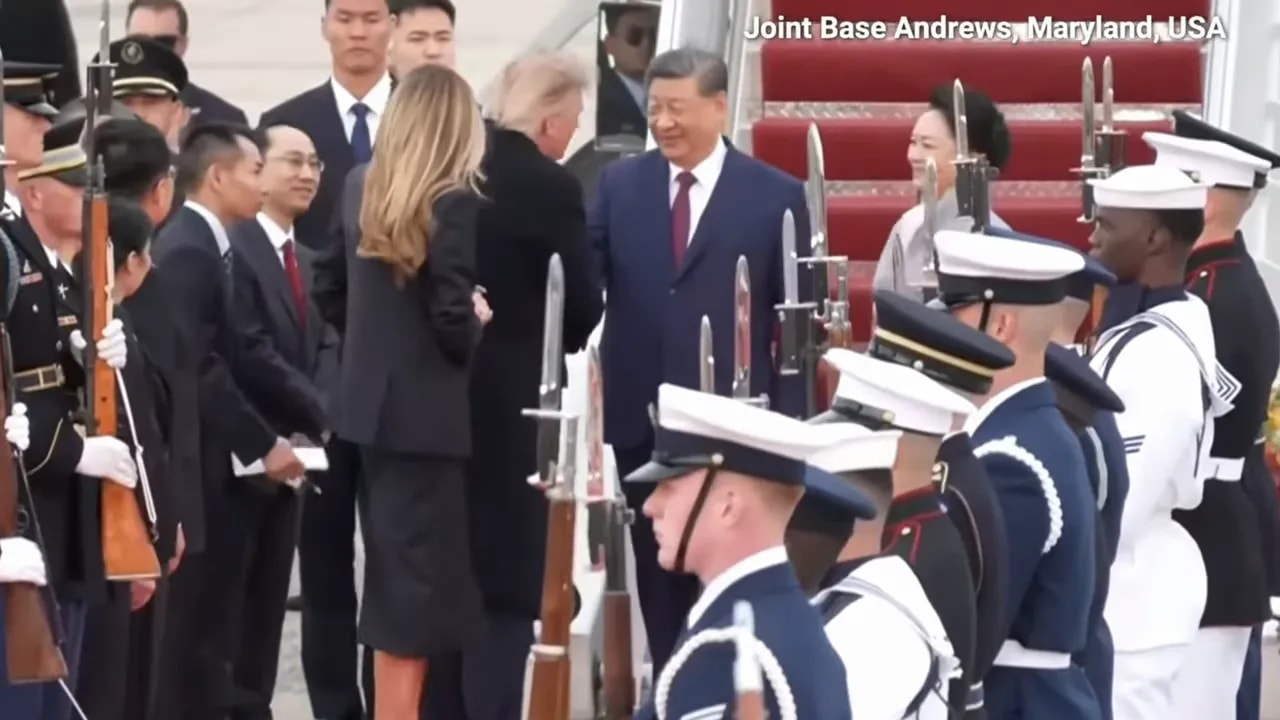
Ahead of a high-stakes meeting between Donald Trump and Xi Jinping in Washington, the two governments have reportedly agreed to establish a formal dialogue on AI. This is one of those developments that sounds reassuring until one remembers the basic problem: Washington and Beijing increasingly agree that AI could create genuinely catastrophic risks, while also treating control over AI as one of the decisive geopolitical contests of the century.
In other words, both sides want guardrails. Neither side wants to hand the other a steering wheel.
The proposed dialogue arrives at a particularly revealing moment for China. Beijing is spending enormous sums trying to turn itself into an AI and semiconductor superpower, even as the domestic economy struggles with weak consumption, property-sector damage, deflationary pressure, unemployment and a rapidly eroding sense of household confidence. China may be closing the technological gap with America. But it is trying to do so while much of its economy is running on fumes.
Key Takeaways
- The United States and China are establishing an AI dialogue focused on catastrophic and national-security risks, despite intense technological rivalry.
- China’s AI investment is accelerating while weak consumption, property distress and unemployment expose major economic vulnerabilities.
- Taiwan is using disaster-management cooperation to broaden practical international engagement without requiring formal diplomatic recognition.
- Saudi Arabia’s withdrawal from mBridge highlights the political difficulty of building alternatives to dollar-based payment systems.
Table of Contents
- An AI Dialogue Between Rivals Is Better Than Silence
- Trade Stability Is Still Being Negotiated One Extension at a Time
- Beijing Is Betting Heavily on Technology While the Domestic Economy Cools
- AI Cannot Succeed Without People and Businesses Able to Buy It
- Taiwan Builds an International Route Around Diplomatic Isolation
- Saudi Arabia Steps Back From China’s Digital-Currency Project
An AI Dialogue Between Rivals Is Better Than Silence
The proposed US-China AI mechanism was reportedly negotiated in talks between US Treasury Secretary Scott Bessent and Chinese Vice Premier He Lifeng in New York. It follows an earlier discussion between Trump and Xi in Beijing, and the first follow-up meeting could take place within two months.
The subjects are not trivial. The agenda reportedly includes:
- Risks posed by uncontrolled AI agents;
- Cyberattacks conducted by non-state groups;
- The possible use of AI in biological weapons development; and
- A notification system for AI incidents with national-security implications.
This is not simply a diplomatic exercise in finding a nice topic that both governments can pretend to care about. Advanced AI introduces risks that do not respect borders particularly well. An autonomous system used recklessly, a cyber tool released by criminals, or AI-assisted biological research falling into the wrong hands could create consequences neither government can easily contain.
That much is obvious. The difficult bit is everything else.
Washington and Beijing remain deeply suspicious of one another’s technological ambitions. The US wants to restrict China’s access to high-end semiconductors and advanced manufacturing equipment. China wants to reduce precisely this dependence while building its own domestic chip, AI and data centre capabilities. Both governments also view military AI as strategically important. Cooperation may therefore happen at the margins, around shared catastrophe prevention, while the much larger technological rivalry continues at full speed.
There is a bleak logic to it. The two biggest AI powers may be able to agree that an uncontrolled system should not destroy everybody. They are much less likely to agree on who gets to own the most powerful controlled system.
Trade Stability Is Still Being Negotiated One Extension at a Time
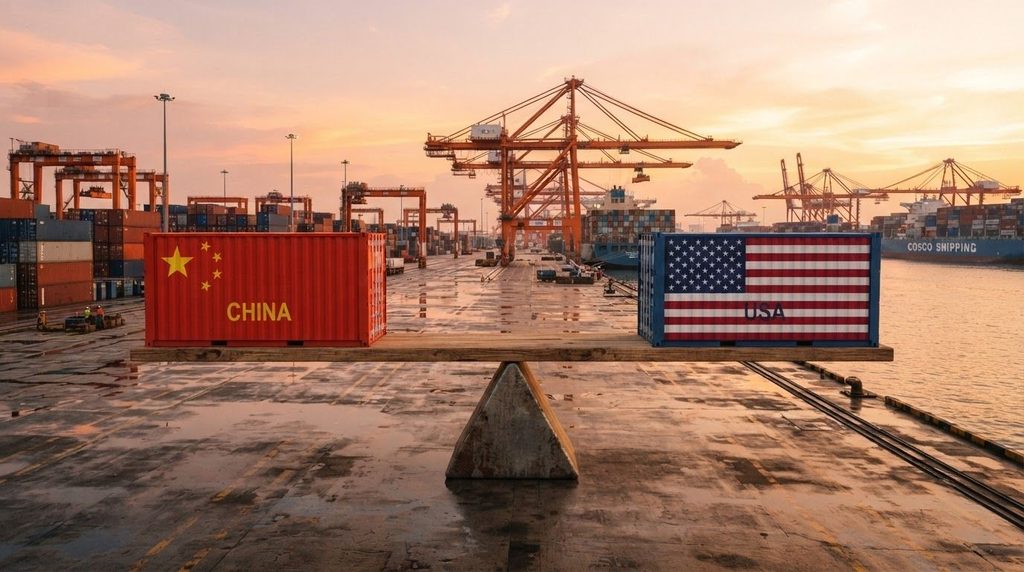
The AI discussions come alongside an unresolved trade truce. The one-year arrangement agreed by Trump and Xi in Busan is due to expire on 10 November, but the latest negotiations reportedly did not produce an extension.
Washington has proposed a six-month rollover. Beijing, meanwhile, has reportedly sought an agreement lasting through the remainder of Trump’s presidency. The difference is not merely administrative. Short extensions give the US repeated opportunities to judge whether China has met its commitments and to apply leverage when it believes Beijing has not.
Rare earths are central to this calculation. US officials say China has fulfilled only around two-thirds of its commitments to maintain rare-earth supplies, while Chinese exports of rare-earth magnets to the United States reportedly fell 21% in August, to 512 tonnes. These magnets are used in vehicles, consumer electronics and advanced weapons systems. Which is to say: they are the sort of unglamorous industrial component that suddenly becomes extremely glamorous when a supply shortage starts shutting down factories.
Beijing may offer more export licences during the summit, but it will likely demand concessions in exchange. This is the familiar shape of US-China economic diplomacy now: each side is trying to preserve enough stability to avoid an outright rupture while keeping enough pressure in reserve to extract the next concession.
There have been some signs of progress. Chinese state-owned companies reportedly bought at least four cargoes of American soybeans, amounting to around 260,000 tonnes, shortly before the summit. China has already passed the halfway point of a commitment to buy at least 25 million tonnes annually through 2028. Yet major purchases of other US crops, including corn and wheat, have not materialised.
The two sides also formalised a bilateral “board of trade” intended to identify non-sensitive goods that could qualify for lower tariffs. That sounds decidedly less dramatic than semiconductor restrictions or rare-earth leverage, but it may be the sort of quiet, transactional arrangement that keeps the wider relationship from falling apart.
Iran remains another source of friction. Washington is concerned by Chinese purchases of Iranian oil and allegations that Chinese groups supplied Tehran with satellite imagery for targeting US bases. Beijing denies the claims. This matters because the summit is not occurring in a neat little AI-and-tariffs vacuum. Technology, energy, sanctions, security and trade are now all part of the same strategic argument.
Beijing Is Betting Heavily on Technology While the Domestic Economy Cools
Here is the uncomfortable contradiction at the heart of China’s current model: the country is becoming more technologically capable at the same time its domestic economy is becoming more structurally fragile.
Under Xi Jinping, Beijing has directed extraordinary political and financial resources into artificial intelligence, semiconductors and advanced manufacturing. State-backed investment funds reportedly deployed an estimated US$184 billion into AI companies between 2000 and 2023. China is also preparing to spend another US$295 billion over five years on state-operated data centres, while investment in information services increased 19.2% in the first half of 2026.
Those are vast sums. But scale is not the same thing as economic health.
China’s latest indicators point to a far broader deterioration:
- Youth unemployment, excluding students, reached 18.9% in August;
- Domestic car sales fell 20% in the first half of the year;
- Housing sales declined another 14%;
- Fixed-asset investment contracted 4.1% in the first five months; and
- Households continue to save heavily rather than spend.
The issue is not that AI is unimportant. It clearly is. The issue is that AI cannot simply be dropped on top of a weak consumer economy and expected to repair it like some sort of magical techno-plaster.
Former central bank adviser Li Daokui described the Chinese economy as “running too cold,” arguing that high-tech sectors cannot lift the much larger traditional economy by themselves. Another former adviser, Liu Shijin, proposed increasing monthly pensions for rural residents from around US$30 to US$150, explicitly to strengthen household consumption. That proposal tells you a lot about the imbalance Beijing is confronting: China can fund data centres, but many of its citizens have too little income security to spend confidently.
The country’s property downturn has hollowed out household wealth, local-government revenues and construction activity. Developers and local authorities are carrying substantial debt. The social safety net remains weak enough that households have rational reasons to hold onto their savings. Meanwhile, an ageing and shrinking population, private-sector uncertainty, deflation, trade tensions and industrial overcapacity are all leaning in the same unpleasant direction.
For more on the link between weak demand, investment pressure and Beijing’s electricity-heavy technology strategy, see this examination of China’s slowing data and power-driven AI ambitions.
AI Cannot Succeed Without People and Businesses Able to Buy It

Xi has made clear that he does not judge national progress solely through headline GDP growth. In a March speech, he argued that expanded hard power and movement into advanced industries mattered even if economic growth slowed. From Beijing’s perspective, this is not irrational. AI could improve productivity, modernise factories, reduce reliance on Western technology and make China more resilient in a confrontation with the United States.
But the benefits may take years to materialise, if they materialise at all. And automation can create its own problem: the more businesses use AI to replace or reduce labour, the weaker demand for workers may become.
Economist Xu Chenggang’s critique is devastatingly simple. Every yuan directed towards state-backed technology is a yuan not directed toward employment and consumption. China can build impressive models, powerful chips and enormous data centres. Yet AI firms still need healthy businesses willing to buy their products and consumers with enough confidence and disposable income to participate in the economy.
This is the same issue that has dogged the broader growth model for years. China produces more than its domestic market can absorb, then sells the surplus abroad. But export markets are becoming increasingly hostile to Chinese overcapacity, particularly in strategic industries such as electric vehicles, batteries and clean-energy equipment.
Technological capability is real power. But it does not erase the problem of underconsumption. It may instead make that problem worse if the state pours even more resources into capital-intensive sectors while households remain financially constrained.
China’s core challenge, then, is not simply whether it can compete with America in AI. It is whether technological strength can compensate for an economy where many households cannot, or will not, spend enough to support the very technologies Beijing wants to commercialise.
Taiwan Builds an International Route Around Diplomatic Isolation
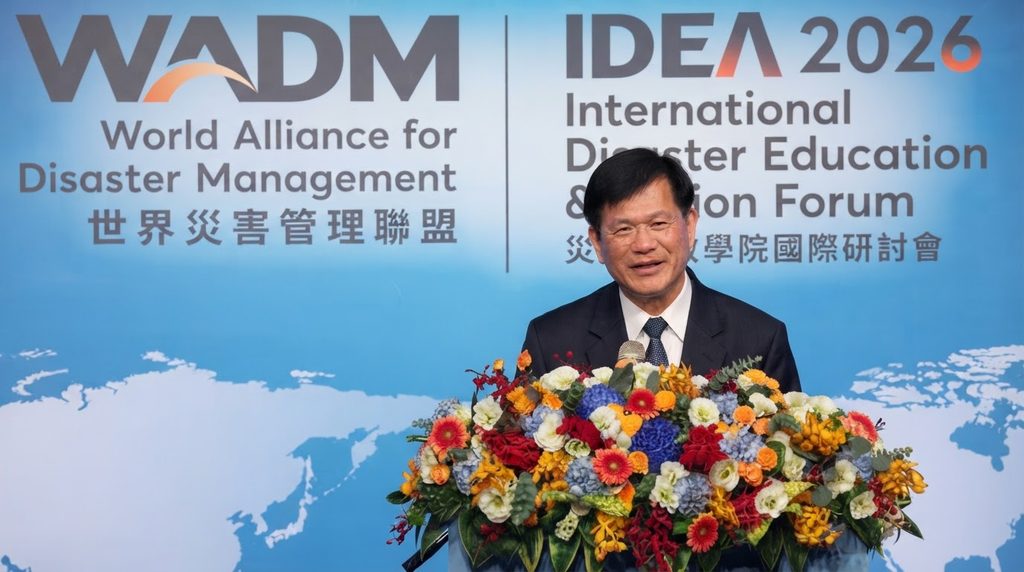
While Washington and Beijing argue over technology, Taiwan is looking for other ways to expand its international space.
President William Lai has announced the World Alliance for Disaster Management, or WADM, an organisation focused on joint training, disaster-response exercises, information sharing and mutual assistance. Taiwan has extensive experience responding to earthquakes and typhoons, and it has increasingly incorporated civilian resilience into planning for a potential conflict with China.
According to Taiwan’s Ministry of Foreign Affairs, WADM is the first intergovernmental international organisation initiated and established entirely by Taiwan. Its founding members include 11 of Taiwan’s diplomatic allies and Somaliland. Governments and organisations from 21 countries, including the United States, Japan, Germany and the Philippines, are participating as observers or partners.
This is significant because Taiwan has faced substantial restrictions in international institutions since losing its United Nations seat in 1971. Beijing pressures governments and global organisations to limit official contact with Taipei, leaving Taiwan outside bodies including the World Bank and International Monetary Fund.
WADM does not solve that diplomatic problem. But it gives Taiwan a practical route around it. Disaster preparedness is difficult for Beijing to dismiss as mere symbolism, and Taiwan’s expertise gives other governments a concrete reason to cooperate. This is a form of diplomacy built not around formal recognition but around useful capability and trust.
That broader cross-strait pressure is explored in this analysis of Taiwan friction and Beijing’s wider strategy for managing uncertainty.
Saudi Arabia Steps Back From China’s Digital-Currency Project
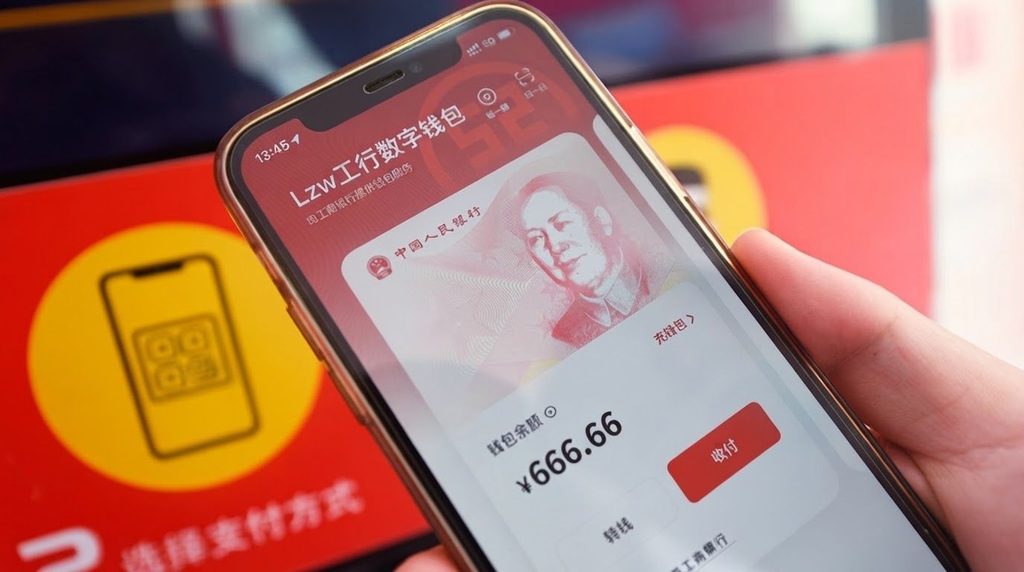
Finally, Saudi Arabia has withdrawn from mBridge, the Beijing-linked cross-border digital-currency initiative designed to offer central banks a faster alternative to conventional dollar-based payment systems.
The blockchain platform allows central banks to transact directly using their own digital currencies. In theory, that could lower foreign-exchange costs, shorten processing times and reduce dependence on the US dollar and networks such as SWIFT.
Saudi Arabia joined China, Hong Kong, Thailand, the United Arab Emirates and the Bank for International Settlements as an active participant in 2024. But the Saudi Central Bank has said that its proof-of-concept work concluded in May 2025 and that it is no longer a participating member. Riyadh insists this was always part of the plan and rejects the idea that its departure carries wider political meaning.
Still, the optics are awkward. The Bank for International Settlements departed in October 2024 amid reports of US pressure, while Washington worries that alternatives to dollar-based payment channels could weaken the enforcement of American sanctions and expand the international role of China’s renminbi. Trump has also threatened BRICS countries with 100% tariffs if they pursue alternatives to the dollar.
Despite the withdrawals, mBridge is moving toward commercial deployment. Macau joined the platform and launched the system in June, while China and the UAE remain involved. The project is therefore not dead. But Saudi Arabia’s exit is a reminder that building an alternative payment system is not simply a technical challenge. It is a geopolitical one, and many countries will want the benefits of diversification without the cost of appearing to pick a side.
That, ultimately, is the same balancing act at work across all these developments. China wants to build technological independence, reduce dollar reliance, strengthen its international networks and compete with the United States. But it is doing so while facing an increasingly difficult domestic economy and a global environment that is becoming less welcoming to Chinese leverage.
Frequently Asked Questions
What will the proposed US-China AI dialogue cover?
The reported agenda includes uncontrolled AI agents, cyberattacks by non-state actors, AI-enabled biological-weapons risks and a notification process for incidents affecting national security.
Why is China’s AI strategy economically controversial?
China is making enormous investments in AI, chips and data centres, while household consumption remains weak, youth unemployment is elevated and the property downturn continues to damage confidence, wealth and local-government finances.
What is Taiwan’s World Alliance for Disaster Management?
WADM is a Taiwan-initiated international organisation for disaster training, preparedness, information sharing and mutual assistance. It provides Taipei with a practical channel for international cooperation amid diplomatic restrictions imposed by Beijing’s pressure.
Why does Saudi Arabia leaving mBridge matter?
mBridge is intended to facilitate cross-border central-bank digital-currency transactions and reduce reliance on dollar-based payment channels. Saudi Arabia’s departure illustrates the geopolitical sensitivity surrounding efforts to diversify away from the US dollar.