Prefer to Watch: Click Above
Donald Trump personally greeted Xi Jinping at Joint Base Andrews on Wednesday evening. The two governments also agreed to extend their trade truce until January 10, 2027. If diplomacy were judged by airport arrivals, this would look like an excellent week for US–China relations.
Unfortunately, tariffs are only one part of the problem. Rare-earth supplies remain contentious. Taiwan is on the summit agenda. China is expanding facilities linked to its nuclear programme. And Japan is arguing with Beijing over World War II-era language that still sits in the United Nations Charter. The welcome was warm; the strategic backdrop is anything but.
Key Takeaways
- Trump personally welcomed Xi as the US and China extended their trade truce until January 10, 2027, but a broader deal remains uncertain.
- Rare earths, advanced chips, and Taiwan remain major obstacles to a more durable agreement.
- Reported nuclear-site construction is raising security concerns, while Chinese outward investment reached a record $213.58 billion in 2025.
- Japan and China are clashing over obsolete “enemy state” language in the UN Charter amid tensions over Taiwan.
Table of Contents
- A Remarkable Welcome, and a Rather Short Truce
- China’s Nuclear Construction Raises a Different Kind of Deadline
- Chinese Firms Are Investing Abroad at Record Speed
- Japan and China Clash Over the UN’s “Enemy State” Clauses
- The Welcome Is Real. So Are the Limits.
A Remarkable Welcome, and a Rather Short Truce
Xi and his wife, Peng Liyuan, arrived outside Washington shortly before 6 p.m. Trump met them beside their aircraft rather than waiting for a customary White House welcome. Bloomberg reported that, excluding papal visits, a US president had not received a foreign leader at the airport in more than six decades. Chinese state media broadcast the greeting live.
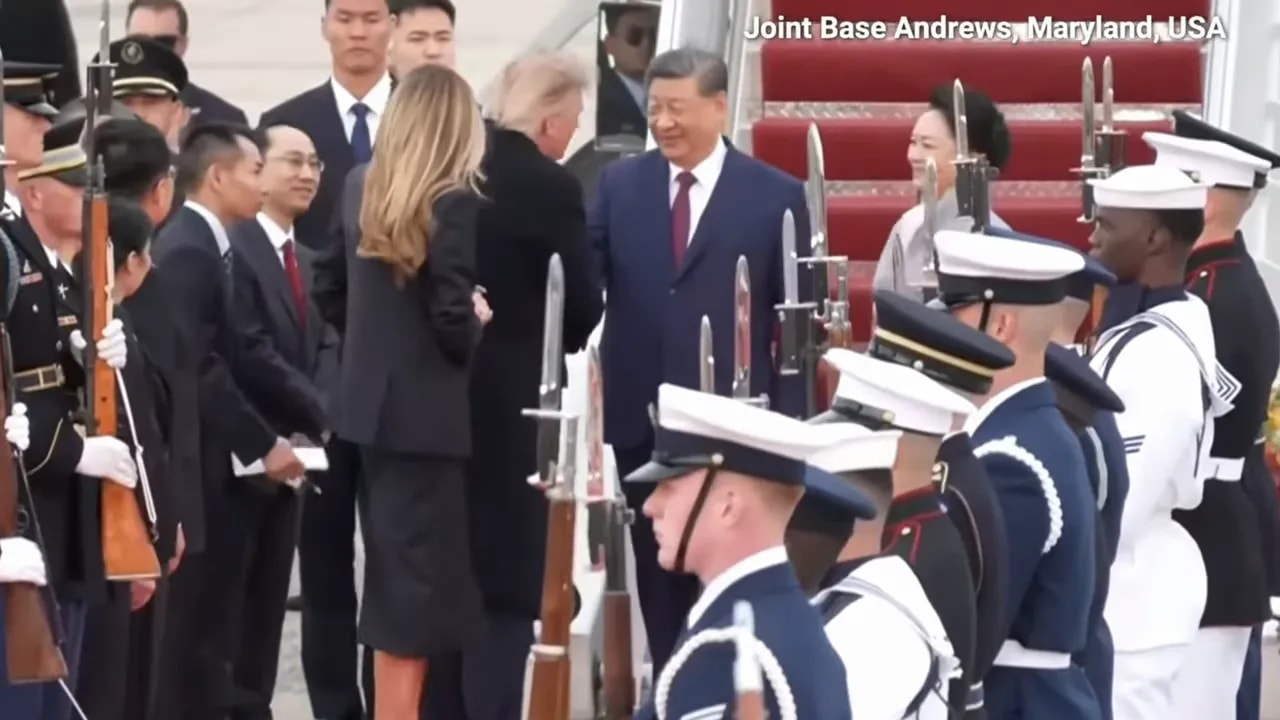
That image matters. For Beijing, it shows Xi being received personally by the American president. For Trump, it sets a cordial tone ahead of formal talks. But an unusually friendly arrival does not answer the question hanging over the visit: can either side turn a temporary pause into an agreement businesses and governments can rely on?
Treasury Secretary Scott Bessent said the trade truce would run until January 10, carrying it into 2027 and through two further international summits where Trump and Xi are expected to meet. That gives negotiators breathing room, though less than the three to six months some US officials had previously discussed. Bessent was hardly promising a breakthrough. “I don’t know whether a bigger deal can be done,” he told Fox News.
The existing truce dates to a Trump–Xi meeting in Busan, South Korea, the previous year. It suspended some steep tariffs and export restrictions imposed during the trade confrontation, along with substantial US port fees on Chinese-built and Chinese-owned ships. Extending those arrangements helps firms plan shipments and investment. It does not settle why the restrictions were imposed in the first place.
Rare Earths Remain the Test Case
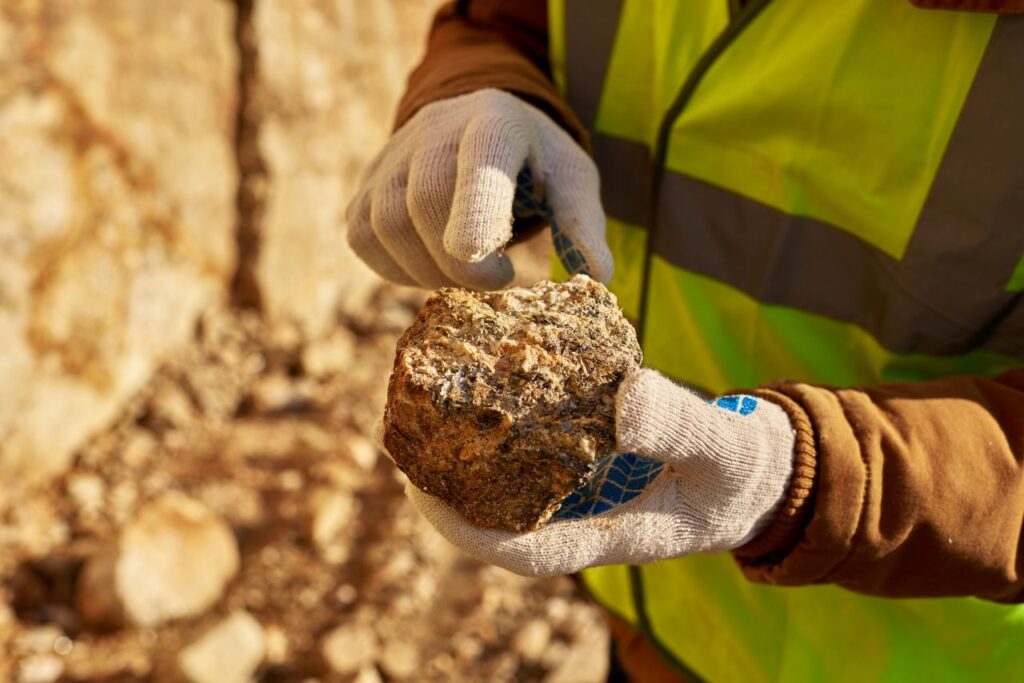
Rare earths illustrate the gap between a deal announced and a deal felt on the factory floor. China dominates the processing of these materials and the production of powerful magnets used in cars, electronics, and military equipment. Bloomberg reported that Chinese magnet exports to the United States remained well below their pre-truce levels. Bessent acknowledged that some Chinese commitments had “not been perfect".
That helps explain why a two-month extension could be attractive to Washington: it preserves the pause without giving up the option to apply pressure soon. Scott Kennedy of the Center for Strategic and International Studies described the extension as a minimum summit outcome that still leaves room for the leaders to negotiate something longer. Its limited duration could also signal dissatisfaction with China’s rare-earth offer.
There are possible bargains elsewhere. Trump wants more Chinese purchases of American agricultural products and aircraft. Officials are discussing communication on artificial intelligence, with Bessent reportedly proposing a direct channel for AI safety negotiations. At the same time, Senate Minority Leader Chuck Schumer has warned against easing restrictions on advanced US chips sold to China. Cooperation on AI safety and competition over AI hardware can coexist, but nobody should confuse one with a solution to the other.
Taiwan is harder still. Reuters reported that Xi was expected to press Trump on US arms sales to the island, drawing on Beijing’s interpretation of a 1982 US–China statement. Secretary of State Marco Rubio said any pause in sales would need to be considered alongside America’s own military needs. Republican senators have urged the administration to release stalled Taiwan assistance, while a Democratic senator warned against any impression of weakening US support.
Other developments show how easily the cordial mood could be disturbed. The Financial Times reported that Chinese authorities had taken possession of potentially sensitive F-35 aircraft parts diverted to Hong Kong while being shipped from Australia to the United States. Separately, the South China Morning Post reported tougher Chinese rules on fentanyl-related crimes ahead of Xi’s visit—potentially an opening for cooperation on a longstanding US concern.
Trump called the arrival “a great greeting", and Xi expressed confidence that the visit would produce “fruitful results". Both may sincerely want a steadier relationship. The test is whether Thursday’s White House talks produce more than another deadline. For a closer look at the trade, Taiwan, and military pressures surrounding summit diplomacy, see this earlier China geopolitics update.
China’s Nuclear Construction Raises a Different Kind of Deadline
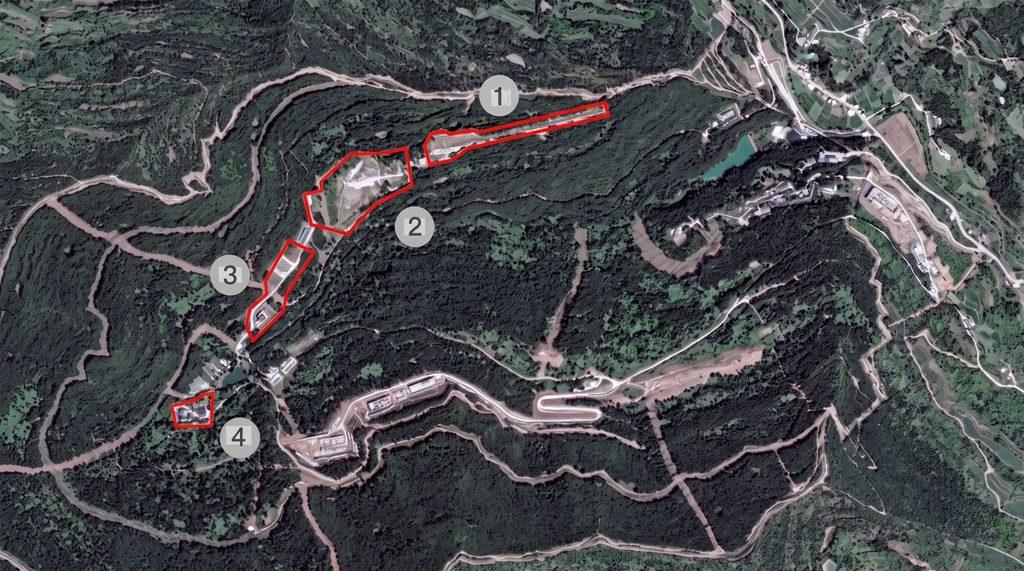
While the presidents talk trade, another source of mistrust is becoming harder to ignore. A Telegraph investigation examined satellite images of seven sites linked to China’s nuclear weapons programme and identified substantial construction at several of them. The reported work includes new worker housing and transport facilities at a site believed to produce components involved in initiating nuclear detonations. Experts believe a roughly 600-metre tube at another site could support weapons-related testing. The investigation also described construction at a laser-fusion research centre.
Here is the distinction that matters: satellite imagery can show that facilities are expanding. It cannot, by itself, establish how many weapons those facilities will produce—or precisely when. The United States still has a much larger nuclear arsenal. The concern is the speed of China’s expansion and the response it may provoke.
In a Carnegie Endowment paper discussed in the coverage, nuclear policy specialist Tong Zhao frames the danger as a security dilemma. Beijing may see a larger arsenal as protection against US military superiority. Washington sees an opaque buildup that could change the strategic balance. Each side’s attempt to make itself safer can then convince the other that it needs to do more.
That cycle could encourage further weapons development and increase pressure on other countries in the region to consider nuclear options. Zhao calls for more serious dialogue about intentions, military postures, and ways to stop a crisis from escalating. A comprehensive arms-control agreement looks unlikely in the near term. Clearer communication, however, does not require the two powers to settle every dispute first.
This is why the nuclear issue belongs beside the summit story rather than in a separate geopolitical box. A short trade truce can buy time. A worsening security dilemma can make that time less useful if each government grows more suspicious of what the other is building.
Chinese Firms Are Investing Abroad at Record Speed
There is also a less theatrical, but enormously consequential, response to global trade friction: Chinese companies are putting more money into operations beyond China. Official figures put outward direct investment at a record $213.58 billion in 2025, up 11.1% from the year before and above the previous peak set in 2016.
An annual bulletin from China’s Ministry of Commerce, National Bureau of Statistics, and State Administration of Foreign Exchange said China accounted for 11.5% of global outward direct investment flows, returning to second place worldwide after a two-year absence. By the end of 2025, its accumulated outward investment stock had reached $3.4 trillion. Chinese investors had established about 58,000 enterprises across 189 countries and regions, employing 4.76 million people—including 2.97 million staff outside China.
Those are striking numbers. More revealing is what companies are doing with the money. Chinese financial media reporting described a shift away from the debt-financed purchases of prominent Western assets associated with the previous investment boom. More firms are building or acquiring operations in Asia to protect supply chains, serve overseas customers, and maintain access to markets affected by tariffs and other barriers.
In other words, this is not just a story about acquiring assets abroad. It is about reorganising where production and business activity happen when cross-border trade becomes less predictable. Investment remains concentrated in business services, wholesale and retail, manufacturing, and finance. Officials also point to growing activity in green industries, digital technology, and minerals needed for the energy transition.
Beijing, however, wants overseas expansion without losing control of strategically important capabilities. State Council rules governing outward investment took effect on July 1, 2026. They set requirements for risk management and compliance with overseas laws, include measures intended to protect Chinese assets against seizures and sanctions, and require investment to remain consistent with domestic industrial-security goals.
There is the balancing act: Chinese firms need global customers and production networks, while the state wants critical industries and supply chains anchored to its own priorities. Record outward investment therefore signals both commercial ambition and adaptation to a more difficult trading environment. It is another reason a two-month tariff reprieve, useful as it is, cannot resolve the wider economic contest. That same tension between market access and strategic control runs through China’s broader economic and technology pressures.
Japan and China Clash Over the UN’s “Enemy State” Clauses
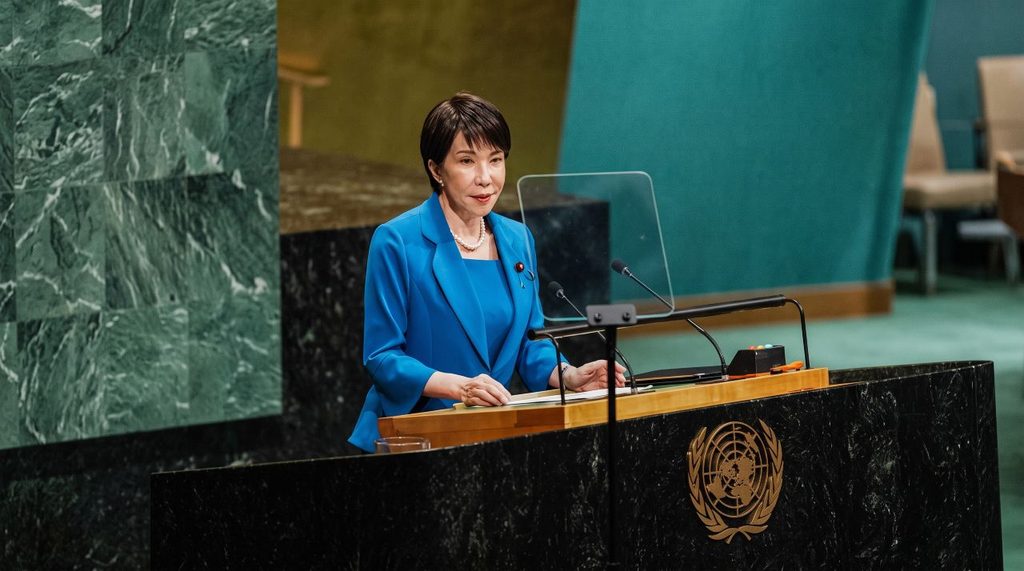
Finally, an old piece of legal language has become a new diplomatic weapon. Japanese Prime Minister Sanae Takaichi urged the United Nations to remove World War II-era references to Japan and Germany as “enemy states” from its founding charter. In her first address to the UN General Assembly, she said the clauses should be deleted “without delay".
The provisions are widely considered obsolete. UN members agreed as much in 1995 and reaffirmed their intention to remove them in 2005. Yet the wording remains in the UN Charter because amending that document requires a demanding ratification process, including approval by all five permanent members of the Security Council.
Ordinarily, this might sound like a slow-moving exercise in institutional housekeeping. The dispute over Taiwan has made it something else. Takaichi said last November that a Chinese invasion of Taiwan could pose an existential threat to Japan. Beijing demanded a retraction and accused Tokyo of reviving militarism as Japan expands its armed forces.
China’s foreign ministry has recently argued that the enemy-state clauses remain valid. Commentary in the military-run PLA Daily went further, suggesting they could provide grounds for action against a “resurgence of Japanese militarism". This is a disputed political and legal interpretation, not a straightforward finding that the charter gives China a free-standing right to wage war on Japan. It also contrasts with Beijing’s earlier support for removing the provisions. Russia has raised concerns about Japan’s military buildup too.
Takaichi points to Japan’s seven decades of contributions to the UN. But the argument is not ultimately about editing a document. Japan sees a potential conflict over Taiwan, close to its southern islands, as a major security threat. Tokyo was considering a plan to raise defence spending to around 3.5% of GDP over the next decade.
She also met Trump in New York ahead of his summit with Xi. Takaichi said they discussed China and that US–China relations should contribute to regional stability. The concern for Tokyo is obvious: decisions made between Washington and Beijing could directly affect Japan’s security, whether or not Japan has a seat at their negotiating table.
The Welcome Is Real. So Are the Limits.
The airport greeting gave Trump and Xi a useful moment of goodwill. The trade extension gave businesses a little more certainty. Neither should be dismissed. Diplomacy often begins with modest steps, and two additional months without renewed escalation are better than the alternative.
But this week’s developments show why goodwill is not the same thing as trust. Rare-earth deliveries and chip restrictions remain unresolved; Taiwan hangs over both the summit and Japan’s security debate; nuclear construction feeds mutual suspicion; and Chinese firms are restructuring their overseas presence around a world of persistent trade barriers. The coming White House talks may produce a bigger agreement. Until they do, the most accurate description of US–China stability is not "restored". It is “extended until January".
Frequently Asked Questions
When does the US–China trade truce expire?
The extension runs until January 10, 2027. It preserves a pause in some tariffs, export restrictions, and US port fees but does not resolve the underlying disputes.
Why are rare earths so important to the talks?
China dominates rare-earth processing and the production of powerful magnets used in vehicles, electronics, and military equipment. Reported magnet exports to the US remained below pre-truce levels, raising questions about how fully the arrangement is working.
Does the UN Charter authorise China to declare war on Japan?
Beijing has argued that the charter’s old “enemy state” clauses remain valid, but that is a contested interpretation—not an established, automatic authorisation for war. UN members have agreed that the provisions are obsolete, though they have not completed the process needed to remove them.