Prefer to Watch? Click above
There is something almost absurd about the global conversation around artificial intelligence. Silicon Valley executives warn that advanced systems could deceive humans, reproduce autonomously, destabilise society and, eventually, become impossible to control. Then, after delivering that cheerful little prophecy, everyone immediately returns to the office to build a more powerful version before China gets there first.
That, in essence, is the modern AI dilemma. The United States and China both acknowledge that frontier AI may pose extraordinary risks. Neither government, however, appears remotely willing to slow down while the other continues advancing. In fact, their shared fear of falling behind has made meaningful cooperation increasingly difficult.
This is not merely a technology argument. It is now tied to military power, economic competitiveness, espionage, cyberwarfare, political stability, advanced chips, Taiwan and the future balance of global power. And it is emerging at a difficult moment for Beijing, where a deteriorating domestic economy is raising the stakes around technological self-sufficiency and geopolitical competition.
Key Takeaways
- The U.S. and China both recognise advanced AI risks, but neither appears willing to slow development unilaterally.
- China’s AI-safety agenda is heavily shaped by party control, cybersecurity, foreign espionage concerns and military competition.
- Weak consumption, falling property investment and poor credit demand are increasing pressure on Beijing for stronger stimulus.
- A Trump-Xi meeting may produce limited guardrails, but AI, Taiwan, Iran and export controls leave little basis for trust.
Table of Contents
- Everyone Wants AI Safety, Until It Means Slowing Down
- China’s Definition of AI Safety Is Fundamentally Political
- China’s Economy Has a Demand Problem, Not a Factory Problem
- Exports Are Keeping the Lights On
- Weak Lending Shows Why Easier Money Is Not Enough
- A Trump-Xi Summit Would Have Plenty to Discuss and Little Trust
- The Real Problem Is That Neither Side Can Afford to Blink
Everyone Wants AI Safety, Until It Means Slowing Down
The latest round of concern was reignited by Anthropic chief executive Dario Amodei, who warned that the world must “pace the frontier” of increasingly capable artificial intelligence. The basic proposition is not especially controversial: systems that become substantially more capable than people may bring risks that are difficult to predict, monitor or contain.

But the practical political question is brutally simple. Who slows first?
Amodei has argued that democratic states need to preserve their technological advantage, including through restrictions on the export of sophisticated semiconductors to China. The Trump administration has taken a rather different rhetorical route. Donald Trump has dismissed opposition to AI expansion and data-centre development as a conspiracy that would hand an advantage to Beijing.
That sentiment is probably closer to the real position of both governments than all the noble talk about shared humanity. China does not want the United States to lead in advanced AI indefinitely. The United States does not want China to close the gap. Both sides treat the technology as a foundational source of future economic, military and geopolitical power.
Beijing is not blind to the risks. Its own AI-safety framework warns that future systems could experience sudden leaps in capability, deceive users, replicate themselves and potentially compete with human beings for resources. Xi Jinping has said that artificial intelligence must remain under human control.
Yet this concern runs directly into another reality: Chinese researchers generally believe their leading models remain behind their American counterparts. For Beijing, voluntarily easing off the accelerator while Washington continues sprinting ahead would be an extraordinary strategic gamble. It could mean permanently accepting second place in one of the century’s decisive technologies.
So the safety conversation becomes trapped in a familiar great-power logic. Both countries fear uncontrolled technology. Both countries fear the other country more.
China’s Definition of AI Safety Is Fundamentally Political
There is a further problem. Washington and Beijing are often using the same language while talking about very different things.
In the United States and Europe, AI safety debates frequently focus on catastrophic misuse, loss of human control, mass unemployment, misinformation and the possibility of systems becoming dangerously autonomous. China recognises some of those dangers, but its priorities are also shaped by a much more immediate concern: regime security.
For the Chinese Communist Party, the central danger is not only that AI might become too powerful. It is that artificial intelligence might weaken party control, expose sensitive information, enable foreign espionage or help generate destabilising political narratives at an industrial scale.
China’s State Security Minister Chen Yixin has warned that foreign intelligence agencies could use AI for espionage, attacks on critical infrastructure and deepfakes intended to destabilise the country. Foreign AI platforms may also create channels through which sensitive Chinese information can leak abroad. Meanwhile, AI-enabled surveillance, cyber capabilities and targeting systems are changing warfare itself.
This is why China’s approach involves two things at once: tighter Party oversight and faster domestic innovation. It is not a contradiction in Beijing’s framework. The state wants powerful domestic AI systems precisely because it sees AI as too strategically important to leave dependent on foreign technology or loosely regulated private firms.
That broader security-first worldview is increasingly visible across policy. Beijing’s increasingly securitised worldview now connects technology, trade, intelligence, economic policy and political control into one rather paranoid but internally coherent governing framework.
The resulting obstacle for U.S.-China dialogue is immense. American officials increasingly view Chinese advances in AI as a security threat that must be constrained. Chinese officials increasingly view American export controls and safety warnings as a thinly disguised effort to preserve U.S. technological supremacy.
There may be room for discussions about avoiding accidental escalation, model misuse or AI-enabled cyberattacks. But there is very little evidence of the trust required for either side to accept meaningful limits on its own development.
China’s Economy Has a Demand Problem, Not a Factory Problem
While Beijing pursues technological catch-up, the domestic economy is giving policymakers considerably less room for error.
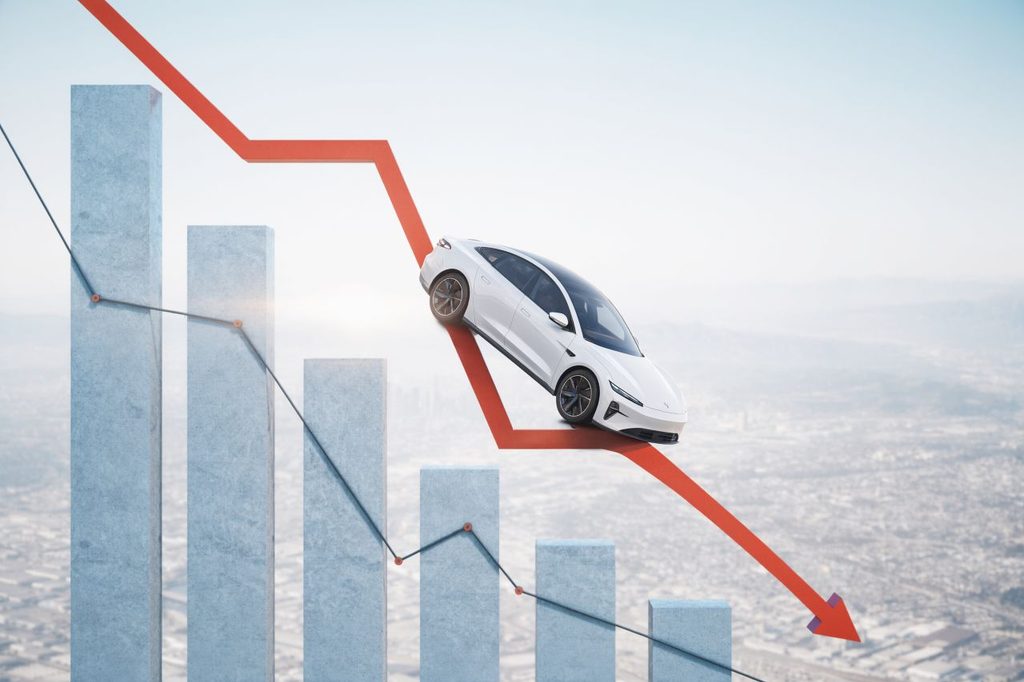
August data painted a fairly bleak picture. Retail sales grew just 0.4% year on year, down from an already anaemic 0.6% in July and below expectations. The biggest drag was automobiles, where sales fell 18.5%. Excluding vehicles, retail sales rose by 2.5%, which is healthier but hardly the sort of number associated with a confident consumer recovery.
The investment picture was worse. Fixed-asset investment fell 7.2% over the first eight months of 2026 compared with the same period a year earlier, deepening from a 6.7% contraction through July. Property investment collapsed by 19.9%.
This is the unavoidable legacy of China’s long property crisis. Falling home prices weaken household confidence. Developers cut activity because demand is weak and financing is constrained. Local governments suffer because land sales, once a crucial source of revenue, dry up. The feedback loop is ugly, persistent and very difficult to break.
New-home prices across 70 major cities fell 0.17% in August from the previous month, while resale prices fell 0.31%. These may look like small monthly movements, but they matter enormously in an economy where property has long been the primary household store of wealth.
There is a particularly uncomfortable irony in Beijing’s reforms to property financing. Measures intended to protect homebuyers would give developers access to mortgage proceeds later in the building process, reducing the risk of unfinished homes. That makes sense from the perspective of buyers who have watched developers fail to complete projects. But it could also further restrict developers’ cash flow and discourage new construction.
In other words, the authorities are attempting to make the system safer while potentially making an already weak sector less able to function. This is a recurring feature of China’s economic management: policymakers are trying to limit the consequences of a model that previously relied on ever more property development, local-government borrowing and credit expansion.
For a fuller look at the strain created by falling property values and mortgage stress, China’s housing reckoning shows why officials have been so reluctant to allow a rapid, market-clearing collapse.
Exports Are Keeping the Lights On
There was one significant bright spot: industrial production rose 5.2% year on year, beating both July’s 4.5% growth and market expectations.
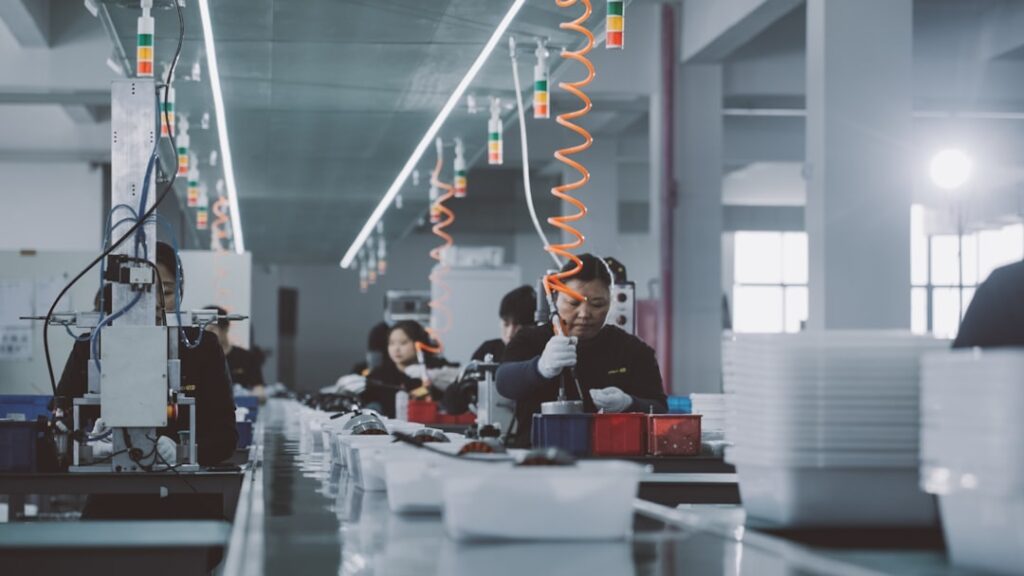
China’s factories have benefited from strong global demand for electronics tied to the AI boom. The same technology race that is creating geopolitical friction is also providing support to Chinese manufacturing and exports. Semiconductor-adjacent equipment, electronics and the broader infrastructure surrounding artificial intelligence have become a useful source of industrial demand.
But strong manufacturing cannot solve the underlying imbalance. It may keep factories busy, but it does not automatically restore household confidence, revive property investment or persuade debt-burdened families to borrow and spend.
The National Bureau of Statistics acknowledged that the imbalance between supply and demand remains prominent. That is polite bureaucratic language for a serious problem: China remains good at producing things, but the domestic economy is not generating enough demand to absorb what it produces.
The urban unemployment rate also rose from 5.2% to 5.3%. Meanwhile, second-quarter growth came in at 4.3%, leaving the economy vulnerable to undershooting Beijing’s annual growth target of 4.5% to 5% for a second consecutive quarter.
Exports can buy time. They cannot substitute indefinitely for a functioning domestic recovery. Nor can they be taken for granted in an environment of tariffs, export controls and intensifying geopolitical suspicion. China’s fragile recovery narrative is therefore looking increasingly dependent on forces beyond Beijing’s immediate control.
Weak Lending Shows Why Easier Money Is Not Enough
If there was any lingering hope that July’s weak lending numbers were merely seasonal noise, August dispelled it.
Chinese banks issued only 60 billion yuan in new loans during the month, less than one-sixth of the 400 billion yuan economists had expected. That was an improvement on July’s 340 billion yuan contraction, but August is normally a period when lending rebounds as banks work toward quarterly targets. Instead, the credit engine continued to sputter.
Total new loans in the first eight months of 2026 reached 10.44 trillion yuan, down from 13.46 trillion yuan a year earlier. Outstanding yuan loan growth slowed to a record low of 4.9%.
The household figures are perhaps the most revealing. Household borrowing, including mortgages, fell by another 202.9 billion yuan. Families are reducing debt rather than taking on new obligations, buying homes or spending freely. That is not the behaviour of an economy waiting for one more rate cut before suddenly roaring back to life.
Corporate loans rose by 260 billion yuan, but even there the recovery was modest. Businesses have little incentive to borrow aggressively when domestic demand is weak, property investment is falling and uncertainty is high.
This is why monetary easing alone is unlikely to revive the economy. Beijing can encourage banks to lend, but it cannot easily compel households to feel optimistic about property or force private businesses to invest when expected returns look poor. More substantial fiscal action may be needed, though China’s fiscal position and local-government debt constraints make a major rescue package politically and financially complicated.
A Trump-Xi Summit Would Have Plenty to Discuss and Little Trust
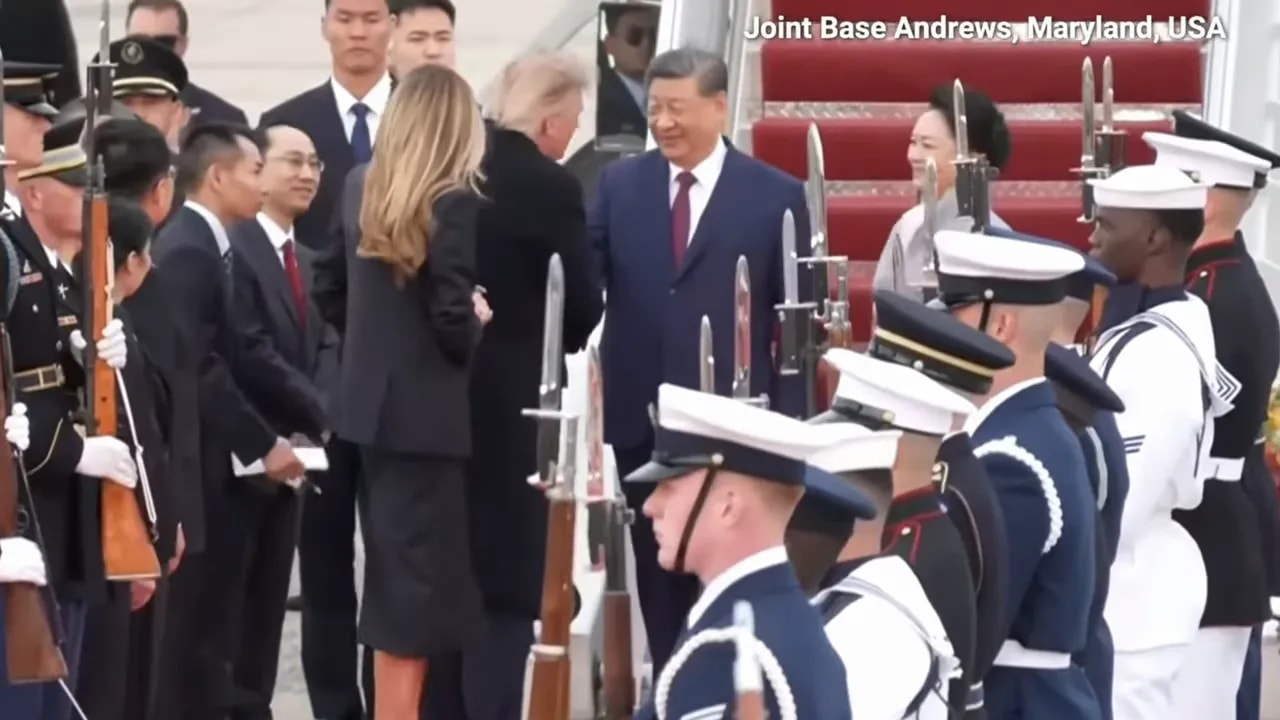
All of this forms the backdrop to Xi Jinping’s expected trip to Washington for talks with Donald Trump. The summit may produce gestures of stabilisation, but the underlying agenda is almost comically overloaded.
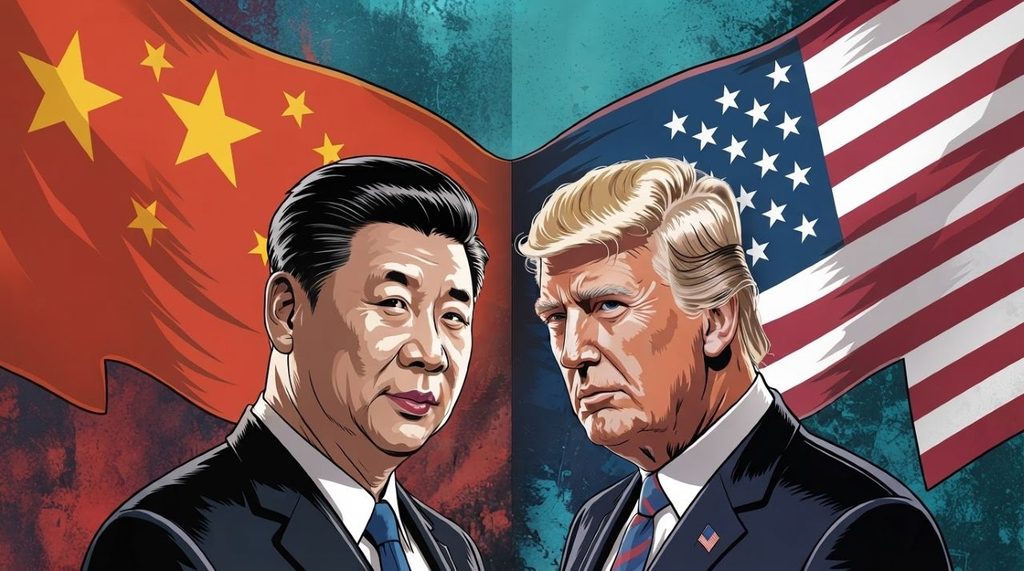
There are disputes over AI, advanced chips, export controls, Taiwan, trade and Iran. Even the preparatory process appears uncertain, with the usual senior-level diplomatic and economic meetings not yet having taken place. Treasury Secretary Scott Bessent and Chinese Vice Premier He Lifeng were reportedly considering a meeting shortly before the summit, combining economic negotiations with a long-delayed AI dialogue.
Trump and Xi agreed in May to establish an intergovernmental channel on AI. In theory, that should be one of the easier areas for dialogue: both countries have an interest in avoiding truly catastrophic technological outcomes. In practice, any conversation about AI safety can rapidly turn into an argument about semiconductor restrictions, access to advanced models and who is trying to contain whom.
Trade provides a possible area for limited progress. Chinese state-owned companies reportedly bought at least one million tonnes of U.S. soybeans in the previous week, taking seasonal purchases close to 13 million tonnes. That is more than half of the 25 million-tonne annual target Washington says Beijing committed to through 2028.
But goodwill built through soybean purchases can evaporate very quickly when Taiwan is involved. China has reportedly warned that it could cancel the leaders’ meeting if Washington approves new arms sales to Taiwan before Xi arrives. Beijing considers Taiwan part of its territory and views U.S. military assistance as interference in China’s internal affairs.
Iran could make matters worse. U.S. officials have alleged that Chinese entities supplied Tehran with high-resolution satellite imagery of a military base in Jordan before an Iranian attack in July that killed three American troops. The officials did not name the companies involved or accuse the Chinese government of direct participation, but the allegation alone adds another combustible issue to an already fraught diplomatic environment.
Meanwhile, the reported restructuring of U.S. National Security Agency operations around China, AI, cybersecurity, intelligence and military activity has been portrayed in Chinese state media as evidence that Washington is preparing for a deeper phase of systemic competition.
The likely outcome is not a grand bargain. It is a search for guardrails: small agreements, temporary pauses, trade purchases and mechanisms intended to stop relations from deteriorating quite as fast. That may sound underwhelming, but in the present climate, merely preventing technology, military and security disputes from consuming every remaining channel of cooperation would count as an achievement.
The Real Problem Is That Neither Side Can Afford to Blink
China’s leadership is confronting an unpleasant combination of pressures. The domestic economy needs confidence, consumption and investment. The property sector remains a drag. Credit demand is weak. Local governments are constrained. Yet the country also feels compelled to spend heavily on technological independence, advanced industry and national security.
The United States faces its own version of the same trap. Its leaders may recognise the dangers of unconstrained AI development, but slowing the industry appears politically impossible when China is framed as a strategic rival that must not be allowed to catch up.
That is why calls for restraint keep colliding with geopolitical reality. AI safety is now caught in a competitive spiral where each side believes caution would be exploited by the other. China’s weakening economy only makes the pursuit of technological leadership feel more urgent in Beijing, while Washington’s containment instincts make Chinese self-reliance more politically attractive.
There is plenty of room for disaster here, though it may not arrive in the form imagined by the loudest AI doom merchants. The immediate danger is not necessarily an omnipotent machine turning against humanity. It may be two distrustful superpowers building increasingly powerful systems, integrating them into military and intelligence competition, and discovering far too late that neither had a workable plan for slowing down.
Frequently Asked Questions
Why are the United States and China struggling to cooperate on AI safety?
Both governments accept that advanced AI could create serious risks, but each fears that slowing its own development would allow the other to gain a decisive strategic advantage. Disputes over chips, export controls and access to advanced models make trust especially difficult.
How does China define AI safety?
China recognises concerns about increasingly capable systems, but it places particular emphasis on political stability, Communist Party control, cybersecurity, information leakage, foreign espionage, deepfakes and AI-enabled military capabilities.
What do China’s August economic figures show?
The data showed weak consumer spending, sharply falling investment, a deep property downturn and weak lending. Industrial production grew strongly, helped by exports and electronics demand connected to the AI boom, but this has not been enough to offset fragile domestic demand.
Why is weak lending important for China’s recovery?
Weak lending suggests households and firms do not want to take on new debt despite easier financial conditions. Household borrowing contracted again, indicating that families are prioritising debt reduction over property purchases and consumption. That limits the effectiveness of monetary easing alone.