China has a remarkable ability to generate two entirely different realities at once. In the official version, the country is steadily advancing towards technological self-reliance, industrial supremacy and geopolitical influence. In the less polished version, Beijing is juggling a fresh wave of Xi Jinping health rumours, an expensive struggle to replace American AI hardware, a car industry producing vastly more vehicles than it can sell, and an energy shock that threatens to turn deflation into something much nastier.
Prefer to Watch: Click Above
None of these problems exists in isolation. They are all expressions of the same uncomfortable truth: China’s leaders want stability, growth and strategic independence, but each objective is increasingly making the others harder to achieve.
Key Takeaways
- Fresh claims that Xi Jinping is seriously ill remain uncorroborated and fit a long pattern of unreliable social media speculation.
- Huawei’s Ascend chip roadmap demonstrates China’s AI ambitions, but export controls and supply-chain constraints still limit its ability to challenge Nvidia in frontier training.
- China’s auto overcapacity cannot be solved by corporate reshuffling alone while domestic consumption remains weak and closures remain politically difficult.
- Rising oil prices and disrupted shipping routes are turning the Iran conflict into a direct threat to China’s energy security, exports and inflation outlook.
Table of Contents
- Another Xi Jinping illness rumour, and the problem with Beijing’s secrecy
- Huawei’s Ascend 960 shows how serious China is about AI self-reliance
- China’s car industry has a production problem, not a merger problem
- Iran’s war is becoming China’s economic problem
- China’s leadership is running out of easy trade-offs
Another Xi Jinping illness rumour, and the problem with Beijing’s secrecy
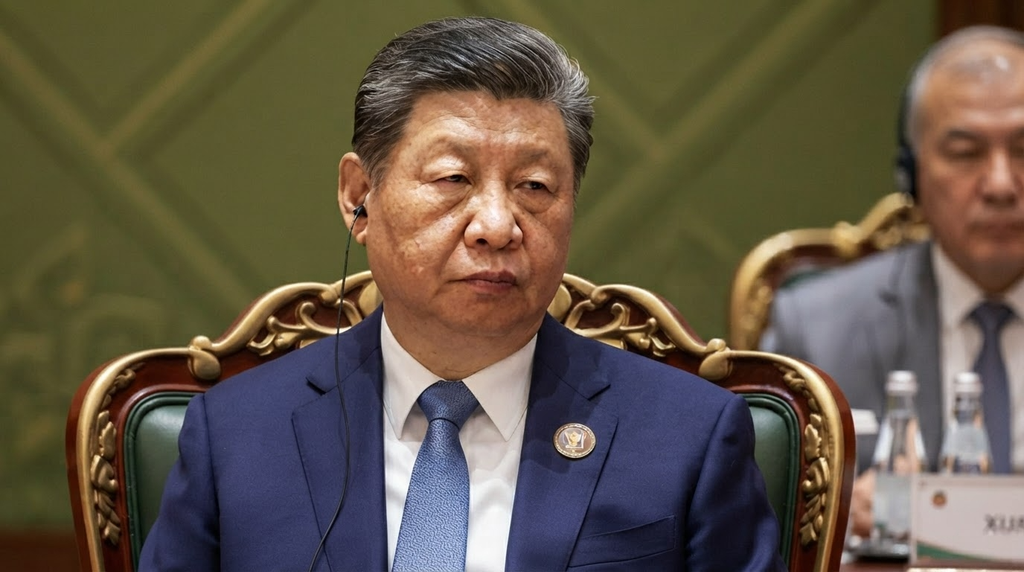
A new claim circulating on social media alleges that Xi Jinping was seriously ill after returning from India, supposedly requiring transport to Beijing’s 301 Hospital by military helicopter. The story comes packaged with the usual flourishes: no welcoming ceremony, no motorcade, no road closures and vague claims that the military may have taken responsibility for Xi’s security. There is currently no credible evidence to support any of it.
No reputable news organisation, official source or independently verifiable account has corroborated the claims. Contacts in Beijing have reportedly not identified any reliable basis for the story either. And this is important because the internet has been producing variations of “Xi is sick", “Xi has been removed", and “Xi has lost the military” for years. They almost always emerge from speculative social media accounts, get shared by people desperate for a dramatic Beijing collapse narrative, and then quietly disappear when reality fails to cooperate.
That does not mean senior Chinese leaders are immortal, healthy, or immune from internal political struggle. It means the evidentiary standard matters. China’s political system is famously opaque. The health of top leaders is treated as a state secret, irregular public appearances invite forensic analysis, and even minor changes in protocol can trigger a week of feverish speculation.
But secrecy is not proof. An absence of confirmed information cannot simply be filled with the most exciting possible explanation.
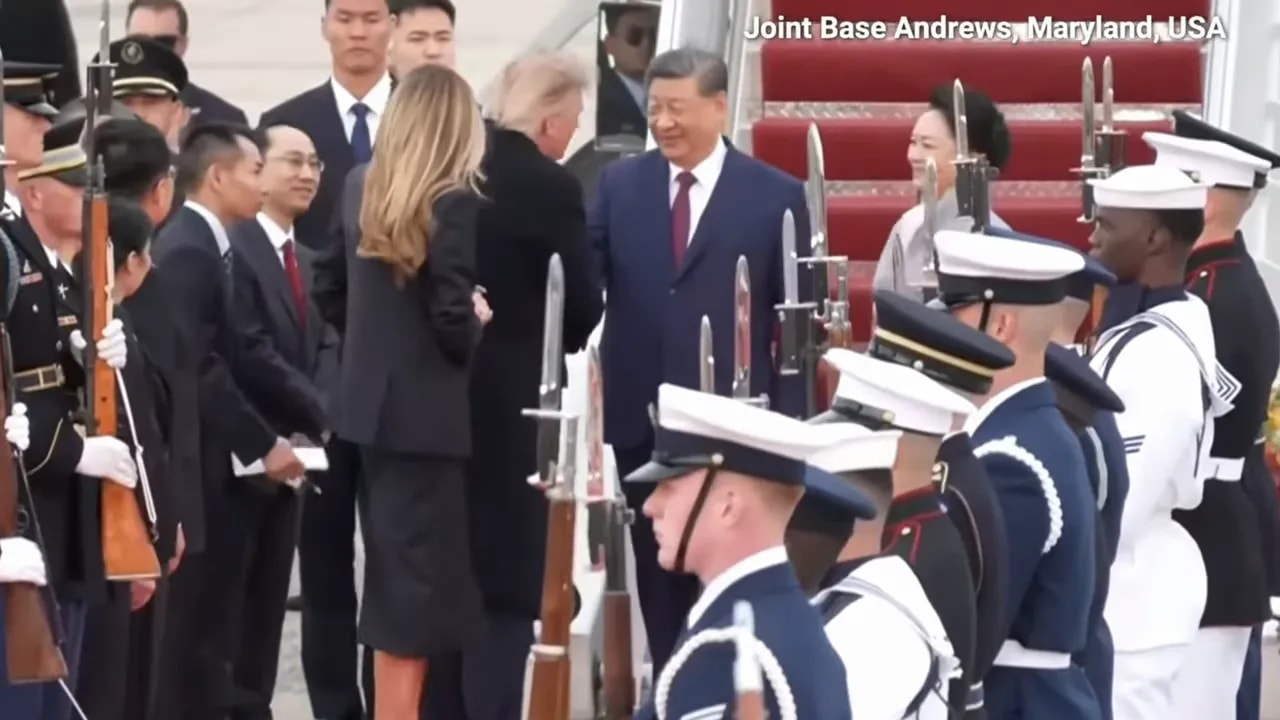
There is also a practical reason to remain sceptical. Xi was expected to travel to Washington soon for a meeting with US President Donald Trump, while Vice Premier He Lifang was due to conduct high-level talks in the United States with Treasury Secretary Scott Bessent and Trade Representative Jamieson Greer. If Xi were genuinely critically ill, the continuation of such summit-level preparations would be rather difficult to explain.
Chinese politics is opaque enough without treating every anonymous X account as an intelligence service with a Wi-Fi connection.
Huawei’s Ascend 960 shows how serious China is about AI self-reliance.
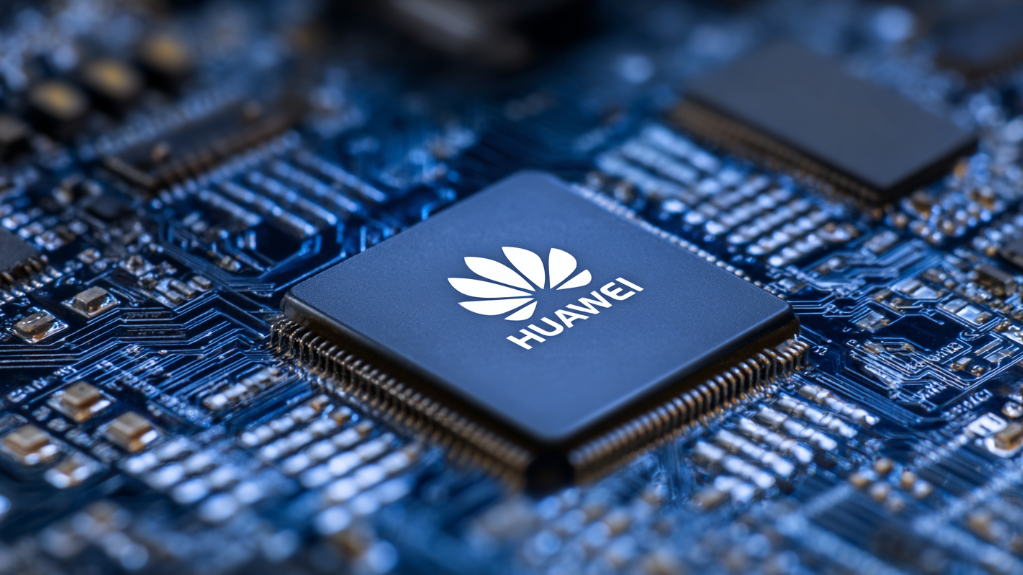
While social media churns through palace intrigue, Beijing’s technological competition with Washington is becoming much more concrete. Huawei is preparing to unveil its Ascend 960 artificial-intelligence processor, the latest part of China’s enormous effort to reduce dependence on US technology.
The company expects the Ascend 960 to reach the market in 2027, followed by the Ascend 970 in 2028. Huawei says each generation will deliver twice the computing power of the preceding one. That is an ambitious claim, and it reflects the extraordinary political pressure behind China’s domestic semiconductor push.
The central question is not merely whether Huawei can make an AI chip. It plainly can. The harder question is whether Chinese chips can train frontier models at a level that competes meaningfully with Nvidia’s leading products.
Chinese technology firms still rely heavily on Nvidia hardware when training their most advanced AI systems. Domestic processors are increasingly used for inference—the process of running trained models—but frontier training requires immense computing capacity, high-bandwidth memory, advanced networking and sophisticated software. This is where China still faces serious bottlenecks.
Huawei is gaining ground nonetheless. DeepSeek reportedly plans to install at least 160,000 Ascend 950DT chips at a data centre in Inner Mongolia, a substantial signal of confidence in Huawei’s ecosystem. The company is also exploring overseas opportunities in Malaysia and Egypt as Beijing attempts to turn domestic technological necessity into international infrastructure influence.
But the chip race is not being won with press releases. Huawei remains constrained by limited access to advanced foreign manufacturing tools and high-performance memory. Demand has reportedly been so strong that the company raised Ascend 950DT prices by 60%, partly to compensate for weaker performance at the individual-chip level.
Huawei’s answer is to compete at the system level. Rather than relying exclusively on a single hyper-powerful processor, it is working on systems linking as many as 100,000 chips. Better packaging, networking and software may narrow Nvidia’s advantage across an entire computing cluster, even if Huawei remains behind in the performance of a single chip.
That strategy may work in some applications. But it is expensive, technically difficult and dependent on precisely the components and expertise that export controls are designed to restrict. China’s AI ambitions are therefore advancing, but under conditions that make every incremental gain more costly.
The wider implications of this technology squeeze are explored in this analysis of China’s fragile recovery and AI chip constraints. The core problem is increasingly clear: China can mobilise vast resources, but money and political urgency cannot instantly recreate the global semiconductor supply chain.
China’s car industry has a production problem, not a merger problem.
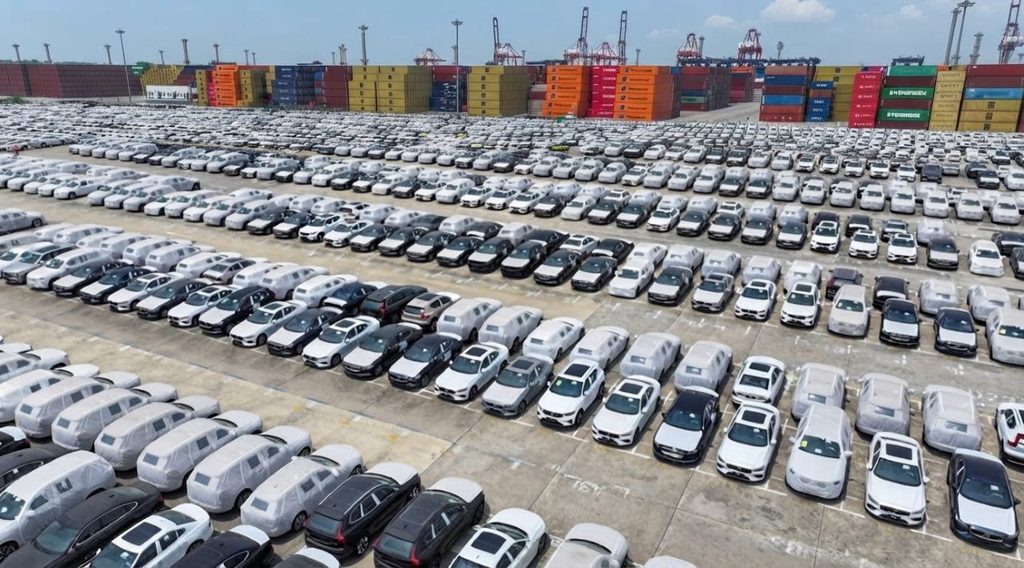
Beijing has also been searching for a politically painless way to tackle the chronic overcapacity engulfing the world’s largest automobile market. Guangzhou Automobile Group, better known as GAC, has announced plans to acquire FAW Group’s stake in an unspecified vehicle-manufacturing venture, paying with newly issued GAC shares.
The likely target is a consolidation of the two groups’ Toyota joint ventures. Both state-owned companies manufacture Toyota vehicles in China, and combining overlapping operations could reduce duplicated capacity without forcing either GAC or FAW to disappear.
That is politically significant. Previous attempts to merge competing state-owned automakers have often failed because China’s industrial system is not simply a collection of companies. It is an ecosystem of local governments, provincial interests, jobs, tax revenues and patronage networks. Closing a plant may be economically sensible, but it also means fewer local jobs, less investment and an angry government somewhere with sufficient influence to make the proposal vanish.
Under the proposed arrangement, FAW—based in Changchun—would become GAC’s second-largest shareholder. S&P Global Ratings has described the transaction as a potential model for cross-regional state-owned-enterprise integration. Investors initially liked the idea, sending GAC shares sharply higher before the stock ended the day up 2.6% in Hong Kong.
But a stock-market pop is not a cure for an industrial glut.
China’s auto sector has annual capacity exceeding 55 million vehicles, while domestic sales last year were less than half that level. The outcome is entirely predictable: price wars, worsening profitability and a relentless push into foreign markets. China exported more than 7 million vehicles, while industry profits fell 20% in the first half of the year as manufacturers slashed prices to preserve market share.
Foreign brands are especially exposed. Toyota’s Chinese sales dropped 24% in July, its sixth consecutive monthly decline, as local manufacturers offered increasingly competitive electric and hybrid models. The old foreign-brand advantage in reliability, scale and technology is being eroded at astonishing speed.
Still, consolidating two Toyota ventures does not address the structural issue. As Peking University finance professor Michael Pettis has argued, a domestic supply glut can be resolved only by exporting more or reducing domestic production if consumption does not rise. And reducing production means allowing investment to fall, plants to close and workers to lose their jobs.
That was never an administrative puzzle. It was a political choice.
Beijing can create new corporate structures, shuffle ownership and advertise “anti-involution” policies until the ministry stationery runs dry. But unless it permits meaningful contraction or finds a way to lift domestic consumption, overcapacity will remain embedded in the model. Exporting the surplus may offer temporary relief, but it is also inviting more trade barriers and political backlash abroad.
This is why Beijing’s recent acknowledgement that export-led growth is unsustainable matters so much. China’s own debate over exports, weak services and the Iran conflict captures the bind well: reducing output hurts growth, increasing investment can worsen excess capacity and debt, while building consumer demand requires reforms the leadership has repeatedly avoided.
Iran’s war is becoming China’s economic problem.
China’s immediate worries are not confined to factories and data centres. Foreign Minister Wang Yi has urged Iran and the United States to return to negotiations as the Middle East conflict threatens China’s energy supply, export economy and already vulnerable recovery.
Wang made the appeal during talks in Beijing with Iran’s foreign minister, shortly before the anticipated Xi-Trump summit. China has encouraged Tehran and Washington to exercise restraint, revive negotiations under the Islamabad Memorandum of Understanding, and restore safe passage through the Strait of Hormuz.
These are not merely routine calls for peace. China is deeply dependent on imported energy, and it also depends on open sea lanes to sell manufactured goods around the world. A wider conflict spreading towards Yemen and the Red Sea would hit both sides of that equation at once.
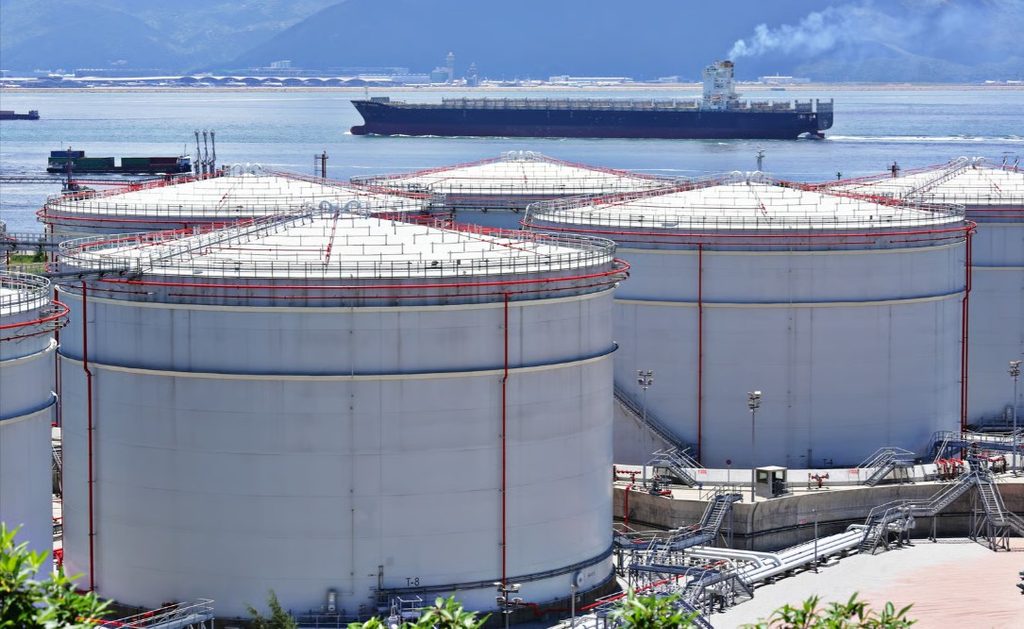
The pressure is already showing up in prices. Shanghai oil futures reached a record $129 a barrel after attacks by Iran-backed militants forced Saudi Arabia to close a major pipeline carrying exports to the Red Sea. Prices rose 14% in a matter of days, surpassing the previous peak seen in the initial weeks of the Iran war.
China’s strategic crude reserves gave Beijing a cushion during the first phase of the shock. Yet stockpiles are not a magic oil well. In August, Chinese refinery throughput exceeded the combined supply from imports and domestic production by roughly 640,000 barrels a day. It was the third month out of four in which refiners drew on inventories.
That matters because China has been struggling with weak demand and deflationary pressure. Rising oil costs could push the country towards cost-driven inflation instead: an uglier scenario in which transport, manufacturing and household costs rise without a healthy recovery in consumption.
The People’s Bank of China would then face a more difficult balancing act. Conventional monetary easing becomes less straightforward when energy costs are feeding inflation, even if the broader economy remains weak. Meanwhile, a global petrochemical price surge could weaken foreign demand for Chinese exports at precisely the moment domestic firms are trying to send even more goods overseas.
Beijing therefore has to balance competing interests. Iran is China’s largest oil customer and an important strategic partner. A distracted United States fighting a costly Middle Eastern conflict might once have looked geopolitically convenient. But disrupted energy markets, unsafe shipping lanes and higher industrial costs are now making that calculation look considerably less clever.
The consequences of this strain extend beyond crude prices. The economic fallout from Hormuz disruption shows how energy and commodity shocks can cascade through petrochemicals, logistics, aviation, industrial production and financing conditions.
China’s leadership is running out of easy trade-offs.
These developments may look disconnected: an unsupported illness rumour, a Huawei processor, a state-owned automaker deal and a diplomatic appeal to Iran. But they all reveal the enormous difficulty of governing an economy that must become more technologically independent, more consumption-driven, less indebted, less dependent on exports and more resilient to geopolitical shocks—all while maintaining stability.
Huawei’s chip programme is a costly response to American pressure. Auto-sector consolidation is a cautious response to a domestic glut that leaders do not want to solve through closures and layoffs. Calls for Middle East de-escalation are a response to energy prices that could undermine the entire recovery narrative.
And the Xi rumours, while unsupported, are a reminder of another problem: a political system that provides so little reliable information that every unexplained detail can become raw material for conspiracy. The correct response is neither blind faith nor gullibility. It is sober attention to evidence, incentives and the things Beijing is actually doing.
Right now, what Beijing is doing looks like a government trying to manage several structural constraints at once. That is not necessarily a sign of imminent collapse. It is, however, a sign that the era of easy growth and easy strategic choices is very much over.
Frequently Asked Questions
Is there credible evidence that Xi Jinping is seriously ill?
No. The claims circulating on social media have not been corroborated by reputable media outlets, official sources or independently verified evidence. China’s secrecy encourages speculation, but it does not establish the truth of unsupported claims.
What is Huawei’s Ascend 960 chip intended to do?
The Ascend 960 is Huawei’s next-generation AI processor, expected to be commercially available in 2027. It is part of China’s effort to reduce reliance on US technology, though the key challenge is whether domestic chips can support the training of frontier AI models at a competitive scale.
Why does China have so much car overcapacity?
China’s annual vehicle-production capacity exceeds 55 million units, while domestic sales are less than half that level. Local-government incentives, employment concerns and reluctance to close facilities make it difficult to reduce production, resulting in price wars and greater pressure to export surplus vehicles.
Why does the Strait of Hormuz matter so much to China?
China relies heavily on imported energy and global shipping routes for its export economy. Disruption around Hormuz, the Red Sea or regional pipelines raises oil and transport costs, strains industrial supply chains and increases the risk of cost-driven inflation inside China.