
China’s latest May data landed with a thud. Even using the official figures, the picture looks worse than expected. Consumption slipped back into contraction, investment weakened sharply, and the property slump continued to drag on the broader economy. At the same time, exports and industrial production still held up, reinforcing a pattern that has become harder to ignore: China’s external engine is still running, but domestic demand remains soft.
That imbalance matters well beyond China’s borders. It affects trade tensions with Europe, shapes expectations for Beijing’s next policy steps, and feeds into larger geopolitical frictions at a time when the EU is taking a tougher line and maritime pressure is building in the South China Sea.
Here is the key news from the day, broken into the main developments.
Table of Contents
- China’s May economic data was weaker than expected
- Exports are still carrying a disproportionate share of growth
- Why Beijing may still hold back on major stimulus
- The deeper structural problem is getting harder to ignore
- Europe is intensifying scrutiny of China’s ties with Russia
- Why the EU-China relationship could get more difficult from here
- A new South China Sea flashpoint is emerging around Vietnam
- Vietnam is fortifying its own position
- Regional coordination is rising, but the balance still favors China
- The bigger picture
- FAQ
China’s May economic data was weaker than expected
The headline disappointment was retail sales. In May, retail sales fell 0.6 percent from a year earlier. That was the first decline since late 2022, when the economy was emerging from the zero-COVID period. It was also worse than what many expected, with markets already braced for a mild drop.
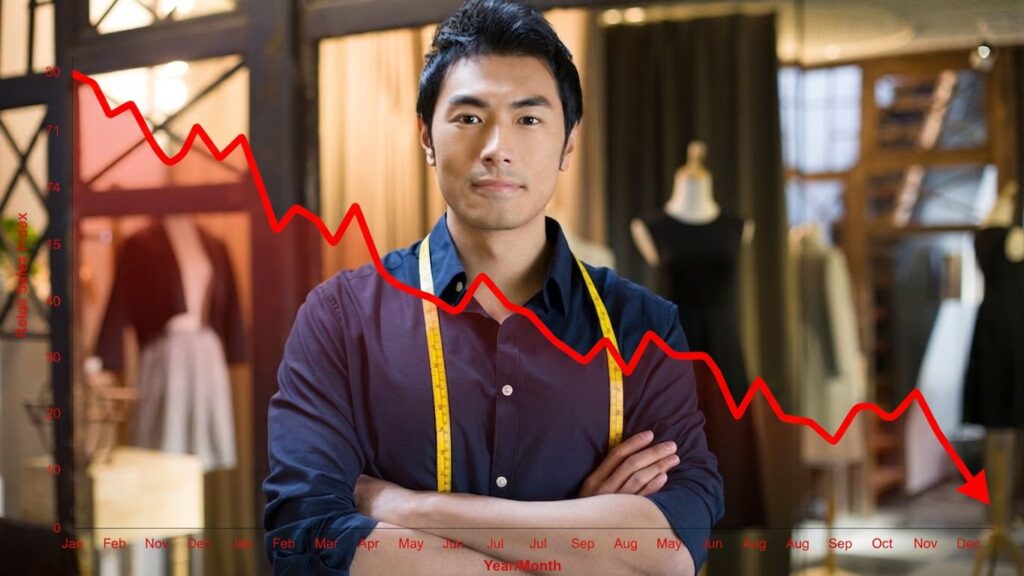
Retail sales are often used as a rough stand-in for consumer demand, and this result points to a familiar problem. Households remain cautious. Confidence has not truly recovered, the property downturn is still weighing on sentiment, and uncertainty around jobs continues to hold spending back.
That would be concerning on its own. But the weakness did not stop with consumption.
Fixed asset investment also deteriorated. Over the first five months of the year, investment fell 4.1 percent. That was a much steeper decline than the earlier period and another sign that growth is losing support at home. Property investment was again a major source of weakness, down 16.2 percent year to date.
Real estate remains one of the biggest drags on the Chinese economy. This downturn has now stretched into a fifth year, and the latest housing figures offered little relief. New home prices across 70 major cities slipped another 0.2 percent in May from the previous month.
For policymakers, this is the central problem. The old growth model built around property is still unwinding, but the replacement model is not strong enough domestically to fill the gap.
Exports are still carrying a disproportionate share of growth
While the domestic economy struggled, the industrial side looked firmer. Industrial production rose 4.5 percent year on year in May, beating both the previous month and market expectations. Exports were especially strong, surging 19.4 percent from a year earlier.
Demand for AI-related products, electric vehicles, batteries, and other clean energy goods helped support that performance. So did wider disruptions in global supply chains tied to conflict in the Middle East, according to some analysts.
The contrast is becoming starker by the month:
- Consumption is weak, and households remain cautious.
- Property is still falling and continues to sap confidence.
- Investment is deteriorating, especially in sectors linked to the old model.
- Exports are strong, helping to prop up headline growth.
That is not a balanced recovery. It is a lopsided one.
Several economists highlighted the same basic theme. Industrial production may have improved, but broader conditions remain under pressure. Inflation has been softer than expected, credit growth has slowed, and auto sales have fallen, all signs that domestic demand is not healthy. Some recent signs of housing stabilization also look fragile rather than durable.
This export-led support has been a recurring issue in recent China News Update coverage. It helps Beijing maintain growth in the short term, but it also deepens trade frictions abroad and leaves the underlying household demand problem unresolved. Related analysis on the limits of export-led expansion is worth reading here: https://chinanewsupdate.com/china-finally-admits-export-led-growth-is-unsustainable-services-lose-momentum-and-the-iran-war-tests-beijing.
Why Beijing may still hold back on major stimulus
Ordinarily, data this weak would increase calls for fresh stimulus. But there are solid reasons to think Beijing will not rush into a major policy rescue.
First, fiscal room is limited. China has used a great deal of stimulus over the years, and the returns have been declining. More borrowing and more state-led spending do not generate the same boost they once did.
Second, as long as exports keep delivering and industrial production remains positive, there is less immediate pressure to launch aggressive support measures. Headline GDP can still look acceptable even while the domestic side remains fragile.
That does not mean policymakers are comfortable. It means they are boxed in.
Attention is now shifting toward late July, when senior Communist Party leaders are expected to meet and discuss economic policy. If consumer weakness worsens further, or if external conditions become more hostile, pressure for additional support will rise. But the threshold for action may be higher than many expect.
The deeper structural problem is getting harder to ignore
One of the more useful ways to frame the current moment is this: China is still producing more, but not consuming enough. That imbalance is not new, but the latest data suggests it is becoming more entrenched, not less.
The economy remains locked into a model where output growth is sustained through manufacturing expansion, debt growth, and large trade surpluses, while household consumption stays relatively weak. Excess capacity has been building for years, and yet the system continues to lean on more production rather than a stronger consumer base.
That creates several risks at once.
- It raises dependence on external demand at a time of growing geopolitical tension.
- It increases pressure on other countries’ manufacturers, which encourages protectionist responses.
- It makes eventual adjustment more painful because the imbalances do not shrink on their own.
The hard part is that changing this model would likely mean slower near-term growth. That is precisely why adjustment has proven so difficult. Moving away from debt-heavy, export-heavy expansion sounds straightforward in principle. In practice, it means accepting weaker growth before a healthier balance is achieved.
For a system that places enormous weight on maintaining stable headline growth, that is a very tough tradeoff.
For a broader look at how weak consumption and headline growth can tell different stories at the same time, this related article adds useful context: https://chinanewsupdate.com/china-update-news-chinas-growth-iran-satellite-concerns-vietnam-ties-and-beijings-security-worldview.
Europe is intensifying scrutiny of China’s ties with Russia
The second major development came from Europe, where the EU sharpened its criticism of China’s relationship with Russia. The most serious claim was that Chinese military personnel trained Russian troops who later fought in Ukraine.

The allegation represents a notable escalation. European officials said they had verified reports that Chinese personnel had provided training to Russian soldiers, reportedly focused on drone operations. Drone warfare has become a central feature of the Ukraine conflict, so any link in that chain carries obvious political and security implications.
China has denied supporting Russia’s military campaign and continues to present itself as neutral while calling for negotiations. But in Europe, patience with that framing is wearing thin.
This is happening against a broader backdrop that has already strained EU-China relations:
- China has become Russia’s most important economic partner since the full-scale invasion in 2022.
- Western governments have repeatedly accused Chinese firms of supplying dual-use goods.
- Europe is increasingly worried about industrial overcapacity and trade imbalances with China.
The EU also expanded its sanctions list to include mainland Chinese manufacturers and Hong Kong shipping firms accused of supplying components and helping Russian oil exports. That alone would be significant. Combined with the training allegation, it points to a harder European posture that spans both economics and security.
This matters because the relationship is no longer being debated only in trade terms. More and more, Brussels is looking at China through a strategic lens, where support networks, dual-use technologies, and geopolitical alignment all carry weight.
That shift increases the chance that commercial disputes and security disputes begin reinforcing each other.
Why the EU-China relationship could get more difficult from here
Trade officials from both sides are preparing for high-level talks in Brussels later in the month, while EU leaders are expected to discuss these concerns more broadly. The timing is awkward for Beijing.
On one side, China needs strong exports because domestic demand is weak. On the other, the very success of those exports is feeding concerns overseas about subsidies, excess capacity, and unfair competition. When that is layered on top of Russia-related security concerns, the political environment in Europe gets harder fast.
That means China is facing a difficult external setting even while trying to manage internal weakness. It is another reason why relying on exports as the main support for growth may become more problematic over time.
For a recent example of Europe taking a firmer trade line while wider geopolitical pressure builds, see this related piece: https://chinanewsupdate.com/beijing-presses-iran-on-hormuz-new-mu5735-evidence-raises-cover-up-questions-and-europe-hardens-on-trade.
A new South China Sea flashpoint is emerging around Vietnam
The final major development was maritime security. Tensions between China and the Philippines have drawn most of the attention in recent years, but new reporting suggests another front is becoming more active: the standoff between China and Vietnam in the South China Sea.
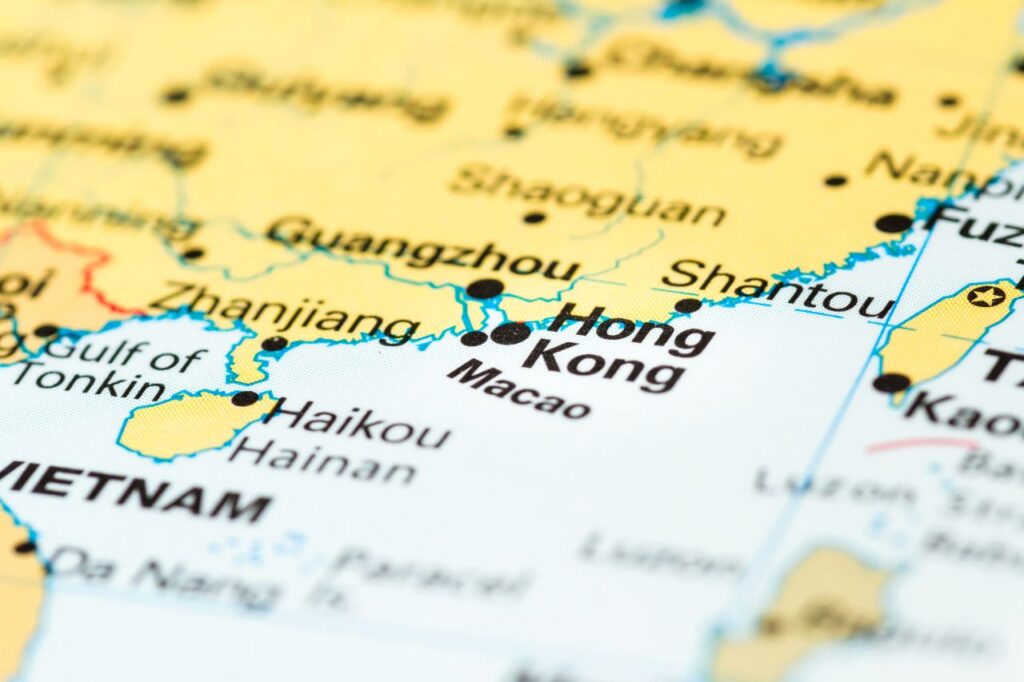
Ship tracking data indicates that more than 100 Chinese vessels passed within 10 nautical miles of Vietnamese-controlled features in the Spratly Islands over the past year. That is nearly double the number recorded in the earlier comparison period.
Many of those ships were linked to China’s Coast Guard and maritime militia. That is important because it reflects a familiar grey-zone strategy. Beijing can reinforce its territorial claims and maintain pressure without formally deploying naval forces in a way that would more clearly escalate matters.
One Chinese Coast Guard vessel in particular has come to symbolise this approach. Since late 2022, a large patrol ship has operated extensively across the South China Sea, moving among reefs, shoals, and islands claimed by multiple parties. By the end of 2025, it had sailed near features controlled by Vietnam, the Philippines, Malaysia, and Taiwan.
Vietnam is fortifying its own position
China’s increased maritime activity is happening alongside a major Vietnamese construction push in the Spratlys. Since 2021, Vietnam has reclaimed nearly 2,800 acres of land in disputed waters, making it the region’s second-largest island builder after China.
That reclaimed land has supported new harbours, airstrips, and military-related infrastructure. Hanoi’s actions point to a clear conclusion: Vietnamese leaders see the strategic environment worsening and are trying to improve their position before conditions become even more difficult.
The underlying dispute is enormous in both scale and consequence. China claims more than 80 per cent of the South China Sea through the so-called Nine-Dash Line, a position rejected by an international tribunal in 2016 but still actively enforced by Beijing.
The stakes go far beyond sovereignty maps. Roughly 4 trillion US dollars in global trade passes through the South China Sea each year, and the area is believed to contain significant oil and gas reserves. Any escalation would hit shipping, supply chains, and energy markets at a time when global trade is already under strain.
Regional coordination is rising, but the balance still favors China
Vietnam has not been standing still diplomatically. It has strengthened maritime coordination with the Philippines, set up new communication links between coast guards, and deepened defence ties with the United States, Japan, and other Indo-Pacific partners.
Even countries that have often been careful about directly challenging Beijing, including Malaysia and Indonesia, have increased maritime cooperation.
Still, the basic power balance remains tilted toward China. Beijing has a defence budget above 250 billion dollars annually, backed by a large coast guard fleet, maritime militia forces, and fortified artificial islands with surveillance and military systems already in place.
That does not mean conflict is inevitable. Both sides still appear interested in managing tensions through diplomacy. But the risk is rising because the operating environment is becoming more crowded, more militarised, and less forgiving of mistakes.
When more ships operate in close proximity around disputed features, and when both sides are steadily expanding infrastructure, the chances of miscalculation grow.
The bigger picture
These three developments may look separate at first glance, but they connect more than they seem to.
China’s economy is under increasing domestic strain, especially in consumption and property. To maintain growth, it is leaning heavily on exports and advanced manufacturing. That supports output in the short term, but it also sharpens trade friction abroad, especially in Europe, where strategic suspicion is already rising over Russia. At the same time, Beijing is operating in a more contested regional environment, with maritime pressure building in the South China Sea.
Put simply, the room for easy choices is narrowing.
Beijing still has industrial strength, export momentum, and considerable state capacity. But it also faces a domestic demand problem that has not been solved, external pushback that is hardening, and a regional security environment that is getting more dangerous.
That combination is what makes the current moment important. The issue is not only whether growth slows. It is whether the old model can keep carrying the load without creating even larger costs later, both for China and for the wider world.
FAQ
Why was China’s May economic data seen as so weak?
The biggest shock was retail sales falling 0.6 per cent year on year, marking the first contraction since late 2022. Investment also weakened, property investment kept falling, and home prices declined again. The result was a much weaker domestic picture than many had hoped for.
If the domestic economy is weak, why is growth not falling even faster?
Exports and industrial production are still providing support. In May, industrial output rose 4.5 percent and exports jumped 19.4 percent. That export strength is helping offset weakness in consumption, property, and investment.
Why might Beijing avoid a major stimulus package for now?
There appears to be limited fiscal room, and past stimulus has delivered weaker returns over time. As long as exports keep headline growth from falling too quickly, policymakers may feel less pressure to act aggressively in the immediate term.
What is driving the EU’s tougher stance toward China?
European concerns now combine economics and security. The EU is worried about trade imbalances and overcapacity but also about China’s links to Russia, including allegations involving military training and dual-use goods. That makes the relationship more politically sensitive.
Why is the South China Sea situation with Vietnam important?
Ship tracking data suggests Chinese activity near Vietnamese-held features has increased sharply, while Vietnam is also expanding reclamation and military infrastructure. Because so much global trade passes through the South China Sea, any escalation could have wide economic and security consequences.