China’s relationship with the United States has entered that familiar stage where both sides insist that things remain constructive while reaching for increasingly expensive weapons from the trade-policy cupboard.
The latest move from Beijing is tighter export control over drones and drone components heading to America—a measured response, it says, to an expanding American restrictions regime. “Measured” is doing quite a lot of work here.
Elsewhere, Beijing is hunting for tax revenue among the country’s wealthy with the enthusiasm of a local government that has just remembered where the money might be. European politicians, meanwhile, are finally becoming more receptive to protecting industry from Chinese overcapacity. And in the South China Sea, China is using military drills, coast guard exercises and environmental regulation to turn control around Scarborough Shoal into a permanent reality.
These are not disconnected stories. They all reflect a government trying to protect economic leverage, secure revenue, manage industrial pressure and expand strategic control at a time when the costs of doing all of the above are rising.
Table of Contents
- China turns its drone dominance into leverage
- Beijing’s fiscal squeeze is reaching offshore wealth
- Europe’s car industry begins to accept the obvious
- Scarborough Shoal: turning presence into control
China turns its drone dominance into leverage.
China’s Commerce Ministry has announced four sets of retaliatory measures against the United States, citing fresh US restrictions on foreign-made robots, power inverters and drones, as well as sanctions on 43 Chinese companies over alleged links to forced labour.
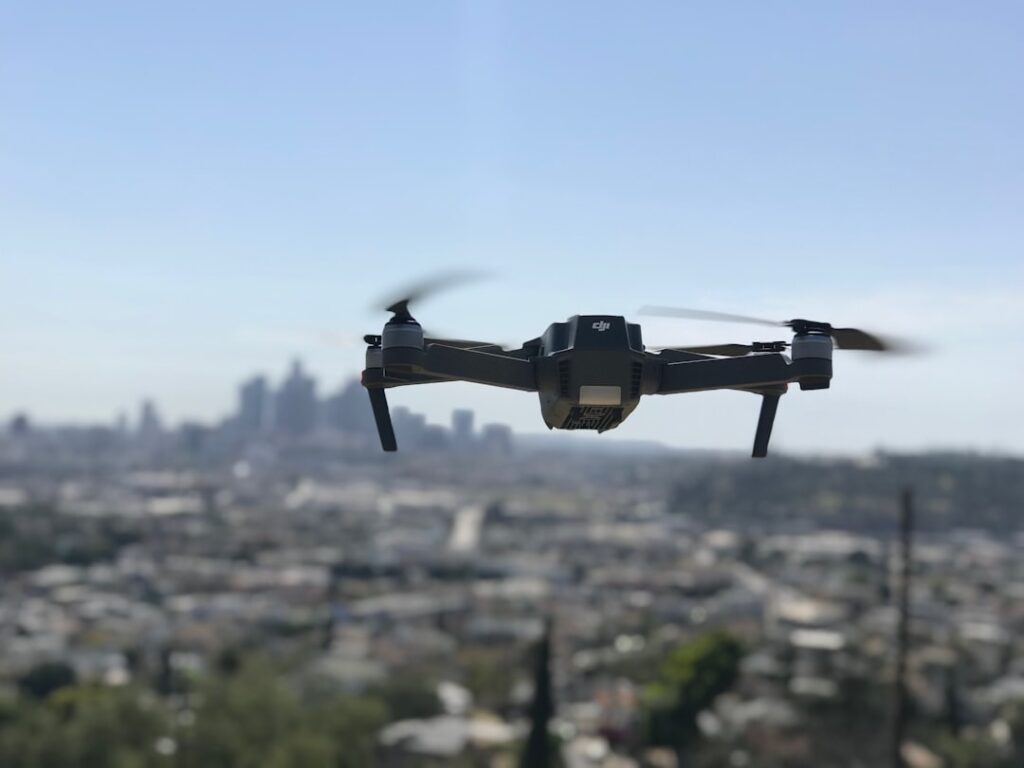
The most consequential part is the drone component. China will subject exports of drones, key drone parts and associated technologies on its dual-use control list to strict case-by-case review when destined for the United States. This is not a formal embargo. It is, however, exactly the sort of administrative bottleneck that can become painful very quickly for companies that rely on Chinese supply chains.
Beijing has an obvious advantage here. Chinese manufacturers dominate the commercial drone market, and Shenzhen-based DJI alone accounted for roughly 70% of commercial drone sales in the United States last year. That degree of market concentration gives China a useful pressure point. A licensing system can delay deliveries, increase compliance costs and make American buyers look for alternatives that may not exist at sufficient scale or competitive price.
The policy is a reminder that technological dependence does not run in only one direction. Washington has spent years tightening access to advanced semiconductors, chipmaking equipment and other technologies that China needs. Beijing has responded with controls on strategically important materials and now appears willing to use dominance in commercially mature industries as well.
China also sanctioned six US entities, including Applied DNA Sciences and Stratum Reservoir, over their alleged connections to Xinjiang-related restrictions. Compliance testing was targeted separately for assisting the Federal Communications Commission in implementing measures against Chinese products. Authorities will also conduct a national security investigation into imported printers, copiers and office imaging equipment containing foreign software.
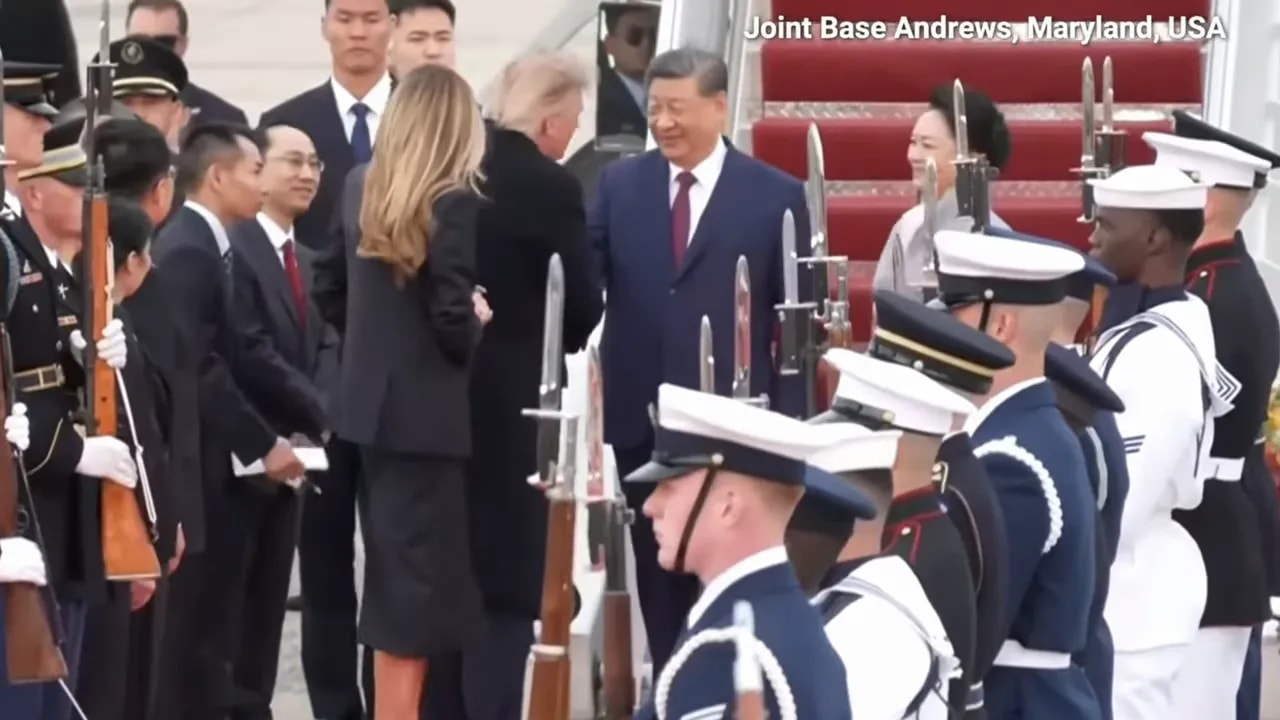
None of this is accidental. The goal appears to be increasing the cost of US restrictions without smashing the trade truce outright. That truce, reached by Xi Jinping and Donald Trump during their May meeting in Beijing, is already looking rather fragile. Xi is expected to travel to the United States next month, where both leaders are due to discuss what they have called “constructive strategic stability". One suspects that the phrase is much easier to say than to sustain.
Beijing was particularly irritated that Washington announced its forced-labour sanctions one day after Chinese Vice Premier He Lifeng met US Treasury Secretary Scott Bessent and Trade Representative Jamieson Greer. China argued that the measures violated agreements reached by the leaders and harmed its legitimate interests. Yet it described its own retaliation as “generally restrained” and called for renewed negotiations.
That language matters. The two governments are still leaving room for a deal. But Washington is reportedly considering more restrictions on Chinese data centre components and optical transceivers, while tighter controls on AI models and advanced chips remain possible. Beijing has made clear that additional US action will bring more countermeasures. The next move from Washington will therefore be a fairly direct test of whether the truce is a framework for stability or merely a pause between rounds.
For more on how geopolitical disorder and trade pressure are weighing on China’s economic outlook, see this analysis of China’s slowing trade engine and widening external risks.
Beijing’s fiscal squeeze is reaching offshore wealth.
The second story is less dramatic than export restrictions, perhaps, but potentially much more revealing. China has launched an aggressive effort to recover potentially hundreds of billions of dollars in unpaid taxes from wealthy citizens, including on offshore investment income that may date back decades.
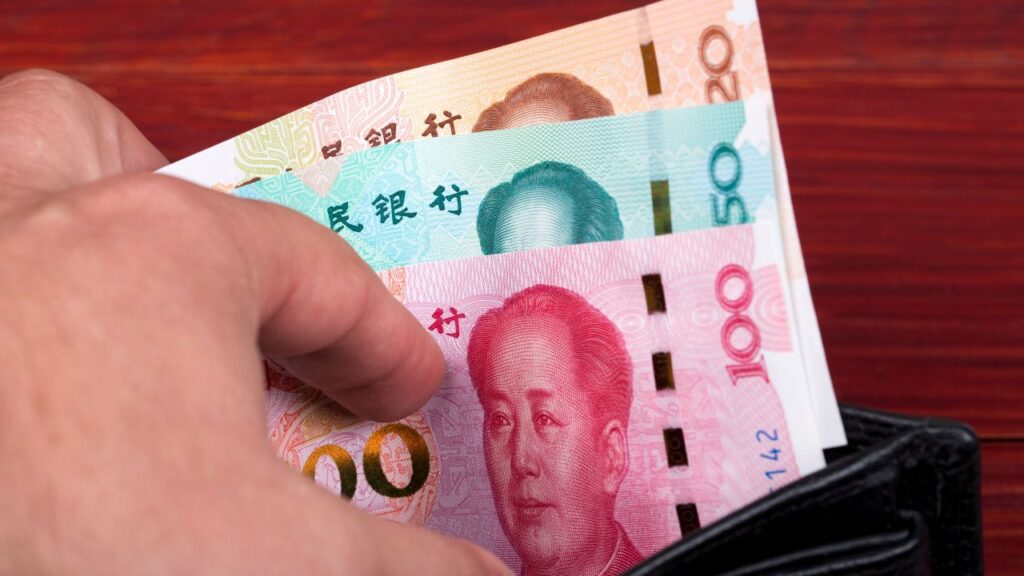
Banks and financial institutions have reportedly been instructed to inspect wealthy clients’ overseas investments and establish whether the income was declared to Chinese tax authorities. In some cases, the scrutiny extends back to 2000. The campaign covers foreign property, equities, precious metals, cryptocurrencies and offshore trusts.
This is not merely a new compliance exercise. Banks are increasingly coordinating with tax officials and, in some instances, freezing deposit accounts until the relevant tax and penalties are paid. One Shenzhen family office reported that clients were asked to pay taxes on offshore gains from 2017 to 2022 without being told why those years had been selected. Predictability has never been Beijing’s most beloved administrative virtue, but it is particularly important when a state starts revisiting decades of cross-border wealth.
A shrinking revenue base leaves few painless options.
The fiscal arithmetic behind the campaign is brutal. China’s budget revenue fell 1.7% to 21.6 trillion yuan in 2025. Land-sale income—the financial life support system for many local governments during the property boom—collapsed from 8.7 trillion yuan in 2021 to 4.15 trillion yuan after the real-estate downturn.
Land sales had long supplied local authorities with money for infrastructure, services and all manner of development projects. When the property model began to fail, it did not just hurt developers and households. It exposed how much public finance had depended on a continuously rising land market. The government now needs revenue from somewhere else, and offshore wealth is an attractive target because it is politically easier to pursue rich citizens than to impose heavier burdens on a consumer sector already struggling with weak confidence.
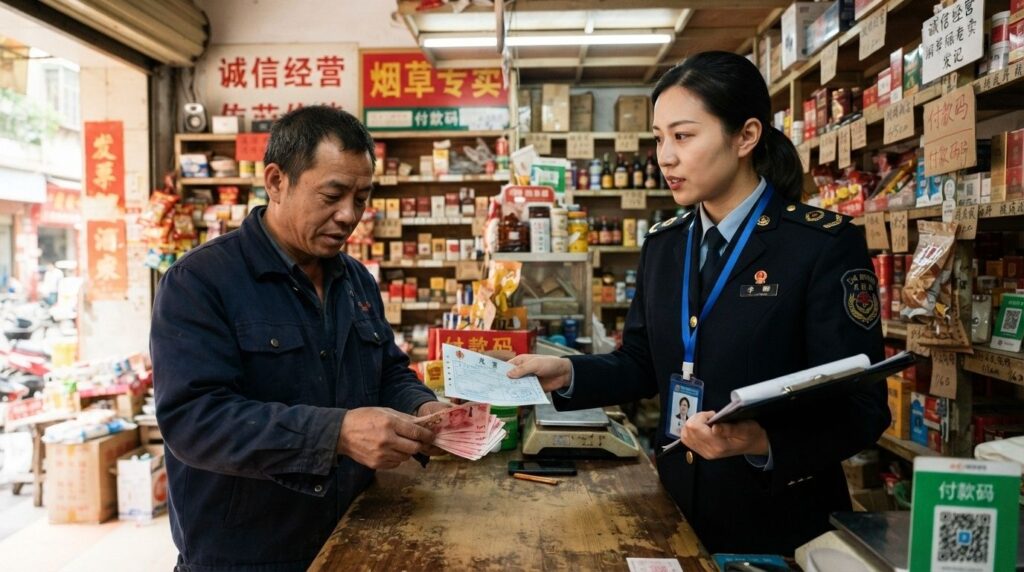
New rules targeting assets transferred into offshore trusts close a commonly used channel for sheltering foreign holdings. Income generated through such trusts may now face a 20% tax at multiple stages. Reports that Beijing had begun taxing dividends and interest earned through offshore insurance policies were enough to trigger sharp falls in the shares of Prudential and HSBC.
China is, in effect, moving closer to the US model of taxing residents on worldwide income. Enforcement is expected to focus first on Chinese citizens trading American shares via Hong Kong and other offshore channels before broadening to overseas bank accounts and real estate.
Tax residency is another source of uncertainty. Spending fewer than 183 days a year in China may not shield an individual from Chinese tax residency if they retain Chinese nationality and substantial ties to the country. In other words, the traditional assumption that physical absence solves the problem may no longer be safe.
There is evidence that the campaign is producing revenue. Individual income tax receipts rose 11.5% in 2025, far faster than overall tax growth of 0.8%. Artificial intelligence may also make it easier for authorities to sift through years of investment records at a cost that would previously have made such mass enforcement impractical.
There is a respectable economic case for taxing the wealthy more effectively. Peking University finance professor Michael Pettis argued that transferring income from the very rich to the broader economy could help domestic demand and improve income distribution. If the state must raise money, explicit taxation of wealthy households is generally less damaging to aggregate demand than squeezing lower-income households through indirect mechanisms.
But Pettis also identified the bigger issue: more revenue does not fix an unsustainable spending model. If additional taxes are used to keep financing economically dubious projects simply to preserve growth targets, the adjustment has not been avoided. It has merely been made later and is likely more painful.
The immediate danger is that enforcement becomes overzealous. Reports suggest that the pressure is already encouraging capital flight, with wealthy clients activating plans to leave China. It may also make it harder for Chinese manufacturers to obtain approval for legitimate overseas investments, including foreign production facilities. A campaign intended to raise money can become self-defeating if it scares away capital, talent and business activity in the process.
China’s local fiscal strains and tougher enforcement efforts are explored further in this report on local governments tightening the tax net.
Europe’s car industry begins to accept the obvious.
For years, major German manufacturers resisted tougher European trade measures against China. The logic was simple: China was too important as a market, too embedded in their supply chains and too capable of retaliation. That calculation may finally be changing, largely because Chinese competition is no longer an abstract future threat. It is here, it is cheap, and it is eating market share.
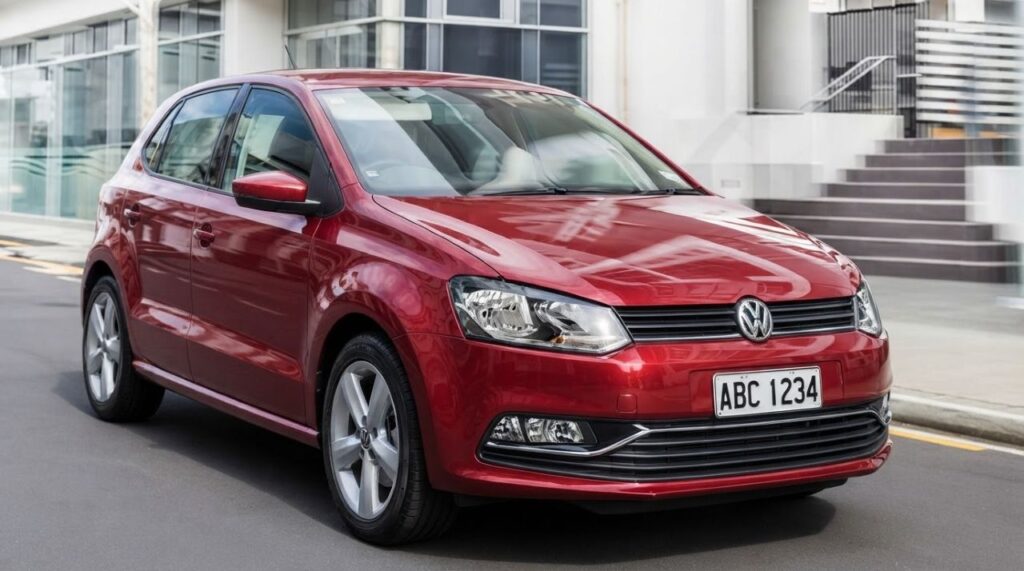
Volkswagen chief executive Oliver Blume recently backed European Union tariffs on Chinese electric vehicles and urged Brussels to extend them to plug-in hybrids. Those hybrids captured nearly a third of the European market in the first half of 2026. According to analyst Noah Barkin, it was the first time the leader of one of Germany’s three major carmakers had publicly supported trade-defence measures against China.
The irony is wonderfully bleak. Volkswagen is expanding production in China, preparing to export Chinese-made vehicles globally, cutting jobs in Germany and encouraging Chinese manufacturers to use struggling German factories. Yet it is simultaneously asking Europe to defend its home market against Chinese competitors. That is not hypocrisy so much as the unavoidable consequence of a business model being squeezed from several directions at once.
German industry groups are reportedly reconsidering their longstanding opposition to defensive trade policy, while major European business associations prepare papers calling for a firmer response to Chinese industrial overcapacity. German Chancellor Friedrich Merz has also taken a tougher position. Germany and France called in July for the “swift and systematic” use of EU instruments against unfair Chinese competition, and the two governments are preparing a joint strategy ahead of a major European Council meeting in October.
Brussels does not see this as a neat choice between capitulation and trade war. The European Commission appears determined to keep negotiating with Beijing while putting more tools in place to protect European industry. That is probably the only plausible approach. Europe needs access to China’s market and its industrial capacity, but it cannot pretend that subsidised overproduction has no consequences for domestic jobs and strategic sectors.
The problem is whether the political coalition can survive. Merz faces domestic unrest within his party, difficult state elections and resistance from within his own government. France, Italy, Spain and Poland will all hold elections next year, and populist parties may gain ground. Economic pressure has pushed Europe toward a harder China policy; electoral politics may yet pull it apart again.
Scarborough Shoal: turning presence into control
China’s response to the Philippines formally delineating a territorial sea baseline around Scarborough Shoal has been muscular, multi-layered and entirely consistent with Beijing’s broader playbook in the South China Sea.

The Foreign Ministry called Manila’s baseline “illegal and void", accused the Philippines of violating Chinese sovereignty and warned of resolute countermeasures. Beijing also attacked the Philippines Maritime Zones Act, which it says attempts to incorporate Scarborough Shoal and much of the Spratly Islands into Philippine maritime zones.
The Philippines argues that Scarborough Shoal lies within its exclusive economic zone. China claims sovereignty over the feature and surrounding waters, a position rejected by relevant international tribunals. Yet legal rulings matter rather less when one side controls access on the water. China has effectively done so since its 2012 confrontation with the Philippines.
The latest developments suggest an effort to institutionalise that control. The People’s Liberation Army Southern Theatre Command carried out joint naval and air exercises around the shoal, including reconnaissance, early warning, deterrence patrols, sea and air control, and joint assault operations. Chinese naval and air units have also increased combat-readiness patrols since July.
Meanwhile, the China Coast Guard has practised boarding vessels, making arrests, blocking intrusions and forcibly towing ships from waters claimed by China. A Chinese researcher cited by state media said forces could use water cannons, ramming and pushing tactics before escalating to towing or detaining vessels. These are not abstract contingencies. They are a menu of coercive measures rehearsed for use against civilian or government ships operating in disputed waters.
Then comes the administrative layer. Four Chinese agencies have introduced management rules for a so-called national nature reserve around the shoal, establishing regular patrols and authorising investigations into activity deemed harmful to the ecosystem. Environmental stewardship is, of course, a perfectly legitimate objective in theory. In this context, though, it also provides a convenient regulatory basis for asserting control.
Military presence, coast guard enforcement and environmental administration all reinforce one another. The more routine each becomes, the easier it is for China to present its control as a fact rather than a contested claim. The risk is not only that Philippine access continues to shrink. It is that the growing frequency of close encounters makes a serious accident or confrontation more likely.
That risk extends beyond Manila and Beijing. The United States is a treaty ally of the Philippines, meaning a local confrontation carries the potential to become a far wider crisis. China’s strategy is designed to stay below the threshold of open conflict. The trouble with grey-zone coercion is that it depends on everyone keeping their nerves indefinitely. History suggests this is not a tremendously reliable safety mechanism.
Across drones, tax enforcement, European trade policy and the South China Sea, the same pattern is visible: pressure is being applied through systems that are technically civilian, legal or administrative, but strategically very much not neutral. The question is no longer whether these pressures will intensify. It is which weak point breaks first.
Frequently Asked Questions
Has China banned drone exports to the United States?
No. China has imposed strict case-by-case reviews on exports to the United States of drones, critical components and associated technologies included on its dual-use control list. The policy can still disrupt supply by adding delay, uncertainty and compliance requirements.
Why is China pursuing taxes on overseas wealth?
China faces serious fiscal pressure as budget revenue has weakened and land-sale income has collapsed following the property downturn. Scrutinising offshore income and investments offers authorities a potentially large new source of revenue, particularly from wealthy citizens.
Why are European carmakers becoming more supportive of tariffs on Chinese vehicles?
Chinese electric vehicles and plug-in hybrids are becoming much stronger competitors in Europe. As domestic job losses and competitive pressure mount, some European manufacturers and industry groups are reconsidering their historic reluctance to support trade-defence measures.
Why is Scarborough Shoal such a significant flashpoint?
Scarborough Shoal is claimed by both China and the Philippines and lies within the Philippines’ claimed exclusive economic zone. China’s expanding military, coast guard and administrative activity may further limit Philippine access while raising the risk that a confrontation draws in the United States under its alliance commitments.