
Three developments stand out in China right now, and they are more connected than they may first appear.
First, Xi Jinping has made a high-profile trip to North Korea that signals a renewed push by Beijing to tighten its grip over a strategically vital neighbour. Second, China’s latest inflation data shows a widening gap between factory-gate prices and weak consumer demand, revealing just how uneven the economic picture remains. Third, relations with Japan are worsening as rare earth export restrictions begin to bite and maritime security tensions deepen across the region.
Taken together, these are not isolated headlines. They point to a broader pattern in which geopolitics, supply chains, and domestic economic stress are increasingly feeding into one another.
Table of Contents
- North Korea moves back to the center of Beijing’s regional strategy
- Why China may be trying to limit Russia’s influence in Pyongyang
- A notable shift on the nuclear issue
- Economics still matters, but reform is not the story here
- China’s inflation data shows an economy split in two
- The AI boom and Middle East tensions are feeding factory-gate inflation
- Why this matters for exports and the wider global economy
- China and Japan are entering a more difficult phase
- Why the rare earth issue goes well beyond Japan
- Trade, tourism, culture, and maritime security are all getting pulled into the same dispute
- The common thread across all three stories
- What to watch next
- FAQ
North Korea moves back to the center of Beijing’s regional strategy
Xi’s visit to North Korea was his first there in seven years and also his first overseas trip of the year. That alone makes it significant. But the substance matters even more than the symbolism.
Beijing used the trip to show that its relationship with Pyongyang is not drifting into the background. On the contrary, China appears determined to reassert itself after a period in which Kim Jong-un moved much closer to Moscow, especially since the war in Ukraine began.
The official messaging out of the trip emphasised four broad areas for closer ties:
- More high-level political engagement
- Stronger party-to-party coordination
- Closer cooperation among diplomatic, security, law enforcement, and military institutions
- Commemoration of the long-standing friendship treaty between the two countries
One detail drew particular attention. China’s defence minister was part of the delegation this time, which was not the case during Xi’s 2019 visit. That suggests security and military coordination were given a more visible place in the relationship.
This matters because Beijing’s calculus on North Korea has always involved tradeoffs. A nuclear-armed North Korea creates obvious risks for China. But it also serves as a buffer between China and the US alliance structure in Northeast Asia, especially as security cooperation among the United States, Japan, and South Korea keeps expanding.
From Beijing’s perspective, that buffer still has value.
Why China may be trying to limit Russia’s influence in Pyongyang
Another major question surrounding the visit is how much of it was really about Russia.
Since the outbreak of the Ukraine war, North Korea and Russia have moved closer together. Pyongyang has aligned itself more openly with Moscow, and military cooperation between the two has become far harder to ignore. That creates a strategic problem for Beijing.
China does not want to lose influence in North Korea. Russia may be able to offer military backing and diplomatic coordination, but China remains the far more important economic partner. If Beijing can use trade, transport links, tourism, and technology cooperation to pull North Korea back toward its orbit, it has a stronger long-term hand than Moscow.
At the same time, the picture is not completely straightforward. It is also possible that Beijing is not entirely unhappy to see North Korea helping Russia, especially if China sees value in preventing Moscow from being weakened too badly in Europe. That ambiguity is important. China may want to limit Russian dominance over Pyongyang without actually opposing every element of Russia-North Korea cooperation.
In other words, this is not necessarily a zero-sum contest. Beijing may simply want to make sure it remains the senior external power in North Korea, not a sidelined one.
A notable shift on the nuclear issue
One of the most striking aspects of the visit was what was not emphasised.
Chinese official summaries of the talks reportedly did not mention North Korea’s nuclear weapons programme. Historically, references to denuclearisation were a routine part of China’s language on the Korean Peninsula. Their absence now has raised fresh questions about whether Beijing is quietly adjusting to the reality that North Korea is, for the foreseeable future, a de facto nuclear state.
That would not mean China has suddenly embraced a nuclear North Korea. But it could mean Beijing is placing more weight on strategic competition and regional stability than on repeating a formula that no longer reflects the balance of power on the ground.
That shift, if it is indeed a shift, would be meaningful. It would suggest China is becoming more pragmatic, or more resigned, or both.
Economics still matters, but reform is not the story here
Economic cooperation also featured in the visit, with discussion around trade, tourism, technology, and transport connectivity. Beijing appears interested in reviving routes through North Korea that could benefit China’s northeastern provinces, which have long struggled economically compared with the country’s more dynamic coastal regions.
But there is an obvious constraint here. North Korea is not showing serious signs that it intends to follow any kind of Chinese-style reform and opening path. So while there may be room for targeted economic projects, nobody should confuse that with a broad liberalisation story.
For Beijing, the main value of economic engagement with Pyongyang is strategic, not ideological. It is about preserving leverage, opening practical corridors, and preventing a key neighbour from tilting too far toward another power.
This is why the visit matters beyond ceremony. It suggests a clearer Chinese effort to re-establish dominance on the Korean Peninsula at a moment when the regional security environment is becoming more tense, not less.
China’s inflation data shows an economy split in two

Beijing’s latest inflation numbers tell a story of deep imbalance.
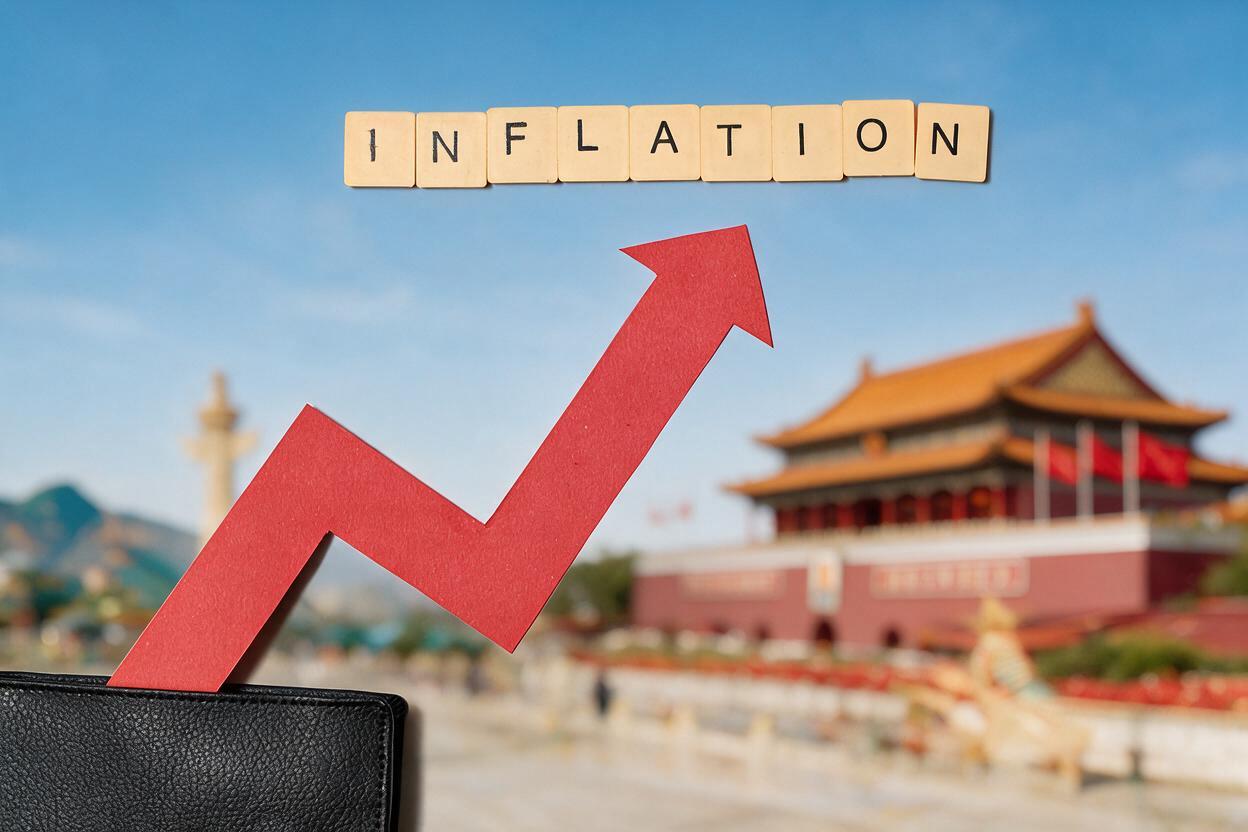
Consumer inflation remained weak in May, while producer prices rose at their fastest pace in nearly four years. That gap matters because it shows China is not experiencing a broad, healthy rebound in demand. Instead, parts of the industrial economy are facing rising input costs while households remain cautious and price-sensitive.
Consumer prices rose 1.2 per cent from a year earlier, slightly below expectations and unchanged from April. One major drag was pork, which remains hugely important in China’s food basket. Pork prices fell sharply again, extending a long period of decline tied to chronic overcapacity in pig farming.
Producer prices, by contrast, jumped 3.9 per cent year on year, up from 2.8 per cent the month before. The main drivers were higher energy prices related to Middle East tensions and stronger demand for industrial inputs connected to the global artificial intelligence buildout.
That means China is being squeezed from two directions at once:
- Upstream sectors face rising costs for energy, metals, semiconductors, and industrial components
- Downstream consumer demand remains too soft for companies to easily pass those costs on
For manufacturers, that is not a comfortable combination. It puts margins under pressure and complicates the policy response.

The AI boom and Middle East tensions are feeding factory-gate inflation
The biggest price pressures are coming from outside the traditional consumer recovery story.
Energy costs rose sharply, with fuel prices up 21 per cent in May. That reflects higher oil prices and supply concerns linked to conflict involving Iran and shipping risk through the Strait of Hormuz. Those pressures are not just theoretical. They flow into transport, logistics, manufacturing, and eventually export pricing.
For a deeper look at how Hormuz risk is feeding into China’s supply chain and financing pressures, this related analysis is useful: Hormuz turmoil, producer inflation, debt strain and rising Taiwan blockade planning.
At the same time, the global race to build AI infrastructure is lifting demand for copper, aluminium, semiconductors, communication equipment, and a wide range of industrial components. Prices for communication devices rose notably, and producer prices in China’s electronics sector increased at the fastest rate since recordkeeping began in the mid-1990s.
That is a remarkable data point because it highlights how external demand linked to strategic technologies is shaping China’s industrial pricing more than domestic household consumption is.
So yes, China may be moving away from outright deflation. But that does not mean the economy is enjoying a balanced recovery. A cost-driven rise in factory prices is not the same thing as broad-based confidence or stronger consumer spending.
Why this matters for exports and the wider global economy
There is also an international angle here.
China’s export prices had already begun rising after several years of decline. If energy, metals, and technology components stay expensive, more of those higher costs may begin moving through global supply chains. That would affect overseas buyers, especially those dependent on Chinese manufacturing inputs.
The challenge for Beijing is that its policy goals now pull in different directions. On one side, it has to manage imported inflation and supply-side cost pressure. On the other, it still needs to support demand at home and restore confidence among households that remain reluctant to spend.
This is one reason the recovery narrative still looks fragile. External shocks can boost some industrial indicators while leaving the domestic core of the economy soft. That kind of rebound is vulnerable. A related piece on that broader fragility is here: China’s recovery narrative looks premature amid Iran tensions and a deepening tech squeeze.
China and Japan are entering a more difficult phase
The third major development is the sharp deterioration in China-Japan relations, and rare earths are right at the centre of it.
China’s exports of seven key rare earth elements to Japan have fallen heavily following tighter export controls introduced earlier this year. During the first four months of 2026, shipments were down 34 per cent from a year earlier. The drops in March and April were especially severe.
Some of the most sensitive categories appear to have been hit hardest. Exports of critical minerals used in high-performance magnets for electric vehicle motors reportedly fell to zero after January. An important material used in semiconductor equipment, medical lasers, aerospace systems, and defence technologies dropped by more than 90 per cent.
That matters because China does not merely produce a lot of rare earths. It dominates processing and refining. While its share of global mine production is already large, its grip over the downstream stages of the supply chain is even more significant. That gives Beijing leverage that is difficult to replace quickly.

Why the rare earth issue goes well beyond Japan
Japan is an immediate target of the restrictions, but the implications are much broader.
Japanese manufacturers occupy critical positions in supply chains that serve American and European firms. If Japanese companies face shortages of essential inputs, the effects can spread into electric vehicles, high-end electronics, chipmaking tools, aerospace, and defence production in multiple countries.
That is why concern in Washington is rising as well. The issue is no longer just a bilateral trade dispute. It is a strategic choke point with global industrial consequences.
This is another reminder that supply chains are now firmly part of geopolitical competition. Access to materials, processing capacity, and manufacturing inputs can be turned into leverage very quickly when diplomatic relations deteriorate.
Trade, tourism, culture, and maritime security are all getting pulled into the same dispute
The rare earth story is unfolding against a wider cooling in ties between Beijing and Tokyo.
China has reportedly tightened restrictions not only in trade but also in tourism after comments by Japan’s prime minister regarding a possible Taiwan contingency late last year. Since then, relations have continued to worsen in a step-by-step fashion.
Even cultural channels appear affected. Japanese films were left out of major festival lineups in Shanghai and Beijing, which is a small detail in one sense but a revealing one in another. When a relationship is deteriorating, pressure often appears first in areas that are easy to signal and politically safe to squeeze.
At the same time, a harder security layer is developing underneath the economic friction. Beijing has objected to stronger security cooperation between Japan and the Philippines. Manila has said it will continue maritime boundary talks with Tokyo despite Chinese objections as part of a broader effort to deepen strategic coordination.
China has responded by increasing maritime patrols east of Taiwan, underscoring how these issues are converging. Trade pressure, military signalling, alliance-building, and supply-chain competition are no longer separate tracks. They increasingly form one strategic picture.
For more on how Japan’s regional posture has been shifting alongside rising pressure on China’s exporters, see this analysis on export costs and Japan’s pivot toward a Taiwan contingency.
The common thread across all three stories
What links Xi’s North Korea visit, China’s split inflation data, and rare earth pressure on Japan is not simply that they happened in the same week.
The common thread is that China is trying to manage a more hostile and fragmented environment by leaning harder on strategic relationships, critical supply chains, and state-directed leverage.
In North Korea, that means reasserting influence before Moscow gains too much room. In the domestic economy, it means coping with a recovery that is being shaped more by external shocks and strategic technologies than by healthy household demand. In relations with Japan, it means using China’s supply-chain dominance at a time when maritime and security tensions are also rising.
This is the broader pattern worth watching in any China news update. Economics cannot be separated cleanly from geopolitics anymore. Industrial pricing, trade controls, military signalling, and regional diplomacy are increasingly all part of the same contest.
What to watch next
Several questions now matter more than the headlines themselves.
- Will China follow up Xi’s North Korea trip with concrete military or infrastructure cooperation?
- Will Beijing continue to downplay denuclearisation language in future statements on Pyongyang?
- Can producer price inflation keep rising without causing deeper strain for consumer-facing businesses?
- Will higher energy and AI-related input costs feed more visibly into China’s export prices?
- How far is Beijing willing to push rare earth restrictions if tensions with Japan and US partners intensify further?
Those are not narrow policy questions. They go to the heart of how China is positioning itself in a period where regional security, global industry, and domestic economic management are all colliding.
FAQ
Why was Xi Jinping’s visit to North Korea so important?
It signalled a clear Chinese effort to reassert influence over Pyongyang after North Korea moved closer to Russia. The visit also highlighted stronger political, security, and possibly military coordination between Beijing and Pyongyang.
Is China accepting North Korea as a nuclear power?
There are signs Beijing may be taking a more pragmatic view. Recent official summaries did not emphasise denuclearisation the way Chinese statements often did in the past. That does not necessarily mean approval, but it may indicate a shift in priorities.
Why are China’s producer prices rising while consumer inflation stays weak?
Factory-gate prices are being pushed up by higher energy costs and strong demand for AI-related industrial inputs such as metals, semiconductors, and equipment. Consumer demand inside China remains soft, which limits how much of those cost increases businesses can pass on.
What role is the AI boom playing in China’s inflation data?
The global expansion of AI infrastructure is increasing demand for materials and components used in data centres, electronics, and advanced computing. That is lifting prices in parts of China’s industrial economy, especially in electronics and related manufacturing.
Why are rare earth exports to Japan such a big issue?
Because rare earths are essential for electric vehicles, chipmaking tools, aerospace systems, medical technologies, and defence equipment. China has major control not just over production but especially over processing and refining, which gives it substantial leverage.
Are China and Japan only clashing over trade?
No. Trade friction is only one part of the story. Tensions are also increasing around Taiwan, maritime security, Japan’s coordination with the Philippines, tourism restrictions, and even cultural exchanges.
What is the bigger takeaway from this China news update?
China’s strategic environment is becoming more interconnected. Foreign policy, supply chains, industrial costs, and regional security are reinforcing one another, making each development more consequential than it might appear on its own.