New US Sanctions, Three Gorges Expansion, Taiwan Chip Curbs, and Business Pressure in China
The latest round of China-related developments spans sanctions, infrastructure, semiconductors, Taiwan security, and the commercial reality facing foreign firms still operating in the Chinese market.
Taken together, these stories point to the same underlying trend. Economic ties remain deep, but the political and security environment around them is getting harder, sharper, and more expensive to navigate.
Table of Contents
- US sanctions target China and Hong Kong links to alleged Iranian procurement networks
- China launches a massive Three Gorges shipping expansion
- Taiwan may tighten AI chip export controls on China
- Taiwan's live-fire HIMARS drill sends a message across the Strait
- US companies still see China as vital, but the operating environment is worsening
- The bigger picture
- FAQ
US sanctions target China and Hong Kong links to alleged Iran procurement networks
Washington has imposed another set of sanctions on individuals and companies in mainland China and Hong Kong over accusations that they helped Iran obtain weapons and bypass restrictions.
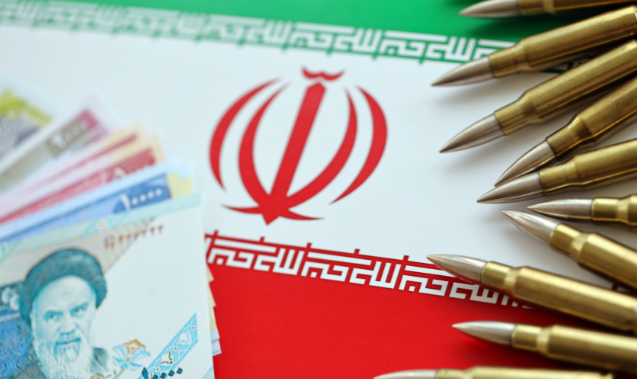
According to the US Treasury, eleven people and entities were tied to networks supporting Iran's military procurement, including activity linked to the Islamic Revolutionary Guard Corps. A notable element in the case involves a Belarus-based intermediary that US officials say connected Chinese suppliers with Iranian buyers.
The allegation drawing the most attention is that this network helped arrange the purchase and movement of large numbers of portable air defence systems from China to Iran, while obscuring where the weapons came from and routing shipments through other countries.
US officials have not publicly confirmed whether those systems ultimately reached Iran or whether they were used in combat, but the sanctions make clear that Washington sees the risk as serious enough to escalate pressure now.
This matters for two reasons.
- First, it links China more directly to one of the most sensitive security crises in the Middle East.
- Second, it shows how US policy is increasingly treating China and Iran as overlapping security challenges rather than separate files.
Beijing has continued to oppose sanctions on Iran and has pushed for diplomacy instead, especially around the nuclear issue. Chinese officials have also argued at the United Nations that attempts to revive older sanction mechanisms are politically motivated and no longer legally justified.
That argument is unlikely to change Washington's approach. If anything, this latest step suggests the opposite. The US is widening its use of financial and legal tools to disrupt networks that it believes move sensitive goods, technology, and money between sanctioned actors.
The sanctions were announced alongside a separate US action aimed at alleged Chinese intelligence operations. American authorities said they had seized thirteen websites tied to suspected Chinese operatives accused of using fake consulting firms, fabricated job postings, and AI-generated content to approach current and former US government personnel with access to sensitive information.
That combination is important. It suggests a broader US strategy built around pressure on multiple fronts at once: military procurement, sanctions evasion, covert influence, and intelligence collection.
For anyone following China News Update themes over the past year, this is consistent with the larger pattern. Security competition is no longer confined to tariffs or high-level rhetoric. It now reaches into financial enforcement, supply chains, cyber operations, and third-country networks.
For related context on how Iran tensions and wider China pressure are feeding into the economic picture, see this analysis on China's fragile recovery and tightening AI chip constraints.
China launches a massive Three Gorges shipping expansion
While geopolitical pressure is rising abroad, Beijing is still pouring resources into the physical backbone of domestic commerce.
China has officially started work on a huge 77.2 billion yuan project to expand shipping capacity at the Three Gorges Dam. In dollar terms, that is roughly $11.4 billion. The goal is straightforward: remove one of the country's most severe inland transport bottlenecks.
The plan includes a second shipping channel at the Three Gorges hub and expanded facilities at a downstream dam to handle 10,000-tonne vessel fleets. Construction is expected to take nearly a decade, with enormous excavation and concrete requirements.
This is not a small upgrade. It is a major strategic logistics project.
The Yangtze River remains China's most important inland waterway, carrying bulk goods, containers, and foreign trade cargo through the industrial heartland. The original ship lock system at Three Gorges was completed in 2007, and planners had expected it to reach an annual capacity of 100 million tonnes by 2030.
Instead, that threshold was crossed in 2011. In other words, demand outran the design assumptions by almost two decades.
Congestion has become severe. Authorities say the locks have been operating above capacity for nine straight years. Average waits have stretched to around 44 hours, and at peak moments ships have reportedly been delayed more than two weeks.
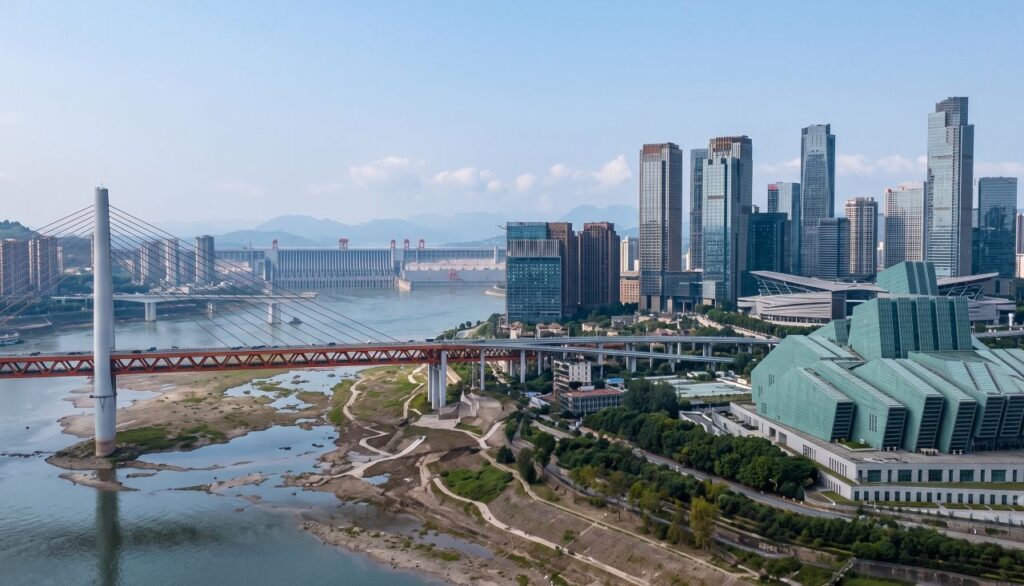
Once the new channel is complete, annual transit capacity at the Three Gorges hub is expected to rise to 336 million tonnes, more than triple the original design level.
There are a few ways to read this.
What the project signals
- China still sees hard infrastructure as economic policy. When growth is uneven and external pressure is intensifying, large transport projects remain a familiar tool.
- The Yangtze corridor is central to domestic resilience. Better inland shipping lowers logistics costs and reduces pressure on already strained freight networks.
- Demand along the river system has been stronger than planners anticipated. That says something real about the industrial importance of the basin, even amid broader concerns about the national economy.
It also reflects the state's preference for solving structural constraints with scale. If one of the country's key trade arteries is clogged, the answer is not marginal optimisation. It is another giant engineering project.
Taiwan may tighten AI chip export controls on China
One of the most consequential developments concerns semiconductors.
Taiwan is reportedly considering tougher export controls on advanced AI chips headed to China, potentially bringing its rules closer to current US restrictions. The reported discussions are tied to broader trade talks with Washington, which has been urging closer coordination from key semiconductor partners. If adopted, the changes would go well beyond Taiwan's current approach.

Right now, restrictions mainly focus on named Chinese companies on blacklists, including Huawei. Under the proposed framework, controls could be broadened to cover all customers in China. That would give authorities much wider powers to investigate diversion, smuggling, or indirect transfers of advanced AI hardware.
Even more significant, violations could potentially carry criminal penalties.
This would represent a meaningful tightening in the global technology blockade around China's access to frontier chips and computing power.
The background here is familiar but increasingly urgent. US policymakers remain concerned that existing export controls have too many gaps. Chinese firms have been accused of obtaining advanced chips through offshore subsidiaries, third-party brokers, and other intermediaries. Another concern is custom chip design. Even where direct sales are blocked, a front company might try to commission designs through contract manufacturers such as TSMC.
That issue has drawn bipartisan interest in Washington, with calls for stronger rules governing custom chip production linked to Chinese entities.
From Beijing's perspective, these controls are framed as an abuse of national security language to hold back Chinese tech companies. Chinese officials have repeatedly condemned the restrictions and promised countermeasures to defend affected firms.
But the strategic direction is clear. The technology contest is moving from entity-specific restrictions to ecosystem-wide controls. The more that Taiwan aligns with the United States, the harder it becomes for Chinese firms to source top-tier AI hardware through legal and semi-legal channels.
This is especially important because semiconductor controls are no longer just about chips. They now shape cloud access, AI model training, military modernisation, industrial automation, and long-term productivity growth.
For broader background on how security policy, growth targets, and technology pressure are increasingly merging in Beijing's worldview, see this report on China's security-first policy framework.
Taiwan's live-fire HIMARS drill sends a message across the Strait
Alongside the chip story, Taiwan has also made a military signal that deserves attention.
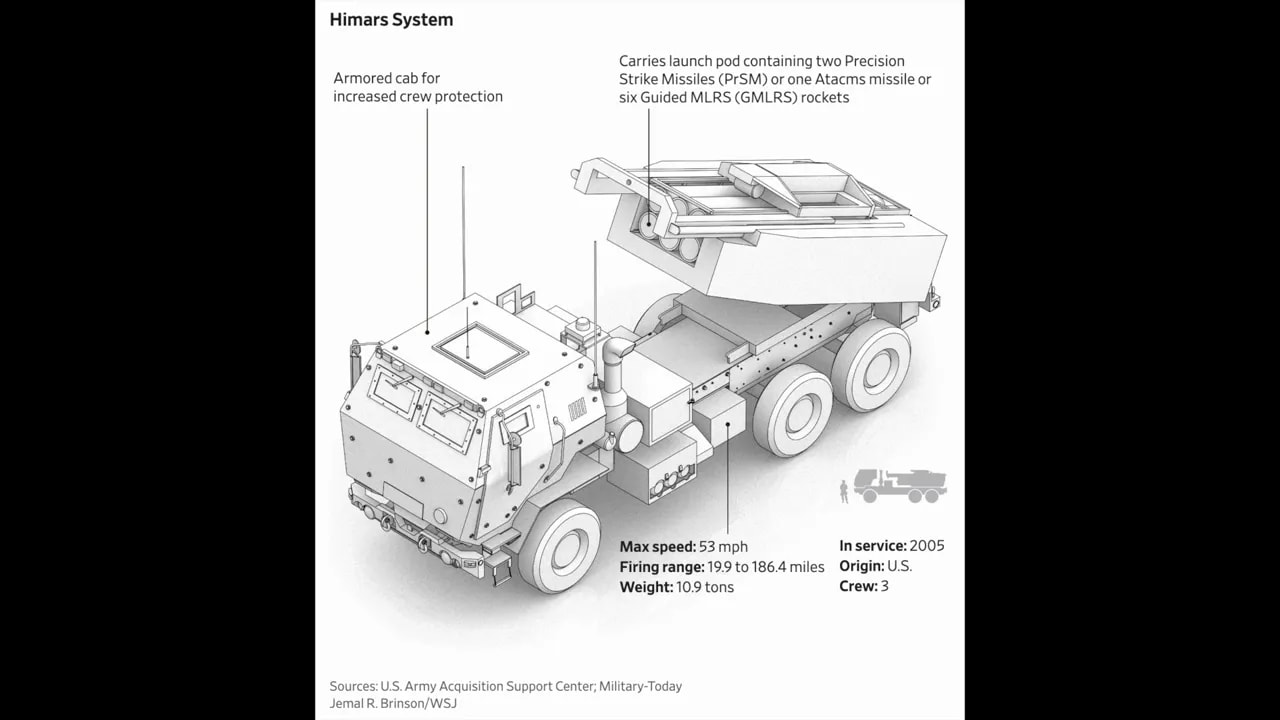
Taiwan carried out its first live-fire HIMARS exercise in waters facing mainland China. During the drill, the army launched 32 rockets from the US-supplied system near a river mouth on the island's western coast, an area considered a plausible landing zone in any future amphibious assault scenario.
The drill was part of a broader exercise focused on repelling a cross-strait attack. The test rockets hit targets just offshore, but the system itself is capable of using longer-range munitions that could reach military targets across the Strait.
The military logic here is tied to Taiwan's asymmetric defence strategy.
Taiwan cannot match China platform for platform. It cannot outbuild the People's Liberation Army in ships, aircraft, or sheer missile volume. So it has leaned more heavily into mobile, survivable, hard-to-target systems that can impose real costs on an invading force.
HIMARS fits that model well. It can be moved, concealed, and redeployed quickly, making it a useful tool for threatening landing forces, supply lines, and staging areas.
The political signalling matters too.
The exercise appears intended to communicate at least three things:
- To Beijing: Taiwan is continuing to prepare seriously for a potential conflict.
- To Washington: Taiwan wants to show that it is investing in its own defence and is a credible security partner.
- To domestic audiences: military modernisation remains a central priority as pressure from the mainland increases.
This comes as a proposed US arms package for Taiwan remains under consideration. The package has reportedly been delayed, with the White House treating it as leverage in broader negotiations with Xi Jinping. That creates uncertainty around timing, but not around the larger trajectory. Security ties between Washington and Taipei continue to deepen, even if individual weapons decisions get caught up in bigger diplomatic bargaining.
Beijing dismissed the drills as political theatre. Still, the exercise underscores a basic reality: both sides of the Strait are preparing more openly for the possibility of military confrontation, even if neither wants to trigger one.
For more on how regional tensions are shaping Chinese planning and Taiwan readiness, this piece on blockade planning and wider geopolitical strain adds useful context.
US companies still see China as vital, but the operating environment is worsening
The final development shifts from security to business, though in today's environment the line between the two is thin.
A new survey from the US-China Business Council found that China remains highly important to many American companies with a global footprint. Among 175 respondents, 95 per cent said their China operations are at least somewhat important to maintaining global competitiveness. That is a striking number given the years of tariffs, export controls, investment pressure, and political friction.
For many firms, China still matters for several reasons at once:
- It remains a major end market.
- It offers insight into fast-moving competitors.
- Its supply chains and manufacturing ecosystem remain hard to replicate elsewhere.
- Profits from China can support operations in other regions.
At the same time, the survey highlights just how difficult the environment has become.
Tariffs continue to impose heavy costs. Seventy-two percent of respondents said they were affected by tariffs, a higher share than the year before. Companies reported higher costs, weaker sales, lower exports, and reduced profits. Many also said they passed at least part of the burden on to consumers.
Export controls are another major pain point. Roughly 40 per cent said US technology restrictions had hurt their business through lost sales and weaker customer relationships. Some companies also worried that Chinese customers increasingly see American firms as unreliable suppliers because access can be cut off for political reasons.
On the Chinese side, firms raised concerns about a market that is becoming less welcoming. Respondents pointed to export controls, sanctions, industrial policy, support for domestic champions, and procurement practices that favour local companies.
The result is a mixed but revealing picture.
China remains too important for many multinationals to ignore, yet it is also becoming harder to justify aggressive expansion there. Only about half of surveyed firms said they plan to increase investment in China this year.
That tells you something important. Companies are not necessarily rushing for the exits, but confidence is thinning out.
There is also an obvious caveat. Surveys of businesses still operating in China naturally miss firms that already failed, downsized sharply, or left the market altogether. So the results should not be treated as a full snapshot of all American corporate experience. Still, they do offer a useful read on sentiment among firms that remain committed enough to stay engaged.
The bigger picture
These stories may seem separate, but they fit together.
The US is tightening sanctions and enforcement around China-linked security risks. Taiwan is considering broader restrictions on advanced AI chips and demonstrating its military posture more openly. China is investing heavily in strategic domestic transport infrastructure while foreign firms inside the country face a more politicised and uncertain operating environment.
The common thread is that economics, security, and state strategy are becoming harder to separate.
That matters for trade, for supply chains, for technology access, and for corporate planning. It also matters for anyone still hoping that geopolitical friction can be neatly contained while business continues as usual.
Business will continue, certainly. Trade will continue too. But the conditions around them are becoming more strategic, more conditional, and more costly.
That is the core message running through this China news update. Deep interdependence remains, but the era of relatively clean separation between commerce and security is fading fast.
FAQ
Why did the United States sanction companies in China and Hong Kong?
US authorities allege that several individuals and firms helped Iran obtain weapons and conduct related financial transactions while evading restrictions. The sanctions are meant to disrupt those networks and raise the cost of doing business with them.
Why is the Three Gorges shipping expansion important?
The existing lock system has been operating beyond intended capacity for years, causing long delays for cargo traffic on the Yangtze. The new project is designed to sharply increase throughput and reduce one of China's biggest inland shipping bottlenecks.
What would Taiwan's proposed AI chip controls change?
The reported changes would move beyond restrictions on specific blacklisted Chinese firms and could apply more broadly to customers in China. They may also introduce stronger enforcement tools, including possible criminal penalties for illegal transfers.
Why does Taiwan's HIMARS drill matter?
The drill highlights Taiwan's shift toward an asymmetric defence strategy built around mobile, survivable systems that can threaten invading forces. It also sends a political signal that Taiwan is continuing to strengthen its defences amid rising pressure from Beijing.
If conditions are getting worse, why do many US companies still stay in China?
For many firms, China is still too important as a market, manufacturing base, and source of competitive insight to leave easily. The issue is less about immediate exit and more about lower confidence, slower investment, and a more cautious approach to future expansion.