
See the full video analysis on YouTube from Tony Fiddis. Click here.
It has been a consequential week for China across finance, diplomacy, and the domestic economy.
Beijing has launched its most aggressive crackdown yet on illegal cross-border stock trading, a move that points to rising concern about capital flight and pressure on the yuan. At the same time, Xi Jinping’s latest summit with Vladimir Putin underscored how much the China-Russia relationship has deepened strategically, even as it becomes increasingly unequal in Beijing’s favour. And back at home, there are tentative signs that housing prices in a handful of top-tier cities may be stabilising, but the broader property crisis remains enormous.
Taken together, these three stories reveal something important about China’s current moment. The leadership is trying to keep money inside the system, shape a more favourable external order, and stabilise a domestic economy still struggling under the weight of a historic property downturn.
Table of Contents
- Beijing escalates its crackdown on offshore stock trading
- Xi and Putin showcase strategic alignment, but also an increasingly unequal partnership
- China’s property market may be stabilizing in top cities, but the national crisis is far from over
- What ties these stories together
- Conclusion
- FAQ
Beijing escalates its crackdown on offshore stock trading
China has moved forcefully against unauthorised overseas investment services aimed at mainland investors. Eight regulators joined the campaign, including the China Securities Regulatory Commission, the People’s Bank of China, and the Ministry of Public Security.
The immediate targets were firms such as Futu Holdings, Tiger Brokers, and Longbridge Securities, which authorities say were operating on the mainland without the necessary licences. Hong Kong regulators also moved to restrict accounts used by mainland clients.
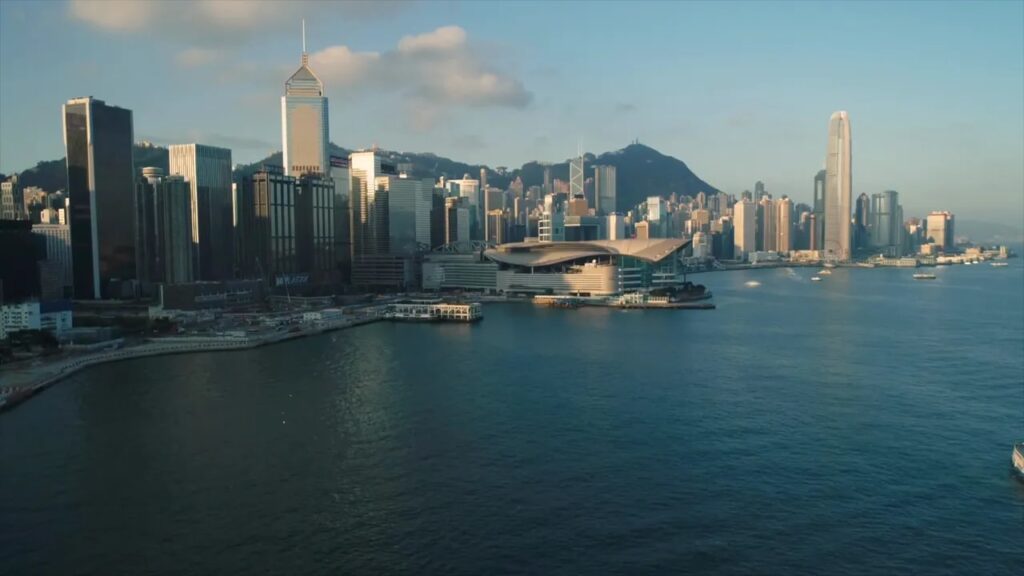
The market reaction was swift. Futu’s US-listed shares fell 27%, while Up Fintech, the owner of Tiger Brokers, dropped 25%. The Nasdaq Golden Dragon China Index also declined as investors began pricing in the possibility that mainland clients could be forced to unwind offshore positions over the next two years.
This is not simply a regulatory tidy-up. It is about capital control.
China has long maintained strict restrictions on moving money out of the country. In basic terms, it is difficult for households and companies in China to send large amounts of wealth abroad freely. These controls are meant to protect the currency, preserve financial stability, and reduce the risk of destabilising outflows.
But for years, mainland investors have found ways around the walls. Offshore broking accounts, Hong Kong-based channels, and underground banking networks have all offered routes into foreign assets.
That matters much more when confidence at home is under pressure.
Why Beijing is worried about capital flight
Bloomberg Intelligence estimated that so-called hot money outflows reached $1.04 trillion in 2025, the largest annual outflow in its dataset going back to 2006. That is a striking figure and one that helps explain why regulators are now acting so aggressively.
China has seen this movie before. In 2015 and 2016, after a surprise yuan devaluation and a stock market crash, money rushed out of the country. Beijing responded by burning through vast foreign exchange reserves and tightening controls. The trauma of that episode still looms over policymakers. Even now, despite this year’s rebound, the CSI 300 remains below its 2015 peak.
The current risks are different in detail but similar in direction:
- the property sector remains weak
- consumer confidence has been soft
- returns on domestic assets have become less attractive
- geopolitical tension has made offshore diversification more appealing
There is also a political signal embedded here. When households and firms try to move money abroad in large volumes, it suggests they are either losing faith in the domestic outlook or at least trying to hedge against further deterioration.
That is exactly the kind of behaviour Beijing wants to stop before it becomes self-reinforcing.
The feared cycle
The worst-case scenario for Chinese authorities is a classic confidence spiral:
- investors become more pessimistic
- money leaves the country
- the yuan weakens
- more people rush to protect savings offshore
- authorities are forced into tighter controls, intervention, or policy trade-offs elsewhere
In an extreme case, uncontrolled capital flight can hurt banks, depress domestic asset prices, reduce investment, and undermine confidence in the entire financial system.
That is why this latest enforcement drive should be understood as something broader than a campaign against a few brokers. It is a warning. Beijing wants capital to remain inside channels the state can monitor, regulate, and if necessary shut down.
This concern over financial fragility also connects with the broader economic story unfolding in China. The property market remains one of the biggest reasons households are nervous, and that makes capital controls more politically and economically sensitive. There is useful background on that wider theme in this earlier analysis of tentative property stabilisation and broader economic weakness.
Xi and Putin showcase strategic alignment, but also an increasingly unequal partnership
Xi Jinping’s latest meeting with Vladimir Putin in Beijing was heavy on symbolism and geopolitical messaging.
The visit came just days after Xi hosted Donald Trump, reinforcing Beijing’s effort to present itself as a central power in a fractured international system. Chinese and Russian officials framed the summit as a defence of “multipolarity” and stability against what they described as American unilateralism.
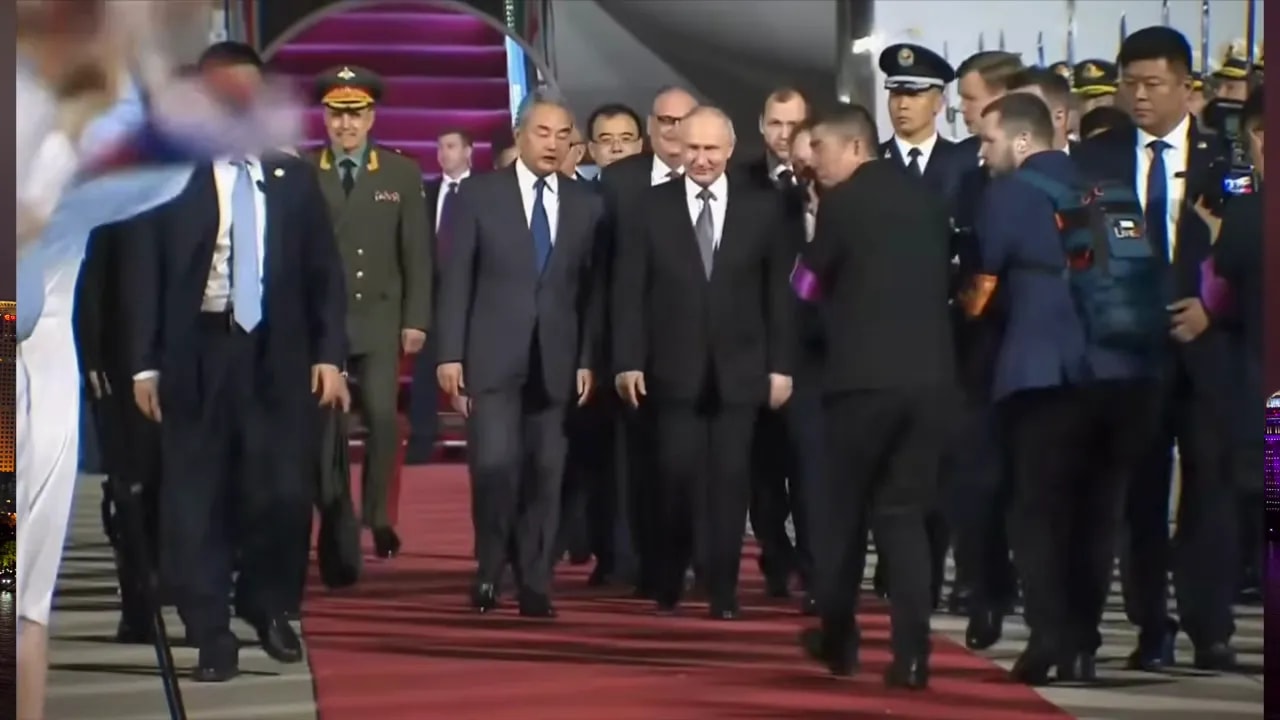
The leaders move down the red carpet under security presence—an image of coordinated state ceremony
 while questions remain about key deliverables like Power of Siberia 2.
The optics were carefully managed. Xi hosted Putin for tea. The two leaders emphasised their long relationship and “deep friendship". Chinese state media highlighted shared opposition to hegemonic politics.
The language was not subtle. Xi criticised the “tide of unilateral hegemony", a clear shot at Washington. Joint statements after the summit criticised US military actions in the Middle East, condemned the proposed Golden Dome missile defence initiative, and warned against what they called the return of the “law of the jungle” in global affairs.
They also took aim at US missile deployments in Asia, especially in the Philippines and Japan.
None of this is surprising. China and Russia have spent years building a common narrative around resistance to US-led power. But there was one issue many were watching more closely than the rhetoric.
No breakthrough on the Power of Siberia 2 pipeline
Despite all the warm language, the summit did not deliver an agreement on the long-discussed Power of Siberia 2 gas pipeline.
That is significant.
The project would send 50 billion cubic meters of natural gas each year from Western Siberia to China. For Moscow, the pipeline has become strategically important after the collapse of much of its European gas market following the invasion of Ukraine.
Russian officials had hinted a breakthrough might finally be possible, especially given turbulence in global energy markets and instability around the Strait of Hormuz. But talks once again stalled over familiar issues: price, supply flexibility, and contract terms.
A Kremlin spokesperson said only “details” remained unresolved. Analysts have heard that line for years.
The failure matters because it illustrates the changing balance inside the relationship. Russia urgently needs new customers, financing, and strategic depth. China, by contrast, has options.
Beijing is still buying large volumes of discounted Russian oil and gas. It is still strengthening trade and institutional ties. But it is doing so on its own timetable and on terms that preserve leverage.
Why China holds the stronger hand
Since the Ukraine war began, Russia has become more dependent on China across multiple fronts:
- energy exports
- technology imports
- machinery and vehicles
- financial settlement
- diplomatic support
Bilateral trade has now surpassed $200 billion annually, up more than 50% since 2022. Russia increasingly sells China discounted oil, coal, agricultural products, and raw materials. China sends back machinery, electronics, vehicles, and dual-use industrial components.
That is a relationship with clear mutual benefits, but it is not one of equals.
China can cherry-pick. Russia increasingly cannot.
That asymmetry was visible in Beijing’s refusal to rush the pipeline deal. If Moscow needs the agreement more than Beijing does, Beijing has every incentive to hold out for better terms.
What the summit did produce
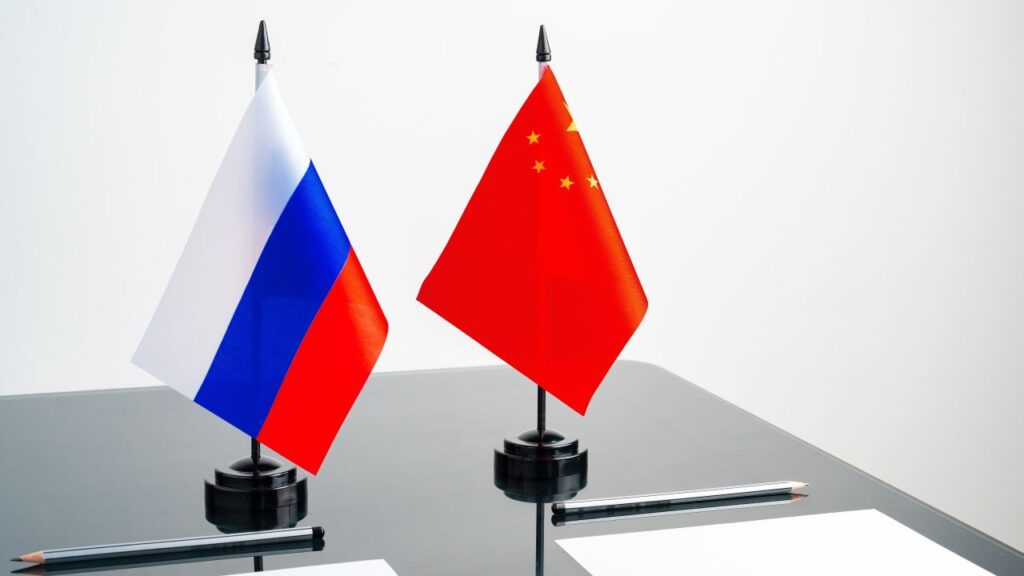
Even without the pipeline breakthrough, the meeting generated roughly 20 cooperation documents covering:
- infrastructure
- transportation
- agriculture
- finance
- science
- education
One notable project was the expansion of the Baikalsk-Manzhouli rail crossing, the busiest rail gateway between the two countries. The plan adds a second railway line and is expected to increase annual freight capacity by 11 million tonnes by 2030.
This is not trivial. As sanctions and geopolitical pressure continue redirecting Russian exports away from Europe and toward Asia, rail logistics become even more important.
Financial integration is deepening too. Shortly after Putin returned to Moscow, Russia announced plans for another major yuan-denominated government bond issuance. Moscow is increasingly using Chinese currency financing to help cover budget deficits driven by military spending and weaker oil revenues.
That helps Russia reduce exposure to the US dollar and Western financial systems. It also extends the international reach of China’s currency and financial architecture.
For more on the summit itself and its immediate diplomatic setting, see this related update on Putin’s Beijing visit and talks with Xi Jinping.
The deeper long-term shift inside Russia
Perhaps the most important development is not the trade data or the pipeline negotiations, but the gradual spread of Chinese institutional and cultural influence inside Russia.
As Russia’s links with Europe collapse, China is increasingly filling the vacuum. Visa-free travel arrangements, scholarships, scientific partnerships, and education exchanges are drawing younger Russians closer to China. Even anecdotal signals point in the same direction, including growing demand for Russian-language community spaces in cities with changing Eurasian demographics.
Russia once imagined itself as a great European or at least balanced Eurasian power. Today, weakened by war and cut off from much of the West, it is becoming steadily more reliant on China for trade, finance, technology, and diplomatic shelter.
For Xi, that opens obvious opportunities. Beijing gains access to cheap resources, more influence across Eurasia and the Arctic, and a large geopolitical partner willing to challenge US power. But China is plainly determined to ensure the relationship develops on Chinese terms.
The strategic partnership is real. So is the hierarchy inside it.
If the current trajectory continues, Russia’s shift from senior partner to junior partner may prove one of the most consequential geopolitical changes of the decade.
China’s property market may be stabilizing in top cities, but the national crisis is far from over
China’s half-decade property crisis may finally be showing faint signs of stabilisation in some of its largest cities. That is the good news.
The bad news is that the structural damage remains immense.
According to data compiled by UBS, home prices in China’s four tier-one cities, Beijing, Shanghai, Shenzhen, and Guangzhou, rose roughly 2% between February and April. That modest rebound follows a collapse of around 38% from their 2021 peaks.
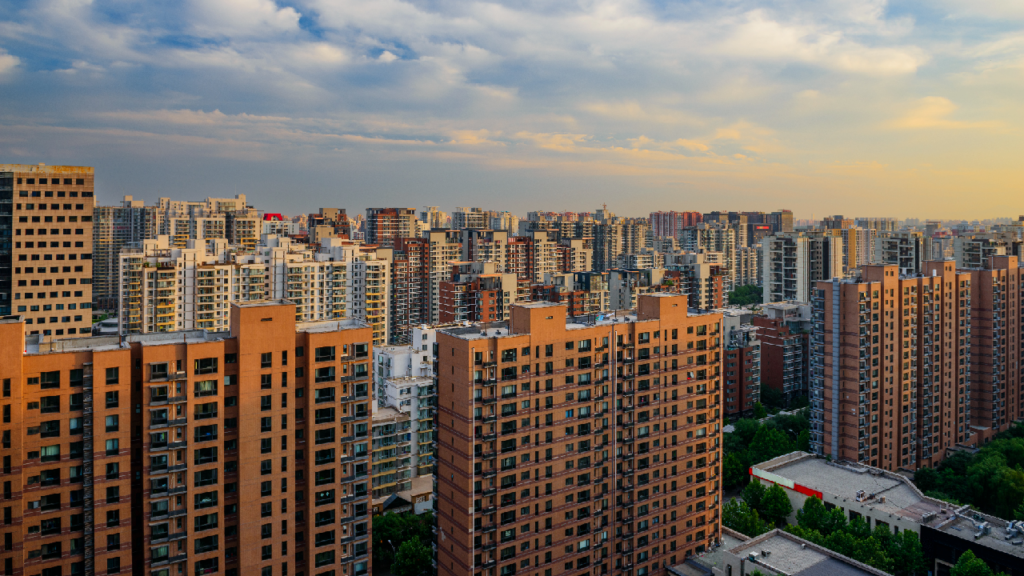
wealth, spending, and confidence.
The strongest signs of improvement appear to be in Shanghai and Shenzhen, where local governments have eased mortgage restrictions and expanded access to low-interest housing loans. Some analysts see those measures as the equivalent of a meaningful rate cut for homebuyers.
That may support a bottoming process later this year in selected urban markets.
But caution is essential here. China’s property slump is not a story about four cities. It is a story about a national oversupply problem so large that it continues to drag on household wealth, local government finances, and consumer confidence.
The scale of oversupply is staggering
Economists estimate that China has roughly 90 million vacant or unfinished apartments nationwide.
That number is extraordinary. It implies enough empty rooms to house the entire population of countries such as Brazil or Indonesia.
In smaller cities, prices continue to fall sharply as younger residents gravitate toward wealthier coastal hubs. Even if Beijing, Shanghai, Shenzhen, and Guangzhou are stabilising, hundreds and indeed thousands of smaller cities are still moving in the wrong direction.
In Yancheng, north of Shanghai, local residents say prices have roughly halved in recent years as demand dried up. Empty developments, unfinished projects, and poor rental yields continue to define much of the landscape.
That pattern has been visible for years. Massive roads, sprawling apartment blocks, and very few people. It is the kind of imbalance that looked unsustainable long before major developers began to unravel.
Why the property slump hurts so much in China
Property dominates household wealth in China far more than in most advanced economies. Surveys suggest Chinese households hold roughly three-quarters of their wealth in real estate. Around a quarter of urban families own two or more homes.
That concentration magnifies the pain when housing falls.
As home values decline:
- households feel poorer
- consumer confidence weakens
- spending slows
- private investment becomes more cautious
The China Household Finance Survey found that average urban household net wealth fell from about $163,000 to $130,000 between 2022 and 2024.
That is a major hit.
It also helps explain why China’s recovery has often looked patchy and uneven. Some elite urban clusters may be stabilising, but broad sections of the country are still dealing with falling asset values and damaged expectations. It is a K-shaped recovery, and then some.
Why this is not 2008 America, but still dangerous
China’s housing crash differs from the US crash in 2008 in one important way. Chinese banks generally required large down payments, which has helped preserve banking system stability.
But that has not made the pain disappear. It has simply shifted more of the burden onto homeowners rather than lenders.
Households absorbed much of the loss directly through declining wealth and stalled projects.
That creates a slower-burning but still serious macroeconomic problem. Weak housing demand and diminished confidence can suppress consumption for years. Local governments, which rely heavily on land sales for revenue, are also under growing fiscal pressure as property transactions remain weak.
The deeper fear in Beijing is not a dramatic banking collapse. It is a long period of stagnation more reminiscent of post-bubble Japan: weak housing demand, soft confidence, impaired balance sheets, and an economy that struggles to rediscover momentum.
This broader securitised approach to economic weakness and external pressure is visible across multiple policy areas, including the leadership’s framing of global disorder and strategic competition. There is relevant context in this analysis of Xi’s warnings about global disarray and China’s slowing trade engine.
What ties these stories together
At first glance, a crackdown on offshore brokers, a Xi-Putin summit, and tentative price gains in Shanghai real estate may seem like unrelated stories. They are not.
All three point to the same underlying reality.
China’s leadership is trying to manage a period of rising fragility by tightening control at home while expanding leverage abroad.
- On capital flows, Beijing wants money to stay inside supervised channels.
- On diplomacy, it wants to shape a more favourable international environment while extracting strategic advantage from a weakened Russia.
- On the economy, it is trying to stabilise the property sector without admitting how deep the structural problems remain.
This is why a China news update right now cannot be read as a collection of isolated headlines. The financial story, the geopolitical story, and the property story all reinforce one another.
Household confidence affects capital outflows. Property weakness affects domestic consumption and the need for tighter financial management. External tensions shape energy risk, trade routes, and the appeal of strategic partnerships. And all of it feeds into Beijing’s preference for control, surveillance, and state-managed channels.
Conclusion
The immediate headlines are straightforward enough.
China is cracking down harder on unauthorised offshore investment platforms. Xi and Putin are presenting a united front against US influence while quietly exposing the imbalance in their own relationship. And China’s property market is showing limited stabilisation at the top while remaining deeply troubled almost everywhere else.
But the larger story is one of constraint.
Beijing is not acting from a position of relaxed confidence. It is responding to capital outflow risk, domestic wealth destruction, and a global environment it sees as more hostile and more unstable. There are still areas where China retains considerable leverage, especially in its dealings with Russia. Yet on the home front, the economic repair job is unfinished and likely to remain so for quite some time.
For now, the signs of stabilisation are real but faint. The controls are tightening. The external partnerships are deepening. And the structural pressures have not gone away.
FAQ
Why is China cracking down on offshore stock trading now?
Because authorities are increasingly worried about capital flight, pressure on the yuan, and the ability of households and firms to move wealth abroad through channels the state cannot fully monitor. The crackdown is meant to keep capital inside the domestic financial system and under closer control.
Which firms were targeted in the latest crackdown?
Chinese regulators said they plan to punish Futu Holdings, Tiger Brokers, and Longbridge Securities for operating on the mainland without the required licenses. Hong Kong regulators also announced restrictions affecting accounts used by mainland clients.
Why did the Xi-Putin summit matter if no pipeline deal was reached?
The summit still mattered because it demonstrated continued strategic alignment between China and Russia on major geopolitical issues, including opposition to US influence. It also produced multiple agreements in infrastructure, trade, finance, and education. But the failure to finalise Power of Siberia 2 highlighted China’s stronger bargaining position.
What does the stalled Power of Siberia 2 project reveal?
It shows that Russia needs the deal more than China does. Moscow has lost much of its European gas market and wants new long-term buyers. Beijing, however, has more flexibility and appears unwilling to sign unless the pricing and terms are clearly favourable.
Is China’s property market recovering?
Only in a limited sense. Some top-tier cities such as Shanghai and Shenzhen are showing tentative signs of stabilisation after sharp declines. But the broader national market remains under severe pressure because of oversupply, unfinished projects, weak demand in smaller cities, and damaged household confidence.
How serious is China’s housing oversupply problem?
It is extremely serious. Estimates suggest there are around 90 million vacant or unfinished apartments nationwide. That oversupply continues to weigh on prices, local government finances, household wealth, and broader economic confidence.
Why does the property downturn matter so much for the wider economy?
Because Chinese households hold a very large share of their wealth in real estate. When home prices fall, people feel poorer and tend to spend less. That reduces consumption, weakens confidence, and adds to economic slowdown. It also strains local governments that depend heavily on land sales for revenue.
That is the latest China news update in broad terms: tighter financial controls, deeper but more unequal strategic alignment with Russia, and a property market that may be stabilising in a few places while remaining deeply fragile overall.