There is a very particular kind of optimism that emerges whenever Beijing and Washington agree to stop throwing bricks through each other’s windows. It is the optimism of people who have forgotten that both sides still own the bricks, have warehouses full of them, and remain deeply convinced the other side started it.
That is the context for the latest apparent thaw in US-China relations. Less than two weeks before Xi Jinping’s expected trip to Washington, officials on both sides are working through tariff reductions, agricultural purchases, military engagement and security cooperation. It all sounds encouraging, because it is encouraging. But it is also narrow, tactical and profoundly conditional.
At the same time, China’s domestic economy is showing why Beijing has such a strong interest in temporary calm abroad. Authorities are trying to stop big firms from using small suppliers as involuntary lenders, rein in ruinous price wars, and halt a potentially absurd battery-capacity boom before it becomes solar-industry levels of carnage.
Then there is AI: DeepSeek reportedly pursuing a domestic listing while releasing a faster model, Moonshot AI chasing colossal revenue ambitions, and investors once again trying to turn every promising Chinese model into a lottery ticket with a suspiciously large minimum buy-in.
Finally, Xi’s first India visit since 2019 offers a useful reminder that diplomatic warmth does not dissolve geopolitical reality. China and India may be trying to lower the temperature. They are not suddenly becoming friends.
Key Takeaways
- Proposed tariff cuts, soybean purchases and renewed military contact point to a US-China guardrail effort, not a strategic settlement.
- Beijing’s crackdown on overdue payments, below-cost pricing and battery expansion reveals deep pressure on corporate margins and liquidity.
- DeepSeek and Moonshot are rapidly commercialising, but both valuation and operating-cost questions remain central.
- Xi’s India visit may stabilise relations, yet borders, Pakistan, Indian Ocean rivalry and competing regional ambitions remain unresolved.
Table of Contents
- A US-China thaw, not a US-China reset
- Beijing is trying to stop businesses from bleeding each other dry
- DeepSeek and Moonshot: China’s AI race gets more commercial
- Xi’s India visit can lower tensions without solving the rivalry
- The bottom line
A US-China thaw, not a US-China reset
The most concrete development is a proposed reciprocal reduction in tariffs on roughly US$30 billion worth of goods from each country. China’s Commerce Ministry has said the two economic teams are working to implement the consensus reached during the leaders’ previous meeting in Beijing, with an agreement potentially ready in time for Xi’s Washington visit.
That would be a meaningful gesture. Tariffs are not merely a technical trade-policy dispute; they have become one of the most visible symbols of the bilateral relationship’s descent into managed hostility. Even a limited rollback would signal that both governments see some value in avoiding a further spiral.
Agriculture is also doing a lot of diplomatic heavy lifting. Chinese buyers reportedly purchased about one million tonnes of US soybeans during the week, bringing purchases closer to the annual commitment of 25 million tonnes through 2028. US officials expect Chinese purchases of other American agricultural products to reach US$17 billion this year, potentially taking the total to US$30 billion once soybeans are included.
This matters because agricultural trade has always been politically useful. It creates a visible constituency for stability in the United States, gives Beijing a relatively straightforward concession to make, and allows both sides to claim progress without conceding the genuinely difficult issues.
Those difficult issues are still very much there.
- Technology restrictions and controls over advanced chips remain unresolved.
- Taiwan remains the central strategic flashpoint in the relationship.
- Iran, regional security and China’s wider geopolitical role continue to generate friction.
- National-security concerns increasingly overlap with trade, investment and corporate operations.
Washington has also expanded warnings in its China travel advisory while maintaining the same formal risk level. That is not exactly the behaviour of two governments preparing to sing kumbaya around a campfire.
Military engagement is nevertheless rising from its recent low base. The Pentagon is sending its principal director for China, Taiwan and Mongolia to lead the US delegation at the Xiangshan Forum in Beijing. That is an upgrade from the previous year, when Washington sent only a defence attaché. China and the United States have also cooperated in law enforcement, with Chinese police arresting 21 suspects in an August investigation into synthetic-cannabinoid precursors, partly using US-supplied information.
These are guardrails. They are not reconciliation. The relationship remains one of systemic competition, but both governments appear to be trying to make it less likely that a single trade dispute, military incident or security scandal turns into something significantly worse.
Beijing is also working hard to reassure American businesses. The National Development and Reform Commission recently met representatives from more than 60 US firms, including Nvidia, Dell, Amazon Web Services and Honeywell, to discuss the next five-year plan and the investment environment. An AmCham Shanghai survey found confidence recovering from record lows, with domestic Chinese competition overtaking bilateral tensions as firms’ leading concern for the first time since 2022.
That is not necessarily a vote of confidence in China’s market. It may simply mean that many companies have moved from worrying about the political fight to worrying about whether they can survive the commercial one.
Beijing is trying to stop businesses from bleeding each other dry.
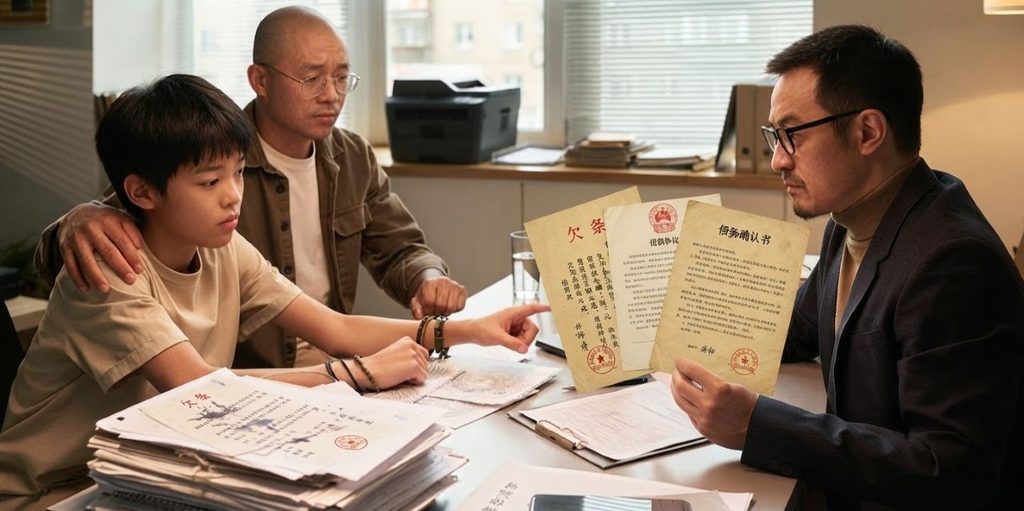
China’s next problem is more domestic and considerably uglier: delayed payments, squeezed suppliers and companies selling products at prices that may not even cover their own costs.
The State Council has ordered stronger supervision of major companies that delay payments to small and medium-sized enterprises. Firms deliberately extending payment terms can be summoned by multiple departments, ordered to correct their behaviour and punished under the anti-unfair competition law. Listed firms carrying substantial accounts payable will face stricter disclosure requirements, including reporting average payment periods and their use of commercial bills or electronic payment instruments.
Central state-owned enterprises have been instructed to pay smaller suppliers entirely in cash. Authorities are also reducing the maximum maturity of electronic payment instruments to six months.
That may sound administrative, but it is a serious intervention into how financial pressure moves through an economy. When a dominant customer delays payment, a smaller supplier has two bad options: wait for the money it is owed or finance the gap itself. In practice, the powerful firm has transferred its own financing costs down the chain to a business least able to absorb them.
It is corporate bullying with paperwork.
The policy strongly suggests the problem remains widespread despite previous campaigns. Large firms and local state-owned enterprises are often financially strained themselves, while smaller suppliers typically lack the leverage to demand better terms. The result is a chain of liquidity stress: one company’s unpaid bill becomes another company’s inability to pay wages, purchase materials or service its own debt.
Beijing is simultaneously taking aim at what it calls “involution-style competition”: relentless price-cutting that destroys margins across entire sectors. The National Development and Reform Commission and the State Administration for Market Regulation plan clearer cost-accounting standards for major industrial products, making it easier to identify firms selling below cost to eliminate rivals.
The auto sector has already received similar guidance, with manufacturers prohibited from using below-cost factory prices to monopolise the market. This is consistent with Beijing’s broader attempt to end subsidy-driven, margin-destroying competition, a dynamic also explored in this analysis of China’s delivery price war and fragile industrial recovery.
The battery industry may be the clearest example of why officials are worried. Authorities have reportedly paused approvals for new power and energy-storage battery projects while reviewing industry capacity. Around 100 expansion projects, representing 2,608 gigawatt-hours of annual capacity, were signed in the first seven months of 2026. That is far beyond China’s entire battery output in 2025.
It is exactly the sort of number that makes policymakers wake up in a cold sweat. China has already seen what happens when industrial policy, easy expansion and competitive panic combine in solar: overbuilding, collapsing prices and multibillion-dollar losses. Beijing appears determined to avoid repeating the experience in batteries.
The underlying problem is brutally simple. Weak demand, excess investment and thin margins do not produce healthy innovation by themselves. They produce firms desperately trying to survive long enough for someone else to fail first.
DeepSeek and Moonshot: China’s AI race gets more commercial
While traditional manufacturers fight over invoices and pricing, China’s AI sector is moving into a more feverish commercial phase in China.

DeepSeek, the Hangzhou-based company frequently presented as China’s answer to OpenAI, is reportedly preparing for an initial public offering on Shanghai’s STAR Market. Citic Securities has reportedly been selected to prepare the listing, which could begin this year, although the plans remain private and may change.
The company is also releasing its V4.1 Flash model, which it says outperforms the earlier V4 Pro in response speed, computing costs, total processing time and other key measures. The model reportedly underwent complete retraining and uses a new architecture rather than being a minor incremental update.
Early testers have described it as exceptionally fast. But speed does not automatically mean value. Some testers found usage credits disappeared remarkably quickly, suggesting that rapid output may come with rapid token consumption. If that is true, the model’s real-world economics could be considerably less attractive than its advertised unit price initially suggests.
This is the slightly boring but essential part of the AI story. Benchmarks, parameter counts and launch-day excitement are nice. Revenue, usage costs, infrastructure spending and repeatable enterprise demand are nicer.
DeepSeek is reportedly hiring around 150 engineers across research platforms, API services, data infrastructure, agent frameworks and computing systems. The combination of a new model, recruitment drive and IPO planning points to an organisation trying to become a commercial platform rather than merely a celebrated research lab.
That transition will invite scrutiny. A public listing would provide better access to capital, but it would also force far harder questions about valuation, revenues, technology claims and the durability of its business model.
Investor enthusiasm has already created a murky secondary market around DeepSeek. Special investment vehicles holding share allocations have reportedly charged unusually high upfront fees. One private offering allegedly valued the company at roughly US$70 billion while seeking minimum commitments as high as US$100 million. This is where the words “exclusive opportunity” should generally cause a person to sit down, breathe deeply and read every line of the paperwork twice.
Moonshot AI is pursuing its own extraordinary trajectory. The Beijing-based company reportedly aims for US$2 billion in annualised revenue by year-end after the breakout success of Kimi K3. Its annual recurring revenue reportedly exceeded US$1 billion in August, up from US$300 million in June.
Kimi K3, a 2.8-trillion-parameter model, achieved strong benchmark results while undercutting leading American rivals on price. Moonshot is now expanding beyond programmers and individual entrepreneurs into enterprise deployment and cloud licensing and is reportedly discussing revenue-sharing arrangements with Microsoft, Amazon and Google.
It is also raising funds at a potential US$50 billion valuation ahead of a Hong Kong IPO that could come this year. Yet there is an enormous gap between Chinese AI firms’ growth ambitions and the established scale of US leaders such as Anthropic and OpenAI.
Moonshot also faces scrutiny after Anthropic accused it of covertly routing requests through Claude and potentially using the responses for training. Moonshot had not publicly addressed the allegations. The case highlights a wider issue in the AI race: rapid model development is not just a question of capital and talent but of data access, platform dependence and increasingly contentious rules around how systems learn.
Xi’s India visit can lower tensions without solving the rivalry.
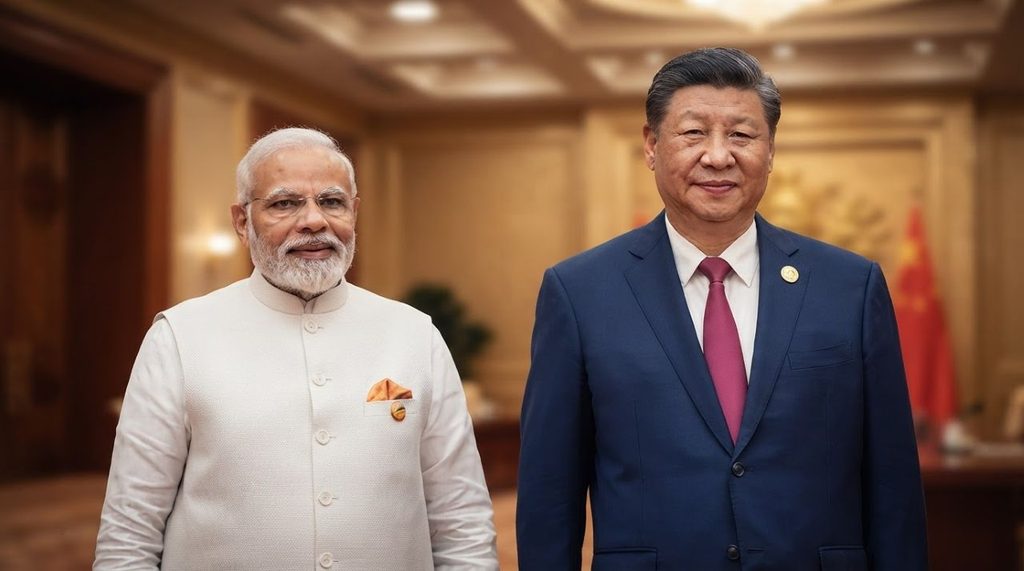
Xi’s arrival in New Delhi for the 18th BRICS summit marks his first visit to India since 2019 and the clearest indication yet that Beijing and New Delhi are attempting a limited thaw.
The central event is an expected bilateral meeting with Prime Minister Narendra Modi. Although the two leaders attended the Shanghai Cooperation Organisation summit the previous week, they did not hold formal talks. Their discussions in New Delhi are expected to cover the direction of bilateral ties, border management, trade, investment and people-to-people exchanges.
The significance of that is hard to overstate. The deadly 2020 clash along the Line of Actual Control drove relations into their deepest freeze in decades. Both sides have taken cautious steps to ease border tensions during the past two years, but the territorial dispute remains unresolved and suspicion still constrains cooperation.
Trade is another complication. India has a vast goods deficit with China, reflecting its dependence on Chinese machinery, electronics and pharmaceutical inputs. New Delhi has kept extensive restrictions on Chinese investment introduced after the border clash while continuing to raise concerns about market access and Chinese controls on high-technology exports.
Still, some Indian policymakers see carefully controlled Chinese investment as useful to India’s manufacturing ambitions. Chinese companies may find it easier to acquire minority stakes in electronics and solar manufacturing, particularly through joint ventures intended to transfer capital and expertise to Indian partners.
The international environment is giving both governments an incentive to be pragmatic. China and India have both faced pressure from Washington’s trade policies, while US-India ties have encountered strain over matters including India’s purchases of Russian oil. Beijing would naturally prefer an India that is less willing to align with the United States as part of a wider containment strategy.
But this is not a genuine reset. Former Indian ambassador Gautam Bambawale’s formulation is the sensible one: the 2020 clash pushed relations ten steps backward, while the recent improvement represents only three steps forward.
China and India remain divided by territorial claims, Beijing’s close relationship with Pakistan, rivalry across the Indian Ocean and their competing ambitions to lead the Global South. The diplomatic temperature may be improving. The strategic weather system is not.
The bottom line
Across all four developments, the same pattern keeps appearing: Beijing is trying to stabilise risks without conceding the underlying contest.
With Washington, it is reducing the chance of escalation while preserving the broader rivalry. At home, it is attempting to contain the consequences of overcapacity and corporate financial stress without abandoning the industrial model that helped create them. In AI, it is encouraging national champions to scale up, while commercial reality begins to intrude on the hype. With India, it is easing tensions because both sides have good reason to avoid confrontation, even as their geopolitical competition endures.
None of this is trivial. Tactical stabilisation can prevent a great deal of damage. But tactical stabilisation is also not transformation, and confusing the two is how policymakers, investors and commentators end up surprised when the next crisis arrives.
Frequently Asked Questions
Why are the United States and China discussing tariff reductions?
Both sides appear to want a more constructive atmosphere before Xi Jinping’s expected Washington visit. The proposed reciprocal cuts cover about US$30 billion in goods from each country and sit alongside progress on agricultural purchases and official engagement.
Why is China targeting overdue payments to small suppliers?
Delayed payments can shift financing pressure from large customers onto smaller firms that have weaker bargaining power and less access to credit. Beijing’s new measures aim to reduce this chain of liquidity stress by improving disclosure, shortening payment instruments and requiring central state-owned enterprises to pay small suppliers in cash.
What is China’s concern about battery overcapacity?
Reported battery expansion plans greatly exceed recent national output, raising the risk of destructive price wars and heavy losses. Authorities appear to be trying to prevent the battery sector from repeating the solar industry’s experience of excessive factory construction and collapsing profitability.
Does Xi’s India visit mean China and India have resolved their differences?
No. The visit signals a cautious effort to stabilise relations after the 2020 border clash, but the border dispute, China’s relationship with Pakistan, Indian Ocean competition and broader strategic distrust remain substantial obstacles.