China opened the week with a heavy mix of disaster response, fiscal pressure, industrial tragedy, financial policy, and maritime friction.
On one side, authorities were scrambling to manage the impact of a major storm system after nearly 2 million people were evacuated along the eastern coast. On another, policymakers were confronting a very different kind of disruption: the speed of China’s electric vehicle transition is now outrunning the tax system that used to fund roads and support the traditional auto industry.
There was also a fatal factory fire in Fujian that has renewed scrutiny of workplace safety enforcement, a new package of measures aimed at strengthening Hong Kong’s role in offshore renminbi finance, and a fresh round of diplomatic sparring over the South China Sea arbitration ruling.
Taken together, these stories show the same underlying pattern. China is dealing with immediate shocks while also trying to adjust to deeper structural changes that are becoming harder to ignore.
Table of Contents
- Storm emergency: nearly 2 million evacuated as Typhoon Bavi hits the east coast
- Electric vehicles are winning faster than expected, and the tax system is falling behind
- Factory fire in Fujian puts industrial safety back under the spotlight
- Beijing rolls out new measures to reinforce Hong Kong’s offshore RMB role
- South China Sea dispute returns to the diplomatic front
- What these developments say about China right now
- FAQ
Storm emergency: nearly 2 million evacuated as Typhoon Bavi hits the east coast china
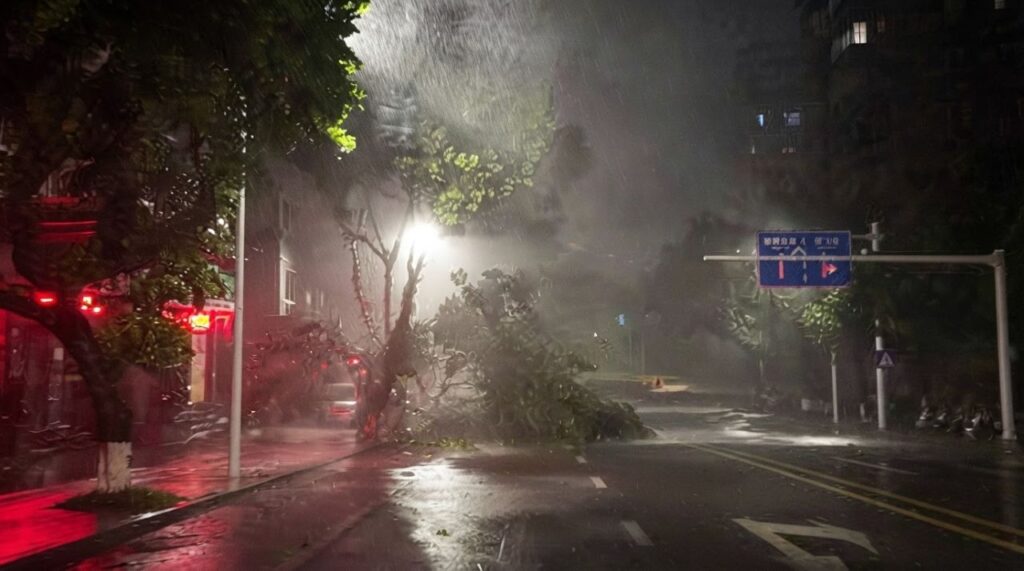
China evacuated nearly 2 million people as Typhoon Bavi, the second major storm to hit the country within a week, came ashore along the eastern seaboard with destructive winds and intense rainfall.
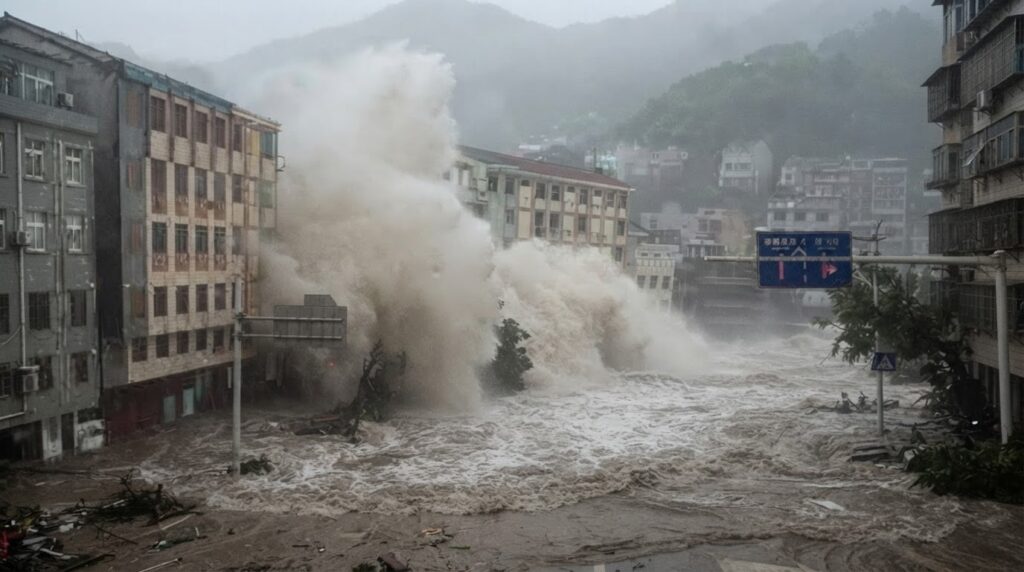
The storm first made landfall in Taizhou in Zhejiang Province on Saturday evening, then hit again near Wenzhou around midnight. Even after weakening from a super typhoon to a severe tropical storm, it remained dangerous because of the enormous amount of moisture it was carrying. By Sunday morning, the centre of the storm had moved to Hangzhou and continued northwest through Anhui before heading toward the Yellow Sea.
The response was enormous. More than 1.7 million people were evacuated in Zhejiang alone, with additional relocations in neighbouring provinces. Schools and workplaces were shut, outdoor activity was suspended, and transport disruption spread quickly. Roughly 400 flights were cancelled, along with dozens of train services.
Wenzhou was among the hardest hit urban areas. Hundreds of thousands of residents were moved out, and local reports described powerful winds tearing through the city. Roof tiles and tree branches were reportedly falling as the storm passed through.
This was not an isolated event in the region. Before reaching China’s coast, Bavi had already battered Japan’s southern islands and brought heavy rain to Taiwan after passing north of the island. Earlier in its path, landslides linked to the storm killed at least 17 people in the Philippines.
The broader concern is cumulative damage. Southern China is still recovering from Typhoon Maysak, which killed at least 39 people earlier in the previous week and caused serious agricultural losses. Two major storms arriving almost back to back put pressure on emergency management systems, transport networks, and local economies all at once.
That pattern matters. Extreme weather is not only a humanitarian issue. It is also a logistics issue, a fiscal issue, and in many cases a food supply issue. Repeated disruptions to farms, freight routes, and urban infrastructure can have effects long after floodwaters recede.
For related pressure points on shipping and regional risk, see this recent China update on Hormuz shipping risks and related tensions.
Electric vehicles are winning faster than expected, and the tax system is falling behind
China’s electric vehicle push has moved so quickly that it is now creating a major fiscal problem.
When Beijing rolled out its long-term new energy vehicle strategy, the expectation was that electric and hybrid models would dominate new car sales by 2035. Instead, that threshold has effectively already been reached. New energy vehicles accounted for more than half of all new passenger vehicle sales in 2025, about a decade earlier than planned.
That is a remarkable industrial success. It is also exposing weaknesses in the country’s vehicle tax structure.

The old system was built for gasoline cars. Taxes are largely tied to engine displacement and fuel consumption. Fully electric vehicles, by contrast, pay little or no fuel-related tax. Yet they still use the same roads, and in many cases their heavier battery packs increase wear on road infrastructure.
That is where the problem becomes especially clear. A large share of road funding depends on fuel taxes, including a gasoline levy currently set at 1.52 yuan per litre. As sales of conventional cars decline, that revenue base is shrinking quickly.
The market shift is no longer theoretical. Domestic sales of traditional vehicles fell 37.5 percent year on year in May, while new energy vehicles captured nearly 57 percent of the market. That kind of swing puts serious stress on any tax model designed around combustion engines.
Officials and industry figures are now debating several possible fixes:
- Taxing electricity used for EV charging
- Introducing taxes on lithium batteries
- Creating a dedicated EV consumption tax
- Replacing fuel taxes over time with mileage-based road user charges
- Moving away from engine size and taxing lifetime carbon emissions or road usage instead
Each option comes with trade-offs.
Taxing charging electricity could provide a new revenue source, but it risks weakening incentives for EV adoption. Battery taxes could capture value within the supply chain but might add pressure to manufacturers already competing in a crowded market. Mileage-based charging sounds more neutral in theory, yet it is administratively harder and raises obvious questions about tracking, enforcement, and regional implementation.
The issue also overlaps with China’s local government incentives. Much of the tax revenue tied to automobiles goes to the central government, while local authorities often benefit more directly from attracting factories and investment. That dynamic can encourage more production capacity without equally strong incentives to build healthy end user markets. In sectors already showing signs of overcapacity, that matters.
Auto-related taxes still generate roughly 1.9 trillion yuan annually, more than 10 percent of total tax revenue. So this is not a minor technical adjustment. It is a significant fiscal redesign challenge.
China has spent years building the world’s largest EV market. Now it has to rebuild the public finance logic underneath that market. That is a much harder task than subsidising the initial rollout.
This also sits within a wider pattern of fiscal strain and changing local incentives. For more on that, this analysis on local governments tightening the tax net provides useful context.
Factory fire in Fujian puts industrial safety back under the spotlight
One of the most tragic developments was a deadly factory fire in Fujian province that killed at least 28 workers.
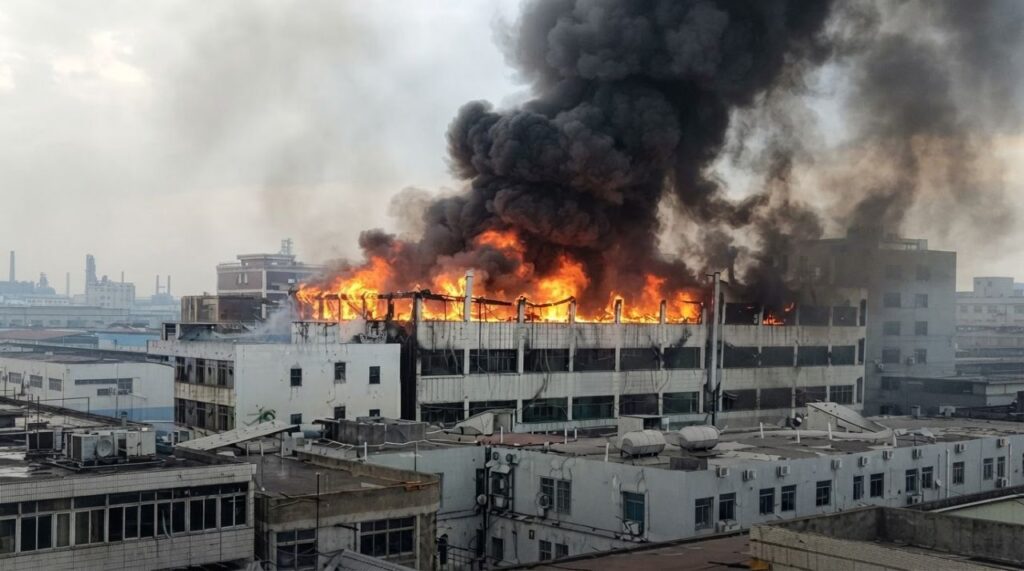
The blaze broke out around midday on Thursday at the Huitang Shoes Factory in Jinjiang, a city well known as a major footwear manufacturing hub. Preliminary findings indicated that the fire began in a first-floor workshop, trapping workers inside the building. Some reportedly had to wait for rescue on the roof.
Emergency services deployed 183 firefighters and 35 vehicles before eventually bringing the fire under control later in the afternoon. Authorities said top leadership ordered full rescue efforts, a rapid investigation into the cause, and strict accountability for those found responsible.
What makes this case especially disturbing is the gap between the company’s official registration and the actual number of workers on site. The factory was reportedly registered as employing just 12 people, yet 237 were inside when the fire broke out.
That discrepancy points directly to a longstanding regulatory problem. In industrial clusters like Jinjiang, many small manufacturers operate in ways that can diverge sharply from what is declared on paper. These so-called “ant factories” may officially appear small, but in practice, they can employ many more workers and expose them to much greater risk than inspections or filings would suggest.
The aftermath has already moved beyond rescue and into enforcement. Police detained factory executives and froze bank accounts as the investigation continued. The expectation now is that this case will trigger a broader nationwide round of workplace safety inspections and put local officials under added pressure.
Industrial safety crackdowns in China often follow a familiar cycle. A major accident occurs, central authorities order intensive inspections, local governments launch rectification campaigns, and enforcement tightens for a period. The real question is whether the underlying incentives change after the headlines fade.
That is the difficult part. In dense manufacturing areas, small factories are often deeply embedded in local supply chains and labour networks. Stronger enforcement can save lives, but it can also expose just how much production depends on underreported staffing, weak fire prevention, and compliance gaps that were tolerated until disaster struck.
Beijing rolls out new measures to reinforce Hong Kong’s offshore RMB role
China also announced a substantial package of financial reforms aimed at strengthening Hong Kong as the leading offshore renminbi hub.
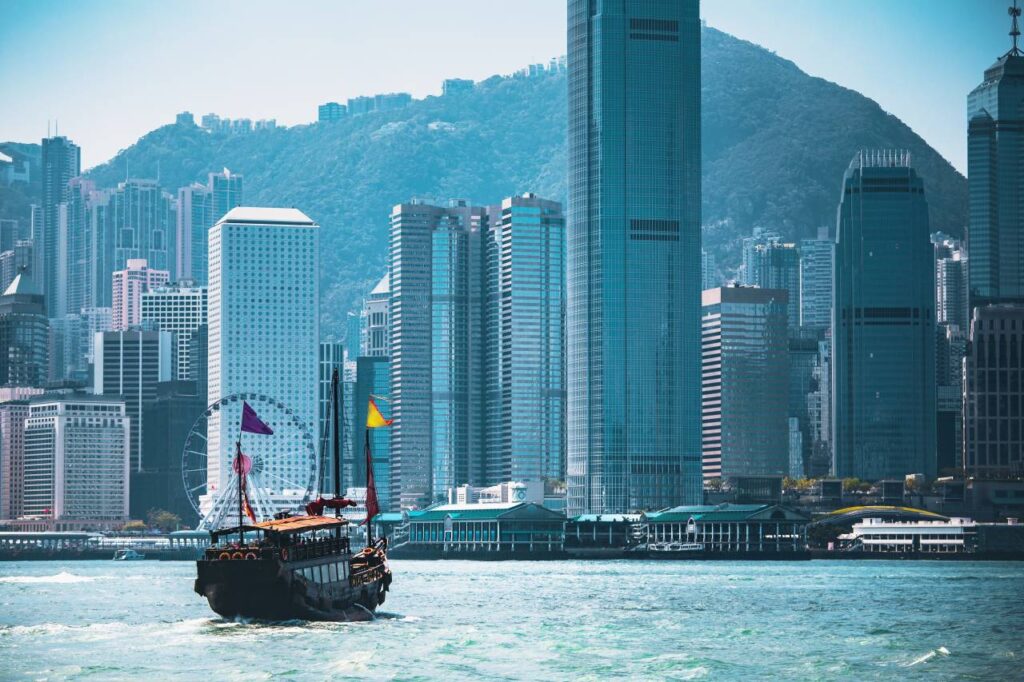
The policy direction is clear: deepen mainland Hong Kong financial connectivity, expand the city’s product range beyond equities, support wider international use of the RMB, and do all of this while trying to preserve financial stability in a fragmented global environment.
The headline measure was the expansion of the RMB business facility from 200 billion yuan to 500 billion yuan. This gives Hong Kong banks greater access to yuan funding through the Hong Kong Monetary Authority and provides more liquidity for the offshore renminbi market.
There was also a major increase in the annual Southbound Bond Connect quota, from 500 billion yuan to 800 billion yuan. That allows mainland institutional investors to buy more offshore bonds through Hong Kong.
Other planned adjustments include:
- Adding repo transactions to the Bond Connect framework
- Launching new Hong Kong dollar- and yuan-denominated bond products
- Expanding the scheme to include Macau’s bond market
- Introducing a five-year offshore RMB treasury bond futures contract
- Upgrading Bond Connect into a broader financial trading platform
- Strengthening gold clearing links between Hong Kong and the mainland
This is not just a technical package for financial professionals. It reflects a strategic objective that has been present for years but has become more urgent as geopolitical and financial fragmentation intensify.
Beijing wants broader international use of the renminbi and less dependence on the US dollar-centred system. Hong Kong remains central to that effort because it offers a bridge between mainland capital and global financial markets that no other Chinese city can replicate in the same way.
At the same time, this is not a simple story of linear RMB internationalisation. The challenge is not only creating more products and more liquidity. It is building trust, depth, and sustained foreign participation in a system shaped by capital controls, policy risk, and broader geopolitical tension.
Even so, the direction is unmistakable. Beijing is still investing heavily in Hong Kong’s role as a financial gateway, especially for offshore yuan business. In an era of sanctions risk, financial decoupling debates, and growing concern over dollar dependence, that matters.
South China Sea dispute returns to the diplomatic front
The final major development was Beijing’s renewed rejection of the 2016 South China Sea arbitration ruling, issued as several countries marked the ruling’s tenth anniversary with a joint statement.
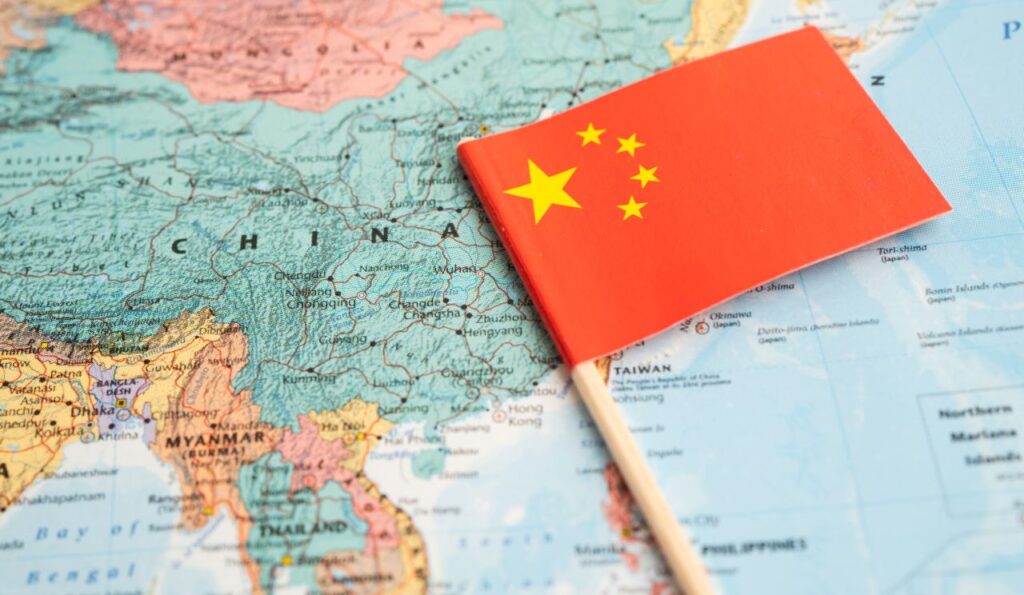
China’s foreign ministry again said the decision was illegal and invalid and insisted that Beijing neither accepts nor recognises it. The official argument remains that the tribunal’s decision has no binding force on China and that questions of territorial sovereignty and maritime boundaries fall outside the compulsory dispute settlement mechanisms under the UN Convention on the Law of the Sea.
The immediate trigger for the new statement was a coordinated declaration by 14 countries, including the United States, the Philippines, and Japan. That statement reaffirmed support for a free and open Indo-Pacific governed by international law and opposed unilateral coercion and the use of force.
Beijing responded sharply. It accused the Philippines of using the arbitration ruling to expand its maritime claims and said outside powers were exploiting the issue to interfere in regional affairs. Japan was singled out as well, with China accusing Tokyo of double standards and meddling beyond its region.
The legal and political divide here is longstanding, but it remains deeply consequential because the South China Sea is one of Asia’s most sensitive flashpoints.
China claims sovereignty over most of the waterway through the so-called Nine Dash Line, overlapping with the claims of the Philippines, Vietnam, Malaysia, Brunei, and Taiwan. Over the past decade, Beijing has built and militarised artificial islands, deployed coast guard and maritime militia vessels, and repeatedly confronted Philippine resupply missions at locations such as Second Thomas Shoal and Scarborough Shoal.
There are also persistent disputes with Vietnam over the Paracel and Spratly Islands, while Malaysia has protested Chinese vessel activity inside its exclusive economic zone.
The central fact remains unchanged: the 2016 tribunal ruling overwhelmingly favoured the Philippines, and Beijing has consistently rejected it. That means the legal dispute is unresolved in practice, and the strategic competition around it continues to intensify.
This story is never only about maps and legal arguments. It is about regional order, maritime access, alliance signalling, and the boundaries of coercion. It also intersects with broader friction involving Japan, Taiwan, and US regional posture, themes that continue to recur across the wider China News Update landscape.
For more on regional friction involving Taiwan, banking stress, and strategic signalling, see this related breakdown.
What these developments say about China right now
These stories may look disconnected at first glance, but they point to a common set of pressures.
- Emergency pressure: severe weather events are testing local disaster response and infrastructure resilience.
- Fiscal pressure: industrial transformation, especially in autos, is eroding legacy tax models.
- Regulatory pressure: deadly accidents continue to expose gaps between rules on paper and conditions on the ground.
- Financial pressure: Beijing is accelerating efforts to strengthen Hong Kong and widen renminbi use in a more divided global system.
- Geostrategic pressure: maritime disputes remain active and legally unresolved, with outside powers increasingly involved.
That is the bigger picture. China is not dealing with one single crisis. It is managing multiple forms of transition at once: climate-related shocks, industrial change, fiscal adaptation, regulatory enforcement, and external strategic rivalry.
That is what makes the current moment so important. A lot of the key challenges are no longer on the horizon. They are already here.
FAQ
Why did China evacuate so many people for Typhoon Bavi?
Authorities moved nearly 2 million people because the storm brought destructive winds and heavy rain across the eastern coast. Even after weakening, it still carried enough moisture to create serious danger, especially in already stressed areas recovering from an earlier typhoon.
What is the main tax problem created by China’s EV boom?
China’s vehicle tax system was designed around gasoline cars, fuel use, and engine size. As electric vehicles rapidly replace conventional cars, fuel tax revenue is falling, which creates a growing gap in funding for roads and other public needs tied to vehicle use.
Why is the Fujian factory fire attracting so much attention?
The fire killed at least 28 workers and raised serious questions about safety oversight. The factory was reportedly registered with only 12 employees, yet 237 people were inside when the fire broke out, suggesting major compliance failures and possible underreporting.
What is Beijing trying to achieve with the new Hong Kong financial measures?
Beijing is trying to strengthen Hong Kong’s role as the leading offshore renminbi centre, deepen financial links with the mainland, expand bond and treasury products, and support wider international use of the RMB while reducing dependence on the US dollar system.
Why does China still reject the 2016 South China Sea ruling?
China argues that the arbitration decision is invalid and not legally binding on Beijing. It maintains that disputes over sovereignty and maritime boundaries are outside the tribunal’s authority, even though the ruling strongly favoured the Philippines.
What ties all of these stories together in this China news update?
They all reflect different forms of stress on the Chinese system: natural disaster management, fiscal redesign, industrial safety enforcement, financial restructuring, and regional security competition. Each one reveals a different part of the adjustment now underway.