China has no shortage of big ambitions. It wants to defend its claims in the South China Sea, build a world-leading AI industry, and keep an indebted public sector running. The awkward part is that each goal now runs into a constraint Beijing cannot simply order away.
At Second Thomas Shoal, a Philippine resupply mission has once again become a test of how far China is willing to push a US ally at sea. In the technology sector, companies are building enormous data centres while hunting for chips capable of filling them. And in the tax system, officials are looking offshore for money as the property downturn continues to drain local government revenue.
These are different stories, but they share a question: What happens when a government needs more leverage than its existing arrangements can reliably provide?
Key Takeaways
- Chinese vessels obstructed a Philippine resupply mission to Second Thomas Shoal, testing a provisional arrangement reached in 2024.
- Beijing is considering Nvidia chip purchases for major AI firms, but no approvals have been announced.
- Some AI and chip executives’ family members reportedly now need approval to travel abroad; the policy’s full scope is unclear.
- China’s offshore tax push could raise revenue, but uncertain assessments may unsettle investors without resolving local fiscal stress.
Table of Contents
- A Philippine resupply mission runs into Chinese vessels
- China’s AI companies need chips, not just data centres
- Beijing is tightening its hold on AI expertise
- The offshore tax hunt meets China’s fiscal squeeze
- What to watch next
A Philippine resupply mission runs into Chinese vessels.
On September 24, Chinese coast guard vessels and warships obstructed a Philippine mission to resupply troops at Second Thomas Shoal. Manila suspended the operation, ending a stretch of more than two years without a publicly reported blockage of this kind.
The legal backdrop matters. A 2016 arbitral ruling in the South China Sea case found that Second Thomas Shoal lies within the Philippines’ exclusive economic zone and rejected the basis for China’s sweeping historic-rights claims in the area.
The Philippine Navy ship Lapu-Lapu, accompanied by two coast guard vessels, encountered Chinese forces roughly 60 nautical miles from the shoal. Philippine officials said the Chinese vessels made dangerous manoeuvres that threatened a collision and put personnel at risk. The supplies were destined for the crew aboard the Sierra Madre, a grounded naval ship that serves as the Philippines’ outpost at the disputed feature.
Beijing tells a different story. The China Coast Guard accused the Philippines of breaking its commitments and described the Chinese response as lawful warnings and monitoring. Manila rejects the idea that it needs Beijing’s permission to supply its own personnel.
This is not a dispute over a single delivery. The Sierra Madre is a small, ageing outpost with an outsized strategic role. If Manila cannot keep its crew supplied, its position becomes harder to sustain. If China regularly blocks those deliveries, a contested maritime claim becomes a practical contest over access.
The 2024 arrangement looks fragile.
Chinese vessels used water cannons and blocking manoeuvres against Philippine supply boats in 2023 and early 2024, damaging vessels and injuring personnel. A more serious clash in June 2024 led the two governments to reach a provisional arrangement the following month. Resupply missions resumed, but the terms were never made public, and the two sides still disagree about what the arrangement requires.
That ambiguity may have helped both governments step back from an immediate confrontation. It also left plenty of room for each to claim the other had broken the deal. The latest obstruction suggests the arrangement is not a dependable solution so much as a temporary way to manage a dispute neither side has resolved.
The legal backdrop matters. A 2016 arbitral ruling in the South China Sea case found that Second Thomas Shoal lies within the Philippines’ exclusive economic zone and rejected the basis for China’s sweeping historic-rights claims in the area. Beijing rejects the ruling. Whatever the legal finding, Chinese and Philippine vessels still have to navigate the same waters.
Washington was drawn into the public argument as well. The US Embassy in Manila condemned the blocking and praised Philippine restraint; China’s embassy accused the United States of encouraging Manila’s actions. That exchange illustrates why a collision would be more than a bilateral maritime incident. The Philippines is a US ally, and a dangerous encounter could quickly become a wider diplomatic crisis.
For now, the immediate test is whether another resupply attempt can proceed safely—and whether Beijing and Manila can agree on what their provisional arrangement actually permits.
China’s AI companies need chips, not just data centres.

China’s technology policy faces a more complicated trade-off. Beijing wants companies to use domestic chips and strengthen the country’s own semiconductor industry. Its AI firms, meanwhile, need computing power now.
Chinese authorities are considering whether to allow major technology companies, including ByteDance and Alibaba, to buy Nvidia RTX Pro 5500 chips. No approvals have been announced. China’s Ministry of Industry and Information Technology has asked companies how many chips they want and how they plan to use them; the timing, quantities, and criteria for any purchases remain unclear.
ByteDance is considering an order of roughly one million chips, although that would depend both on government permission and on Nvidia’s ability to supply them. That is a striking expression of demand, not a completed purchase.
The RTX Pro 5500 is intended for high-end workstations used by engineers and designers. It lacks the high-speed connections and advanced memory found in Nvidia’s leading AI data centre products. Even so, Chinese buyers see a potential role for it in servers running AI models for customers. When access to top-tier hardware is restricted, a less-than-ideal chip can still be valuable.
The scale of the build-out makes the shortage harder to ignore. Research firm SemiAnalysis estimates that China has more than 24 gigawatts of delivered data centre capacity and that ByteDance occupies roughly one-fifth of it. But buildings and electrical capacity are not substitutes for capable processors. An AI expansion plan can look impressive on the ground while remaining constrained at the chip level.
That is the tension behind the possible Nvidia approvals. Imported hardware could help Chinese firms meet immediate demand, but every purchase also complicates Beijing’s push to favour domestic alternatives. The question is not simply whether China can build more computing facilities. It is whether imports and local production can furnish them quickly enough to match companies’ ambitions. The same advanced-chip bottleneck runs through the wider debate about China’s AI growth.
The contest extends to manufacturing equipment.
US restrictions do not end with finished Nvidia chips. The US-based Center for Technology and Statecraft has argued that Washington should further restrict China’s access to deep-ultraviolet immersion lithography equipment used in advanced chipmaking.
That proposal targets a different part of the problem. Limiting sales of powerful chips constrains what Chinese companies can buy today. Limiting access to manufacturing tools could also make it harder to produce more capable domestic alternatives tomorrow.
It would be a mistake to treat this as a contest decided by any single product or rule. Chinese firms need suitable chips, enough of them, and a dependable route to obtaining the next generation. Beijing must weigh those needs against its desire for technological self-reliance, while Washington weighs how far to extend its controls.
Beijing is tightening its hold on AI expertise.
Hardware is only one scarce resource in the AI race. People who know how to design chips and build advanced models are valuable too—and Beijing is reportedly subjecting some of them and their families to closer scrutiny.
According to Bloomberg, spouses and children of some executives at strategically important AI and chip companies must obtain approval before travelling abroad, even for short trips. The reported measures affect founders and leaders of private companies whose work officials consider important to national security. Some people have been notified, but the policy’s full scope remains unclear.
There is an important distinction here: an approval requirement is not a blanket travel ban. It is still an extraordinary form of pressure. Earlier in the year, Beijing had already restricted foreign travel for some senior AI personnel at companies including Alibaba and DeepSeek. Extending scrutiny to family members would bring a researcher’s private life into the state’s effort to retain strategically valuable expertise.
The logic is easy to follow, even if the policy is troubling. A country investing heavily in AI does not want its most important knowledge to leave. Yet restrictions can carry their own costs. Researchers deciding where to work may place considerable value on the ability to travel, collaborate internationally, and make ordinary family decisions without official approval.
That creates another trade-off Beijing cannot escape: measures designed to retain talent could make Chinese technology companies less attractive to the very people they most want to keep. It is part of a broader pattern of tightening controls around AI and strategic technology.
The offshore tax hunt meets China’s fiscal squeeze.
China’s final pressure point is money. Authorities are intensifying efforts to collect tax on wealth held overseas, assembling specialist teams to investigate some of the country’s richest citizens. Offshore family trusts, foreign stock accounts, and assets held in Hong Kong are all receiving closer attention.
According to the Financial Times, some investigative teams bring together local tax officials, inspectors, and regulators; some are focused on a single billionaire. Authorities are also pursuing back taxes from companies. Arrangements that once attracted limited scrutiny could now produce substantial bills.
In July, Chinese authorities clarified that gains realized when assets are transferred into offshore trusts are subject to a 20% tax. Income generated by those trusts and the offshore entities they control is also subject to a 20% tax. Unpaid tax on certain transfers dating from January 2023, along with earlier trust income, must be settled within a specified window to avoid late-payment penalties.
The principle is not inherently unreasonable. Holding wealth overseas does not make income tax-free, and more consistent enforcement could make the system fairer to people whose earnings are taxed at home. But fairness depends on clear rules applied consistently—not on an unpredictable negotiation after years of lighter enforcement.
Calculating the bill may be as difficult as paying it

Some taxpayers have received precise demands; others have been asked to work out their own liabilities. Bloomberg reports disputes over how far back officials can investigate, whether loans can offset gains, and how to value assets that have since fallen in price. Some investors are selling shares or borrowing against overseas holdings to raise cash.
One Guangdong textile business owner told Bloomberg that officials demanded 9 million yuan in tax on profits from overseas stock trading. He was trying to reconstruct records from accounts he had already closed so that he could challenge the calculation. It is a practical problem with broader implications: how do you apply today’s enforcement standards to transactions made when collection was much less rigorous?
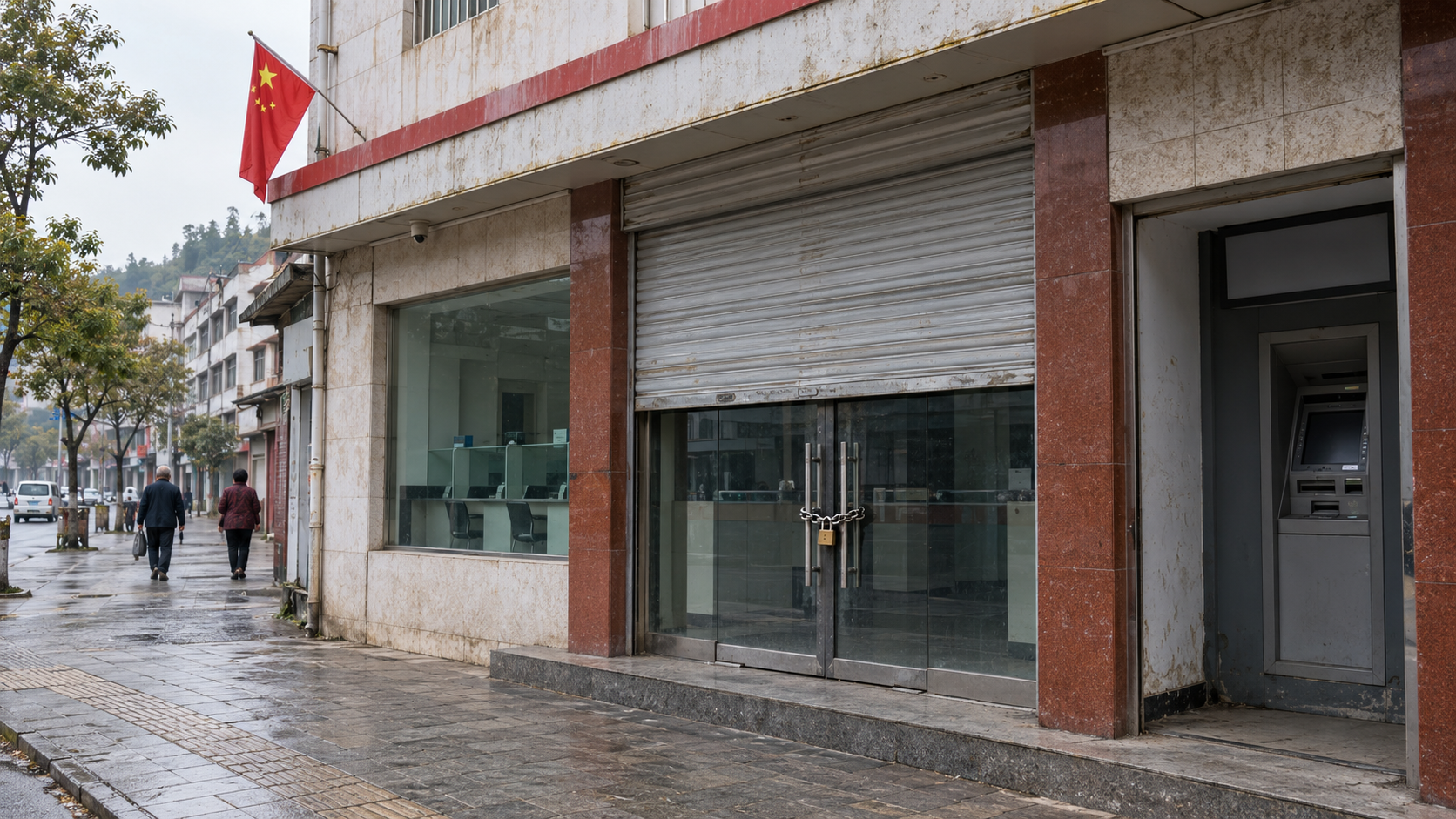
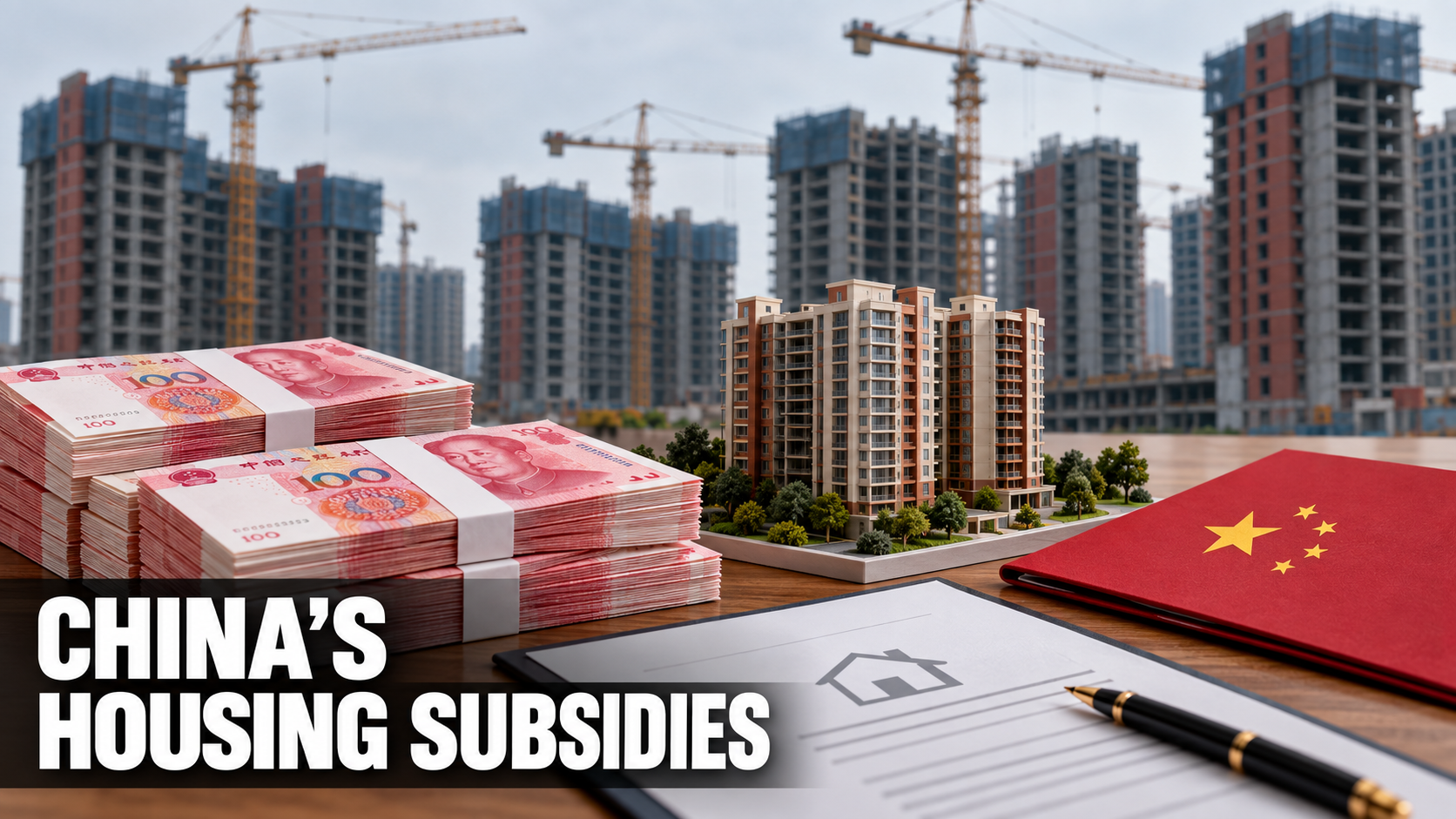
China’s fiscal motive is plain. The prolonged property downturn has sharply reduced land-use-rights sales, once a major source of funding for local governments. Central and local government spending exceeded revenue by an estimated $1.9 trillion last year. Many local authorities face heavy debt and continued spending demands. Under those conditions, collecting tax already owed on offshore gains is an attractive option.
There is a political case too. China’s leaders have long promoted “common prosperity,” while some of the country’s largest fortunes are held abroad. Asking wealthy households to pay tax on offshore income may have public appeal. Whether it improves fairness in practice depends on both the reliability of the assessments and how the revenue is used.
A windfall is not a fiscal repair plan
Even substantial collections would not close China’s fiscal gap. Bloomberg cited a tax lawyer’s estimate that wealthy people’s Hong Kong assets could yield $15 billion to $25 billion in tax, alongside a much higher extreme scenario from Barclays. Those are large sums in ordinary terms. They are small beside recurring fiscal pressures measured in trillions of dollars.
That leaves Beijing with a delicate task. Firm, predictable enforcement could raise revenue and address an obvious gap in the tax system. Unclear assessments and case-by-case bargaining could instead unsettle entrepreneurs already deciding whether to invest more. Reuters has reported that the new trust rules have prompted some wealthy Chinese to reconsider their holdings and raise funds for potential payments.
The offshore campaign is therefore not simply a story about rich people receiving tax bills. It is a test of whether China can strengthen collection without weakening confidence in the rules governing private wealth. The same fiscal stress is driving tighter scrutiny at the local-government level, where the need for revenue is particularly acute.
What to watch next
Across these three stories, the near-term signals are concrete. Can the Philippines resupply the Sierra Madre without another dangerous encounter? Will Beijing approve chip purchases, and in what quantities? How broadly will travel approvals be applied to technology executives’ families? And will offshore tax assessments follow rules clear enough for taxpayers to calculate and challenge?
China can gain leverage in each case: by pressing its position at sea, permitting scarce chip imports while developing domestic capacity, and collecting more tax from overseas wealth. But leverage is not free. Maritime pressure risks a clash, technology controls can hinder the talent and hardware firms need, and aggressive tax collection may discourage investment. How Beijing manages those costs will matter more than any one confrontation, chip order, or tax demand.
Frequently Asked Questions
Why is Second Thomas Shoal so contentious?
The Philippines maintains an outpost there aboard the grounded Sierra Madre and must regularly resupply its crew. China disputes Manila’s position and has obstructed missions. A 2016 arbitral ruling placed the shoal within the Philippines’ exclusive economic zone, but Beijing rejects that ruling.
Has China approved the proposed Nvidia chip purchases?
No approvals have been announced. Officials have asked companies about the quantities they want and their intended uses, but any purchase remains subject to government approval and available supply.
Are families of Chinese AI executives banned from traveling abroad?
The reported measure requires approval for some spouses and children to travel abroad; it is not a blanket ban. Its full scope remains unclear.
Will taxes on offshore wealth fix local government finances?
They could bring in meaningful revenue, but the estimates discussed are far below the scale of China’s recurring fiscal pressures. The longer-term effect will also depend on whether authorities apply the rules clearly and consistently.