China builds impressive electric vehicles. Its robotics industry is advancing. Its artificial intelligence companies are attracting global attention. Put those achievements together, and it is tempting to conclude that Beijing has found a winning formula: invest relentlessly in strategic industries, challenge American technological dominance, and let economic prosperity follow.
There is just one rather substantial problem. Prosperity does not automatically follow.
Weak household spending, strained government finances, and growing dependence on exports tell a less flattering story. Meanwhile, Hong Kong’s stock market is showing how quickly that industrial optimism can collide with expensive money and disappointed investors. Taiwan’s deepening military and semiconductor ties with Washington add another complication. And alleged AI chip-smuggling networks expose the gap between imposing technology restrictions and actually enforcing them.
These are not separate stories about an economy, a stock market, an island, and some computer processors. They are different expressions of the same tension: technological power matters enormously, but it does not eliminate financial vulnerability or geopolitical dependence.
Key Takeaways
- China’s technological advances coexist with weak consumption, fiscal strain, and increasing export dependence.
- Hong Kong’s sell-off reflected higher US yields, reduced liquidity, and disappointment with Beijing’s stimulus.
- Taiwan’s fighter deliveries and potential TSMC expansion deepen US ties, but delays and investment conditions remain important.
- Alleged AI chip diversions expose enforcement weaknesses; their scale and individual criminal allegations remain disputed.
Table of Contents
- A Technological Superpower With a Consumption Problem
- Cheap Credit Cannot Manufacture Confidence
- The Export Engine Is Also a Negotiating Weakness
- Hong Kong’s Sell-Off Shows Where Optimism Breaks
- Taiwan’s Fighter Jets Reveal the Limits of Diplomatic Deals
- TSMC’s American Expansion Comes With Conditions
- AI Chip Controls Meet the Distribution Network
- A Ban Is Only as Strong as Its Verification
- Industrial Strength Is Not the Same as Resilience
A Technological Superpower With a Consumption Problem
First, we need to separate two things that are too often treated as interchangeable: industrial capability and economic well-being.
China’s advances in electric vehicles, robotics, and AI have reinforced the impression that Xi Jinping approached recent negotiations with Washington from a position of strength. Those capabilities are real assets. They improve competitiveness and can support national security. But they do not tell us whether ordinary households feel secure enough to spend on basics every week.
A Wall Street Journal commentary highlighted that disconnect. Inflation-adjusted Chinese retail sales fell 0.4% in August compared with a year earlier, while the equivalent American measure grew approximately 2.6%. Investment is increasingly concentrated in high-tech industries, even as other sectors struggle and unemployment remains widespread.
That is the awkward bit. A country can get better at manufacturing sophisticated products without getting better at distributing the resulting benefits.
Official figures showed economic growth of 4.3% in the second quarter and 4.7% across the first half. Yet those headline numbers obscure increasing reliance on exports to compensate for subdued domestic demand. Overseas customers are being asked to carry more of the load because Chinese consumers are not doing enough spending at home.
There is also a substantial disagreement about the growth figures themselves. Logan Wright of Rhodium Group estimates that China grew only 1.5% to 2% annually between 2022 and 2025, rather than the reported 4.6%. He believes actual growth in the year under discussion could be zero.
Those are alternative estimates, not established measurements. They should not simply replace the official figures as unquestionable facts. But the size of the disagreement matters: beneath the confident headline numbers lies considerable uncertainty about the economy’s underlying strength.
This is also why the contrast between weak economic indicators and Beijing’s AI ambitions deserves attention. An industrial success story and a struggling domestic economy can exist simultaneously.
Cheap Credit Cannot Manufacture Confidence
Beijing’s response has been its largest stimulus effort since September 2024. The measures include mortgage subsidies, expanded central-bank lending for infrastructure and technology, and promises of further targeted fiscal support.
On paper, that sounds substantial. In practice, it runs into a familiar problem: making borrowing cheaper is not particularly useful if people do not want to borrow.
Barclays analysts argue that insufficient demand for credit is the underlying obstacle. They see the package as helping China reach its annual growth target, rather than producing a comprehensive recovery. That is an important distinction. Supporting a statistical target is not the same thing as restoring household confidence.
The fiscal picture makes the task harder. A broad measure of government spending fell 3.5% during the first eight months. Meanwhile, the property slump continued to undermine local governments’ revenue from land sales.
Authorities intensified tax collection from companies and wealthy individuals, helping tax revenue rise 6.6%. But stronger revenue collection alongside weaker spending hardly describes an uncomplicated stimulus push. It reveals governments trying to repair their finances while the wider economy needs support.
The central tension is therefore political as much as financial. Xi’s emphasis on industrial strength directs resources toward strategic technologies. Restoring consumption requires attention to household incomes, employment, and confidence. The first does not automatically deliver the second.
None of this makes technological investment pointless. It means technology cannot be asked to do every economic job at once. Building national capabilities and making households feel financially secure are related goals, but they require more than the same industrial spending programme.
The Export Engine Is Also a Negotiating Weakness
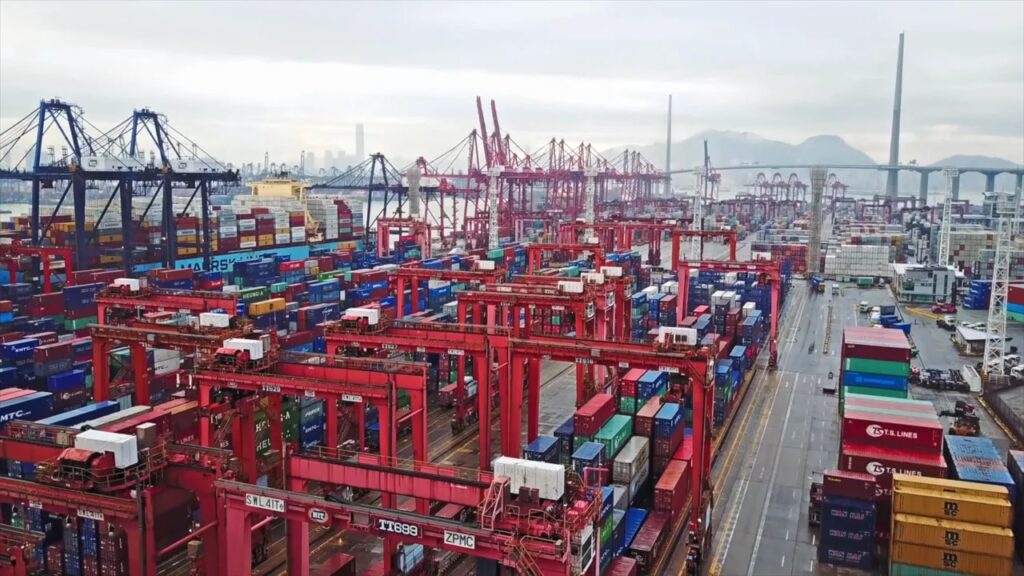
Export strength gives Beijing influence. Export dependence also gives its trading partners leverage. Both statements can be true.
If domestic demand remains weak, access to overseas buyers becomes more important. That potentially strengthens Washington’s hand in negotiations, even when China arrives with formidable manufacturing and technological capabilities.
Recent tariff concessions illustrate both the possibility and the limits of cooperation. Planned reductions cover approximately $60 billion in bilateral trade, compared with a reported $415 billion total the previous year. That is meaningful, but it is nowhere near a wholesale reset.
China has leverage of its own, including purchases of American soybeans that carry political significance. The relationship is therefore not a simple story of one powerful country dictating terms to another. It is mutual pressure, applied through different vulnerabilities.
The larger question is whether Beijing will shift more resources toward household incomes and consumption. Until that happens, exports will continue shouldering an unusually heavy burden. Industrial leadership may strengthen China’s negotiating position in some areas, while its domestic weaknesses undermine that position in others.
Hong Kong’s Sell-Off Shows Where Optimism Breaks
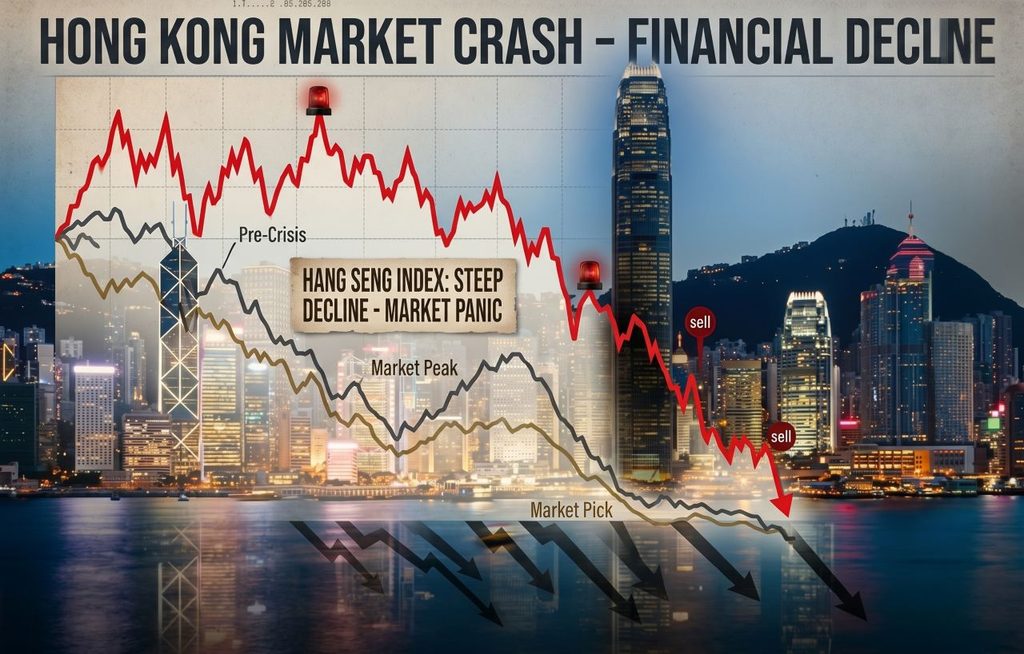
Financial markets offered a less enthusiastic assessment of China’s latest support measures.
When Hong Kong trading resumed after a holiday, the Hang Seng Index fell as much as 3%, its steepest decline since March 23. HSBC dropped 5.7%, making it the benchmark’s biggest drag. China Construction Bank and Bank of China each lost about 2.5%, while Alibaba and Tencent also declined.
Several pressures arrived together. Mainland markets remained closed for Golden Week, reducing liquidity and removing potential buying support through southbound investment flows. At the same time, the US 10-year Treasury yield had climbed to its highest levels since 2002.
Hong Kong cannot simply shrug off American interest rates. Its dollar peg transmits pressure from US rates into local financial conditions, raising borrowing costs and concerns about credit risk. The Hong Kong Monetary Authority’s explanation of the linked exchange rate system provides useful background on that connection.
HSBC also faced pressure from the possibility of higher British bank taxes. Chinese property developers had their own problems: a Bloomberg gauge of the sector fell as much as 4.3%.
Higher rates can improve banks’ interest margins. But that benefit is not a magic shield against weak loan demand or customers struggling with higher funding costs. Investors were also judging Beijing’s stimulus as sufficient to support growth, rather than strong enough to generate a broader recovery.
That is the economy’s central problem, reflected in market prices. There is a difference between preventing deterioration and producing a convincing turnaround.
Taiwan’s Fighter Jets Reveal the Limits of Diplomatic Deals

Meanwhile, Taiwan received its first two US-made F-16 Block 70 fighters after years of delays. The aircraft landed at an eastern air force base, where acceptance checks and conversion training will precede their gradual entry into operational service in Taiwan.
They are the first deliveries from a 66-aircraft order placed in 2019 under a $7.7 billion programme. Deliveries had originally been expected to begin in 2024 and finish in the year discussed, but production and supply-chain problems disrupted that schedule.
Defence Minister Wellington Koo said more aircraft would arrive before year-end, with subsequent deliveries coordinated with Washington. Their arrival underscores that defence commitments can continue even while high-level diplomacy complicates the wider relationship.
During recent White House talks, Xi urged Washington to oppose Taiwan independence. That wording would represent a shift in longstanding US policy. The Trump administration has also held up a separate $14 billion Taiwan arms package amid engagement with Beijing, following approval of $11.1 billion in weapons sales the previous December.
China opposes such sales. The Taiwan Relations Act, meanwhile, establishes the American commitment to provide Taiwan with defence articles and services necessary for a sufficient self-defence capability.
The tension is straightforward, even if the policy is not: Washington is pursuing diplomatic engagement with Beijing while maintaining a defence relationship with Taipei. The arrival of two aircraft matters, but it does not settle questions about future deliveries or political priorities.
TSMC’s American Expansion Comes With Conditions
Taiwan’s relationship with Washington is also deepening through semiconductors.
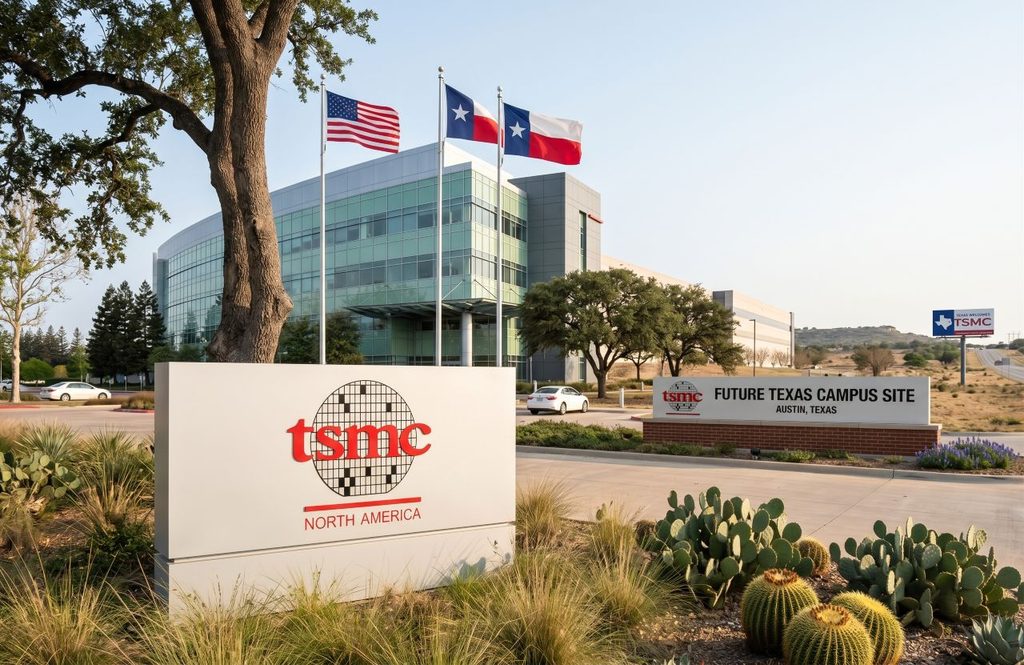
TSMC is evaluating a Texas campus that could add tens of billions of dollars to its American manufacturing commitments. The reported proposal could include multiple fabrication plants, each costing at least $20 billion, alongside a reported $265 billion commitment to its Arizona complex.
The discussions remain preliminary. These are not completed investments, and treating them as guaranteed would miss an important condition: the Texas proposal depends on US lawmakers extending an advanced-manufacturing tax credit scheduled to expire at year-end.
Demand for AI chips is driving the expansion. North America accounts for more than 75% of TSMC’s wafer revenue in the period discussed, with customers including Nvidia and AMD ordering advanced technologies. TSMC has also discussed potential investment with Singaporean officials, while declining to comment on what it described as market rumours.
But expanding overseas does not necessarily mean moving the technological frontier overseas. TSMC is expected to retain its longstanding practice of developing cutting-edge manufacturing technology and conducting its most advanced research in Taiwan.
That distinction matters for Taipei. Overseas factories can deepen economic relationships, while capabilities retained at home preserve Taiwan’s technological significance. The challenge is to strengthen deterrence and international ties without surrendering the capabilities that make Taiwan so important in the first place.
AI Chip Controls Meet the Distribution Network
Then there is the problem Washington cannot solve merely by writing a prohibition: getting advanced processors to stay where they are supposed to stay.
Investigations across the United States and Asia have uncovered alleged schemes involving redirected shipments, falsified documents, and manipulated serial-number labels. In one case, surveillance footage reportedly showed a woman using a hairdryer to remove stickers from server packaging at a Southeast Asian warehouse.
It is a strikingly mundane image for a supposedly high-tech confrontation. The chips may be sophisticated; some alleged methods of concealment are not.
The scale remains disputed. SemiAnalysis estimates that hundreds of thousands of restricted AI processors have reached China, potentially representing billions of dollars in hardware. Nvidia argues that publicly alleged diversion amounts to less than half of 1% of its products and is small compared with China’s domestic computing capacity.
Nvidia has not been accused of violating export controls or knowingly assisting smugglers. Nevertheless, officials have questioned whether it and its hardware partners adequately scrutinised customers whose purchases appeared inconsistent with their available data-centre space.
One Taiwanese case concerns infrastructure provider Flying Tiger, which ordered 130 Supermicro servers containing Nvidia Blackwell processors. Prosecutors allege that executives conspired with employees at Nvidia, Supermicro, and another company to divert the equipment to China. They say 74 servers were shipped before authorities seized the remaining 56.
That case awaits trial. The claims remain allegations.
A separate US indictment alleges that Supermicro co-founder Liu and associates channelled $2.5 billion in hardware through a Southeast Asian intermediary for Chinese customers. Liu has pleaded not guilty. Supermicro says it was unaware of the alleged scheme.
A Ban Is Only as Strong as Its Verification
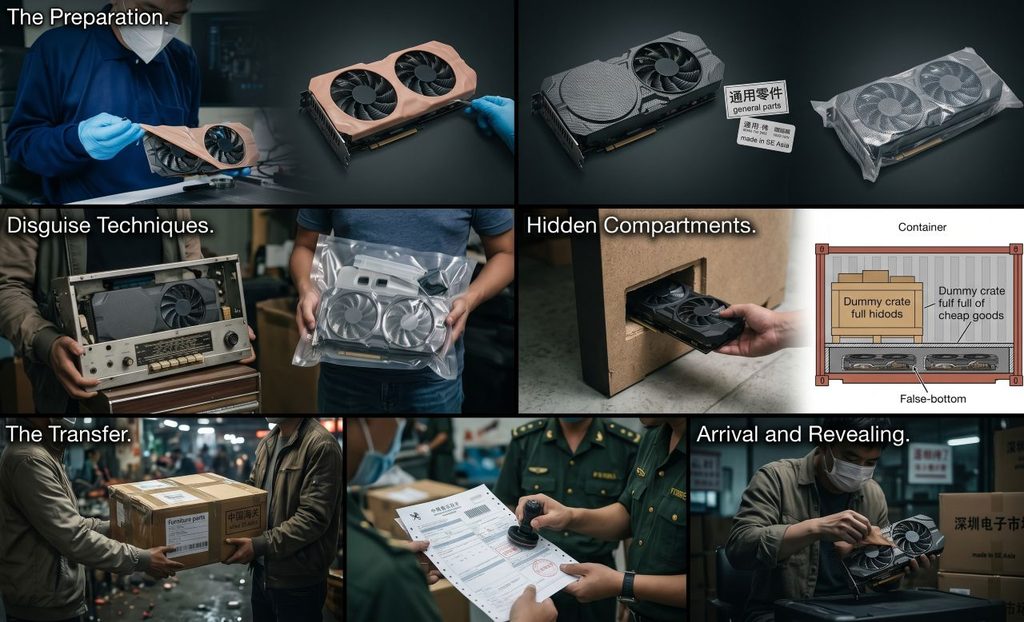
The vulnerability lies in the distribution chain. Nvidia supplies processors to server manufacturers. Their products pass through distributors before reaching customers. Brokers allegedly exploit that structure by ordering equipment for approved overseas destinations, then rerouting it.
Nvidia has reduced its list of pre-approved Asian buyers and introduced an optional hardware-tracking feature. Server manufacturers have strengthened customer checks. Yet optional tools and tighter checks still face a moving target.
Proposed restrictions targeting Malaysia and Thailand were reportedly shelved following diplomatic opposition. The Commerce Department’s Bureau of Industry and Security has faced resource constraints, although it maintains that enforcement is stronger than ever.
Commercial lobbying complicates the picture further. Following lobbying by Nvidia chief executive Jensen Huang, Washington eased restrictions on some earlier-generation processors while retaining controls on more advanced Blackwell chips.
US officials suspect some smuggled hardware supported Chinese AI developers, including DeepSeek and Moonshot. Neither company commented on those claims. Alibaba has denied allegations concerning its purchases. Those suspicions complicate narratives about Chinese laboratories succeeding with limited computing resources, but they do not establish how much any particular developer benefited.
The broader debate over export controls and China’s uneven technological rise turns on precisely this distinction between capability, access, and enforcement.
With brokers reportedly adapting routes through Europe and the Middle East, arrests alone may offer limited protection. Effective controls require consistent rules, credible buyer verification, and enough resources to investigate diversion across borders.
Industrial Strength Is Not the Same as Resilience
China’s technology achievements are substantial. But they do not erase weak consumption, repair local-government finances, or make dependence on overseas markets disappear. Equally, American control over important technologies does not guarantee control over every shipment.
Taiwan sits between these competing sources of power, strengthening defence ties and overseas manufacturing relationships while trying to preserve its technological edge at home.
The lesson is not that technology is overrated. It is that technology cannot substitute for everything else. Economic resilience still requires confident households. Deterrence still requires delivered capabilities. Export controls still require enforcement.
A world-class chip, car, or robot is an achievement. It is not, by itself, proof that the system around it is working.
Frequently Asked Questions
Why hasn’t China’s technology boom fixed household spending?
Investment in strategic industries does not automatically create sufficient employment, raise household incomes, or restore confidence. Weak consumption can therefore persist alongside impressive technological progress.
Is TSMC’s Texas investment confirmed?
No. Discussions remain preliminary, and the proposal depends on an extension of an American advanced-manufacturing tax credit. Overseas expansion is also expected to preserve TSMC’s most advanced research and technology development in Taiwan.
Has Nvidia been accused of knowingly helping chip smugglers?
No. Nvidia has not been accused of violating export controls or knowingly assisting smugglers. Officials have questioned customer scrutiny within the distribution network, while separate criminal cases involving alleged diversion remain unresolved.