Closing hundreds of banks sounds like the sort of thing a government does after a financial crisis. In China, it is supposed to help prevent one. But there is an awkward question lurking beneath this enormous restructuring: if a struggling bank disappears into a bigger bank, where does its bad debt go?
It does not magically disappear. And that distinction matters.
China’s regulators are consolidating lenders at an unprecedented pace, while weak property markets, squeezed profits, and questionable lending continue to weigh on the system. Meanwhile, Britain is reportedly considering tariffs on Chinese electric vehicles to protect its access to European manufacturing incentives. And Taiwan faces another uncomfortable combination: alleged surveillance of its president’s family overseas and uncertainty over a major American weapons package.
These are different stories, but they share a revealing problem. Governments can reorganise institutions, redraw trade barriers, and stage diplomatic meetings. None of that necessarily removes the underlying vulnerability.
Key Takeaways
- China’s bank consolidation can reduce immediate liquidity risks without resolving troubled loans or systemic exposures.
- Britain reportedly faces pressure to tariff Chinese EVs to protect access to proposed European manufacturing incentives.
- Alleged overseas surveillance and delayed US weapons approval highlight Taiwan’s overlapping security vulnerabilities.
Table of Contents
- China Is Losing Banks. It Is Not Necessarily Losing Banking Risk.
- Britain’s Chinese EV Dilemma: Cheap Cars Meet European Industrial Policy
- Taiwan Faces Pressure Beyond Its Borders
- Managing the Symptoms Is Not the Same as Removing the Cause
China Is Losing Banks. It Is Not Necessarily Losing Banking Risk.
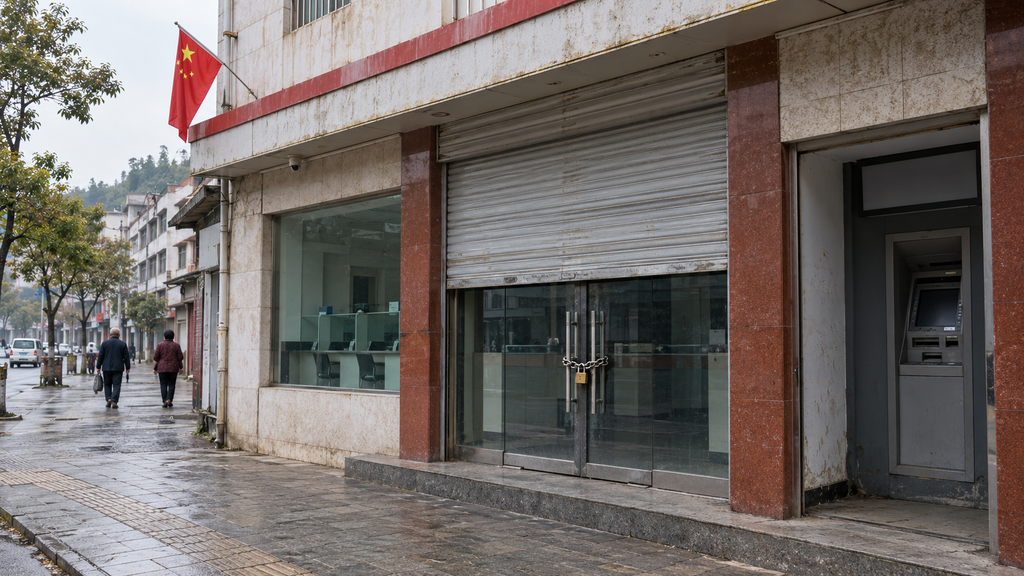
China has reduced its number of banking institutions by almost a quarter in four years. More than 670 banking entities closed in the latest reported year, a record, according to National Financial Regulatory Administration data. Fitch says almost all were rural institutions.
That brought the total to 3,139—a 23% decline over the four years to 2025.
This is not a minor administrative cleanup. China’s banking system holds approximately $64 trillion in assets, and rural and city-level lenders collectively account for more than a quarter of that total. Their problems are therefore not confined to a few obscure branches in distant towns. They sit inside a system that finances businesses, property, households, and local development across the country.
Fitch identifies smaller banks as the weakest segment, citing deteriorating loan quality, limited capital, and poor governance, particularly in less-developed regions. The regulatory response is to merge institutions or dissolve them while another lender assumes their liabilities.
There is a sensible argument for doing this. Fewer institutions are easier to supervise. Absorbing a fragile lender into a stronger one can reduce its immediate exposure to a liquidity crisis. Jason Bedford, a senior visiting research fellow at the National University of Singapore’s East Asian Institute, described the scale of consolidation to the Financial Times as unprecedented.
But simplifying the organisational chart is not the same as repairing the balance sheet.
The Trouble Has Reached City-Level Lenders
Rural banks are not the only institutions under pressure. Authorities in Wuhan took over a struggling city-level lender in July, the first such intervention since the 2019 takeover of Baoshang Bank in Inner Mongolia.
The Wuhan institution held 124 billion yuan in assets at the end of 2024 and was absorbed by Hankou Bank. Moody’s described the intervention as evidence of the challenges facing weaker regional lenders and predicted further consolidation.
The pressures are straightforward enough. Low interest rates, deflation, and the prolonged property downturn are squeezing profitability. Banks’ net interest margins—the difference between what they earn from lending and what they pay for funding—have narrowed. Smaller lenders, with less capital and less room to absorb mistakes, are particularly exposed.
Nor is government support limited to the smallest institutions. Reported September measures included a $54 billion capital increase involving ICBC and Agricultural Bank of China, following nearly $70 billion raised for four other major state-owned banks.
Those are substantial sums. They underline how broadly the authorities are working to reinforce the system, even as the most dramatic consolidation is happening among smaller lenders.
A Merger Cannot Make a Bad Loan Good
The central distinction is between liquidity risk and underlying credit losses. Consolidation may make a sudden run on a vulnerable institution less likely. It does not necessarily improve the ability of its borrowers to repay.

Peking University finance professor Michael Pettis argues that China has moved from a highly concentrated banking system in the late 1990s to a fragmented one and is now back toward concentration as weaker banks are absorbed. In his assessment, concentration reduces the risk of bank runs but does not resolve systemic risk. It may even worsen that risk by prolonging bad lending.
That is the uncomfortable part. A property developer with weak sales does not become financially healthy because its lender changes ownership. An indebted local government does not suddenly gain more revenue. A business with inadequate cash flow remains a questionable borrower.
Falling property values can weaken loan collateral. Financially strained local governments have less capacity to support troubled regional banks. Extending or restructuring loans may prevent immediate defaults, but it can also postpone the recognition of losses.
Our coverage of China’s growing banking risks explores this same distinction between containing visible distress and confronting the bad debt beneath it.
China has powerful tools for preventing panic: state ownership, capital controls, and government support. But preventing an acute crisis could still leave years of weak profitability, constrained lending, and repeated recapitalization. Stability is valuable. It is not proof that the problem has been solved.
There Is Also the Problem of Finding Good Borrowers
Credit demand adds another complication. Overall financing continues to expand, partly through government bond issuance, but growth has slowed. New yuan lending recorded rare outright declines in April and July.
Moody’s vice president Nicholas Zhu says household mortgage deleveraging has pushed banks toward corporate lending. The agency considers that shift worth monitoring, although it does not yet regard it as a systemic threat.
The distinction matters. More lending is not automatically more productive lending, particularly when policymakers encourage banks to finance sectors with weak returns. A healthier system needs borrowers capable of generating the income required to service their debts—not merely institutions large enough to carry those debts for longer.
Britain’s Chinese EV Dilemma: Cheap Cars Meet European Industrial Policy
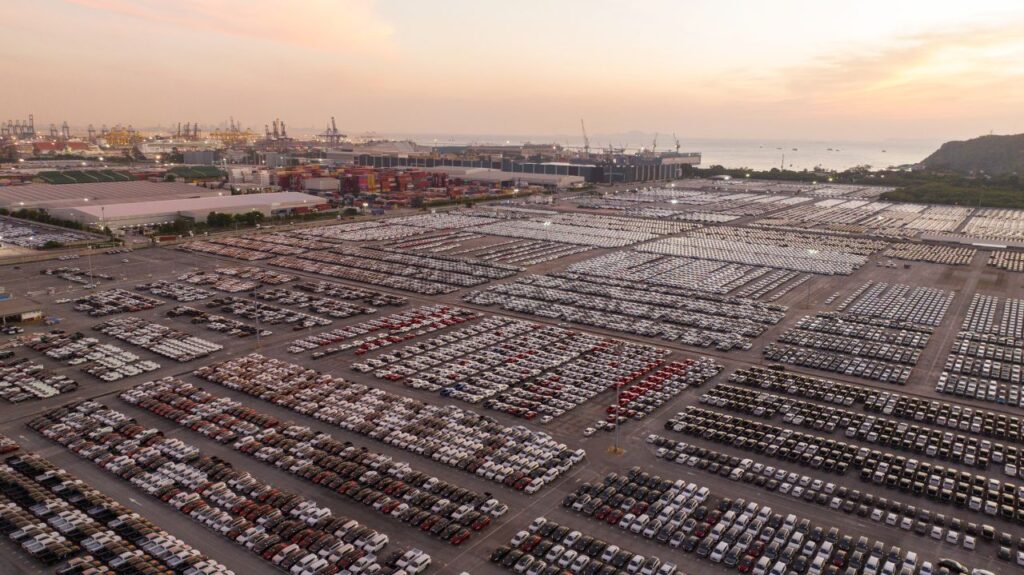
Britain’s reported tariff plans illustrate another uncomfortable trade-off. Chinese manufacturers have expanded rapidly in the British car market. But maintaining that openness may come at a cost to factories already operating in the UK.
According to The Times, Britain is preparing import levies on Chinese electric vehicles to secure favourable treatment under the European Union’s proposed “Made in Europe” manufacturing framework.
Brussels has reportedly warned that Britain could be excluded unless it introduces tariffs. The concern is that the UK could become a backdoor for Chinese exports into Europe.
The proposed framework could reserve important subsidies for vehicles manufactured within the bloc, potentially disadvantaging British factories operated by companies including Jaguar Land Rover and Nissan. British officials therefore face two competing risks: provoke Beijing through tariffs or leave domestic manufacturing outside a valuable European support mechanism.
They reportedly consider exclusion from the European framework the greater economic threat.
Chinese Brands Have a Lot at Stake
Chinese brands captured 23% of UK new-car sales in September, with Chery’s Jaecoo 7 becoming the country’s best-selling model.
That figure needs a qualification: the 23% share includes vehicles beyond fully electric cars. It should not be read as Chinese manufacturers taking nearly a quarter of the British battery-electric market, or as every one of those sales being directly exposed to a tariff specifically targeting EVs.
Nevertheless, brands including BYD and MG benefit from Britain’s absence from the additional Chinese EV duties imposed by the EU. The European Commission’s announcement of those countervailing duties provides background on the policy Britain has so far avoided.
Intense competition at home continues to push Chinese manufacturers overseas. As our analysis of China’s changing auto market and export pressures explains, foreign expansion is increasingly important as domestic conditions become more difficult.
Chery’s UK executive, Victor Zhang, says changing tariffs would not alter the company’s commitment to investing in Britain. That signals continued interest, but it does not make tariffs commercially irrelevant.
For Britain, the dilemma is not simply whether Chinese cars should be cheaper or more expensive. It is whether keeping the market open could disadvantage British production elsewhere. Officials also worry about Chinese retaliation against Jaguar Land Rover. There is no painless option here—only competing costs.
Taiwan Faces Pressure Beyond Its Borders
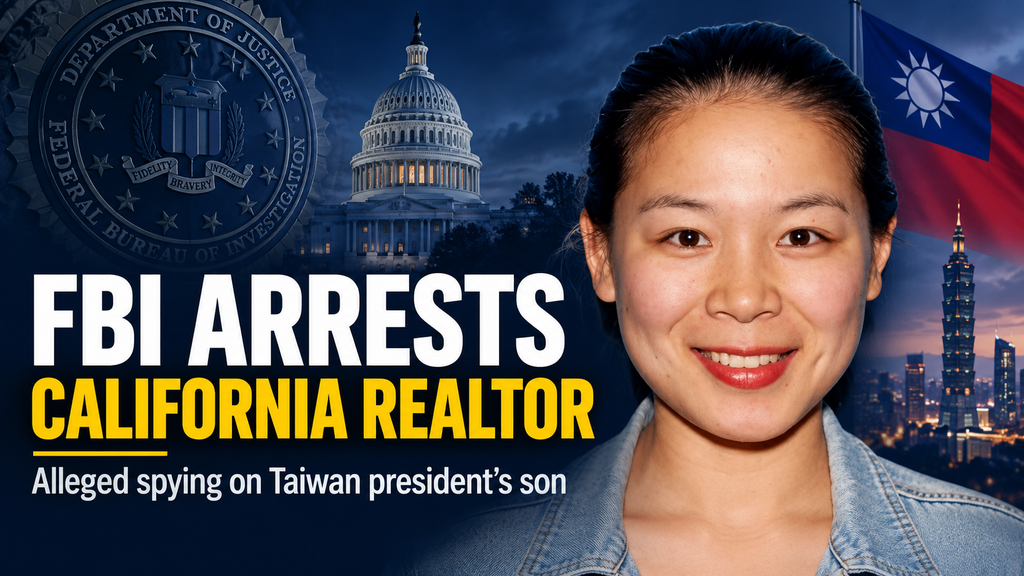
The third development is more personal and potentially more disturbing.
The FBI detained a 34-year-old Irvine resident, identified as Jiang, at Los Angeles International Airport before she could board a flight to Shanghai. US authorities charged her with acting as an unregistered agent of China.
They allege that she filmed the home and vehicles of Taiwanese President Lai Ching-te’s son and his family in 2025, then passed information to Chinese handlers.
These allegations have not been proven in court. That qualification is essential. An arrest and a charge are not a conviction.
Taiwanese presidential spokesperson Karen Hsu described the alleged surveillance as “transnational repression,” condemning attempts to intimidate people advocating democracy or their relatives.
The concern is that political pressure need not stop at Taiwan’s coastline. If the allegations are established, they would demonstrate how a leader’s family abroad can become a target. The case also follows espionage investigations in Taiwan, where authorities indicted 58 people for suspected Chinese spying between 2025 and early 2026.
A $14 Billion Weapons Package Remains Uncertain
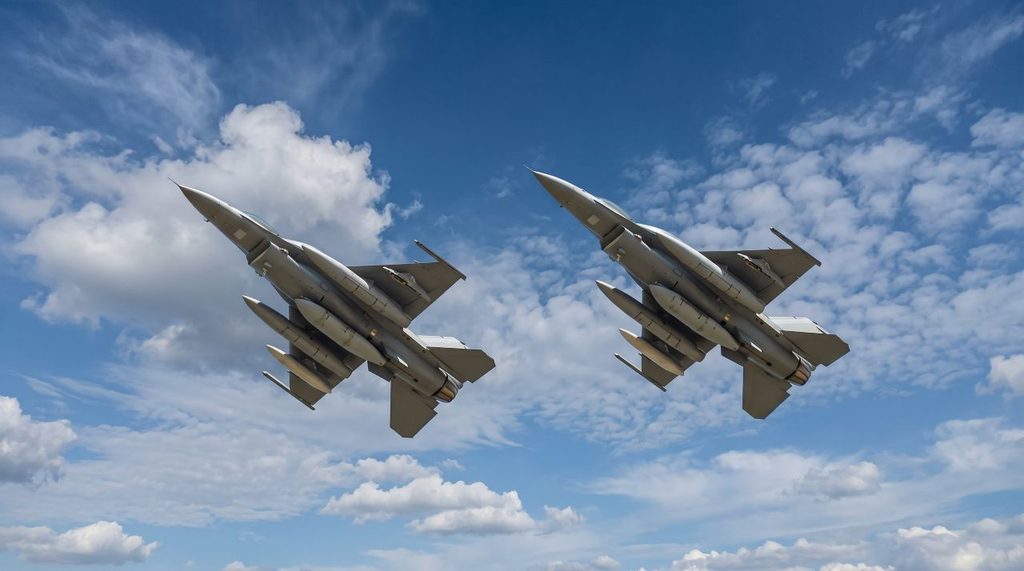
At the same time, Taipei is waiting for Washington to approve a proposed $14 billion weapons package containing substantial air-defense capabilities.
A senior administration official says President Donald Trump will decide relatively soon, but has offered no timetable. That leaves Taiwan trying to interpret both the delay and the political messages surrounding it.
Following recent US-China talks, Xi Jinping urged Washington to explicitly oppose Taiwanese independence. That would go beyond the longstanding American position of not supporting independence.
The difference may sound like diplomatic hair-splitting. It is not. “Not supporting” and “opposing” are different commitments, which is precisely why Beijing wants the stronger formulation.
Taiwan’s representative to the United States, Alexander Yui, says Washington neither accepted nor responded to Xi’s demand. He maintains that US policy is unchanged and expresses confidence that further defense equipment will be approved.
But Trump has previously described weapons sales to Taiwan as a useful negotiating instrument with Beijing. That raises the concern that Taiwan’s security could become entangled in broader bargaining. Yui’s description of Taiwan’s objective—to ensure it is not “on the menu”—captures the anxiety rather neatly.
Mixed Messages Make Reassurance Harder
Administration supporters point to Trump’s approval of $11 billion in arms sales last December. House Speaker Mike Johnson attributes the latest delay to competing demands arising from the Middle East.
Those explanations provide context. They do not remove the uncertainty.
Conflicting remarks about possible American weapons sales to China have added to the confusion. After the US ambassador to China said Trump had asked Xi about buying American weapons, Trump disputed the account before suggesting such sales might have merit. The State Department subsequently said US law prohibits arms sales to China and that no offer existed.
The existing American framework remains important. Washington recognizes Beijing as China’s sole legal government while acknowledging, without endorsing, Beijing’s position on Taiwan. It maintains unofficial relations with Taipei, supplies defensive weapons, and leaves military intervention deliberately ambiguous. The Taiwan Relations Act provides the legislative foundation for important aspects of that relationship.
Former National Security Council official Ryan Hass expects further arms sales, potentially in smaller packages. But he warns that uncertainty over American support helps Beijing’s efforts to make Taiwan feel isolated.
The stakes extend beyond Taiwan. US allies across Asia are assessing Washington’s reliability, while global technology supply chains depend on Taiwan’s advanced semiconductors.
Managing the Symptoms Is Not the Same as Removing the Cause
China’s banking consolidation may reduce the likelihood of individual bank runs without eliminating bad loans. Britain’s possible EV tariffs may protect access to European manufacturing support while creating new costs and retaliation risks. Diplomatic engagement between Washington and Beijing may stabilize their relationship without making Taiwan feel more secure.
That is the thread connecting these developments: a visible policy response can contain one problem while leaving another intact.
The useful questions are therefore not just how many banks have merged, whether Britain announces a tariff, or when Washington approves another weapons package. They are whether lending becomes more productive, whether British manufacturing gains durable protection, and whether Taiwan receives consistent support.
Those are harder tests than an announcement or a summit photograph. They are also the ones that matter.
Frequently Asked Questions
Does China’s banking consolidation eliminate the risk of a crisis?
No. It can improve supervision and reduce bank-run risks, but troubled property loans, local-government debt, and weak borrowers remain potential sources of losses.
Has Britain confirmed new Chinese EV tariffs?
The reporting describes preparations for import levies linked to proposed European manufacturing rules, rather than a completed tariff regime.
Have the Taiwan surveillance allegations been proven?
No. US authorities have brought charges, but the allegations remain unproven in court.
Has Washington approved Taiwan’s proposed $14 billion weapons package?
The package remained pending in the reporting, with a senior administration official indicating a decision relatively soon but providing no timetable.