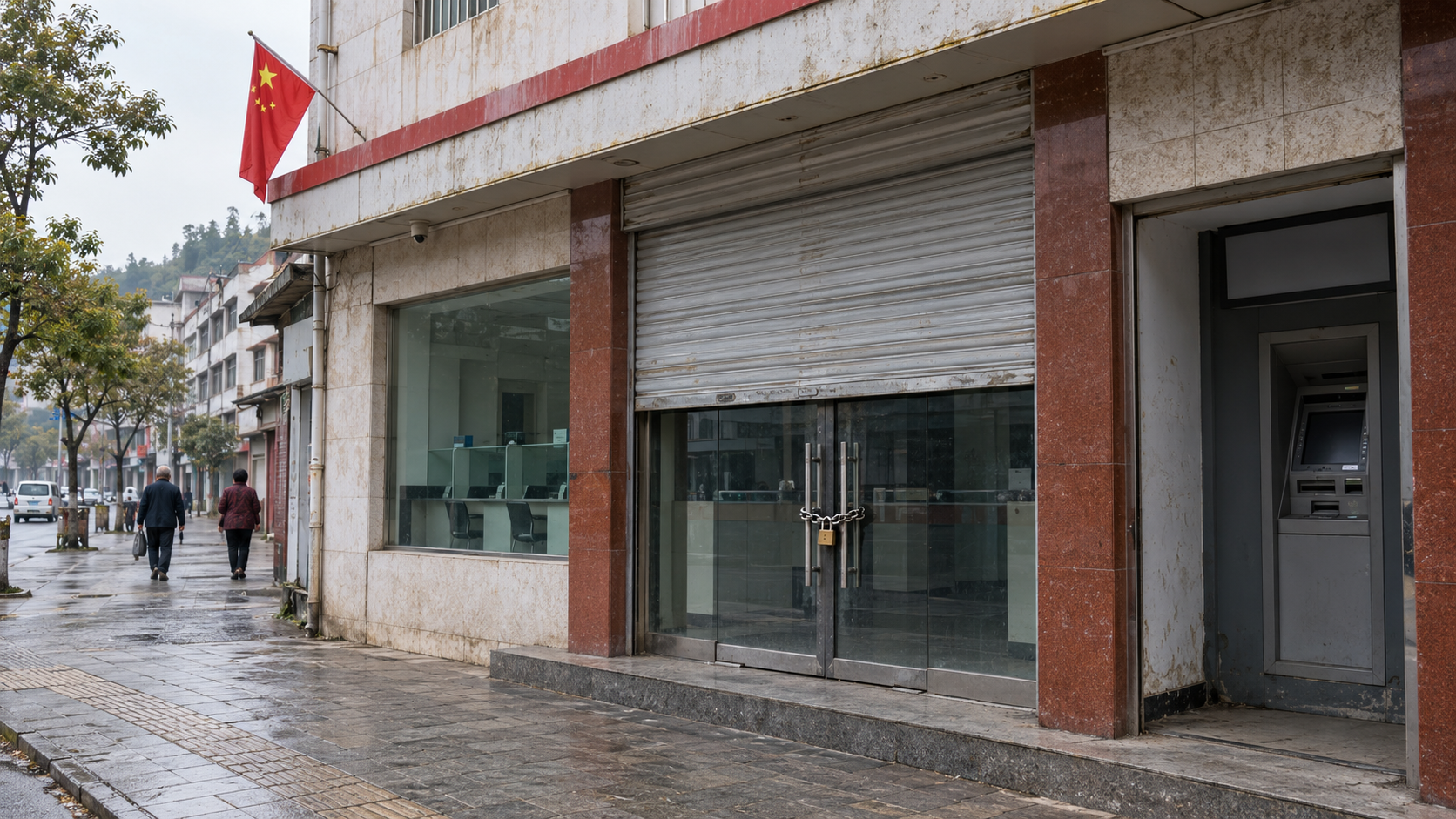
China has a new mortgage subsidy, a multibillion-dollar canal and ambitious plans to secure the minerals needed for batteries and artificial intelligence. On paper, these are three separate stories. In practice, they point to the same uncomfortable question: can Beijing keep investing its way toward growth when households, local governments and businesses are becoming more cautious about taking risks?
The housing measures are the most urgent. A prolonged property slump has weakened household wealth, squeezed developers and stripped local governments of land-sale income. The Pinglu Canal is a longer-term bet that cheaper freight routes will bring industry closer to Southeast Asia. And mining and battery companies are trying to get ahead of the next contest over lithium, copper and other critical materials.
There is a logic to each move. There is also a gap between building capacity and persuading people to use it.
Key Takeaways
- China’s new first-home mortgage subsidy lowers borrowing costs, but weak confidence and unfinished projects remain bigger obstacles.
- The Pinglu Canal offers a shorter route toward Southeast Asia, though its long-term freight demand and returns are uncertain.
- Battery and mining companies are investing in overseas operations, alternative chemistries and recycling as critical-mineral supply grows more contested.
Table of Contents
- Mortgage help meets a much bigger property problem
- The Pinglu Canal is a bet on a different trade map
- Battery firms prepare for a minerals squeeze
- The real test is whether investment restores confidence
Mortgage help meets a much bigger property problem.
Beijing has introduced a nationwide mortgage-interest subsidy for eligible first-home buyers, effective October 1. It is designed to reduce borrowing costs by the equivalent of one percentage point annually for up to five years. To qualify, a home must be no larger than 120 square metres and cost no more than 1.5 million yuan. The subsidy applies to mortgage principal of up to 1 million yuan.
The central government will cover 90% of the cost, with local governments paying the rest. Qualifying loans will initially be accepted for one year. That division of the bill matters: local authorities are being asked to contribute, but most are hardly swimming in spare cash.
Housing is not the only target. The People’s Bank of China has increased its relending quota for technological innovation and equipment upgrades by 200 billion yuan, bringing it to 1.4 trillion yuan. It has also cut the pledged supplementary lending rate by 25 basis points to 1.5% and broadened support for infrastructure. Finance Minister Lan Fo’an has called for wider interest subsidies, higher funding limits and measures to encourage consumption and private investment. He has also raised the possibility of using unspent local-government bond quotas from previous years.
So the plan is to support homebuyers, keep investment moving and give strained local budgets more room to operate. The trouble is that China’s economic slowdown is not merely a shortage of cheap loans. Second-quarter growth came in at 4.3%, below the annual target range of 4.5% to 5%. Subsequent figures pointed to weaker industrial output, retail sales and investment.
Property sits at the centre of that weakness. Annual property sales fell from roughly 18 trillion yuan in 2021 to 8 trillion yuan in 2025—about a 56% decline. That is not just a problem for developers. Fewer sales mean less construction work and less demand for steel, cement, furniture and appliances. Falling home values also make households feel poorer. If a family expects its main asset to lose value, saving can look rather more sensible than splashing out.
The latest January–August figures show the downturn has not run its course. Property investment fell 19.9% from a year earlier, while new residential starts and residential completions each dropped 25.4%. Developers’ funding fell 21%. That last figure points to a particularly nasty trap: companies need money to finish homes, but buyers are reluctant to hand money to companies they fear may not finish them.
Local governments are caught in their own version of the same bind. Reuters Breakingviews estimates that annual land-sale revenue has fallen by roughly 4.5 trillion yuan since the property bubble burst in 2021. That reduces the money available for infrastructure, public services and debt repayments. Goldman Sachs expects the revenue stream could fall by more than 90% from its peak before it reaches a low in the next two to three years. For more on how the housing slump is eroding wealth even as other investment surges, see this analysis of China’s property losses and power buildout.
Banks face risks too, as borrowers struggle and property used as collateral loses value. Put it all together, and the cycle is difficult to break: weaker housing undermines spending, weaker spending hurts growth, and falling land revenue limits the ability of local governments to respond.
Why cheaper mortgages may not bring buyers back
The roots of this crisis go deeper than today’s interest rates. Beijing’s “three red lines” restrictions, introduced in 2020, squeezed financing for heavily indebted developers. Many had relied on borrowing and apartment presales to keep building. When that flow of money tightened, their weaknesses became impossible to hide. Evergrande defaulted in 2021, followed by Sunac in 2022 and Country Garden in 2023.
Relaxing credit conditions is easier than rebuilding confidence in that business model. A developer needs presale income to complete apartments; a buyer wants confidence that an apartment will actually be completed before paying for it. Additional lending can buy time, but it cannot guarantee that enough homes will be sold to repay existing debts.
Even a reputation for strong connections is no automatic shield. Vanke reported an annual loss of 89 billion yuan, taking its combined losses over two years above 130 billion yuan. Meanwhile, used-home prices in top-tier cities had fallen by more than a third by July. If buyers expect further declines, a cheaper mortgage may still look less attractive than waiting.
Beijing’s choices are awkward. It wants to stabilise developers and prices without reviving the speculation that helped make homes unaffordable. Aggressive support risks keeping failing businesses alive indefinitely. Letting them collapse more quickly risks frightening buyers and creditors. IMF staff have recommended central-government fiscal support for the property sector equivalent to about 5% of GDP over three years—an indication of how large a repair effort they consider necessary.
Against that backdrop, the mortgage subsidy is useful but modest. The central challenge is not simply making monthly payments cheaper. It is convincing households that their incomes, jobs, property values and prospective homes are secure enough to justify taking on a large debt.
The Pinglu Canal is a bet on a different trade map.
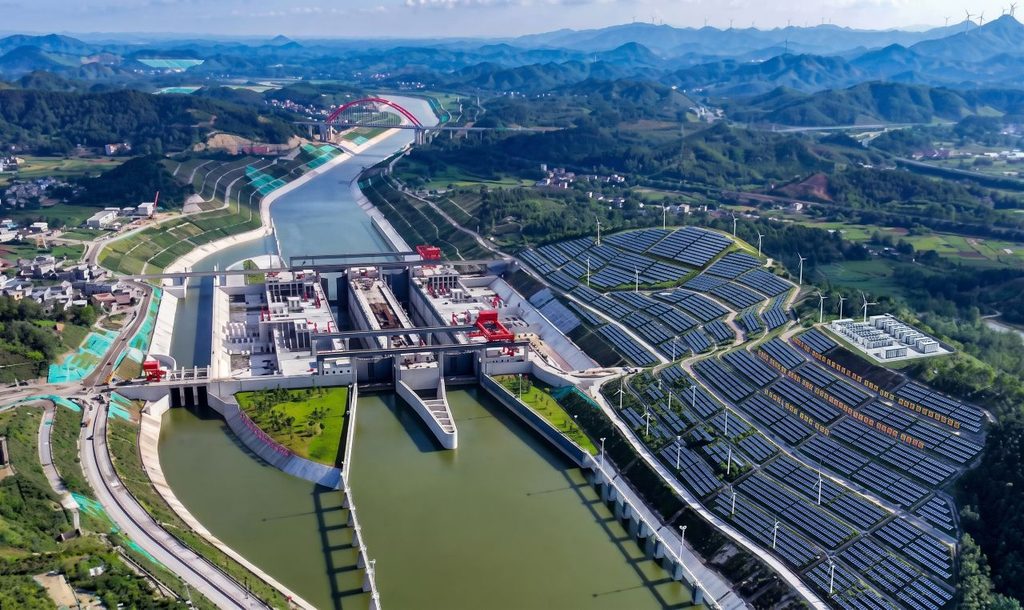
While Beijing tries to repair the property market, it is also spending heavily on new routes for trade. The Pinglu Canal, built over four years at a cost of 72.7 billion yuan, connects the Xi River in Guangxi to the Beibu Gulf, also known as the Gulf of Tonkin. Cargo from inland areas can head south to the sea rather than travel east toward Pearl River Delta ports such as Guangzhou, Shenzhen and Hong Kong.
The proposed gain is substantial: a journey up to 560 kilometres shorter than existing river routes. State broadcaster CCTV estimates that the canal could save businesses 5.2 billion yuan a year. Getting there required excavating about 315 million cubic metres of earth and rock. Three sets of hydraulic locks will handle vessels of up to 5,000 metric tonnes as they descend 65 metres toward sea level.
This is more than a shipping shortcut. Southeast Asia has become China’s largest trading partner, and a more direct route could make Guangxi a stronger link between China’s inland economy and regional markets. It could also serve Chinese manufacturers shifting some production into Southeast Asia to manage costs and navigate trade barriers in Western markets.
One broking forecast suggests the canal could generate 200 million tonnes of additional annual freight from Gulf ports by 2035. For scale, those ports handled 358 million tonnes last year. But forecasts are not cargo bookings. Bulk commodities are expected to account for much of the traffic, while attempts to build up advanced manufacturing in Guangxi have produced uneven results. Further canal development could bring steep engineering costs and heavy water use.
That makes the project a test of how to judge infrastructure. The canal might not deliver its full value as a straightforward calculation of construction cost against freight savings. Better access could attract investment and expand markets over decades. Equally, a costly route cannot create profitable demand by itself. Southeast Asian governments may welcome stronger trade links while worrying that deeper integration makes their markets an outlet for China’s excess industrial capacity.
Battery firms prepare for a minerals squeeze.
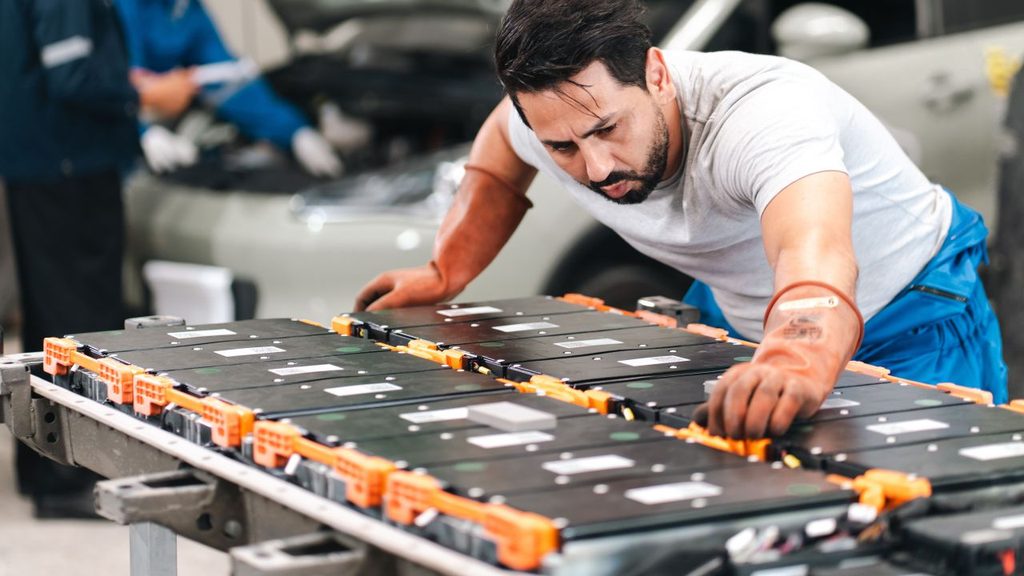
The final piece of the story is less visible than an empty apartment or a canal lock, but it may prove just as consequential. Chinese mining and battery companies are reorganising supply chains as electric vehicles, energy storage and AI infrastructure increase demand for critical minerals.
At the Asia New Vision Forum in Singapore, industry executives described a market shaped not just by rising demand but by geopolitical tensions and resource nationalism. One forecast cited by a Sunwoda battery executive puts electric-vehicle battery demand at three to four terawatt-hours by 2030. Energy-storage demand, supported in part by expanding AI infrastructure, could reach another three terawatt-hours. These are forecasts, not guaranteed outcomes, but they show why companies are thinking far beyond their next supply contract.
Lithium and copper have relatively clear growth prospects under those scenarios. Demand for nickel and cobalt is less straightforward because battery chemistry can change. Countries with mineral deposits are also increasingly seeking to process those resources domestically rather than export raw materials and leave most of the value-added work elsewhere. Environmental and social requirements in Europe and the United States add another layer of compliance for companies selling into those markets.
The responses go beyond buying more mines. A major cobalt producer outlined plans to invest 50 billion yuan in core technology research and development over five years, expand facilities across eight countries and train thousands of skilled workers and engineers. Sunwoda is pursuing cobalt-free cathodes, sodium-ion batteries and mineral recycling—different routes toward relying less heavily on scarce or vulnerable supplies.
An Ellen MacArthur Foundation representative suggested global critical-mineral demand could double over the next 10 to 15 years. That helps explain why recycling is moving from a worthy extra to a supply-chain priority. Recovering materials from used products cannot eliminate the need for mining, but it can give companies another source when access to newly extracted minerals becomes costly or politically complicated. The physical demands of AI, including power and storage, are another reason China’s electricity-driven AI push matters well beyond the technology sector.
The real test is whether investment restores confidence
These three developments operate on different clocks. The mortgage subsidy needs to persuade households now. The Pinglu Canal may take years to prove its commercial worth. Mineral research, overseas facilities and recycling systems are bets on an industrial landscape still taking shape.
Yet the common thread is clear. Beijing can subsidize borrowing, finance infrastructure and encourage companies to secure future inputs. It has considerable power to expand supply. What it cannot command so easily is confidence: confidence that a presold home will be finished, that a new trade route will carry enough profitable cargo, or that today’s investment in a battery supply chain will match tomorrow’s technology.
That is why the property slump matters beyond property, and why the canal and minerals plans deserve more than automatic praise or dismissal. Their success will depend not simply on how much China builds, but on whether households and businesses find enough reason to put it to work.
Frequently Asked Questions
Who qualifies for China’s new mortgage subsidy?
Eligible first-home buyers can receive an interest subsidy equivalent to one percentage point annually for up to five years. The home must be no larger than 120 square meters and cost no more than 1.5 million yuan; the subsidy covers mortgage principal of up to 1 million yuan.
Why hasn’t cheaper credit fixed China’s property crisis?
Buyers remain concerned about falling prices and whether developers can finish presold homes. Cheaper loans do not, by themselves, repair developers’ finances or restore confidence in household incomes and property values.
What is the purpose of the Pinglu Canal?
It gives cargo from Guangxi and inland areas a shorter route to the Beibu Gulf, strengthening connections with Southeast Asian markets. Its eventual commercial returns will depend on how much freight and investment the route attracts.
Why are Chinese battery companies investing in recycling?
Recycling can provide another source of critical materials as demand rises and mineral-producing countries seek greater control over processing. Companies are also developing alternative battery chemistries to reduce dependence on particular resources.