
China can build enormous wind farms, supply the global artificial intelligence boom, and put European carmakers under serious pressure. What it still struggles to do is turn that industrial muscle into a convincing recovery for ordinary households.
That is the uncomfortable contradiction running through four important developments: a tentative deal to curb hybrid exports to Europe, mixed Golden Week spending, another round of narrowly targeted economic support, and a power system struggling to absorb its extraordinary renewable buildout.
These are not separate stories. They are different expressions of the same problem. Beijing has become exceptionally good at expanding strategic production. Creating enough domestic demand—and the infrastructure and incentives needed to use that production efficiently—is proving considerably harder.
The distinction matters. A country can lead in advanced manufacturing while its households remain cautious, its property market struggles, and its businesses find profits increasingly difficult to come by. Technological success does not automatically fix an economy. Sometimes, it makes the weaknesses elsewhere easier to overlook.
Key Takeaways
- China’s proposed hybrid-export curbs could ease EU tensions, but implementation and enforcement remain unclear.
- Golden Week services revenue grew strongly, while travel and cinema figures showed uneven demand.
- Targeted economic support has not resolved weak household confidence, property pressures, or dependence on exports.
- China’s renewable abundance could support industry and AI, but grid investment and electricity-market reform are essential.
Table of Contents
- China’s Hybrid Export Deal Has One Rather Important Missing Piece
- Golden Week Spending Looks Strong Until You Examine the Details
- Beijing Is Supporting the Economy, but Not Changing the Underlying Problem
- China Has Built the Electricity. Now It Has to Make It Useful.
- Building More Is Not the Same as Fixing More
China’s Hybrid Export Deal Has One Rather Important Missing Piece
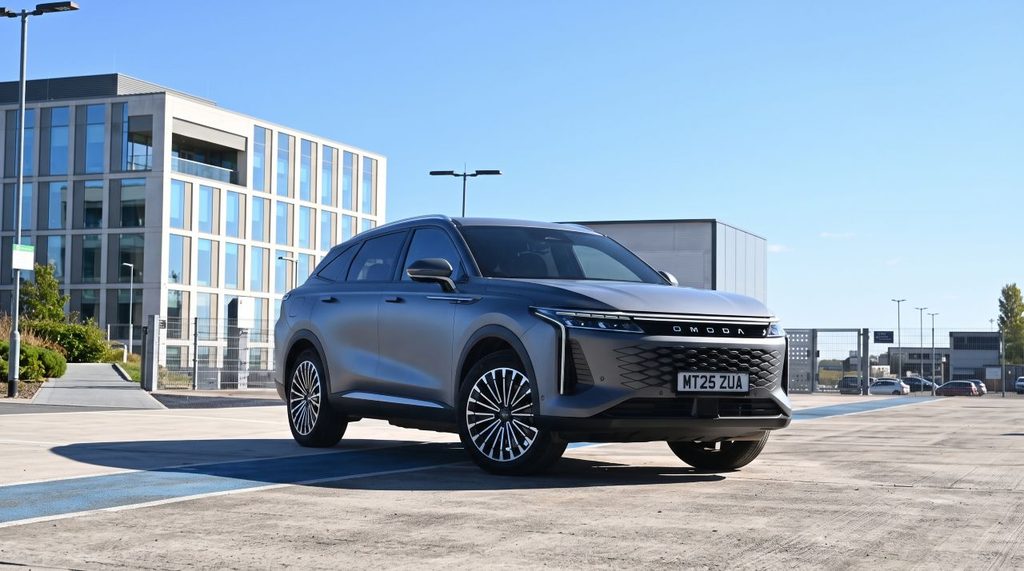
First, the potential trade breakthrough. China has agreed in principle to curb exports of hybrids and plug-in hybrids to the European Union. EU trade chief Maroš Šefčovič announced the understanding after two days of negotiations with Chinese Commerce Minister Wang Wentao in Beijing.
According to Šefčovič, the arrangement could reduce those exports by more than half over four years. That is a substantial concession on paper. But there is a catch: neither side disclosed how the reduction would actually happen.
Implementation, enforcement, and the response of European governments therefore remain open questions. An agreement to reduce exports is not the same thing as a mechanism that reliably reduces them. For European manufacturers demanding protection, that difference is the whole point.
The background explains why hybrids have become so contentious. The EU’s 2024 duties on Chinese battery-electric vehicles excluded hybrids. Chinese manufacturers consequently had a route into the European market that did not face the same additional barriers. For context, the European Commission’s announcement of those duties sets out their battery-electric scope.
Chinese-made vehicles accounted for roughly a quarter of European hybrid sales in August, according to figures cited in the reporting. The concern in Brussels is straightforward: a measure intended to protect European automotive manufacturing may have redirected competition rather than contained it.
The negotiations also covered something European industry cannot easily shrug off: access to Chinese rare earths and permanent magnets. These materials are important to automotive manufacturing and other advanced industries. China’s Commerce Ministry said a “green channel” would accelerate export licensing, while Šefčovič said Beijing would expand market access for some European products.
European automotive shares rallied, with BMW and Volkswagen among the biggest beneficiaries. That reaction reflects the possibility of relief on two fronts: reduced competitive pressure and more dependable access to industrial inputs. It does not establish that either outcome has been secured.
The Car Dispute Is Part of a Much Bigger Imbalance
The EU’s trade deficit with China reached €360 billion in the preceding year. European concerns therefore extend well beyond cars. France and Germany have urged Brussels to strengthen its retaliatory powers and investigate possible damage from subsidised imports in sectors including chemicals and plastics.
Germany’s harder position is particularly significant. It increases the pressure on Beijing to offer concessions rather than assume Europe will tolerate the existing trade relationship indefinitely.
China, meanwhile, faces an unpleasant trade-off. Weak domestic demand has made overseas customers increasingly important. Restricting exports sacrifices some immediate sales, but refusing concessions risks broader restrictions across a major market.
This is the structural tension explored in our coverage of the limits of China’s export-led growth model: foreign demand can support production, but trading partners do not have unlimited appetite for absorbing the imbalance.
EU leaders are expected to assess the understanding at their Thursday summit in Brussels, with further ministerial talks anticipated by January. The test is whether Beijing’s promises produce measurable changes—or merely buy time before the next confrontation.
Golden Week Spending Looks Strong Until You Examine the Details

China’s National Day holiday produced the sort of numbers that can support two very different headlines. Services revenue grew strongly. Travel growth slowed sharply. Cinema spending collapsed.
So, is the consumer recovering? The honest answer is that the evidence is mixed, and pretending otherwise would make the data considerably less useful.
Figures from the State Taxation Administration, reported by Caixin, showed service-industry sales revenue rising 19.5% year on year during the holiday. Several categories delivered substantial increases:
Tourism and entertainment sales rose 23.6%.
Restaurant revenue increased 9%.
Culture services grew 20.9%.
Sports services expanded 29.4%.
Those are encouraging figures. They show that consumers were spending on experiences. But they do not establish that household confidence has recovered broadly or that the spending will persist once the holiday ends.
Transport data offered a more restrained picture. Cross-regional passenger trips reached 2.14 billion during the reported October 1–7 period, with growth of just 0.6%, compared with 6.2% a year earlier. Holiday-calendar differences—including the longer 2025 holiday—complicate direct comparisons.
There were also large differences between transport modes. Railway passenger trips increased 12.7%, while air travel was broadly flat at 16.9 million trips. Average domestic economy airfares, including surcharges, rose 9.5%, according to FlightMaster.
In other words, more spending does not necessarily mean proportionately more activity. Prices, transport choices, and the particular services people buy all affect the result.
Cheaper Cinema Tickets Did Not Rescue the Box Office
The weakest signal came from cinemas. Holiday box-office revenue fell 36%, while admissions dropped by roughly 18 million to 32 million tickets. Average ticket prices declined to a five-year low of 36.4 yuan, according to Maoyan.
That is a particularly uncomfortable combination: lower prices and substantially fewer admissions. Cheaper tickets were not enough to restore demand.
Still, cinema performance depends partly on the films available. A disappointing release schedule is not the same thing as a nationwide collapse in consumption. The figures reveal serious weakness in one discretionary category, not a complete diagnosis of Chinese households.
Inbound tourism was brighter. Foreign arrivals reached 682,000, up 5.4%, while visa-free entries rose 9.2% to 505,000, according to the National Immigration Administration.
The sensible conclusion is therefore neither “everything is recovering” nor “nobody is spending". Selected services showed resilience, but the recovery’s breadth remains uncertain. Tax-based revenue, passenger journeys, and cinema receipts measure different things. They cannot simply be thrown together and treated as one consumer-confidence indicator.
Concerns reported by Bloomberg about softer spending per traveller reinforce that caution. Further tourism expenditure figures and subsequent retail data will matter more than an optimistic reading of one holiday.
Beijing Is Supporting the Economy, but Not Changing the Underlying Problem

The broader economy displays the same imbalance. Technological breakthroughs coexist with a prolonged property downturn, weak employment, and pressure on corporate profitability.
China’s economy expanded 4.3% year on year in the second quarter—the slowest pace in more than three years and below Beijing’s annual target range of 4.5% to 5%. Exports remained a crucial source of support.
According to Capital Economics, electronics manufacturing linked to the global AI boom accounted for more than half of the quarter’s expansion relative to the previous quarter. That is an impressive contribution. It is also a concentration risk.
If global technology spending weakens, a major engine of Chinese growth becomes less dependable. Success in one strategic industry cannot indefinitely substitute for healthier demand across the rest of the economy.
Beijing has responded with mortgage subsidies, additional infrastructure financing, and capital injections for financial institutions. These are real interventions. But they remain targeted rather than the sweeping stimulus many economists believe is necessary.
The mortgage subsidy illustrates the limits. Qualifying first-time buyers receive a one-percentage-point subsidy for one year. Restrictions on property size and value mean the measure covers only about 16% of housing transactions and 12% of new-home sales, according to Morgan Stanley.
That may help eligible buyers. It is not a comprehensive answer to the property slump.
Authorities have also announced a $54 billion capital injection into eight major banks and insurers. Yet financial institutions remain squeezed by exposure to troubled developers and local-government financing vehicles, alongside declining net interest margins.
Strengthening their capital can stabilise parts of the financial system. It does not automatically repair the borrowers beneath it.
Why Household Support Matters
Economists arguing for stronger direct financial assistance to households are addressing the demand side of the problem. If households remain cautious, expanding productive capacity does not guarantee that businesses will find enough customers.
Beijing has not delivered that assistance at scale. Its restraint reflects concerns about government debt and the risks surrounding further property-price declines. Xi Jinping’s emphasis on technological leadership and resilience against Western pressure also directs resources toward advanced manufacturing.
The danger is a reinforcing cycle. Weak demand puts downward pressure on prices. Falling prices squeeze profits. Businesses become less willing to invest or hire, which further undermines household confidence.
This is why stabilisation measures and a durable recovery are not interchangeable. A subsidy can support a transaction. A capital injection can strengthen an institution. Neither necessarily changes the reasons families are reluctant to spend.
China’s strategic industries may keep advancing. Broader prosperity still requires addressing the financial pressures facing ordinary households.
China Has Built the Electricity. Now It Has to Make It Useful.
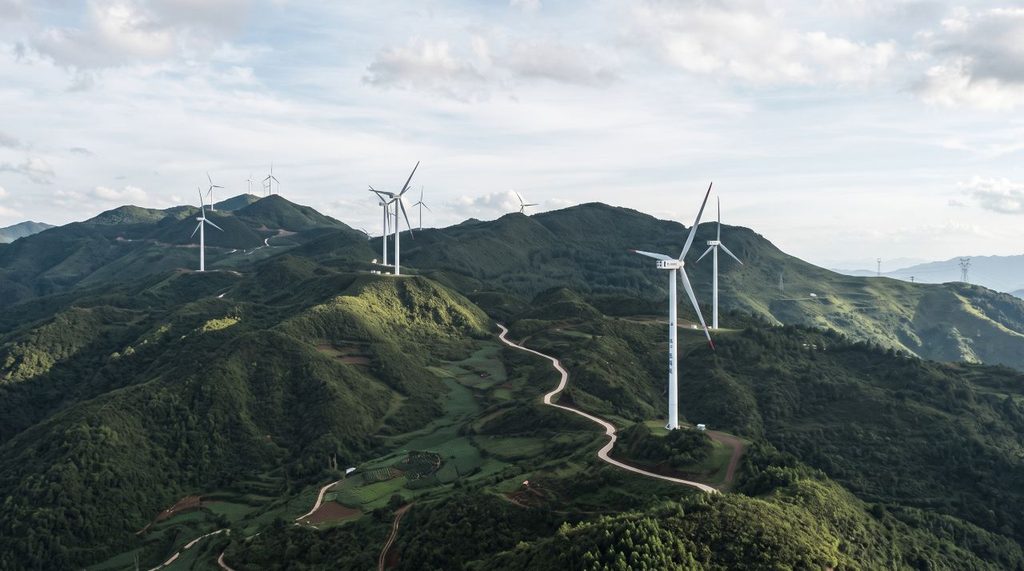
The energy story is perhaps the clearest physical expression of this mismatch between building capacity and extracting value from it.
China’s clean-energy expansion has created enormous quantities of potential electricity that its power system cannot fully absorb. In Gansu, wind capacity exceeds 20 gigawatts at the enormous wind development highlighted in the reporting. Many of the households and factories needing that electricity are hundreds of kilometres away.
The generation exists. The connection between supply and demand is the problem.
Official figures suggest around 9% of potential wind and solar generation was curtailed in the first half of 2026. The Centre for Research on Energy and Clean Air estimates China could have generated an additional 401 terawatt-hours over that period, indicating a wider shortfall than the headline curtailment figure captures.
BloombergNEF estimates China needs to invest $3.9 trillion in its grid through 2049—substantially more than Europe or the United States. That includes long-distance transmission, battery storage, and pumped hydro, allowing power to move between regions and remain available when wind and sunshine fade.
The scale of demand explains the urgency. Chinese electricity consumption exceeded 10 trillion kilowatt-hours in 2025, driven by industrial electrification, electric vehicles, and data centres. Between 2022 and 2025, China added more generating capacity than the entire US power system.
For wider context on electricity demand and system pressures, the International Energy Agency’s electricity resources provide a useful reference. The central distinction here is between having generating capacity and delivering usable power when and where it is needed.
The AI Opportunity Depends on More Than Construction
Abundant electricity could give China an important advantage in computing infrastructure. Western regions, including Gansu and Inner Mongolia, are expected to become major computing hubs, placing energy-intensive servers closer to plentiful supplies.
That opportunity is especially relevant while rising power costs and opposition to data centres complicate US expansion. Our coverage of Beijing’s electricity-driven AI strategy examines this connection between energy abundance and computing ambitions.
But more infrastructure alone will not solve the problem. China’s electricity system still relies heavily on administrative decisions and long-term coal contracts. These arrangements can crowd out renewable generation and weaken incentives to operate storage efficiently.
There are signs of change. Battery utilisation is improving. Short-term electricity trading accounted for 12% of transactions in the first half of 2026, compared with just over 4% in 2025. Beijing aims to establish a unified national power market by 2030.
Reform is nevertheless politically difficult. Coal remains central to energy security and supports millions of jobs. China continues expanding coal-fired capacity even as renewable additions break records.
Get the infrastructure and incentives right, and energy abundance could lower manufacturing costs, support AI development, and reduce exposure to imported fuels. Get them wrong, and China pays for underused renewable assets while maintaining costly fossil-fuel backup.
Building More Is Not the Same as Fixing More
The common thread is hard to miss. China has demonstrated extraordinary productive capacity. Its harder task is making that capacity work for a balanced economy.
Hybrid exports need sustainable access to foreign markets. Strong holiday revenues need to translate into persistent household demand. Financial support needs to address underlying economic weakness. Renewable capacity needs transmission, storage, and market rules that allow it to be used.
None of this diminishes China’s technological achievements. It does undermine the assumption that those achievements automatically solve everything else. Beijing’s next test is not simply whether it can build more. It is whether what it builds delivers reliable electricity, viable businesses, and greater financial confidence for the households on which a durable recovery depends.
Story 1: China’s Hybrid Export Deal Has One Rather Important Missing Piece
- Q: Why has China’s proposed deal to curb hybrid vehicle exports to the EU drawn skepticism despite appearing to be a major concession?
- A: While China agreed in principle to an arrangement that EU trade chief Maroš Šefčovič said could slash hybrid exports by more than half over four years, neither side outlined how these reductions will be implemented or enforced. Without a binding, transparent mechanism, European carmakers remain unconvinced the deal will effectively prevent Chinese manufacturers from bypassing existing EV tariffs.
Story 2: Golden Week Spending Looks Strong Until You Examine the Details
- Q: What reveals the underlying fragility in China’s Golden Week consumer spending data?
- A: Although headline service revenues jumped 19.5%—buoyed by tourism and dining out—discretionary spending elsewhere was deeply fractured. Cross-regional passenger trip growth slowed to just 0.6%, cinema box-office revenues plunged 36% despite ticket prices hitting a five-year low, and air passenger volumes remained flat, pointing to cautious, selective spending rather than a broad recovery in household confidence.
Story 3: Beijing Is Supporting the Economy, but Not Changing the Underlying Problem
- Q: Why are Beijing’s targeted stimulus measures failing to fix the core weakness in the broader economy?
- A: Beijing’s interventions—such as a $54 billion bank recapitalization and narrowly scoped mortgage subsidies that cover only 12% to 16% of property transactions—stabilize institutions without repairing household balance sheets. By prioritizing supply-side tech manufacturing over direct, large-scale consumer assistance, policy leaves domestic demand depressed, trapping businesses in margin-crushing price wars and over-relying on foreign exports.
Story 4: China Has Built the Electricity. Now It Has to Make It Useful.
- Q: What is preventing China from turning its record clean-energy buildout into usable economic and industrial power?
- A: The primary bottleneck is geographical and systemic: massive renewable installations are concentrated hundreds of kilometers away from consumption centers, causing roughly 9% of wind and solar capacity to be curtailed in early 2026. Without trillions in ultra-high-voltage grid links, large-scale storage, and power-market reforms that dismantle rigid long-term coal contracts, surplus green energy cannot efficiently power industries or regional AI computing clusters.