Photo by Simon Kadula on Unsplash
China opened the week with four developments that, taken together, say a great deal about where the regional and global economy is heading.
First, Beijing is pushing aggressively into artificial intelligence and robotics as it tries to manage a severe demographic decline. Second, Germany’s industrial core is coming under sharper pressure as Chinese manufacturers close the quality gap while competing at much lower prices. Third, a new strategic assessment underscores how vulnerable global trade has become to any disruption in the South China Sea and around Taiwan. Fourth, Vietnam is moving forward with a major deep-water port and transport corridor in its south, a project with both economic and security implications.
Each story stands on its own. Together, they show a region being reshaped by automation, industrial rivalry, maritime chokepoints, and strategic infrastructure.
Table of Contents
- China’s AI and robotics push is colliding with demographic reality
- German manufacturers are facing a much sharper China challenge
- Global shipping is more exposed to Taiwan Strait disruption than many assumed
- Vietnam’s new southern port project is about more than commerce
- What these four developments tell us
- FAQ
China’s AI and robotics push is colliding with demographic reality
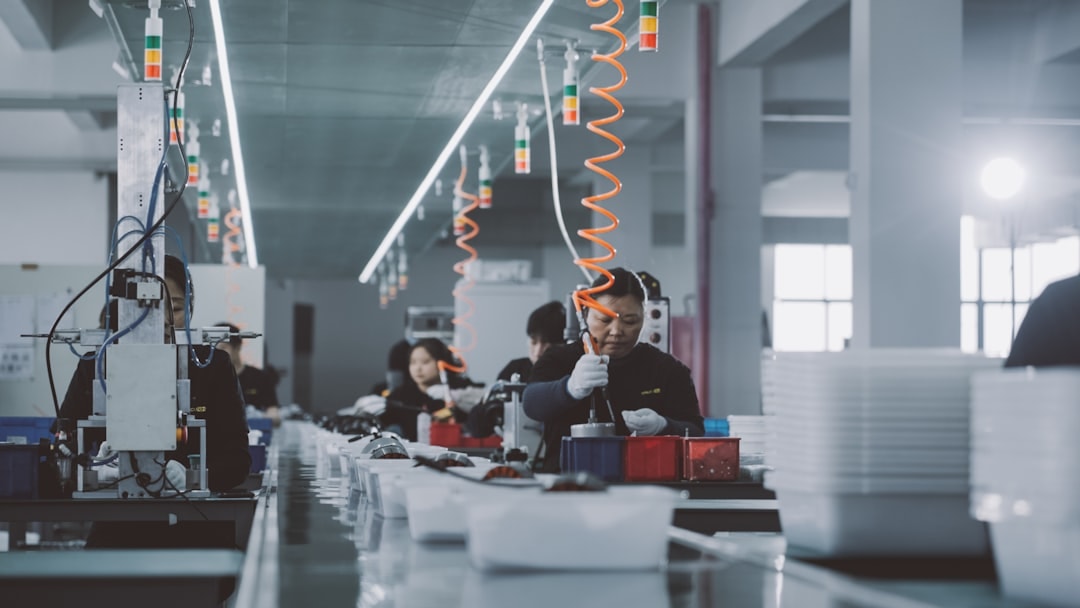
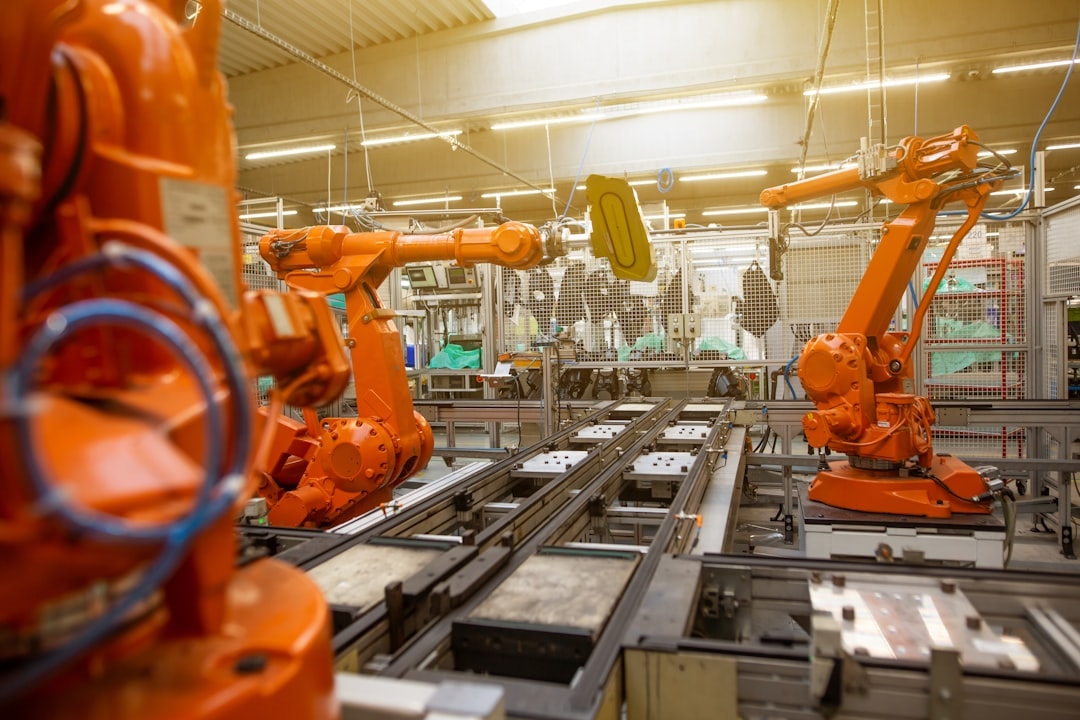
China is moving rapidly to automate as it faces one of the toughest demographic transitions in the world. The basic logic from Beijing’s perspective is straightforward. If the workforce is shrinking and the population is ageing, then productivity has to come from somewhere else. Robotics and AI are being positioned as that answer.
This is no longer just about adding industrial robots to factory floors. Chinese firms are also developing humanoid robots intended for more flexible work across manufacturing, logistics, healthcare, and retail. Beijing has elevated what it calls embodied AI into a strategic priority, encouraging wider commercial adoption and backing the transition with subsidies and long-term investment.
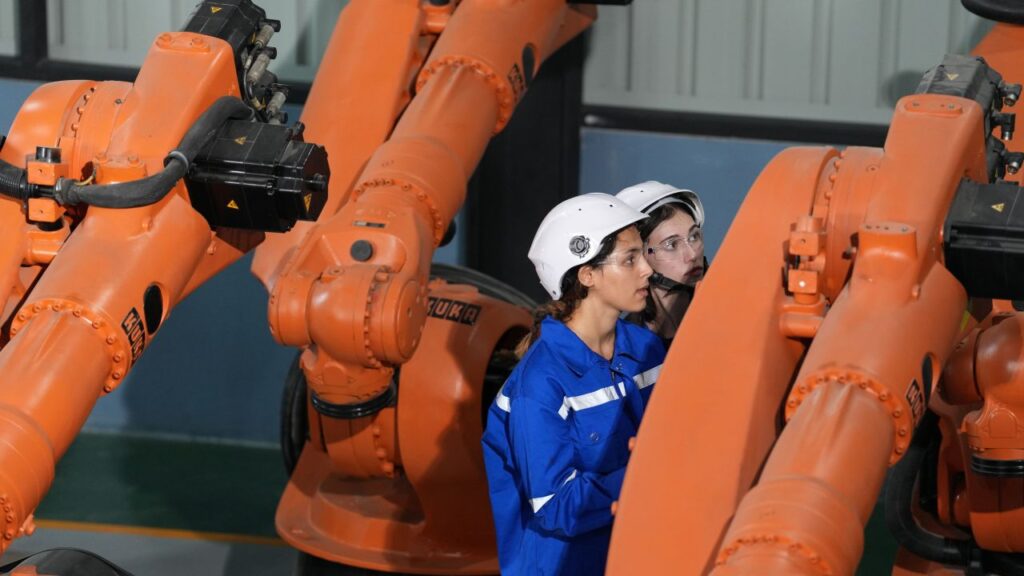
The urgency is real. Even conservative international projections show a steep decline ahead in China’s working-age population. That creates obvious pressure on labour-intensive industries and raises a difficult question for policymakers: how do you preserve manufacturing scale when the labour pool is shrinking?
For many manufacturers, automation is no longer treated as optional. It is increasingly being framed as necessary for maintaining output, cost competitiveness, and long-term growth.
China is already the world’s largest installer of industrial robots. It added more new robots last year than the rest of the world combined. At the same time, domestic companies are trying to build the next export success story after electric vehicles, with humanoid robotics often described as a likely candidate.
Officials have reportedly told local governments and state-owned firms to speed up deployment, with a target of placing at least 10,000 humanoid robots in commercial settings this year. That is a strong signal that this is not a side project. It is now firmly part of industrial policy.
The labor market risk is immediate, not theoretical
The trouble is that the benefits of automation may arrive on a very different timeline from the social costs.
China is already dealing with elevated youth unemployment, a larger gig economy, and lingering weakness connected to the prolonged property downturn. Against that backdrop, rapid automation could deepen labour market stress long before it solves the country’s structural workforce problem.
Factory workers are the most obvious group at risk, but they are hardly the only one. Delivery drivers, hotel staff, and even some highly skilled professionals could face growing competition from machines and AI systems as the technology improves.
The service sector offers a preview of where this is going. Hotels are already using robots to deliver food, transport luggage, and handle some cleaning tasks. Self-service systems are reducing staffing needs more broadly. Meanwhile, technology companies are trying to train humanoid systems for precision manufacturing and eventually more specialised work.
That said, there is still a substantial gap between ambition and capability.
Current humanoid systems remain limited in unpredictable environments. They require enormous volumes of training data and still struggle to match human adaptability. Industry estimates suggest that tens of millions of hours of human activity may need to be recorded to train future generations of these machines properly.
So while the direction of travel is clear, this is not a magic switch that fixes China’s demographic crisis overnight. If anything, the transition may create a period where labour displacement arrives faster than productivity gains are fully realized.
Policymakers appear aware of the risk. Authorities are developing AI-linked employment risk monitoring systems and expanding retraining efforts for displaced workers. Longer term, economists argue that deeper tax and welfare reforms may be needed as more income shifts from labour to capital.
The broader point is that Beijing appears willing to accept short-term labour disruption in exchange for technological leadership and long-term resilience. That gamble fits with other signs of policy direction, especially the way the state is pairing industrial policy with strategic goals, a dynamic also visible in this related coverage on Beijing’s electricity-driven AI push.
German manufacturers are facing a much sharper China challenge
The second major development comes from Europe, where Germany’s Mittelstand is under serious pressure.
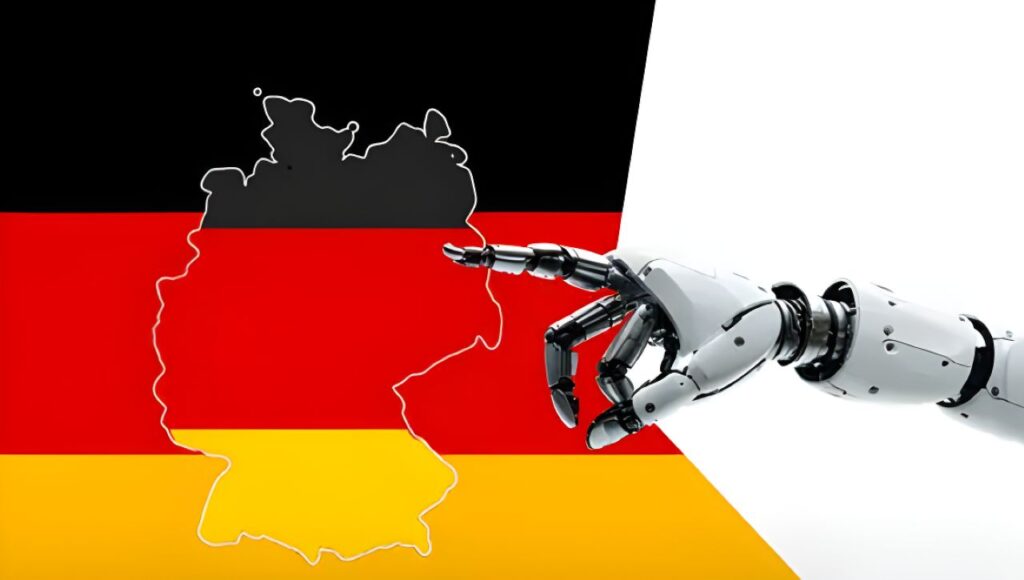
For decades, these highly specialised mid-sized manufacturers formed the backbone of German industrial strength. Many are family-run firms built around deep engineering expertise, niche industrial excellence, and a reputation for making some of the world’s best machinery.
That model is now under increasing strain as Chinese rivals improve product quality while competing at much lower prices.
In some cases, Chinese manufacturers are offering machinery that customers see as broadly comparable, but at prices that can be roughly half those of European competitors. Backed by state subsidies and industrial policy, they are no longer just competing at the low end. They are moving directly into spaces where German firms long assumed they would remain dominant.
The effects are being felt across Germany’s industrial regions. Production is being cut. Workers are being laid off. Order books are thinning.
One machinery producer in southwest Germany described the situation as increasingly difficult, saying Chinese competition had intensified sharply over the past six months as buyers turned toward lower-cost alternatives. The warning was stark: if conditions in Europe do not improve, a substantial portion of production may eventually shift to China.
Trade flows are changing in ways that would have been hard to imagine a decade ago
The numbers show the pressure clearly.
- Germany is losing more than 10,000 industrial jobs per month, according to EY.
- Industrial production is down roughly 10 percent from early 2022 levels.
- Energy-intensive sectors have suffered even steeper declines.
- German machine tool exports to China fell by roughly one-third in the first quarter compared with a year earlier.
Perhaps the most telling shift is in trade structure itself. Germany has historically been a major exporter of advanced capital goods to China. Now, it imports more capital goods from China than it exports there. That is not a cyclical blip. It points to a deeper change in industrial competitiveness.
China’s rise in this space has been carefully cultivated. Through programmes such as the so-called 10,000 Little Giants initiative, Beijing has spent years directing subsidies, tax incentives, and state support toward specialised industrial firms intended to challenge established foreign leaders.
Chinese manufacturers now account for about one-third of global machinery production, and they are gaining share not only in developing markets but also in Europe itself. One reason is that many can provide a much more complete industrial package from a single supplier, including machine tools, robotic arms, and cloud-based management software.
German firms still lead in some highly specialised technologies. But analysts increasingly argue that China is investing precisely to eliminate those remaining dependencies over time.
That puts Germany in a difficult position. On one side is external competition from heavily supported Chinese rivals. On the other are domestic problems, especially high energy costs, weak demand in Europe, and regulatory burdens. Many industrial leaders now argue that Germany needs structural reform as much as trade defence.
More than three-quarters of German engineering firms reportedly identify China as their biggest long-term strategic challenge. That says a lot about how far the industrial balance has shifted.
This also fits with a broader pattern in the economic story around China. While some narratives still emphasise recovery or technological ascent in isolation, the reality is more uneven and more contested, a point that also comes through in this report on fragile recovery claims and growing tech constraints.
Global shipping is more exposed to Taiwan Strait disruption than many assumed
The third development is geopolitical, but the implications are deeply economic.
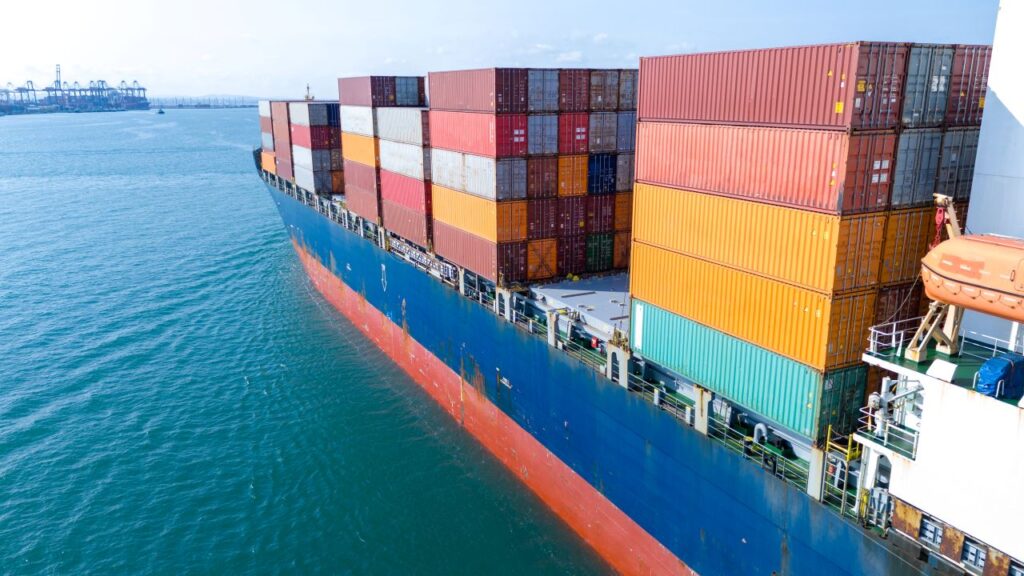
A recent study from the Center for Strategic and International Studies argues that some of the world’s most important trade routes are also among its most dangerous strategic vulnerabilities. The report focuses on maritime chokepoints in the South China Sea and around Taiwan, and its conclusion is simple enough: any conflict in these waters would hit global commerce hard and fast.
Nearly US$6.4 trillion worth of goods moved through the South China Sea’s eight major chokepoints in 2024. Two routes stand out above all others: the Malacca Strait and the Taiwan Strait. Each carried more than US$2.4 trillion in maritime trade, around 21 percent of the global total.
The striking point in the report is that the Taiwan Strait may now be a greater economic vulnerability for China than the Malacca Strait, despite years of discussion about Beijing’s so-called Malacca Dilemma.
According to the analysis:
- About one-third of China’s imports passed through the Taiwan Strait in 2024.
- Roughly 16 percent of China’s exports used the same route.
- That compares with 21 percent of imports and 14 percent of exports moving through the Malacca Strait.
The Taiwan Strait is not just an international route. It also plays a major role in China’s domestic coastal shipping system, linking key southern manufacturing hubs with ports further north. In other words, disruption there would affect both external trade and internal logistics.
Why Taiwan matters even more than headline trade figures suggest
The most severe scenario outlined is conflict over Taiwan, whether through invasion, blockade, or a more limited quarantine. Any of those could disrupt traffic through both the Taiwan Strait and nearby passages such as the Luzon Strait, with direct consequences for semiconductors, electronics, and broader industrial supply chains.
Alternative routes do exist. But rerouting is expensive and slow. It raises shipping times, insurance costs, and logistical complexity. The comparison to disruptions in the Red Sea and the Strait of Hormuz is important because it shows how quickly regional security problems can become global supply chain problems.
Even countries that are not directly involved would feel the impact. The United States itself has relatively limited direct reliance on these shipping lanes compared with some of its allies. But Japan, South Korea, and the Philippines collectively moved US$755 billion of trade through the Taiwan Strait in 2024, much more than the US$474 billion they shipped through the Malacca Strait.
Taiwan’s own dependence is even more obvious. As an island economy reliant on maritime imports, any major disruption would be existential.
The effects also extend well beyond East Asia. Gulf energy exporters, including Saudi Arabia, Qatar, and the United Arab Emirates, rely heavily on the Malacca route to reach Asian buyers. Several African economies are also heavily exposed to these corridors. Australia and New Zealand are somewhat different, with more trade moving through the Luzon and Mindoro Straits, but they are hardly immune to wider regional instability.
The practical lesson from the report is that governments need a much more detailed map of shipping vulnerability than simple aggregate trade figures can provide. It is not enough to know how much trade moves through Asia. The real issue is which chokepoints matter for which products, industries, and national economies.
That is especially relevant as tensions around Taiwan remain elevated and shipping resilience becomes a more central policy concern. For further context on how maritime stress and regional tensions can spill into inflation, debt, and supply chains, see this related piece on Hormuz turmoil, debt strain, and Taiwan blockade planning.
Vietnam’s new southern port project is about more than commerce
The final development comes from Vietnam, where Hanoi is moving ahead with a major deep-water port and transport corridor in the country’s far south. The project is valued at nearly US$4 billion and is widely seen as carrying both economic and strategic significance.

At the centre of the plan is an 18-kilometre sea bridge linking Ca Mau province to Hon Khoai Island. Vietnam intends to build a dual-use port there capable of handling some of the world’s largest cargo vessels. The facility is expected to process up to 20 million tonnes of cargo each year while also supporting larger naval platforms.
That dual-use element matters.
The project gained momentum after two developments nearby. One was Cambodia’s construction of the China-backed Funan Techo Canal. The other was Beijing’s expansion of the Ream naval base in Cambodia. Vietnamese officials and analysts appear to view both as shifts in the regional strategic balance, increasing pressure on Hanoi to strengthen its own footprint in the Gulf of Thailand.
From a development perspective, the project could improve logistics for the Mekong Delta, one of Vietnam’s poorer regions. Better connectivity, more port capacity, and upgraded transport links could generate long-term gains for trade and local industry.
From a security perspective, it could significantly improve Vietnam’s naval reach in the southwest.
That combination explains why some analysts see the project less as a conventional commercial investment and more as strategic infrastructure with economic benefits attached. There is scepticism about whether the commercial return alone justifies the scale of spending. But that criticism somewhat misses the point if the underlying objective is to strengthen both logistics and deterrence.
Either way, the project is likely to reshape Vietnam’s southwestern coastline and reinforce the trend of Southeast Asian states adapting to a more contested regional order.
What these four developments tell us
These stories are different, but they connect in obvious ways.
- China’s automation drive shows a state trying to offset demographic decline through technology, even at the risk of social disruption.
- Germany’s industrial stress shows how that same state-backed industrial rise is already reshaping advanced manufacturing competition.
- The Taiwan Strait trade warning shows how much of the global economy depends on a small number of highly exposed maritime routes.
- Vietnam’s southern port shows how neighbouring countries are adjusting with strategic infrastructure of their own.
In short, this is not just about economics and not just about geopolitics. It is about the growing overlap between the two.
That overlap is becoming the defining feature of the regional landscape. Industrial policy is now strategic policy. Shipping lanes are now frontline economic infrastructure. Ports are now commercial assets and security assets at the same time. And AI is not just a productivity tool. In China’s case, it is being treated as part of the national response to demographic decline and long-term competition with the United States.
That makes this latest China news update especially revealing. It captures how labour, trade, technology, and security are increasingly part of the same story.
FAQ
Why is China investing so heavily in robotics and AI right now?
Because China is facing a rapidly aging population and a shrinking workforce. Beijing sees automation as a way to preserve manufacturing capacity, improve productivity, and maintain industrial competitiveness despite worsening demographic pressure.
Will robotics solve China’s demographic problem?
Not fully, and likely not quickly. Automation can offset some labour shortages, but current humanoid systems still struggle in unpredictable environments and require extensive training. The social costs of labour displacement may also appear before the full productivity gains do.
Why are German manufacturers so concerned about Chinese competition?
Because Chinese firms are increasingly offering machinery that customers see as high quality at significantly lower prices. Combined with subsidies, complete industrial ecosystems, and Germany’s own domestic challenges such as energy costs and weak demand, this is putting intense pressure on the Mittelstand.
Why is the Taiwan Strait considered such a major trade risk?
It carries a huge volume of global maritime trade and is especially important for China’s imports, exports, and domestic coastal shipping. Any conflict, blockade, or quarantine around Taiwan could disrupt semiconductor, electronics, and industrial supply chains across the region and beyond.
What is the strategic purpose of Vietnam’s new southern port project?
It is intended to support economic development in the Mekong Delta while also strengthening Vietnam’s naval reach and presence in the Gulf of Thailand. The project appears to be partly a response to changing regional dynamics linked to Cambodia and China-backed infrastructure nearby.
What is the main takeaway from this China News Update?
The main takeaway is that technology, industry, and security are increasingly fused together. China’s AI push, Germany’s industrial pressure, Taiwan Strait shipping risk, and Vietnam’s port expansion all point to a regional order where economic systems are being reshaped by strategic competition.