Three developments this week reveal three very different, but deeply connected, weaknesses in China’s current model:
A biotechnology sector racing ahead of credible safeguards, a foreign-policy machine willing to make smaller countries pay for great-power competition, and an industrial system so addicted to expansion that Beijing is now attempting to deny the problem exists.
First, there is the devastating case of a six-year-old girl who died after receiving an experimental gene-editing treatment in Shanghai. Then there is Panama, which has discovered that removing Chinese-linked operators from strategic canal ports does not mean escaping Beijing’s influence. Finally, China’s Ministry of Commerce has released a lengthy defence of its industrial policy, insisting that the country’s overcapacity problem is essentially a foreign invention.
It is a remarkable combination of stories. In each case, officials and institutions appear to be confronting an uncomfortable reality with a familiar blend of opacity, denial and political pressure. And, as usual, the people left carrying the consequences are parents, smaller states, private businesses and foreign competitors.
Table of Contents
- A child’s death exposes the risks of China’s biotech sprint
- Panama discovers the cost of choosing sides
- Beijing’s overcapacity denial is getting harder to sustain
- The bigger pattern: power without accountability
- Frequently asked questions
A child’s death exposes the risks of China’s biotech sprint.
A previously undisclosed death following experimental gene editing in Shanghai has prompted an official investigation and raised serious questions about ethical oversight in one of China’s fastest-growing scientific sectors.
The child, identified publicly only by the pseudonym Mei, was six years old and had a rare neurodevelopmental disorder associated with intellectual disability, delayed speech development and low muscle tone. In March 2025, she received an experimental treatment intended to correct a mutation associated with her condition. She died only days later.
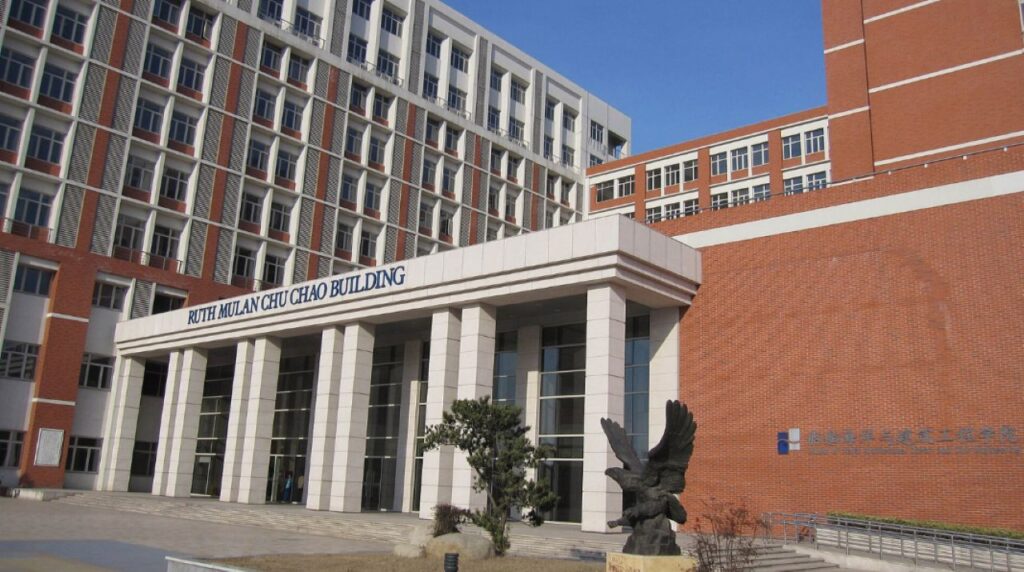
The project was led by neuroscientist Qiu Zilong at the Songjiang Research Institute of Shanghai Jiao Tong University School of Medicine and conducted through its affiliated Xinhua Hospital. The death was later reported by Science and Retraction Watch, prompting Shanghai Jiao Tong University School of Medicine to announce a comprehensive investigation into both the clinical study and concerns surrounding research papers linked to Qiu.
The university said it opposed research that violated ethical standards or regulations and would take serious action based on the outcome of the investigation. That is the correct public response. It is also the bare minimum after a child has died in a first-in-human treatment programme at one of the country’s leading medical institutions.
Base editing is promising. That does not make it safe.
The treatment reportedly used base editing, a form of CRISPR-based genetic engineering designed to alter individual DNA components without cutting both strands of the genetic sequence. In theory, this can make genetic intervention more precise than older gene-editing approaches. The potential is enormous: treatments for diseases that previously had no meaningful therapeutic option.

But “potential” is doing a lot of work here. A technology can be elegant in a laboratory and still be dangerous in a human body. First-in-human treatments demand exceptionally strong evidence, particularly where the patient is a child, the disease is rare, and the intervention has been developed for a single person.
Seven specialists consulted by Science and Retraction Watch reportedly raised concerns over the project’s preclinical evidence, risk assessments and the explanations provided to Mei’s parents. Documents reportedly indicated that a primate study had resulted in serious organ damage in four monkeys. Stephen Grey, a gene-therapy researcher at the University of Texas Southwestern Medical Center, reportedly said the treatment should not have proceeded to human testing.
That is not a minor disagreement over scientific methodology. It goes to the heart of whether the most basic threshold for medical experimentation was met.
Mei’s parents reportedly contributed more than US$860,000 toward the development of the therapy. Their financial contribution, along with the child’s death, was not disclosed when related animal research was published in Nature in early 2026. Nature said it had not been aware of the clinical-trial issues when it published the research.
A Chinese biotechnology-law and ethics specialist also told Caixin that available information raised serious questions regarding subject selection, financing, approvals and whether the expected benefits could plausibly justify the risks. Under existing ethical standards, the expert’s assessment was stark: the project should not have reached human testing.
China needs oversight, not a bureaucratic cover-up.
There is an obvious danger in how Beijing responds. A scandal of this magnitude could trigger a blunt regulatory backlash, constraining legitimate research through broad restrictions rather than fixing the failures that allowed a questionable experiment to move forward.
But the alternative is worse. China’s biotech ambitions will not be protected by treating transparency as an inconvenience or by allowing wealthy families facing desperate medical circumstances to finance high-risk experimentation behind closed doors. Public trust is not a luxury add-on to medical innovation. It is the thing that prevents innovation from sliding into exploitation.
The essentials are not mysterious: independent ethical review, clear disclosure of adverse outcomes, transparent financing arrangements, rigorous preclinical standards and serious protections for vulnerable patients. If an experimental treatment fails those tests, no amount of national prestige or scientific hype should carry it across the finish line.
Panama discovers the cost of choosing sides.
Panama is now learning a lesson that many smaller countries already know: in a confrontation between Washington and Beijing, there is rarely a safe neutral ground. You can make a decision for reasons of law, sovereignty or domestic politics and still find yourself treated as collateral damage in someone else’s strategic contest.
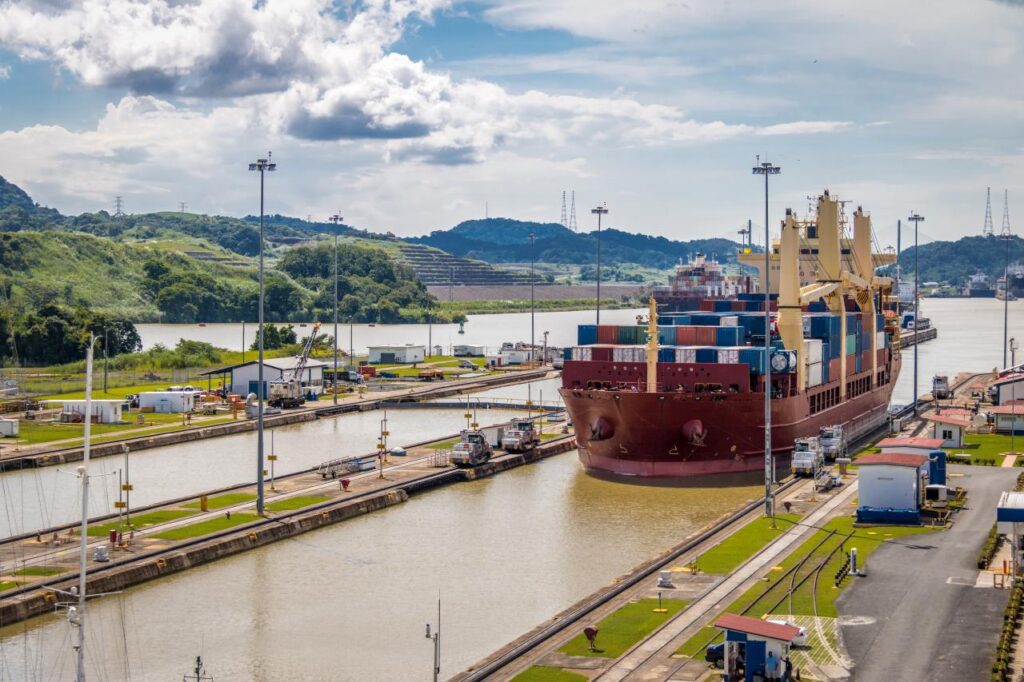
In January, Panama’s Supreme Court ruled unconstitutional the contracts that allowed Hong Kong conglomerate CK Hutchison to operate the ports of Balboa and Cristóbal, located at opposite ends of the Panama Canal. The ruling was a political victory for US President Donald Trump, who had argued that Chinese involvement in strategic canal infrastructure presented a security risk.
Beijing’s apparent response has been swift. Since the ruling, Chinese authorities have sharply increased inspections and detentions of Panama-flagged vessels. Nearly 500 such ships have reportedly been detained in Chinese ports since January, including 146 in May alone, compared with only 23 in January.
Chinese officials deny Panama is being singled out. Foreign Ministry spokesperson Lin Jian said Panamanian vessels accounted for a disproportionately high share of maritime incidents involving foreign ships in Chinese waters and insisted the inspections complied with international conventions.
Perhaps. But an explosion in detentions of this scale, arriving immediately after a geopolitical dispute over canal ports, is the sort of coincidence that only becomes less convincing the longer it continues.
Shipping inspections can become political weapons.
Ship managers and seafarers have reportedly alleged that Chinese inspectors are finding reasons to detain vessels regardless of age or condition. Some ships have remained anchored for more than a month while supposed safety issues were resolved.
Port-state inspections are normal. Maritime safety standards matter. But they also offer a remarkably convenient pressure point: technical, slow-moving, expensive and easily framed as routine enforcement. No official needs to announce sanctions. No ministry has to say retaliation out loud. The commercial pain simply accumulates.
For Panama, the stakes are serious. Roughly 8,500 vessels sail under the Panamanian flag, generating valuable registration income. If shipowners conclude that the flag carries an elevated risk of detention in Chinese ports, they can move elsewhere. Some reportedly already have.
Pressure is also building around the canal ports. Chinese shipping giant Cosco has suspended cargo shipments to Balboa, while CK Hutchison is pursuing US$2 billion in damages through international arbitration. Beijing has also warned other companies, including Mediterranean Shipping Company subsidiaries appointed as interim operators, against harming Chinese commercial interests.
Panama’s dilemma is almost absurdly neat. Allow another Chinese company to operate strategic canal infrastructure and risk provoking Washington. Exclude Chinese bidders and risk further friction with Beijing, while also making other investors wonder whether Panama has become too politically radioactive to touch.
Officials from Panama and China have reportedly held talks over renewal of a maritime agreement that grants Panamanian vessels preferential access to Chinese ports. Tensions reportedly eased considerably in July, suggesting some room for compromise. Yet Beijing has not confirmed whether that agreement will be renewed.
The point is not simply that Panama faces commercial pressure. It is that trade, shipping, port access and regulatory enforcement increasingly function as instruments of geopolitical leverage. The same pattern has emerged in other disputes involving sanctions, energy and maritime trade, including Beijing’s increasingly confrontational posture toward US restrictions on Iranian oil commerce.
For further context on that sanctions dispute, see China’s blocking- statute order against US sanctions on Iranian oil trade.
Beijing’s overcapacity denial is getting harder to sustain.
China’s Ministry of Commerce has now formally rejected international criticism that the country’s industrial policies are producing damaging overcapacity. The ministry’s position paper, titled China’s Position on the So-Called Issue of Excess Capacity, runs to more than 10,000 Chinese characters and represents Beijing’s most extensive public defence yet.
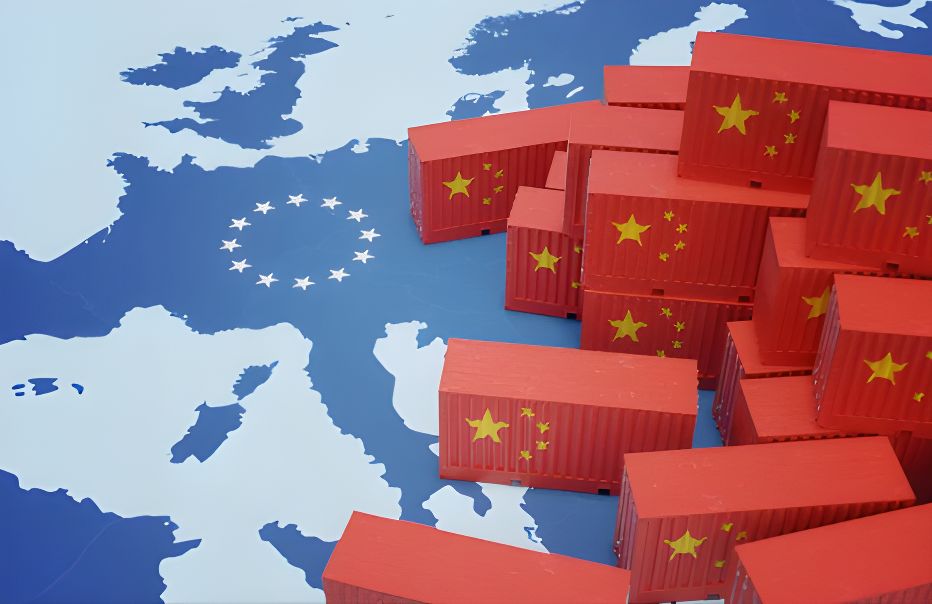
The document rejects the idea that subsidies necessarily create overcapacity. It rejects the notion that a large trade surplus is evidence of excess production. It argues that China’s export growth reflects economies of scale, improving technological capability and legitimate demand created by industrialisation and the global green transition.
It also insists that global imbalances are historically normal, shaped by savings patterns, international supply chains and the global financial system. Most crucially, it rejects the argument that weak domestic demand is forcing Chinese manufacturers to dump excess output abroad.
China, Beijing says, is not merely the “world’s factory". It is also the “world’s market".
That line is politically useful. It is also increasingly difficult to square with the underlying economic picture.
The problem is structural, not rhetorical.
Overcapacity is widely recognised as a serious structural issue inside China, including by Chinese economists and policymakers. For years, state-directed investment, subsidies, cheap financing and local-government support have encouraged companies to expand, especially in sectors deemed strategically important.
The outcome is familiar. First, production capacity rises. Then domestic firms compete viciously for market share. Prices fall, margins collapse and companies continue building capacity anyway because stopping expansion risks political embarrassment, lost subsidies, stranded local investment and job losses.
China has seen this dynamic before in steel, cement and chemicals. It is now spreading through industries that Beijing considers vital to its technological future:
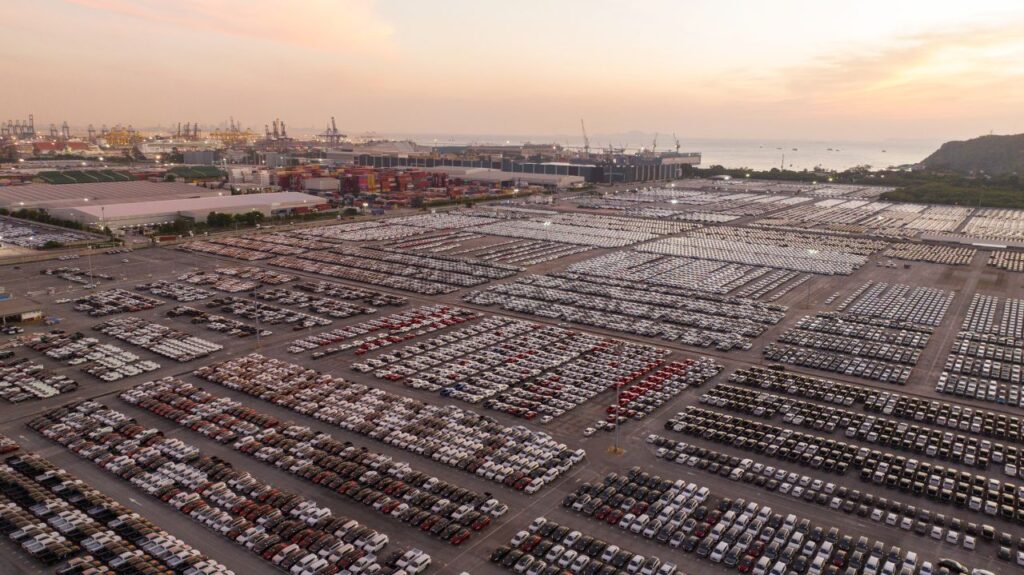
- Electric vehicles;
- Battery manufacturing;
- Solar panels;
- Robotics;
- Other advanced manufacturing sectors.
The problem becomes especially acute because household consumption remains subdued and the property downturn has weakened a major source of domestic demand. When Chinese consumers cannot absorb rising industrial output, companies look abroad. Exports rise, foreign producers face lower-priced competition and governments begin reaching for tariffs, investment restrictions and defensive industrial policies.
Beijing can call this “legitimate international demand” as often as it likes. Brussels and Washington are unlikely to accept the framing when the commercial effects are factories under pressure, deteriorating margins and politically explosive job losses at home.
A May report from the US Chamber of Commerce and Rhodium Group concluded that Beijing is doubling down on industrial policy, with state intervention becoming more systemic across entire production chains: upstream inputs, industrial equipment, services and frontier technology.
In other words, foreign governments are not only worried about a few subsidised exports. They are worried about a model designed to support national champions from raw materials through final sale, while competing firms are expected to survive on market logic alone.
That is why the Ministry of Commerce’s paper matters. It suggests Beijing has little appetite to make the structural changes sought by the European Union, the United States and other trading partners before looming negotiations. Rather than acknowledging a problem and debating remedies, China has chosen to dispute the premise.
The likely result is not de-escalation. It is more trade friction. The more Beijing denies the visible effects of excess capacity, the easier it becomes for foreign policymakers to justify tariffs, local-content requirements, investment screening and other forms of economic self-defence.
This sits uneasily beside China’s own growing recognition that export-led growth cannot indefinitely substitute for stronger domestic demand. The contradictions in that model are explored further in China’s debate over unsustainable export-led growth and weakening services momentum.
The bigger pattern: power without accountability
These three stories are not identical. One concerns medical ethics. One concerns maritime pressure. One concerns industrial policy. But together they reveal a broader pattern in China’s political economy: an immense capacity to mobilise resources, paired with a persistent inability—or unwillingness—to acknowledge the damage created when those resources are deployed without credible accountability.
In biotechnology, the risk is that vulnerable families become participants in opaque and inadequately tested experiments. In Panama, the risk is that legal and commercial institutions become bargaining chips in a rivalry between superpowers. In manufacturing, the risk is that a state-supported drive for scale exports its economic consequences to the rest of the world.
Beijing may be able to delay a reckoning in each case. It cannot avoid one forever. Medical scandals erode public trust. Economic coercion encourages countries to diversify away from dependence. Denial of structural overcapacity invites a coordinated protectionist response.
The central issue is no longer whether China has the capacity to innovate, build, produce and project influence. Clearly, it does. The issue is whether the country’s institutions can impose limits when political ambition, commercial incentives and national prestige all point in the same reckless direction.
Frequently asked questions
What happened in the Shanghai gene-editing case?
A six-year-old girl known publicly as Mei died days after receiving an experimental base-editing treatment for a rare neurodevelopmental condition in March 2025. Shanghai Jiao Tong University School of Medicine later announced an investigation into the clinical study and related research concerns.
Why are Panama-flagged vessels being detained in China?
Chinese authorities say Panama-flagged vessels account for a high share of maritime incidents involving foreign ships and that inspections follow international conventions. However, the sharp increase in detentions followed Panama’s ruling against CK Hutchison’s canal-port contracts, leading to concerns that shipping enforcement is being used as political pressure.
What does China mean when it rejects claims of overcapacity?
Beijing argues that exports, trade surpluses and industrial subsidies do not automatically prove excess production. It says Chinese export strength comes from scale, technology and global demand. Critics argue that weak domestic consumption, state-backed investment and aggressive capacity expansion are pushing surplus output into foreign markets.
Why could this worsen China’s trade disputes with the EU and US?
European and American policymakers increasingly view China’s industrial export strength as a product of systemic state support rather than ordinary market competition. Beijing’s refusal to recognise overcapacity as a structural problem is likely to strengthen arguments for tariffs, investment restrictions and defensive industrial policies.