
Three developments stand out right now in China’s economic picture, and together they tell a fairly stark story.
First, Beijing’s land market has weakened sharply, which matters because the capital is supposed to be one of the most resilient property markets in the country. Second, China’s top auditor has publicly accused major state-backed financial institutions of tax avoidance, governance failures, and improper lending. Third, Europe is growing more alarmed about China’s trade model but still seems reluctant to accept the cost of a harder response.
Each of these stories points to the same underlying problem. China is dealing with weak domestic demand, long-running property stress, fragile local government finances, and rising external friction, all at the same time.
Table of Contents
- Beijing’s land market is sending a warning signal
- China’s top auditor has publicly called out major financial institutions
- Europe is getting tougher on China in words, not yet in action
- The modern Plaza Accord idea is politically dramatic, but unrealistic
- Europe still looks cautious despite growing alarm
- What these three stories say about China’s current position
- FAQ
Beijing’s land market is sending a warning signal
China’s property downturn is no longer a story confined to lower-tier cities or distressed developers. The latest land sale figures out of Beijing show that even the capital is under heavy pressure.
During the first half of the year, land-use sales in Beijing totalled about US$4.7 billion. That was down 66 per cent from the same period a year earlier. This is not a small drop in a weak region. This is a collapse in one of the country’s most sought-after housing markets.
The average land price also fell sharply, down 35 per cent to around US$4,100 per square metre. The planned construction area almost halved as well, falling to roughly 1.22 million square metres.
That combination matters. Lower sales revenue, cheaper land, and reduced construction plans all suggest the same thing: developers are holding back because they do not trust demand to recover in a meaningful way.
And in China, land sales are not just a property-sector metric. They are a major revenue source for local governments. When land auctions weaken, the strain spreads well beyond real estate. It affects budgets, debt servicing, infrastructure spending, and local fiscal stability.

A two-speed property market is taking shape
Developers are not pulling back evenly. They are becoming highly selective.
The average auction premium fell to 3.6 per cent from 7.2 per cent a year earlier. Only seven of the 21 land parcels sold above reserve price. Most attracted little real competition and changed hands at the minimum asking price.
This points to a split market:
- Prime central sites still attract interest because sales prospects and margins are better.
- Suburban and less desirable sites are struggling because demand remains soft and risk is high.
That is not a healthy recovery. It is a defensive market where capital is only going into the safest corners. In practical terms, developers are saying they will still buy, but only if the location is strong enough to offset broader weakness.
After five years of property-sector crisis, that is a sobering picture. If land demand in Beijing looks like this, conditions elsewhere are likely much worse.
The broader implications line up with other signs of economic strain covered in related reporting on China’s slowing trade momentum and rising external pressures. The issue is no longer just one troubled sector. It is the interaction between property, local government finance, weak consumption, and the larger growth model.
China’s top auditor has publicly called out major financial institutions
The second major development is politically significant because it involves China’s own state auditing apparatus directly accusing large, state-backed institutions of serious misconduct.
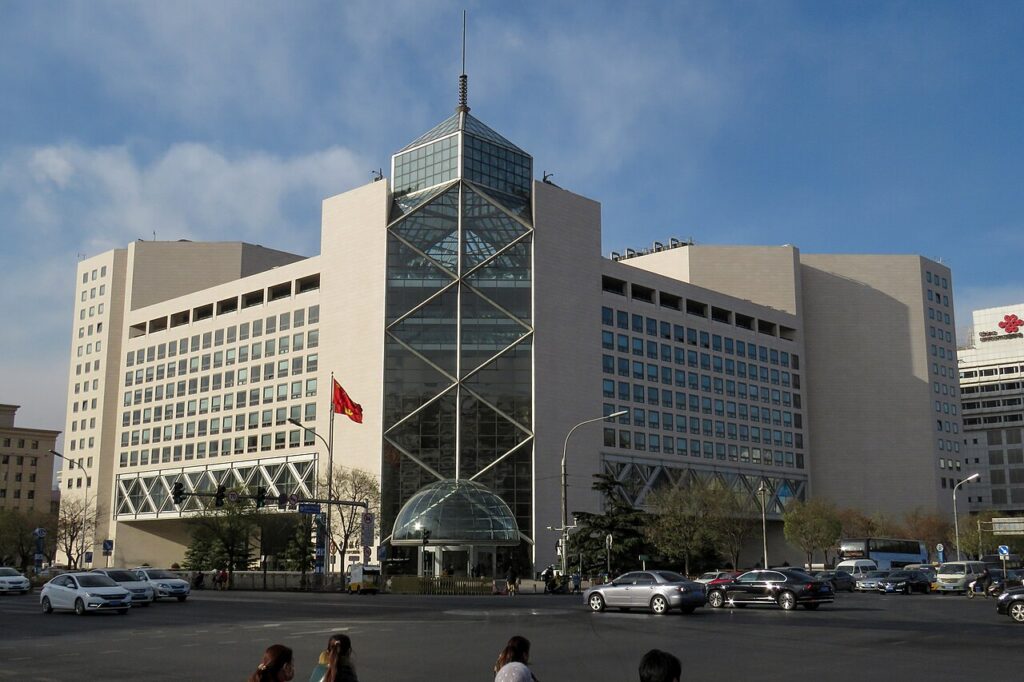
In its annual report, the National Audit Office alleged that Bank of China avoided roughly 2.37 billion yuan in taxes by exploiting policies meant for public investment funds.
The basic accusation is that affiliated institutions and nominal investors were used to make private investment funds appear to qualify for tax exemptions intended for public funds. Some employees reportedly contributed token amounts, in some cases as little as one yuan, to help create the appearance of eligibility.
That is notable for two reasons.
- It suggests the alleged scheme was not accidental or technical, but structured and deliberate.
- It is unusual for a major state-owned bank to be named this explicitly in a national audit report for tax evasion.
Beijing has spent years emphasising tighter financial discipline and lower systemic risk. When the top auditor publicly exposes behaviour like this inside flagship institutions, it highlights how entrenched these problems may still be.
The problems go beyond one bank
The audit findings were not limited to Bank of China.

The Agricultural Bank of China was criticised for weak loan screening. Auditors found that more than 11 billion yuan in loans had been issued to projects that did not actually qualify as high-standard farmland developments. Some of that money was later diverted into wealth management products and debt repayment.
That is exactly the kind of behaviour regulators are supposed to be stamping out. Funds designated for a specific development purpose end up supporting financial engineering or plugging other balance-sheet holes.
China Everbright Group was also cited for governance failures, including poor oversight of subsidiaries and improper use of the group’s brand.
Taken together, the audit points to three persistent vulnerabilities in China’s financial system:
- Tax avoidance and regulatory arbitrage
- Weak internal governance
- Misallocation of credit
None of those issues are new. What is striking is how openly they are being aired at a time when the broader economy is already under pressure.
Why this matters now
China is trying to stabilise growth while dealing with sluggish domestic demand, a weak property sector, and rising geopolitical tension. In that environment, confidence in the financial system becomes especially important.
If state-backed institutions are using loopholes, extending questionable loans, or failing to monitor subsidiaries properly, then financial risk is not just a private-sector problem. It sits closer to the centre of the system.
The standard public response from institutions in these situations is usually predictable. Recommendations will be implemented. Compliance will be strengthened. Controls will be improved.
But the bigger question is not whether corrective language appears after the fact. The bigger question is how widespread these practices are and how much they have already distorted capital allocation across the economy.
This also connects to a wider pattern in China’s current policy environment, where economics, governance, and security are increasingly treated as part of the same challenge. That theme appears again in the analysis of Beijing’s increasingly securitised worldview.
Europe is getting tougher on China in words, not yet in action
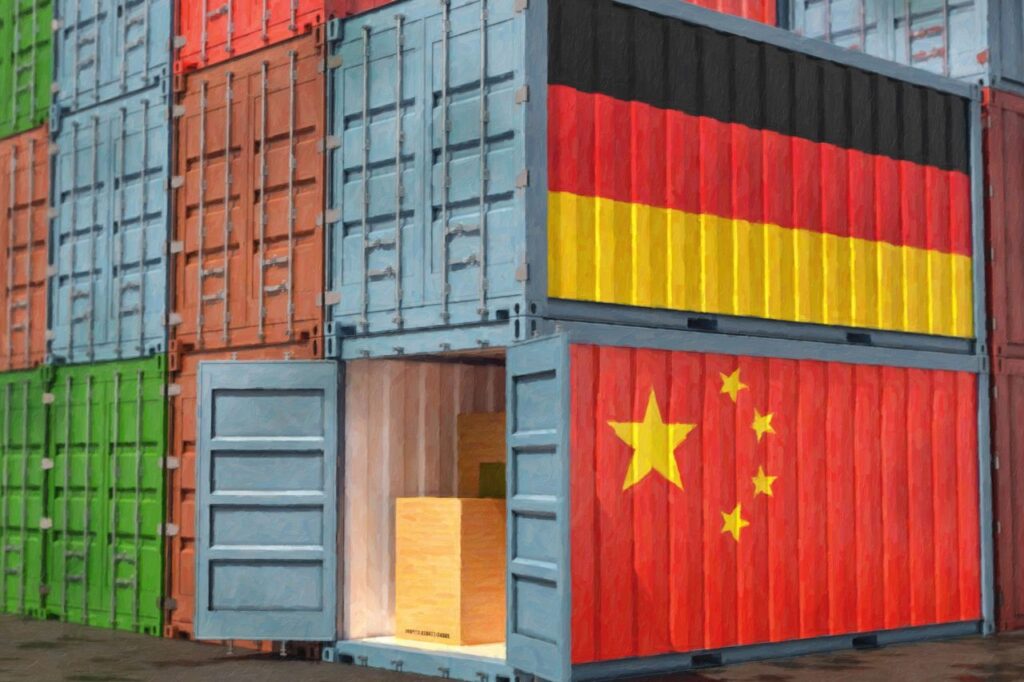
The third major story is external rather than domestic, but it may prove just as important. European concerns about China’s economic model are intensifying, especially around trade imbalances and industrial overcapacity.
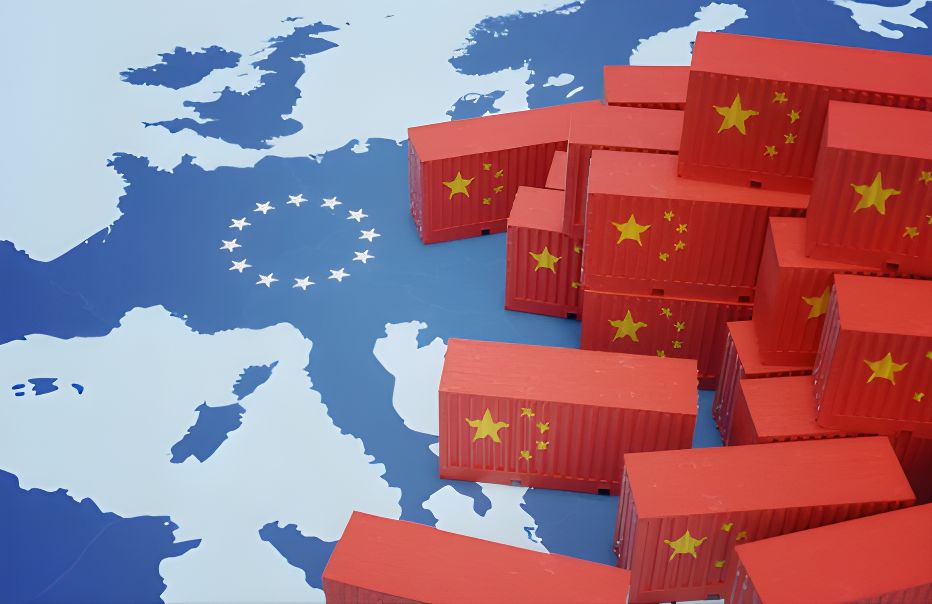
At the recent European Council summit in Brussels, EU leaders spent significant time discussing the widening trade gap with China and the growing pressure Chinese exports are putting on European industry.
Still, the summit produced more discussion than decisive action.
That gap between rhetoric and policy is the core issue. Many European leaders now clearly recognise the scale of the problem, but there is much less consensus on whether Europe is willing to bear the cost of a serious confrontation.
The trade deficit is becoming harder to ignore
According to data presented at the summit, the EU’s goods trade deficit with China has reached about 1 billion euros per day. Some estimates suggest the annual figure could approach 400 billion euros in 2026.
This is no longer a narrow complaint tied to a single product category. European officials increasingly argue that Chinese exports are creating pressure across a wide range of sectors, including the following:
- Electric vehicles
- Batteries
- Chemicals
- Machinery
- Industrial goods more broadly
Germany’s shift is especially important. Berlin has traditionally favoured economic engagement with China, but its tone has become noticeably harder. Recent trade data suggests Germany accounted for roughly two-thirds of the deterioration in the EU’s trade balance with China over the past year.
When Germany starts speaking more bluntly, it usually signals that concerns inside Europe’s industrial core are becoming more serious.
The modern Plaza Accord idea is politically dramatic, but unrealistic
One of the more striking proposals to emerge from the European discussion came from German Chancellor Friedrich Merz, who suggested that international talks on exchange rates might help address the imbalance with China.
The reference point was the 1985 Plaza Accord, when major economies coordinated to weaken the US dollar and strengthen other currencies.
That historical parallel is loaded.
Many in China view the Plaza Accord as a warning example, especially because it is often linked, fairly or unfairly, to the conditions that contributed to Japan’s later asset bubble and long period of stagnation. There is still deep disagreement among economists about how much blame the accord deserves versus Japan’s own domestic policy decisions. But in Beijing’s policy imagination, the episode remains a cautionary tale.
That is why the idea that China would willingly participate in a modern version of such a deal is extremely hard to take seriously.
Chinese state media pushed back in familiar terms, arguing that China today is fundamentally different from Japan in the 1980s and warning against outside pressure framed around the exchange rate.
That response matters because it shows how Beijing sees this issue. Currency management is treated not just as economics but as sovereignty and strategic autonomy.
Why the exchange-rate argument matters
The counterargument from analysts such as Michael Pettis is straightforward. An exchange rate is not a one-country possession. It affects both sides in a trading relationship.
If one side keeps its currency persistently weak, that has real consequences for trade balances, domestic industry, and household purchasing power in both economies.
The logic here is simple:
- If currency values truly did not matter for trade imbalances, then a stronger renminbi should not be a problem.
- If policymakers resist a stronger renminbi, that implies they understand it would affect competitiveness.
- And if it affects competitiveness, then it also affects trade imbalances.
The deeper warning is that large and persistent trade imbalances rarely unwind neatly. Historically, when these imbalances are tied to debt growth and political unwillingness to compromise, the eventual adjustment tends to be ugly.
That is the real concern. Not just whether Europe can force a currency discussion, but whether both surplus and deficit economies are drifting toward a more painful correction because neither wants to absorb the cost early.
Europe still looks cautious despite growing alarm
For all the stronger language coming out of Brussels, Europe remains hesitant.
The European Commission is reportedly considering additional legal tools that would allow faster action when imports suddenly flood European industries. There is also work underway on legislation designed to encourage supply-chain diversification and reduce strategic dependencies.
But at the summit itself, leaders stopped short of endorsing major new measures. Instead, they called for continued engagement with trading partners, including China.
That tells you a lot about the current limits of Europe’s China strategy.
European governments are worried about Chinese industrial policy and export pressure. At the same time, many of those same governments are worried about what a genuine trade confrontation would do to their own manufacturers, supply chains, and market access.
So Europe ends up in a familiar position:
- The sense of urgency is increasing.
- The diagnosis is becoming clearer.
- The rhetoric is getting tougher.
- Concrete action still lags behind.
That means proposals like a modern Plaza Accord are more likely to remain symbols of frustration than realistic policy options.
And from Beijing’s perspective, that hesitation matters. If European leaders are not prepared to absorb economic pain, China has reason to believe it can continue resisting stronger demands for adjustment.
That dynamic also overlaps with broader international tensions surrounding sanctions, trade, and strategic dependence, themes explored in recent reporting on Beijing’s defiance of US sanctions tied to Iranian oil trade.
What these three stories say about China’s current position
These are separate news items, but they fit together.
On the domestic side, the property slump remains entrenched, and the weakness in Beijing’s land market suggests there is still no convincing turnaround in underlying demand.
In the financial system, the audit findings show that governance failures, tax avoidance, and questionable lending remain serious concerns even among large state-backed institutions.
On the external side, Europe is increasingly uneasy with China’s trade model, but not yet convinced it can afford the consequences of a more forceful response.
The common thread is imbalance.
China still relies heavily on an economic structure that has become harder to sustain. Property no longer provides the same support. Local governments are under fiscal pressure. Domestic demand is not strong enough to carry growth cleanly. And export strength, while still powerful, is creating more political resistance abroad.
That does not mean an immediate crisis in every dimension. But it does mean the room for easy solutions continues to narrow.
For anyone tracking China News Update themes closely, this is the key takeaway: the system is still functioning, but the stress points are becoming harder to hide and increasingly difficult to separate from one another.
FAQ
Why are weak land sales in Beijing such a big deal?
Because Beijing is one of China’s most desirable housing markets. If land demand is falling sharply even there, it suggests conditions in less attractive markets are likely much worse. It also matters because land sales are a major source of revenue for local governments.
What did China’s National Audit Office accuse Bank of China of doing?
The audit office alleged that Bank of China used affiliated institutions and nominal investors to structure private funds in a way that allowed them to benefit from tax treatment meant for public investment funds, avoiding roughly 2.37 billion yuan in taxes.
What other institutions were criticised in the audit?
The Agricultural Bank of China was criticised for weak loan screening tied to farmland-related projects, and China Everbright Group was cited for governance failures and poor oversight of subsidiaries.
Why is Europe worried about China’s trade model?
European officials argue that Chinese industrial overcapacity and export pressure are harming manufacturers across a broad range of sectors, from electric vehicles and batteries to chemicals and machinery. The large and growing trade deficit has intensified those concerns.
What is the modern Plaza Accord idea about?
It refers to the idea of coordinating exchange-rate policy to push the renminbi higher and reduce trade imbalances, loosely inspired by the 1985 Plaza Accord. The problem is that Beijing sees that historical example as a warning, making any similar arrangement highly unlikely.
Is Europe likely to take much tougher action soon?
Europe’s language is becoming tougher, and new defensive tools are being explored, but there is still clear hesitation. Many governments worry that a major trade confrontation with China would also hurt European industry and supply chains.
That is the current picture from this China news update. The details differ, but the pattern is consistent: domestic weakness persists, financial discipline remains uneven, and external pressure is building faster than policymakers appear ready to respond.