Photo by Weichao Deng on Unsplash
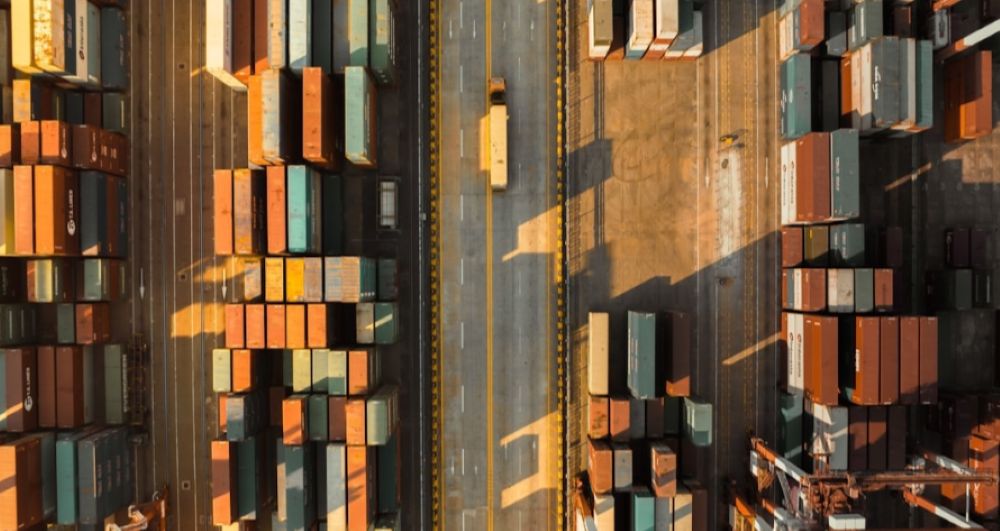
Beijing is increasingly demonstrating that power does not always arrive in the form of a warship, a tariff announcement, or a grim spokesman reading out threats from behind a podium. Sometimes it arrives as a customs delay. A supplier gets a call. A shipment of specialist material takes a little longer than it should. Production schedules become impossible to guarantee, orders disappear, and suddenly a company halfway across the Taiwan Strait has discovered that its supply chain has developed a politically inconvenient pulse.
At the same time, Shanghai’s technology market is being pumped full of capital and policy support as China hunts for semiconductor, robotics, and artificial-intelligence champions. And, in a seemingly separate development, authorities are cracking down on bizarre online claims that vast sections of Chinese history were simply invented. These stories may look unrelated at first glance. They are not.
They all point to the same broad reality: the Chinese Communist Party is treating supply chains, financial markets, technology, history, and national identity as components of one sprawling security project. In this system, economics is not merely economics. It is leverage. Markets are not merely markets. They are strategic instruments. And history is not merely history. It is political infrastructure.
Key Takeaways
- China can exert pressure through selective supply-chain delays without announcing a formal embargo.
- Shanghai’s STAR Market is becoming a policy-backed financing hub for strategic technology companies.
- High valuations in Chinese semiconductor shares reflect national priorities as much as conventional market fundamentals.
- Beijing treats historical narratives as a core component of political legitimacy and national security.
Table of Contents
- Supply Chains Are Becoming a Tool of Political Pressure
- Order No. 834 Makes the Direction of Travel Harder to Ignore
- Shanghai’s STAR Market Is Beijing’s Favourite New Toy
- Hong Kong Is Not Finished, but Its Role Is Changing
- Why Beijing Is Fighting a Very Strange History Conspiracy
- New Qing History Is the More Serious Target
- One Security State, Many Fronts
Supply Chains Are Becoming a Tool of Political Pressure
Taiwanese optical-technology manufacturers have reportedly faced prolonged customs inspections and mounting difficulty obtaining germanium and quartz-based materials from Chinese suppliers. The issue appears to be broad rather than isolated. One industry executive described it as an industry-wide problem, with delays capable of dramatically extending production lead times.
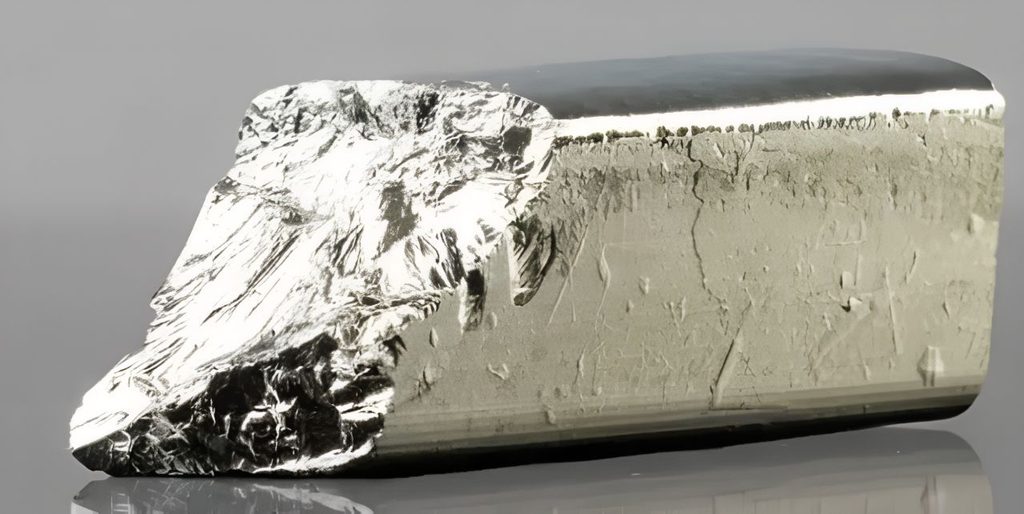
That might sound dry, technical, and therefore safely ignorable. It is not. Germanium and high-purity quartz are the sort of materials that keep advanced economies functioning while everyone else argues about social-media posts and celebrity gossip.
Germanium is used in infrared lenses, thermal imaging equipment, defence systems, fibre optics, photonics, and industrial technology. High-purity quartz is essential for optical components and semiconductor manufacturing. Taiwan, as the world is painfully aware, is not exactly a peripheral player in advanced chip production. Any disruption to the inputs its manufacturers require has consequences far beyond a missed delivery date.
The genius, if one can use that word without feeling mildly unwell, is that no formal embargo is necessary. Beijing does not need to announce that it is cutting Taiwan off from a material. It can simply create friction. Customs checks become more thorough. Suppliers become nervous after being questioned about customers or shipments. Paperwork mysteriously becomes an obstacle course designed by someone who hates both efficiency and plausible deniability.
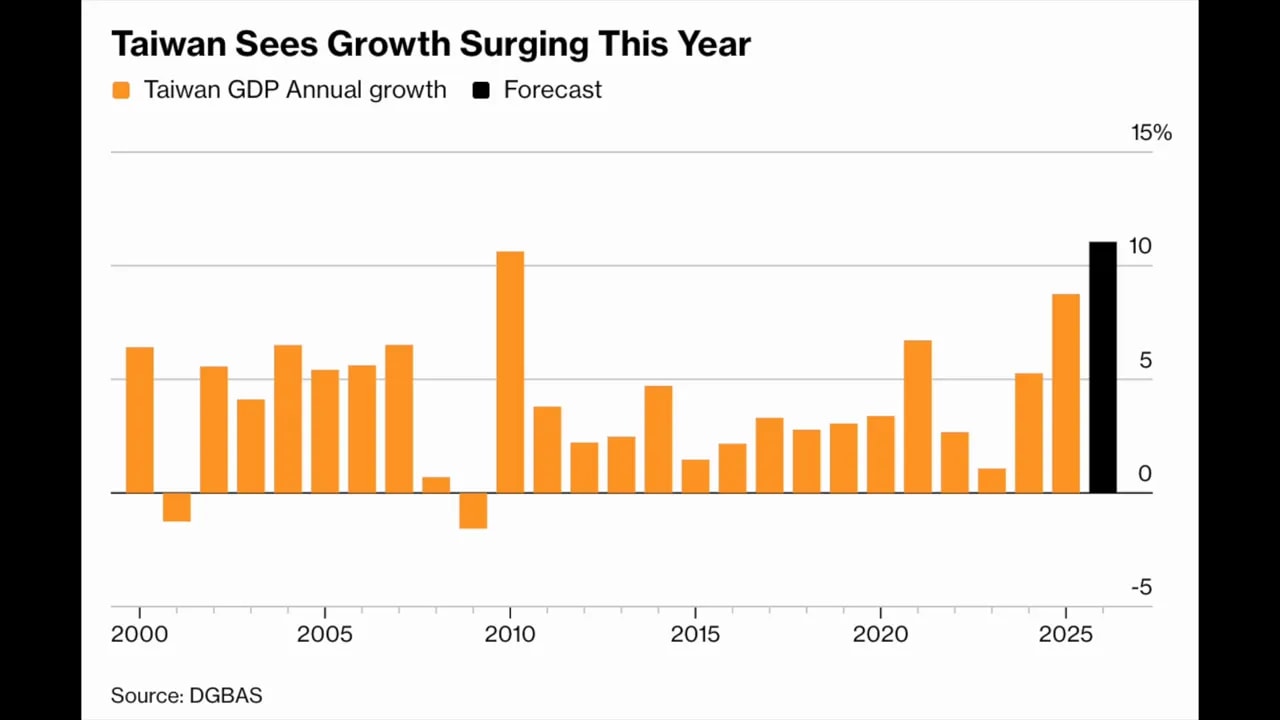
This is coercion below the threshold of outright confrontation. It allows China to impose real commercial costs while retaining enough ambiguity to deny it is doing anything unusual. Taiwanese firms lose orders because they cannot guarantee delivery times; Chinese authorities can insist that customs officials are merely doing their jobs. Everybody is technically innocent, apart from the businesses quietly being strangled by uncertainty.
This approach has precedent. During the 2010 dispute over the Japan-administered Senkaku Islands, which China calls the Diaoyu Islands, Beijing was accused of halting rare-earth exports to Japan. More recently, it has imposed formal controls on minerals including gallium, germanium, and graphite amid mounting technology competition with the United States.
The larger strategy is straightforward: make the world dependent on Chinese intermediate goods while reducing China’s own dependence on everyone else. Intermediate products reportedly accounted for about one-third of Chinese exports when China joined the World Trade Organization in 2001. By 2025, that share had risen to 46 percent. This is not merely a trade statistic. It is a map of potential leverage.
For a broader look at how export restrictions are becoming part of Beijing’s strategic toolkit, see this analysis of China’s expanding export controls and uneven technological rise.
Order No. 834 Makes the Direction of Travel Harder to Ignore
The reported Taiwan delays arrive alongside a more formal development: State Council Order No. 834, signed by Premier Li Qiang on March 31. This is China’s first dedicated regulation focused on industrial and supply-chain security, creating a centralised mechanism involving more than 15 government agencies.
The regulation gives authorities broad scope to investigate foreign governments, organisations, and companies deemed threats to China’s supply-chain security. Crucially, it can also target companies that comply with foreign sanctions, conduct supply-chain investigations that Beijing considers excessive, or attempt to reduce their dependence on China.
That last point deserves more attention than it will probably receive. Diversification is usually considered sensible business practice. If a firm relies on one country for a vital material, component, manufacturing process, or market, reducing that dependency is not paranoia. It is basic risk management. But Beijing increasingly appears to view some attempts at de-risking as a hostile political act.
That puts foreign firms in a rather lovely position: they may face pressure from their own governments to reduce exposure to China while risking Chinese retaliation for doing so. The business world’s favourite fantasy—that economics and geopolitics can be kept neatly separate—is becoming harder to maintain. The supply chain is now part of the battlefield, except everyone is wearing business casual and pretending it is not.
Taiwan is especially exposed because its economy depends upon sophisticated manufacturing, its security rests partly on technological relevance, and its political relationship with Beijing remains uniquely fraught. Delays in materials such as germanium and quartz could test industrial vulnerabilities without triggering the kind of response that a military escalation would provoke.
Shanghai’s STAR Market Is Beijing’s Favourite New Toy
While China sharpens its supply-chain leverage abroad, it is also trying to build the financial machinery needed to accelerate technological self-sufficiency at home. Shanghai’s STAR Market, launched in 2019 as a sort of state-supported answer to Nasdaq, has emerged as a central platform for this project.
The STAR 50 Index, which tracks leading companies listed on the exchange, has climbed 23 percent this year. That compares with a 10 percent rise in Shenzhen’s technology index and a 14 percent fall in Hong Kong’s Hang Seng Tech Index. It is the widest performance gap since the STAR Market was established.
And this is before the full effect of major new listings. Memory-chip manufacturer CXMT and robotics company Unitr both completed blockbuster Shanghai debuts, potentially adding more fuel to an index already powered by investor enthusiasm for semiconductors, artificial intelligence, robotics, advanced materials, and the general belief that China can engineer a technological escape hatch from Western restrictions.
The STAR Market is useful to Beijing precisely because it permits innovative but loss-making hard-tech firms to list more easily than they might elsewhere. Semiconductor and robotics companies do not always arrive with tidy profits, mature business models, and the comforting boringness investors usually pretend to value. They require capital, patience, political support, and, apparently, price-to-earnings ratios that would make a dot-com-era banker blush.
Cambricon Technologies and Hygon Information Technology have traded at trailing price-to-earnings ratios above 180. Semiconductor Manufacturing International Corporation has traded at around 149 times earnings. Advanced Micro-Fabrication Equipment has nearly doubled this year, while Montage Technology has risen 69 percent.
These valuations are not proof that the companies are worthless. Nor are they proof that China has solved its technological bottlenecks. They are proof that policy-backed optimism has become extremely expensive.
Beijing wants domestic capital to fund domestic champions, particularly in sectors where foreign technology restrictions create uncomfortable vulnerabilities. That means semiconductor producers, equipment makers, advanced-material suppliers, robotics firms, and AI companies are no longer just commercial entities. They are strategic assets with ticker symbols.
There is another motive: capital control. Encouraging prominent technology companies to list in Shanghai helps keep Chinese savings inside mainland markets rather than flowing through Hong Kong and into more internationally connected financial channels. The state does not simply want national champions. It wants those champions financed at home, listed at home, and answerable to institutions more easily shaped by policy priorities.
Hong Kong Is Not Finished, but Its Role Is Changing
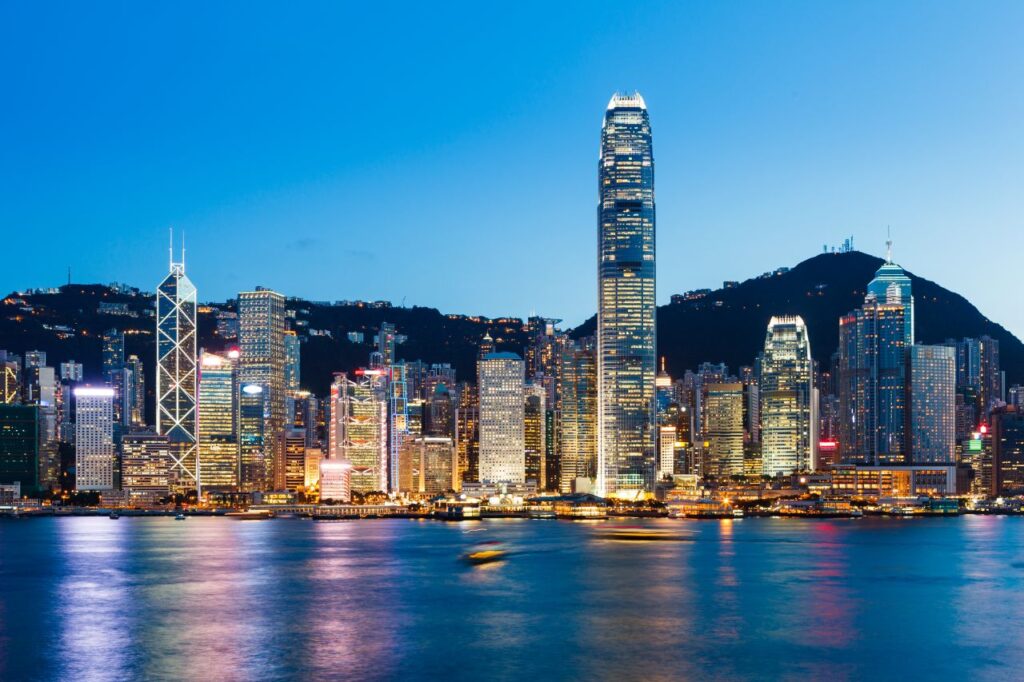
It would be premature to declare Hong Kong irrelevant. That favourite pastime has been attempted many times, usually by people who confuse change with disappearance. Hong Kong still hosted 41 technology listings this year, compared with 16 on the STAR Market. It remains attractive for companies seeking foreign capital, global investors, and international employees.
But the division of labour is becoming clearer. Shanghai is increasingly the preferred venue for strategically sensitive technology companies whose development aligns directly with Beijing’s industrial ambitions. Hong Kong remains a gateway for businesses that need global expansion and international financing.
The competition has also forced other exchanges to adapt. Shenzhen has introduced rules making it easier for unprofitable innovative companies to list. Hong Kong has relaxed standards and proposed expanding the Hang Seng Tech Index from 30 to 50 companies, while reducing the dominance of older giants such as Alibaba and Tencent.
The problem for Hong Kong is that “old tech” has struggled to capture the political and financial imagination now surrounding chips, AI, and robotics. Investors, particularly in China’s current policy environment, are being encouraged to chase the technologies that promise autonomy, national prestige, and resilience against American controls. An e-commerce platform is useful. A domestic semiconductor champion is useful and patriotic, which in these circumstances is rather more lucrative.
Beijing’s energy-intensive push for technological independence is also explored in this report on China’s electricity-driven AI strategy amid weakening economic data.
Why Beijing Is Fighting a Very Strange History Conspiracy
The final development is less about minerals or markets than the raw political importance of historical narrative. Chinese authorities have mounted an unusually prominent campaign against online “pseudo-history” after viral videos claimed that the Tang Dynasty and several other major periods of Chinese history were fabricated by later scholars.
The claims were spectacularly unserious. A creator on the Bilibili platform argued that the Song Dynasty ruled for 800 years and that the Sui, Tang, Five Dynasties and Ten Kingdoms, and Yuan periods had been invented. Poetry associated with Li Bai, Du Fu, and Bai Juyi was supposedly written by Song-era scholars using assumed names. Archaeological evidence including the ruins of Daming Palace, Tang tri-coloured pottery, and the Dunhuang manuscripts was dismissed as forgery.
It is the sort of theory that should normally be treated with the dignity it deserves: none whatsoever. Yet the China Social Sciences Daily, a publication overseen by the Chinese Academy of Social Sciences, put the matter on its front page. The account was banned and its videos deleted.
Why the heavy response? Because the Party does not see history as a harmless collection of old dynasties, ruins, poems, and scholarly arguments. It sees history as one of the foundations of regime legitimacy. The official narrative presents China as a continuous, unified, multi-ethnic civilisation whose modern development culminates, with extraordinary convenience, in socialist rule under Communist Party leadership.
Any interpretation that complicates this story can therefore become a political threat. The issue is not that every alternative reading of the past is accurate. The pseudo-history claims plainly were not. The issue is that authorities react not only to crank conspiracy theories but also to serious scholarship that challenges a centrally sanctioned version of national continuity.
New Qing History Is the More Serious Target
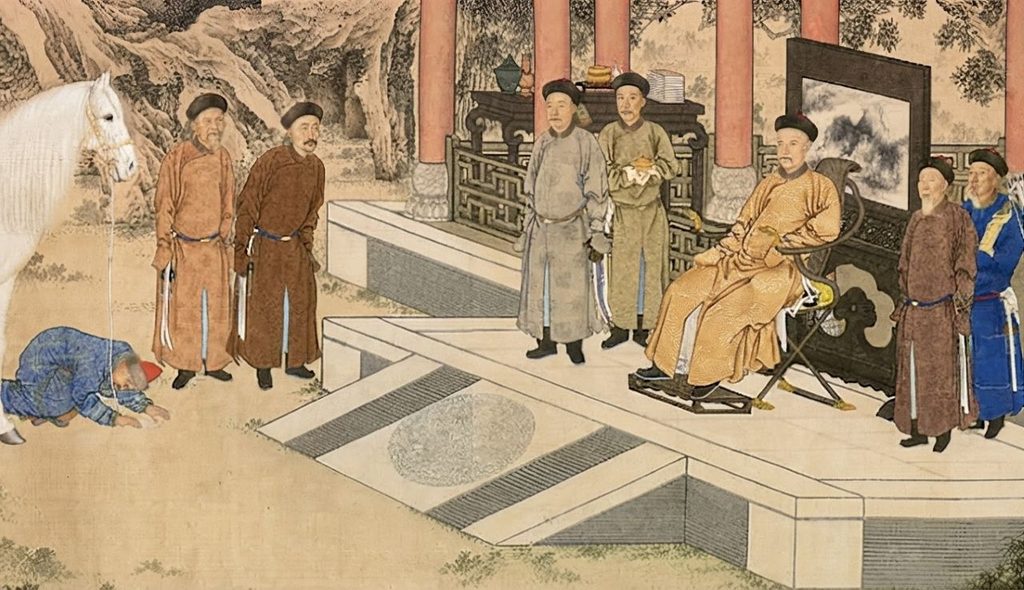
Earlier in the same week, the United Front Work Department attacked what is known as New Qing History, a substantial and increasingly mainstream field of scholarship that emerged largely in American academia. New Qing historians use Manchu, Mongolian, and other non-Han Chinese sources to examine the Qing as an inter-Asian empire.
Their argument is not that the Qing does not belong in Chinese history. Rather, it is that Qing rulers retained distinctive Manchu institutions and governed different populations in different ways. That complicates the idea of a smoothly continuous, culturally uniform Chinese state extending naturally across all the territories of the modern People’s Republic.
For Beijing, this is deeply awkward. Describing the Qing as an empire rather than simply another Chinese dynasty could invite discussion of Tibet, Xinjiang, Mongolia, and other frontier regions as places incorporated through contested imperial processes. The official response has been to portray New Qing History as Western-centric scholarship disguising malicious political intent.
There is an obvious irony here. The scholarship is criticised as foreign and imperial in outlook precisely because it examines the imperial dimensions of Qing rule. But irony is not generally a decisive factor when a government believes that historical interpretation could weaken national cohesion, cultural confidence, acceptance of socialism, or faith in Party rule.
The establishment of the Chinese Academy of History in 2019, partly to combat what officials call historical nihilism, makes clear that this is not simply a dispute over internet misinformation. It is institutional policy. An apparently silly online theory can receive high-level attention because the authorities fear what sits behind it: the possibility that people begin treating official history as a claim to be interrogated rather than a story to be absorbed.
One Security State, Many Fronts
These developments are different expressions of the same governing instinct. Beijing wants resilient supply chains under Chinese control, capital markets capable of funding national technological priorities, and historical narratives that reinforce territorial unity and Party legitimacy.
None of this means China is uniquely strategic, uniquely protective of domestic industry, or uniquely sensitive about history. Plenty of countries behave badly when power and insecurity collide. What stands out is the integration of these projects: a state increasingly willing to fuse economics, technology, ideology, finance, and national security into a single architecture of control.
For Taiwan, the immediate concern is that supply-chain pressure can be applied quietly and repeatedly without crossing into military conflict. For investors, the concern is whether policy-driven enthusiasm is inflating strategic sectors faster than underlying profitability can justify. For scholars and citizens, the warning is simpler: when history becomes a matter of state security, intellectual disagreement is no longer just disagreement.
And that is the central lesson. Beijing’s competition with the outside world is not confined to trade negotiations, naval exercises, or chip restrictions. It is taking place in customs offices, stock exchanges, academic debates, and the tiny bureaucratic decisions that determine whether a shipment arrives this week, next month, or perhaps never at all.