China’s economic model is doing something rather extraordinary—and not necessarily in a good way. As property, consumption and conventional investment weaken, Beijing has doubled down on the one thing it knows can still produce impressive-looking growth figures: making a truly enormous quantity of stuff.
Not merely cheap toys, T-shirts and plastic household clutter, either. China is now expanding aggressively into electric vehicles, batteries, solar panels, industrial robots, heavy machinery, semiconductors and artificial intelligence. In other words, the industries that Western governments have spent decades describing as strategic, high-value and central to the jobs of the future.
This is why economists and policymakers are increasingly talking about a “China Shock 2.0.” The first shock hollowed out industrial communities across much of the United States and Europe. The second could be more consequential because it is taking place much further up the value chain—and because China’s domestic economic weakness is making its export push even more difficult to restrain.
The result is a world in which Beijing’s industrial policy, America’s tariff regime, Europe’s manufacturing exposure and Iran’s oil exports are all beginning to collide. And, as usual, everyone involved is pretending this is a manageable situation right up until it becomes very much not manageable.
Key Takeaways
- China’s advanced-manufacturing expansion is reshaping competition in vehicles, batteries, machinery and AI.
- Weak property, consumption and investment are increasing Beijing’s reliance on exports and industrial policy.
- Proposed US tariffs seek leverage over China but may undermine cooperation with exposed allies.
- China’s purchases of Iranian oil limit Washington’s ability to economically isolate Tehran.
The First China Shock Was Brutal. The Next One Could Be Bigger.
The original “China Shock” followed Beijing’s entry into the World Trade Organization in 2001. Chinese producers flooded global markets with clothing, furniture, appliances and other relatively low-cost manufactured goods. The immediate benefit was obvious: consumers got cheaper products. The longer-term cost was rather less pleasant.
Factories closed. Supply chains moved. Communities that had been built around manufacturing lost jobs, local businesses, property values and much of their economic purpose. The political consequences were also profound. Industrial decline helped produce the resentment, regional alienation and anti-establishment politics that reshaped American elections over the following two decades.
But the new phase is not simply a repeat of that story. As Council on Foreign Relations senior fellow Brad Setser has argued, China is no longer concentrated in the lower-value segments of global manufacturing. It is increasingly competing at the technological frontier.
That distinction matters. A country losing low-margin textile production faces a very different strategic problem from a country losing vehicle manufacturing, industrial machinery, clean-energy equipment, advanced electronics or AI-related capacity. These industries do not only generate exports. They support large research budgets, skilled jobs, supplier networks, engineering expertise and—increasingly—military and national-security capabilities.
China’s strength in rare earths and magnets gives a useful indication of where this can lead. These materials are crucial for electric vehicles, electronics, renewable-energy systems and weapons platforms. Control over production is not simply an economic advantage; it creates leverage. If access can be restricted, delayed or politically conditioned, then tariffs begin to look like a rather blunt instrument.
Property Collapse Turned Into an Advanced-Manufacturing Binge
The roots of this second shock lie in China’s property crisis. After Beijing’s “three red lines” policy curtailed developer financing, the country’s vast real estate sector began to unwind. A growth engine that had absorbed colossal quantities of credit, labour, steel, cement and household savings suddenly became a drag on the economy.
Beijing’s response was not to embark on a large-scale campaign to put more money directly into households’ pockets. Instead, it redirected credit, local-government support and industrial funds towards advanced manufacturing. The logic was clear enough: if property could no longer carry growth, electric vehicles, batteries, chips, machinery and AI might do the job instead.
In the narrowest sense, it has worked. China has built formidable production capacity in strategically important sectors. Foreign technology transfers through joint ventures, years of domestic-content policies, subsidies, tariff protection and local-government support helped create a deep industrial ecosystem. Domestic firms then expanded into that system at bewildering speed.
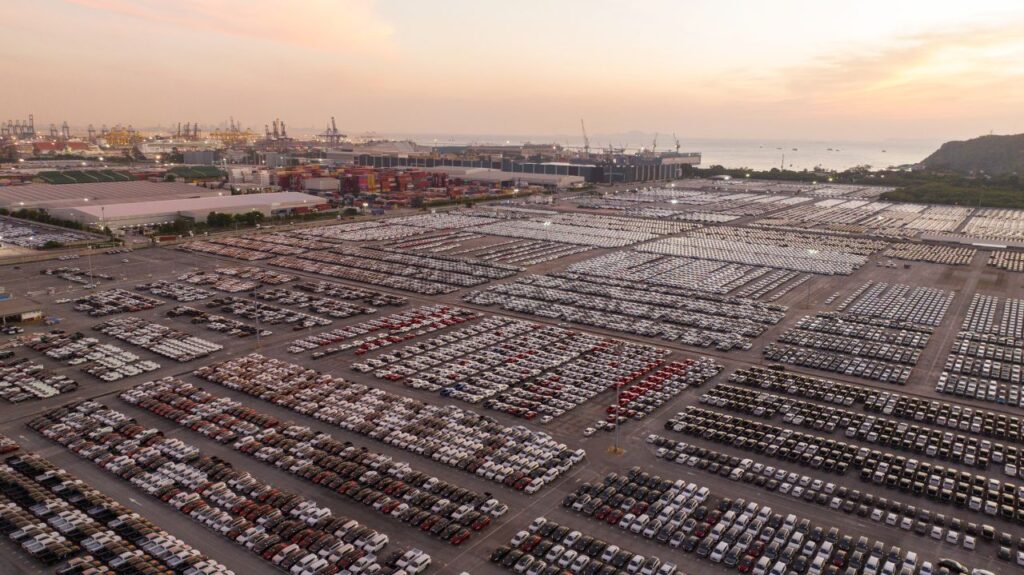
Electric vehicles are the clearest example. China’s annual vehicle exports reportedly climbed from fewer than one million to roughly 10 million in only five years. Its factories now have capacity to produce around 55 million vehicles annually—close to two-thirds of global demand.
That is not merely scale. It is a warning label.
There is no plausible version of the global car market in which one country dramatically expands production towards that level without displacing manufacturing somewhere else. Either Chinese firms take market share abroad, foreign producers retreat, or the world ends up with even more unused capacity and even uglier price wars. Perhaps all three, because why settle for one economic headache when you can have a full set?
Germany and Europe Are Sitting in the Blast Radius
Europe is especially vulnerable because manufacturing remains central to several of its largest economies. Germany, in particular, built much of its modern economic model around selling premium vehicles, machinery and industrial equipment to China.
That arrangement made sense while Chinese demand was rising and foreign firms retained a technological advantage. It looks considerably less secure now that Chinese companies are replacing overseas suppliers at home while competing directly against them abroad.
German exports to China have reportedly fallen by around one percentage point of GDP as this competitive relationship shifts. That is not a minor inconvenience. It is a major structural change for an economy already struggling with weak growth, high energy costs and declining competitiveness.
Cheap Chinese clean-energy products do, of course, offer real benefits. Lower-cost solar panels, batteries and EVs can speed up the energy transition and help households facing high prices. Pretending otherwise would be silly.
But the question facing Western governments is not whether cheap imports are useful. The question is whether short-term consumer gains justify the erosion of domestic industries that provide productive employment, technological capability and strategic autonomy.
That tension is already shaping trade policy across the Atlantic. Europe has become more willing to investigate Chinese subsidies and protect sensitive industries, though it remains divided over how far to go. Washington, meanwhile, is reaching for tariffs with the enthusiasm of a government whose toolbox contains one hammer and a vague memory that there might once have been other tools.
For a broader look at how Beijing’s export dependence is exposing the weakness in its recovery narrative, see this analysis of China’s fragile recovery and tightening technology constraints.
Trump’s Tariff Strategy Is Trying to Keep the Truce Alive
The Trump administration is reportedly preparing an additional tariff of around 7.5% on Chinese imports, potentially bringing its second-term replacement tariff regime to roughly 20%. These measures would sit on top of duties imposed during Trump’s first term and retained under Joe Biden.
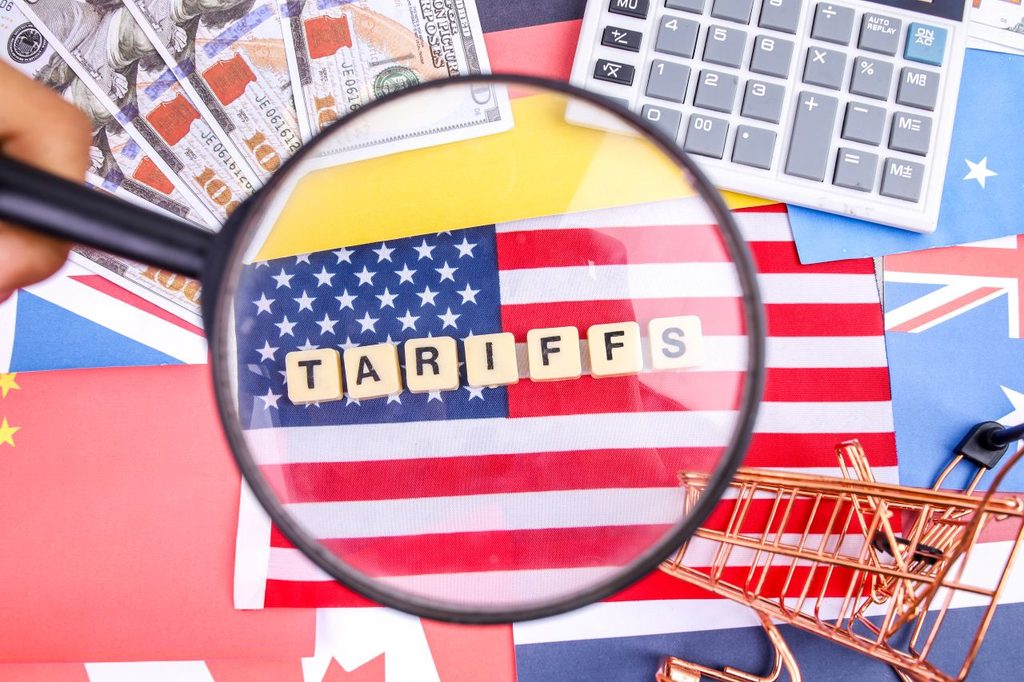
The stated justification is Chinese industrial overcapacity. The legal mechanism is a Section 301 investigation, a trade tool that allows Washington to examine and respond to practices it considers unfair or harmful to American commerce. The Office of the United States Trade Representative describes Section 301 as one of its key enforcement mechanisms, though its use has become inseparable from the broader political contest over China.
What makes the proposed increase interesting is its apparent restraint. The administration seems to want leverage before a Trump-Xi summit, not a complete collapse of the current trade truce. One proposal reportedly involves announcing a higher headline tariff while temporarily suspending part of it, producing a lower effective rate.
That is classic negotiation theatre: make the gun look bigger, then graciously agree not to fire all of it.
Yet tariffs alone cannot resolve the underlying problem. If China has built vast surplus industrial capacity while domestic demand remains weak, it will continue seeking overseas markets. And if the United States applies broad tariffs not only to China but also to allies facing the same pressures, it risks alienating the partners needed for an effective coordinated response.
Setser’s criticism is therefore difficult to dismiss. A strategy aimed at limiting Chinese industrial dominance ought to bring the United States, Europe, Japan, South Korea and other manufacturing powers closer together. Treating everyone as a tariff target may feel satisfying in the short term, but it is a deeply inefficient way to build a coalition.
China’s Economy Is Splitting Into Two Different Countries
The deeper problem for Beijing is that the export boom is taking place alongside evident weakness in the rest of the economy. State media has recently published a series of authoritative commentaries defending the government’s economic strategy, insisting that China’s long-term fundamentals remain sound and that policymakers retain ample room for targeted support.
Such messaging is hardly unusual. What is notable is the timing.
Official July figures pointed to a sharp divergence. Industrial production rose 4.5% year on year, but retail-sales growth slowed to just 0.6%. Fixed-asset investment contracted 6.7% in the first seven months of the year. Urban unemployment reached 5.2%, while property investment plunged by a record 19.2%.
Meanwhile, the favoured technology sectors continued charging ahead:

- Electronic equipment production rose by more than 19%.
- Integrated-circuit output increased by almost 21%.
- Industrial robot production grew by more than 30%.
This is the increasingly strange shape of China’s economy: advanced manufacturing and AI-linked production are booming, while households, property markets, conventional investment and consumer demand remain under pressure.
Beijing wants to reassure businesses and families without admitting that major stimulus may be needed. Hence the carefully calibrated message: policy remains correct, debt-funded excess is undesirable, targeted measures are available, and everything is fundamentally fine. Except, perhaps, for the part where retail sales are barely growing, investment is falling and the old property model is still collapsing in slow motion.
If headline growth threatens to fall beneath the government’s 4.5% to 5% target, further bond issuance, policy-bank financing and selective fiscal support may become unavoidable. That would add to an already substantial debt burden, but governments rarely discover fiscal restraint when their growth targets are in danger.
China’s own official acknowledgement that export-led expansion is becoming harder to sustain makes this tension even clearer. Beijing’s increasingly difficult attempt to balance exports, domestic demand and debt is now one of the defining questions for the country’s economic future.
Iran Shows Why China’s Economic Power Is Also Geopolitical Power
The same trade relationship that gives China leverage over Western industries also gives it influence over America’s Iran strategy.
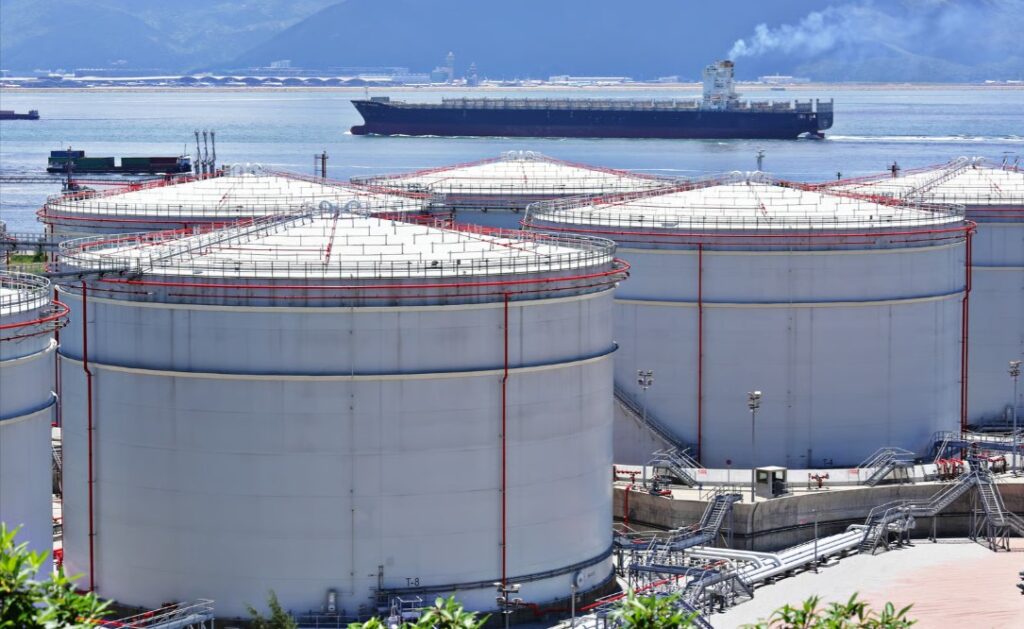
The Trump administration’s “Operation Economic Outcast” is intended to sever Iran’s remaining financial lifelines by targeting oil shipments, digital payments, ship-to-ship transfers and gold movements. But the central obstacle is rather obvious: China purchased more than 80% of Iran’s oil exports in 2025.
Without Chinese cooperation—or a willingness by Washington to sanction major Chinese banks, refiners and trading companies—the campaign will struggle to produce decisive economic isolation. Secondary sanctions are only as credible as the administration’s willingness to use them against powerful actors. Threatening Iran’s smaller commercial partners is one thing. Taking on major Chinese institutions ahead of a presidential summit is quite another.
Beijing has several reasons to keep buying Iranian oil. It provides discounted supplies outside Western-controlled financial channels, supports China’s resilience against future sanctions or maritime disruption, and fits neatly into the country’s broader effort to reduce strategic dependence on the United States.
Iran also matters geographically. It links the Persian Gulf, Central Asia and the wider Eurasian landmass, making it useful to China’s Belt and Road ambitions. More importantly, a prolonged US confrontation in the Middle East ties down warships, air-defence systems, intelligence resources and precision munitions that might otherwise be directed towards the Indo-Pacific.
In that sense, Beijing does not need to deploy forces to benefit from an American distraction. It merely needs to preserve Iran’s economic lifeline, remain diplomatically relevant and allow Washington to confront the unpleasant limits of its own sanctions policy.
China Shock 3.0 May Be Digital
The next phase may be more unsettling still. China’s industrial competition is no longer confined to physical goods. Chinese AI models are becoming increasingly capable and cheaper to operate, raising the prospect of a third China shock centred on software, digital services and artificial intelligence.

For the United States, this would strike at sectors that have generated some of its most profitable companies and highest-value jobs. American technological leadership remains formidable, but it is not an inherited birthright. It depends on sustained investment, talent, market access, infrastructure and the ability to commercialise frontier technologies faster than competitors can replicate them.
That is the uncomfortable reality beneath the tariff announcements, industrial-policy speeches and summit diplomacy. China’s economic slowdown has not made it passive. It has made Beijing more determined to export its way through the problem.
And if the rest of the world responds with fragmented tariffs, political theatre and an inability to decide whether cheap imports are a blessing or an existential threat, China will have been handed exactly the kind of opening its industrial strategy was designed to exploit.
Frequently Asked Questions
What is China Shock 2.0?
China Shock 2.0 describes China’s growing competition in advanced industries such as EVs, batteries, robotics, machinery, semiconductors and AI, rather than lower-value consumer goods.
Why is China producing so many electric vehicles?
After the property downturn weakened a major source of growth, Beijing directed more credit, subsidies and industrial support toward advanced manufacturing, with EVs becoming a flagship sector.
Why are European manufacturers particularly exposed?
Several European economies, especially Germany, depend heavily on vehicle, machinery and industrial-equipment exports. Chinese firms are increasingly replacing foreign suppliers in China and competing in export markets.
Why does China matter to US sanctions on Iran?
China bought more than 80% of Iran’s oil exports in 2025. Effective economic isolation would therefore require Beijing’s cooperation or sanctions against significant Chinese commercial interests.