Prefer to Watch: Click Above.
Donald Trump and Xi Jinping have emerged from a Washington summit with warmer photographs, a few useful trade concessions and plans to meet twice more. That is better than another tariff spiral. It is not, however, a reset of the world’s most consequential economic rivalry.
The agreement’s basic logic is straightforward: keep some ordinary goods moving while the United States and China continue fighting over advanced chips, critical minerals and artificial intelligence. The uncomfortable part for Beijing is that its AI companies are not simply fighting Silicon Valley. They are also fighting one another, often with less money and more pressure to turn a profit.
These stories belong together. The summit may have made the relationship calmer, but it did little to change the conditions under which the technology contest is being fought.
Key Takeaways
- The Trump–Xi summit proposed limited tariff relief and extended the tariff truce but did not settle strategic disputes.
- Taiwan, Iran, advanced chips and critical minerals remain major sources of US–China friction.
- Chinese AI firms face intense domestic competition alongside chip restrictions and a substantial US investment gap.
- China’s research talent is a major strength; financing sustained work and finding export markets are the harder tests.
Table of Contents
- The Trump–Xi summit delivered a narrow trade bargain
- Taiwan and Iran exposed the summit’s limits
- China’s AI war is also a domestic war
- China’s strongest asset may still be its researchers
The Trump–Xi summit delivered a narrow trade bargain.
Trump says he will travel to China when Beijing hosts the Asia-Pacific Economic Cooperation summit in November and meet Xi again at the Group of 20 gathering in Miami in December. That gives both governments more opportunities to manage disputes after two days of unusually cordial public diplomacy in Washington.
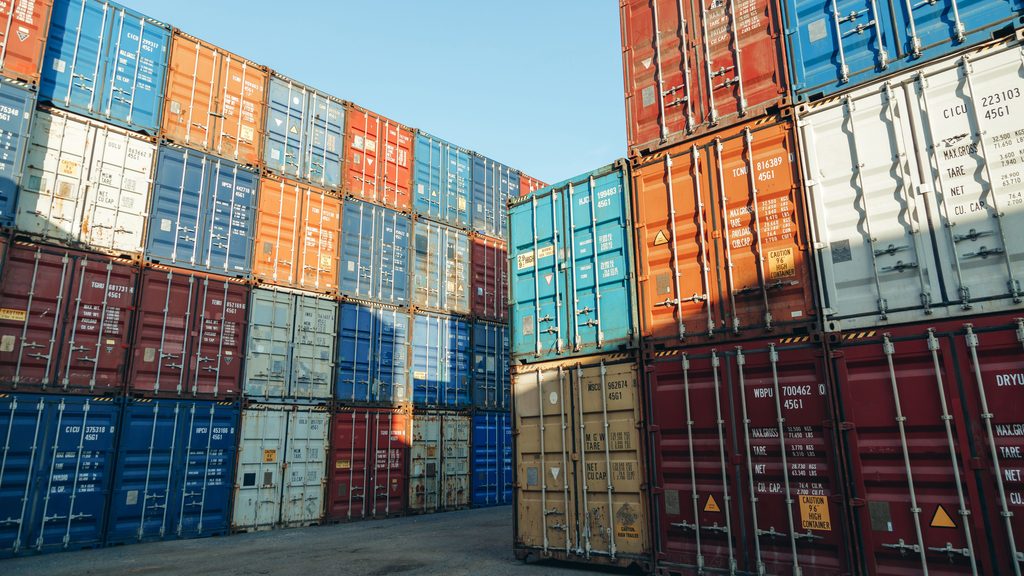
For now, the clearest proposed gains concern trade. The White House says the countries will seek more favourable tariffs on roughly $30 billion worth of non-sensitive goods through a new bilateral board of trade. American products covered by the arrangement include agricultural goods, seafood, timber, cosmetics and medical devices. On the Chinese side, the list includes toys, small appliances, holiday decorations and children’s car seats.
China’s official account endorsed work on reciprocal tariff relief, although Beijing had not separately confirmed every detail announced by Washington. That distinction matters. A proposed arrangement, a government announcement and a fully implemented agreement are not the same thing.
There was also a coal pledge. According to the White House, China agreed to import at least 10 million metric tonnes of American coal next year and another 10 million in 2028. It is a politically attractive commitment for Trump, who has made support for the coal industry a priority. Whether it becomes a commercially significant one will depend on prices, freight costs and Chinese buyers actually placing the orders.
Treasury Secretary Scott Bessent announced a two-month extension of the tariff truce as the summit began. It keeps negotiators at the table but is shorter than the extension some had expected. US Trade Representative Jamieson Greer said more details of the trade arrangements could be released soon.
Put the $30 billion figure in context. US government figures place bilateral goods and services trade at almost half a trillion dollars last year. The preferential treatment would therefore protect a defined slice of commerce, not transform the entire relationship. It is a practical bargain: avoid needless disruption to relatively ordinary trade while leaving the fight over strategically important industries largely untouched.
New forums will manage disputes, not make them disappear.

The two governments also announced an agricultural working group to address barriers facing US exports and a board of investment to discuss opportunities and obstacles. Officials intend to continue talks on rare earths and other critical minerals, where Washington has questioned whether China is fully meeting earlier commitments to ease supply. A further exchange on AI is planned by November.
These mechanisms could be useful. They give officials places to raise problems before those problems become a fresh political crisis. But a working group cannot erase the underlying contest. Washington still restricts China’s access to advanced semiconductors; Beijing still has substantial influence over the rare earth materials and magnets used in manufacturing. Neither government has indicated that it intends to abandon its longer-term strategy.
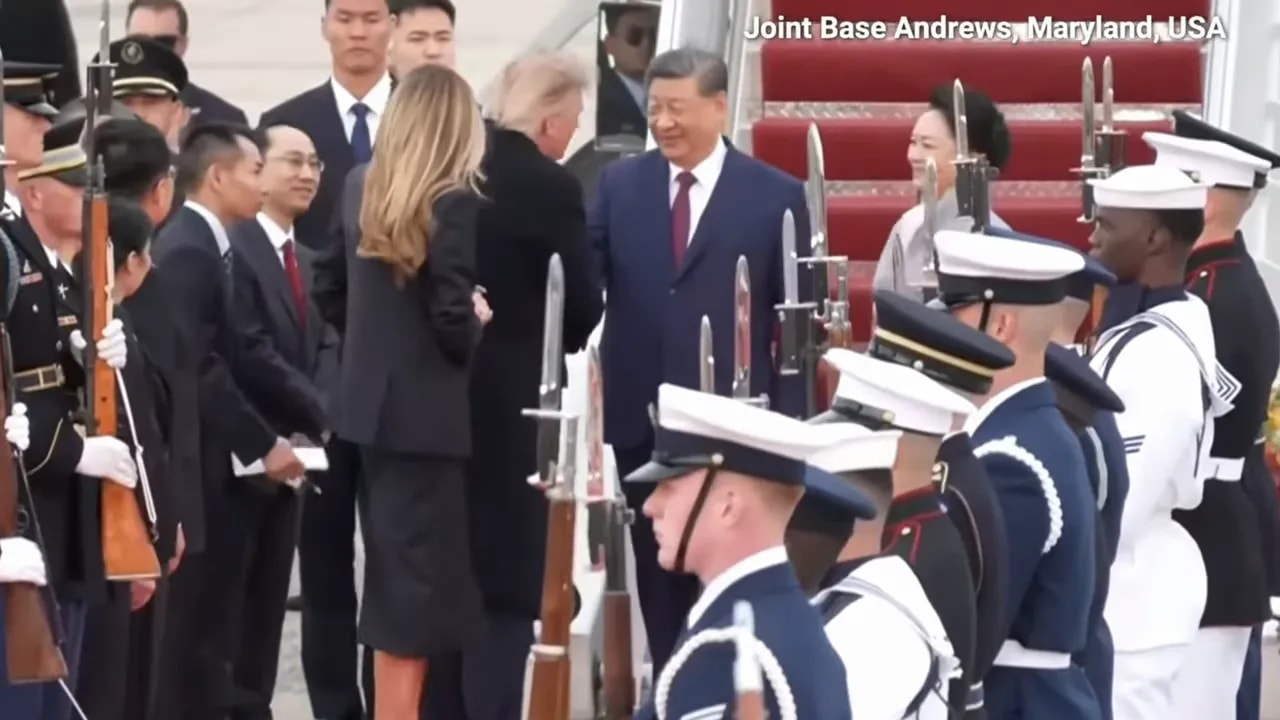
That gap between diplomatic tone and strategic reality was visible throughout the visit. Trump greeted Xi at the airport, hosted a state dinner and showed him Marine One. The leaders and their wives also visited the National Archives. For Xi, the reception presented China as an unmistakable counterpart in Washington. For Trump, it reinforced his argument that a personal relationship with Xi can keep the rivalry under control.
It might help. But warm ceremony is not a substitute for agreement on the hardest questions.
Taiwan and Iran exposed the summit’s limits.
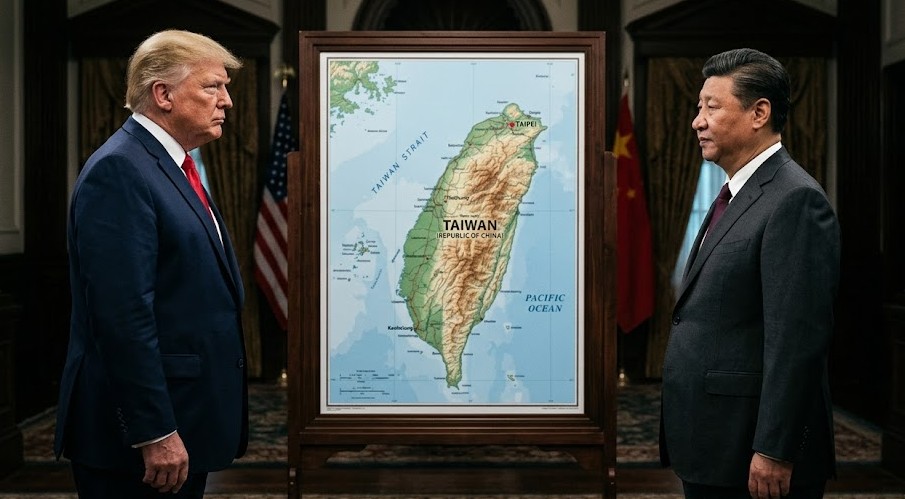
Taiwan remains the sharpest test. Xi urged Washington to state that it opposes Taiwan independence, rather than retain its long-standing formulation that it does not support independence. The difference sounds small until one considers what an explicit change in US language would signal to Beijing, Taipei and Congress.
Trump did not publicly accept Xi’s request. The US ambassador to China said the president’s position had not changed and added that Washington opposed coercion as well as independence. There was no announced Taiwan agreement. That leaves the central problem intact: Beijing regards Taiwan as part of its territory, while the self-governing island remains a potential flashpoint in US–China relations. For a closer look at how Taiwan fits into the wider security picture, see this China geopolitics update.
Iran revealed another divide. The US ambassador said Trump had warned Xi that Chinese military equipment, components or intelligence assistance to Tehran would be unacceptable during the ongoing war. These are US allegations and demands, not an established account of Chinese assistance. The summit produced no public Chinese commitment to meet Washington’s demands. Beijing’s account instead emphasised de-escalation and renewed US–Iran negotiations.
Trump also urged Xi to increase supplies of refined petroleum products to help stabilise global energy markets. Again, the public outcome fell short of a sweeping agreement.
One prospective security measure deserves more attention than the summit photographs. Chinese state media reported that the two militaries had agreed to sign a memorandum on crisis communication and prevention as soon as possible. If completed—and, crucially, used—it could reduce the chance that an accident turns into a broader confrontation. It would not resolve the disputes that make such accidents possible. It could at least provide a guardrail when diplomacy is most urgently needed.
Washington, then, produced a fuller calendar, limited commercial gains and the possibility of better crisis management. November may reveal whether the trade arrangements are implemented and whether the military and AI discussions take shape. Until then, describing the summit as a breakthrough would be getting rather ahead of the evidence.
China’s AI war is also a domestic war.
The usual account of the AI race casts Chinese laboratories as a coordinated national challenger to Silicon Valley. Venture capitalist David Chung’s recent conversations with Chinese founders, investors and researchers point to a far less tidy picture. In his essay Involution Without Export Is Wasted Effort, he describes domestic competition so intense that some participants see it as a more immediate threat than American rivals.
The phrase “war of a hundred models” captures the problem. Numerous companies are competing to improve products and win customers, while pressure on prices threatens the returns needed to fund the next round of research. Chung compares it with earlier Chinese technology battles in which well-funded competitors fought until only a few survivors remained.
This is an account drawn from conversations during one visit, not a census of the entire industry. Still, it challenges the idea of a single, unified Chinese AI bloc. A company trying to outpace US frontier labs may simultaneously be trying to survive a brutal fight at home.
One prominent Chinese AI founder gave Chung a particularly bleak assessment. In that founder’s view, some improvements to Chinese models depend heavily on learning from the outputs of leading American systems. If US firms tighten access to their strongest models, that approach becomes harder. The founder also argued that Chinese investors expect revenue too quickly to support prolonged foundational research, while restrictions on advanced chips deepen the disadvantage.
Those are one participant’s judgements, not a settled verdict on Chinese AI. The same founder credited Chinese labs with strong post-training work and with deploying AI systems on customers’ own premises. That distinction is important: a company can face difficulty financing frontier research and still be highly capable at adapting and installing useful products.
Spending is rising, but the financing gap remains.
Research from the Rhodium Group gives the funding concern some weight. It estimates that Chinese AI capital expenditure will roughly double this year to 932 billion yuan, or about $139 billion. That is an enormous sum. Rhodium nevertheless estimates it will equal only 15% to 20% of US investment and projects Chinese spending above 1.2 trillion yuan in 2027.
The difficulty is not merely finding money for one impressive year. Rhodium argues that Chinese AI companies lag their American peers in revenue and profitability, leaving expansion dependent on equity markets, bank lending and cash generated by other businesses. State investment may increase, but Rhodium expects much of it to favour chips rather than frontier model laboratories.
That creates a nasty combination: expensive research, fierce price competition and investors looking for near-term sales. Talent and ambition can produce breakthroughs. They cannot, on their own, pay indefinitely for compute, researchers and deployment. The advanced-chip constraints explored in this analysis of China’s AI chip squeeze make the financing challenge still more consequential.
Access to US models has become a security dispute.
The question of learning from American systems has moved beyond industry gossip. In a September report, Anthropic alleged that seven China-based labs had used unauthorised methods to access its Claude models. It accused Moonshot of forwarding some customer requests to Claude and said DeepSeek relayed requests connected to a Chinese police system.
These remain Anthropic’s allegations, not independently established conclusions about every company named. Separately, cybersecurity firm Team Cymru reported finding thousands of gateway servers that could help people bypass regional restrictions on AI services. The existence of such gateways does not, by itself, establish how any particular lab used them.
The matter has reportedly attracted attention inside China as well as in the United States. The information reported that Chinese internet regulators summoned representatives of the seven companies named by Anthropic and later focused an investigation on DeepSeek and Moonshot over possible data leaks. According to that report, the enquiries were continuing, and no penalty decision had been made.
That is a more complicated story than a simple accusation of model theft. American firms are concerned about unauthorised access to their systems; Chinese authorities may have their own concerns about sensitive data moving through foreign services. For the companies involved, tighter access or regulatory scrutiny could make an already difficult competitive environment harder.
China’s strongest asset may still be its researchers.
None of this means China is short of AI talent. A Carnegie Endowment study of authors at a leading AI research conference found that people who earned undergraduate degrees in China accounted for 57% of the elite researchers it examined in 2025, an increase from 2022. China was also retaining a larger share of its own researchers, although the United States continued to attract substantial talent from abroad.
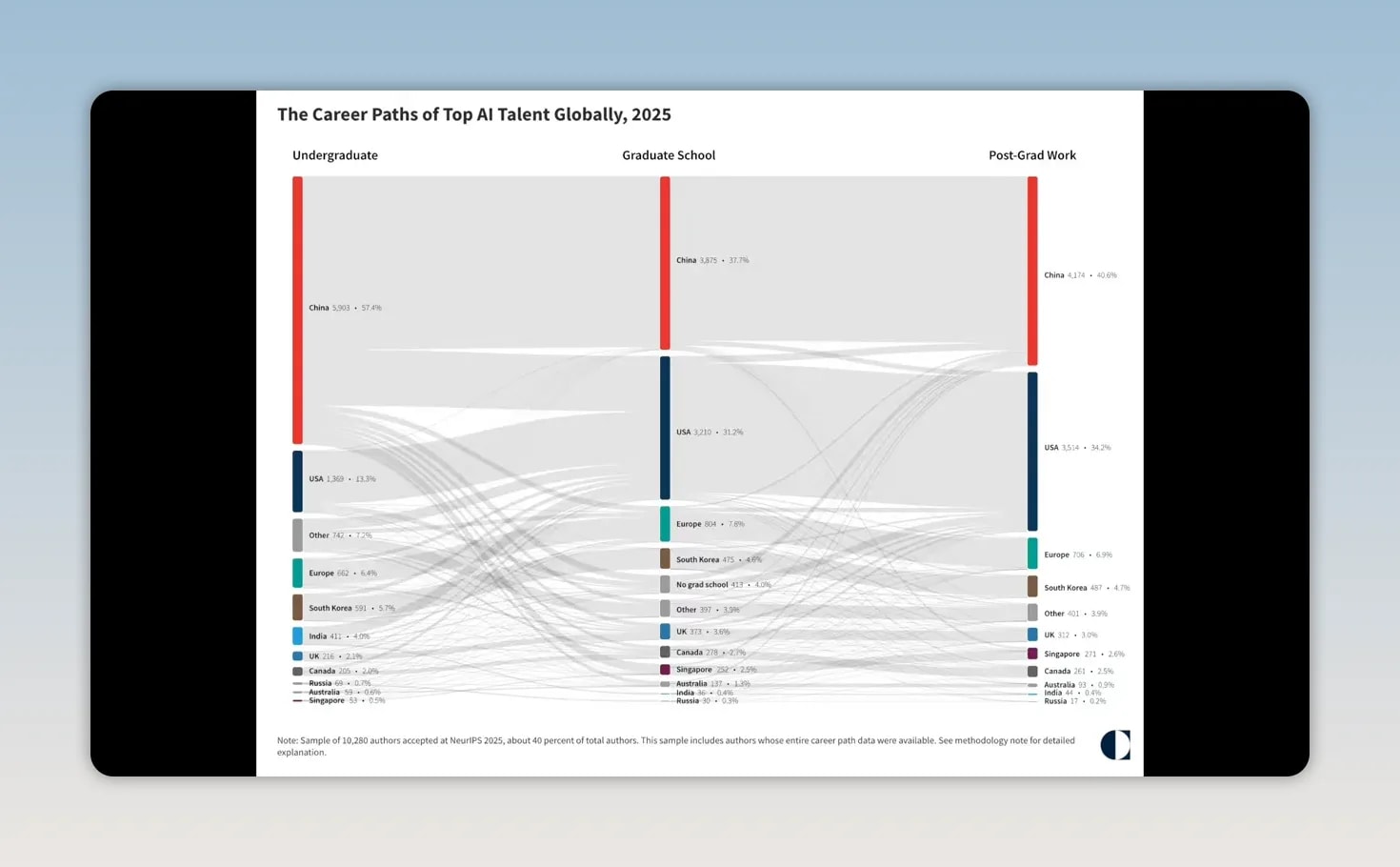
The study describes a particular research cohort, not the overall AI capability of either country. But it is a useful warning against treating chip access and spending totals as the whole contest. Chinese companies have skilled people, intense competition and experience deploying systems quickly. Alibaba is investing in domestic AI chips, while DeepSeek has gained an international profile; Reuters reported that DeepSeek was invited to brief the UN Security Council on AI risks.
The hard question is what those strengths become. Can Chinese firms finance sustained foundational research despite restricted access to the best chips? Can they turn fierce domestic competition into products that sell abroad, rather than a price war that consumes the returns from innovation?
The Trump–Xi summit may buy the governments time to talk. For China’s AI firms, time alone is not enough. They need durable financing, reliable routes to customers and room to invest beyond the next round of domestic competition. That is the tension behind this week’s diplomatic calm: Washington and Beijing have found a way to ease a little trade friction, while the contest that matters most keeps accelerating.
Frequently Asked Questions
Did the Trump–Xi summit end the US–China trade dispute?
No. The governments proposed more favourable tariffs on a limited group of goods and extended their tariff truce by two months, but major technology and trade disputes remain.
Was there an agreement on Taiwan?
No Taiwan agreement was announced. Xi sought a change in US wording on independence, but Trump did not publicly accept it, and the US ambassador said Washington’s position had not changed.
What is the “war of a hundred models”?
It describes intense competition among Chinese AI model developers. That rivalry can drive improvement, but it may also push down prices and make long-term research harder to finance.
Does the AI investment gap mean China cannot compete?
Not necessarily. Chinese labs face funding and advanced-chip constraints, but China has substantial research talent and strengths in post-training and deployment. The open question is whether firms can turn those advantages into durable businesses.