There is a particular kind of diplomatic failure that tells you far more than a triumphant communique ever could. The G20 finance ministers were meant to spend two days discussing the usual menu of global economic dysfunction: trade imbalances, critical minerals, debt crises and the increasingly unnerving possibility that everyone is subsidising everything all at once.
Instead, the meeting collapsed over two words: "non-market".
That phrase, pushed by Washington and rejected by Beijing, is not merely bureaucratic jargon. It is a polite formulation for an extremely impolite accusation: that China’s economy is not competing on remotely comparable terms. And that its enormous industrial subsidies, state-owned companies, managed finance and export machine are warping the global economy.
China, naturally, sees something rather different. From Beijing’s perspective, the United States and Europe are suddenly discovering the joys of industrial policy, subsidising electric vehicles, semiconductors and artificial intelligence, then demanding that China stop doing what it has spent decades doing at a vastly larger scale.
That argument has some surface-level logic. It also rather misses the point. The issue is not whether Western governments subsidise strategic industries. They obviously do. The issue is degree, opacity and the sheer size of a state-backed manufacturing system that produced a record US$1.2 trillion trade surplus in 2025.
Across trade, currency, energy and even sport, the latest developments point to the same underlying reality: China is becoming more resilient in some important areas, but its model is also creating more friction abroad and more contradictions at home.
Key Takeaways
- The G20 dispute over “non-market” policies reflects a broader clash over China’s state-directed export model.
- Yuan use has expanded, but capital controls and the dollar’s deeper markets still limit China’s currency ambitions.
- EVs and public transport helped China cut oil use during Strait of Hormuz disruption, strengthening energy resilience.
- The UFC is betting that Chinese champions and long-term distribution deals can unlock a major sports market.
Table of Contents
- The G20’s “Non-Market” Fight Was About Much More Than Wording
- The Yuan Is Growing, but It Is Not Replacing the Dollar
- Energy Shock Shows What China’s EV Build-Out Can Actually Do
- The UFC Thinks China’s Next Global Star May Be in the Cage
- China’s Strengths Are Also Its Sources of Friction
The G20’s “Non-Market” Fight Was About Much More Than Wording
After finance chiefs met in Asheville, North Carolina, the United States released a statement calling on countries to eliminate “non-market policies and practices that exacerbate imbalances". Every country present backed the text except China.
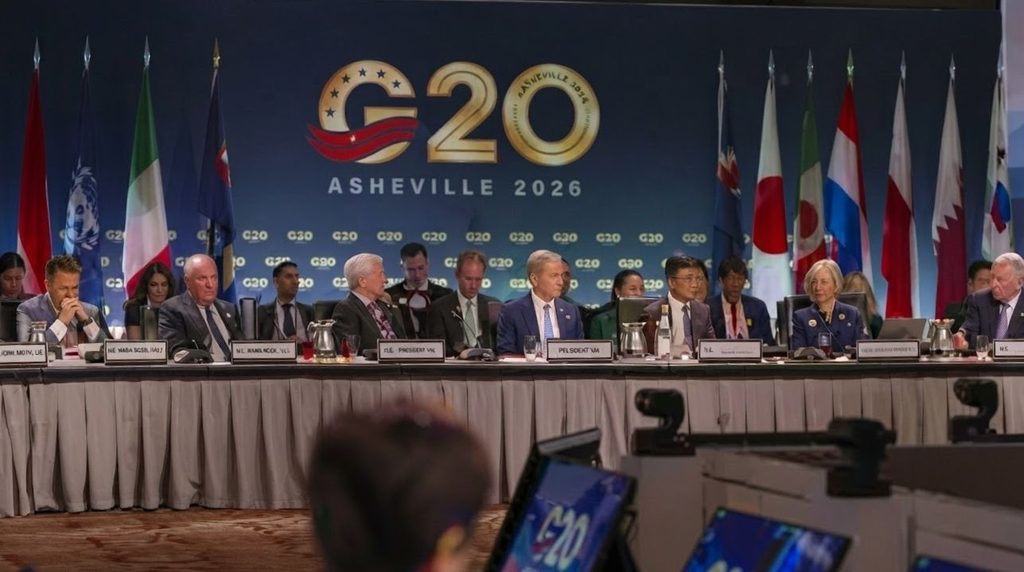
Beijing objected because it understood precisely what was being said. “Non-market” is shorthand for China’s sprawling state-led economic architecture: subsidised manufacturing, favoured credit, protected domestic firms, state-owned enterprises and the political direction of investment on an almost continental scale.
Chinese officials reportedly proposed language on global imbalances that would not single out state-backed firms. It went nowhere. Nor was this dispute limited to trade. There were also disagreements over critical minerals and sovereign debt restructuring, where Beijing argued that official bilateral creditors account for only around 15% of developing-country debt and that declining Western development assistance had been conveniently ignored.
That is a familiar Chinese complaint: Western governments want to lecture China about global responsibilities while avoiding scrutiny of their own failures. In some cases, it is not entirely wrong. But it is also an increasingly useful rhetorical shield for avoiding the harder question: what happens when a giant economy suppresses domestic demand while relentlessly expanding supply?
US Treasury Secretary Scott Bessent’s argument is that China directs support toward manufacturing and exports while keeping household consumption relatively weak. The result is a flood of goods looking for somewhere to go. Europe has made similar complaints, particularly around electric vehicles, solar panels and other green technologies.
Beijing responds that the West is engaging in double standards. Washington subsidises chips and clean energy. Brussels is trying to build strategic industrial capacity. Both are using tariffs, export controls and investment restrictions with increasing enthusiasm. All true.
But these are not identical systems. China’s state support reaches much deeper into the financial system, local government incentives, industrial policy and the direction of private enterprise. The argument is not about whether governments should shape markets. It is about whether the market has any meaningful capacity to shape the government’s preferred outcomes in return.
The failed G20 statement arrives shortly before an expected meeting between Xi Jinping and Donald Trump in Washington, with trade and artificial intelligence likely to feature heavily. That makes the diplomatic breakdown especially revealing. The disagreement is no longer really about a phrase in a communique. It is about whether China’s development model is a legitimate alternative to Western capitalism or an export-driven distortion that other economies can no longer absorb.
For a broader look at why Beijing’s trade engine is facing more resistance even as geopolitical risks mount, see this analysis of China’s slowing trade momentum and widening external pressures.
The Yuan Is Growing, but It Is Not Replacing the Dollar
One of the more durable fantasies in geopolitical commentary is that the yuan is on the verge of replacing the US dollar. It is not. At least not under current conditions.
China has made meaningful progress in internationalising its currency since Russia’s invasion of Ukraine. Western sanctions gave Moscow and some of its trading partners a compelling reason to reduce exposure to dollar-based financial systems. The yuan’s share of payments sent through SWIFT rose from around 2% in 2022 to 4.7% in July 2024, briefly making it the fourth most-used payment currency in the world.
That was an impressive surge. It was also temporary.
The yuan’s SWIFT share has since dropped to roughly 2.75%, placing it sixth globally and behind the Canadian dollar. Meanwhile, the dollar’s role in foreign-exchange transactions has increased. Around 72% of China’s merchandise trade is still settled in currencies other than the yuan. For all the grand talk of de-dollarisation, China itself remains heavily reliant on foreign currencies to conduct trade.
There is a more encouraging story for Beijing in the Cross-Border Interbank Payment System, or CIPS. Payment volumes have reached record highs, and the number of direct participant banks climbed from 79 in early 2023 to 210. Because CIPS has its own messaging infrastructure, it gives China a potentially valuable route around SWIFT should sanctions or financial coercion intensify.
But that is not quite the same as broad-based global demand for the yuan.
RMB volumes handled through Hong Kong’s clearing system have declined by more than one trillion yuan since June 2024. CIPS volumes rose by around 200 billion yuan over the same period. Some transactions may indeed have moved between systems, but not enough to explain the yuan’s wider loss of momentum. China’s own data shows the yuan accounting for roughly half of its cross-border settlements, a share that has largely stalled even as absolute use rises.
The yuan reached 28% of China’s goods trade in the first half of 2025, its highest proportion in a decade. That is real progress. It is still a long way from a global reserve-currency revolution.
The problem is structural. A genuinely global currency requires open capital markets, deep pools of liquid assets, legal predictability and easy convertibility. China wants the prestige and strategic protection that come with a major international currency while retaining capital controls that limit money leaving the country. Unfortunately, the world’s investors tend to notice when the exit door has a lock on it.
The most sensible way to understand yuan internationalisation is as strategic insurance. Beijing is building a payments ecosystem that could reduce vulnerability if the United States and its allies ever impose sweeping financial sanctions. Under normal conditions, however, companies and governments still prefer the dollar because its markets are deeper, its network is bigger and its convertibility is vastly easier.
Energy Shock Shows What China’s EV Build-Out Can Actually Do
While the yuan remains constrained by finance, China’s electrification drive is starting to produce a much more concrete strategic benefit: reduced exposure to imported oil.
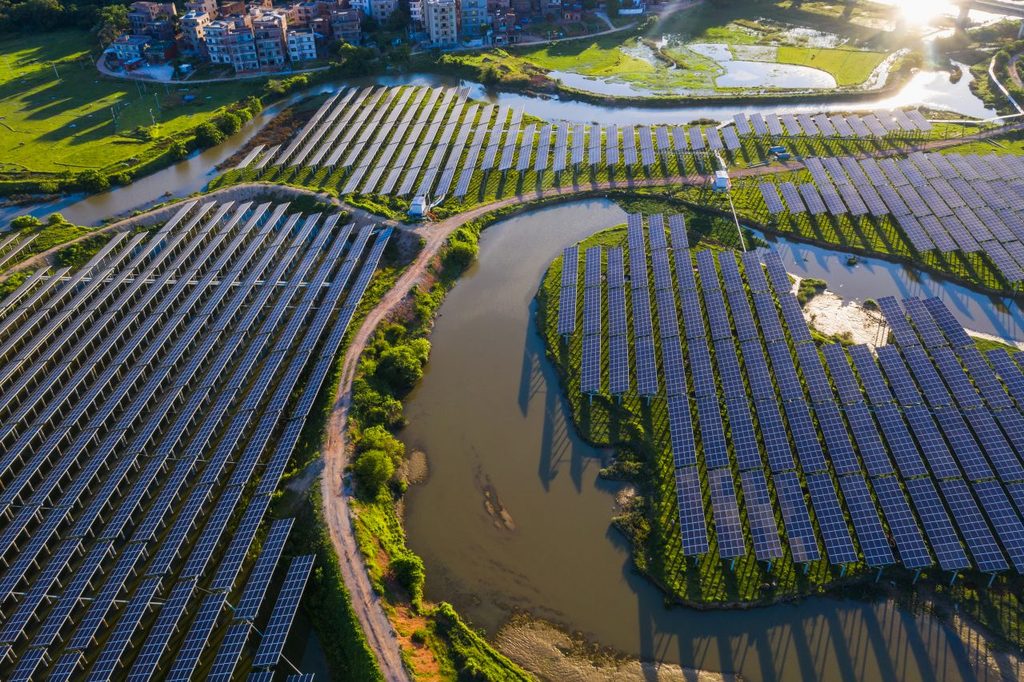
China’s carbon dioxide emissions fell by 1% year on year in the second quarter of 2026, according to analysis from Carbon Brief. The immediate catalyst was disruption around the Strait of Hormuz, which sharply affected oil supplies and consumption. Overall oil use fell 9%, while transport-related oil consumption declined 16%.
That is an important result, not because it proves China’s emissions are now in permanent decline, but because it demonstrates the strategic value of scale. China’s vast electric-vehicle fleet and public-transport network helped the economy absorb an external energy shock without a comparable collapse in mobility.
Oil consumption displaced by EVs in the first half of 2026 exceeded the United Kingdom’s total oil consumption over the equivalent period. More strikingly, the effect was almost twice what would normally be expected from the growth in the number of electric vehicles alone. Existing EVs were apparently used far more frequently as fuel supplies became less reliable and more expensive.
Public transport picked up additional journeys too. Overall transport activity increased even as fuel consumption fell sharply. Some of the difference was likely behavioural: fewer discretionary trips, more efficient route planning and businesses cutting unnecessary travel. Still, the broader lesson is difficult to miss. Electrification has become a meaningful buffer against geopolitical disruption.
For decades, China has worried about its dependence on oil shipments travelling through narrow maritime choke points, particularly the Strait of Hormuz and the Strait of Malacca. A supply disruption in either can rapidly become an economic and political problem. Electric vehicles do not eliminate that vulnerability entirely; China still needs oil, and its electricity system has its own resource dependencies. But every kilometre shifted from imported fuel to domestic electricity is one less kilometre exposed to a shipping crisis.
There is an awkward irony here. China’s clean-energy industries are simultaneously a national-security asset and an economic headache. The solar industry, in particular, has been devastated by chronic oversupply. Polysilicon prices have fallen below average production costs as companies fight a ruinous price war for market share.
Regulators are now trying to restore some discipline through energy-consumption limits, cost-accounting rules and tougher action against below-cost sales. In plain English: Beijing is attempting to stop firms from losing money so aggressively that they destroy the industry they were supposed to dominate.
This tension runs through much of the Chinese economy. State-led expansion has built genuinely formidable capacity in EVs, batteries and solar. Yet the same model can create excess production, collapsing margins and pressure to export the problem abroad. The world gets cheaper green technology; China gets industrial champions; competitors get understandably alarmed. Everyone then accuses everyone else of protectionism. A very modern arrangement.
The Hormuz disruption also shows why energy security has become inseparable from wider geopolitical risk. China’s exposure to the Iran conflict and its economic spillovers illustrates just how quickly an external crisis can affect fuel costs, manufacturing and trade.
The UFC Thinks China’s Next Global Star May Be in the Cage
Not every China story needs to involve a trade surplus, a maritime choke point or a collapsing diplomatic meeting. Sometimes it involves someone being knocked out in Shanghai.

The Ultimate Fighting Championship is planning a more consistent presence in China after its biggest local event yet drew more than 16,000 people in Shanghai. The night ended with Chinese bantamweight Song Yadong defeating a Russian favourite by second-round knockout, providing exactly the kind of homegrown sporting moment that global sports businesses spend extraordinary amounts of money trying to manufacture.
The UFC held its first mainland China event in 2017, then suspended its local schedule during the pandemic. After returning to Shanghai in 2025, it is now attempting to establish regular events and build on China’s deep martial-arts traditions.
The organisation has already made a substantial bet on local development. In 2019, it opened a 92,000-square-foot performance institute in Shanghai, its first such facility outside Las Vegas. Twenty Chinese fighters now compete across the UFC’s global roster.
The crucial ingredient, though, is not infrastructure. It is stardom.
Zhang Weili created the breakthrough in 2019 when she became the UFC’s first Chinese champion. UFC executives have compared her influence to that of Yao Ming, whose NBA success helped transform basketball’s popularity in China. Song Yadong, a 28-year-old fighter from Harbin, could be the next major figure if he continues his ascent towards title contention.
The UFC says it has around 18 million social media followers in China, while analysts see considerable room for broadcasting revenues to grow. In March, the promotion renewed an agreement with China Mobile subsidiary Migu, which will remain the exclusive distributor of live UFC events in Greater China until 2031.
This is the commercial formula in its simplest form: build the infrastructure, secure distribution, develop local talent and hope a champion breaks through into mainstream culture. China remains an underserved market for mixed martial arts, despite its obvious affinity with combat sports. If Song or another Chinese fighter wins a UFC belt, the organisation’s long investment may begin to look very clever indeed.
China’s Strengths Are Also Its Sources of Friction
These stories might seem disconnected: a G20 communique collapses, the yuan stalls, oil use falls, and the UFC expands. But they all reveal different sides of the same country.
China has built enormous industrial depth, an increasingly sophisticated payments infrastructure, world-leading electrification and a consumer market still large enough to tempt every global entertainment company. Those are not trivial achievements. They give Beijing real options at a time of growing geopolitical instability.
Yet each strength arrives with a caveat. The export machine fuels foreign backlash. The yuan cannot fully internationalise without financial openness that the Communist Party is unwilling to tolerate. Green industrial capacity brings both energy resilience and devastating oversupply. A huge consumer market is attractive, but converting interest into sustained commercial success still depends on local stars, reliable access and consumer confidence.
China is not collapsing, despite the often breathless claims made by those who desperately want it to be. Nor is it effortlessly replacing the United States at the centre of a new world order. It is a powerful, innovative and deeply contradictory economy trying to reduce its vulnerabilities without surrendering the controls that created some of them.
That balancing act is becoming more difficult. And increasingly, the rest of the world is refusing to pretend otherwise.
Frequently Asked Questions
Why did G20 finance ministers fail to issue a joint communique?
China rejected the language calling for the elimination of “non-market policies and practices", viewing it as a direct criticism of its state-owned enterprises, subsidies and wider economic model. No compromise was reached.
Is the yuan replacing the US dollar in global trade?
No. The yuan has gained international use, and China’s CIPS payment system is expanding, but the currency’s SWIFT share has fallen from its 2024 peak, and most of China’s merchandise trade is still settled in other currencies.
Why did China’s emissions and oil consumption fall in the second quarter of 2026?
Disruption around the Strait of Hormuz affected oil supplies, encouraging greater use of electric vehicles and public transport. Reduced discretionary travel and more efficient transport behaviour likely also contributed.
Why is the UFC expanding in China?
The UFC sees significant growth potential in China, supported by a record Shanghai attendance, an established local training facility, a growing roster of Chinese fighters and an exclusive media-distribution agreement through 2031.