Watch the full video here: https://www.youtube.com/watch?v=ur6NDdEx-Hs
Beijing is once again trying to sell itself as the sane alternative to a Western-led global order supposedly collapsing under the weight of American arrogance, geopolitical blocs and “double standards". It is a familiar pitch. China does not want to overthrow the international system, the argument goes. It merely wants a more democratic, multipolar version of it—one where Washington cannot decide the rules, the punishments and, presumably, which countries are allowed to develop.
That sounds rather lovely in theory. In practice, China’s grand diplomatic campaign is running into some awkward realities: a devastating Himalayan disaster that exposes weak regional coordination, a debt-heavy stimulus strategy that is increasingly about rolling over liabilities rather than creating growth, and a rapidly hardening European position on Chinese exports.
These are not isolated issues. They are different expressions of the same dilemma. China wants to become the indispensable economic partner for the developing world and a credible pole of global leadership. Yet at home, its economic model remains reliant on manufacturing and exports, while abroad, the countries receiving Chinese investment are beginning to ask whether partnership means resilience—or merely dependence.
Key Takeaways
- Xi Jinping is pairing multipolar rhetoric with AI, green energy, infrastructure and security initiatives across the developing world.
- The China-Nepal disaster highlights the absence of a formal real-time warning system for cross-border Himalayan hazards.
- Record Chinese bond issuance is partly masking a deeper problem: substantial borrowing is being used to refinance existing liabilities.
- European concern over China’s manufacturing surplus is pushing Brussels and Berlin towards tougher trade defences.
Table of Contents
- Xi’s pitch: a multipolar world with China near the centre
- Egypt shows how China’s economic diplomacy works
- Nepal’s flood disaster tests the promise of regional partnership
- China’s stimulus is increasingly a debt-management exercise
- Europe is losing patience with China’s export machine
- The central contradiction Beijing cannot export away
Xi’s pitch: a multipolar world with China near the centre
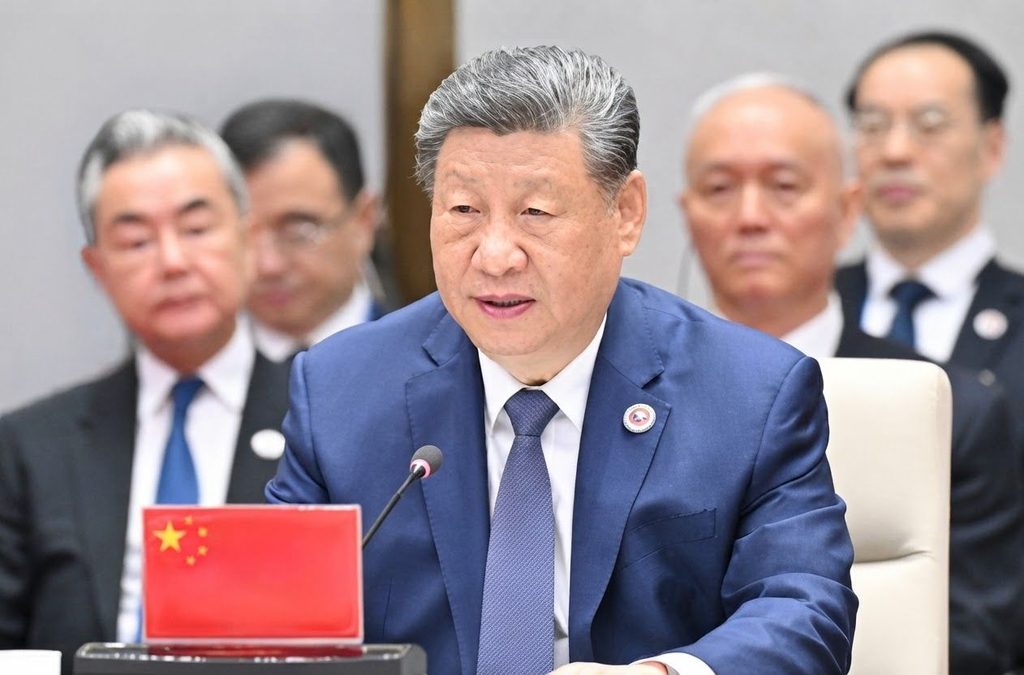
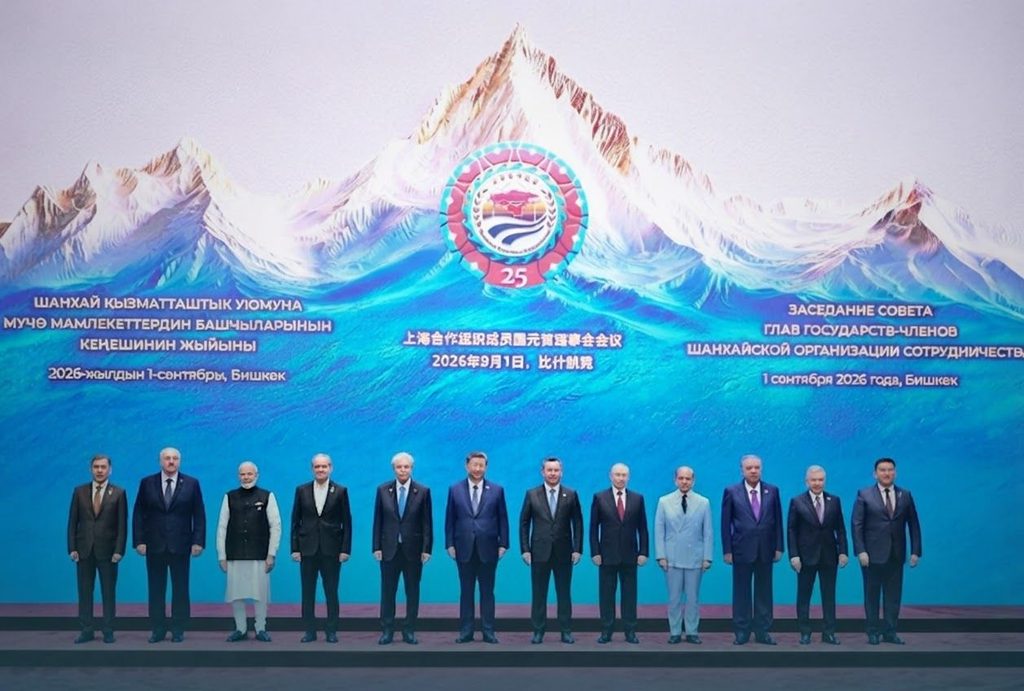
At the Shanghai Cooperation Organisation’s 25th anniversary summit in Kyrgyzstan, Xi Jinping made the central message plain: multipolarity is irreversible, global affairs should not be dictated by one country, and no small clique of powers should dominate international politics.
No prizes for guessing who this was aimed at.
Xi did not need to say “the United States” out loud. The references to exceptionalism, interference, bullying and double standards were standard Beijing shorthand for the US-led international system. China’s message is that Western powers have spent decades preaching sovereignty while invading countries, imposing sanctions and deciding who qualifies as a respectable member of the international community. Again, this is not an entirely invented grievance. But Beijing’s alternative vision usually comes with a rather conspicuous footnote: sovereignty is sacred, unless it is inconvenient for China’s own strategic interests.
The SCO gathering was not purely rhetorical. Beijing announced a set of practical initiatives designed to tie member states more closely into China’s technological and economic orbit:
- An International Artificial Intelligence Application Cooperation Center.
- New large-scale solar and wind projects.
- One hundred science and technology programmes over three years.
- Education and port-economy cooperation centres.
- Four security centres under the SCO framework.
This is the modern Chinese influence toolkit: infrastructure, green technology, industrial capacity, security cooperation and increasingly AI. The old Belt and Road model was often associated with railways, ports and giant concrete projects. The updated version is more sophisticated. It is about making China integral to the digital systems, logistics routes, clean-energy supply chains and institutional structures of partner countries.
Security sits at the heart of this agenda too. Xi urged SCO members to resist external interference that might threaten their political systems. For authoritarian governments, that has obvious appeal. China is offering something that Western governments generally cannot: investment and diplomatic backing without lectures on elections, civil society or human rights.
It is a very effective proposition for leaders who would prefer not to be asked inconvenient questions.
Egypt shows how China’s economic diplomacy works.
Xi’s visit to Egypt provided a clearer view of what this geopolitical strategy looks like on the ground. China and Egypt marked 70 years of diplomatic relations with agreements spanning the Belt and Road Initiative, artificial intelligence, trade, industrial development and supply chains.
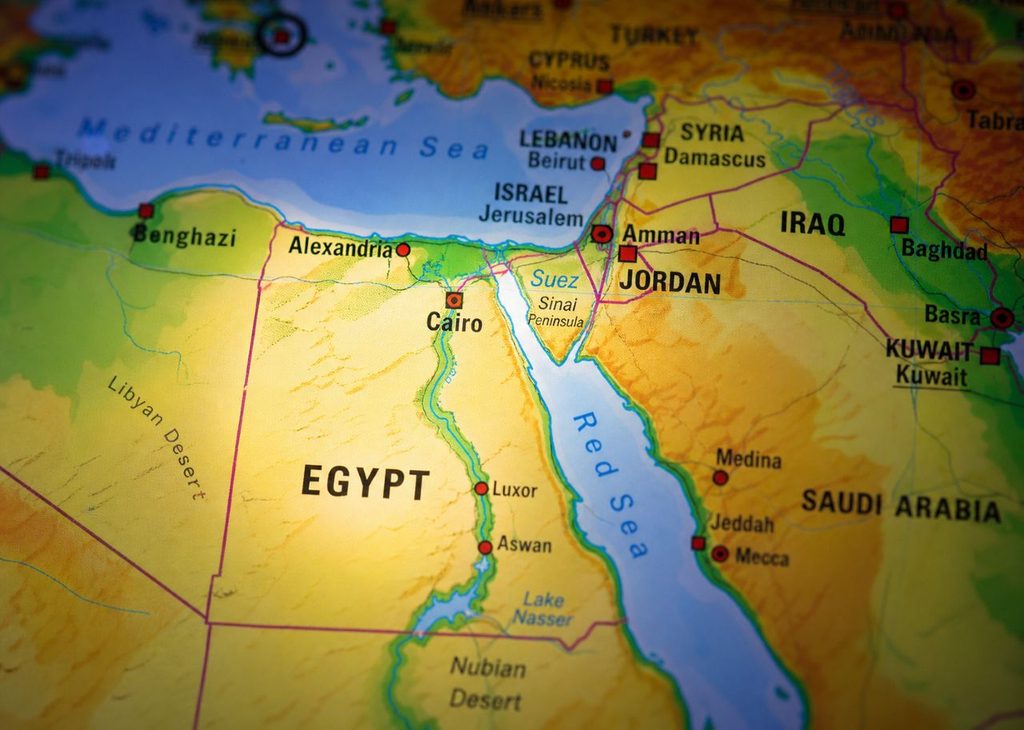
Egypt wants Chinese manufacturers, technology and capital. It also wants to become a production and export base connecting Asia, Africa, Europe and the Middle East. That makes perfect geographical sense. Egypt sits beside the Suez Canal, one of the world’s most strategically important maritime chokepoints, and it has long been trying to turn this location into broader industrial relevance.
China has already invested heavily in the Suez Canal Economic Zone and contributed to major Egyptian projects, including the new administrative capital and a light-rail system. Chinese automakers are planning local assembly operations. Bilateral trade exceeded US$20 billion last year, roughly 60% higher than a decade earlier.
For Beijing, Egypt is not just another Belt and Road partner. It is a gateway. A Chinese company assembling vehicles or producing goods in Egypt is closer to European, African and Middle Eastern markets. It can potentially reduce shipping costs, diversify production and embed China deeper into regional supply chains.
For Cairo, the appeal is equally obvious. Chinese investment can bring jobs, infrastructure and manufacturing capacity that Egypt has struggled to develop at the necessary scale. But there is a trade-off here, as there often is with China’s overseas economic footprint. A country can become a hub for Chinese capital and Chinese production without necessarily becoming a hub for domestic innovation, locally owned industry or higher-value technology.
That is the uncomfortable question lurking behind much of Beijing’s global-development pitch: does China help partners climb the value chain, or does it simply build a more geographically distributed Chinese supply chain?
The answer will vary country to country. But it is worth asking, particularly as Beijing itself has begun acknowledging that export-led growth has serious limits. China’s own debate over the limits of export dependence makes its overseas manufacturing push look rather less like altruistic development and rather more like a search for new outlets for excess capacity.
Nepal’s flood disaster tests the promise of regional partnership.
Just as Beijing was presenting itself as a reliable champion of developing countries, catastrophe along the China-Nepal border exposed a glaring weakness in regional cooperation.
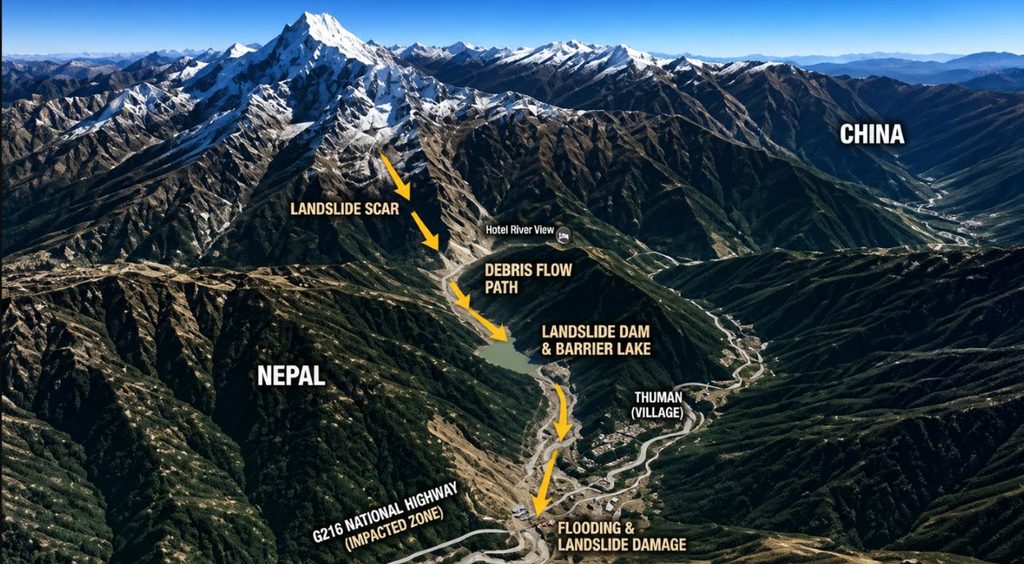
Floods and mudslides killed at least 1,100 people in Nepal and at least 21 people in China, with more than 4,000 still missing. Chinese, Indian and Nepalese specialists joined Nepal’s army in search and rescue operations around mud-covered hydropower facilities and the devastated Gyirong Port.
China sent aid, rescue personnel and assistance to clear the road to the border crossing. That matters, of course. But the more politically damaging issue is whether the disaster could have been mitigated by an earlier warning.
Scientists believe the event began when part of a glacier and surrounding bedrock collapsed, unleashing a torrent of water, mud and debris. The immediate event originated within Nepal. Yet Himalayan hazards do not respect borders, and previous floods have started in Tibet before surging south. The region is intensely vulnerable to glacial-lake outbursts, landslides and sudden flooding. The fact that China and Nepal still lack a formal real-time information-sharing system for these threats is, frankly, absurd.
China has extensive satellite capabilities and environmental monitoring technology. Nepal needs warning time. Those two facts should have produced a robust joint disaster-warning mechanism years ago.
This is where grand claims about South-South cooperation become rather difficult to sustain. If Beijing wants to be seen as a responsible regional power, it cannot simply arrive with aid after a disaster. It needs to share data before the disaster, build systems that work across borders and ensure smaller neighbours are not left guessing when a mountain, lake or glacier becomes unstable.
The destruction of Gyirong Port adds an economic dimension. The crossing has become a symbol of China’s growing footprint in Nepal, handling Chinese consumer goods and electric vehicles while serving as a planned route for Belt and Road rail and electricity links. Trade between the two countries rose from US$1.1 billion in 2018 to US$2.2 billion in 2024, overwhelmingly driven by Chinese exports.
Rebuilding the crossing will be important. Creating a serious cross-border warning system will be more important still. Infrastructure is only transformative if it survives crises—and if the people living around it have the information required to stay alive.
China’s stimulus is increasingly a debt-management exercise.
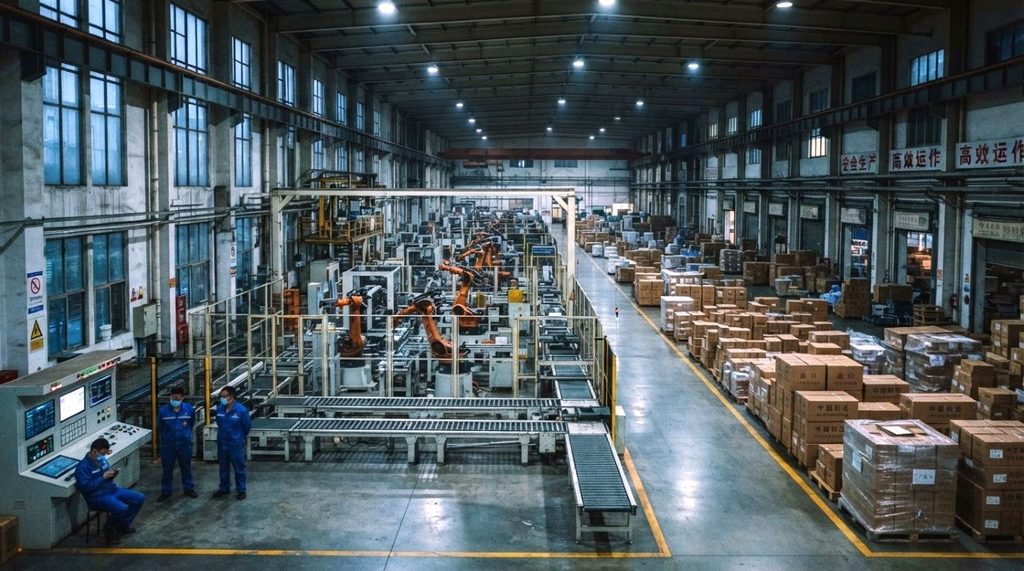
Back in China, Beijing is trying to support a weakening economy without unleashing the kind of massive stimulus package that would acknowledge just how constrained policymakers have become.
Local governments issued around 7.7 trillion yuan in bonds during the first eight months of the year, a record for that period and 1.3% higher than the same period in 2025. That headline sounds impressive. Record borrowing! Support is coming! Beijing is doing something!
But the details are considerably less exciting.
Authorities had used only about 68% of their combined annual bond quota by the end of August, compared with 76% at the same point a year earlier. Central-government issuance was only 65% of its allocation, the slowest pace since 2022. Bond issuance was heavily front-loaded, slowed after the first quarter, then rebounded sharply in June.
The bigger problem is what much of this borrowing is actually doing. Some 1.8 trillion yuan in refinancing bonds were issued in the first eight months, including debt intended to replace hidden liabilities. In other words, a large share of new borrowing is not financing new roads, new productive investment or a new burst of household demand. It is paying off, restructuring or extending old debts.
That may prevent immediate financial stress. It does not create much growth.
China’s local governments are caught in a brutal squeeze. Land-sales revenue has weakened with the property sector. Their existing debt burdens are enormous. Their spending obligations remain substantial. So the state is asking them to support growth while also cleaning up the liabilities left behind by years of debt-fuelled development. It is less a stimulus strategy than a fiscal juggling act performed above a pit of increasingly angry creditors.
The central government has more room than local authorities, but Beijing remains reluctant to dramatically expand central borrowing. That caution reflects a political preference for stability and control, but also a recognition that China has already spent years treating debt as a substitute for structural reform.
Property investment remains weak. Household consumption remains weak. Private-sector confidence remains weak. Yet instead of a major consumption-led programme, Beijing appears likely to accelerate already approved borrowing quotas and call it support.
That may provide incremental help. It will not solve the underlying problem: China needs stronger domestic demand, but its system remains much more comfortable building factories than transferring meaningful purchasing power to households.
The strain is becoming harder to hide. As covered in this analysis of China’s producer inflation and debt pressures, rising costs and weak consumer demand are creating an especially nasty combination. More credit can keep the machinery moving. It cannot automatically make the machinery profitable.
Europe is losing patience with China’s export machine
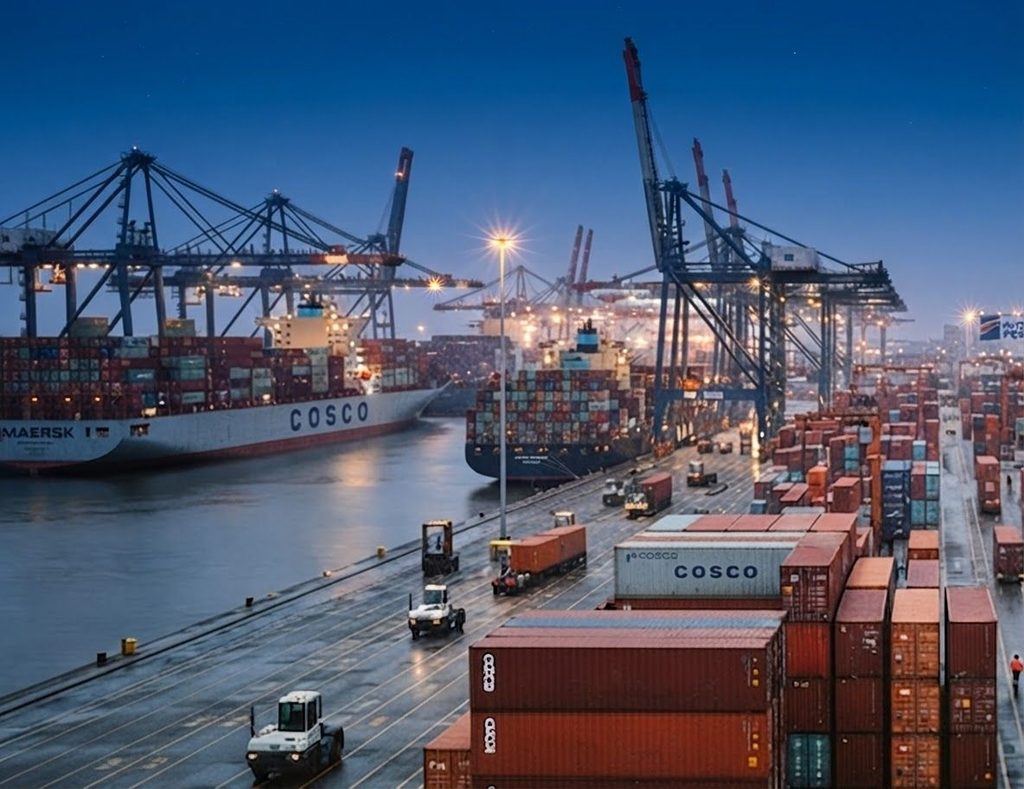
While Beijing looks abroad for markets and influence, Europe is increasingly asking whether China’s industrial model is compatible with Europe retaining an industrial base at all.
EU officials are holding intensive talks in Beijing before an October deadline for what Brussels calls “tangible results". The delegation is being led by Denis Redonnet, the EU’s top trade-enforcement official and a central figure in the bloc’s tougher China policy. Other senior trade officials are expected to engage Chinese counterparts before and during an early-October visit.
The language matters. China is no longer being treated primarily as a commercial opportunity. It is increasingly regarded as a competitor and systemic rival.
Brussels wants China to import more European goods and reduce the torrent of Chinese products entering the EU market. In July, China expanded its trade surplus with all but three EU member states compared with the previous year. Germany, historically the European country most invested in commercial engagement with China, is becoming more confrontational too.
Chinese exports to Germany rose 14.4% in yuan terms in the first seven months of 2026, while imports from Germany fell 2.4%. German officials are now considering measures aimed at what Berlin regards as unfair Chinese trade practices.
This is a major shift. Germany’s industrial establishment spent years treating the Chinese market as indispensable. German carmakers, machinery producers and chemical companies built strategies around Chinese demand. Now many of them are confronting a far uglier reality: Chinese firms are no longer just customers or lower-cost suppliers. They are formidable competitors in automobiles, machinery, batteries, solar technology and clean-energy manufacturing.
China rejects the diagnosis. Chinese state media and commentators argue that Germany’s problems stem from high energy costs, slow innovation, excessive regulation and declining competitiveness. There is some truth in that too. Europe has not exactly made life easy for energy-intensive industry.
But this is not an either-or question. Germany can have structural problems of its own, while China also benefits from an economic model that channels vast resources into strategic manufacturing, suppresses consumption and then depends on external markets to absorb the output.
Europe’s concern is not merely that Chinese products are competitive. Competition is normal. The concern is that China’s weak domestic demand and vast industrial capacity produce export surpluses on a scale that can crush industries elsewhere before those industries have the chance to adapt.
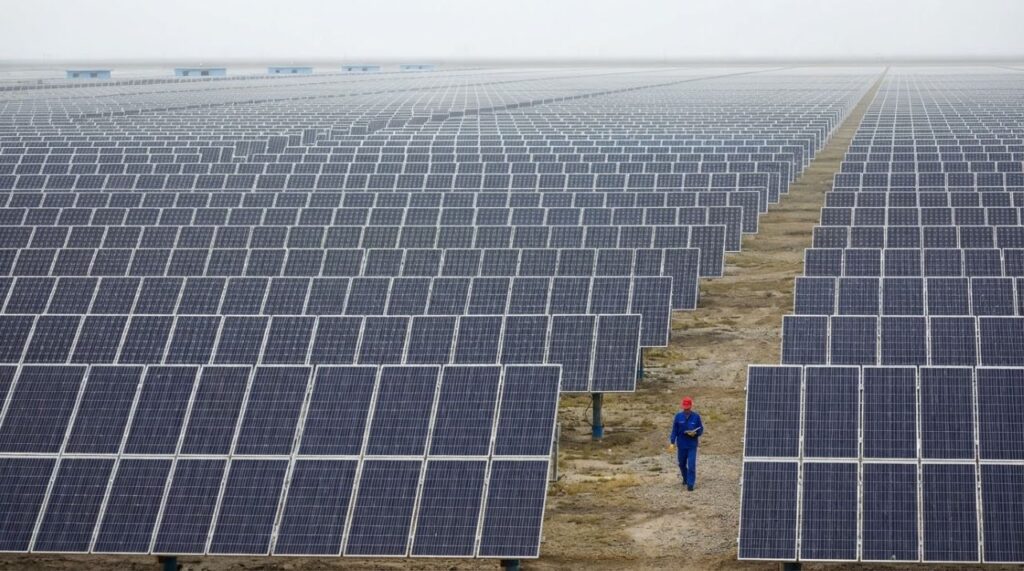
Beijing has warned that reducing European reliance on Chinese solar panels, batteries and other green technologies would raise costs and slow the green transition. Again, this is true in the short term. But European governments are increasingly concluding that cheap clean technology is not worth much if it comes at the cost of long-term industrial dependency.
Without meaningful concessions, the EU appears increasingly ready to use tariffs, procurement restrictions and other trade defences. That raises the risk of retaliation and a wider trade conflict. It also reflects a basic political reality: European governments cannot preach strategic autonomy while allowing critical industrial capacity to disappear.
The central contradiction Beijing cannot export away
China’s leadership wants to reshape the global order. It wants the developing world to see Chinese investment as an alternative to Western conditionality. It wants Europe to remain open to Chinese goods. It wants neighbouring countries to trust Chinese technology, infrastructure and security partnerships.
But all of that rests on China’s ability to offer something more durable than cheap capital and cheap manufactured products.
Nepal needs transparent disaster coordination. Egypt needs investment that creates local capability, not simply Chinese-operated industrial islands. Europe wants reciprocity rather than a permanently widening goods imbalance. And China’s own economy needs demand that comes from households rather than another round of debt refinancing.
Beijing’s multipolar world may indeed be arriving. The American unipolar moment is over, and pretending otherwise is silly. But a multipolar world is not automatically a fairer world. It can just as easily become a more fragmented, more transactional and more coercive one—especially when every major power insists its own dependence on trade is “cooperation” while everyone else’s attempt to compete is "protectionism".
China has the resources, industrial capacity and diplomatic reach to become a central force in this new order. The question is whether it can resolve the contradictions of its own model before those contradictions become impossible for its partners to ignore.
Frequently Asked Questions
What is China’s multipolarity agenda?
China’s multipolarity agenda argues that international affairs should not be dominated by the United States or a small group of Western powers. Beijing promotes itself as an alternative centre of influence through investment, technology cooperation, infrastructure, security partnerships and institutions such as the Shanghai Cooperation Organisation.
Why is Egypt important to China’s strategy?
Egypt offers China a strategic location near the Suez Canal and access to markets across Africa, Europe, the Middle East and Asia. Chinese firms have invested in the Suez Canal Economic Zone, transport infrastructure and planned manufacturing projects, including local vehicle assembly.
Why does the China-Nepal disaster have geopolitical significance?
The floods and mudslides tested whether China’s close regional partnerships can deliver meaningful protection during a crisis. The absence of a formal real-time system for sharing information on glacial lakes, landslides and other Himalayan hazards has intensified questions over whether China could provide earlier warnings to Nepal.
Why are China’s bond sales not necessarily a major stimulus?
Although bond issuance has reached a record pace, a significant portion is being used to refinance existing local-government and hidden debt. Refinancing can ease financial pressure, but it does not necessarily create new investment, stronger household consumption or immediate economic demand.
Why is the EU becoming tougher on Chinese trade?
European officials fear that China’s large manufacturing capacity, weak domestic demand and expanding export surpluses could damage European industry. The concerns are particularly acute in cars, machinery, batteries, solar panels and other clean technologies, where Chinese companies have become powerful competitors.