Watch the full video here: https://www.youtube.com/watch?v=Fz_J5WcKZYE
China is trying to insulate itself from a world that is becoming more expensive, more dangerous and, frankly, far less predictable. That means building solar farms across deserts, ultra-high-voltage transmission lines across provinces, emergency infrastructure in the Himalayas, and ever-larger policy packages intended to stop the population from collapsing.
But there is a grim catch: resilience is not the same thing as invulnerability. This week’s developments reveal a country pouring enormous resources into managing risk, only to find that climate shocks, energy turmoil, price wars and demographic decline are outrunning the old playbook.
From a catastrophic glacier collapse on the Nepal-Tibet border to billion-yuan airline losses and warnings that China could become the world’s lowest-fertility society, the common thread is that Beijing’s strategic priorities are colliding with difficult physical and economic realities.
Key Takeaways
- A glacier collapse near Gyirong exposed how rapidly cascading Himalayan climate hazards can overwhelm conventional warning systems.
- China’s major state airlines remain loss-making despite stronger passenger traffic as fuel costs and fare competition crush margins.
- Solar capacity has surpassed coal capacity in China, but coal remains vital because solar supplies only a fraction of actual electricity generation.
- Demographers argue China’s current child-care subsidy is far too small to meaningfully address its accelerating fertility decline.
Table of Contents
- A Himalayan Disaster Shows the Limits of Conventional Planning
- Gyirong’s Geography Is Becoming an Economic Vulnerability
- Chinese Airlines Are Selling More Tickets and Losing More Money
- Solar Has Overtaken Coal in Capacity—But Not in Actual Power Generation
- China’s Fertility Policy Is Too Small for the Problem It Faces
- Resilience Is Becoming China’s Defining Economic Challenge
A Himalayan Disaster Shows the Limits of Conventional Planning
More than 900 people have been confirmed dead following a catastrophic mudslide along the Nepal-Tibet border, while thousands remain missing. Nepal’s disaster authority reported 903 deaths and 4,247 missing people, including 592 foreign nationals. In Tibet, at least 16 people were reported killed, and another 546 remained unaccounted for.
The scale of the human loss is appalling. Yet the mechanics of the disaster may be even more alarming.
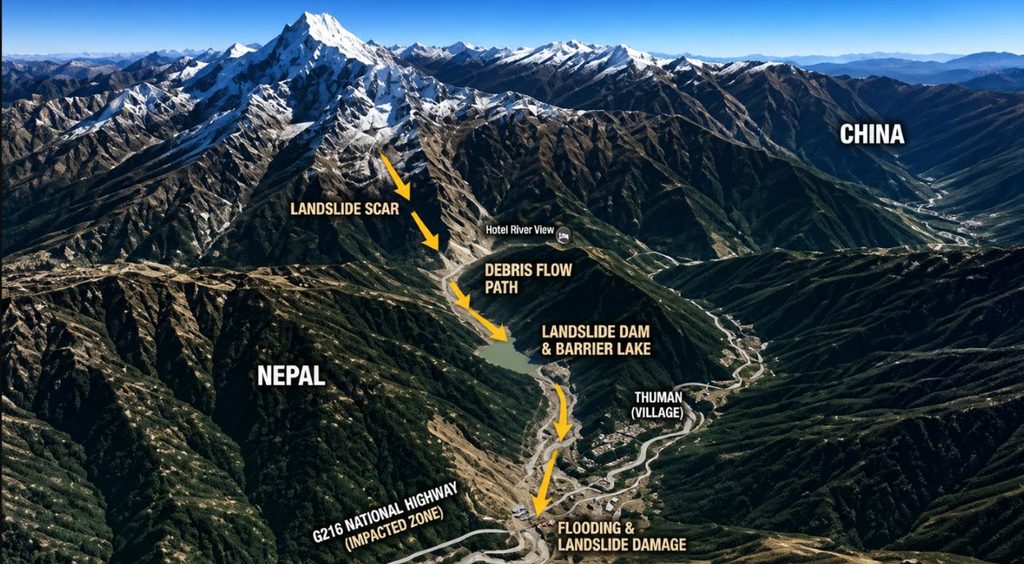
Ice collapsed from a glacier, unleashing a tsunami-like surge of water, boulders and debris through a narrow Himalayan valley. The torrent demolished 27 buildings at the Gyirong border complex before continuing into Nepal. Officials estimated that only six or seven minutes elapsed between the original avalanche and the wave reaching the crossing.
That timeframe matters. It is very difficult to design an evacuation system around a disaster that moves from initial collapse to destructive flood in mere minutes. Warning systems can be effective where hazards are slower, isolated and reasonably predictable. They are far less useful when several hazards cascade into one another at extreme speed.
President Xi Jinping dispatched Premier Li Qiang to the affected Tibetan areas, while the Communist Party’s August Politburo meeting focused heavily on rescue efforts and reconstruction. Authorities ordered a full search for missing people and accelerated repairs to roads, communications and electricity infrastructure.
There is, however, an awkward reason this disaster is attracting such scrutiny: officials were already worried about glacial danger in the area.
Fourteen months earlier, an overflowing glacial lake triggered a landslide nearby, destroying homes, trucks and a bridge. Authorities subsequently built flood walls, reinforced embankments, set up continuous water monitoring and held evacuation exercises. These measures were directed mainly at glacial-lake outburst floods. This disaster was caused by a rapid ice avalanche instead.
In other words, the preparations were not meaningless. They were simply designed for the wrong version of a rapidly changing threat.
Gyirong’s Geography Is Becoming an Economic Vulnerability
Gyirong Port sits in a steep gorge where two glacier-fed rivers meet. This is not merely an unfortunate location for a border complex. It is one of the principal trade routes between China and Nepal, handling close to one-third of bilateral commerce and more than 180,000 travellers.
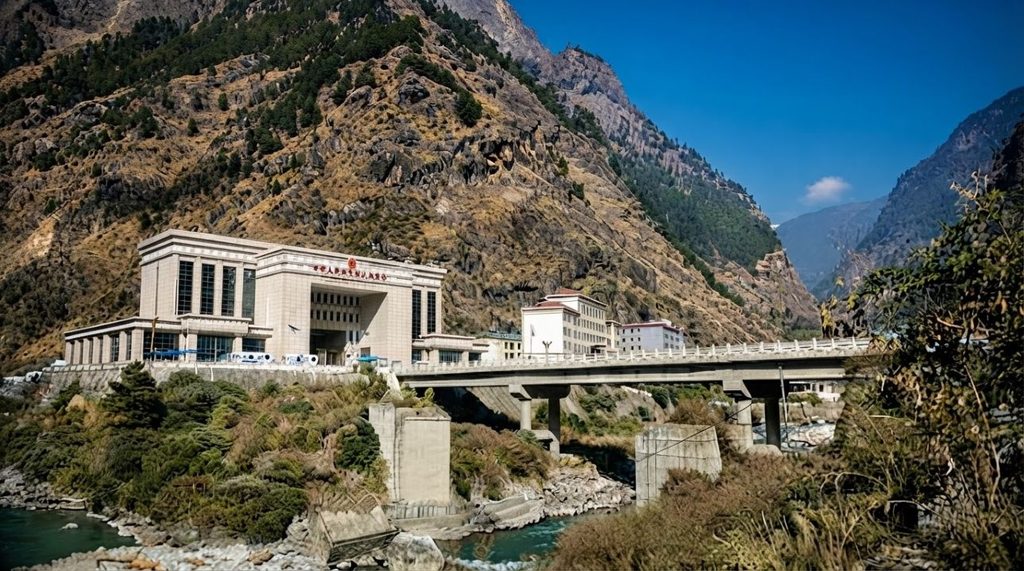
A 2024 study identified Gyirong as the China-Nepal transport corridor most exposed to glacial-lake flooding. Moving the crossing would be difficult. The alternative route through Zhangmu suffered major damage in Nepal’s 2015 earthquake and faces its own glacial risks.
That leaves policymakers with an unattractive set of options. They can invest further in defences at Gyirong, accept substantial disruption while developing alternatives, or attempt both while the terrain itself becomes less stable.
Scientists have warned that rising temperatures are destabilising glaciers, thawing permafrost and weakening mountain bedrock. The result is not one easily managed risk but a chain of potential failures: avalanches can trigger floods, floods can become debris flows, and narrow valleys can turn a local event into a cross-border catastrophe.
This is the broader climate-security problem facing the Himalayas. Infrastructure that once appeared merely remote and challenging is now exposed to hazards that are evolving faster than the systems built to contain them. Rebuilding Gyirong and devastated communities in Nepal may take years. Making them safe against the next climate-driven emergency could prove considerably harder.
Chinese Airlines Are Selling More Tickets and Losing More Money
China’s three biggest state-owned airlines—Air China, China Eastern Airlines and China Southern Airlines—reported combined first-half losses of 8.16 billion yuan, roughly US$1.2 billion. This happened despite revenue growth of about 10% at each carrier.
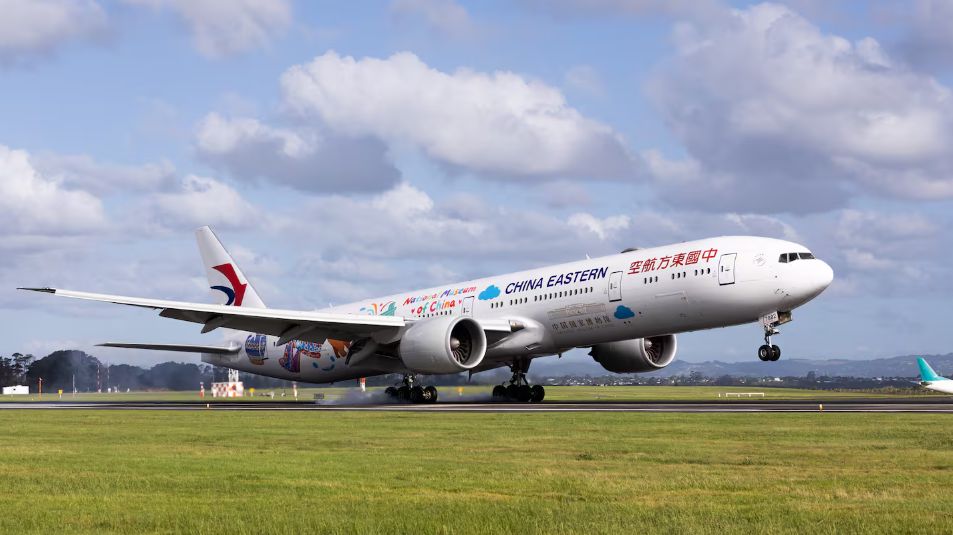
That is the sort of result that lays bare the weakness beneath a superficially encouraging recovery story. Passenger traffic is rising. Revenues are growing. Yet the companies are still sinking further into the red.
China Southern, the country’s largest airline by fleet size, recorded the largest net loss at 3.7 billion yuan. The problem is straightforward: fuel costs have surged much faster than airlines can raise fares.
Global jet-fuel prices reached an average of US$164 per barrel in the week ending August 21, an 82% increase from a year earlier, according to S&P Global. Fuel normally represents around 30% of Chinese airlines’ costs, but the share is climbing rapidly. China Eastern said fuel accounted for almost 40% of operating costs after a 36% annual increase. China Southern’s fuel bill rose 38% to 34.9 billion yuan.
These carriers are being squeezed from both directions. They cannot simply push higher energy costs onto passengers because fuel surcharges are inadequate and competition is fierce. Ticket prices remain under pressure even as travel volumes recover.
On domestic routes, China’s vast high-speed rail network remains a formidable competitor. For many routes, rail is fast enough, convenient enough and cheap enough to constrain airline pricing power. Internationally, restored routes have been concentrated in Central Asia, Europe and the Middle East, where operating costs are high and competition is intense.
Wide-body aircraft returning from sluggish international markets have worsened overcapacity. International passenger traffic rose between 12% and 14% across the three major state carriers, but more passengers have not automatically translated into more profitable routes.
Privately controlled airlines performed better. Spring Airlines, Hainan Airlines and Juneyao Airlines remained profitable, albeit with narrowing margins. Spring was the only listed Chinese airline to report a second-quarter profit, helped by a reduction of nearly 5% in unit non-fuel expenses.
The contrast is telling. Low-cost carriers can run leaner operations, but no airline can indefinitely outrun a massive fuel shock. The wider aviation sector’s prospects now depend heavily on whether global energy prices retreat. This is one of the clearest examples of how conflict in the Middle East can reach directly into China’s domestic economy, a pressure also visible in China’s wider struggle to manage economic and energy pressures.
Solar Has Overtaken Coal in Capacity—But Not in Actual Power Generation
China’s solar capacity has officially surpassed coal capacity, a milestone that would have sounded fanciful not long ago.
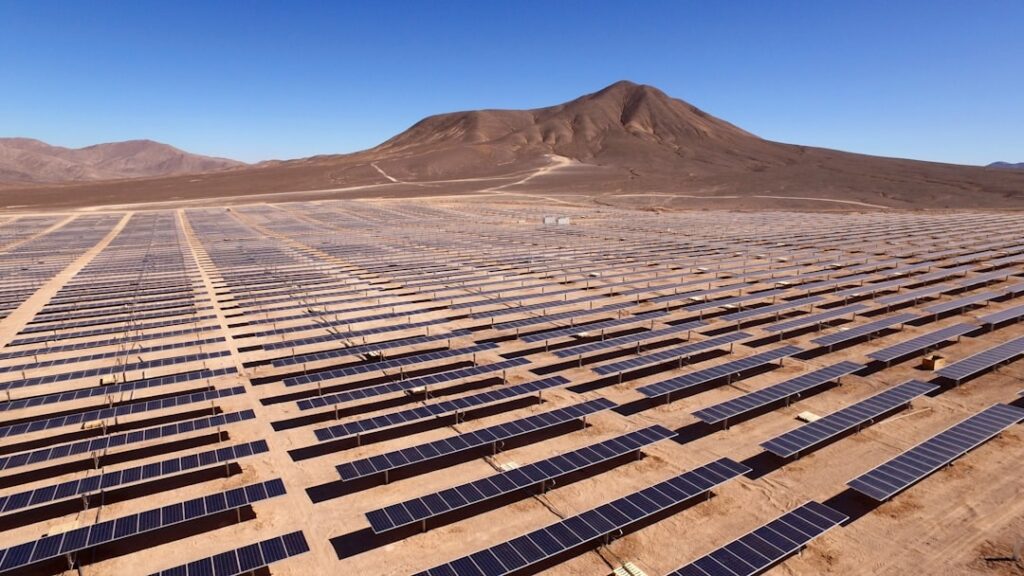
At the end of July, China had 1,286 gigawatts of installed solar capacity, representing 31.5% of its total electricity-generating capacity, according to the National Energy Administration. Solar had sat just one gigawatt behind coal in June. The crossover arrived a month later.
It is an extraordinary achievement of industrial scale. China has built giant solar installations across western deserts and encouraged rooftop systems on factories, commercial buildings and homes. Since 2020, the buildout has been supported by lower equipment costs, targeted industrial policy and enormous investment in ultra-high-voltage transmission infrastructure that moves electricity from western generating regions to coastal demand centres.
The strategy has always been about more than emissions. Renewable power supports energy security, reduces dependence on imported fossil fuels and gives China a commanding position in industries it sees as strategically important. Its immense manufacturing base has also helped drive down global solar-panel prices.
Of course, there is a familiar Chinese economic caveat: producing a great deal of something does not guarantee that producers make money. Severe overcapacity has pushed many domestic solar manufacturers into losses. China can boast spectacular capacity figures while companies further down the supply chain fight vicious price wars for survival.
More importantly, installed capacity is not the same as electricity generated.
Solar generation rose 15.5% year on year to 802.4 billion kilowatt-hours during the first seven months of 2026. That was only about one-eighth of total electricity production. Solar panels do not generate continuously, while coal plants can run for longer periods and remain critical to grid stability.
Coal has lost the capacity crown. It has not lost its central role in keeping the lights on.
Nor is solar expansion moving at the same breakneck pace as before. China installed 86 gigawatts of solar capacity in the first seven months of 2026. That is still enormous, but it pales beside the remarkable 93 gigawatts installed in May 2025 alone, before a policy overhaul ended guaranteed revenue arrangements for new wind and solar projects.
Investment in the sector is nevertheless expected to exceed 2 trillion yuan over the next five years. The direction of travel is obvious. The transition, however, will be long, expensive and dependent on a grid capable of managing intermittent power at an unprecedented scale. Beijing’s electricity-centred industrial strategy is becoming increasingly central to its AI and technology ambitions, as explored in China’s electricity-driven push for AI.
China’s Fertility Policy Is Too Small for the Problem It Faces

Beijing introduced a nationwide child-care subsidy in 2025, offering families 3,600 yuan annually for each child until age three. The maximum payment is 10,800 yuan, or about US$1,600.
Chinese demographers are warning that this is nowhere near enough.
James Liang, executive chairman of Trip.com and co-founder of the YuWa Population Research Institute, has proposed a much larger package worth around 62,000 yuan per child. Under his proposal, families would receive 855 yuan a month until a child reaches six. Liang estimates that such support could lift China’s fertility rate by 25%, to roughly 1.25, within several years.
Even that would remain disastrously low. Replacement-level fertility is generally around 2.1 children per woman. A rate of 1.25 would not reverse population decline; it would merely slow the rate at which the demographic problem becomes economically brutal.
Another demographer, Xiaofu, has advocated an even larger package of at least 72,000 yuan per child, equivalent to monthly payments of 1,000 yuan until age six.
Supporters of a more generous approach point to Singapore and South Korea. Singapore recently announced a package worth up to 62,000 Singapore dollars per child, roughly US$48,000. South Korea has also sharply expanded subsidies and recorded its highest number of births for a June quarter and first half in almost seven years.
Yet neither country offers a miraculous demographic escape route. South Korea’s fertility rate rose to 0.8 last year, still the lowest in the world. Singapore recorded 0.87. China was estimated at 1. All are far below replacement level.
China’s deterioration has been exceptionally rapid. Annual births fell from nearly 18 million in 2016 to fewer than 8 million in 2025. The national population has declined every year since peaking in 2021.
Cash support could help, particularly at the margins. But money alone will not solve a problem rooted in housing costs, education costs, intense academic competition, long work hours and a shortage of accessible childcare services. Couples are not necessarily declining to have children because they lack a small annual payment. Many are looking at the complete cost of raising a child in urban China and concluding, quite rationally, that it is too risky.
That is why a credible response would require major direct payments alongside affordable child care, less punishing work expectations and serious relief from the financial pressure surrounding housing and education. China is not trying to restore an old demographic model. At this stage, it is trying to mitigate the harshest consequences of a population structure that is already changing.
Without a far stronger intervention, China could fall below South Korea and Singapore to become the world’s lowest-fertility society. The country’s demographic challenge is not a distant threat. It is increasingly the backdrop against which every other economic decision must be made. For a wider look at how demographic pressure intersects with Beijing’s broader economic stresses, see this analysis of China’s mounting pressures on multiple fronts.
Resilience Is Becoming China’s Defining Economic Challenge
These stories may appear disconnected: a Himalayan disaster, loss-making airlines, solar expansion and falling births. They are not.
Each reveals a system under pressure from forces that cannot be managed through a single infrastructure project, subsidy or production target. China can build flood walls, but glacier collapse may come from another direction. It can expand solar capacity, but intermittent generation does not immediately replace coal. It can sell more airline tickets but cannot easily escape global fuel prices. It can offer childcare subsidies, but a small payment will not make urban family life affordable.
Beijing’s instinct is to mobilise: build faster, subsidise harder, direct more capital and secure more capacity. That approach has delivered formidable results in areas such as solar deployment and national infrastructure. But the latest developments show where its limits are becoming painfully obvious.
The difficult work ahead is not merely building more. It is designing institutions, services and systems capable of coping with risks that are interconnected, fast-moving and much harder to control.
Frequently Asked Questions
Why was the Nepal-Tibet border disaster so difficult to respond to?
The ice avalanche triggered a fast-moving surge of water, debris and boulders that reached the Gyirong crossing within an estimated six or seven minutes. Existing preparations focused largely on glacial-lake outburst floods rather than this kind of exceptionally rapid cascading event.
Why are China’s large state-owned airlines losing money despite rising travel demand?
Fuel costs have risen sharply, while competition, insufficient fuel surcharges and high-speed rail prevent airlines from raising fares enough to recover those costs. Restored international routes have also added long-haul operating expenses and intensified competition.
Does solar overtaking coal in capacity mean China no longer relies on coal power?
No. Solar capacity measures the maximum potential output of installed panels, not continuous electricity production. Solar generated around one-eighth of China’s total power during the first seven months of 2026, while coal remains important for dependable generation and grid stability.
Can larger child-care subsidies reverse China’s population decline?
Larger subsidies may increase births and reduce some financial pressure, but demographers stress that cash alone will not solve the problem. High housing and education costs, long working hours, academic competition and limited child-care services all continue to discourage couples from having children.