Photo by Winston Chen on Unsplash
It has been a heavy news cycle, with pressure building across China's economy, technology policy, trade diplomacy, and regional security environment.
The latest developments point in the same broad direction. Beijing is trying to stabilise weak domestic demand, protect strategic technologies, manage external trade pressure, and steadily expand its operational posture around Taiwan. None of these stories sits in isolation. They are all part of the same larger pattern of a system under strain, adapting in real time.
Table of Contents
- Tragedy in Gansu After Landslide Kills Forestry Workers
- China's June Inflation Data Shows Demand Still Looks Weak
- Beijing May Restrict Access to Its Most Advanced AI Models
- China May Allow Limited NVIDIA H200 Purchases While Pushing Domestic Chips
- Wang Yi's Northern Europe Tour Signals a New Push to Stabilize EU Trade Ties
- China Expands Coast Guard Patrols East of Taiwan
- Beijing Attacks US Comments on Taiwan's Drone Strategy
- What This News Cycle Says About China's Current Direction
- FAQ
Tragedy in Gansu After Landslide Kills Forestry Workers
Before getting to the broader policy stories, there was a major tragedy in Gansu province.

A landslide in northwestern China killed 21 forestry workers during routine operations at a state-owned forestry farm in Longnan, according to local authorities. The incident took place just before 7 a.m. on Tuesday in Pan'an County, trapping a 33-member crew.
All 33 workers were eventually recovered from the debris. Twenty-one died, seven suffered minor injuries, and five escaped unharmed. Officials said about 10,000 cubic metres of earth collapsed over an area of roughly 5,400 square metres, with debris as deep as 10 metres in places.
The official explanation pointed to steep terrain, unstable geological conditions, and localised erosion. Given the usual caution required when assessing initial official accounts, that explanation should be treated carefully until more detail emerges. What is clear is that the sudden nature of the collapse appears to have contributed to the high death toll, and the victims were local residents from nearby villages.
China's June Inflation Data Shows Demand Still Looks Weak
The latest inflation numbers offered a mixed picture, and the key word here is mixed.
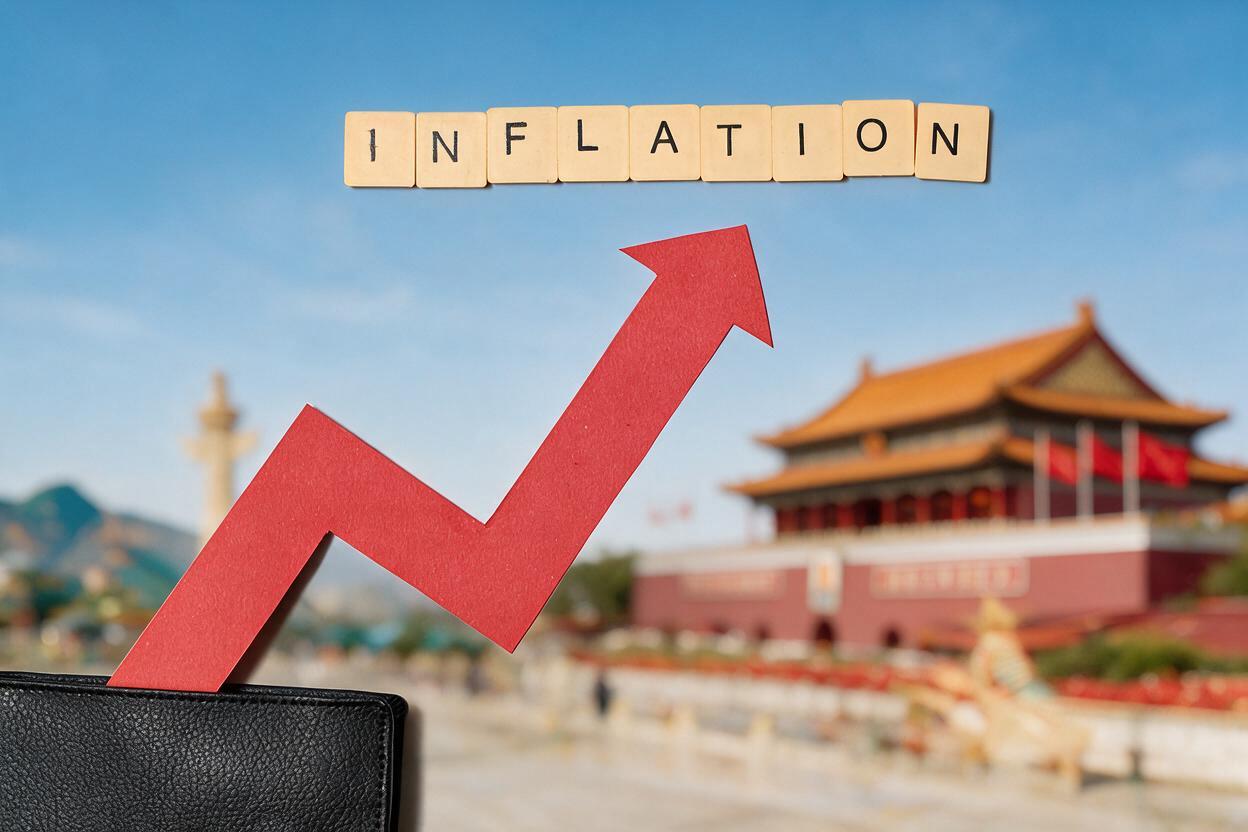
China's consumer price index rose 1.0 percent in June from a year earlier. That was down from 1.2 percent in May and slightly below expectations. On a monthly basis, consumer prices fell 0.3 percent, extending the decline from the previous month.
That matters because it suggests domestic demand remains subdued despite ongoing efforts to support consumption.

Food prices continued to drag on the overall number, falling 1.6 percent year on year. Non-food inflation also eased, slipping to 1.5 percent from 1.9 percent in May. Core inflation, which strips out volatile food and energy components and gives a cleaner signal of underlying demand, slowed to 1.0 percent from 1.1 percent.
That is not the kind of data that points to a broad, healthy rebound in household demand.
Producer prices are rising, but the quality of the recovery matters
At the factory gate, the picture was stronger, at least on the surface. China's Producer Price Index rose 4.1 percent from a year earlier, up from 3.9 percent in May. That marked a fourth straight month of annual producer inflation.
But monthly momentum weakened. Producer prices fell 0.3 percent from May, reversing the previous month's increase as global oil prices retreated after tensions around Iran eased.
This is why headline improvement in producer inflation should not be overread. A rise driven by input costs, especially energy, is very different from a rise driven by broad industrial demand and stronger pricing power. When energy spikes are doing the heavy lifting, that is not evidence of a fully repaired economy. It can just mean producers are paying more.
Some economists now believe China likely moved out of economy-wide deflation during the second quarter after nearly three years of falling prices. But even if that is technically true, it does not mean the underlying recovery is durable.
Recent price support has come from sectors tied to artificial intelligence investment, semiconductors, metals demand, and earlier energy price increases. That is a narrower base than Beijing would want. If you are looking for a broad consumption-led inflation recovery, the June data does not really give you that.
For a broader read on why the recovery story still looks fragile, this related analysis is worth reading: China Update: Iran Tensions Expose Fragile Recovery and AI Chip Constraints.
Beijing May Restrict Access to Its Most Advanced AI Models
On the technology front, one of the more important reports is that Beijing is considering new restrictions on access to China's most advanced AI models.

According to a Reuters report out of the UK, China's Ministry of Commerce recently held meetings to discuss limiting overseas access to cutting-edge Chinese AI systems, including both proprietary and open-source models. Officials also reportedly discussed whether theft or unauthorised disclosure of advanced AI technology should become an offence under national security laws.
This is a major signal.
It suggests that Chinese policymakers increasingly see frontier AI not just as a commercial sector but as a strategic asset that may need to be controlled in the same way sensitive military-adjacent technologies are controlled.
The timing is also notable. These discussions reportedly took place just ahead of the World AI Conference in Shanghai, where Chinese leaders are expected to highlight the country's AI ambitions and major firms are likely to roll out new systems.
There are still many unknowns. It is not clear exactly when such measures might be introduced, how far they would go, or whether they would apply only to future models. But the direction is clear enough. Beijing appears to be moving toward tighter governance over who can access its strongest AI capabilities and under what conditions.
That would align China with a broader international shift. Governments around the world are increasingly trying to control frontier AI, either through export restrictions, compute controls, access limitations, or security review mechanisms. The United States has already moved aggressively on advanced AI chip exports and continues debating wider restrictions tied to national security concerns.
For companies outside China that rely on Chinese AI models, this creates a new layer of uncertainty. Businesses working with sensitive data, critical infrastructure, or public sector clients may need contingency planning if access conditions suddenly change.
China May Allow Limited NVIDIA H200 Purchases While Pushing Domestic Chips
At the same time, Beijing is reportedly preparing to let a limited number of advanced NVIDIA H200 chips into the country for some of China's biggest tech firms.

That may sound contradictory next to the push for tighter AI controls, but it actually fits Beijing's current strategy quite neatly.
The reported plan would allow selected companies such as Alibaba, ByteDance, and DeepSeek to apply for permission to buy H200 chips. Firms would reportedly need to explain how many chips they need and how they intend to use them.
The crucial detail is the restriction on use. Officials reportedly want these NVIDIA chips used for training large AI models, while requiring companies to prioritise domestically produced processors for inference, the stage where trained models actually generate answers and carry out tasks.
That distinction matters enormously.
It suggests Beijing believes foreign chips are still necessary at the frontier of training, where performance and scale remain especially demanding, but sees inference as an area where Chinese chips are becoming competitive enough to support local substitution.
The total number of approved H200 chips could reportedly be under 200,000, less than half of what Chinese firms had requested earlier in the year. So even if the approvals go through, this would not represent open access. It would be targeted, limited, and conditional.
This is a classic dual-track policy.
- Use the best foreign hardware where it is absolutely necessary
- Restrict that use to priority functions
- Accelerate domestic alternatives where substitution is realistic
- Reduce long-term dependence without slowing AI development too much in the short term
That also tells us something important about the state of China's domestic semiconductor ecosystem. Progress is real, but the top-end training stack still appears insufficient in either quantity, quality, or both.
That interpretation was reinforced by the broader discussion around China's chip sector. Domestic memory maker CXMT is reportedly drawing growing international attention and continues to purchase certain approved lithography tools from ASML, which can still sell some DUV equipment because the company has not been placed on the US entity list.
So the picture is not one of isolation. It is one of constrained integration. China is trying to remain plugged into whatever advanced foreign technology it can still legally obtain while building out local substitutes at speed.
This connects closely with Beijing's electricity-heavy AI buildout and the pressure created by chip bottlenecks, which is explored further here: China April Data Slumps, Taiwan Risks Escalate, Beijing Turns to Power for AI.
Wang Yi's Northern Europe tour signals a new push to stabilise EU trade ties.
Another important development this week came from diplomacy, specifically China's effort to reset increasingly strained economic relations with the European Union.
Foreign Minister Wang Yi used a tour of Denmark, Sweden, Finland, and Norway to press for greater trade cooperation and fewer restrictions on Chinese access to European markets. The core message from Beijing was straightforward: Europe should remain open, avoid restrictive legislation, ease export controls on high-value products, and take a more positive view of the economic relationship.
That messaging reflects a clear Chinese objective. Beijing wants to prevent the deterioration in EU-China trade ties from tipping into something more openly confrontational.
The trade imbalance remains the central problem
The obstacle is equally clear. Europe is deeply concerned about the scale and structure of its trade imbalance with China.
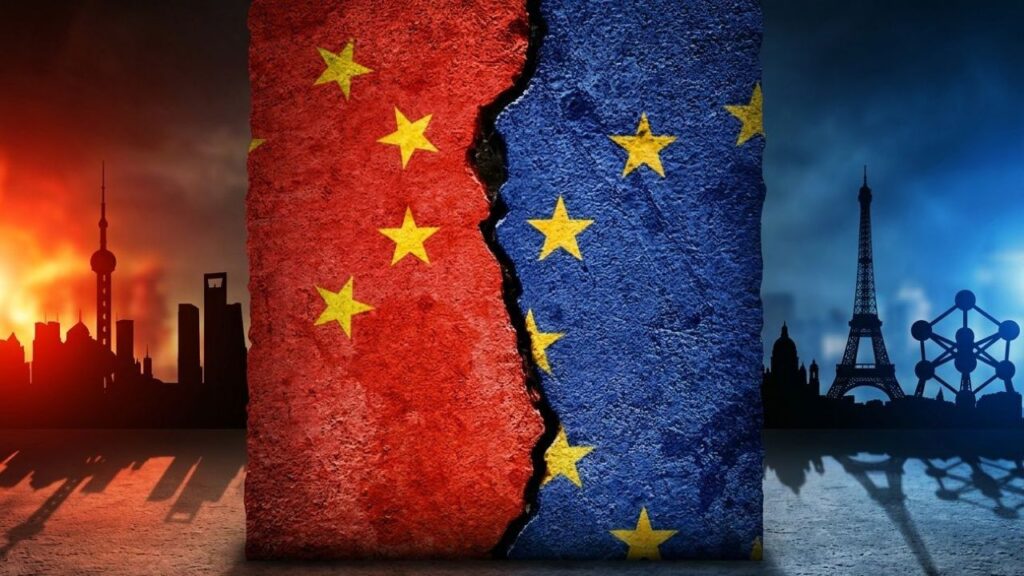
The EU trade deficit with China now exceeds 360 billion euros, or roughly 411 billion US dollars. Across Europe, many policymakers see this as the result of Chinese state support, industrial subsidies, and overcapacity being pushed into overseas markets. That has fuelled calls for tougher defensive measures.
French President Emmanuel Macron has even framed the issue in existential terms for parts of European industry. That gives a sense of just how politically charged the matter has become.
Beijing's answer is not to reduce exports, but to pursue what it calls an "upward balance" in trade. In practical terms, that means increasing overall commerce while encouraging more European exports into China.
Chinese officials have also identified new areas for cooperation, including artificial intelligence, services trade, and intellectual property. The idea is to broaden the agenda and keep negotiations moving ahead of an October deadline tied to current disputes.
Still, the differences remain substantial.
European governments continue to worry about the following:
- Unequal market access
- Industrial subsidies
- State-backed overcapacity
- Technology transfer risk
- Dependence on sensitive Chinese supply chains
And on the China side, there is growing frustration with export controls on advanced technology, especially around semiconductors. ASML remains central here, given its role in chip manufacturing equipment.
So while the diplomatic language is about cooperation, the strategic reality is that both sides are trying to manage a relationship that is becoming harder to stabilise.
China Expands Coast Guard Patrols East of Taiwan
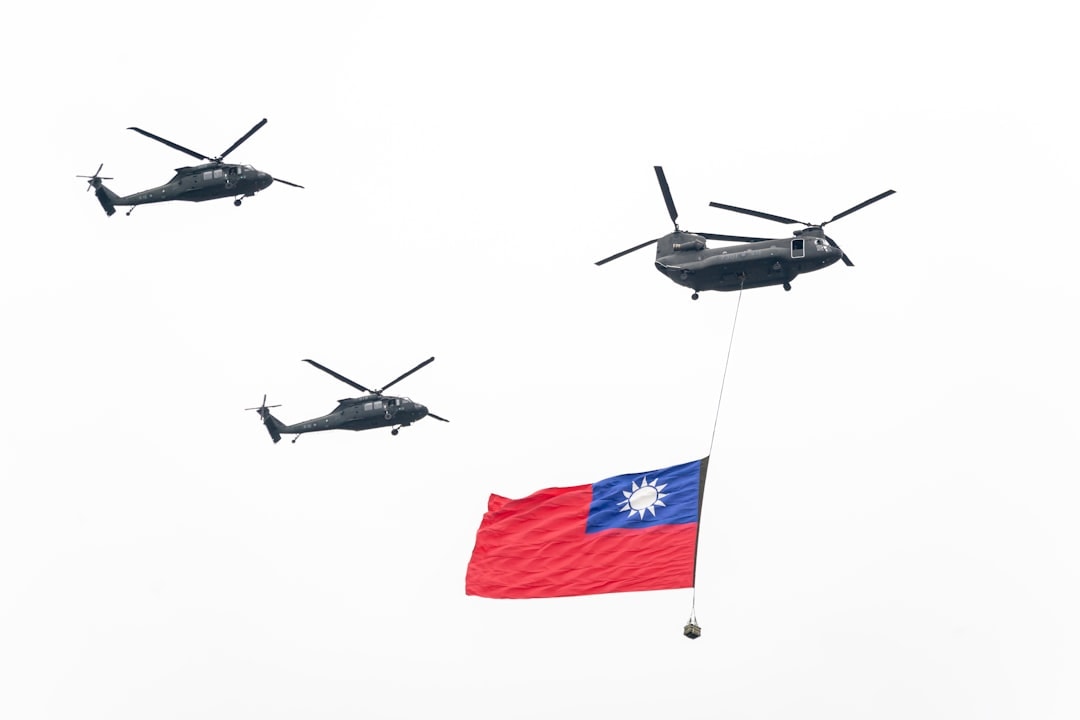
On the security front, Beijing has announced that its Coast Guard will begin routine so-called law enforcement patrols in waters east of Taiwan.
This is not a small procedural update. It marks another step in expanding regular Chinese operations around the island.
According to the China Coast Guard, these patrols will become a standing feature in the Western Pacific east of Taiwan. State media presented the move as a response to repeated Japanese protests and provocations, arguing the operations are needed to protect Chinese fishermen, including fishermen from Taiwan, and defend lawful maritime interests.
Officially, the line is that this is about restoring order rather than escalating tensions.
But the strategic meaning is difficult to miss. Analysts broadly see this as part of Beijing's campaign to normalise a more permanent Chinese operational presence not just in the Taiwan Strait but around the entire island.
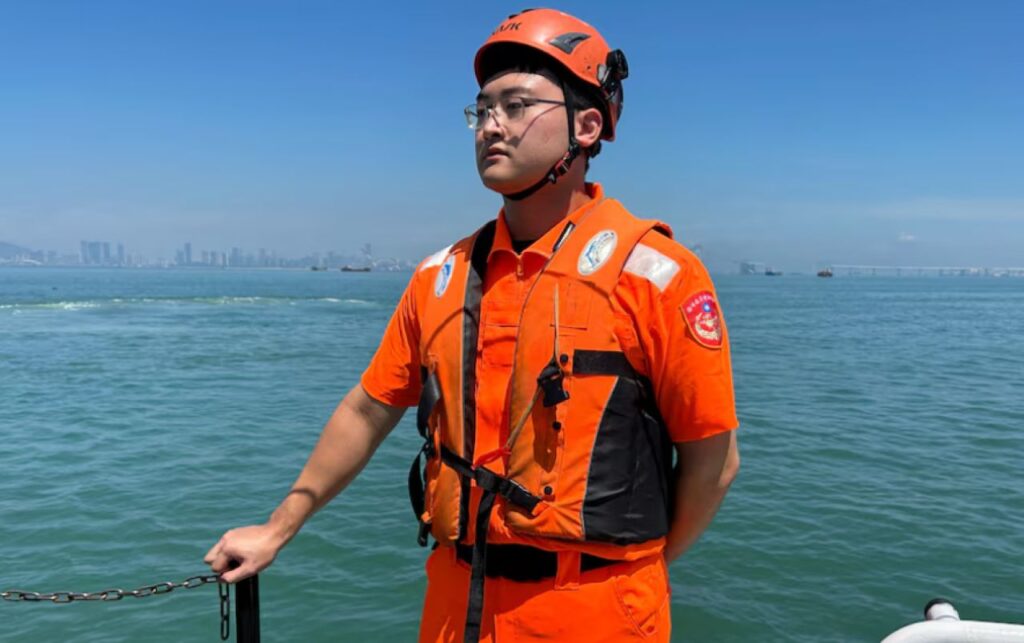
That matters because persistent Coast Guard activity can shift facts on the ground, or more accurately, on the water, without crossing the threshold of open military confrontation. It sits in the grey zone between peacetime law enforcement and overt coercion.
In effect, China can apply more pressure, expand familiarity with the operating environment, and make its presence feel more normal over time.
This trend fits with broader cross-strait tension covered in related reporting here: Taiwan Cross-Strait Friction, Banking Stress, Trade Leverage, and Identity Policy in Inner Mongolia.
Beijing Attacks US Comments on Taiwan's Drone Strategy
Another Taiwan-related flashpoint came after remarks by Raymond Greene, head of the American Institute in Taiwan, at a drone industry forum in Taichung on July 2.
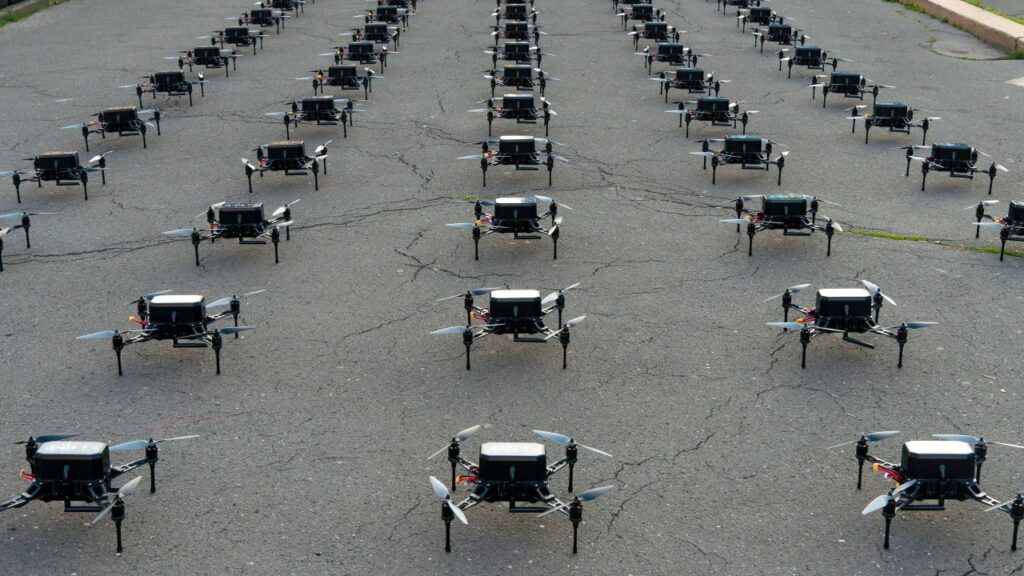
Greene described drones as a game-changing opportunity for Taiwan's security and argued that turning Taiwan into a "hornet's nest" of air, surface, and underwater drones would strengthen deterrence against possible aggression. He also said the United States was prepared to work with Taipei on building those capabilities.
Beijing reacted sharply.
China's Taiwan Affairs Office accused Greene of undermining stability in the Taiwan Strait and pushing relations in a dangerous direction. The spokesman argued that Greene's comments conflicted with statements attributed to President Trump after an earlier meeting with Xi Jinping, particularly on Taiwan independence, military entanglement, and arms sales restraint.
Beijing also accused the US representative of promoting Taiwan's asymmetric wartime strategy, pressuring lawmakers to support higher defence spending, and encouraging what it calls separatist forces on the island.
The American Institute in Taiwan rejected the idea that US policy had changed, saying Washington's long-standing approach remains in place and defending the remarks as part of deterrence and peace preservation in the Indo-Pacific.
This exchange is important because it highlights the core dynamic now shaping the Taiwan issue.
- Beijing is expanding regular operational pressure around Taiwan
- Taiwan and the United States are emphasizing resilience and asymmetric defence.
- Both sides claim they are preserving stability
- Each side sees the other's actions as destabilizing
That is not a stable equilibrium. It is a competitive cycle, and each new coast guard patrol, defence forum remark, military drill, or procurement decision adds another layer to it.
What This News Cycle Says About China's Current Direction
If you step back from the individual headlines, the bigger picture comes into focus pretty quickly.
On the economy, China still has not solved the domestic demand problem. Inflation has improved from deflationary conditions, but the composition of that improvement remains narrow and not especially reassuring.
On technology, Beijing is trying to do two things at once. It wants to secure strategic control over advanced AI while selectively using foreign hardware where domestic alternatives are still not good enough. That is pragmatic, but it also shows the limits of current self-sufficiency.
On trade, China is trying to prevent relations with Europe from sliding further while refusing the core European diagnosis that Chinese overcapacity and subsidy patterns are distorting competition.
And on Taiwan, the pressure campaign continues to broaden. The use of routine Coast Guard patrols east of the island is exactly the kind of steady expansion that can gradually change the status quo without a dramatic single event.
That is the common thread running through this entire China News Update. Beijing is managing weakness at home, tightening control over critical technologies, and projecting greater confidence abroad, all at the same time. The challenge is that each of those goals can create new friction with the others.
FAQ
Why did China's June inflation data matter so much?
Because it showed the recovery remains uneven. Consumer inflation slowed and monthly prices fell again, suggesting household demand is still weak. Producer inflation stayed positive, but much of the improvement appears linked to earlier energy price pressure rather than broad economic strength.
What is Beijing reportedly considering for advanced AI models?
Chinese officials are reportedly discussing limits on overseas access to the country's most advanced AI models and whether unauthorised disclosure of advanced AI technology should fall under national security law. The aim appears to be tighter control over strategically important AI capabilities.
Why would China allow some NVIDIA H200 chips if it wants self-sufficiency?
Because Beijing appears to see a practical need for top-end foreign chips in AI model training, while still pushing domestic chips for inference. In other words, it is trying to reduce dependence over time without giving up access to the best hardware where it still matters most.
What is China asking from the European Union?
Beijing wants the EU to remain open to trade, ease export controls on advanced and high-value goods, and avoid new restrictive legislation. It is also pushing the idea of an "upward balance" in trade, meaning more European exports to China rather than fewer Chinese exports to Europe.
Why are the new patrols east of Taiwan significant?
They expand China's regular operating presence beyond the Taiwan Strait into waters east of the island. Even if framed as law enforcement, such patrols can gradually normalize broader Chinese activity around Taiwan and increase pressure without direct military confrontation.
What was the dispute over Taiwan's drone strategy?
A senior US representative in Taiwan argued that large-scale drone capabilities could strengthen Taiwan's deterrence. Beijing condemned the remarks, saying they undermined stability and encouraged separatism. The United States side responded that its policy had not changed and that deterrence helps preserve peace.